New Mexico Fishing Violations and Penalties
Few things can ruin a peaceful day of fishing faster than an unexpected encounter with a New Mexico Game and Fish officer that ends in a citation. The sheer volume and complexity of fishing regulations can make anyone feel anxious about accidentally breaking a rule. Nobody wants to face a fine, lose their fishing privileges, or worse, just because they weren't aware of a specific nuance in the law. This comprehensive guide is designed to demystify New Mexico's fishing violations and their penalties, helping you understand the rules, avoid common mistakes, and ensure your time on the water is always enjoyable and lawful.
Understanding New Mexico's Fishing Laws: Why They Matter
It's easy to look at a thick booklet of fishing regulations and think, "Do I really need to know all this?" The answer, unequivocally, is yes. These laws aren't just there to make your life difficult; they serve crucial purposes, from protecting fish populations and their habitats to ensuring fair chase and a sustainable future for angling in the Land of Enchantment. When you understand the 'why' behind the rules, it becomes much easier to appreciate and follow them.
The Purpose of Regulations and Their Complexity
New Mexico's diverse landscapes, from high mountain streams to vast desert reservoirs, support an incredible array of fish species. Protecting these species, especially our native trout like the Rio Grande Cutthroat and the Gila Trout, is paramount. Regulations control things like how many fish you can keep, what size they must be, and even what kind of bait or lures you can use in certain waters. For instance, some of the most pristine trout streams, like parts of the San Juan River or Fenton Lake, have very specific "Special Trout Water Rules" to safeguard delicate ecosystems and ensure high-quality fishing experiences.
The complexity often arises because different bodies of water, or even different sections of the same river, can have unique regulations. What's perfectly legal at Elephant Butte Lake might be a serious violation on a designated "Quality Water" section of a river. This localized approach is necessary because each fishery has its own ecological characteristics and management goals. For example, some regulations aim to promote trophy fish, while others might focus on controlling invasive species. Keeping up with these localized rules can feel like a full-time job, but it’s a responsibility every angler shares to preserve New Mexico’s natural beauty and its angling heritage.
Common Misconceptions About Fishing Rules
One of the biggest misconceptions anglers often harbor is that ignorance of the law is an excuse. Unfortunately, that's simply not true. As an angler, it's your responsibility to know and understand the current New Mexico Fishing Regulations Overview. Another common myth is that private land always means private rules. While private landowners can certainly regulate access to their property, state fishing laws still apply to the waters that run through or are contained within that land, unless explicitly exempted by a specific agreement with the New Mexico Department of Game and Fish (NMDGF).
Many anglers also mistakenly believe that if they're just "dunking a worm" or "only catching and releasing," they don't need a license or need to follow bag limits. This is a dangerous assumption. Unless you're fishing on one of New Mexico's designated "Free Fishing Days", a valid New Mexico Fishing License Guide is almost always required for anyone over the age of 12, regardless of intent or catch. Even catch and release fishing is governed by specific rules in some areas, emphasizing proper handling to minimize harm. These misconceptions are exactly what often lead to unintentional violations, so it's critical to always err on the side of caution and informed compliance.
Most Common Fishing Violations in New Mexico
Let's face it, nobody wakes up planning to break fishing laws. But sometimes, a lapse in judgment, a forgotten detail, or simply not knowing the current rules can lead to a violation. Being aware of the most frequently cited offenses can help you steer clear of trouble and ensure your fishing trip remains enjoyable.
Fishing Without a Valid License or Proper Validation
This is by far one of the most common and easily preventable violations. Every resident and nonresident angler aged 12 and older generally needs a current fishing license to fish in New Mexico's public waters. There are various options, from a New Mexico One-Day and Five-Day Fishing Licenses for visitors to a New Mexico Annual Fishing License for regulars. Beyond the basic license, many anglers forget about additional validations. For instance, if you plan to fish on U.S. Forest Service or Bureau of Land Management (BLM) lands, you'll need a New Mexico Habitat Management and Access Validation Stamp. Likewise, if you want to use a second rod, you must purchase a New Mexico Second Rod Validation.
It's not enough to just buy a license; you need to have it with you, or readily accessible digitally, while fishing. Forgetting your physical license at home, even if you bought it online, can still lead to a citation. Officers will often ask for proof of purchase, so printing a New Mexico Fishing License at Home or having it on your phone is essential. The New Mexico Fishing License Costs Explained can help you understand all the associated fees, including the Habitat Stamp Cost and Requirement, to ensure you're fully covered before you even cast your line.
Bag and Possession Limit Infractions
New Mexico's regulations specify how many fish of a particular species you can keep in a single day (bag limit) and how many you can have in your possession at any given time, including those at home or in your vehicle (possession limit). These limits vary significantly by species, waterbody, and even by specific sections of a river. For example, the New Mexico Daily Trout Bag Limit is usually 5 fish statewide, but on certain waters, it might be 2, or even 0 (catch and release only). The New Mexico Trout Possession Limit is generally twice the daily bag limit.
A common scenario leading to violations here is misunderstanding what "possession" means. If you catch your limit of trout in the morning, go home, clean them, and then return to the same waterbody in the afternoon to catch more, you've likely exceeded your possession limit. Game and Fish officers consider any fish you've already caught, even if cleaned and stored, as part of your possession limit until they are consumed. Another frequent mistake involves misidentifying fish. For instance, anglers might accidentally keep a Rio Grande Cutthroat Trout in a waterbody where only rainbow trout are allowed to be harvested, leading to a violation. Always consult the official NMDGF fishing proclamation or their online resources to verify current limits for your specific fishing location.
Rules About Legal Gear and Prohibited Methods
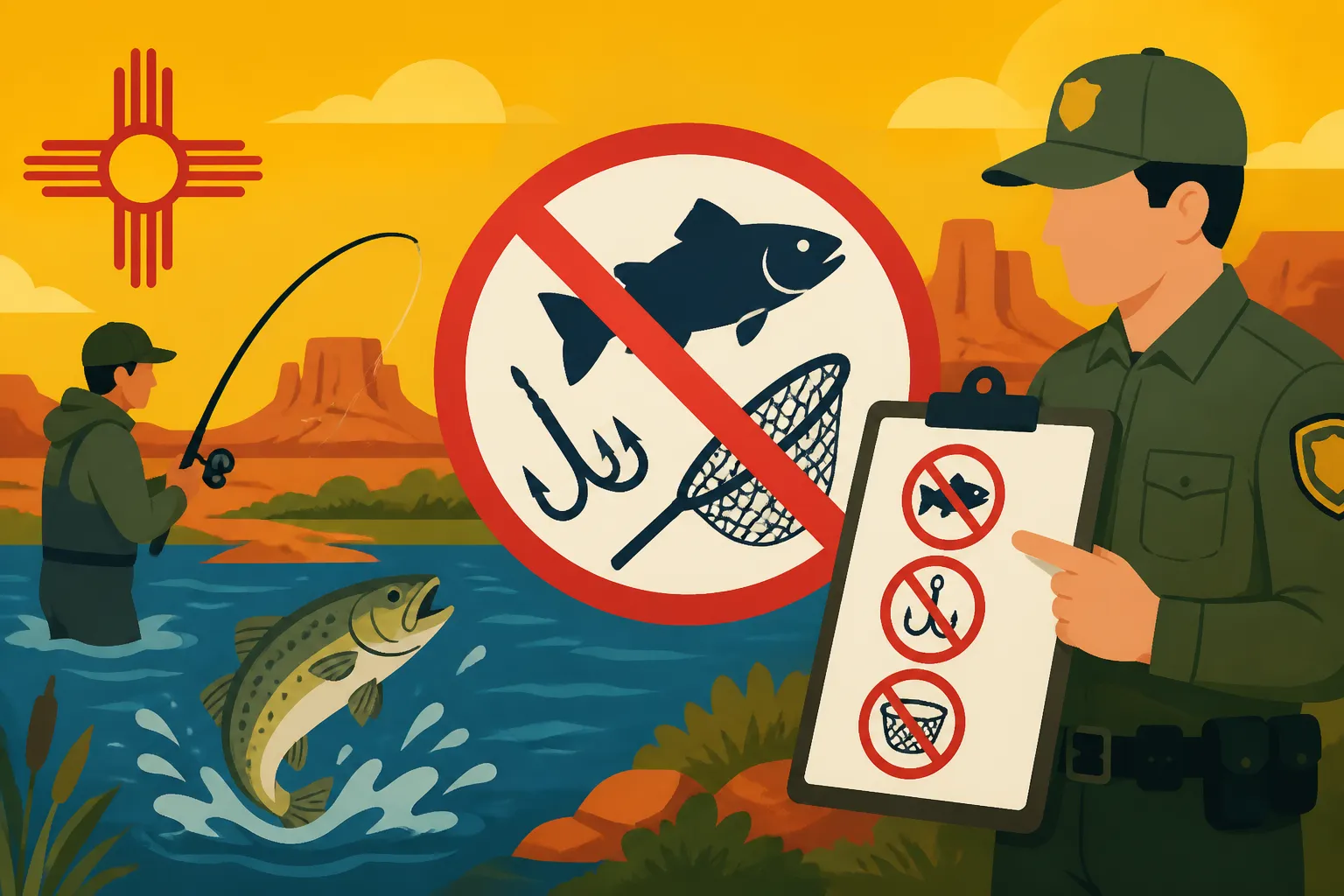
The type of gear you use and how you use it are also heavily regulated. Some waters, particularly "Special Trout Water Rules" like the San Juan River Quality Waters, mandate the use of artificial flies and lures with single, barbless hooks. Using bait (like worms or PowerBait), treble hooks, or barbed hooks in these areas is a clear violation. Even if you're not intentionally targeting trout, if you're fishing in these areas, your gear must comply.
Prohibited methods extend beyond just bait and hooks. The use of gaffs, nets (other than a landing net for landing legally hooked fish), seines, or traps is generally illegal for taking game fish. Certain methods like "snagging" (intentionally hooking a fish anywhere other than its mouth) are typically prohibited, except for specific species like Kokanee salmon during designated "snagging seasons" at certain lakes like Navajo Lake or Heron Lake. Fishing with more than two rods at a time without a New Mexico Second Rod Validation is another frequent violation. Always check the specific regulations for your chosen body of water, as special conditions or temporary rule changes can occur. For instance, purchasing equipment on Amazon like barbless hook tools or specialized measuring tapes can help ensure compliance.
Fishing in Closed Waters or During Closed Seasons
While New Mexico offers year-round fishing in many areas, some waters are periodically closed to fishing, either seasonally or permanently, to protect spawning fish, sensitive habitats, or for safety reasons. Forgetting to check these closure dates can lead to an easy, albeit accidental, violation. For example, certain areas might be closed during spring runoff, or specific stretches of rivers might be closed during critical spawning periods for particular species.
Similarly, some species might have specific "New Mexico Fishing Season Dates and Limits" during which they can be harvested. While trout fishing is generally open year-round in most New Mexico waters, certain lakes might have specific rules for species like salmon or pike. Always refer to the most current NMDGF fishing proclamation. These rules are put in place for a reason, and respecting them is crucial for the health of the fishery. A quick check of the latest regulations booklet before heading out is a small investment of time that can save you significant trouble.
Penalties for New Mexico Fishing Offenses
The consequences of violating New Mexico's fishing laws can range from a minor inconvenience to severe penalties, impacting your wallet, your ability to fish, and potentially even your freedom. It's important to understand the gravity of these offenses and what you might face if cited.
Fines and Court Costs
The most immediate and common penalty for a fishing violation is a fine. These fines can vary widely depending on the severity of the offense and the number of fish involved. For instance, a first-time offense of fishing without a license might result in a base fine, but that fine can escalate if there are aggravating circumstances, such as repeated offenses or multiple fish illegally taken. Many fishing violations in New Mexico are classified as petty misdemeanors. A general Penalty for Fishing Without a License in New Mexico can typically start around $50-$100 but can easily climb much higher when court fees and administrative costs are added.
Let's consider a hypothetical: Imagine you're caught fishing on the San Juan River Special Trout Water with barbed hooks. Even if you release all the fish, the mere possession and use of illegal gear in that specific water could incur a fine. If you were found to have exceeded your New Mexico Trout Bag and Possession Limits, especially with valuable species like Gila Trout or Rio Grande Cutthroat, the fines per fish could quickly add up. Beyond the base fine, you'll almost always be responsible for court costs and surcharges, which can significantly increase the total amount you owe. These financial burdens are a clear deterrent, but they're just one piece of the penalty puzzle.
License Revocation and Suspension
Beyond monetary fines, one of the most impactful penalties for an avid angler is the potential loss of fishing privileges. Depending on the nature and severity of the violation, your New Mexico fishing license can be suspended or revoked for a period ranging from one year to indefinitely. If you commit a serious violation, such as taking an endangered species or repeatedly breaking bag limits, the NMDGF has the authority to suspend your license. During this suspension period, it is illegal for you to fish in New Mexico, and doing so would result in even harsher penalties.
Furthermore, New Mexico is part of the Wildlife Violator Compact, an agreement among many U.S. states and Canadian provinces. This means that if your fishing license is suspended in New Mexico, that suspension can be recognized and enforced by other member states. So, a violation at Navajo Lake could mean you're also unable to fish in Colorado, Arizona, or many other popular angling destinations. This compact serves as a powerful incentive for anglers to adhere to wildlife laws, recognizing that responsible conduct is essential across state lines. Understanding "New Mexico Fishing License Violations and Penalties" includes this far-reaching consequence.
Potential Jail Time and Property Seizure
While less common for minor offenses, serious fishing violations can carry the possibility of jail time, particularly for repeat offenders or those involved in commercial poaching. For example, if an individual is caught taking a large number of fish far in excess of the legal limits with the intent to sell them, or if they use illegal commercial methods, these cases can quickly escalate beyond a simple misdemeanor. Poaching, especially of protected species, is considered a serious crime and is treated accordingly.
In addition to jail time, Game and Fish officers have the authority to seize any equipment used in the commission of a serious offense. This could include your fishing rods and reels, tackle boxes, and even boats or vehicles if they were integral to the illegal activity. Imagine losing your prized fishing boat or truck simply because you decided to engage in illegal fishing. This potential for property seizure is a stark reminder of the serious nature of wildlife laws and the NMDGF's commitment to protecting New Mexico's natural resources. It's a risk no responsible angler should ever contemplate taking.
Navigating a Violation: What to Do if You Get a Citation
Getting a fishing citation can be a stressful and confusing experience. Your heart might race, and you might feel a mix of frustration, embarrassment, and anger. However, how you handle the situation can significantly impact the outcome. Knowing your rights and the proper steps to take is crucial.
Interacting with Game and Fish Officers
If a New Mexico Game and Fish officer approaches you, the most important thing to do is remain calm and be cooperative. Officers are typically polite and professional, and they are simply doing their job to enforce state laws. Provide your valid fishing license and identification when requested. Resist the urge to argue or become confrontational, as this can escalate the situation unnecessarily and potentially lead to additional charges, such as resisting arrest or obstruction.
While you should answer factual questions, remember that you are not obligated to incriminate yourself. You have the right to remain silent regarding questions that might lead to self-incrimination. You can politely state, "I prefer not to answer any questions without consulting legal counsel." However, refusing to provide your identification or valid license when legally required is a separate offense. If you feel that you have been treated unfairly or that your rights have been violated, make a mental note of all the details, including the officer's badge number, time, and location, but address these concerns through the proper channels later, not during the interaction itself.
Understanding Your Rights and Options
After receiving a citation, take the time to carefully read it. It will outline the specific violation you're accused of, the court you need to appear in (if required), and the deadline for responding. In New Mexico, many citations for petty misdemeanors, like fishing without a license or exceeding bag limits, allow you to simply pay the New Mexico Fishing License Fine Amount online or by mail, effectively pleading guilty. However, paying the fine means you are admitting guilt to the violation.
If you believe you were wrongly cited, or if there were extenuating circumstances, you have the right to challenge the citation in court. This typically involves appearing before a judge and presenting your case. You might consider gathering any evidence that supports your claim, such as photos, witness statements, or documentation proving you had a valid license. For more serious offenses, or if you're facing a potential license suspension, seeking legal counsel is highly advisable. A lawyer specializing in wildlife law can help you understand the charges, explore your defense options, and represent you in court. They can also advise on the implications of the Wildlife Violator Compact.
Appealing a Violation or Seeking Legal Advice
If you choose to fight a citation, the first step is usually to notify the court of your intention to contest it, often by requesting a court date. This is where having a clear understanding of the law and the specifics of your case becomes critical. For example, if you were cited for fishing in closed waters, but you can prove the signage was inadequate or that official NMDGF information indicated the water was open, you might have a strong defense.
For more complex situations, especially those involving the New Mexico Habitat Stamp and Validation Requirements or potential license suspension, engaging with a legal professional can make a significant difference. They can help you navigate the bureaucratic processes, understand the nuances of the law, and represent your best interests. Even if you're simply trying to understand the full implications of a citation, a brief consultation can provide clarity and peace of mind. Remember, the goal is not just to avoid a fine but to protect your future angling opportunities.
Preventing Violations: Best Practices for Responsible Angling
The best way to deal with fishing violations is to avoid them entirely! As dedicated anglers, we all want to enjoy our time on the water without the stress of wondering if we're breaking a rule. By adopting a few key habits, you can significantly reduce your risk of a citation and contribute to the overall health of New Mexico's fisheries.
Staying Up-to-Date on Regulations
The fishing world isn't static; regulations can change. New Mexico's fishing proclamation, which outlines all the rules, is updated annually. While the core tenets often remain the same, specific bag limits, special water rules, or season dates might be adjusted. It's your responsibility to review the current New Mexico Fishing Regulations Overview every single year, ideally before your first outing. You can pick up a physical copy at any NMDGF office or license vendor, or easily download the PDF from their website. Keep a copy in your tackle box, in your truck, or saved on your phone for quick reference.
Beyond the annual proclamation, pay attention to local signage at popular fishing spots. Sometimes, temporary closures or special restrictions are posted directly at the boat ramp or trailhead. A quick search on the NMDGF website for "New Mexico Fishing Regulations Booklet for 2026-2027" (or the current year) should always be your first step. Following reputable online forums or social media groups run by local fishing guides or the NMDGF can also keep you informed about real-time changes or alerts, like unexpected lake closures or specific species stockings.
Double-Checking Your Gear and Documentation
Before you even leave the house, make it a habit to check your fishing license and any required validations. Make sure they are current and that you have them in your possession, whether it's a physical card or a digital copy on your phone. Many anglers find it helpful to keep their license in a waterproof wallet or a dedicated slot in their fishing vest. This simple habit can prevent a very common and easily avoidable citation. How to Get a New Mexico Fishing License is a great resource if you need a refresher on the purchasing process.
Next, inspect your gear, especially if you're heading to specific waters with unique rules. If you're going to a "Special Trout Water" like the San Juan River Quality Waters, ensure all your hooks are single and barbless. Consider purchasing a small, inexpensive measuring device, often found on Amazon, to ensure your catch meets the New Mexico Trout Bag and Possession Limits or other size restrictions. If you're using live bait, make sure it's legal for the water you're fishing – some areas prohibit live bait entirely to prevent the introduction of invasive species. A thorough gear check only takes a few minutes but can save you a lot of grief.
Embracing Catch and Release When Appropriate
While many waters allow for the harvest of fish, practicing catch and release, especially for certain species or in specific areas, is a fantastic way to both prevent violations and contribute to healthy fish populations. Even if you're within the legal New Mexico Trout Fishing Rules, releasing a few fish ensures more opportunities for others and contributes to the overall fishery. On waters designated as "Quality Waters" or "Special Trout Waters," catch and release is often encouraged or even mandated to protect trophy fish or vulnerable native populations.
If you choose to practice catch and release, make sure you're doing it responsibly. Minimize handling of the fish, use wet hands, and release them quickly. Barbless hooks greatly aid in quick and low-impact releases. Consider bringing a rubberized landing net, easily available on Amazon, which is gentler on a fish's slime coat and fins than traditional nylon nets. Adhering to New Mexico Catch and Release Regulations and techniques not only demonstrates respect for the fish but also helps prevent accidental violations related to bag or possession limits, especially if you're unsure about fish identification or local regulations. When in doubt, let it swim!
Disclaimer
The information provided in this guide is for general informational purposes only and does not constitute legal advice. Fishing regulations are subject to change, and interpretation can vary. Always consult the official New Mexico Department of Game and Fish (NMDGF) regulations handbook or website for the most current and accurate information. If you receive a citation, seeking advice from a qualified legal professional is recommended.