Titling Rules for Inflatable Rafts in New Mexico
It can be incredibly confusing trying to figure out which of your beloved fishing vessels falls under New Mexico's titling and registration requirements, especially when you're talking about something as seemingly simple as an inflatable raft. Many anglers assume their small, non-motorized craft are exempt, only to find themselves scratching their heads or, worse, running into trouble. This guide will cut through the confusion, helping you understand exactly when your inflatable raft needs to be titled or registered in the Land of Enchantment.
The Nuance of Inflatable Rafts and New Mexico Boating Law
When you picture a boat that needs to be registered, most folks probably imagine a sleek bass boat, a powerful ski boat, or maybe a cabin cruiser out on Elephant Butte Lake. An inflatable raft, often seen as a casual, portable vessel, doesn't always spring to mind in the same category. This common perception leads to a lot of misunderstandings, and it's easy to see why anglers might overlook the regulations that could apply to their bouncy, air-filled craft.
The truth is, New Mexico's boating laws are designed to ensure safety and accountability on all navigable waters, regardless of what your vessel is made of. The distinction often comes down to two critical factors: propulsion and size. A small, paddle-only inflatable raft might be treated very differently than a larger one that you've rigged up with a trolling motor. It's not about whether it's rigid or inflatable, but rather how it's used and what powers it. Many people just want to float a quiet stretch of the Pecos River or a calm cove on Heron Lake, and they rarely think about the legalities until a game warden asks. That's why understanding these nuances from the get-go is so important for peace of mind and staying within the law.
Understanding New Mexico's Titling and Registration Requirements
Let's break down the fundamental difference between titling and registration in New Mexico, as they aren't quite the same thing, though they often go hand-in-hand. Think of a boat title like the deed to a house or the title to your car – it's the official document that proves you are the legal owner of the vessel. Registration, on the other hand, is like getting license plates for your vehicle; it allows you to legally operate the vessel on public waters and helps authorities identify it. You'll typically get a registration number and a decal to display.
New Mexico's regulations generally state that any vessel principally operated on the state's waters that is propelled by machinery, regardless of horsepower, or is a sailboat over a certain length, needs to be registered. Additionally, any vessel that needs to be registered usually also needs to be titled. This means if your inflatable raft has an engine attached, even a small electric one, it almost certainly falls under these requirements. The aim is to ensure all powered vessels are accounted for, contributing to safety and helping fund conservation efforts. For more general information, our New Mexico Boat Registration and Titling Guide dives into all the specifics.
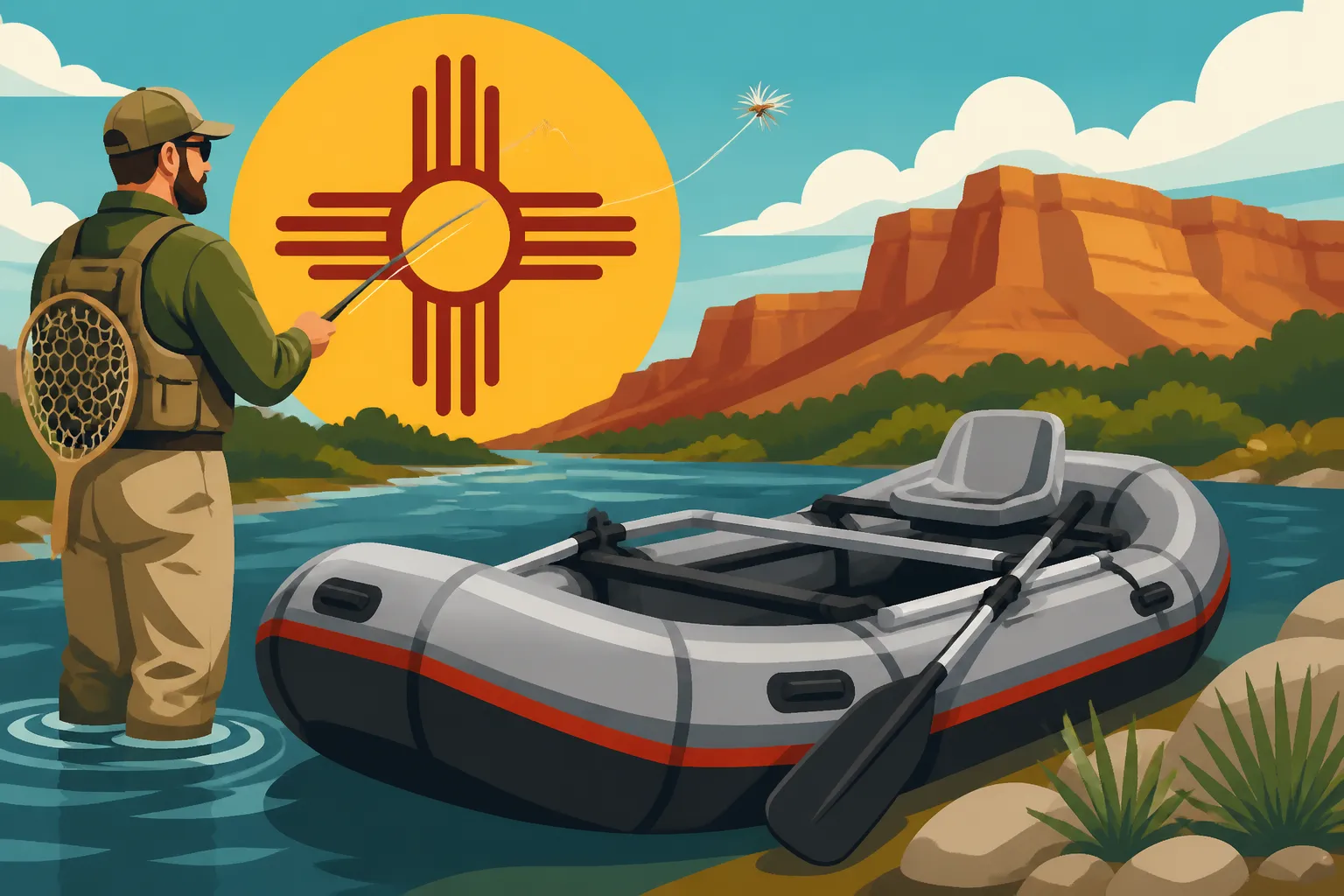
There are, however, some important exemptions. Generally speaking, small, non-motorized vessels like canoes, kayaks, paddleboards, and indeed, many inflatable rafts that rely solely on paddles or oars for propulsion, are usually exempt from both titling and registration. This is a huge relief for many casual anglers who enjoy drifting down a river or quietly fishing a pond without the added bureaucratic steps. However, don't just assume; it's always worth double-checking the latest regulations to ensure your specific craft fits the exemption, as rules can sometimes change or have unexpected clauses based on size or even intended use.
When Your Inflatable Raft Does Need Titling or Registration
While many inflatable rafts can sail through the system without needing a title or registration, there are specific scenarios where you'll definitely need to comply with New Mexico's boating laws. These exceptions are crucial to understand, as overlooking them could lead to fines or other penalties.
Motorized Inflatables: The Game Changer
This is the big one. The moment you attach any form of mechanical propulsion to your inflatable raft, its status changes dramatically in the eyes of New Mexico law. It doesn't matter if it's a mighty outboard motor or a tiny, whisper-quiet electric trolling motor – if it has an engine, it's generally considered a motorized vessel and must be registered and titled. Many anglers enjoy the convenience of a small motor to cover more water or fight currents, especially when fishing larger reservoirs like Ute Lake or Navajo Lake. They'll strap a little electric motor, perhaps one picked up from Bass Pro Shops or Amazon, onto their inflatable dinghy, thinking it's still just a glorified raft. However, that motor makes all the difference.
Consider a scenario: you decide to upgrade your fishing setup by adding a small electric motor to your sturdy inflatable raft to get around Elephant Butte Lake more efficiently. Suddenly, that raft, which was once just an oar-powered float, becomes a "motor vessel." This means you'll need to go through the entire process of titling it as your property and registering it so it can legally operate on state waters. You'll be assigned a registration number and receive decals to display on your raft, ensuring it's clearly identifiable. This is similar to the requirements for kayaks; if you're curious about those, check out Do You Need to Register a Kayak With a Trolling Motor in New Mexico?. It's a common oversight, but one that authorities take seriously, primarily for safety and resource management reasons.
Larger Inflatables and Commercial Use
While less common for individual recreational anglers, the size and intended use of an inflatable raft can also trigger titling and registration requirements. If you're operating a very large inflatable, perhaps a multi-person whitewater raft that might typically be paddle-powered but could technically accommodate a motor, there can be nuances. Even if it's not currently motorized, regulations sometimes consider the capacity or design for motorization. For the average individual fishing from a smaller, personal inflatable, this is usually not a concern.
However, if you're involved in any kind of commercial operation—like guiding fishing trips or river tours using inflatable rafts—even if they're primarily oar-powered, specific commercial licensing and registration requirements can kick in. This is about ensuring public safety and proper permitting for businesses utilizing public waterways. For instance, a commercial outfitter running trips on the Rio Grande or other popular rivers would likely have a completely different set of hoops to jump through than someone just enjoying a quiet afternoon with a personal float tube. While this might not apply to your weekend fishing setup, it's a good example of how "use" can impact regulations. For most recreational anglers, the key takeaway remains the motor: if it has one, it needs to be registered.
The Process: How to Title and Register Your Raft (If Required)
So, you've realized your inflatable raft, perhaps with that new trolling motor you just got, definitely needs to be titled and registered. Don't panic! The process, while requiring a bit of paperwork, is straightforward once you know what to do. It's similar to registering other types of boats in the state.
Gathering Your Documents
Preparation is key to a smooth registration process. You'll need several important documents to prove ownership and your identity. First and foremost, you'll need proof of ownership for your inflatable raft. This typically comes in the form of a manufacturer's statement of origin (MSO) if the raft is brand new, or a bill of sale if you purchased it used. The bill of sale should clearly state the purchase price, date, seller's and buyer's information, and a detailed description of the raft, including any hull identification number (HIN) if it has one. If you picked up a quality inflatable from an outdoor retailer like Bass Pro Shops, they'll usually provide the necessary paperwork.
Beyond proof of ownership, you'll also need a valid form of personal identification, such as a New Mexico driver's license or state ID. If you're a new resident, you might need to show proof of residency. You'll also need to complete specific application forms provided by the New Mexico Motor Vehicle Division (MVD). These forms gather all the necessary details about you and your vessel. Having everything organized in a folder before you even head out the door will save you a lot of time and frustration. If you're looking for detailed steps, our New Mexico Motor Vehicle Division Boat Title Application guide is a great resource.
Where to Go and What to Expect
Once you have all your documents in hand, your next stop will be a local New Mexico Motor Vehicle Division (MVD) office. You can usually find a list of offices on the MVD's website. When you arrive, you'll present your documents, fill out any remaining paperwork, and submit your application. Be prepared to pay any applicable fees, which typically cover the cost of titling and registration. While I can't provide exact figures, understand that these fees contribute to the state's boating and conservation programs. You can often find current fee schedules on the MVD's official page or by calling them directly.
After your application is processed and fees are paid, you'll typically receive your registration certificate on the spot. Your official title document might be mailed to you later. Crucially, you'll also be issued a unique registration number and state decals. These must be properly displayed on your inflatable raft according to MVD specifications. This usually means applying the numbers and decals to the bow (front) of your raft in a visible manner. It's a bit like getting a license plate for your car – it's how your raft is identified on the water. Make sure you keep your registration certificate onboard whenever you're out fishing, as law enforcement may ask to see it.
The good news is that for many small, non-motorized inflatable rafts, you can skip this entire process. However, if you've added a motor, or if your raft is unusually large and falls under specific commercial use, it's essential to comply. Knowing these rules ensures your time on the water, whether it's fly fishing the San Juan River or casting for bass at Conchas Lake, is stress-free and legal. Remember, part of being a responsible angler is understanding and following the rules that help protect our beautiful New Mexico waterways and wildlife.
| Feature | Non-Motorized Inflatable Raft (Paddled/Oared Only) | Motorized Inflatable Raft (Any Engine) |
|---|---|---|
| Titling Required? | Generally No | Yes |
| Registration Required? | Generally No | Yes |
| Proof of Ownership Needed? | Good to have for personal records | Yes (Bill of Sale/MSO) |
| Display of Numbers/Decals? | No | Yes |
| Safety Equipment Required? | Life jackets for each person | Full set of Required Safety Gear on a New Mexico Boat including life jackets, fire extinguisher, etc. |
| Typical Use | Casual floating, quiet fishing, short trips | Faster travel, larger bodies of water |
| Relevant Regulations | Primarily New Mexico Fishing Regulations Overview for angler rules | New Mexico Boating Act, MVD rules |
Disclaimer
This article is for general informational purposes only and does not constitute professional advice. Laws, prices and regulations vary by location and change over time. Consult a qualified professional for guidance on your specific situation.