Boat Size That Requires Titling in New Mexico
Figuring out the exact requirements for titling your boat in New Mexico can feel like navigating a maze, leaving many anglers scratching their heads and worrying about compliance. It’s a common frustration, especially when you just want to get out on the water without a headache. This guide is here to clarify which boat sizes and types require titling in the Land of Enchantment, helping you understand the rules so you can enjoy your time fishing without unnecessary stress.
Understanding New Mexico's Boat Titling Basics
Before we dive into the specifics of boat size, let's clear up some fundamental differences. Many people confuse boat titling with boat registration, and while they're closely related and often handled by the same state agency, they're not exactly the same thing. Think of it like a car: you have a title that proves ownership, and you have a registration that allows you to legally operate it on public roads. Boats work in a very similar fashion here in New Mexico.
What is Boat Titling and Why is it Important?
A boat title is essentially the legal document that establishes ownership of a vessel. It's a formal record, much like a deed to a house or a title to a vehicle, that proves you are the rightful owner. This document is crucial for several reasons. First, it protects you as the owner; it prevents someone else from claiming your boat. Second, it's absolutely necessary when you decide to sell your boat, as it transfers legal ownership to the new buyer. Without a proper title, selling your boat becomes incredibly complicated, often requiring additional paperwork and affidavits that can be a real hassle. It also comes into play for insurance purposes or if you ever need to secure a loan using your boat as collateral.
Titling vs. Registration: A Clear Distinction
While titling establishes ownership, registration grants permission to operate your vessel on public waters in New Mexico. When you register your boat, you'll receive a registration card and decals that must be displayed on your boat's hull. This shows that you've paid the necessary fees and are permitted to be on the state's lakes and rivers. Even if your boat doesn't require a title (which we'll get into shortly), it might still need to be registered. Generally, all motorized vessels operating on public waters must be registered, regardless of size, but the titling requirement has a specific threshold we'll explore. It’s important to understand this two-pronged approach to avoid any surprises when you're preparing for your next fishing adventure. If you're wondering about the overall process, our guide on New Mexico Boat Titling and Registration Guide offers a more comprehensive overview.
The Crucial Boat Size Threshold for Titling in New Mexico
Now, let's get to the heart of the matter: what boat size triggers the titling requirement in New Mexico? This is where many anglers get confused, especially those new to boating or considering an upgrade. The rule is fairly straightforward once you know it, but easy to miss if you're not looking in the right place.
The 10-Foot Rule for Powered Vessels
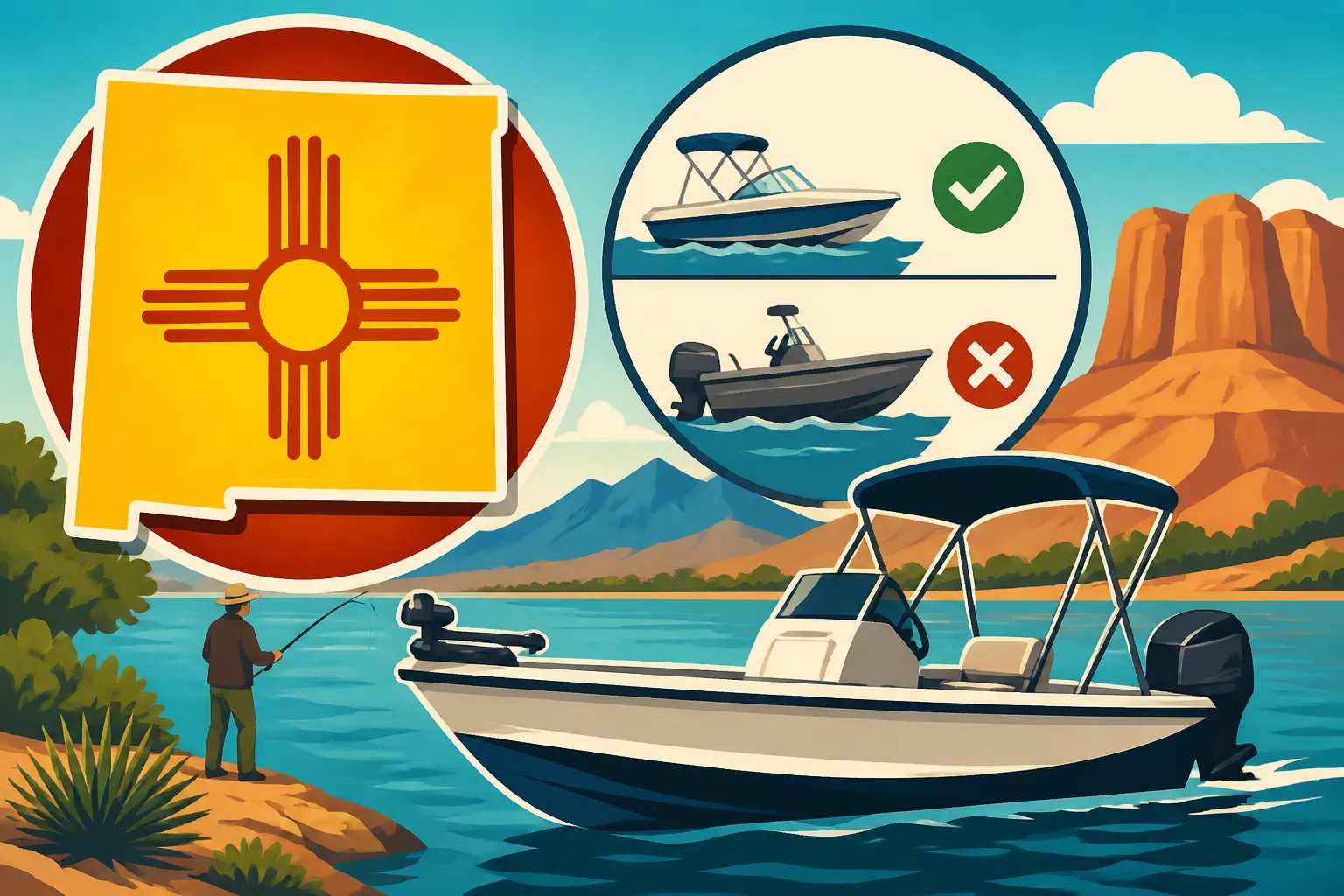
In New Mexico, any vessel that is 10 feet in length or greater AND is propelled by machinery (a motor) must be titled. This is the critical threshold. It doesn't matter if it's an outboard, an inboard, or even an electric trolling motor – if your boat is 10 feet or longer and has a motor, it needs a title. This regulation is designed to ensure that larger, more valuable motorized assets on the water have a clear chain of ownership, much like larger vehicles on the road.
Consider a common scenario: you pick up a brand-new 12-foot aluminum fishing boat from your local Bass Pro Shops, complete with a small outboard motor. Even though it might seem small, because it's over 10 feet and has a motor, it absolutely requires a title in New Mexico. This also applies to pontoon boats, larger bass boats, cabin cruisers, and even substantial jon boats used for hauling gear and anglers to prime fishing spots.
What About Non-Powered Vessels or Shorter Motorized Boats?
This is where the distinction becomes crucial. If your vessel is under 10 feet in length, even if it has a motor, it is not required to be titled. For instance, a small 8-foot dinghy with a 2-horsepower motor would not need a title, though it would still need to be registered if operated on public waters. Similarly, if your boat is 10 feet or longer but is not propelled by machinery, it does not require a title.
This covers a wide range of popular craft for New Mexico anglers and outdoor enthusiasts. Think about your trusty kayak, a canoe you use for exploring quiet coves, or a stand-up paddleboard. Even if these vessels are well over 10 feet in length, they are typically human-powered (or wind-powered, in the case of some sailboats) and therefore fall outside the titling requirement. You can still buy accessories for these from Amazon or local sporting goods stores without worrying about a title. However, remember the distinction: these non-motorized vessels often do not require registration either, unless they're equipped with a motor at some point. For a detailed look at whether your particular vessel needs registration, our New Mexico Boat Registration and Titling Guide can help clear things up.
Practical Scenarios to Illustrate the Rule
Let's walk through a few examples to solidify your understanding:
- Scenario 1: You own a 14-foot fishing skiff with a 25 HP outboard motor.
- Requirement: Yes, titling is required. It's over 10 feet and powered.
- Scenario 2: You have a 9-foot inflatable boat with a small electric trolling motor.
- Requirement: No, titling is not required. Even though it's powered, it's under 10 feet.
- Scenario 3: You just bought a new 16-foot canoe to paddle the Rio Grande.
- Requirement: No, titling is not required. It's over 10 feet but is human-powered.
- Scenario 4: You retrofit that 16-foot canoe with a small transom-mount electric trolling motor.
- Requirement: Yes, titling is now required. It's over 10 feet and now propelled by machinery.
Understanding these subtle but important differences can save you a lot of hassle and ensure you're in full compliance when you head out to Elephant Butte Lake Fishing Guide or the San Juan River Fishing Guide.
Beyond Size: Other Factors Influencing Titling and Registration
While boat length and the presence of a motor are the primary determinants for titling in New Mexico, a few other factors can come into play or influence the overall process. It's not always just a cut-and-dry measurement, and understanding these nuances can prevent delays and unexpected hurdles when you're dealing with the Motor Vehicle Division (MVD).
Type of Propulsion and Length Measurement Specifics
We’ve already covered that "propelled by machinery" is key. This specifically means any internal combustion engine, electric motor, or even a jet propulsion system. If it's not a human paddling or the wind pushing a sail, it likely counts as machinery. For sailboats, unless they have an auxiliary motor of 10 horsepower or more and are over 10 feet, they typically fall into the "non-powered" category for titling purposes, though they would still be registered if they have a motor.
When it comes to measuring the length, New Mexico follows standard boating industry practices. The length is measured from the bow (front) to the stern (back) of the boat, along the centerline, excluding any accessories like bowsprits, swim platforms, or outboard motor brackets. It’s the hull length that matters. So, if your boat's hull measures exactly 9 feet 11 inches, it technically falls under the 10-foot requirement, even if a bowsprit makes its overall length seem greater. Always measure precisely if you're close to the threshold.
Owner Residency and Out-of-State Boats
Your residency status in New Mexico is also an important factor, not necessarily for whether a title is required, but for how you process it and the fees involved. New Mexico residents typically deal with the New Mexico MVD directly. If you're an out-of-state angler bringing your boat in for an extended stay, or if you've recently moved to New Mexico, you'll generally need to apply for a New Mexico title and registration if your boat meets the titling criteria. States have reciprocity agreements, but usually, after a certain period (often 90 days), an out-of-state vessel needs to be titled and registered in the new state of residency. Don't assume your old state's title and registration will be sufficient indefinitely if you've made New Mexico your home. Our guide on New Mexico Resident Fishing License Options and New Mexico Nonresident Fishing License Options touches on similar residency considerations for fishing licenses.
New, Used, or Homemade Vessels
The process also varies slightly depending on whether your boat is brand new, used, or even one you built yourself.
- New Boats: When you purchase a new boat from a dealer, they will typically provide you with a Manufacturer's Statement of Origin (MSO) or Manufacturer's Certificate of Origin (MCO). This document is crucial for your first title application. The dealer often handles much of the initial paperwork for you, which is a big relief.
- Used Boats: Buying a used boat from a private party requires the previous owner to sign over their existing title to you. This is why a clear title is so important; without it, transferring ownership can be a nightmare. Always ensure the title is properly endorsed, and that the Hull Identification Number (HIN) on the title matches the HIN on the boat.
- Homemade Boats: If you're a DIY enthusiast and build your own boat, you'll need to go through a special process to obtain a title. This usually involves an inspection by the MVD to verify its construction and assign a Hull Identification Number (HIN) if one isn't already present. You'll also need receipts for major components to prove ownership of the materials used. It's a bit more involved, but entirely doable for those who craft their own vessels.
No matter the type, ensuring you have the correct documentation is paramount. When in doubt, always contact the New Mexico Motor Vehicle Division or check their official website for the most current requirements.
Navigating the Titling Process: Steps and Essential Documentation
Once you've determined that your boat needs a title in New Mexico based on its size and propulsion, the next step is to actually go through the titling process. While it might seem daunting, breaking it down into manageable steps can make it much smoother. The key is to be prepared and have all your ducks in a row before you even walk through the MVD doors.
Where to Go and What to Bring
The New Mexico Motor Vehicle Division (MVD) is the agency responsible for boat titling and registration. You'll need to visit one of their field offices in person. Before you make the trip, gather all the necessary documentation. There’s nothing more frustrating than waiting in line only to realize you’re missing a critical piece of paper and have to start over!
Here’s a general checklist of what you'll likely need:
- Application for Title and Registration: This form will be available at the MVD office or sometimes online.
- Proof of Ownership:
- For new boats: Manufacturer's Statement of Origin (MSO) or Manufacturer's Certificate of Origin (MCO).
- For used boats: The original signed-over title from the previous owner. If the previous state didn't title boats of that size, you might need a notarized bill of sale and possibly a certificate of registration from that state.
- Bill of Sale: A clear, itemized bill of sale, especially important for used boats, showing the purchase price and signed by both buyer and seller.
- Hull Identification Number (HIN) Verification: The HIN is the boat's unique identifier. The MVD may require a physical inspection or a completed HIN verification form. Make sure the HIN on your documents matches the one etched into your boat.
- Proof of Residency: A New Mexico driver's license or state ID, or other acceptable forms of residency proof if you're new to the state.
- Payment for Fees: Be prepared to pay titling fees, registration fees, and potentially excise tax. The amount can vary, so it's a good idea to check the MVD website or call ahead for current figures. For more on related costs, see our New Mexico Boat Registration Cost by Length Class article.
Importance of Timely Titling
New Mexico generally requires you to title your boat within a certain timeframe after purchase, typically within 30 days. Failing to do so can result in late fees and penalties. It's always best to complete this process as soon as possible after acquiring a vessel that meets the titling criteria. This not only keeps you in compliance but also solidifies your legal ownership without any lingering doubts.
Imagine you bought a fishing boat and planned a big trip to Navajo Lake Fishing Guide, but you put off the titling. Then, a few weeks later, you get pulled over for a routine check, and you're hit with a hefty fine for not having your paperwork in order. That's a surefire way to spoil a fishing trip! Being proactive saves you from these kinds of headaches.
Potential Pitfalls to Avoid
- Incomplete or Incorrect Paperwork: This is the most common reason for delays. Double-check everything, ensure signatures are in the right places, and all fields are filled out accurately.
- Missing Previous Title: If buying a used boat, insist on a clear title from the seller. If they claim it's lost, they should obtain a duplicate title before selling to you.
- Discrepancies in HIN: Ensure the HIN on all documents perfectly matches the HIN on the actual boat.
- Hidden Liens: Before purchasing a used boat, it's wise to do a lien search to ensure there are no outstanding loans against the vessel that could complicate the title transfer.
- Not Understanding Residency Rules: If you're a new resident or a part-time resident, make sure you understand how New Mexico defines residency for titling purposes to avoid issues.
Being thorough and organized from the start will make your boat titling experience in New Mexico much less stressful, letting you focus on the excitement of your next fishing expedition.
Summary of Boat Titling & Registration Requirements in New Mexico
To help clarify the requirements, here’s a quick reference table summarizing the general rules for different types of vessels in New Mexico. Remember, this is a general guide, and specific situations may vary. Always consult the New Mexico Motor Vehicle Division for the most precise and up-to-date information.
| Vessel Type | Length | Propulsion Type | Titling Required? | Registration Required? (for public waters) | Common Examples |
|---|---|---|---|---|---|
| Motorized Vessels | 10 feet or greater | Engine (gas, electric) | Yes | Yes | Bass boat, pontoon, larger aluminum fishing boat, cabin cruiser |
| Motorized Vessels | Less than 10 feet | Engine (gas, electric) | No | Yes | Small dinghy with motor, short jon boat with trolling motor |
| Non-Motorized Vessels (Human-Powered) | Any length | Paddles, oars, pedals | No | No | Kayak, canoe, paddleboard, rowboat, float tube |
| Non-Motorized Vessels (Sail-Powered) | Any length (without auxiliary motor <10HP) | Sail | No | No (unless auxiliary motor >10HP) | Sailboat (without significant auxiliary motor) |
| Homemade Vessels | 10 feet or greater | Engine (gas, electric) | Yes | Yes | Custom-built motorboat, larger homemade fishing boat |
This table should give you a good visual aid to quickly assess your situation. For more details on specific costs, you might want to refer to New Mexico Boat Registration Fees by Length.
Knowing the rules about boat titling in New Mexico doesn't have to be a source of anxiety. By understanding the 10-foot and motorized propulsion criteria, and by preparing your documentation diligently, you can ensure your vessel is legally recognized and ready for all your adventures. Whether you're heading to the high country lakes or the vast reservoirs, a properly titled boat means peace of mind, letting you focus on the thrill of the catch.
Disclaimer
This article is for general informational purposes only and does not constitute professional advice. Laws, prices and regulations vary by location and change over time. Consult a qualified professional for guidance on your specific situation.