Best Scale for Weighing a Trophy Fish
There's nothing quite like the adrenaline rush of hooking into what you know is a truly special fish. You fight it, you land it, and then the next question immediately pops into your head: "How big is it?" For many anglers, especially those chasing a personal best or a true trophy, merely estimating the weight just doesn't cut it. The fear of getting an inaccurate reading, or worse, fumbling the weigh-in and stressing the fish, is a common frustration. This guide is here to walk you through everything you need to know about choosing and using the best scale for weighing that New Mexico trophy fish, ensuring accuracy, durability, and fish safety.
Why Accurate Weight Measurement Matters for Your Trophy Fish
Catching a truly magnificent fish in New Mexico – whether it's a massive striped bass from Elephant Butte, a trophy walleye from Ute Lake, or a chunky brown trout from the San Juan River – is a moment to savor. But without an accurate measurement, that memory can feel a little…incomplete. Beyond personal satisfaction, there are some very real reasons why investing in a quality scale and knowing how to use it properly is so important.
Bragging Rights and Documentation
Let's be honest, part of the joy of a trophy catch is sharing the story, and the numbers often speak louder than words. Imagine telling your fishing buddies about the "huge striper" you caught, versus showing them a photo with a precise weight: "Got this 22-pounder at Elephant Butte!" That specific number adds undeniable credibility to your tale. For many anglers, it's about chasing a personal best, and an accurate scale allows you to track that progress reliably over time. Perhaps you're even aiming for a state record, or participating in a local club tournament where precise weights are everything. A good scale ensures that when you report that weight, it stands up to scrutiny. New Mexico State Record Fish are often subject to strict verification processes, and having a reliable personal scale helps you know if you're even in the ballpark before considering official measurements.
Think about those moments when you're flipping through old photos of your catches. A written weight attached to that memory enhances the experience, turning a blurry recollection into a verifiable achievement. It's not just about ego; it's about celebrating a genuine accomplishment in a sport where every ounce can matter.
Conservation and Data Collection
Beyond the personal glory, accurate weight measurements play a crucial role in fisheries management and conservation efforts, especially in a state like New Mexico with its diverse and sometimes fragile aquatic ecosystems. When you practice catch-and-release, which is common and often mandatory in many of New Mexico's New Mexico Special Trout Water Rules, minimizing stress on the fish is paramount. An efficient, accurate scale helps you get the weight quickly and release the fish unharmed.
Fisheries biologists rely on angler data, among other sources, to monitor fish populations, growth rates, and overall health. If you participate in citizen science programs or report your catches (especially for unique species like Gila Trout in New Mexico), accurate weights contribute valuable information. For example, understanding the average size and weight of Rainbow Trout on the San Juan River over time can indicate the health of that specific fishery. By providing accurate data, even informally, you're contributing to a larger picture that helps ensure healthy fish populations for future generations of anglers. It's about being a responsible steward of the waters we all cherish.
Types of Scales for Weighing Your New Mexico Trophy Catch
When you start looking for a fishing scale, you'll quickly realize there's a world of options out there. Each type has its pros and cons, and the "best" one really depends on your priorities, the kind of fish you're targeting, and the conditions you typically fish in here in New Mexico.
Digital Scales: Precision and Ease of Use
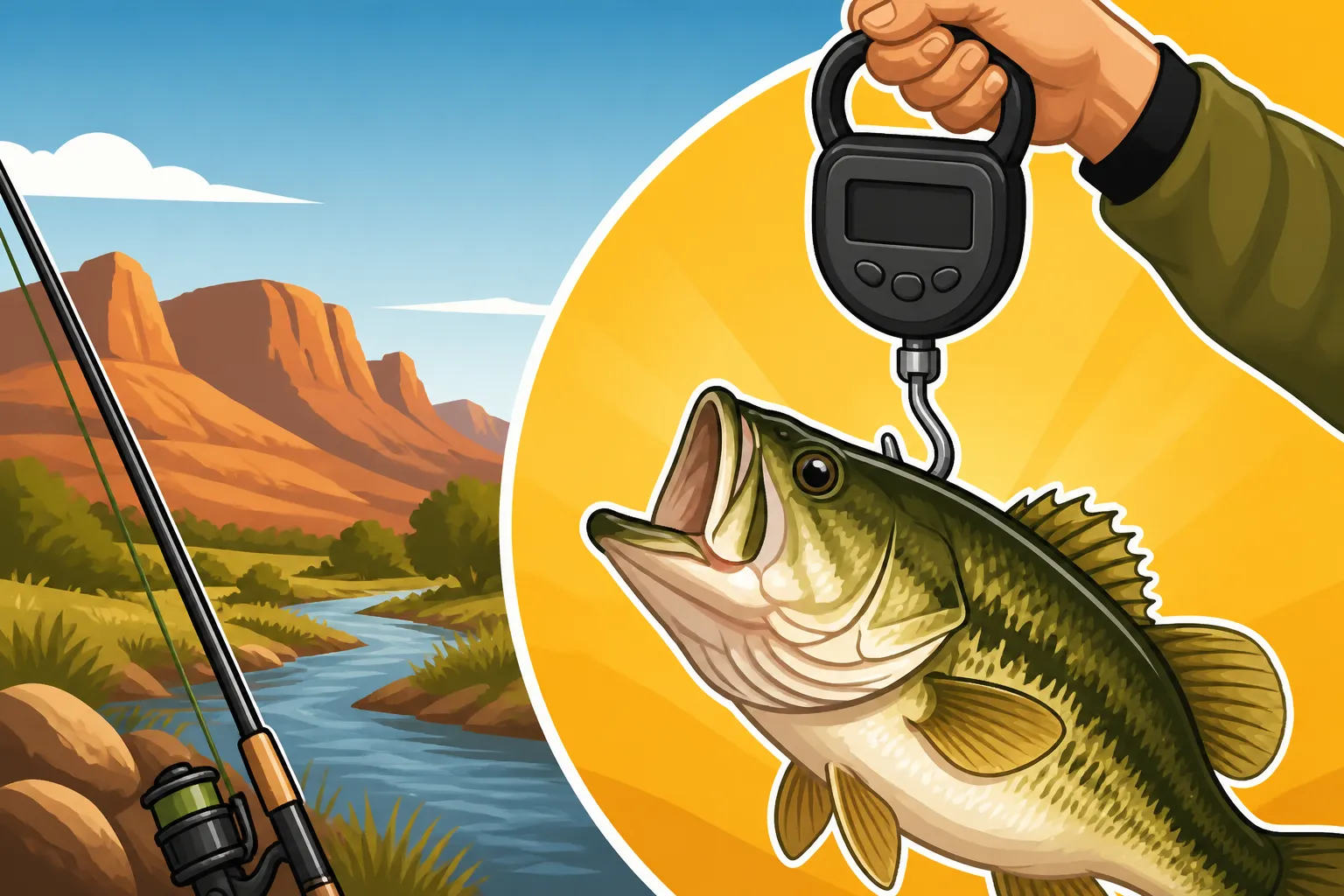
Digital scales have become incredibly popular, and for good reason. They offer superior precision and are generally very easy to read. Most feature a clear LCD display, often backlit, which is a huge bonus when you're trying to weigh a fish in dim light, whether it's an early morning start at Navajo Lake or a late evening session catfishing on the Rio Grande.
A good digital scale will have a "tare" function, allowing you to zero out the weight of a fish bag or sling, ensuring you only measure the fish itself. Many also come with memory functions, so you can record multiple weights and even calculate totals, which is fantastic for tournaments or just tracking your day's success. You'll find models with different weight capacities, from those suitable for panfish up to heavy-duty scales designed for monster catfish or large striped bass. Brands like Rapala, Berkley, and the house brands you find at Bass Pro Shops are common, offering a range of features. While they require batteries, modern digital scales are often quite efficient, and many are designed to be water-resistant, if not fully waterproof, which is a must for any angler. The main drawback might be battery dependency, so always carry spares, especially on a multi-day trip!
Analog Scales: Reliability and Simplicity
The classic, old-school spring scale still has a dedicated following, and for good reason. These scales operate mechanically, relying on a spring mechanism to display the weight. Their biggest advantage? No batteries needed! This makes them incredibly reliable in remote areas or during unexpected power outages (though less common for a scale, it's a point of peace of mind). They are typically more rugged and can often withstand drops or harsh conditions better than their digital counterparts. If you're out hiking to a high mountain lake in New Mexico, an analog scale's durability and independence from power might be a compelling factor.
However, analog scales generally aren't as precise as digital models. Readings can sometimes be a bit subjective, as you're estimating the exact point on a dial. They also might not have features like tare or memory. For anglers who value simplicity, robustness, and don't need absolute pinpoint accuracy down to the ounce for a state record, an analog scale can be a solid, dependable choice. You'll often see them in a variety of capacities, but ensure the markings are clear and easy to read before you commit.
Specialized Scales for Larger Fish
For those truly chasing giants – think catfish nearing the triple digits or massive stripers – you'll want to look at specialized scales. These aren't your average trout scales. They'll feature much higher weight capacities, often ranging from 50 to 150 pounds or more, sometimes even higher. The hooks are typically larger and more robust, designed to safely cradle and lift very heavy, thrashing fish without bending or breaking.
Many of these heavy-duty scales, whether digital or analog, will also incorporate ergonomic handles or grips that make it easier to lift and stabilize a substantial fish. This is critical not just for getting an accurate reading, but also for the safety of both the angler and the fish. Imagine trying to lift a 40-pound fish with a flimsy plastic handle; it's a recipe for disaster. When you're dreaming of landing a truly monumental catch, these specialized scales are designed to handle the challenge. You can find these specialized options in larger fishing supply stores or online at places like Amazon, often with detailed specifications for their maximum load.
Key Features to Look for in a Quality Trophy Fish Scale
Choosing the right scale isn't just about picking digital or analog. There are several crucial features that distinguish a great trophy fish scale from a mediocre one. Paying attention to these details will ensure your investment pays off in accurate readings and many seasons of reliable use.
Weight Capacity and Accuracy
This is perhaps the most critical factor. What kind of "trophy" are you chasing in New Mexico? A five-pound trout is a trophy for many, but a fifty-pound striped bass requires a different tool. Ensure your scale's maximum capacity comfortably exceeds the largest fish you anticipate catching. It's always better to have a bit of leeway. For instance, if you're targeting big catfish, you'll want a scale that goes well over 50 pounds.
Beyond capacity, accuracy is paramount. A good digital scale should offer precision down to a few ounces, or at least 0.1 pounds. Look for scales that claim high accuracy (e.g., +/- 0.1% of reading). Some scales even come with calibration weights or instructions on how to check their accuracy, which can be invaluable. What's the point of weighing a trophy if the number isn't dependable? For competitive anglers, a certified scale might even be a requirement, but for personal use, a consistent and precise reading is key.
Durability and Water Resistance
New Mexico's fishing environments can be tough on gear. From the dry, dusty banks of a reservoir to the potentially muddy, wet conditions along a river, your scale needs to be built to last. Look for models constructed with robust materials – durable plastics, stainless steel hooks, and reinforced casings.
Water resistance is a non-negotiable feature. Even if you don't plan on dunking your scale, splashes, rain, or wet hands are inevitable. Many digital scales are rated to IPX standards (e.g., IPX4 for splash resistance, IPX7 for immersion), so keep an eye out for these specifications. While full submersion might not be necessary, good splash protection will prevent corrosion and prolong the life of your scale's electronics. A scale that can handle being dropped in the boat or on the bank without immediately breaking is also a huge plus. Think about the abuse your other fishing gear takes; your scale should be no different.
Ergonomics and Fish Safety
When you've just landed a hard-fighting trophy, the last thing you want is a scale that's awkward to hold or difficult to use, especially if you're trying to release the fish quickly. Good ergonomics involve a comfortable, non-slip grip that allows for stable lifting. Many scales feature a loop handle or a pistol grip, making it easier to hoist a heavy fish without dropping it or straining your wrist.
Fish safety is another critical consideration, particularly for catch-and-release. The hook or gripper on the scale should be robust and designed to minimize harm to the fish. A wide, smooth hook is generally better than a narrow, sharp one, as it distributes weight more evenly when cradling the fish's jaw or gill plate. Better yet, consider using a fish-friendly weigh sling or net to support the fish's entire body while weighing, especially for larger specimens. This prevents internal organ damage that can occur when a heavy fish is suspended solely by its jaw. Remember, a healthy released fish means more trophies for everyone in the future! These accessories are readily available at fishing retailers like Bass Pro Shops or online at Amazon.
Additional Useful Functions
While capacity and accuracy are fundamental, some extra features can make a scale much more user-friendly:
- Tare Function: As mentioned, this is vital for zeroing out the weight of a fish bag or cradle, ensuring you only weigh the fish.
- Unit Conversion: The ability to switch between pounds and kilograms (or even ounces) can be handy, especially if you're traveling or sharing data internationally.
- Memory/Hold Function: A memory function allows you to store multiple weights, which is great for tallying up your catch or comparing sizes throughout the day. A "hold" function will lock the weight on the screen after the fish is stable, so you can focus on the fish and then read the weight comfortably.
- Backlit Display: For digital scales, a backlit screen is a game-changer for low-light conditions, from dawn patrols to New Mexico Night Fishing Guide adventures.
- Integrated Measuring Tape: Some scales include a retractable tape measure, allowing you to get both length and weight quickly without needing a separate tool. This is excellent for compliance with New Mexico Trout Bag and Possession Limits or size limits on species like bass.
Here's a quick comparison of digital and analog scales:
| Feature | Digital Scale | Analog Scale |
|---|---|---|
| Precision | Generally very high (ounces, 0.1 lb increments) | Good, but readings can be less precise |
| Ease of Reading | Clear digital display, often backlit | Dial with pointer, can be harder to read precisely |
| Power Source | Batteries required (carry spares!) | Mechanical (spring), no batteries needed |
| Durability | Good, but electronics can be vulnerable to water/impact | Very rugged, less sensitive to impact/water |
| Features | Tare, memory, hold, unit conversion, backlight | Basic weight measurement only |
| Cost | Wide range, generally higher for advanced models | Often more affordable |
| Ideal For | Tournaments, precise record keeping, low light | Rugged use, reliability, budget-conscious |
Best Practices for Weighing Your Trophy Fish Safely and Accurately
So you've chosen your awesome new scale, you're out on the water, and you've just hooked into that fish of a lifetime. Now what? Getting an accurate weight and ensuring the fish's well-being requires a bit of preparation and a smooth process.
Preparing for the Weigh-In
The key to a successful weigh-in, especially for a trophy fish destined for release, is speed and minimizing stress. Have your scale readily accessible and pre-set. If it's a digital scale, make sure it's turned on and the tare function is zeroed out if you're using a weigh sling. If you plan to use a weigh sling or net, have that ready and wet it down before the fish even comes near it. This keeps the slime coat on the fish intact, protecting it from disease.
Avoid dragging the fish through abrasive surfaces like rocks or sand. Instead, use a large, rubberized landing net or cradle it carefully with wet hands. Remember, a fish out of water is already under stress. The goal is to make the weighing process as quick and gentle as possible to increase its chances of survival once released. Having a partner to assist can also make the process much smoother, with one person handling the fish and the other managing the scale and camera.
The Weighing Process Step-by-Step
Once you've safely landed your fish and have it contained (ideally in a net or sling, or securely in wet hands if it's smaller), follow these steps:
- Get the Scale Ready: Power on your digital scale or prepare your analog scale. If using a weigh sling or bag, attach it to the scale and use the tare function to zero out its weight. This ensures only the fish's weight is measured.
- Lift Gently and Swiftly: If using a weigh sling, place the fish entirely within the wet sling. If using a lip gripper or jaw spreader (for species like bass or striper, but use with extreme caution and only for short periods), attach it firmly. For trout and other sensitive species, a sling is almost always preferred. Lift the fish with the scale, ensuring it's suspended vertically and not dragging on anything.
- Stabilize and Read: Hold the scale as steadily as possible. A thrashing fish will give you an inaccurate, fluctuating reading. Wait for the fish to calm momentarily, or for the digital display to stabilize. If your scale has a "hold" function, activate it once the reading is stable.
- Record and Document: Read the weight clearly and record it immediately. A quick photo of the scale with the weight displayed (if possible) provides excellent documentation.
- Release Promptly: Once you have your weight, immediately and gently return the fish to the water. Support it in an upright position until it regains its strength and can swim away on its own. For some species in warmer water, revival might take a few moments. Proper Catch and Release Best Practices in New Mexico are crucial, especially for native species or those in sensitive waters.
Maintenance and Calibration for Longevity
Even the best scales need a little love to perform accurately and last for years. After each use, especially if it's been exposed to water or fish slime, give your scale a quick wipe down. Rinse off any saltwater residue immediately if you're fishing brackish waters (though less common in landlocked New Mexico, it's good practice for general gear care). Ensure all moving parts are clean, and if it's a digital scale, check the battery compartment for any moisture. Store your scale in a dry, protected place, ideally in its original packaging or a dedicated tackle box slot to prevent damage.
For digital scales, batteries will eventually die. Replace them with fresh ones when needed, and consider removing them for long-term storage to prevent corrosion. Calibration is another important aspect. While most scales are factory-calibrated, over time, impacts or extreme temperature changes can affect accuracy. Some digital scales allow for user calibration with specific weights. If yours doesn't, you can periodically check its accuracy by weighing a known object (like a bag of sugar or a dumbbell with a precise weight). If your scale consistently reads off by a significant margin, it might be time for a repair or replacement. Taking care of your scale ensures that when that true trophy finally bites, you'll be ready to get an accurate, memorable measurement.
Disclaimer
This article is for general informational purposes only and does not constitute professional advice. Laws, prices and regulations vary by location and change over time. Consult a qualified professional for guidance on your specific situation.