Best Measuring Board for Recording Catch Length
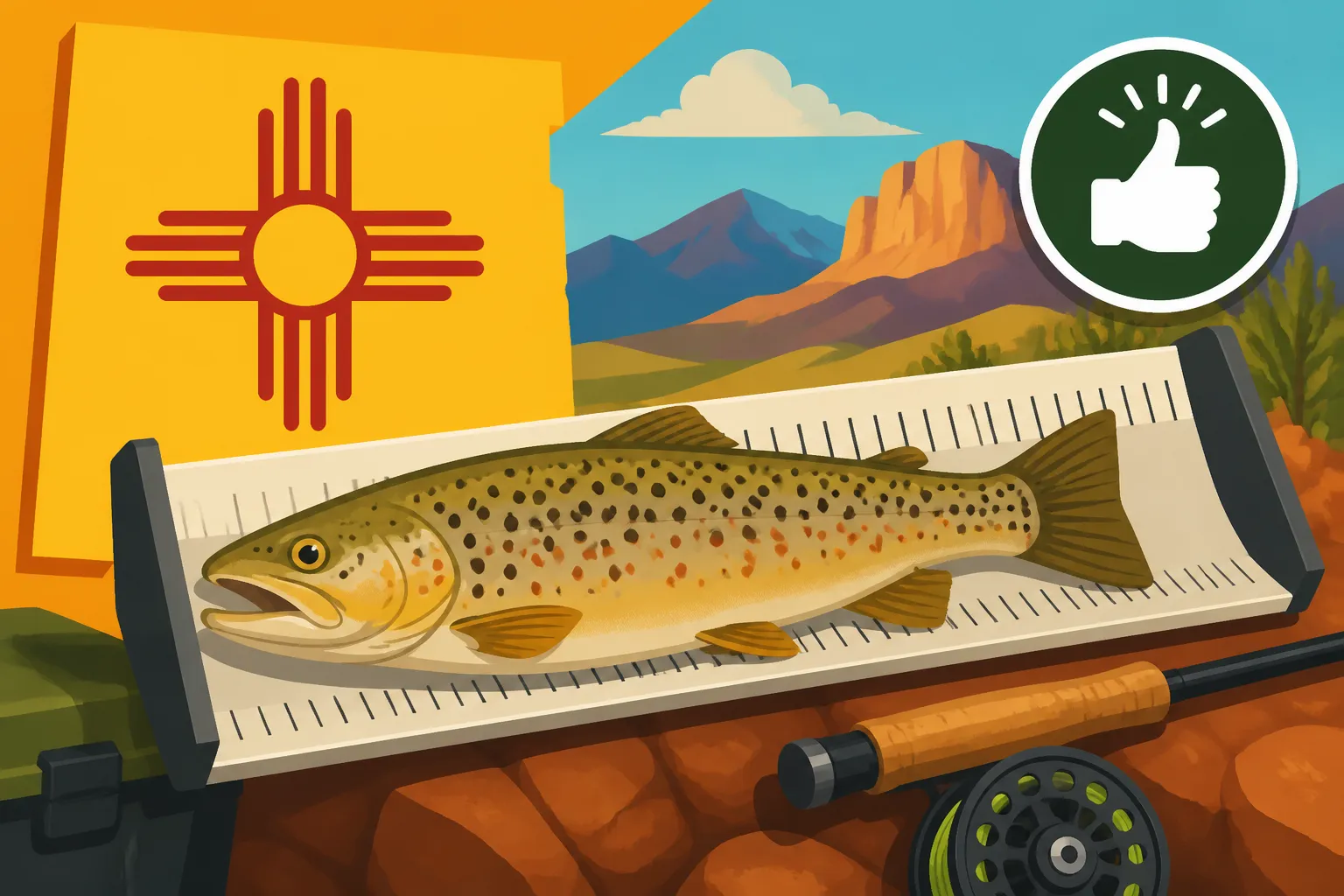
Every New Mexico angler knows the crushing feeling of landing what you think is a keeper, only to realize back at the truck that your hasty measurement was off, and your fish is either undersized or, worse, oversized for a slot limit. It's frustrating, it's confusing, and it can even lead to penalties if you're not careful. This guide is all about helping you avoid those headaches by diving deep into the world of fishing measuring boards, ensuring you have the right tool to accurately record your catch length every single time you hit the waters of the Land of Enchantment.
Why an Accurate Measuring Board Matters for New Mexico Anglers
Fishing in New Mexico isn't just about the thrill of the catch; it's also about respecting the local regulations and contributing to conservation efforts. An accurate measuring board isn't just a nice-to-have accessory; it's a critical piece of gear that every responsible angler should carry.
Understanding New Mexico's Size Limits and Regulations
New Mexico has a diverse array of fish species, from the prized trout in cold mountain streams to the hard-fighting bass and walleye in its vast reservoirs. Each species, and often specific bodies of water, comes with its own set of rules concerning size limits. Missing these marks, even by a fraction of an inch, can turn a fantastic day on the water into a disappointing experience, or worse, a costly citation.
Imagine you're out on the San Juan River Quality Waters Section, where the trout regulations are famously strict. You land a beautiful brown trout, quickly measure it against the side of your cooler, and decide it's within the slot limit. Only later, when a game warden checks your cooler, do you discover your improvised measurement was off by half an inch, putting your fish out of compliance. That's a gut-wrenching moment. A dedicated, accurate measuring board eliminates this guesswork. It provides a consistent, reliable surface and clearly marked increments, taking the stress out of determining if your catch is legal to keep. This precision is especially vital when dealing with species like walleye, which often have minimum size requirements in lakes like Conchas Lake, or the sometimes-complex slot limits for bass at Elephant Butte. For a complete understanding of the rules, you should always consult the official New Mexico Fishing Regulations Overview.
The Importance of Catch and Release Data
Beyond legal compliance, a measuring board is an invaluable tool for the catch-and-release angler, which many of us in New Mexico are, especially when targeting sensitive populations or participating in certain fisheries. Knowing the exact length of the fish you release provides a personal record of your angling achievements and contributes to a broader understanding of fish health and growth.
For those of us who meticulously log our catches, recording accurate lengths helps track personal bests, observe seasonal growth patterns, and even identify changes in fish populations over time. Picture yourself fly fishing a high-mountain lake for cutthroat trout. You're committed to catch and release, but you still want to know how big that gorgeous native trout truly was. A quick, accurate measurement on a board allows you to document that experience without unduly stressing the fish. Furthermore, consistent data collection, even on a personal level, can highlight trends. If you notice the average size of fish in a particular spot seems to be declining, it might signal an environmental change or increased fishing pressure, information that, when aggregated, can be useful for conservation efforts. Catch and Release Best Practices in New Mexico are essential, and a measuring board aids in minimizing handling time.
Key Features to Look for in a New Mexico Fishing Measuring Board
Not all measuring boards are created equal, especially when you consider the unique challenges and diverse environments found across New Mexico's fishing landscape. From scorching desert sun to freezing mountain mornings, your gear needs to stand up to the elements.
Durability and Material Considerations for Rugged New Mexico Conditions
New Mexico's environment can be tough on fishing gear. Intense UV radiation, temperature swings, and sometimes rough handling are par for the course. Therefore, the material and construction of your measuring board are paramount.
Think about fishing on the expansive, sun-drenched waters of Elephant Butte Lake. A flimsy plastic board might warp under the intense summer sun, making accurate measurements impossible. A more robust option, perhaps made of marine-grade aluminum or thick, UV-resistant PVC, would hold up much better. Aluminum boards, for instance, are exceptionally durable, resistant to corrosion, and won't flex, ensuring consistent accuracy even after years of use. They can withstand being dropped on a rocky shore or baked in the back of a truck. Hard plastics, especially those with reinforced edges, also offer good longevity. When considering materials, ask yourself: Will this board resist cracking if I accidentally step on it? Can it handle being exposed to water, mud, and fish slime day after day without degrading or becoming a hygiene concern? The answer often lies in investing in quality materials designed for outdoor, aquatic use.
Accuracy and Readability: Essential for Compliance and Records
What's the point of a measuring board if you can't read it clearly or trust its markings? Precision is key when regulations are involved, and readability ensures you can make quick, confident decisions on the water.
Look for boards with clearly etched or deeply printed markings that won't fade or rub off with use and cleaning. Surface-printed rulers, while often cheaper, tend to wear away over time, especially with exposure to sun and abrasive fish scales. Contrast is also crucial. Black markings on a light background, or vice-versa, will be much easier to read in bright sunlight or low-light conditions than subtle colors. Some boards even feature high-visibility measuring tapes embedded in the material. Consider the increments as well; a board marked in half-inch or even quarter-inch increments will provide greater precision than one only showing full inches. This level of detail can be critical for species with tight slot limits or minimum length requirements where every fraction of an inch counts. A non-glare finish can also be a huge advantage, preventing sun reflections from obscuring your view of the numbers, which can be a real issue on a sunny New Mexico afternoon.
Portability and Storage: Fitting Your Angling Style
Your measuring board should complement your fishing style, not hinder it. Whether you're wading a small stream or navigating a large reservoir, how easily you can carry and store your board makes a big difference.
If you're a fly angler who spends most of your time wading New Mexico rivers or hiking into high-mountain lakes, a rigid, bulky board might be a non-starter. For you, a roll-up, flexible measuring mat or a foldable board that tucks neatly into a fishing backpack would be ideal. These lighter, more compact options ensure you're not sacrificing precious pack space or comfort on a long trek. On the other hand, if you primarily fish from a bass boat on a large reservoir like Navajo Lake, a rigid, boat-mounted board might be perfect. It can be permanently attached or easily stowed in a rod locker, always ready for action. Kayak anglers need something in between – often a compact, rigid board that fits securely across their lap or can be easily stored in a tankwell without shifting around. Think about where you typically fish and how you transport your gear. The best measuring board is one you'll actually bring with you and use consistently.
Types of Measuring Boards Popular Among New Mexico Fishermen
Just like there are different fishing techniques and preferred species, there's a variety of measuring boards designed to suit diverse angling needs. Understanding these types will help you narrow down the best choice for your particular adventures.
Rigid Boards: The Classic Choice for Boats and Docks
Rigid measuring boards are the workhorses of the angling world, offering unmatched stability and ease of use, particularly for those who fish from larger vessels or fixed structures.
These boards are typically constructed from sturdy materials like aluminum, hard plastic, or even treated wood, and they usually come in fixed lengths, often up to 30 or 36 inches, but some go much longer for big game. Their main advantage is their unyielding surface, which ensures a perfectly straight and accurate measurement every time. There's no fear of the fish flexing or the ruler distorting, common issues with softer materials. Anglers on larger boats, such as those targeting striped bass at Elephant Butte Lake Striped Bass Fishing or walleye at Conchas Lake, often appreciate rigid boards that can be permanently mounted to the gunwale or a cooler lid. This provides a designated, stable measuring station, allowing for quick processing of fish. The downside, of course, is their bulk. A long, rigid board can be cumbersome to transport if you're hiking to a remote stream or if storage space is limited in a smaller craft. However, for sheer accuracy and convenience on a boat or dock, rigid boards are tough to beat. Many can be found at specialized retailers like Bass Pro Shops.
Foldable and Roll-Up Boards: Versatility for Wading and Kayaks
For the angler on the move, who prefers to walk riverbanks, wade streams, or explore lakes from a kayak, foldable and roll-up measuring boards offer a brilliant blend of accuracy and portability.
These clever designs allow you to carry a substantial measuring surface that, when not in use, compacts down to a very manageable size. Roll-up mats are often made from heavy-duty, waterproof fabric with a printed ruler, sometimes backed with a flexible material for added rigidity when unrolled. They can be rolled up like a poster and tucked into a fishing vest pocket or backpack. Foldable boards, on the other hand, are typically made of sections of rigid plastic or aluminum connected by hinges. They fold accordion-style, becoming much shorter and easier to carry. These options are perfect for wade fishing the Rio Chama Fishing or exploring the small coves of Heron Lake in a kayak or float tube. They're lightweight, won't snag on brush, and are generally easy to clean. While they might require a bit more attention to ensure they are fully flat for an accurate measurement compared to a rigid board, their convenience for mobile anglers makes them an incredibly popular choice. You can often find a good selection of these versatile boards on Amazon.
Specialty Measuring Devices: Beyond the Basic Board
While traditional boards cover most scenarios, there are also some specialty measuring devices that cater to niche needs or offer alternative approaches, though they often come with their own set of trade-offs.
For instance, some anglers carry heavy-duty measuring tapes, similar to what you'd find in a hardware store. While compact, these can be tricky to use accurately with a live, wriggling fish, as the tape can flex or slide. Soft, flexible measuring mats that lack any backing are even more prone to inaccuracy for the same reasons. Then there are integrated ruler systems, sometimes seen molded directly into cooler lids or on boat decks. These can be very convenient as they're always there, but their placement might not always be ideal for every catch, and their markings can wear down over time. For specific applications, such as trying to get a quick length estimate for very large, potentially dangerous fish that you want to release immediately without removing them from the water, certain specialized tools might come into play, but for general compliance and record-keeping, a dedicated, firm measuring board remains the gold standard for precision.
Choosing the Right Measuring Board for Your New Mexico Fishing Adventure
With so many options, how do you pick the perfect measuring board for your New Mexico fishing escapades? It comes down to aligning the board's features with your specific angling habits, target species, and the environments you'll encounter.
Tailoring Your Choice to Specific New Mexico Fisheries
New Mexico offers an incredible diversity of fishing experiences, and what works best on one body of water might be less ideal on another. Your measuring board should be chosen with your primary fishing grounds and target species in mind.
Consider if you're primarily a trout angler, chasing rainbow and brown trout in the high mountain streams of the Carson National Forest or the tailwaters below Navajo Dam. For these environments, portability and quick deployment are key. A foldable or roll-up board that fits easily into a vest or small pack, perhaps marked with smaller increments for precise trout measurements, would be ideal. If your passion is for warm water species like largemouth bass or walleye on large reservoirs, a longer, more rigid board might be more appropriate. These fish often have higher minimum size limits, and a stable surface is crucial for measuring a feisty 20-inch bass quickly before release. Some anglers even own multiple boards: a compact, flexible one for wading rivers and a more robust, rigid one for their boat excursions on bigger lakes. Understanding the typical size of the fish you're pursuing and the regulations that apply to them will guide your choice. For example, knowing the New Mexico Trout Bag and Possession Limits or the New Mexico Statewide Bag Limit for Bass will help determine the necessary length of your measuring board.
Budget and Brand Considerations
Like any piece of fishing gear, measuring boards come in a range of prices, from very affordable to premium, high-tech models. Thankfully, you don't always need to break the bank to get a reliable tool.
Entry-level options, often simple plastic or flexible mats, can be quite effective for the casual angler or those just starting out. They might cost less, but it's important to check their durability and accuracy markings carefully. Mid-range boards often offer better materials, clearer markings, and more thoughtful designs, such as built-in handles or non-slip backing. Premium boards might feature marine-grade aluminum, laser-etched markings, or specialized coatings for extreme durability and precision. When looking, consider reputable brands known for their fishing accessories; many offer measuring boards as part of their lineup. You can browse extensive selections at retailers like Bass Pro Shops, where you can often compare different models side-by-side and feel the quality. For convenience and a broader range of price points, online platforms like Amazon also offer a vast array of measuring boards, often with customer reviews that can provide valuable real-world insights. Remember, the cheapest option might not be the best value if it quickly becomes inaccurate or falls apart.
Maintenance and Care for Longevity
Even the most durable measuring board will benefit from a little care and maintenance. Proper upkeep ensures its accuracy and extends its lifespan, meaning it will serve you faithfully for many seasons to come.
After each fishing trip, especially if your board has been exposed to fish slime, dirt, or saltwater (unlikely in landlocked New Mexico, but good practice for any angler!), give it a good rinse with fresh water. A mild soap can be used to remove stubborn grime or odors. For boards with etched markings, a soft brush can help clean out any debris that might obscure the numbers. Ensure the board is thoroughly dry before storing it, particularly if it's a foldable or roll-up type, to prevent mildew or material degradation. Store rigid boards flat or hung to prevent warping. Flexible mats should be rolled or folded neatly according to their design to avoid creasing or damaging the printed ruler. Protecting your board from prolonged, direct sun exposure when not in use will also help prevent fading of markings and material breakdown. A little effort after each outing can keep your measuring board in pristine condition, ready for your next New Mexico fishing adventure.
| Measuring Board Type | Pros | Cons | Ideal For |
|---|---|---|---|
| Rigid Boards | Highly accurate, stable, durable, easy to clean. | Bulky, less portable, can be heavy. | Boats, docks, bank fishing with vehicle access, large reservoirs like Elephant Butte. |
| Foldable Boards | Portable, compact, stable when unfolded, accurate. | Hinges can collect dirt, potential pinch points. | Kayaks, smaller boats, bank fishing, moderate hiking, general versatility. |
| Roll-Up Mats | Very portable, lightweight, flexible, easy to store. | Can curl if not laid flat, less rigid for quick measure. | Wading, hiking to high-mountain lakes, kayak fishing (when space is critical), backpacking anglers. |
| Integrated Rulers | Always present, no extra gear to carry. | Fixed location, markings can fade, often less precise. | Coolers, boat decks (as a secondary or backup measuring method). |
Disclaimer
This article is for general informational purposes only and does not constitute professional advice. Laws, prices and regulations vary by location and change over time. Consult a qualified professional for guidance on your specific situation.