Best Beach Cart for Hauling Gear to the Shore
Oh, the sheer joy of arriving at your favorite New Mexico fishing spot, only to be immediately deflated by the daunting task of lugging what feels like a ton of gear from the car to the water's edge. Whether you're targeting those elusive stripers at Elephant Butte or simply enjoying a peaceful morning panfishing at a local pond, that trek across sand, gravel, or uneven terrain with rods, a cooler, tackle boxes, and chairs can turn a relaxing outing into an Olympic event. This guide is all about making that struggle a thing of the past by helping you choose the best beach cart for hauling your precious fishing gear to the shore, ensuring your fishing trip starts with ease, not exhaustion.
Why a Beach Cart is Your New Best Friend for New Mexico Shoreline Fishing
Let's face it, New Mexico's diverse fishing landscapes, from sandy lake shores to rocky riverbanks, aren't always designed for easy access. You might find yourself parking a good distance from your ideal casting spot, and that's when the reality of multiple trips back and forth for gear sets in. A dedicated beach cart isn't just a luxury; it's a game-changer for any angler who prefers to fish from the bank or needs to transport a lot of equipment for a comfortable day on the water.
Conquering Diverse New Mexico Terrains
Imagine you're headed to Elephant Butte Lake, famous for its vast sandy beaches when the water levels are up. Trying to drag a standard cooler or backpack on wheels through soft sand is an exercise in futility and frustration. The wheels just dig in, and you end up doing more lifting than rolling. Or perhaps you're exploring a less-trodden section of a river like the Rio Grande, where the path is more gravel, small rocks, and uneven dirt. A cart with the right kind of wheels can glide over these obstacles, saving your back and your patience. It means you can bring that extra tackle box, the bigger cooler for all your snacks and drinks, or even a couple of camp chairs for maximum comfort without a second thought about the haul. It allows you to explore those prime, harder-to-reach spots where fewer people venture, often leading to better fishing.
Consolidating Your Fishing Arsenal
Anyone who loves to fish knows the sheer volume of "essentials" that accumulate. Rods, reels, tackle bags, a bait bucket, maybe a portable depth finder, a cooler full of ice and drinks, a separate cooler for fish, sunscreen, bug spray, hats, rain gear, a first-aid kit… the list goes on. Trying to carry all this by hand often means multiple trips, leaving valuable gear unattended, or making difficult choices about what to leave behind. A well-designed beach cart centralizes all your equipment. It organizes everything so you can make one efficient trip from your vehicle to your chosen fishing spot. This efficiency not only saves time and energy but also reduces the risk of forgetting something important at the car or accidentally dropping gear along the way. Think about how much smoother your setup will be when everything is right there, ready to go, the moment you reach the water.
Essential Features to Look for in a New Mexico Fishing Beach Cart
When you're choosing a beach cart, you can't just pick any old wagon. You need something purpose-built for the rigors of fishing, especially considering New Mexico's varied landscapes. Focusing on specific features will ensure your cart is a workhorse, not a hassle.
Wheel Type and Size: The Key to Sand and Rough Terrain
The single most critical feature of any good beach cart is its wheels. Standard utility cart wheels are typically narrow and hard, which are fantastic on pavement but utterly useless in soft sand or over chunky gravel. For true versatility in New Mexico, you'll want to prioritize large, wide, pneumatic (air-filled) or balloon-style wheels.
- Balloon Wheels: These are often dubbed "beach wheels" for a reason. They are specifically designed to roll over soft sand without digging in, distributing the weight over a larger surface area. They’re excellent for open lake shores like those at Navajo Lake or Elephant Butte.
- Pneumatic Tires: While not as specialized as balloon wheels for deep sand, large pneumatic tires with a good tread pattern offer excellent shock absorption and traction on uneven ground, gravel paths, and light mud. They are a good all-around choice for many of New Mexico's river access points or slightly firmer lake beds.
The larger the diameter and wider the tread, the easier your cart will traverse challenging terrain. Don't compromise on this feature; it's what truly separates a good fishing beach cart from a frustrating one.
Capacity and Durability: Haul It All, Season After Season
Your fishing gear, especially coolers filled with ice and drinks, can get heavy. A beach cart needs to be able to handle significant weight without buckling or breaking. Look for carts with a stated weight capacity that exceeds what you anticipate carrying.
- Frame Material: Aluminum frames are often preferred because they are lightweight and rust-resistant, which is crucial if you're frequently around water. Steel frames can be very strong but will be heavier and require more diligent drying to prevent rust.
- Fabric (for folding carts): If you opt for a folding wagon style, ensure the fabric is heavy-duty, tear-resistant, and preferably waterproof or quick-drying. Denier ratings can give you an idea of fabric strength.
- Hardware: Check the quality of bolts, pins, and hinges. Stainless steel hardware is a big plus for corrosion resistance, extending the life of your cart.
When considering capacity, also think about the physical dimensions. Can it comfortably fit your longest fishing rods, your largest cooler, and still have room for your tackle box? Some carts even feature extensions or modular designs to adapt to different loads. For example, if you're bringing a full spread for a day of Elephant Butte Lake Striped Bass Fishing, you'll need ample space.
Rod Holders and Additional Attachments: Tailored for Anglers
This is where fishing-specific carts truly shine. Integrated rod holders are incredibly convenient, preventing your rods from getting tangled, broken, or simply being another item you have to juggle.
- Number and Placement: Consider how many rods you typically bring and where the holders are located. Some carts have vertical holders on the sides, while others might have horizontal slots.
- Adjustability: Can the rod holders be adjusted to accommodate different rod lengths or angles?
- Other Attachments: Many fishing carts offer additional features like tackle box trays, bait bucket holders, umbrella mounts, or even small tables. These thoughtful additions can make a huge difference in convenience once you're set up at your spot. Even simple bungee cords or straps can be invaluable for securing your gear during transport, especially when navigating bumpy trails. You can often find great options for these accessories, and even complete carts, at places like Bass Pro Shops or on Amazon.
Types of Beach Carts and Which is Best for Your New Mexico Adventure
Just like there are different types of fish, there are different types of beach carts, each with its own strengths and weaknesses. Understanding these can help you pick the perfect companion for your New Mexico fishing trips.
Traditional Beach Carts: The Classic Hauler
These are often characterized by a sturdy, typically open-top frame, with two large, often balloon or pneumatic, wheels. They usually feature a handle for pulling and are designed to prioritize rough-terrain capability.
- Pros: Excellent for soft sand and very rough ground dueability to their large, specialized wheels and robust construction. They often have high weight capacities and simple, durable designs. Many come with built-in rod holders or are easily customizable with them. They're great for a dedicated angler who knows they'll be on challenging terrain often, like exploring the banks of the Pecos River or remote sections of a lake.
- Cons: Can be bulky to store and transport in your vehicle, especially if you have a smaller car. They might not fold down significantly, taking up valuable trunk space. Their open design means you might need bungee cords to secure smaller items.
Folding Beach Wagons: Compact Convenience
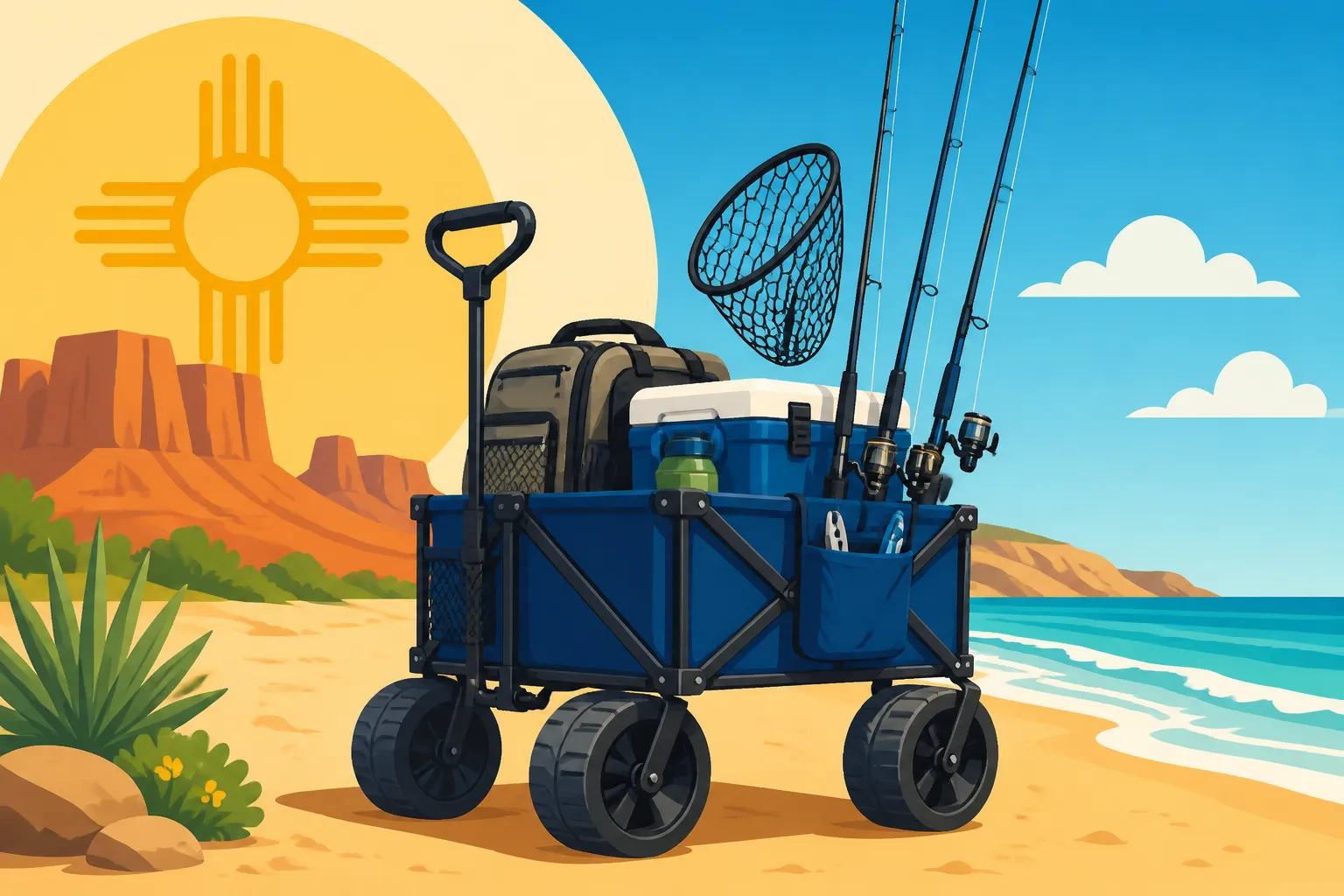
Folding wagons resemble a child's wagon but are built with heavy-duty fabric bodies and a collapsible frame. They typically have four wheels, which can range from small plastic to larger pneumatic tires.
- Pros: Highly portable and easy to store, as they fold down to a compact size. They're great for anglers with limited vehicle space or those who only need to transport gear a moderate distance over relatively smooth surfaces or firmer sand. Good for urban ponds or easily accessible state park lakes. You can find many options for these on Amazon.
- Cons: Not always equipped with the best wheels for deep, soft sand or very rocky terrain; you need to specifically seek out models with large, wide, all-terrain wheels. The fabric body, while durable, can be prone to tears if overloaded with sharp objects, and cleaning out sand can sometimes be tricky. Weight capacity can also be lower than traditional carts.
Specialized Fishing Carts: The Angler's Dream
These carts are designed with anglers specifically in mind, often combining features from traditional carts and wagons but adding a host of fishing-specific enhancements. Think of them as the Swiss Army knife of fishing transport.
- Pros: Optimized for fishing gear with integrated rod holders, bait buckets, tackle box storage, and often even cutting boards or measuring tools. They typically have robust frames and good wheels for varied terrains. These are for the angler who wants every piece of gear to have its place and appreciates maximum efficiency at the waterside. If you're planning a serious day of Trout Fishing Techniques for New Mexico, having everything organized can make a big difference.
- Cons: Often the most expensive option. They can also be quite specialized, meaning they might not be as versatile for other general hauling tasks as a basic wagon. They still might be bulky, though some models do offer folding capabilities. Many premium options can be found at outdoor retailers like Bass Pro Shops.
Here's a quick comparison to help you weigh your options:
| Feature/Cart Type | Traditional Beach Cart | Folding Beach Wagon | Specialized Fishing Cart |
|---|---|---|---|
| Wheel Performance | Excellent on sand/rough | Varies, seek large tires | Good to excellent |
| Durability | High | Moderate to High | High |
| Portability | Low (bulky) | High (folds flat) | Moderate (can be bulky) |
| Storage | Requires space | Very compact | Varies, some fold |
| Rod Holders | Often integrated/add-on | Rare (DIY possible) | Standard, multiple |
| Gear Organization | Open, relies on user | Open, relies on user | Highly organized, purpose-built |
| Best For | Challenging terrain, heavy loads | Easy access, compact storage | Dedicated anglers, full gear setup |
Making the Most of Your Beach Cart: Tips for New Mexico Anglers
Getting the right beach cart is just the first step. Knowing how to pack it, navigate with it, and maintain it will ensure it serves you well on countless New Mexico fishing adventures.
Smart Packing Strategies
How you load your cart makes a huge difference in its performance and your effort. Think about balance and accessibility.
- Heavy Items First: Place your heaviest items, like coolers filled with ice and water, at the bottom and center of the cart. This lowers the center of gravity, making the cart more stable and easier to pull or push, especially over uneven ground.
- Rods Last and Secured: If your cart has rod holders, use them! Otherwise, bundle your rods together and secure them horizontally across the top of your gear with bungee cords. This prevents them from bouncing around, getting stepped on, or catching on branches.
- Easy Access: Keep frequently used items like your tackle box, bait, sunscreen, or a water bottle in an easily accessible spot. You don't want to unload half the cart just to grab your favorite lure. Consider using smaller dry bags for these items if your cart has an open design.
- Balance is Key: Distribute weight evenly from side to side and front to back. An unbalanced cart will constantly want to tip, making the journey much harder than it needs to be. For a day of New Mexico river fishing, a well-packed cart can prevent headaches on narrow trails.
Navigating Tricky Spots
New Mexico's terrain is beautiful but can be challenging. Knowing a few tricks can help you get through tough spots.
- Soft Sand: When hitting really soft sand, sometimes it's easier to pull the cart backward, leading with the larger, wider wheels, rather than pushing it forward. The wheels will dig less. Don't be afraid to take a slightly longer, firmer path if one is available, rather than battling directly through deep sand.
- Rocky or Uneven Paths: Slow down and be deliberate. Use the larger wheels to roll over smaller rocks, and if you encounter larger obstacles, lift the cart slightly to clear them. If possible, try to pick a line where the path is smoother. It's often better to lift a wheel over a large rock than to try to drag it, which can damage the cart or spill your gear.
- Steep Inclines/Declines: On hills, take it slow. If pulling up a steep incline, use your body weight to lean into the pull. On declines, let the cart's weight work for you, but maintain control, don't let it run away. A sturdy handle with a comfortable grip makes a huge difference here.
Maintenance for Longevity
A little care goes a long way in extending the life of your beach cart, especially when exposed to the elements.
- Rinse After Use: After every trip, especially if you've been to sandy or muddy areas, rinse your cart thoroughly with fresh water. Pay extra attention to the wheels, axles, and any moving parts to remove sand, salt, and dirt that can cause corrosion or wear.
- Dry Completely: Allow your cart to dry completely before storing it. If you have a folding wagon with a fabric body, ensure the fabric is completely dry to prevent mildew and odors. If your cart has pneumatic tires, check the air pressure periodically and inflate as needed.
- Check Fasteners: Regularly inspect all bolts, screws, and pins to ensure they are tight. Vibration from travel over rough terrain can loosen them over time. A quick check after a few trips can prevent parts from falling off mid-journey. Taking good care of your gear, from your cart to your Best Rods and Reels for New Mexico Trout Fishing, ensures it lasts longer.
With the right beach cart and a few smart strategies, hauling your fishing gear to the shore in New Mexico will no longer be a chore. It'll just be another smooth step on your way to a fantastic day on the water.
Disclaimer
This article is for general informational purposes only and does not constitute professional advice. Laws, prices and regulations vary by location and change over time. Consult a qualified professional for guidance on your specific situation.