Best Paddle Board for Calm New Mexico Lakes
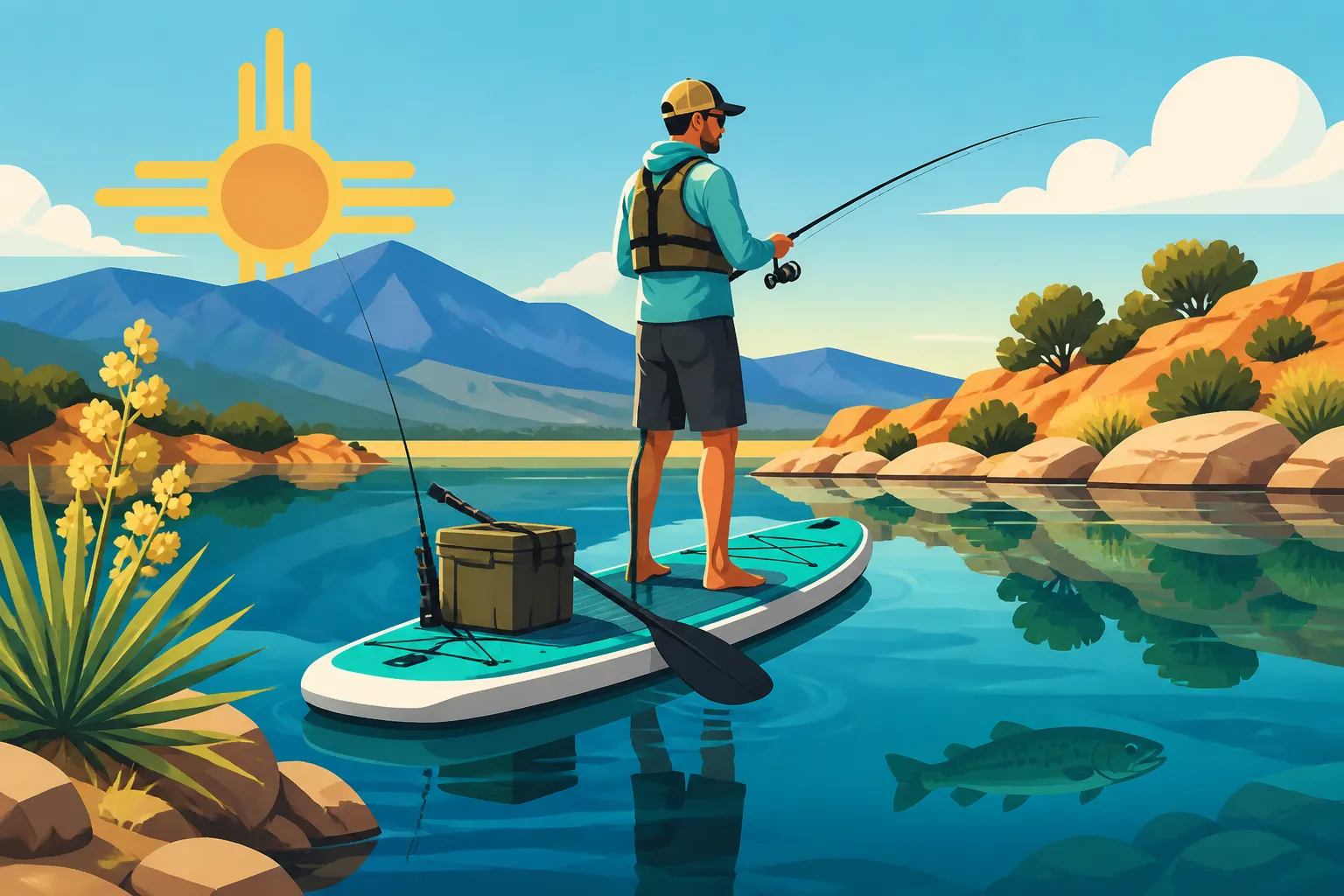
There’s nothing quite like the peace and quiet of gliding across a glassy New Mexico lake in the early morning, paddle in hand, heading to your favorite fishing spot. But if you’ve ever tried to fish from a traditional stand-up paddle board, you know the struggle is real – wobbling, limited space, and trying to keep your balance while casting. This guide is all about cutting through that confusion, helping you pick the perfect paddle board designed for fishing, specifically for those calm, breathtaking waters we love here in New Mexico.
Why Paddle Boards Are a Game-Changer for New Mexico Lake Fishing
For years, kayaks were the go-to for solo anglers wanting more mobility than bank fishing but less hassle than a full-sized boat. While kayaks are still fantastic, paddle boards have carved out their own niche, especially on New Mexico's calmer lakes and reservoirs. Imagine silently approaching a cove where bass are hiding, or gently drifting over a submerged structure without the splash and noise of a motor or the heavy drag of a traditional boat. It’s an experience that really connects you with the water and the fish.
The Appeal of Stealth and Accessibility
One of the biggest advantages of fishing from a paddle board is the stealth factor. You stand higher than in a kayak, which gives you an incredible vantage point to spot fish, submerged structures, or changes in water depth. This elevated perspective can make a huge difference when you're sight-fishing for trout in clear water or trying to pick out subtle weed lines where bass might be lurking. Plus, the silent glide of a paddle board means you won't spook fish like a noisy boat engine or even a clumsily handled paddle from a kayak can.
Beyond stealth, paddle boards offer unparalleled accessibility. Many of New Mexico's hidden gems – those small, serene lakes or secluded coves on larger reservoirs – don't have boat ramps suitable for trailers. With an inflatable paddle board, you can carry it to spots that would be impossible to reach with a traditional boat or even a hard-shell kayak. Think about those secluded stretches of Heron Lake Fishing Guide or quiet corners of Navajo Lake Fishing Guide that become accessible simply by having a board you can inflate on site. This freedom to explore means less competition and potentially more fish!
Understanding "Calm" New Mexico Lakes
When we talk about "calm" New Mexico lakes, we're generally referring to conditions without strong winds, large boat wakes, or significant currents. Places like Storrie Lake, Fenton Lake, or even the numerous small urban ponds are often ideal. Larger reservoirs like Elephant Butte or Conchas Lake can also have incredibly calm mornings or evenings, especially in sheltered coves.
However, even on these larger bodies of water, conditions can change quickly. A lake that's a millpond at sunrise might turn into a choppy mess by midday as winds pick up or recreational boaters hit the water. This is why choosing the right paddle board is so crucial. A board specifically designed for stability and fishing will perform much better if an unexpected chop rolls in, preventing you from taking an unplanned dip with all your gear. It's about being prepared for New Mexico's sometimes unpredictable nature.
Key Features for a Fishing-Friendly Paddle Board
Not all paddle boards are created equal, and a board meant for yoga or casual paddling won't cut it for fishing. You need specific features that prioritize stability, gear storage, and durability. Let's dive into what to look for when you're ready to make that investment.
Stability is Paramount
When you're casting, reeling, setting the hook, and even just reaching for your tackle box, you need a stable platform. The last thing you want is to be constantly fighting to stay upright. For fishing, stability comes primarily from the board's width and design. Look for boards that are at least 32 inches wide, with many dedicated fishing SUPs ranging from 34 to 36 inches. This extra width creates a much more forgiving platform, allowing you to move around, retrieve gear, and even stand to cast without feeling like you're walking a tightrope.
Beyond width, the overall shape of the board contributes to stability. Boards with a flatter, wider tail and nose tend to be more stable than those with pointed, rockered ends. Some specialized fishing boards even feature slight concaves or channels on the bottom, which can help track straight and further enhance stability. Remember, you're not trying to win a race; you're trying to stay dry and land a fish.
Ample Deck Space and Attachment Points
Fishermen, by nature, carry gear. Rods, tackle boxes, bait buckets, a cooler for drinks and your catch – it all adds up. A good fishing paddle board needs generous deck space, both at the front (bow) and back (stern), to accommodate this. Look for boards with bungee cord systems already installed, especially in multiple locations. These are invaluable for securing dry bags, PFDs, and other essentials.
But even better are boards that offer multiple D-rings, grommets, or integrated accessory mounts. These allow you to customize your setup with things like:
- Rod Holders: Essential for holding your extra rods or keeping your main rod secure while paddling.
- Cooler Tie-Downs: Many fishing-specific boards are designed to securely strap down a small cooler, which can double as a seat.
- Action Camera Mounts: To capture that epic catch!
- Accessory Tracks: Some premium boards feature universal accessory tracks that let you slide and lock in various mounts for fish finders, GPS, additional rod holders, or even anchor systems.
Brands often design dedicated fishing accessories that seamlessly integrate with their boards. Check out what options are available on retailers like Amazon or Bass Pro Shops when you're looking at specific board models. The more attachment points, the more versatile your setup can be.
Inflatable vs. Hard-Shell Boards for Transport and Storage
This is often the biggest decision point for anglers: do you go with an inflatable paddle board (iSUP) or a traditional rigid (hard-shell) board? Both have their pros and cons, and the best choice really depends on your lifestyle, storage space, and how you plan to transport your board.
Inflatable Paddle Boards (iSUPs):
- Pros: Incredible portability and storage. They deflate and roll up into a backpack-style bag, making them perfect for smaller cars, apartments, or carrying to remote launch spots. They are generally more forgiving against impacts (bumping rocks, dropping gear) and often lighter. Many reputable brands make extremely rigid and stable iSUPs that perform almost as well as hard boards for fishing.
- Cons: Requires inflation and deflation time (usually 5-15 minutes with a hand pump, less with an electric pump). Can feel a bit "bouncier" on the water, though this is less noticeable on calm lakes. Repairing a puncture, while possible, can be a minor inconvenience.
- Ideal for: Anglers with limited storage, those who transport their board in a regular vehicle, or who want to hike their board to more remote fishing locations.
Hard-Shell Paddle Boards:
- Pros: Superior rigidity and performance on the water. No setup time – just grab and go. Often more options for integrated features and a slightly lower center of gravity.
- Cons: Requires roof racks or a truck for transport. Needs significant storage space at home or a dedicated garage/shed. More susceptible to dings and dents from impacts. Generally heavier.
- Ideal for: Anglers with ample storage, a dedicated vehicle for transport, and who prioritize maximum performance and rigidity above all else.
For many New Mexico anglers, especially those wanting to explore various calm lakes, the convenience of an iSUP often wins out. Being able to throw your board in the trunk and head out to Elephant Butte Lake Fishing Guide or a local pond without a roof rack can be a huge time-saver.
Here’s a quick comparison to help you weigh your options:
| Feature | Inflatable Paddle Board (iSUP) | Hard-Shell Paddle Board (Rigid) |
|---|---|---|
| Portability | Excellent (rolls into a backpack) | Limited (requires roof racks/truck) |
| Storage | Excellent (compact, fits in closet/trunk) | Poor (large, needs garage/shed) |
| Setup Time | 5-15 mins (inflate/deflate) | None (ready to go) |
| Durability | Very durable against impacts, resistant to dings | More prone to dings/scratches from impacts |
| Stability | Excellent (especially wider models) | Excellent (often slightly stiffer feel) |
| Performance | Good (less glide than rigid, but very functional) | Excellent (faster, more efficient glide) |
| Integrated Gear | Bungees, D-rings, some accessory tracks | More built-in features, robust mounting options |
| Weight | Often lighter (easier to carry when deflated) | Heavier, can be awkward to carry for one person |
Choosing the Right Size and Shape
Once you've decided between inflatable and hard-shell, the next step is to hone in on the specific dimensions and hull design. These factors will directly influence your board's stability, maneuverability, and how it performs while fishing.
Length, Width, and Thickness Explained
- Length: This impacts speed and tracking. Longer boards (11 to 14 feet) tend to track straighter and offer more glide, meaning less effort to paddle longer distances on open water. Shorter boards (under 11 feet) are more maneuverable, which can be great if you're navigating tight coves or dodging obstacles. For fishing on calm New Mexico lakes, a sweet spot is often 10.5 to 12 feet. This length provides a good balance of glide for reaching your spot and enough maneuverability once you're there.
- Width: As discussed, width is key for stability. For a dedicated fishing SUP, aim for at least 32 inches wide. Many premium fishing boards are 34-36 inches wide, offering exceptional stability even when standing and casting. If you plan to carry a lot of gear or are a larger angler, leaning towards the wider end of the spectrum is a wise move.
- Thickness: For iSUPs, thickness plays a role in rigidity and weight capacity. Most quality iSUPs are 6 inches thick. This thickness provides excellent buoyancy and stiffness, preventing the board from flexing in the middle, especially when loaded with an angler and gear. Thinner boards (4-5 inches) might be cheaper, but they sacrifice rigidity and capacity, making them less ideal for fishing.
Consider your own weight and the weight of your typical gear load when looking at a board's specified weight capacity. Always give yourself a comfortable buffer – don't buy a board where your combined weight is near its maximum limit.
Hull Design for Stability vs. Speed
Paddle boards generally come with two main hull designs, each serving a different purpose:
- Planing Hull: These boards are flat and wide, similar to a surfboard. They are designed to ride on top of the water. Planing hulls offer excellent stability and maneuverability, making them fantastic for casual paddling, surfing, and, crucially, fishing. They might not be the fastest, but they provide the stable platform you need for casting and reeling. Most fishing-specific paddle boards feature a planing hull.
- Displacement Hull: These hulls are pointed at the nose, resembling a kayak or canoe. They are designed to cut through the water, displacing it as they go, which makes them faster and better at tracking in a straight line. While they offer good glide for covering distance, they are generally less stable than planing hulls, especially when you factor in standing, casting, and moving around with gear. You'll typically find displacement hulls on touring or race SUPs, not dedicated fishing models.
For fishing on calm New Mexico lakes, a planing hull is almost always the superior choice due to its inherent stability and roominess. If you're looking to cover long distances quickly on wide-open waters, a displacement hull might be tempting, but the trade-off in stability for fishing actions is usually not worth it.
Essential Accessories for Paddle Board Fishing
Getting the right paddle board is just the first step. To make your fishing experience truly safe, efficient, and enjoyable on New Mexico's waters, you'll need a few key accessories. Think of these as essential components to your fishing platform, not just add-ons.
PFDs, Leashes, and Safety Gear
Safety should always be your top priority, especially when you're out on the water. Even on a calm lake, unexpected situations can arise.
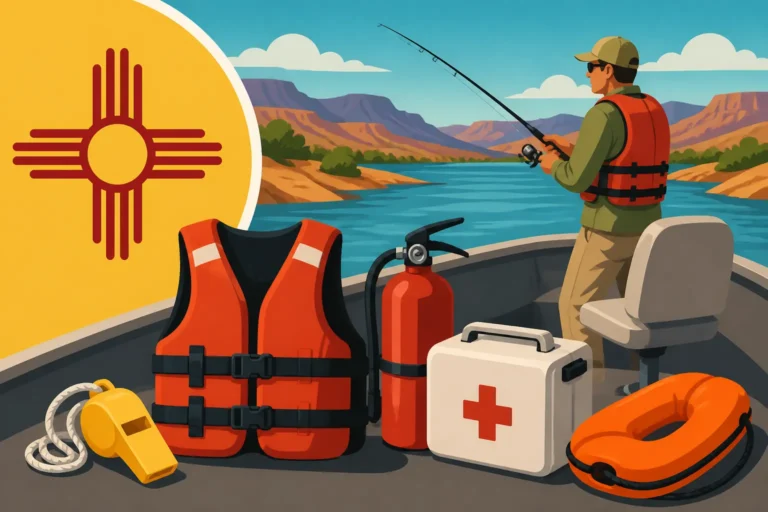
- Personal Flotation Device (PFD): In New Mexico, just like with any vessel, a U.S. Coast Guard-approved PFD is required for every person on board a paddle board. Children under a certain age are usually required to wear them at all times. Even if you're a strong swimmer, wearing a PFD (or at least having one easily accessible on your board) is non-negotiable. Some anglers prefer inflatable belt-pack PFDs for less bulk while casting, but traditional vests offer more inherent buoyancy. Check Life Jacket Requirements for New Mexico Boaters for specific state regulations.
- Leash: A leash attaches your ankle to your paddle board. This is incredibly important, especially if you fall off. Your board will stay with you, preventing it from floating away with your gear while you're left swimming. On calm lakes, a coiled leash is often preferred as it stays out of the water and prevents dragging.
- Whistle/Signaling Device: Another legal requirement in many places, and a good idea everywhere. A whistle can alert other boaters or signal for help in an emergency.
- Sun Protection: New Mexico's sun can be intense, even on cloudy days. A wide-brimmed hat, polarized sunglasses (great for spotting fish!), and good quality sunscreen are crucial. Consider bringing a long-sleeved fishing shirt for extra protection. You might want to review Best Sun Protection Gear for New Mexico Reservoir Fishing.
- First-Aid Kit: A small, waterproof kit with basic supplies for cuts, scrapes, or minor emergencies is always a smart addition to your dry bag.
Rod Holders, Coolers, and Storage Solutions
Once safety is covered, it’s time to optimize for fishing efficiency.
- Rod Holders: These are absolutely essential. Trying to manage multiple rods while paddling or having one rod secure while you work another is nearly impossible without them. Look for flush-mount rod holders that can be glued or bolted to hard boards, or suction cup/accessory track mounted holders for iSUPs. Some fishing SUPs even come with integrated rod holders, which is a huge bonus.
- Cooler/Storage Box: A small, marine-grade cooler can serve multiple purposes. It keeps your drinks and snacks cold, stores your caught fish, and can even act as a comfortable elevated seat when you want a break from standing. Many fishing SUPs have dedicated tie-down points for a cooler. If you're planning on keeping your catch, check out Best Coolers for Keeping Fish Fresh in New Mexico.
- Dry Bags: Keep your phone, keys, wallet, and any other electronics or valuables absolutely dry in a quality dry bag. Even on calm water, splashes happen, and an unexpected dunk can ruin your day (and your gear).
- Anchor System: Even on calm days, a light breeze can push your board off your spot. A small, collapsible anchor (like a grapnel anchor) with about 30-50 feet of line is invaluable for holding your position over a productive fishing area. Many anglers also use a "stakeout pole" in very shallow water for a silent, quick anchor.
- Paddle Holder: While you're fishing, you don't want your paddle floating away or getting in the way. Many fishing SUPs have side paddle holders or bungee straps where you can secure your paddle while you're busy with your rod.
Equipping your paddle board properly turns it from a simple watercraft into a highly functional, mobile fishing platform. Taking the time to set up your gear thoughtfully will pay dividends in comfort, efficiency, and ultimately, your success on New Mexico's beautiful calm lakes. For a broader overview of what gear to consider for your angling adventures, you might find Best Fishing Gear for New Mexico Anglers helpful.
Disclaimer
This article is for general informational purposes only and does not constitute professional advice. Laws, prices and regulations vary by location and change over time. Consult a qualified professional for guidance on your specific situation.