Best Line Test for Catfish Fishing in New Mexico
If you've ever stood on the banks of the Rio Grande or a favorite New Mexico reservoir, staring at your tackle box and wondering what strength fishing line to spool up for catfish, you're not alone. Choosing the right line test for whiskered warriors can feel like a guessing game, especially with New Mexico's diverse waters and the sheer power these fish possess. This guide is here to untangle that confusion, helping you pick the perfect line to land those impressive catfish without fear of snapping off.
Understanding New Mexico Catfish and Their Habitats
Before we even talk about line, we need to get intimately familiar with the fish we're after and where they like to hang out. New Mexico is home to several species of catfish, each with their own quirks, average sizes, and preferred dwelling spots. Knowing your quarry is the first step in setting up for success.
The Different Catfish Species in New Mexico
The most common catfish you'll encounter in New Mexico are the Channel Catfish. These are the workhorses of our catfish world, often found in a wide variety of waters, from large reservoirs to smaller rivers and even some urban ponds. They typically range from a pound or two up to 10 or 15 pounds, but bigger ones certainly exist. Channel cats are known for their strong, sustained runs and often inhabit areas with moderate current or deeper sections of lakes, especially around structure. Their mouths are relatively small compared to their body size, which is important when considering hook choice.
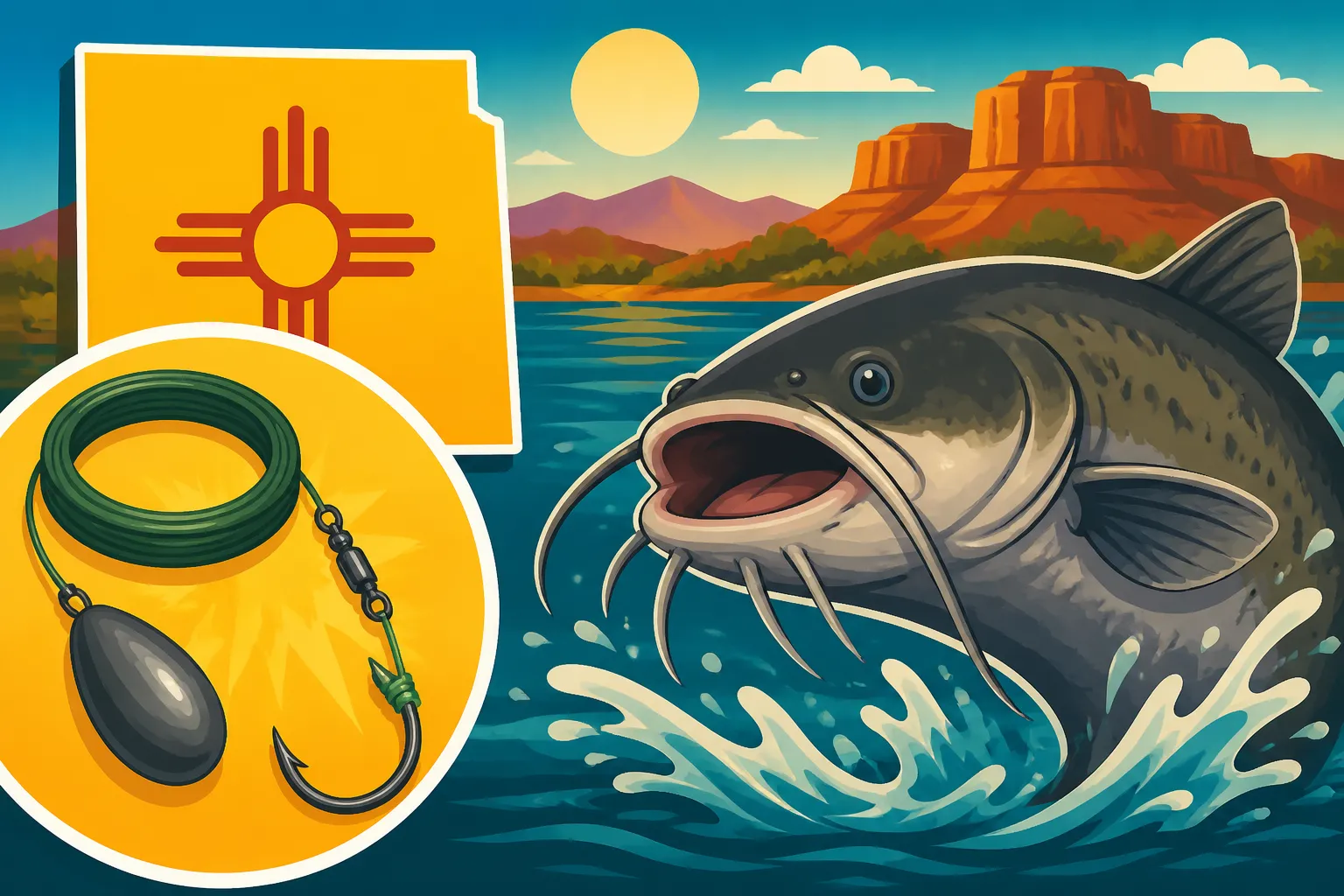
Then we have the formidable Flathead Catfish. These are the true titans of New Mexico's catfish scene. Flatheads are predatory, preferring live bait, and can grow to truly enormous sizes, often exceeding 30-40 pounds, with some trophy fish pushing much higher. They are powerful, stubborn fighters that will try to drag you into the nastiest cover they can find. Unlike channel cats, flatheads have a broad, flattened head and a much larger mouth, designed for swallowing big meals. Targeting flatheads demands a significantly different approach, especially concerning line strength, due to their sheer size and fighting style.
Lesser known, but still present in some waters, are Bullheads (Black and Yellow Bullhead). These are much smaller, rarely exceeding a few pounds, and are often found in muddy-bottomed ponds, slow-moving streams, or shallow, weedy areas. While they don't offer the same fight as a channel or flathead, they can still be fun to catch, especially for beginners or when you're just looking for some consistent action. Your line test choices for bullheads will be much lighter than for their larger cousins.
Where Catfish Live in New Mexico Waters
New Mexico offers a fantastic array of catfish habitats. The mighty Rio Grande, for instance, is a prime spot for both channel and flathead catfish. Here, you'll find them in deeper holes, around submerged logs and root wads, or lurking behind current breaks. The river's flow and potential for snags mean your line needs to be robust enough to handle both a strong fish and abrasive underwater obstacles. Think about those times your bait gets hung up – a weaker line might mean losing your whole rig. You can learn more about where these fish reside in our Where to Catch Channel Catfish in the Rio Grande guide.
Reservoirs like Elephant Butte Lake and Conchas Lake are also hotspots. In these larger, often clearer waters, catfish might be found along old creek channels, near submerged brush piles, or congregating around rocky points and drop-offs. Flatheads, in particular, love the deep, woody cover that these reservoirs can offer. While there might be fewer strong currents to contend with compared to a river, the possibility of snagging on timber or sharp rocks is still very real, and a big fish diving into such cover can easily fray a weak line. Many anglers explore best New Mexico lakes for catfish to find their next big catch.
Even smaller lakes and urban ponds across the state can hold good numbers of channel cats and bullheads. These waters may have fewer snags but might still present challenges like dense aquatic vegetation or rocky shorelines. The key is understanding that catfish, regardless of species, often relate to structure and cover, and your line choice must reflect the need to extract them from these tricky spots.
Factors Influencing Your Catfish Line Choice
Choosing the "best" line test isn't a one-size-fits-all answer. It's a dynamic decision based on a few critical factors that any savvy New Mexico angler considers before casting out. Neglecting these could lead to lost fish, frustration, and a lighter tackle box.
Water Conditions and Structure
The environment where you're fishing plays a huge role in determining appropriate line strength. Imagine fishing the clear, rocky sections of the Pecos River versus the often turbid, snag-ridden stretches of the lower Rio Grande. In rocky areas, your line is constantly rubbing against sharp edges, and a lighter line will fray quickly. Thick submerged brush or timber, a favorite haunt for big flatheads, demands a line that can withstand immense pressure and abrasion as the fish tries to bury itself in the cover.
Muddy or murky waters, while reducing line visibility as a factor, often hide more submerged debris and snags. Your line needs to be strong enough to pull through minor hang-ups or, at the very least, survive long enough to fight a big fish out of such cover. In contrast, if you're fishing a relatively clear, open section of a lake with a clean, sandy bottom, you might be able to get away with a slightly lighter line. However, always err on the side of caution when targeting catfish, as their power can be deceptive.
Target Catfish Size and Species
This is perhaps the most obvious, but often overlooked, factor. Are you heading out hoping to catch a mess of smaller, eating-sized channel catfish, or are you on a dedicated quest for a trophy flathead that could outweigh your small child? The answer profoundly impacts your line choice. For general channel cat fishing, especially if you're expecting fish in the 2-10 pound range, a moderately strong line will suffice. These fish put up a good fight but aren't typically known for breaking heavy lines unless conditions are particularly challenging.
However, if you're pursuing those massive flatheads, you need to be prepared for an entirely different battle. A 30-pound flathead can generate incredible pulling power, especially when it turns its broad body sideways in the current or attempts to dive into cover. Your line needs to be able to absorb these shocks and provide the stopping power necessary to turn the fish away from snags. Don't underestimate the sheer will of a big flathead – they don't give up easily!
Fishing Methods and Tackle Types
How you're presenting your bait and what gear you're using also influences your line test. If you're bank fishing with a sturdy rod and reel, casting heavy weights or bait further out, you might lean towards a heavier line test to handle the casting stress and any potential long-distance snags. Drift fishing from a boat, where you're covering ground and potentially encountering varying depths and structures, might require a versatile line strength.
If you're trotlining or jug lining for catfish, where the line is set and left, you'll almost always opt for much heavier line, often 50-80 pound test or more, due to the possibility of multiple large fish on the same line and the need for extreme abrasion resistance against underwater debris. For more active techniques like slip-sinker rigs or suspend fishing, the emphasis might shift slightly, but strength remains paramount. Your choice of rod and reel, whether it's a medium-heavy spinning combo or a stout baitcasting setup, should also match the line test you intend to use. An appropriately matched setup ensures balance, better casting, and effective fish fighting.
Recommended Line Tests for New Mexico Catfish
Now, let's get down to the brass tacks: what line test should you actually use? While there's no single "correct" answer for every scenario, we can provide some solid guidelines based on the species you're targeting and the conditions you expect to face in New Mexico.
General Guidelines for Channel Catfish
For the vast majority of your channel catfish adventures in New Mexico, a line test in the 15 to 20-pound range is a fantastic starting point. This range offers a great balance of strength for fighting feisty fish and enough abrasion resistance for common snags, without being so heavy that it hinders casting or reduces sensitivity. Many anglers find 17-pound test to be a sweet spot. This is suitable whether you're fishing smaller rivers like the Pecos or larger reservoirs. If you anticipate fishing in areas with particularly dense vegetation or rocky bottoms, bumping up to 20 or even 25-pound test monofilament or a braided line of similar diameter (which will be much stronger) can offer added peace of mind.
If you're using braided line, remember that its strength-to-diameter ratio is much higher. So, a 20-pound braided line will be much thinner than 20-pound monofilament. For channel cats, a braid in the 20-30 pound range will give you incredible strength and sensitivity, allowing you to feel even the lightest bites. However, because braid has no stretch, you'll need to make sure your rod has enough give to absorb shocks and prevent hooks from tearing out of the catfish's mouth. Many anglers choose to use a monofilament or fluorocarbon leader with braided mainline for this reason.
Tackling Larger Flathead Catfish
When you're specifically targeting those monstrous flatheads, you need to step up your game significantly. Forget the lighter lines; these fish require serious pulling power. For flatheads, especially in snaggy New Mexico rivers or reservoirs, you should be looking at 30 to 50-pound test line, at minimum. Many dedicated flathead anglers won't even consider anything less than 40-pound test, and often spool up with 60 or even 80-pound braided line.
The reason for such heavy line is threefold: brute strength, abrasion resistance, and the need to turn a fish. A big flathead isn't just strong; it's smart. It knows how to use current and cover to its advantage. You need a line that won't snap when it makes its initial blistering run, won't fray easily when it rubs against submerged timber, and has the power to pull it away from structure once hooked. Braided line shines here for its incredible strength and sensitivity, allowing you to feel every head shake and direction change, which is crucial when trying to steer a large fish. When purchasing heavy lines for flatheads, you'll find a wide array of options at major retailers like Bass Pro Shops or through online stores such as Amazon, where you can compare different brands and strengths.
Specific Recommendations for Different New Mexico Waters
Let's break it down a bit for some common New Mexico fishing spots:
- Rio Grande (especially below Cochiti Dam and through Albuquerque): This river often has current and plenty of snags. For channel cats, 17-20 lb mono or 30 lb braid would be suitable. For flatheads, definitely go with 50-60 lb braid, perhaps with a heavy mono or fluorocarbon leader. The extra strength is invaluable here.
- Elephant Butte Lake / Navajo Lake / Conchas Lake (Large Reservoirs): These lakes can have varying bottom structures, from open flats to deep timber. For channel cats, 15-20 lb mono or 20-30 lb braid is a good choice. For flatheads, especially if you're targeting submerged structures, 40-50 lb braid is recommended. The depths here often mean longer fights, so strong knots are critical.
- Smaller Ponds and Urban Lakes: For the smaller channel cats and bullheads often found in these waters, you can typically get away with lighter gear. 10-15 lb mono or 20 lb braid is usually more than enough. These waters generally have less current and fewer severe snags, making lighter tackle a fun and effective option.
It's always better to be slightly over-gunned than under-gunned when catfishing in New Mexico. You never know when that personal best will decide to bite, and you want your gear to be ready. For more details on species limits, check out our New Mexico Warm Water Fish Bag Limits article.
Line Types and Their Advantages for Catfishing
Beyond just the line test, the material of your fishing line makes a huge difference in its performance. Each type has its own set of characteristics that can either aid or hinder your catfish pursuits in New Mexico.
Monofilament Line: The Classic Choice
Monofilament, or "mono," has been the go-to fishing line for generations, and for good reason. It's affordable, easy to tie knots with, and has a good amount of stretch, which acts as a shock absorber. This stretch can be a real asset when a big catfish makes a sudden lunge, helping to prevent the hook from tearing out of its mouth. It also tends to be quite forgiving if your drag isn't set perfectly. For anglers who prefer a more traditional feel or are on a budget, mono is still a fantastic option, especially for general channel cat fishing in the 15-25 pound test range.
However, monofilament does have its downsides. Its larger diameter for a given test strength means you can't fit as much on your spool, and it can be more visible in clearer water, potentially making wary fish a bit shy. It's also more susceptible to abrasion than braided lines, which can be an issue when fishing around rocky bottoms, submerged timber, or shell beds – all common catfish haunts in New Mexico. Mono also has "memory," meaning it can retain the coil shape from the spool, leading to more tangles or casting issues over time, especially with heavier lines.
Braided Line: Power and Sensitivity
Braided line is a game-changer for many serious catfish anglers. Made from multiple strands of synthetic fibers woven together, it boasts incredible strength-to-diameter ratio, meaning a 30-pound braid is much thinner than a 30-pound mono. This allows for longer casts, more line on your spool, and less resistance in the water. The lack of stretch in braided line provides exceptional sensitivity, allowing you to feel every bump, nibble, and subtle change in the bottom composition. This is invaluable when trying to detect light bites from cautious catfish or when navigating snaggy terrain.
For flathead enthusiasts or those fishing heavy cover, braided line's superior abrasion resistance is a huge advantage. It can withstand more rubbing against rocks and wood without fraying or breaking, giving you a better chance of landing a big fish that tries to bury itself. The main drawbacks of braid are its higher cost compared to monofilament, its tendency to "dig in" on spools under heavy pressure, and the need for more careful knot tying, as some knots can slip if not cinched down properly. Its high visibility can also be a concern in clear water, leading many anglers to use a monofilament or fluorocarbon leader. You can find a huge variety of braided lines, from brands like PowerPro to Spiderwire, at Bass Pro Shops or easily order them from Amazon.
Fluorocarbon Leaders: The Stealth Factor
While often used as a leader material rather than a main line for catfishing, fluorocarbon deserves a mention. It shares many characteristics with monofilament, but with key differences. Fluorocarbon is nearly invisible underwater due to its refractive index being very close to that of water, making it an excellent choice for finicky fish in clear conditions. It also offers significantly better abrasion resistance than monofilament and less stretch, providing a bit more sensitivity.
Many New Mexico anglers will spool their main reel with braided line (for strength and sensitivity) and then tie on a section of fluorocarbon leader. This gives them the best of both worlds: the power of braid and the stealth and abrasion resistance of fluorocarbon. For catfish, especially when targeting larger specimens or in waters that aren't overly murky, using a heavy fluorocarbon leader (e.g., 30-50 pound test) can be a smart move, providing an extra layer of protection against sharp teeth and rough structure while remaining practically invisible to the fish.
Here’s a quick comparison of the main line types for New Mexico catfishing:
| Line Type | Key Advantages | Key Disadvantages | Best Use Case for Catfish |
|---|---|---|---|
| Monofilament | Affordable, good stretch (shock absorption), easy knots | Higher diameter, less abrasion resistance, memory | General channel cat, beginners, less snaggy areas |
| Braided | High strength-to-diameter, sensitive, abrasion resistant | Higher cost, visible, can dig into spool, knot-slippage potential | Flatheads, heavy cover, deep water, increased sensitivity |
| Fluorocarbon | Nearly invisible, good abrasion resistance, low stretch | More expensive, stiffer, can be prone to kinking | Leaders for braid, clear water, stealth applications |
Ultimately, the "best" line test and type for catfish fishing in New Mexico depends on your personal preferences, the specific water you're fishing, and the size of the catfish you hope to encounter. Don't be afraid to experiment, and always make sure your knots are strong – a weak knot is often the first point of failure. Happy catfishing! For more general fishing rules, refer to the New Mexico Fishing Regulations Overview. If you're looking for gear beyond just line, our Best Fishing Gear for New Mexico Anglers offers a comprehensive overview. And for those planning a multi-day trip, consider reading New Mexico Combination Hunting and Fishing Licenses. Don't forget to check out New Mexico Annual Fishing License options as well!
Disclaimer
This article is for general informational purposes only and does not constitute professional advice. Laws, prices and regulations vary by location and change over time. Consult a qualified professional for guidance on your specific situation.