Best Rod Action for Walleye Jigging
Ever been out on a New Mexico lake, like the vast expanse of Elephant Butte or the rocky shores of Conchas, dropping your jig down, hoping for that tell-tale walleye thump, only to feel… nothing? Or maybe you felt something, but by the time you reacted, the fish was gone. A lot of that frustration can come down to your rod, specifically its action. This guide is here to help you truly understand rod action and how to choose the ideal one for jigging walleye effectively in the Land of Enchantment.
Decoding Rod Action for Walleye Success
Rod action is one of those terms that gets thrown around a lot in fishing circles, and it can be a bit confusing if you’re new to it. Simply put, rod action describes where a fishing rod bends when pressure is applied, such as when you’re fighting a fish or setting the hook. It's a crucial characteristic, especially when you're trying to feel those incredibly subtle walleye bites that often feel like nothing more than a slight "tick" or added weight.
The Spectrum of Rod Actions
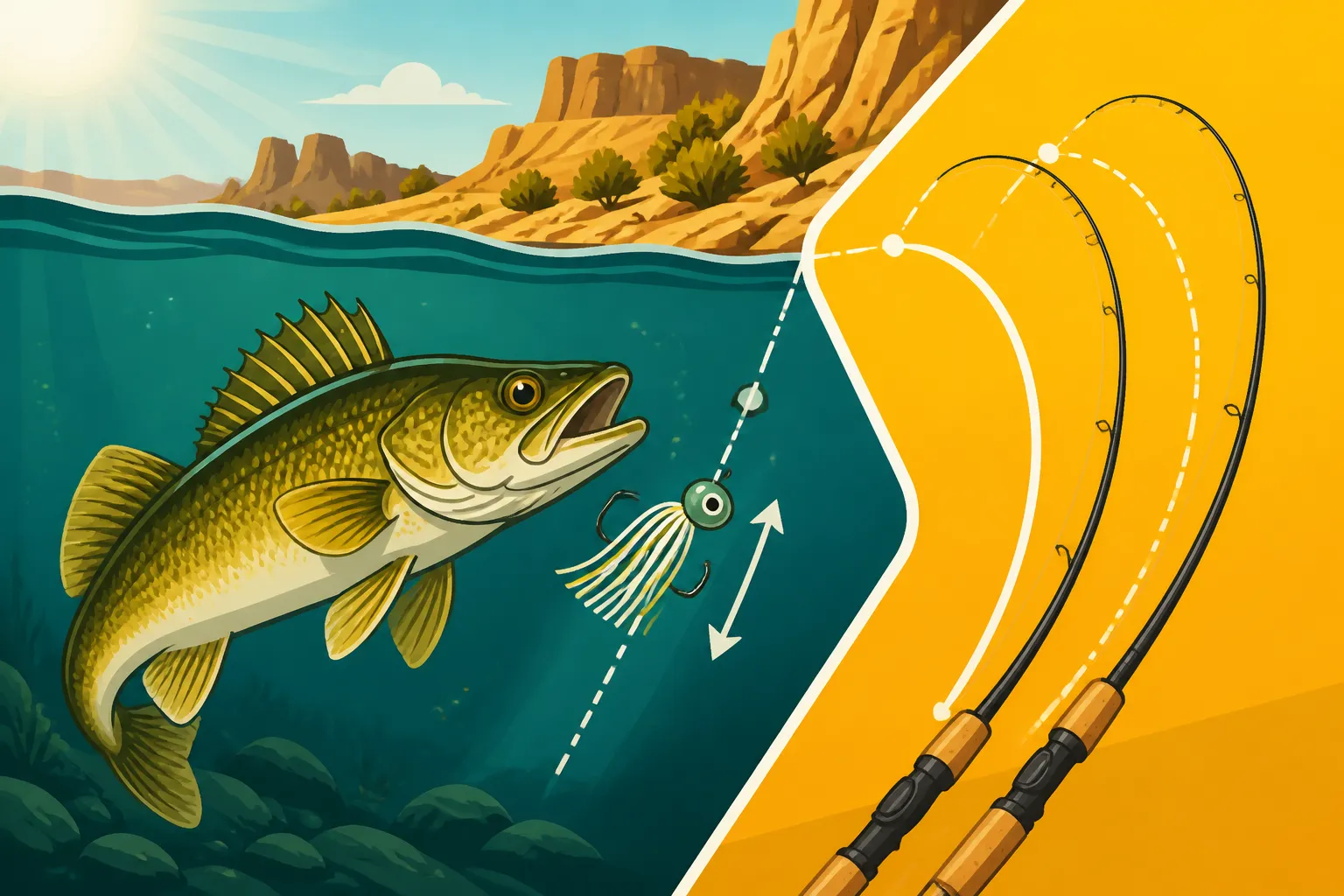
Think of rod action as a spectrum, ranging from slow to extra-fast. A slow action rod bends throughout its entire length, almost like a noodle. This might be great for casting small, delicate baits or for absorbing powerful runs from large fish with light line, but it's terrible for jigging. You wouldn't be able to feel much, and your hooksets would be slow and weak. On the other end, an extra-fast action rod bends only at the very tip. This design provides maximum sensitivity and allows for incredibly quick, powerful hooksets. Somewhere in the middle, you have moderate and fast actions, which bend more towards the middle or in the upper third of the rod blank, respectively. For jigging, especially for finicky walleye, we're really going to focus on the faster side of this spectrum. Understanding this fundamental difference is the first step in upgrading your walleye game.
Why Action Matters for Walleye Jigging
Walleye are notorious for their light bites. They often don't engulf a bait like a bass might; instead, they might just "mouth" it or gently inhale it. This means you need a rod that can transmit those tiny vibrations and pressure changes directly to your hand. A fast or extra-fast action rod does this exceptionally well because the stiff backbone of the rod doesn't absorb the subtle feel. It acts like a direct pipeline to your bait. The stiffer midsection also means that when you feel that faint bite, a quick snap of the wrist translates into immediate energy transfer to the hook point, driving it home before the walleye has a chance to spit out your offering. You're not just moving a soft, bending rod; you're setting the hook with authority. This responsiveness is vital when jigging deep structure at a lake like Ute, where currents or depth can further mask those tentative bites. For a deeper dive into targeting these fish, check out our guide on Walleye Fishing in New Mexico.
Ideal Rod Actions for Walleye Jigging
When it comes to walleye jigging, you're looking for sensitivity and quick response. This narrows down our choices considerably to two primary actions: Fast and Extra-Fast. Each has its own merits, and the "best" often depends on personal preference and the specific jigging technique you're employing.
Fast Action Rods: A Versatile Performer
A fast action rod typically bends in the upper third of its blank. This design offers a fantastic balance of sensitivity and backbone, making it a highly versatile choice for many walleye anglers. With a fast action rod, you'll still feel those subtle taps and bumps, and you'll have plenty of power to drive a hook through a walleye's bony mouth. It's forgiving enough for a variety of jig weights and types, from a light hair jig to a heavier blade bait. This action also provides a bit more flex in the upper portion, which can be beneficial when fighting a larger fish, helping to absorb sudden surges and prevent hook pulls, especially if you're battling a trophy-sized walleye out of deep water. Many anglers consider a fast action rod their go-to workhorse for general walleye jigging, especially in situations where you might encounter larger fish or need a bit more casting distance for presentation.
Extra-Fast Action Rods: The Sensitivity King
For the ultimate in sensitivity and lightning-fast hooksets, an extra-fast action rod is often the preferred choice for dedicated walleye jigging. These rods bend only at the very tip, meaning the majority of the rod blank remains stiff and rigid. This stiffness minimizes the dampening effect on subtle bites, transmitting even the faintest contact with a fish or the lake bottom directly to your hand. When a walleye inhales your jig, you'll feel it instantly, allowing for an immediate and powerful hookset. This quick reaction time is crucial for species like walleye, which can suck in and expel a bait incredibly quickly. Extra-fast rods excel when fishing with lighter jigs, subtle presentations, or when you really need to discern between a bite and simple bottom contact. If you're focusing on finesse jigging techniques in clear waters, such as those found in some areas of Navajo Lake, an extra-fast action rod will give you a significant advantage in detecting those tentative bites. It takes a bit of getting used to, as the unforgiving tip can sometimes pull hooks if you're too aggressive, but once mastered, it's a game-changer. For more on specific jigging approaches, explore our article on Jigging for Walleye in New Mexico.
Here's a quick comparison of rod actions relevant to walleye jigging:
| Rod Action | Bend Point | Sensitivity | Hookset Speed | Typical Use Case (Walleye) | Pros | Cons |
|---|---|---|---|---|---|---|
| Extra-Fast | Very tip | Excellent | Very Fast | Finesse jigging, light bites | Maximum bite detection, quick hooksets | Less forgiving, potential for pulled hooks |
| Fast | Upper third of blank | Very Good | Fast | General jigging, various jig weights | Good balance of feel & power, versatile | Slightly less sensitive than extra-fast |
| Moderate | Mid-section of blank | Fair | Moderate | Trolling, crankbaits, reaction baits | Absorbs shock well, good for casting distance | Poor bite detection for jigging, slow hooksets |
| Slow | Entire length of blank | Poor | Slow | Panfishing, live bait, ultra-light | Very forgiving, casts light baits far | Unsuitable for jigging walleye |
Complementary Rod Characteristics
While rod action is paramount, it’s not the only factor to consider. Rod power and length also play significant roles in how a rod performs for walleye jigging. These characteristics work in conjunction with action to create a balanced tool perfectly suited for your fishing style and the conditions you face. Ignoring them would be like picking out a high-performance engine without thinking about the car's transmission or tires – you won't get the full benefit.
Rod Power: Matching Strength to the Fight
Rod power refers to the rod's lifting strength or how much weight it can handle. It's often described as Ultra-Light, Light, Medium-Light, Medium, Medium-Heavy, and Heavy. For walleye jigging, you'll typically be looking at the Medium-Light to Medium range.
A Medium-Light power rod is excellent for lighter jigs, especially when the walleye are being particularly finicky and you're using small presentations. This power offers enough backbone to handle most walleye, while still providing the sensitivity to feel those light bites on smaller jigs. It's a great choice for waters where the average walleye size isn't massive, or when fishing with lighter line.
A Medium power rod, on the other hand, provides more backbone and is suitable for heavier jigs, deeper water applications, or when you anticipate larger walleye. If you're dropping heavier jigs in places like Elephant Butte Lake or Conchas Lake, where bigger walleye might be lurking, a medium power rod gives you the leverage to control them and prevent them from burying themselves in structure. It also stands up better to slightly heavier line and provides more confidence when you’re fishing around snags. Choosing the right power is about balancing the need for sensitivity with the ability to effectively work your jig and land the fish.
Rod Length: The Reach and Leverage Factor
Rod length is another critical consideration that affects casting distance, leverage, and how you work a jig. Walleye jigging rods typically fall within the 6'6" to 7'6" range.
Shorter rods (6'6" to 6'10") are fantastic for precision and close-quarters jigging. They offer excellent control for precise bait presentations, making them ideal for vertical jigging directly over structure from a boat. The shorter length also makes them easier to manage in tight spaces or when jigging in winds that might make a longer rod unwieldy. If you're navigating boat traffic or fishing in areas with overhead obstructions, a shorter rod can be a real asset.
Longer rods (7'0" to 7'6") provide increased casting distance, which can be a huge advantage when you need to cover more water or reach distant schools of walleye from the bank or a boat. The added length also provides greater leverage, which can be beneficial for making long sweeping hooksets or fighting larger fish, keeping their head up and guiding them away from snags. Many anglers prefer longer rods for pitching jigs or for light line applications where the extra length helps cushion the fight. For those looking to maximize their casting reach, perhaps from shore at a spot like Sumner Lake, a longer rod is often the way to go. Consider how you primarily fish for walleye in New Mexico when deciding on rod length.
Equipping Yourself for Walleye Success
Finding the perfect rod for walleye jigging in New Mexico involves understanding its characteristics and then knowing where to find quality gear. It's an investment, but a well-chosen rod can dramatically improve your fishing experience and your catch rates. Remember, the best rod is one that feels balanced and comfortable in your hands, allowing you to focus on the fish, not the gear.
Sourcing Quality Walleye Rods
When you're ready to invest in a rod specifically for walleye jigging, you have a few excellent options for finding quality gear. Local tackle shops are always a great starting point; they often have staff who are passionate anglers themselves and can offer personalized advice based on their experience fishing New Mexico waters. They might even recommend specific brands or models that perform particularly well for the unique conditions you find at lakes like Conchas Lake or Elephant Butte.
Beyond local shops, larger retailers like Bass Pro Shops offer a vast selection of rods from various manufacturers, allowing you to physically hold and compare many different models. This is invaluable for gauging the balance, feel, and true action of a rod before you buy it. You can often find a dedicated walleye section or at least knowledgeable staff who can guide you to appropriate options. Online retailers, such as Amazon, also provide an enormous selection, often at competitive prices, though you miss the opportunity to handle the rod in person. When buying online, pay close attention to customer reviews and detailed product descriptions to ensure you're getting exactly the action and power you need. Whichever route you choose, don't rush the decision; selecting the right rod is key to enhancing your jigging performance. If you're building out your tackle box, you might also be interested in our guide on Best Lures for a New Mexico Tackle Box.
Balancing Rod and Reel for Optimal Feel
Once you've chosen your rod, the next crucial step is pairing it with the right reel. A perfectly matched rod and reel combo will feel balanced in your hand, reducing fatigue and further enhancing sensitivity. For jigging, a lightweight spinning reel in the 1000 to 2500 size range is usually ideal. The lighter weight keeps the overall setup nimble, allowing you to detect those subtle bites and make quick adjustments to your jig presentation. Ensure the reel's retrieve ratio matches your preferred jigging style; a faster retrieve can be beneficial for quickly taking up slack line or moving between spots, while a slightly slower one might offer more torque for battling larger fish.
Line choice also plays a significant role. Many walleye jigging enthusiasts prefer braided line for its incredible sensitivity and lack of stretch, which provides a direct connection to your jig. A fluorocarbon leader is often added to the braid for stealth, as it's nearly invisible underwater. The combination of an extra-fast or fast action rod, a balanced lightweight reel, and a sensitive line will give you an unparalleled feel for the subtle world beneath the surface, greatly increasing your chances of detecting and hooking those elusive New Mexico walleye. For general rod and reel considerations that can be applied to walleye fishing, check out our piece on Best Rods and Reels for New Mexico Trout Fishing, as many principles of sensitivity and balance cross over.
Key Considerations for New Mexico Walleye Waters
New Mexico's walleye fisheries, such as those at Conchas Lake or Ute Lake, can present diverse conditions. Water clarity, depth, and the presence of structure all influence the optimal rod choice. In clear, deep waters where walleye are more wary and bites are often extremely light, an extra-fast action rod with a high-modulus blank will maximize your sensitivity. Conversely, if you're fishing murkier water or pitching jigs into heavy cover, a slightly more forgiving fast action rod with a bit more power might be preferred to handle potential snags and larger fish. Always keep in mind the potential size of the walleye you're targeting; for the chance at a New Mexico State Record Walleye, you'll want a rod with sufficient backbone to control a heavy fish without sacrificing the sensitivity needed for the initial bite detection. Considering these local factors will help you fine-tune your rod selection even further, making your setup truly purpose-built for New Mexico's angling challenges.
Disclaimer
This article is for general informational purposes only and does not constitute professional advice. Laws, prices and regulations vary by location and change over time. Consult a qualified professional for guidance on your specific situation.