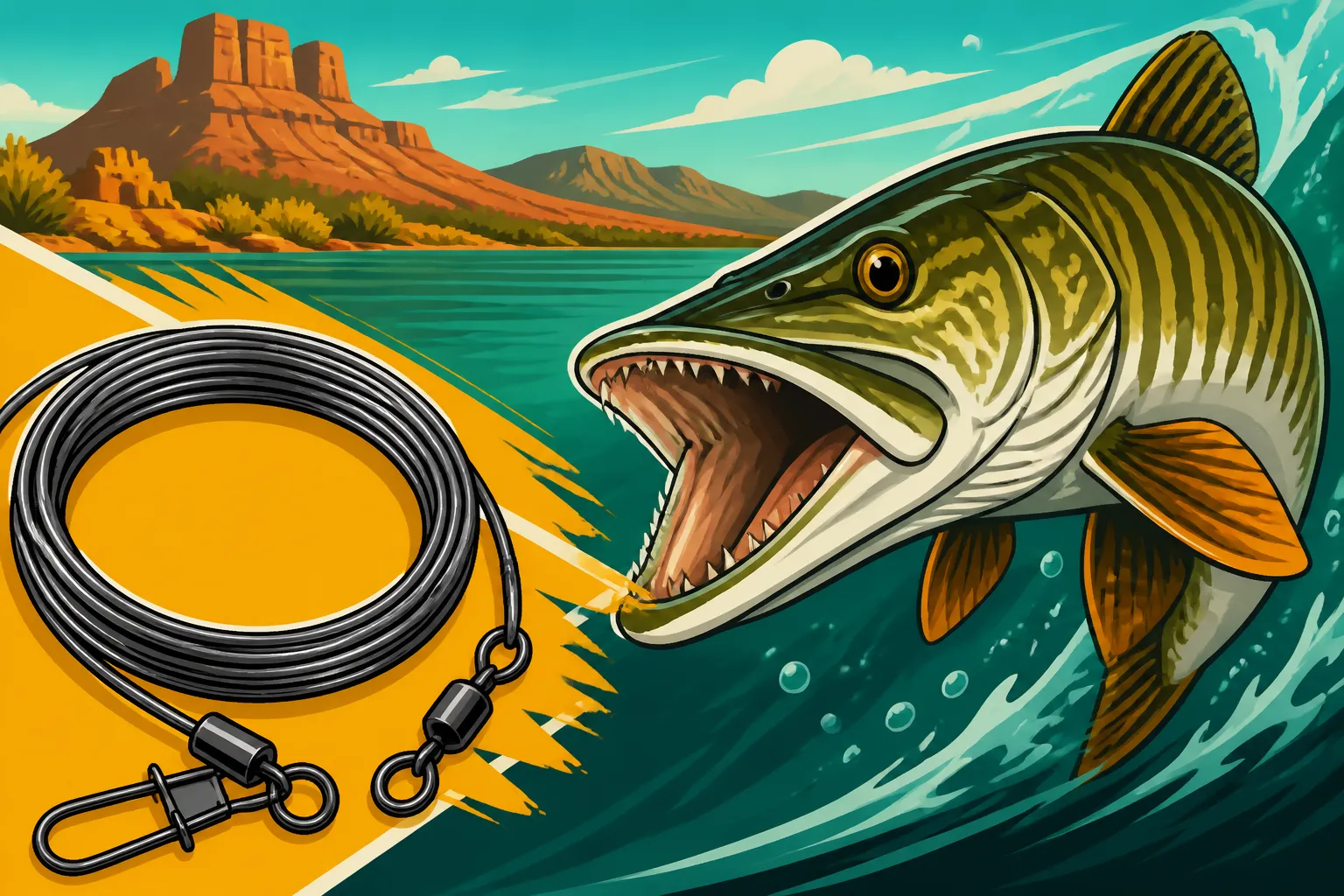
Best Leader Wire for Tiger Muskie Fishing
There are few things more disheartening in fishing than hooking into a true New Mexico monster, feeling that electrifying fight, only for your line to go limp because of a dreaded break-off. When you're targeting toothy predators like the tiger muskie, a standard monofilament or fluorocarbon main line simply won't cut it against their impressive array of dental weaponry. This guide is your ultimate resource for understanding, selecting, and rigging the best leader wire to conquer New Mexico's tiger muskie, ensuring you land that once-in-a-lifetime fish.
The Non-Negotiable Necessity of a Leader Wire for Tiger Muskie
Anglers often learn the hard way: tiger muskie are not your average fish. Their aggression and razor-sharp teeth demand specialized gear, and at the top of that list is a high-quality leader wire. Without it, you're essentially gambling your expensive lures and your chance at a trophy on a coin flip.
The Razor-Sharp Reality of Tiger Muskie Teeth
Tiger muskie possess a mouth full of needle-sharp teeth, often described as a "minefield" for your fishing line. Unlike some other predatory fish that might have a few sharp points, a muskie's entire mouth cavity is lined with rows of cutting edges. When a muskie strikes, whether it's a subtle take or an explosive ambush, these teeth can sever even strong fishing lines in an instant. A quick head shake or a roll at the boat and snap – your line is gone, often with your favorite lure still firmly embedded in the fish's jaw. It’s a frustrating scenario many muskie anglers know all too well, especially when fishing for big fish in places like Bluewater Lake. Even a brief moment of contact can be enough for them to chew through a 20-pound fluorocarbon leader like it’s nothing.
Protecting Your Investment in Lures and Time
Let's be real, tiger muskie lures aren't cheap. High-quality swimbaits, jerkbaits, and bucktails can easily run you a significant amount, and losing one to a toothy muskie is a costly experience. Think of a leader wire as an insurance policy for your tackle box. Beyond the financial investment, there's the investment of your time. You've spent hours researching spots, maybe consulted guides on Where and How to Target Tiger Muskie, traveled to a remote lake, and finally located fish. To have all that effort culminate in a break-off that could have been prevented by a proper leader is genuinely deflating. A robust leader wire ensures that when that muskie hits, you have a fighting chance to bring it to the boat, admire it, and get your lure back. It’s about being prepared for the powerful fight and the unique anatomy of these incredible game fish.
Exploring Your Options: Types of Leader Wire for Tiger Muskie
When it comes to leader material for tiger muskie, you have a few excellent options, each with its own set of advantages and considerations. Your choice often depends on water clarity, personal preference, and the specific fishing technique you're employing.
Stainless Steel Wire Leaders
Stainless steel wire is the traditional heavyweight champion when it comes to tooth-proof leaders. It offers unparalleled cut resistance, making it an incredibly reliable choice for muskie fishing. Steel leaders come in various forms:
- Single Strand Wire: This is the most basic and arguably the most abrasion-resistant. It's stiff, which can sometimes impact lure action, and it kinks easily once bent. Many anglers choose single strand for its sheer strength and direct connection to the lure. When it comes to tying, you'll almost exclusively be using haywire twists, which require a bit of practice but form an incredibly strong connection.
- Multi-Strand Wire (e.g., 7-Strand, 49-Strand): These leaders consist of multiple fine wires braided or twisted together, often coated in nylon. They are much more flexible than single-strand wire, offering a more natural lure presentation and better casting performance. The flexibility reduces kinking issues common with single-strand. You can find excellent multi-strand options at most well-stocked tackle shops, like those you might browse online at Amazon or in person at Bass Pro Shops. While incredibly strong, multi-strand wire, especially when severely abraded, can sometimes fray, making regular inspection crucial.
Steel leaders are fantastic in situations where maximum durability is your primary concern, such as fishing in heavy cover or for extremely aggressive fish. However, their visibility can be a drawback in exceptionally clear water, as some anglers believe muskie might detect the leader, though this is often debated.
Heavy-Duty Fluorocarbon Leaders
While not technically "wire," heavy-duty fluorocarbon leaders (usually 80-pound test and up, sometimes as high as 130-150 pound test) have gained immense popularity for muskie fishing. Fluorocarbon offers several distinct advantages:
- Low Visibility: It has a refractive index very close to water, making it nearly invisible underwater. This stealth factor is a huge plus, especially in clear lakes or pressured waters where muskie might be leader-shy.
- Good Abrasion Resistance: While not entirely tooth-proof like steel, high-test fluorocarbon is surprisingly tough against abrasion. It can withstand a fair amount of rubbing against a muskie's teeth before breaking, particularly if the fish is hooked well and the line isn't deeply abraded.
- Excellent Knot Strength: Unlike wire, fluorocarbon can be tied directly to your main line and lure with strong, reliable knots, eliminating the need for crimps or specialized twists. Knots like the Albright or FG knot can connect your main braided line to the fluorocarbon leader effectively.
However, it's crucial to understand that fluorocarbon can be cut by a muskie's teeth, especially if they clamp down repeatedly or the line gets pinched. It's a calculated risk some anglers take for the added stealth. Always check your fluorocarbon leader after every fish, or even after a strong strike, for nicks or abrasions. If you feel any roughness, it's time to re-tie.
Titanium Leaders
Titanium leaders represent the cutting edge (pun intended) in muskie leader technology. They offer a compelling blend of strength, flexibility, and unique properties that make them highly desirable:
- Kink Resistance: The most significant advantage of titanium is its super-elasticity. It can be bent and twisted repeatedly without kinking or taking a permanent set, unlike steel wire. This means your leaders last longer and maintain optimal lure action.
- Strength-to-Weight Ratio: Titanium is incredibly strong for its diameter, often allowing for lighter leaders that still provide exceptional protection.
- Corrosion Resistance: It's naturally corrosion-resistant, making it excellent for all water types and ensuring longevity.
The main downside to titanium leaders is their cost, which is typically higher than steel or fluorocarbon. They are also usually best attached using crimps rather than knots, which requires a specific crimping tool and sleeves. Despite the higher price point, many serious muskie anglers consider titanium an investment that pays off in durability and performance. Brands like New Mexico Fishing Regulations Overview sometimes have specific rules for leader materials in certain special waters, so it's always good to double-check.
Here's a quick comparison of these leader types:
| Leader Material | Key Advantages | Key Disadvantages | Best Use Cases |
|---|---|---|---|
| Stainless Steel | Ultimate cut resistance, very durable | Prone to kinking, visible, can be stiff | Heavy cover, aggressive fish, maximum security |
| Heavy Fluorocarbon | Low visibility, good abrasion resistance, knot-able | Can be cut by extreme tooth contact | Clear water, leader-shy fish, balanced approach |
| Titanium | Kink-resistant, high strength-to-weight, flexible | Most expensive, often requires crimping | All-around performance, durability, lure action |
Sizing It Up: Choosing the Right Strength and Length
Once you've decided on your material, the next crucial steps are selecting the appropriate pound test and length for your tiger muskie leader. These choices significantly impact your leader's effectiveness and your overall fishing experience.
Understanding Pound Test for Muskie Leaders
The pound test of your leader wire refers to the amount of force it can withstand before breaking. For tiger muskie, you need leaders in the heavy-duty range. Most muskie anglers will use leaders ranging from 80-pound test up to 150-pound test, depending on the material and specific conditions.
- 80-100 Pound Test: This range is often sufficient for most situations, especially with quality steel or titanium. It offers a good balance of strength and manageability. If you’re targeting average-sized tiger muskie in New Mexico, say at Bluewater Lake, this might be your sweet spot.
- 120-150 Pound Test: When you're throwing truly massive lures, or specifically targeting trophy-class fish, bumping up to 120-150 pound test provides an extra layer of security. This is especially true for fluorocarbon, where the thicker diameter adds more protection against cutting. Remember, the New Mexico Fishing License Guide is your first step before even thinking about what size leader you need!
Factors like the size of your lures also play a role. Heavier lures generate more torque and strain on your leader during casting and retrieving, so a stronger leader prevents potential failures. Water clarity can also influence this decision; in very clear water, you might opt for the lowest practical pound test (e.g., 80 lb) in fluorocarbon for stealth, while in stained water, you can go heavier without concern for visibility.
Finding the Ideal Leader Length
Leader length is another critical consideration that directly impacts your chances of landing a tiger muskie. The primary goal is to ensure the leader is long enough that the muskie cannot bite through your main line, even if it engulfs the lure deeply or rolls wildly.
- The "Head Length" Rule: A good rule of thumb is to make your leader at least as long as the largest muskie's head you expect to encounter. This generally translates to a leader between 12 and 24 inches long.
- Why Too Short is Bad: If your leader is too short, a muskie can easily turn its head and bite through your braided main line. This is a common mistake for beginners. Imagine a large muskie thrashing boatside; if your leader only extends six inches, that main line is very vulnerable.
- Why Too Long Can Be Troublesome: While more protection is good, an excessively long leader can hinder casting performance, especially with lighter lures. It can also interfere with the natural action of some baits, particularly those designed for specific dives or erratic movements. For specific techniques like trolling, where casting isn't an issue, you might sometimes opt for slightly longer leaders. When considering a New Mexico Fishing License for Visitors on Vacation, remember that understanding these nuanced gear choices can make or break your trip.
For most casting applications, a leader between 15 and 18 inches offers an excellent balance of protection and casting efficiency. If you're fishing smaller bucktails or spinnerbaits, you might go a touch shorter, while larger swimbaits might warrant a slightly longer leader. Always ensure your chosen length allows for a secure connection to your main line and still keeps those sharp teeth away from anything you don't want them to sever.
Rigging for Success: Essential Leader Connections and Hardware
Having the right leader material and length is only half the battle. How you connect your leader to your main line and to your lure, along with the quality of your terminal tackle, are equally important. These connections are often the weakest link if not done correctly.
Secure Connections: Knots and Crimps
The way you attach your leader depends heavily on the material you've chosen:
- Knots for Fluorocarbon: If you're using heavy fluorocarbon, robust knots are your go-to. To connect your braided main line to the fluorocarbon leader, strong joining knots like the FG knot, Alberto knot (modified Albright), or Uni-to-Uni knot are excellent choices. Practice these knots until you can tie them quickly and reliably, as a poorly tied knot can reduce the line's strength significantly. For attaching the fluorocarbon leader to your snap swivel, an improved clinch knot, Palomar knot, or a strong loop knot (like a non-slip mono loop for topwater lures) works well. Always moisten your knots before tightening to prevent friction from weakening the line.
- Crimping for Steel and Titanium: When working with single-strand steel, multi-strand wire, or titanium, crimping is often the preferred and most reliable method for creating loops. This involves using specialized crimping sleeves and a crimping tool. Good quality crimps, correctly applied, create a connection that is often stronger than a knot in these materials. Make sure to use the correct size crimp for your leader diameter, and double-barrel crimps are often preferred for added security. Never over-crimp or under-crimp, as both can weaken the connection. If you're buying pre-made leaders, especially from reputable brands found at Bass Pro Shops or Amazon, they'll usually be expertly crimped. For those looking to build their own, a decent crimping kit is a worthwhile investment.
Always inspect all your connections before and during your fishing session. Even a slight imperfection can be a potential point of failure when a muskie decides to strike.
Robust Hardware: Swivels, Snaps, and Split Rings
The small pieces of metal connecting your leader to your main line and your lure are absolutely crucial. Skimping on hardware quality is a surefire way to lose a fish and a lure.
- Heavy-Duty Ball Bearing Swivels: Muskie lures, especially bucktails and spinnerbaits, can cause significant line twist. A high-quality ball bearing swivel placed between your main line and your leader will virtually eliminate this issue. Don't use cheap, barrel swivels; invest in premium ball bearing swivels that can withstand the torque of large lures and fighting fish.
- Strong Snaps: You'll want a snap at the end of your leader to quickly change lures. However, not all snaps are created equal. Avoid flimsy, basic snaps that can bend or break under pressure. Look for heavy-duty options like Cross-Lok snaps, Stay-Lok snaps, or similar designs that offer maximum security. These snaps are designed to resist opening even under extreme stress from a thrashing muskie. Many anglers opt for black or dark-finished snaps to minimize visibility.
- Robust Split Rings: Ensure the split rings on your lures are also up to par. Many lures come with decent split rings, but some, especially on cheaper baits, might be too weak. If you're using a lure with a questionable split ring, replace it with a heavy-duty, stainless steel split ring immediately. A muskie can easily straighten out a weak split ring, leading to a lost fish and lure.
Remember, your entire system is only as strong as its weakest link. A perfect leader material and length won't matter if your knot slips or your snap opens. Investing in quality terminal tackle, just like you would with Best Rods and Reels for New Mexico Trout Fishing, is essential for tiger muskie success. Regularly check your snaps and split rings for any signs of fatigue or bending. If they look worn or compromised, replace them without hesitation. When you're out there on the water, battling a powerful What a Tiger Muskie Is, the last thing you want to worry about is gear failure due to an oversight.
Disclaimer
This article is for general informational purposes only and does not constitute professional advice. Laws, prices and regulations vary by location and change over time. Consult a qualified professional for guidance on your specific situation.