Do You Need Steel Leader for Tiger Muskie?
It's a familiar gut-wrenching feeling: you've spent hours on the water, meticulously casting, working your retrieve, and then, a massive strike! Your rod bends, the reel screams, and for a few exhilarating moments, you're locked in an epic battle with a powerful fish. Then, suddenly, the line goes slack. You reel in to find nothing but a frayed, snapped line, and the realization hits – a toothy predator just made off with your lure and your chance at a trophy. If you're targeting the elusive and formidable Tiger Muskie in New Mexico, this scenario is a real possibility, and it's why understanding leader material is absolutely crucial for success. This guide is here to unravel the mystery of fishing for these aggressive hybrids, specifically tackling the burning question of whether steel leader is truly necessary to land one of these toothy critters.
Understanding the Tiger Muskie's Predatory Nature
Let's get one thing straight: Tiger Muskie are built for hunting. They aren't dainty eaters; they're apex predators in the waters they inhabit. In New Mexico, especially in lakes like Bluewater Lake, these fish have a reputation for being incredibly powerful and having a mouth full of sharp, needle-like teeth. Ignoring their dental capabilities is like bringing a butter knife to a steak dinner – you're just not prepared for the main course!
The Anatomy of a Toothbrush Mouth
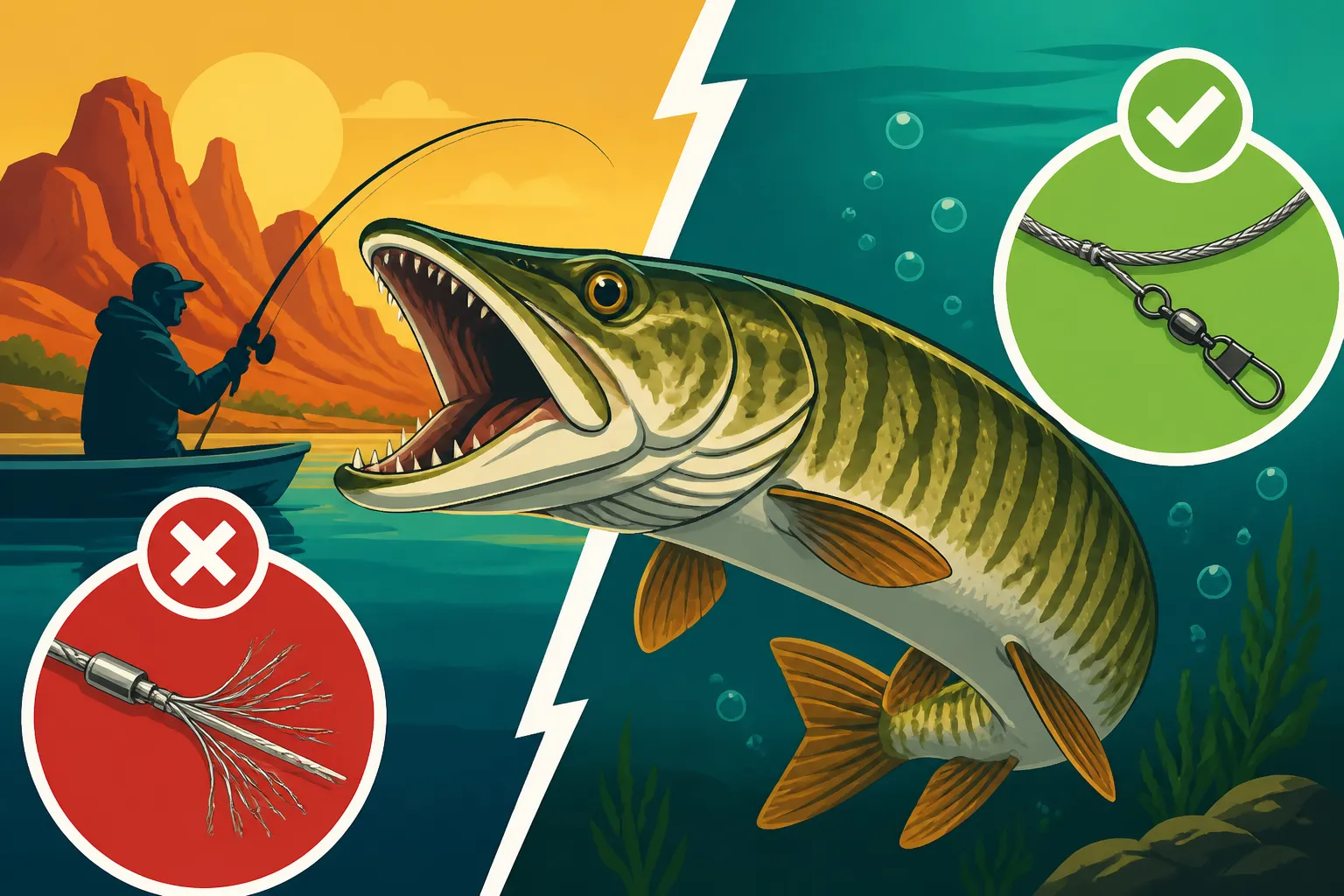
Imagine a fish that's essentially a freshwater barracuda, long and muscular, with a jaw full of formidable weaponry. That's a Tiger Muskie. Their mouths are lined with rows of backward-pointing teeth, not just on the main jawbone, but also on the roof of their mouth and even on their tongue. These teeth are designed to hold onto struggling prey, and they are incredibly efficient at slicing and dicing. A single shake of their head can put immense pressure on your line, and if that line comes into contact with even one of those teeth, it's game over for anything but the most robust materials.
What many anglers don't realize until they actually get a muskie to the boat is just how rough their mouths feel. It's not just the sharp points; the bone structure and gill plates inside are also abrasive. When a muskie clamps down or rolls, your line is rubbing against a gauntlet of shredding surfaces. Regular monofilament or even standard fluorocarbon, which is relatively abrasion-resistant for other species, simply cannot withstand this kind of assault. You’d be amazed how quickly even a heavy test line can be compromised, leading to that heartbreaking snap.
How Muskie Attack and Why It Matters
Tiger Muskie are ambush predators. They'll lurk in cover – submerged timber, weed lines, or rocky drop-offs – waiting for an unsuspecting meal to swim by. When they strike, it's typically a violent, explosive attack. They engulf their prey headfirst, turning it quickly to swallow. This means your lure, and by extension your leader, is often deep within their mouth during the initial strike and subsequent fight.
During the fight, muskie are known for powerful runs, deep dives, and impressive head shakes. These head shakes are particularly problematic because they cause the line to whip around inside their mouth, grinding against those myriad teeth. A fish might shake its head several times, each time increasing the likelihood of a complete severance. This aggressive behavior, coupled with their dental array, is precisely why a specialized leader material isn't just a suggestion; it's a fundamental requirement for consistent success when targeting Tiger Muskie in New Mexico. Without it, you're essentially donating expensive lures to the muskie population, and trust me, they don't send thank-you notes.
Why Steel Leader is the Go-To for Tiger Muskie
Given the muskie's formidable dental setup, it becomes clear that standard fishing lines, no matter how strong, are simply inadequate for the task. This is where steel leader shines. It provides an impenetrable barrier between those razor-sharp teeth and your main fishing line, drastically increasing your chances of landing that trophy fish.
Different Types of Wire Leader
Not all wire leaders are created equal, and understanding the differences can help you choose the best option for your New Mexico muskie adventure.
- Single-Strand Wire: This is exactly what it sounds like: a single, solid strand of wire. It offers maximum bite resistance because there are no individual strands to fray. However, it's very stiff, prone to kinking, and can be difficult to work with, especially for tying knots (though crimps are typically used). Its stiffness can sometimes impact lure action, especially with smaller baits, making it less popular for muskie in general.
- Multi-Strand (Stranded) Wire: This is the most common type of steel leader used for muskie. It's made up of multiple fine strands of wire braided or twisted together, often seven or more strands. This construction makes it much more flexible and kink-resistant than single-strand wire, allowing for better lure presentation and easier handling. It's available in various strengths and coatings, providing a good balance of flexibility and tooth-proof protection.
- Coated Wire Leader: Many multi-strand wire leaders come with a nylon or plastic coating. This coating offers several benefits: it reduces kinking, prevents corrosion, and makes the leader smoother, which can reduce wear on knots and hardware. The coating also makes the leader slightly less visible in the water, a minor but sometimes appreciated benefit. Brands like American Fishing Wire (AFW) and Malin make excellent coated leaders. When you're browsing the aisles at Bass Pro Shops or searching for options on Amazon, you'll find a wide variety of these coated options.
Each type has its place, but for the majority of Tiger Muskie fishing scenarios in New Mexico, a high-quality multi-strand or coated multi-strand wire leader, typically in the 80 to 130-pound test range, will serve you best.
When to Choose Steel vs. Other Options
For Tiger Muskie, the answer is almost always steel, or at least a super-heavy-duty bite-proof wire. There's simply no other material that offers the same level of confidence against their teeth. Think of it as a crucial insurance policy for your expensive lures and your angling dreams. If you're specifically targeting muskie, skimping on the leader is a surefire way to experience disappointment.
However, if you're fishing for other toothy predators where the teeth aren't quite as extreme, like pike in certain waters, or even some large, aggressive bass with abrasive mouths, you might consider alternatives. For instance, some anglers use extremely heavy fluorocarbon (say, 80-100 lb test) for northern pike where visibility is a major concern, though even then, it's a calculated risk against a big pike's teeth. But for the gnashers of a Tiger Muskie, especially a big one, steel remains the gold standard. The visibility factor is often less critical for muskie than for other species, as they are often triggered by movement and vibration more than subtle presentation, making the benefits of steel far outweigh any potential drawbacks in clarity.
Alternatives to Steel Leader for Muskie (and Their Limitations)
While steel leader is highly recommended for Tiger Muskie, some anglers might wonder about alternatives. It's true that for certain species or in specific situations, other materials can be effective. However, when it comes to the toothy grin of a New Mexico Tiger Muskie, most alternatives come with significant limitations.
The Heavy Fluorocarbon Debate
One of the most common alternatives discussed is very heavy fluorocarbon leader, often in the 80 to 130-pound test range. Fluorocarbon has excellent abrasion resistance compared to monofilament, is nearly invisible underwater, and unlike steel, you can tie knots in it fairly easily. For species like largemouth bass, even giant ones, or for walleye where stealth and abrasion resistance are key, heavy fluorocarbon is fantastic.
However, for Tiger Muskie, it's a different story. While heavy fluorocarbon can withstand some contact with teeth, it is not truly bite-proof. A muskie's teeth are like tiny surgical scalpels, and they can saw through even thick fluorocarbon with repeated contact or a well-placed bite. Many a frustrated angler has tried going the heavy fluorocarbon route only to discover a clean, tell-tale cut in their leader after losing a prime muskie. The moment of truth often comes when the muskie performs one of its violent head shakes, and that heavy mono or fluoro leader rubs against multiple sharp points, leading to a quick and disheartening snap. It's simply not designed to withstand the sustained, multi-point pressure from a muskie's mouth.
| Leader Material | Bite Resistance | Visibility | Flexibility | Knot Tying | Cost (per spool/pack) | Best Use Case |
|---|---|---|---|---|---|---|
| Steel (Stranded/Coated) | Excellent | Good (coated) | Good | Crimps/Special | Moderate | Tiger Muskie, Pike, Barracuda |
| Heavy Fluorocarbon | Moderate | Excellent | Good | Good | Higher | Large Bass, Walleye, Pike (smaller) |
| Heavy Monofilament | Poor | Good | Excellent | Excellent | Low | General purpose, less toothy fish |
Other Exotic Materials
Beyond traditional steel and heavy fluorocarbon, some anglers experiment with other advanced materials. Titanium leader, for example, is another option. Titanium is incredibly strong, very lightweight, and extremely kink-resistant. It can offer excellent bite protection, often surpassing traditional steel in terms of durability and memory retention. However, titanium leaders tend to be significantly more expensive than steel options. While they are a viable alternative, their higher cost and sometimes more specialized rigging requirements mean they aren't as widely adopted by the general muskie fishing community, particularly when standard steel leaders perform so effectively.
Another specialized material sometimes used is a type of super-braid or fused line specifically designed for leader material. While these can offer incredible strength, their core weakness against muskie remains the same as fluorocarbon: they can still be cut by those sharp teeth, often cleanly. Unlike steel, which deflects and resists cutting, these materials can be cleanly severed if caught just right. So, while innovation brings new materials to the market, for the pure tooth protection needed for New Mexico's Tiger Muskie, traditional steel remains the most reliable and cost-effective choice. It's a tried-and-true solution for a reason, backed by decades of muskie anglers who simply refuse to lose their hard-earned catches to a missed leader choice.
Rigging Your Steel Leader for New Mexico Tiger Muskie
So, you're convinced that steel leader is the way to go for your New Mexico Tiger Muskie pursuit. Excellent! Now, let's talk about the practical side of things: how to properly rig your leader to ensure it performs its job flawlessly when that big muskie decides to strike. Proper rigging isn't just about protection; it's also about lure presentation and managing the fight.
Leader Length and Hardware
The length of your leader is important. For Tiger Muskie, a leader typically ranging from 12 to 24 inches is common. A shorter leader might be more stealthy or give some lures a better action, but it also increases the chance of your main line coming into contact with the fish's teeth during a long fight or a deep strike. A longer leader offers more protection, ensuring that even if the muskie thrashes wildly, your main line stays safe. For most situations, a 12-18 inch leader is a good starting point. Consider the size of the lures you're throwing as well; very large baits often warrant a slightly longer leader.
When it comes to hardware, don't skimp! You're dealing with powerful fish and heavy lures, so quality components are essential.
- Swivels: You'll want a heavy-duty ball-bearing swivel to connect your main line to your leader. This is crucial for preventing line twist, especially when casting large, rotating lures like bucktails or when fighting a fish that spins. A strong swivel also acts as a convenient connection point. Look for swivels with a breaking strength that matches or exceeds your main line, often 100-150 lb test.
- Snaps: At the business end of your leader, you'll need a robust snap to quickly attach and detach lures. A high-quality snap allows you to change baits without retying. There are various types, but a heavy-duty "coastlock" or "cross-lock" snap is ideal. Avoid cheap, flimsy snaps, as they can bend or break under the strain of a muskie fight. Just like swivels, these should be rated for heavy-duty use, generally 100-150 lb test. Some anglers prefer to use a solid ring and a heavy-duty split ring to attach lures, finding it more secure than a snap.
Remember, every component in your setup is a potential weak point. Investing in quality swivels and snaps is just as important as choosing a good rod and reel, or the right Best Lures for New Mexico Trout.
Where to Source Your Muskie Leaders
Finding high-quality steel leader materials and pre-rigged leaders is relatively easy these days, thanks to both specialized fishing retailers and online marketplaces.
If you prefer to buy pre-made leaders, which can save time and ensure professional crimping, reputable brands offer a wide selection. When you're heading out to fish in New Mexico, you can usually find a good assortment at larger sporting goods stores. Stores like Bass Pro Shops typically have dedicated sections for muskie and pike fishing, where you'll find various types of wire leaders, crimps, and heavy-duty snaps and swivels. Their staff might also be able to offer local advice on what sizes or styles are popular for the Tiger Muskie populations in New Mexico.
For those who enjoy the convenience of online shopping or might live a bit further from a specialty store, Amazon is an excellent resource. You can find bulk spools of multi-strand wire, crimping sleeves, crimping tools, and heavy-duty components from various brands. This allows you to build your own custom leaders, which can be more cost-effective in the long run, especially if you plan on doing a lot of muskie fishing. Just make sure to read reviews and choose products from well-regarded fishing tackle manufacturers. Building your own leaders also gives you the flexibility to experiment with different lengths and hardware configurations until you find what works best for you and the specific conditions you're fishing under. Don't forget to grab some heavy-duty crimping pliers if you go this route; they're essential for secure connections.
Disclaimer
This article is for general informational purposes only and does not constitute professional advice. Laws, prices and regulations vary by location and change over time. Consult a qualified professional for guidance on your specific situation.