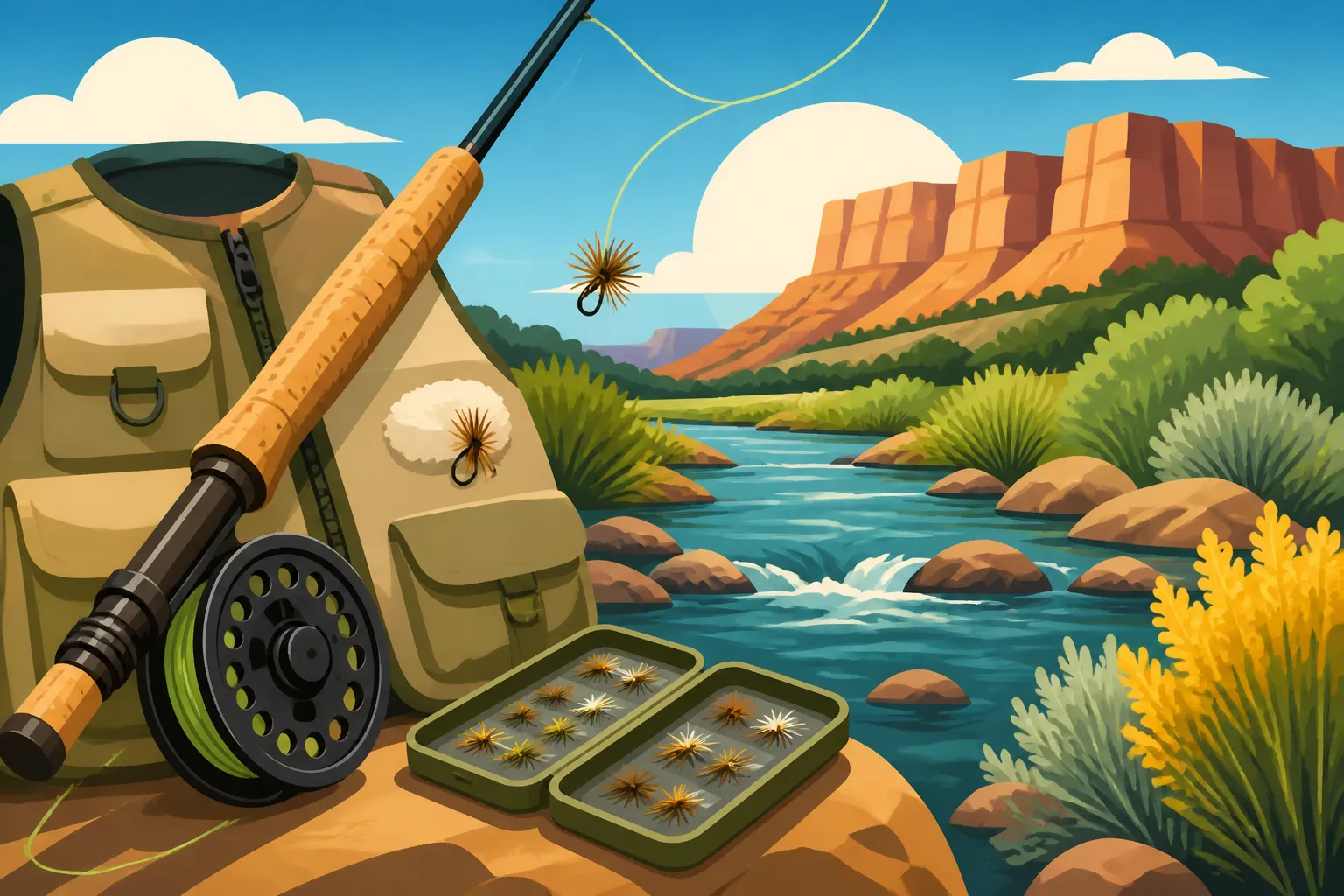
Fly Fishing Gear for New Mexico Rivers
Stepping into the world of fly fishing in New Mexico can feel like a beautiful, yet slightly daunting, adventure. Our rivers, from the famous San Juan to the pristine Pecos and the wild Gila, offer incredible opportunities, but they also demand specific gear to truly enjoy the experience. If you’ve ever stood in an outdoor store, staring at walls of rods, reels, and lines, feeling a bit lost about what you really need for our unique Land of Enchantment waters, you're not alone. This guide is here to cut through the confusion and help you confidently equip yourself for successful fly fishing adventures across New Mexico.
The Heart of Your Setup: Rods and Reels
Your rod and reel are the foundation of your fly fishing system. They work in tandem, balancing each other out to create an extension of your arm, allowing for precise casts and controlled fights with feisty New Mexico fish. Getting this pairing right can make all the difference between a frustrating day and a truly magical one on the water.
Choosing the Right Fly Rod for New Mexico's Rivers
When you start looking at fly rods, you'll immediately notice numbers like "3-weight," "5-weight," or "6-weight." These numbers aren't just arbitrary; they refer to the weight of the fly line the rod is designed to cast, which in turn dictates the size of flies and fish it's best suited for. For the diverse rivers of New Mexico, you'll likely want a versatile rod, but specialized options have their place too.
For most general trout fishing on mid-sized rivers like sections of the Rio Grande or the Chama, a 5-weight, 9-foot rod is often considered the workhorse. It's powerful enough to handle larger indicator rigs or streamers, yet delicate enough to present a dry fly to a rising trout. If you're planning on fishing smaller, brush-lined streams where pinpoint accuracy and smaller flies are key, a 3-weight or 4-weight rod might be a joy to cast. These lighter rods make even pan-sized trout feel like giants, adding to the fun. Conversely, if you’re heading to the famed San Juan River Quality Waters, where robust trout often require heavier nymph rigs or larger streamers, a 6-weight rod can offer more backbone and easier casting, especially when battling New Mexico's notorious winds. Understanding these nuances helps you select a rod that will genuinely enhance your experience, rather than fighting against you all day. Best Rod Setup for New Mexico Trout Fishing delves deeper into these choices.
Beyond weight, rod action—how much and where a rod bends—is another crucial factor. Fast-action rods bend mostly in the tip, offering power and distance, making them great for cutting through wind or casting heavy rigs, which is often a necessity on open New Mexico waters. Medium-action rods offer a good balance of power and feel, bending from the middle to the tip, making them incredibly versatile for different techniques and fly sizes. Slow-action rods bend deep into the blank, providing a delicate presentation ideal for small streams and dry fly fishing, where subtlety is everything. Given the variability of New Mexico's fishing, from technical tailwaters to high-mountain freestone streams, many anglers opt for a medium-fast action rod for general use, reserving faster or slower rods for specific situations or personal preferences. Don't be afraid to try a few different actions if you get the chance; what feels right for one angler might not for another.
Selecting a Reliable Fly Reel for New Mexico Waters
While the rod does the "work" of casting, your fly reel is far more than just a line holder. A good reel provides balance to your rod, stores your line neatly, and, most importantly, offers a smooth, reliable drag system—essential when a large trout decides to make a run for it.
The most critical feature of any fly reel for New Mexico fishing, especially when targeting larger trout, is a dependable drag system. Imagine hooking into a big brown trout on the San Juan River or a robust rainbow on a high-mountain lake; its initial burst of energy can spool your line in seconds if your drag isn't smooth and consistent. Look for reels with sealed drag systems, as they are less susceptible to grit, dirt, and moisture, which can be common hazards when fishing exposed New Mexico rivers. A high-quality drag will give line smoothly without jerks or stickiness, protecting your tippet from snapping under pressure and allowing you to tire out the fish effectively. Don't skimp on the reel, even if you think you'll only be catching smaller fish; the one time you hook into a true trophy, you'll be thankful for that consistent drag.
Matching your reel's weight to your rod's weight is key for overall balance. A well-balanced setup feels lighter in hand, reduces fatigue over a long day of casting, and improves casting accuracy. Most reel manufacturers will specify which rod weights their reels are designed for. For a 5-weight rod, you'd typically pair it with a 4/5 or 5/6 weight reel. Beyond balance, consider the reel's arbor size. Large arbor reels have a wider core, which allows for faster line retrieval – a big plus when a fish charges you – and reduces line memory, leading to fewer tangles and better line management. While a standard arbor reel works perfectly fine for most situations, the advantages of a large arbor reel, especially when you're wading in currents or dealing with a fast-moving fish, are undeniable. You can find a wide array of options at reputable outdoor retailers like Bass Pro Shops, where you can often try them out in person.
The Connection to the Fish: Fly Lines, Leaders, and Tippet
Once you have your rod and reel, the next crucial components are the line system. This is your direct connection to the fly and, ultimately, the fish. Understanding the different types and how they work together is vital for effective presentation and successful angling in New Mexico's diverse aquatic environments.
Understanding Fly Line Types for Diverse Conditions
Fly line isn't just a string; it's a precisely engineered tool designed to cast the virtually weightless fly and present it naturally to the fish. The type of line you choose will dramatically impact your ability to fish different depths and conditions, which vary widely across New Mexico's rivers and lakes.
For the vast majority of trout fishing in New Mexico, a weight-forward (WF) floating line is your bread and butter. The weight-forward design concentrates more mass towards the front of the line, making it easier to load the rod and cast longer distances, especially in windy conditions often encountered on our larger reservoirs or open river sections. A floating line is perfect for presenting dry flies, suspending nymphs under an indicator, or even stripping smaller streamers in shallower water. However, New Mexico's fishing isn't always shallow. For deeper nymphing, stripping larger streamers, or targeting fish that are holding closer to the bottom, you might need a sinking-tip or even a full-sinking line. Sinking-tip lines have a short section at the front that sinks, allowing your fly to get down quickly while the rest of your line floats, making it easier to mend and control. Full-sinking lines are designed for getting flies deep, fast, and staying there, ideal for fishing in reservoirs like Navajo Lake for kokanee or targeting deeper holding areas in rivers.
Beyond the basic floating or sinking properties, fly lines also come with various tapers and coatings designed for specific applications. Some lines are built with a more aggressive front taper to turn over large, wind-resistant flies, which can be useful when throwing big streamers for aggressive trout or bass. Others have a delicate front taper for subtle presentations of tiny dry flies, ideal for the finicky trout in crystal-clear mountain streams. Lines optimized for nymphing often feature a special coating or taper that helps them cut through the water faster and improve sensitivity to subtle takes. Many modern lines also come in dual colors, helping you visually track your line on the water and identify strikes. When selecting a line, consider not just the species you're targeting, but also the typical conditions of your chosen New Mexico fishing spots. A good fly line can be an investment, but it's one that pays off with better casting and more successful hook-ups.
The Crucial Role of Leaders and Tippet
Your leader and tippet are the invisible link between your heavy fly line and your delicate fly. This often-overlooked part of your setup is absolutely critical for presenting your fly naturally and fooling wary New Mexico fish.
A fly leader is a tapered piece of monofilament or fluorocarbon, designed to transfer the casting energy from your fly line smoothly down to your fly, allowing it to land gently and naturally. It starts thick at the butt end, attaching to your fly line, and gradually tapers down to a very fine point where you attach your tippet. This taper is essential for "turning over" the fly and presenting it realistically, avoiding a splashy landing that could spook fish. Leaders come in various lengths, typically from 7.5 feet to 12 feet. Longer leaders (10-12 feet) are generally preferred for spooky fish in clear water or when delicate dry fly presentations are needed, common on rivers like the San Juan River Quality Waters or high-mountain lakes. Shorter leaders (7.5-9 feet) are more forgiving for beginners, easier to cast in windy conditions, and better suited for heavy nymph rigs or streamers. The material also matters: nylon leaders are flexible and float well, great for dry flies, while fluorocarbon leaders sink quickly and are nearly invisible underwater, making them ideal for nymphing.
Tippet is the final, finest section of line that you tie directly to your fly. It's designed to be easily replaced, saving your more expensive leader from getting too short. Tippet is denoted by an 'X' rating (e.g., 5X, 6X, 7X), which corresponds to its diameter and breaking strength. A lower 'X' number means a thicker, stronger tippet, while a higher 'X' number means finer, more delicate tippet. For instance, 5X tippet is a good all-around choice for many New Mexico trout scenarios, offering a balance of strength and stealth. However, if you're fishing tiny dry flies to highly educated trout, you might need to drop down to 6X or 7X for better presentation. Conversely, if you're throwing large streamers or fishing for larger, stronger species, you might step up to 4X or even 3X. Always match your tippet strength to your fly size and the size of the fish you expect to catch, erring on the side of caution. Carrying a spool of 4X, 5X, and 6X tippet will cover most situations you'll encounter on New Mexico's trout streams. Barbless Hook Fishing Technique for New Mexico Rivers highlights how these fine connections become even more critical when striving for minimal impact on fish.
Staying Dry and Comfortable: Waders and Wading Boots
Fly fishing often means getting in the water, not just standing by it. To truly explore New Mexico's rivers, from the chilly San Juan to warmer summer flows, you'll need reliable waders and sturdy wading boots. Staying dry and comfortable makes a huge difference in your ability to focus on fishing and enjoy your time outdoors, regardless of the conditions.
Choosing the Right Waders for New Mexico's Climate
New Mexico’s climate can be notoriously variable, swinging from chilly mornings to hot afternoons, or from bone-dry conditions to sudden monsoon downpours. Your waders need to be up to the task of keeping you comfortable through these changes, allowing you to focus on the fish, not on shivering or sweating.
Breathable waders, typically made from multi-layered nylon or advanced materials like Gore-Tex, are the gold standard for most New Mexico fly fishing. They excel because they allow perspiration to escape, preventing that clammy, uncomfortable feeling on warmer days, while still providing a waterproof barrier against the river. This breathability is crucial for hiking into remote spots or simply spending a full summer day on the water where temperatures can fluctuate dramatically. Chest waders, which come up to your chest, offer the most protection and versatility for navigating deeper runs, crossing currents, or simply giving you more flexibility in varying water depths. They are definitely the recommendation for most of New Mexico's larger rivers. However, for smaller, shallower streams or in the heat of summer, some anglers opt for hip waders, which only come up to your hips, offering less coverage but more freedom of movement and cooler wear. Ultimately, investing in a good quality pair of breathable chest waders that fit well will serve you best for the widest range of New Mexico fly fishing scenarios, from the cool tailwaters of the San Juan to the warmer, shallower stretches of the Rio Grande in the south. Brands like Simms, Orvis, and Redington offer durable options that you can find at most major outdoor retailers or online at places like Amazon.
Beyond material and style, durability is a huge factor when considering waders for New Mexico. Our landscape is rugged, often involving thorny bushes, sharp rocks, and abrasive terrain on the hike in and out of prime fishing spots. A cheap pair of waders might save you money upfront, but a tear or leak halfway through a long day can quickly ruin the experience. Look for waders with reinforced knees and seat, durable seam construction, and quality zippers or buckles. Proper fit is also paramount; waders that are too tight will restrict movement and create stress points, leading to leaks, while waders that are too baggy can be cumbersome and collect water. Always try on waders with the layers you expect to wear underneath, ensuring full range of motion and no uncomfortable pinching. Remember, these aren't just about staying dry, they're about providing a comfortable and protective shell against the elements so you can truly enjoy your time in the wilderness. Best Waders for New Mexico Rivers offers more detail on this essential piece of gear.
Essential Wading Boots for Secure Footing
Once you’re in your waders, the next critical piece of gear for navigating New Mexico's diverse river bottoms is your wading boots. Our rivers present a mix of challenges: slick, algae-covered rocks, loose gravel, muddy banks, and often uneven terrain, making secure footing not just about comfort, but about safety.
When selecting wading boots, the sole type is paramount. Felt soles, historically popular, offer excellent grip on smooth, algae-covered rocks – a common feature in many New Mexico rivers. However, felt can pick up invasive species (though many manufacturers offer treatment kits), and they perform poorly on mud, snow, or dry ground, often becoming very slippery when walking on riverbanks. Rubber soles, on the other hand, are much more versatile for varied terrain, performing better on mud and dry ground, and are often preferred by anglers who hike to their fishing spots. For superior grip on those notoriously slick New Mexico riverbeds, many anglers opt for rubber soles equipped with screw-in studs or boots designed for permanent studded soles. These studs provide incredible traction, giving you confidence even in swift currents or on treacherous rock formations. It's often a trade-off: maximum grip on rocks versus versatility on other surfaces. Many seasoned New Mexico anglers carry both studded and non-studded options or choose a hybrid.
Beyond the sole, look for wading boots that offer excellent ankle support. Crossing uneven riverbeds or navigating swift currents can put a lot of strain on your ankles, and a sturdy boot can prevent twists and sprains, keeping you on your feet and in the water. Durability is also key; wading boots take a beating from rocks, sand, and constant immersion, so look for reinforced toe caps, strong stitching, and robust lacing systems. The fit should accommodate your wader's neoprene booties, so always try them on together. Remember, a comfortable, well-fitting boot means you’re less likely to slip, stumble, or experience foot fatigue, allowing you to explore more of New Mexico's beautiful, sometimes challenging, waters safely. Consider checking out brands like Simms or Patagonia for reliable options that stand up to the rigors of our high desert and mountain environments. Best Wading Boots for New Mexico's San Juan River expands on these considerations.
Essential Tools and Accessories for the Fly Angler
While rods, reels, and waders form the core, a collection of smaller, specialized tools and accessories will greatly enhance your efficiency, comfort, and success on New Mexico's rivers. These items might seem minor, but they often make the difference between a smooth fishing experience and a frustrating one.
Must-Have Tools on the River
Fly fishing often requires quick adjustments, precise knot tying, and careful handling of fish. Having the right tools readily accessible can save time, prevent headaches, and ensure you're practicing ethical catch-and-release.
First and foremost, a good pair of nippers and forceps are non-negotiable. Nippers, often attached to a lanyard or zinger on your vest, allow you to quickly and cleanly cut tippet and leader materials. Forget fumbling with your teeth or a dull knife. Forceps (or hemostats) are invaluable for safely removing hooks from a fish's mouth, especially when using small flies. They allow you to pinch down barbs (which is a requirement on many of New Mexico's special trout waters, like the San Juan Quality Waters) and gently extract the hook, minimizing stress and injury to the fish. A small, retractable knot-tying tool, like a knot tyer or a small pair of scissors, can also be incredibly useful for quickly and securely tying various knots, especially when your fingers are cold or wet. Next, consider fly floatant for your dry flies. A tiny container of liquid or gel floatant keeps your dry flies riding high on the water, making them visible to you and attractive to trout. For those keen on understanding the subtle nuances of the river, a stream thermometer can be a revelation. Knowing the water temperature can help you understand fish activity, insect hatches, and overall conditions, allowing you to adapt your approach. And finally, for those planning to keep fish within regulations, a priest (a small, weighted club) offers a humane way to dispatch your catch quickly and ethically.
Carrying Your Gear: Vests, Packs, and Chest Packs
How you carry all your essential tools, fly boxes, and other necessities is crucial for accessibility and comfort. New Mexico's fishing spots can range from easy roadside access to long hikes into the backcountry, and your carrying system needs to adapt.
The traditional fly vest, with its myriad pockets and attachment points, remains a popular choice. Vests distribute weight evenly across your shoulders, keeping your essentials within easy reach and off your back, which can be advantageous in hot weather or when wading deep. They are fantastic for organizing a large number of fly boxes, leaders, tippet spools, and tools. However, some anglers find them a bit bulky or warm in the peak of summer. Alternatively, chest packs offer a more streamlined, compact option, keeping your most-used items right in front of you. They are often preferred by minimalist anglers or those who combine them with a small backpack for extra layers or water. They are particularly useful when deep wading, as your gear stays above the waterline. For anglers who carry more gear, extra layers, or water for longer hikes to remote high-mountain lakes or stretches of the Gila River, a fishing backpack is often the best choice. These packs keep the weight on your back, leaving your chest free, and can be combined with a small chest pack for quick access to essential tools. Many fishing-specific backpacks feature hydration sleeves, extra compartments for lunch, rain gear, or camera equipment, making them ideal for full-day or multi-day excursions. Ultimately, the best carrying system is one that keeps your gear organized, accessible, and comfortable for the type of fishing you do most in New Mexico. Browse options online at Amazon or try them on in person at Bass Pro Shops to see what feels best.
Fly Selection and Storage: Matching the Hatch
The fly itself is the ultimate offering to the fish, and having the right patterns is paramount. New Mexico's waters host a variety of insect life and baitfish, and successful fly fishing often comes down to presenting a fly that mimics what the fish are currently eating.
Building Your New Mexico Fly Box
New Mexico's diverse ecosystems mean a diverse menu for its fish. From tiny midges on the San Juan to hefty stoneflies on the Pecos or baitfish in larger reservoirs, your fly box needs to reflect this variety to ensure you have an offering that matches the prevailing conditions.
When building a New Mexico fly box, think of it in categories: nymphs, dry flies, and streamers. Nymphs, which imitate the underwater larval and pupal stages of insects, are often the most productive flies, as trout feed subsurface a vast majority of the time. Must-have nymphs include patterns like the San Juan Worm (a true New Mexico staple, especially after rain or snowmelt), Copper Johns, Pheasant Tail Nymphs, Hare's Ear Nymphs, and various midge patterns (zebra midges, tiny larva patterns) which are consistently effective on tailwaters like the San Juan River. Dry flies, which imitate adult insects on the water's surface, provide exhilarating visual strikes. For New Mexico, carry general attractor patterns like Elk Hair Caddis, Adams, and Parachute Adams, along with specific mayfly and caddisfly imitations in various sizes. Streamers, which imitate baitfish, leeches, or other larger prey, are excellent for aggressive fish or when targeting larger trout and bass. Woolly Buggers (in black, olive, and brown), Clouser Minnows, and Sculpzillas are all highly effective. Fly Selection for New Mexico's San Juan River offers more specific patterns for our famous tailwater. The key is not necessarily to have every fly under the sun, but to have a good range of sizes and colors within these categories to cover different hatches and conditions you might encounter, from the high desert to the high mountains.
Beyond these staples, understanding the concept of "matching the hatch" will elevate your success. This means observing what insects are active on or near the water – are tiny midges swarming? Are larger mayflies fluttering? – and then selecting a fly pattern that closely mimics that insect in size, shape, and color. This often requires a bit of local knowledge or asking at a local fly shop. Trout can be incredibly selective, keying in on a particular food source. However, when no specific hatch is occurring, or when you’re fishing for more opportunistic fish, attractor patterns (flies designed to simply look "buggy" and tempting) can be very effective. It's always a good idea to have a few "confidence flies"—those patterns that have consistently produced fish for you in the past, even if they don't perfectly match a hatch. Ultimately, a well-stocked and diverse fly box, combined with an understanding of insect life cycles and local conditions, will greatly increase your chances of success on any New Mexico river.
Protecting Your Precious Cargo: Fly Boxes and Storage
Once you’ve amassed a collection of flies, keeping them organized, protected, and easily accessible is paramount. A good fly box isn't just a container; it's a system that helps you quickly find the right fly when the fish are rising or when you need to make a rapid change.
Fly boxes come in a vast array of styles, materials, and sizes, each suited for different types of flies and storage preferences. For delicate dry flies, slotted foam inserts are excellent, holding each fly securely by the hook bend without crushing hackle or wings, ensuring they remain presentation-ready. Magnetic fly boxes are fantastic for tiny midges and nymphs, preventing them from scattering when opened. Compartment boxes are useful for larger streamers or for separating different patterns within your general collection. Many modern fly boxes are waterproof, featuring rubber gaskets that seal out moisture, which is a huge benefit when wading or in a sudden New Mexico rain shower. Imagine capsizing your kayak or slipping in the river only to find your entire fly collection waterlogged and rusty – a waterproof box prevents this nightmare.
Consider also how you organize your flies within the boxes. Many anglers dedicate specific boxes or sections of boxes to different categories: one for nymphs, one for dry flies, one for streamers. Some organize by size, others by color or insect imitation. The goal is to create a system that allows you to quickly identify and retrieve the fly you need without fumbling, especially when conditions are changing rapidly or you're trying to make a quick "match the hatch" decision. Carrying a couple of smaller, primary fly boxes in your vest or chest pack for the flies you expect to use most frequently, and a larger, secondary box in your fishing backpack as a backup or for less-used patterns, is a common and effective strategy for New Mexico's diverse fishing opportunities. Keeping your flies organized not only saves time but also protects your investment, ensuring they remain in prime condition for your next cast.
Safety and Comfort on the Water: Beyond the Basics
While catching fish is the main goal, ensuring your safety and comfort on the river should always be your top priority. New Mexico's natural beauty can sometimes be accompanied by unpredictable weather, swift currents, and rugged terrain. Being prepared for more than just the fish will make your fly fishing experiences much more enjoyable and secure.
Critical Safety Gear for New Mexico Rivers
Fly fishing on New Mexico's rivers, especially in areas with swift currents or deep pools, carries inherent risks. Being equipped with essential safety gear can mitigate these dangers and provide peace of mind for both you and your companions.
A wading staff is an often-underestimated piece of safety equipment. When navigating rocky, slippery riverbeds or crossing unfamiliar currents, a sturdy wading staff provides a crucial third point of contact, enhancing your stability and preventing potentially dangerous falls. Many collapsible staffs easily attach to your belt or pack, deploying quickly when needed. For those who frequently fish deeper waters, particularly from a float tube or kayak on larger New Mexico reservoirs, or in swift river sections, a personal flotation device (PFD) is non-negotiable. Even strong swimmers can be overwhelmed by strong currents, cold water, or unexpected obstacles. A lightweight, comfortable PFD designed for angling can literally be a lifesaver. Furthermore, always carry a basic first-aid kit. Minor cuts from hooks, scrapes from falls, or blisters from hiking are common occurrences, and having supplies for immediate treatment can prevent small issues from becoming larger problems. Finally, consider communication devices, especially when fishing alone or in remote areas. A fully charged cell phone is a start, but in many of New Mexico's wilderness areas, signal is nonexistent. A satellite messenger or personal locator beacon can provide a vital link to emergency services if you find yourself in a truly dire situation. These items aren't just for extreme expeditions; they are smart additions for any angler exploring New Mexico's beautiful, but sometimes challenging, waterways.
Staying Protected from the Elements
New Mexico is famous for its "Land of Enchantment" sunshine, but that sun can be intense, especially at higher elevations or on open water. Add in potential for sudden thunderstorms, chilling winds, or dramatic temperature swings, and it's clear that dressing for the elements is as important as dressing for the fish.
Sun protection is absolutely paramount. A wide-brimmed hat is essential for shielding your face, ears, and neck from the relentless New Mexico sun. Polarized sunglasses are another non-negotiable item, not just for reducing glare and allowing you to spot fish or underwater structure, but also for protecting your eyes from harmful UV rays and errant hooks. Sunscreen with a high SPF should be applied liberally and frequently, especially on exposed skin. Many anglers also wear lightweight, long-sleeved shirts made from technical fabrics that offer UPF (Ultraviolet Protection Factor) ratings, which are incredibly effective at preventing sunburn while still being breathable. Beyond the sun, prepare for sudden weather changes. Even on a clear morning, afternoon thunderstorms can roll in rapidly, particularly during the monsoon season. Always pack good quality rain gear – a lightweight, packable rain jacket and possibly rain pants – even if the forecast looks clear. Layering is also key: start with a moisture-wicking base layer, add an insulating mid-layer (like fleece), and then your waterproof outer shell. This system allows you to adapt to fluctuating temperatures throughout the day, ensuring you stay warm when it’s cold and cool when it’s hot, allowing you to stay focused on the incredible fishing New Mexico has to offer. Don't forget to stay hydrated; carry plenty of water, especially during hot summer months or strenuous hikes.
Disclaimer
This article is for general informational purposes only and does not constitute professional advice. Laws, prices and regulations vary by location and change over time. Consult a qualified professional for guidance on your specific situation.