Best Rod Setup for New Mexico Trout Fishing
Choosing the perfect rod setup for trout fishing in New Mexico can feel like a puzzle, especially with such a diverse range of waters, from tiny high-mountain streams to vast, open lakes and legendary tailwaters. Many anglers struggle with picking the right gear that won't feel overkill in one spot and underpowered in another. This comprehensive guide is here to untangle that confusion, walking you through the ideal rod and reel combinations to maximize your success and enjoyment on New Mexico's beautiful trout fisheries.
Understanding New Mexico's Diverse Trout Waters
New Mexico is a land of incredible contrasts, and its trout fisheries are no exception. What works for a feisty brook trout in a mountain trickle simply won't cut it for a trophy brown trout in a big river or a rainbow in a deep reservoir. Understanding the specific characteristics of these waters is the first step toward selecting the perfect rod setup.
High Mountain Streams and Small Creeks
When you're hiking into the Pecos Wilderness or exploring small, meandering creeks in the Carson National Forest, you're looking for a very specific type of fishing experience. These waters are often tight, brushy, and require precise, short casts. The fish, while often abundant, tend to be smaller, like wild Rio Grande cutthroat trout or brook trout. They spook easily, so delicate presentations are key.
Imagine trying to cast a long, heavy rod in an overgrown canyon—you'd spend more time untangling from branches than actually fishing! This is where lightweight, shorter rods truly shine. They allow for accurate flick-casts under branches, easy maneuvering in tight spaces, and make even a small trout feel like a champion fighter. The goal here isn't distance or brute strength; it's finesse and stealth.
Tailwaters and Larger Rivers
New Mexico boasts some truly world-class larger rivers and tailwaters, the most famous being the legendary San Juan River Quality Waters below Navajo Dam. These are often cold, clear, and rich in nutrients, allowing trout—primarily rainbow and brown trout—to grow to impressive sizes. Fishing these waters demands a balance of casting distance, line control, and the ability to handle powerful fish in strong currents.
You're likely to encounter more open stretches, requiring longer casts to reach feeding lanes, but also technical nymphing rigs that need precise mends. Fish in these rivers are often heavily pressured, making proper presentation and fighting technique crucial. A rod that's too light might struggle with casting larger indicator rigs or fighting a 20-inch brown, while one that's too heavy might lack the sensitivity needed for subtle takes. Understanding the San Juan River Fishing Guide is critical for these conditions.
Lakes and Reservoirs
From the vastness of Eagle Nest Lake to the smaller, picturesque Fenton Lake, New Mexico's lakes and reservoirs offer a different set of challenges and opportunities for trout anglers. Here, casting distance is often paramount, especially if you're fishing from the bank or targeting deeper areas from a boat without a trolling motor. You might be casting heavier spoons, spinners, or PowerBait a long way out, or trolling with downriggers.
The fish in these waters can vary greatly in size, from recently stocked rainbows to massive lake trout or kokanee salmon. You need a rod that can handle the stress of continuous casting, provide enough backbone to fight larger fish, and still offer enough sensitivity to detect light bites. When planning your trip, remember to check the Best Time of Year to Fish in New Mexico for specific lake species.
Spinning Rod Setups for New Mexico Trout
Spinning gear is a fantastic, versatile choice for many trout anglers in New Mexico, offering ease of use and the ability to throw a wide variety of lures and baits. Whether you're a seasoned pro or just learning How to Catch Trout in New Mexico, a well-matched spinning setup can make all the difference.
Rod Length, Power, and Action
When selecting a spinning rod for trout, these three characteristics are paramount:
- Rod Length: For those tight, brushy mountain streams and creeks (like those found in the Gila National Forest), a 5' to 6' ultra-light or light action rod is often ideal. It allows for pinpoint accuracy on short casts and helps you navigate around obstacles without snagging your rod tip. If you're tackling larger rivers or fishing from the bank on a smaller lake, a 6'6" to 7' light to medium-light action rod offers a good balance of casting distance and control. For bigger reservoirs where long casts are common, a 7' to 7'6" medium-light action rod will help you reach those distant fish and manage your line more effectively.
- Rod Power: This refers to the amount of force it takes to bend the rod. For most New Mexico trout fishing, you'll want something in the ultra-light, light, or medium-light range. Ultra-light is perfect for the smallest streams and pan-sized trout, making every fish a thrilling fight. Light power is a great all-around choice for many streams and smaller lakes. Medium-light offers a bit more backbone for casting heavier lures or fighting larger trout in bigger waters.
- Rod Action: This describes where the rod bends.
- Fast Action: Bends mostly in the tip. This is great for sensitive bite detection and quick hook sets, which is often crucial when trout are finicky or when fishing with jigs and soft plastics. Many anglers prefer fast action for larger rivers and lakes.
- Moderate Action: Bends in the upper half of the rod. This provides a more parabolic bend, which is excellent for casting lighter lures a good distance and for keeping hooks set during a fight, as it acts as a shock absorber. This can be a good all-around choice for varied fishing.
- Slow Action: Bends almost throughout the entire rod. Rarely used for trout, but sometimes found on older fiberglass rods.
Reel Size, Line, and Leader
Matching your reel to your rod is just as important as the rod itself.
- Reel Size: For ultra-light and light rods (5'-6'6"), a 1000 or 1500 series spinning reel is usually perfect. These smaller reels balance well, keeping the overall setup light and comfortable for hours of casting. For medium-light rods (6'6"-7'6"), a 2000 or 2500 series reel provides a bit more line capacity and cranking power, which is beneficial when targeting larger trout or casting further. Brands like Shimano, Daiwa, and Pflueger offer excellent options that you can often find on Amazon.
- Main Line: For most trout fishing in New Mexico, a 4-6 lb test monofilament or fluorocarbon line is a solid choice. Monofilament is forgiving and easy to cast, while fluorocarbon offers lower stretch, higher sensitivity, and is nearly invisible underwater. Many anglers spool up with 4lb mono for smaller waters and 6lb fluorocarbon for larger rivers and lakes. Braided line, typically 10-15 lb test, can also be used, especially on larger reels, but you'll almost always want to add a fluorocarbon leader for invisibility.
- Leader: A leader is crucial for trout fishing, providing an invisible connection to your lure or bait. Use 2-4 lb test fluorocarbon leader material, typically 18-36 inches long, tied to your main line with a small swivel or a line-to-line knot like an Albright or blood knot. The lighter the leader, the less visible it is, but also the more prone to breaking. Balance stealth with strength based on the water clarity and size of the fish you expect.
Essential Terminal Tackle
While not part of the rod setup itself, having the right terminal tackle completes the picture. For New Mexico trout, you'll want a variety of small treble and single hooks (sizes 10-18), appropriate for bait like PowerBait or worms. A selection of split shots or small sliding sinkers will help you get your bait to the desired depth. And don't forget small swivels to prevent line twist, especially when using spinners or spoons. Check out our guide on Best Lures for New Mexico Trout for specific recommendations.
Fly Fishing Rod Setups for New Mexico Trout
Fly fishing offers a uniquely engaging way to target trout, and New Mexico provides some truly exceptional fly-fishing opportunities. Getting your rod setup dialed in is key to a rewarding experience.
Fly Rod Weight and Length
Fly rod weights are measured in "weights" (wt), which correspond to the weight of the fly line they are designed to cast. The length helps with casting, line control, and fighting fish.
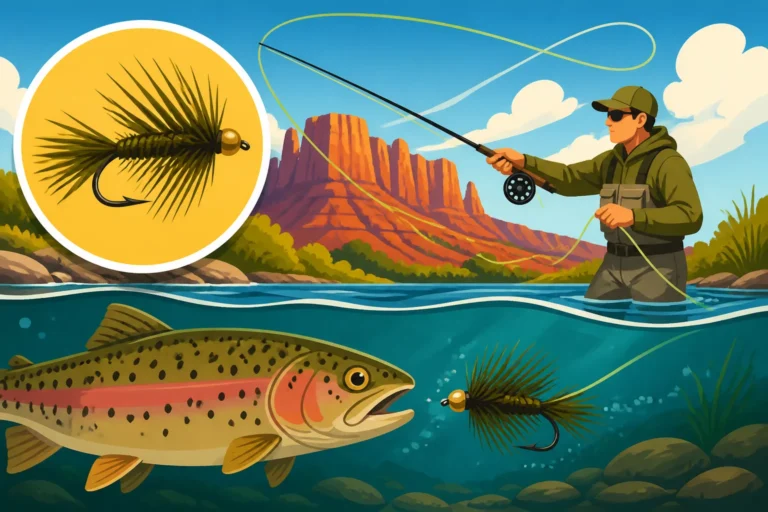
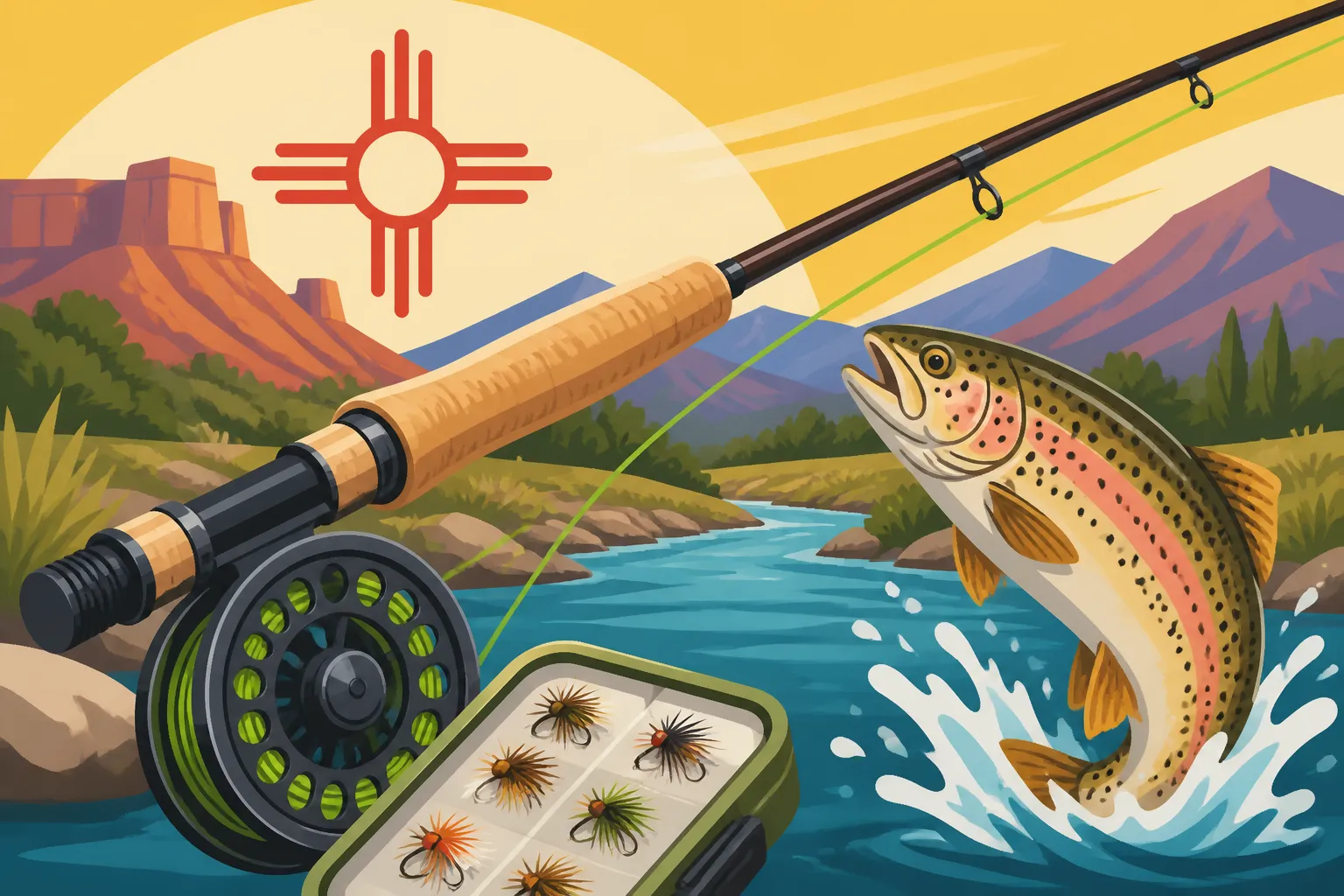
- For High Mountain Streams and Small Creeks: A 7' to 8'6" 2-weight or 3-weight fly rod is absolute magic in these environments. The shorter length allows for easier casting in tight quarters, and the lighter weight makes presenting small dry flies or nymphs a delicate affair. A 2wt or 3wt makes even an 8-inch cutthroat feel like a monster. This setup perfectly complements the challenge of fishing the upper stretches of the Rio Chama or other small, wild trout streams.
- For Tailwaters and Larger Rivers (like the San Juan River): The sweet spot here is a 9' 4-weight or 5-weight fly rod. The 9-foot length provides excellent line control for mending, crucial when nymphing complex rigs in currents, and helps with casting longer distances. A 4-weight offers a delicate presentation for small flies, while a 5-weight provides a bit more backbone for casting larger flies, indicator rigs, or fighting bigger fish. Many serious San Juan River anglers opt for a 5-weight for its versatility. Don't forget to review New Mexico Special Trout Water Rules before heading to these unique locations.
- For Lakes and Reservoirs: A 9' 5-weight or 6-weight fly rod is a good choice for stillwater fishing. The longer length aids in casting from shore or boat, and the slightly heavier weight helps turn over larger flies (like streamers) and manage windy conditions. A 6-weight can also be very useful if you plan on targeting larger species like kokanee salmon or big lake trout with bigger flies.
Fly Reel and Line Considerations
The fly reel often acts as a line storage device, but it also provides crucial drag for fighting fish. The line is what gives the rod its casting weight.
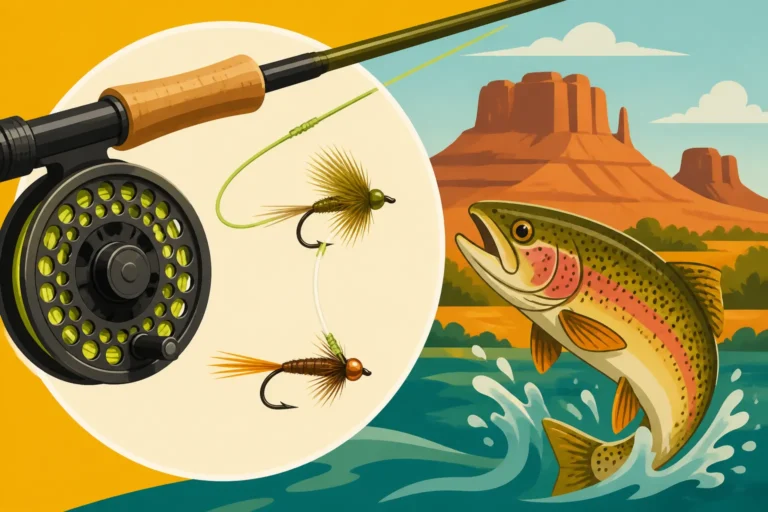
- Fly Reel: Your fly reel should balance the weight of your rod. For 2wt-3wt rods, a small, lightweight reel with a smooth, reliable drag is sufficient. For 4wt-6wt rods, a slightly larger reel with a disc drag system is preferred to handle the runs of larger trout. Look for a reel that holds your chosen fly line plus 50-100 yards of backing. Reputable brands include Orvis, Redington, and Lamson, with various models available on Amazon.
- Fly Line:
- Weight Forward (WF) Floating Line: This is the most versatile line for trout and is ideal for dry fly fishing, nymphing, and even some streamer fishing. It has a heavier front taper that helps load the rod for easier casting.
- Sinking Tip or Full Sinking Line: These are used for getting flies down deep in lakes or faster rivers when trout are holding near the bottom. Sinking tip lines are great for presenting streamers, while full sinking lines are often used for trolling or deep nymphing in lakes.
- Match the line weight to your rod's weight. So, a 5-weight rod should use a 5-weight line.
Leaders and Tippet for Stealth
In fly fishing, the leader and tippet are perhaps even more critical for success, as trout often have time to inspect your offering.
- Tapered Leaders: These are typically 7.5 to 9 feet long, tapering from a thick butt section (which connects to your fly line) down to a fine tip. The taper helps transfer casting energy smoothly, allowing your fly to land softly and naturally. For most trout fishing, a 4X to 6X tapered leader is a good starting point.
- Tippet: Tippet is the thinnest, final section of your leader, to which you tie your fly. It's usually a short piece (1-3 feet) of monofilament or fluorocarbon. It's designed to be the weakest link in your system, so if you get snagged, you only lose your fly and tippet, not your entire leader. It also helps with stealth.
- For delicate dry fly presentations or very finicky fish in clear water, 6X or 7X tippet might be necessary.
- For general nymphing or streamer fishing, 4X or 5X tippet is common.
- For larger flies or bigger fish in stronger currents, 3X tippet can provide extra strength.
Learning the nuances of New Mexico Trout Fishing Rules for specific waters, especially concerning fly and lure regulations, is always a good idea.
Specialized Considerations and All-Around Options
While specific setups excel in specific conditions, there are always nuances and ways to make your gear more versatile.
Balancing Your Setup for Optimal Performance
The best rod setup isn't just about having the right individual components; it's about how they work together as a harmonious system. A well-balanced spinning rod, for instance, should feel comfortable in your hand, with the reel's weight complementing the rod's length and power. You shouldn't feel like the rod is tip-heavy or butt-heavy. The same goes for fly fishing; a properly balanced fly rod and reel reduce fatigue and improve casting efficiency.
Think about the specific techniques you'll be using. If you're going to spend hours sight-fishing with small nymphs in a clear stream, sensitivity and a delicate presentation will be paramount. If you're slinging heavy spoons for stripers at Elephant Butte Lake (a warm-water fishery, but illustrative), then casting power and durability become more important. Every component, from the rod's guides to the reel's handle, plays a role in the overall feel and effectiveness. You might even want to check out some New Mexico Fishing Regulations Overview to ensure your chosen techniques and gear align with local guidelines.
The Versatile All-Around Setup
For those who want a single setup that can handle a decent range of New Mexico trout fishing scenarios without breaking the bank or requiring a massive tackle box, here are some "jack-of-all-trades" recommendations:
Spinning: A 6'6" to 7' light to medium-light action spinning rod paired with a 2000 or 2500 series reel spooled with 6 lb fluorocarbon main line is a highly versatile choice. This setup can cast light lures and baits in many streams, handle small to medium-sized lakes, and even tackle some of the less demanding sections of larger rivers. It’s light enough to be fun with smaller fish but has enough backbone for unexpected bigger ones. It’s a great option if you're exploring different locations listed in the New Mexico Fishing Season Calendar.
Fly Fishing: A 9' 5-weight fly rod with a matching weight-forward floating line and a reliable disc drag reel is arguably the most versatile fly setup for New Mexico. This rod is capable of casting everything from tiny dry flies to heavier nymph rigs and small streamers. It’s a workhorse on the San Juan River, adaptable for many high-mountain lakes, and capable of handling various trout species. You'll want to carry a range of tippet sizes (3X, 4X, 5X, 6X) to adjust for different conditions and fly sizes. For deeper dives, remember to consult New Mexico Fishing Regulations Overview.
This table provides a quick overview of suggested rod setups for different New Mexico trout fishing scenarios:
| Water Type | Rod Type | Length | Power/Weight | Reel Size/Line Weight | Ideal Uses |
|---|---|---|---|---|---|
| Small Streams/Creeks | Spinning | 5'-6' | Ultra-Light | 1000 series / 4lb | Small spinners, worms, micro jigs; tight casting, delicate presentations |
| Small Streams/Creeks | Fly | 7'-8'6" | 2-3 wt | Matching / WF Floating | Small dry flies, tiny nymphs; close-quarters casting, high stealth |
| Larger Rivers/Tailwaters | Spinning | 6'6"-7' | Light-Med-Light | 2000 series / 6lb | Spinners, spoons, jigs, bait; casting distance, fighting larger trout |
| Larger Rivers/Tailwaters | Fly | 9' | 4-5 wt | Matching / WF Floating | Nymphing rigs, dry flies, streamers; line control, mending, bigger fish |
| Lakes/Reservoirs (Bank) | Spinning | 7'-7'6" | Med-Light | 2500 series / 6-8lb | Long casts with PowerBait, spoons, larger spinners; distance, wind |
| Lakes/Reservoirs (Boat) | Spinning | 6'6"-7'6" | Med-Light | 2500-3000 series / 6-10lb | Trolling, casting to structure, deeper water techniques |
| Lakes/Reservoirs | Fly | 9' | 5-6 wt | Matching / WF or Sinking | Streamers, nymphs, indicator rigs; casting distance, fighting strong fish |
Ultimately, the best rod setup for New Mexico trout fishing is one that feels comfortable and inspires confidence in your hands. Don't be afraid to experiment, and enjoy the journey of finding what works best for you across the Land of Enchantment's incredible fishing spots!
Disclaimer
The information provided in this guide is for general informational purposes only and does not constitute legal or professional advice. Fishing regulations, license requirements, and local conditions in New Mexico can change frequently. Always consult the official New Mexico Department of Game and Fish website or current fishing proclamation for the most up-to-date and accurate rules and information before planning your fishing trip. Adherence to all regulations is the responsibility of the angler.