How to Fish PowerBait for Stocked Trout
There’s nothing quite like the excitement of a day out fishing in New Mexico, especially when you’re targeting those feisty stocked trout. But let's be honest, sometimes it feels like they’re playing hard to get, leaving you scratching your head while others reel them in. Many anglers swear by PowerBait, and for good reason—it’s incredibly effective, but only if you know how to use it right. This guide will walk you through everything you need to know about using PowerBait to consistently catch stocked trout, from understanding their behavior to rigging up like a pro and avoiding common pitfalls.
Understanding Stocked Trout and Why PowerBait Works
Before you even think about casting, it helps immensely to get into the mind of a stocked trout. They're not wild, stream-born fish, and their behavior, particularly when they're fresh out of the hatchery, is quite distinct. Knowing this difference is your first step to a successful day on the water.
The Behavior of Freshly Stocked Trout
When trout are raised in a hatchery, they're fed a specific diet, usually in pellet form. This means their natural foraging instincts for insects or small baitfish are often dulled. They're conditioned to look for a consistent food source that floats or is easily accessible. Once they're introduced into a lake or pond in New Mexico, they might initially be disoriented. They often cruise in schools, sticking together and generally staying in deeper, cooler water until they acclimate.
These freshly stocked fish are often opportunistic eaters. They're not necessarily "hunting" in the traditional sense; rather, they're looking for an easy meal. This is why you'll often find them congregating in areas where food might accumulate or where they feel safe. Understanding this behavior is crucial because it directly influences how effective your PowerBait presentation will be. If you're wondering when the best time to fish is, our guide on the New Mexico Fishing Season Calendar can give you an idea of peak stocking times, which often means more active fish.
How PowerBait Taps Into Their Instincts
This is where PowerBait truly shines. Think about it: PowerBait is designed to mimic the exact kind of food experience these hatchery fish are accustomed to. It comes in various forms, colors, and scents, but the key features are its buoyancy and strong smell.
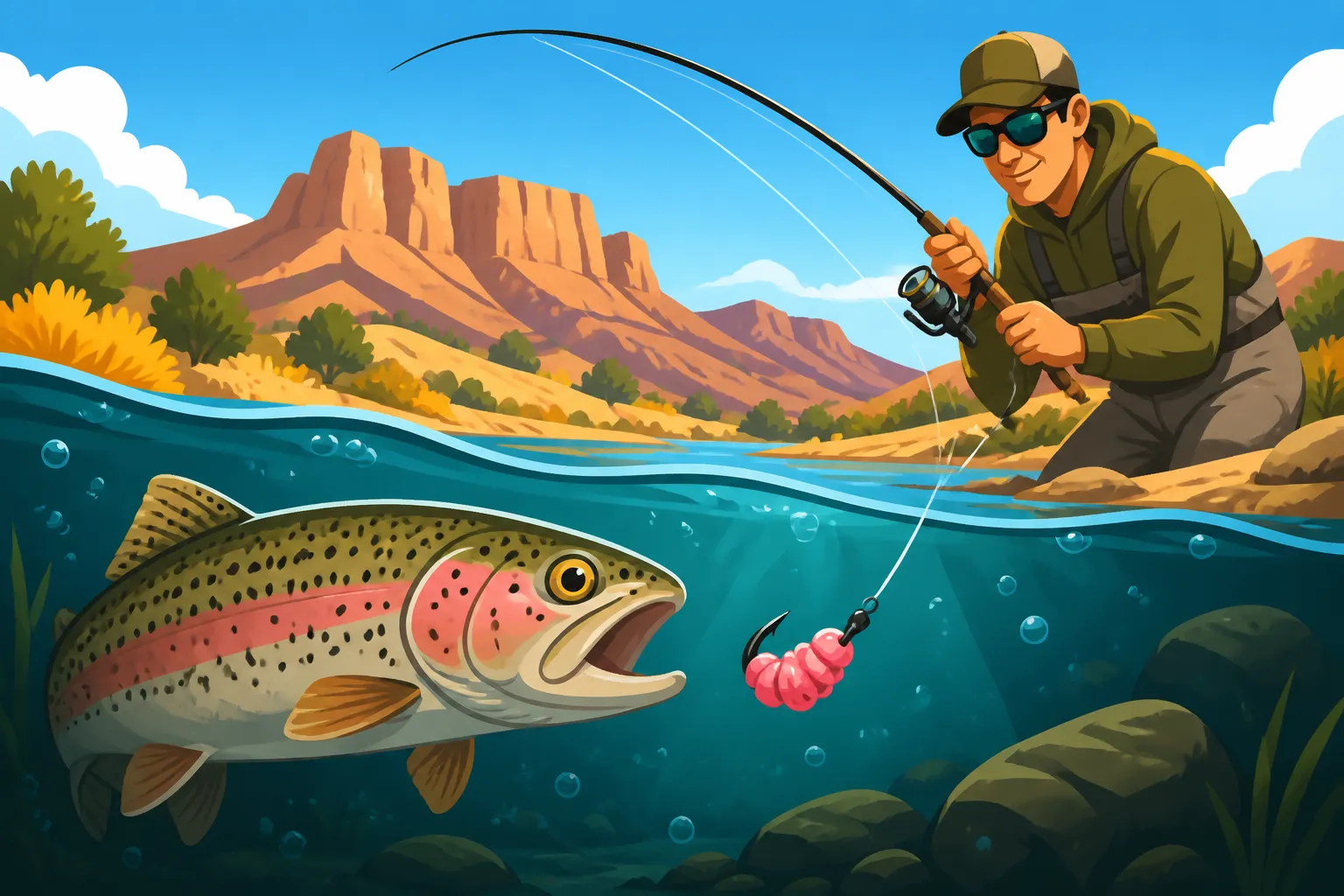
The buoyancy of PowerBait is a game-changer. Unlike worms or corn that sink to the bottom, PowerBait, especially the dough and nugget varieties, floats. When rigged correctly, it lifts your hook off the bottom, putting it right at eye level for trout that are cruising above the substrate. This presentation is incredibly appealing because it looks like a suspended food pellet—exactly what they've been eating their whole lives. The strong, often cheesy or garlicky scent, further entices these trout, drawing them in from a distance. It's like ringing the dinner bell for them. The vibrant colors also play a role, making it highly visible in different water conditions. Our article on Best Lures for New Mexico Trout further explores other effective options, but PowerBait often tops the list for stocked fish.
Essential Gear and Rigging for PowerBait Success
You can have the best PowerBait in the world, but if your gear isn't set up correctly, you'll still struggle. A proper rig maximizes the bait's effectiveness and ensures a solid hookset. This isn't complicated, but paying attention to the details makes all the difference.
Choosing the Right PowerBait and Accessories
When you walk into a sporting goods store or browse online, you'll see an overwhelming array of PowerBait options. Don't let it intimidate you! For stocked trout, the most common and effective forms are:
- PowerBait Dough: This is the classic. It's moldable, allowing you to create small, tear-drop shapes that float well. It comes in a huge variety of colors (chartreuse, rainbow, pink, orange, white are popular) and scents. It’s a great all-around choice.
- PowerBait Nuggets/Eggs: These are pre-formed, often resembling salmon eggs or small pellets. They're super convenient if you don't want to mess with molding dough. They also float well and come in bright colors.
- PowerBait Soft Baits (worms, grubs): While these can work, they often require more finesse (like retrieving them slowly) and aren't as consistently effective as the floating dough or nuggets for passive, bottom-feeding stocked trout.
For accessories, you'll need:
- Small Treble Hooks (size 10-14): These are ideal for molding PowerBait dough and offer multiple points for a hookset.
- Small Single Hooks (size 8-12): If you prefer single hooks, perhaps for easier removal and less harm to fish you intend to release, these work well, especially with PowerBait nuggets.
- Egg Sinkers or Split Shots: You'll need weight to get your bait down to the desired depth.
- Barrel Swivels: These prevent line twist and are crucial for the slip sinker rig.
- Light Fishing Line (4-6 lb test monofilament or fluorocarbon leader): Delicate presentations are often best for trout. You can find many of these items readily available on platforms like Amazon if your local tackle shop doesn't have the specific sizes or colors you're looking for.
Mastering the Slip Sinker Rig
This is, hands down, the most effective PowerBait rig for stocked trout. It allows the fish to pick up the bait and swim away without immediately feeling the weight of the sinker, giving you more time to react and set the hook.
Here’s how to set it up:
- Main Line: Start with your main fishing line (the one coming off your reel).
- Egg Sinker: Thread an egg sinker (1/8 oz to 1/4 oz is usually sufficient, depending on how far you need to cast and the current) onto your main line. The hole in the sinker should be large enough for the line to pass through freely.
- Bead (Optional but Recommended): Slide a small bead (a plastic or glass bead works) onto the line after the sinker. This protects your knot from the sinker constantly bumping against it.
- Barrel Swivel: Tie a small barrel swivel to the end of your main line. This is where the slip sinker stops, preventing it from sliding all the way down to your hook.
- Leader Line: To the other end of the barrel swivel, tie a length of fluorocarbon or monofilament leader. This leader should be lighter than your main line (e.g., 4 lb test if your main line is 6 lb). The length of your leader is critical—anywhere from 12 inches to 36 inches is common. A longer leader allows the PowerBait to float higher above the bottom, giving it a more natural presentation. For example, if you're fishing in a lake known for deeper trout, a longer leader might be better.
- Hook: Finally, tie your small treble or single hook to the end of the leader.
This rig ensures that when a trout bites, it pulls on the leader, but the main line slips through the sinker. The fish feels minimal resistance until you set the hook. This is often described in detail in guides for How to Catch Trout in New Mexico.
Optimal Hook and Leader Selection
Choosing the right hook and leader is often an afterthought for many anglers, but it's incredibly important.
Hooks: For PowerBait dough, a small treble hook (size 10, 12, or even 14) is usually best. The multiple points allow the dough to be molded around the hook, leaving the points exposed, which greatly increases your chances of a hookset. When molding the PowerBait, cover the hook shank and eye, leaving only the barbs and points exposed. Shape it into a small teardrop or marshmallow shape, about the size of a marble or a garbanzo bean, that is large enough to float the hook.
If you're using PowerBait nuggets or eggs, a small single hook (size 8-12) can be just as effective, especially if you're practicing catch and release, as single hooks tend to cause less damage. Make sure the hook size is small enough that the nugget can float it.
Leader Line: Fluorocarbon line is often preferred for leaders because it's nearly invisible underwater and is more abrasion-resistant than monofilament. A 4-pound test leader is a good starting point for most New Mexico stocked trout. For finicky fish, you might even drop down to 2-pound test. The length of the leader is critical, as mentioned earlier. Experiment with leader lengths. If fish are hugging the bottom, a shorter 12-18 inch leader might be perfect. If they are suspended higher in the water column, a 24-36 inch leader will get your bait up to their level. Often, trout in stocked ponds and lakes will cruise at various depths, so adjusting your leader length throughout the day can lead to more bites.
| Component | Recommendation | Why it's Important |
|---|---|---|
| PowerBait Type | Dough (chartreuse, rainbow, orange) or Nuggets | Floats, strong scent, mimics hatchery food. |
| Hook Size | Treble #10-14 (dough) / Single #8-12 (nuggets) | Correct size for bait, ensures good hookup, small enough to be floated by bait. |
| Sinker Weight | 1/8 oz – 1/4 oz Egg Sinker | Gets bait to depth, allows line to slip for sensitivity. |
| Leader Material | 4-6 lb Fluorocarbon | Nearly invisible, abrasion-resistant, allows natural bait presentation. |
| Leader Length | 12-36 inches (adjustable based on conditions) | Crucial for presenting bait at the right depth above the bottom. |
Putting PowerBait into Action: Techniques and Troubleshooting
Now that you're rigged up, it's time to put that PowerBait to work. Fishing with PowerBait isn't just about casting and waiting; there are nuances to presentation, patience, and knowing when to adjust.
Casting, Presentation, and Waiting Game
Once your PowerBait is molded onto your hook (ensure the hook points are exposed and the bait floats it!), and your slip sinker rig is ready, it's time to cast.
- Cast to Productive Areas: Stocked trout often congregate near structure (submerged trees, rocks, weed lines), drop-offs, or in areas where food might naturally collect. Look for subtle changes in water color or depth. If you're bank fishing, try casting parallel to the shore a bit, not just straight out. Our guide to Best Bank Fishing Spots on Elephant Butte Lake or other New Mexico lakes often highlights these types of areas.
- Allow It to Settle: After casting, let your sinker hit the bottom. You'll feel a distinctive "thunk" as it settles. Reel in any slack line until you feel the weight of the sinker, but don't pull it. You want your line to be relatively tight, but not so tight that the sinker moves with every slight current.
- The Waiting Game: This is where patience comes in. PowerBait is often a passive fishing technique. Once your bait is out there, wait. Trout might nibble gently before committing. Watch your rod tip closely. You might see subtle taps, or the tip might bend slightly. Often, a trout will just slowly swim off with the bait, causing your rod tip to bend steadily. Don’t set the hook on every twitch! Wait for a sustained pull or a steady bend in the rod before setting the hook with a firm, sweeping motion.
- Recasting: If you haven't had a bite after 15-20 minutes, or if the wind has caused your bait to drift significantly, it’s a good idea to reel in and recast. Check your PowerBait to make sure it's still on the hook and hasn't washed off or been stolen by a small fish.
Remember, trout are creatures of habit. If you catch one in a spot, there are often more nearby. Keep working that area. If the bites stop, consider changing your leader length, or even the color/scent of your PowerBait.
Common PowerBait Mistakes and How to Fix Them
Even experienced anglers can make these simple mistakes when using PowerBait, especially when they're not thinking about the unique behavior of stocked trout.
- Using Too Much PowerBait: A common beginner mistake is globbing too much PowerBait onto the hook. This can prevent your hook from floating, or it can make the bait so large that smaller trout can't get it in their mouths.
- Fix: Use a piece of PowerBait about the size of a marble or a garbanzo bean, just enough to cover the hook and float it. Test its buoyancy in shallow water by your feet before casting.
- Improper Hook Placement: If your hook points are buried in the PowerBait, you'll have trouble getting a good hookset.
- Fix: When molding the dough, ensure the very tips of the treble hook points or the barb of a single hook are exposed.
- Wrong Leader Length: As discussed, leader length directly impacts bait presentation depth.
- Fix: Start with a 18-24 inch leader, then adjust longer (up to 36 inches) if you suspect fish are suspended higher, or shorter (down to 12 inches) if they are tight to the bottom.
- Setting the Hook Too Soon: Many anglers mistake initial nibbles or taps for a full bite and jerk their rod too early, pulling the bait away from the fish.
- Fix: Practice patience. Wait for a definite, sustained pull or a continuous bend in your rod before setting the hook. Trout often take a moment to fully engulf the floating bait.
- Not Checking Your Bait Frequently Enough: PowerBait can sometimes wash off the hook, or small fish might peck at it, leaving you fishing with a bare hook.
- Fix: Recast and check your bait every 15-20 minutes, or sooner if you feel a lot of subtle taps but no hookset.
- Using Line That's Too Heavy: Heavy line is more visible underwater and can spook finicky trout, especially in clear New Mexico waters.
- Fix: Stick to 4-6 pound test monofilament or fluorocarbon main line, and a 4-pound fluorocarbon leader. Our guide on Best Rod Setup for New Mexico Trout Fishing has more details on ideal line weights.
Adapting Your Approach to New Mexico Conditions
New Mexico's diverse fishing environments mean you'll need to be flexible. What works perfectly at Fenton Lake might need tweaks for the urban ponds near Albuquerque.
- Water Clarity: In clear water, such as many of New Mexico's mountain lakes after runoff, trout will be more wary. Use lighter line, longer fluorocarbon leaders, and possibly more natural-colored PowerBait.
- Water Depth: Stocked trout can be found at various depths. If you're not getting bites at a certain leader length, try shortening or lengthening it. Deeper lakes like Heron Lake or Navajo Lake might require different presentations than shallower ponds.
- Current: In rivers or windy lakes, current can drift your bait. You might need a slightly heavier sinker to hold your bait in place, or consider casting slightly upstream to allow the bait to drift naturally into a holding area. Always ensure your bait still floats effectively with the added weight.
- Time of Day/Season: Fish behavior changes with temperature and light. Trout are often more active in cooler parts of the day, early morning or late evening, especially during warmer months. During spring and fall, they might be active all day. You can learn more about this in our New Mexico Fishing Season Dates and Limits article. In winter, during ice fishing, trout might be slower, requiring an even more patient approach.
Maximizing Your Catch and Practicing Responsible Angling
Getting bites is one thing, but converting those bites into landed fish and ensuring the health of the fishery requires a bit more thought.
When and Where to Use PowerBait in New Mexico
PowerBait is most effective for freshly stocked, put-and-take trout fisheries. These are the lakes and ponds across New Mexico that the Department of Game and Fish regularly stocks. You'll find these locations throughout the state, from the northern mountains to the southern lowlands.
- Urban Ponds: Places like Tingley Beach in Albuquerque or other community fisheries are prime PowerBait spots because they are specifically managed for recreational trout fishing.
- State Park Lakes: Many New Mexico State Parks, such as Clayton Lake, Storrie Lake, or Bluewater Lake, receive regular trout stockings and are excellent places to use PowerBait.
- Smaller Mountain Lakes: Lakes like Fenton Lake or small reservoirs in the Carson National Forest that are regularly stocked are also great candidates.
- Tailwaters (with caution): While PowerBait can technically work in some tailwater fisheries below dams, like parts of the San Juan River, many of these "Quality Waters" have special regulations that prohibit or restrict the use of bait, only allowing artificial flies or lures. Always check the New Mexico Special Trout Water Rules before fishing these areas, as PowerBait is generally not allowed in fly-fishing-only sections.
The best time to use PowerBait is often right after a stocking event. The fish are hungry and haven't fully acclimated to their new environment, making them very responsive to their familiar pellet-like food. Check the NMDGF stocking reports for up-to-date information on when and where fish are being released.
Catch and Release Considerations with PowerBait
While PowerBait is highly effective, it's essential to be mindful of responsible angling practices, especially if you intend to release your catch.
- Deep Hooking: Because trout often take their time to fully engulf PowerBait, they can sometimes be deep-hooked, especially with treble hooks. This significantly reduces their survival chances upon release.
- Solution: If you plan to practice catch and release, consider switching to small, single barbless hooks, or immediately cut the line if a fish is deep-hooked rather than trying to remove the hook. Our article on New Mexico Catch and Release Regulations provides further guidance.
- Handling Fish: When handling fish you intend to release, minimize air exposure, keep your hands wet, and support the fish horizontally. Avoid squeezing them.
- Adhering to Limits: Always be aware of the New Mexico Trout Bag and Possession Limits for the specific body of water you're fishing. Even if PowerBait is working wonders, respect the regulations.
By understanding how stocked trout behave, rigging your PowerBait effectively, and adapting your techniques to the conditions, you'll dramatically increase your chances of a successful and enjoyable fishing trip in New Mexico. Don't be afraid to experiment with different colors and leader lengths, and remember that patience is truly a virtue when PowerBait fishing.
Disclaimer
Fishing regulations, stocking schedules, and local conditions can change. Always consult the official New Mexico Department of Game and Fish website or their current fishing proclamation for the most up-to-date rules and information before you head out on the water. Be safe, respect the environment, and enjoy your time fishing!