How to Rig a Two-Fly Setup for Trout
There’s nothing quite as frustrating as seeing trout actively feeding in New Mexico's crystal-clear waters, knowing they're down there, but just not being able to entice a bite. Sometimes, a single fly just isn't enough to figure out what they're keying in on or to reach them at the right depth. This guide is all about equipping you with the knowledge and confidence to rig a two-fly setup, a proven technique that significantly boosts your chances of hooking into those elusive New Mexico trout.
Why a Two-Fly Setup is a Game Changer for New Mexico Trout Anglers
Many anglers, especially those new to fly fishing or transitioning from spin fishing, start with a single fly. It's simpler, less prone to tangles, and easier to manage. But if you’ve spent any time on the San Juan River or the Pecos, you know that trout can be incredibly finicky. They might be focused on a specific insect, holding at a precise depth, or simply ignoring whatever you’re presenting. A two-fly setup, often referred to as a "nymph rig" or "dry-dropper," is essentially having two different offerings in the water at once, giving you twice the opportunity to mimic what those fish are actually eating.
The Frustration of Single-Fly Limitations
Imagine you're casting a perfect drift with your favorite pheasant tail nymph. It looks great, it feels right, but nothing. You switch to a different nymph, still nothing. Hours can pass, and your confidence starts to wane. This is a common scenario in many New Mexico trout fisheries, especially when you're dealing with educated fish in pressured waters like the San Juan Quality Waters. A single fly only presents one option in terms of insect imitation, size, and depth. If the trout aren't interested in that one specific thing, you're essentially out of luck until you painstakingly re-tie, which eats up valuable fishing time and can be a real pain with cold fingers.
The struggle is real when you’re trying to crack the code on a trout’s diet. Are they looking for tiny midges suspended just off the bottom? Are they snatching emerging caddis in the middle of the water column? Or perhaps they’re aggressively feeding on larger stoneflies tumbling along the riverbed? A single fly forces you to make a definitive guess. If your guess is wrong, you learn nothing except that the fish aren't biting that particular fly. It's like trying to hit a moving target with your eyes closed – sometimes you get lucky, but often you're left wondering what you could have done differently. This limited approach often leads to frustration, especially for beginners who are still honing their ability to read water on the San Juan River or understand trout behavior.
Doubling Your Odds and Exploring Depths
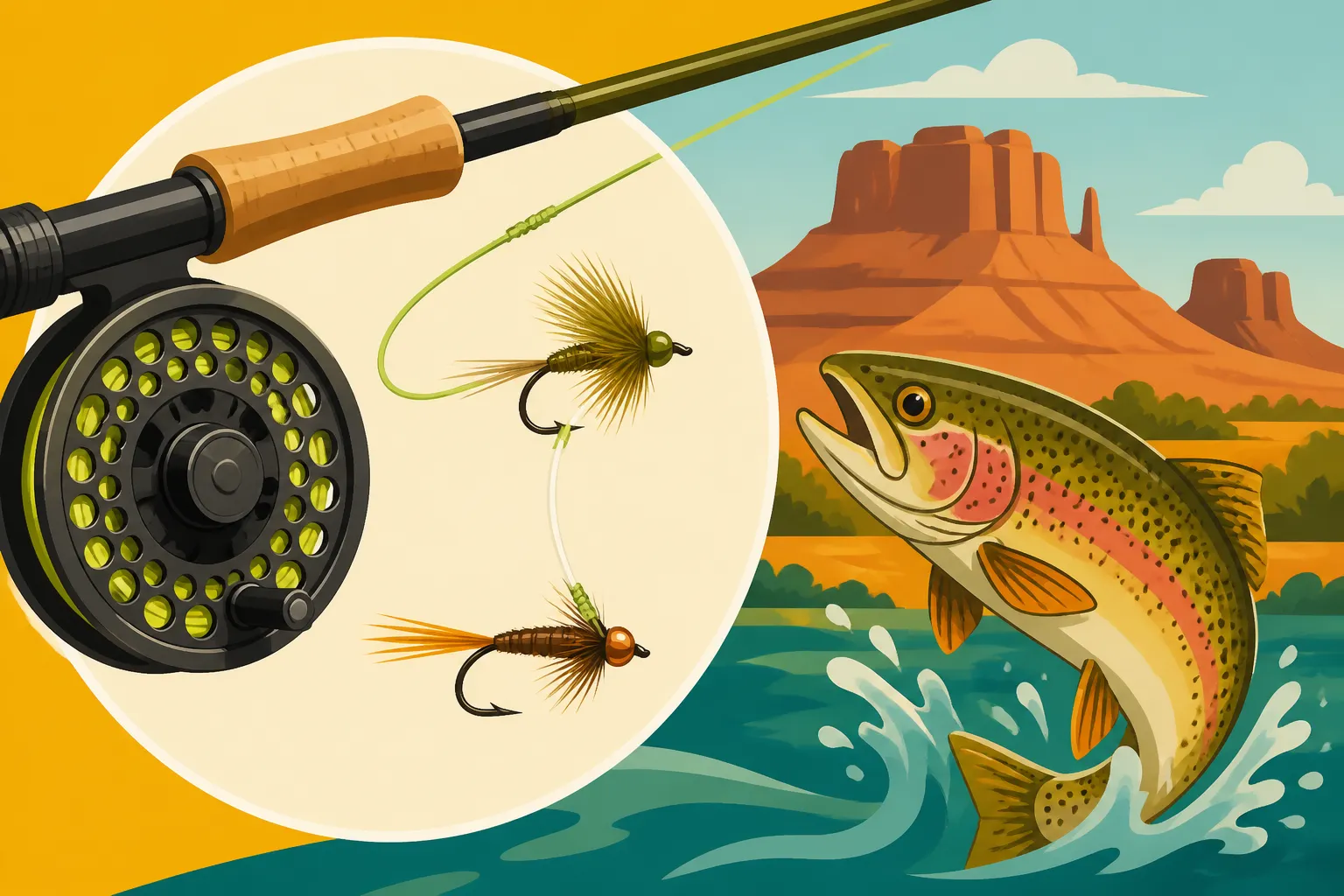
The beauty of a two-fly setup is its versatility. You’re no longer limited to a single presentation. Instead, you can present two different fly patterns at varying depths and imitate different stages of an insect's life cycle simultaneously. For instance, you could tie on a heavier, larger nymph as your "point" fly (the one at the very end of your leader) to help sink your rig quickly, and then attach a smaller, lighter nymph or an emerger pattern as your "dropper" fly (the one tied off the bend of the point fly or a separate tag) to drift naturally above it. This strategy allows you to cover more of the water column and offer multiple food sources, significantly increasing your chances of finding what the trout are truly interested in.
Think of it as having two lines in the water without actually breaking any rules. One fly might imitate a mayfly nymph crawling on the bottom, while the other could represent a tiny midge slowly rising towards the surface. This dual approach is particularly effective in varied environments, from the deep pools of the Rio Grande to the riffles of the Chama, where trout might be feeding at different levels depending on the time of day or insect hatch. It essentially allows you to experiment rapidly, getting feedback from the fish on what they prefer. If one fly gets hit more often, you know to adjust your other fly or even switch to two of the "hot" pattern. This strategy is a cornerstone of effective fly fishing techniques for New Mexico rivers and helps anglers maximize their time on the water.
Essential Components for Your Two-Fly Rig
Before you even start tying knots, it’s crucial to understand the foundational elements that make up a successful two-fly rig. Getting these components right will save you headaches later and ensure your setup performs optimally in New Mexico’s diverse fishing conditions.
Choosing Your Leader and Tippet
Your leader is the tapered section of line that connects your fly line to your tippet and flies. For a two-fly setup, especially for nymphing, you'll generally want a longer leader to allow your flies to sink naturally without being hampered by the heavier fly line. A 9-foot or even a 12-foot tapered leader is a good starting point. The butt section will be thicker, gradually tapering down to a finer diameter at the end. The "X" rating on your leader and tippet indicates its diameter and strength – a higher number (e.g., 5X, 6X) means a thinner, less visible line, ideal for wary trout, but also more prone to breaking.
Tippet, then, is the fine section of line you tie directly to your flies. It's essentially an extension of your leader. For a two-fly setup, you’ll be adding a section of tippet to the end of your leader, and then another section for your dropper fly. I typically carry spools of 4X, 5X, and 6X fluorocarbon tippet. Fluorocarbon is fantastic because it's nearly invisible underwater and sinks faster than monofilament, which is a huge advantage when nymphing. You can find reliable fluorocarbon tippet from brands like Seaguar or Rio on platforms like Amazon, ensuring you always have a fresh supply. The choice of tippet strength will often depend on the size of your flies and the target species; smaller flies for tiny San Juan River midges might call for 6X, while larger stonefly patterns in faster water could handle 4X. Getting your best leader length for San Juan River nymphing dialed in is crucial for successful presentation.
Selecting Your Flies
This is where the magic happens and where you can really double down on your presentation. When choosing flies for a two-fly rig, consider two main approaches:
- Imitation and Depth: You might want to imitate two different insects or the same insect at two different life stages. For example, a heavy stonefly nymph (like a Pat's Rubber Legs or a 20-Incher Stone) as your point fly to get down quickly, followed by a smaller, more delicate mayfly nymph (like a Pheasant Tail or Hare's Ear) as your dropper. This covers both a bottom-dwelling and a mid-column food source.
- Attractor and Imitator: One fly could be a flashy attractor pattern (like a Squirmy Wormy, a bright San Juan Worm, or a Prince Nymph) to grab attention, while the other is a more natural, subtle imitator (like a tiny midge pupa or a Baetis nymph). This strategy works well when you're not entirely sure what the fish are keying into. The attractor might draw them in, and if they don't take it, they might see and take the more natural offering nearby.
Always check local regulations before selecting your flies. New Mexico's New Mexico Trout Fishing Rules sometimes specify artificial flies and lures only, or even barbless hooks only in certain "Quality Waters." The Fly Selection for New Mexico's San Juan River is often dictated by insect hatches specific to that incredible fishery. For beginners wondering what gear beginners need to start fishing in New Mexico, having a varied fly box is key.
Other Must-Have Tools
Beyond your rod, reel, line, and flies, a few indispensable tools will make rigging and fishing a two-fly setup much easier:
- Nippers: Tiny, sharp clippers for easily cutting tippet and leader. A good pair with an attached knot-tying tool is a lifesaver.
- Hemostats or Forceps: Essential for safely removing hooks from a trout's mouth, especially important for practicing catch and release best practices in New Mexico. Look for ones with long, slender jaws.
- Split Shot or Tungsten Putty: Sometimes, even with a heavy point fly, you need extra weight to get your flies down to the strike zone, especially in fast currents. Non-toxic split shot or reusable tungsten putty works wonders. Just be mindful of where you place the weight to maintain a natural drift.
- Strike Indicators: These are like bobbers for fly fishing, indicating when a fish takes your fly. There are various types, from small yarn indicators that are highly sensitive to larger buoyant foam indicators that can support heavier rigs. For effective nymph fishing on the San Juan River, a good indicator is indispensable. You can often find a wide array of these tools on Amazon for convenience.
Step-by-Step Guide to Tying Your Two-Fly Setup
Alright, now let’s get down to the actual rigging. Don't be intimidated; with a little practice, this will become second nature. The key is to be patient and ensure your knots are strong and secure.
Attaching Your First Fly (The "Point" Fly)
Your point fly is the fly at the very end of your leader/tippet section. It's usually the heavier or larger fly, designed to get your rig down to depth, or it could be a dry fly in a dry-dropper setup.
- Prepare your Leader: Start with your tapered leader. To the fine end of your leader, tie on about 18-24 inches of tippet (e.g., 5X fluorocarbon). A strong knot like a Surgeon's Knot or a Blood Knot works great for connecting leader to tippet. You want this section of tippet to be relatively long because you'll be tying your dropper off of it.
- Tie on the Point Fly: Once your tippet is securely attached to your leader, take the free end of the tippet and tie on your chosen point fly. For attaching the fly, an Improved Clinch Knot or a Uni Knot are excellent choices. Make sure the knot is cinched down tightly against the eye of the hook. If you're using a heavier point fly to sink your rig, ensure it has enough weight. This is often a weighted nymph like a bead-head Prince Nymph or a large stonefly pattern. When you’re learning how to tie an Improved Clinch Knot for trout fishing, practice makes perfect.
Remember to wet your knots before tightening them; this helps them cinch down properly and prevents friction from weakening the line. Take your time, as a poorly tied knot is the weakest link in your entire setup!
Adding Your Second Fly (The "Dropper")
Now for the exciting part: adding your second fly, the dropper. There are two primary methods for attaching a dropper, each with its pros and cons.
-
Method 1: Tying off the Bend of the Point Fly's Hook: This is a very common and effective method.
- Tie a new section of tippet: Take another section of tippet (again, 12-18 inches, and often one X size lighter than your main tippet, e.g., 6X if your point fly is on 5X) and tie one end directly to the bend of the point fly's hook. A simple Improved Clinch Knot or a standard Clinch Knot works well here. Make sure it's snug, but don't pull so hard you bend the hook.
- Attach the Dropper Fly: To the free end of this new tippet section, tie your dropper fly. This fly is often smaller, lighter, or a different imitation altogether. For example, if your point fly was a large stonefly, your dropper might be a tiny midge or a Baetis nymph.
- Pros: Simple, few knots in the main leader, good for stealth.
- Cons: Can sometimes result in tangles around the point fly, especially with aggressive casts or when fish are thrashing.
-
Method 2: Tying off a Tag End (Surgeon's Knot Dropper): This method creates a small "tag" of tippet from a knot in your main leader, to which you attach your dropper.
- Tie a Surgeon's Knot: About 18-24 inches above your point fly, tie a triple Surgeon's Knot in your main tippet section. When you cinch this knot down, leave one of the tag ends longer (about 6-8 inches).
- Attach the Dropper Fly: This longer tag end now becomes your dropper leader. Tie your dropper fly directly to the end of this tag using an Improved Clinch Knot. Trim the other, shorter tag end of the Surgeon's Knot close.
- Pros: Less prone to tangles with the point fly, offers a slightly more independent drift for the dropper. Great for when you need your flies to spread out a bit more.
- Cons: More knots in the main leader can potentially create weak points if not tied properly, and the tag can occasionally wrap around the main line.
Experiment with both methods to see what works best for your style and the specific conditions you're fishing. Keep your knots tidy, and your line healthy, and you’ll be set up for success! For specific scenarios like fishing the famous San Juan River, a dedicated Two-Fly Rig Setup for the San Juan River guide might offer more tailored advice.
Balancing Your Rig for Optimal Presentation
A two-fly setup, while effective, requires a bit more thought regarding balance and presentation. You want your flies to drift naturally, not drag unnaturally or tangle constantly.
- Weight Distribution: If you're nymphing, the heavier fly should generally be your point fly. This ensures your entire rig sinks efficiently. If your dropper is too heavy or placed too far up the line, it can impede the natural drift of your point fly. Sometimes, a tiny bit of additional split shot, placed 6-12 inches above your point fly, is necessary to get your flies into the strike zone in deeper or faster water. Remember, your goal is to imitate real insects, and they don't typically zoom to the bottom.
- Distance Between Flies: The distance between your point fly and your dropper can vary from 12 inches to 36 inches, depending on the depth of the water and how spread out you want your offerings. In shallower water or when fish are concentrated at a specific depth, a shorter distance (12-18 inches) is often ideal. In deeper water or when you want to cover a wider range of the water column, a longer distance (24-36 inches) can be more effective.
- Tippet Size Harmony: As mentioned, it's often a good idea for your dropper tippet to be one X size lighter (thinner) than your main tippet and point fly. This creates a "fuse" – if you get snagged, ideally you only break off the dropper fly, saving your more important (and often heavier) point fly and the rest of your leader.
- Dry-Dropper Considerations: If you're running a dry-dropper rig (a buoyant dry fly on top, with a nymph trailing below), your dry fly acts as both an attractor and your strike indicator. Choose a dry fly that's hardy and buoyant enough to support the weight of your nymph, even if it's small. Foam-bodied terrestrials or large Stimulators work well for this purpose. The length of the tippet from the dry fly to the nymph determines how deep your nymph will ride.
Getting the balance right takes practice. You'll want to observe how your flies are drifting in the current. If they're dragging or getting snagged too often, adjust your weight or the distance between flies. This fine-tuning is part of the art of how to catch trout in New Mexico and makes a significant difference.
Fishing Techniques and Considerations for New Mexico Waters
Once your two-fly rig is expertly tied, it’s time to put it to use on the water. New Mexico offers a vast array of fishing environments, and adapting your technique to the specific conditions is paramount for success.
Reading the Water and Adjusting Your Depth
New Mexico’s rivers and lakes present incredibly diverse conditions. From the deep, cold tailwaters of the San Juan River below Navajo Dam to the high-mountain streams of the Pecos Wilderness, trout will hold in different places and at varying depths. This is where a two-fly rig truly shines, but only if you know how to leverage it.
- Pocket Water and Riffles: In faster, broken water, trout often hold behind structure (rocks, logs) or in the seams of currents, expending minimal energy while waiting for food. Here, a heavier point fly is crucial to punch through the current and get down quickly. Your dropper can then drift just above the bottom. Focus on short, precise casts and mending your line to achieve a drag-free drift. The depth isn't usually extreme here, so your flies might be 12-18 inches apart.
- Deep Pools and Runs: In slower, deeper sections, trout might be suspended anywhere from the bottom to mid-water. This is where varying the distance between your flies and potentially adding a bit more weight (split shot or tungsten putty) comes in. Start by aiming for the bottom with your point fly, using your indicator to gauge depth. If you're not getting bites, try adjusting your indicator to fish higher in the water column, effectively raising both flies. You can also increase the distance between your point and dropper fly (up to 30+ inches) to cover more vertical water.
- Tailwaters: Rivers like the San Juan are legendary for their consistent insect hatches and large trout. However, these fish are incredibly pressured and often feed on tiny midges and small mayfly nymphs. In these scenarios, a two-fly rig with two small nymphs (e.g., a #20 Red Larva as your point and a #22 Jujubee Midge as your dropper) becomes almost a necessity. Precision in depth control and delicate drifts are key. Always be mindful of the specific New Mexico Special Trout Water Rules that apply to these productive, but often regulated, stretches.
Remember, trout are opportunistic feeders. Observing insect activity (hatches, emergers) can give you huge clues about where they're feeding in the water column and what patterns to choose. Don’t be afraid to adjust your indicator depth or even your fly choice after a few drifts if you're not getting any action.
Managing Tangled Lines and Snags (The Real Talk)
Let's be honest, fishing a two-fly rig isn't always smooth sailing. The biggest headache is tangles. It happens to the best of us, especially when you're casting in wind or trying to make delicate presentations. The frustration of unwrapping knots while trout are actively rising is enough to make anyone want to throw their rod in the river!
- Casting Technique: The biggest culprit for tangles is often your casting stroke. A smooth, open loop, avoiding jerky motions, will significantly reduce tangles. Imagine your line forming a wide "U" shape in the air, allowing both flies to travel without colliding. If you’re used to throwing a tight loop with a single fly, you’ll need to open it up a bit.
- Leader Length: A leader that's too long for your casting ability or the specific conditions (like strong winds) can also lead to tangles. Sometimes, trimming a few inches off the butt section or reducing the distance between your flies can help.
- Wind Management: When the wind picks up, it's a battle. Try to cast with the wind when possible, or make shorter, more controlled casts. In extreme wind, you might consider switching back to a single, heavier fly to reduce wind resistance.
- Snags are Inevitable: Especially when nymphing near the bottom, you're going to get snagged. It's part of the game. If you feel a snag, try to pull directly upstream in the direction of the snag; sometimes the current and a gentle tug will free your flies. If not, a strong, quick pull will usually break off the tippet at the weakest point (hopefully near the fly). This is why having extra tippet and flies readily accessible in your Best Fishing Backpack and Wading Gear for New Mexico is crucial. Using the lighter tippet for your dropper can also act as a fuse, saving your heavier point fly and the rest of your rig.
Don't let the occasional tangle deter you. The benefits of a two-fly rig far outweigh these minor inconveniences, and with practice, you'll find yourself untangling less and fishing more.
When to Use a Two-Fly Rig (And When to Stick to One)
While a two-fly setup is incredibly effective, it's not always the best solution. Knowing when to deploy this versatile rig and when to simplify your approach is key to maximizing your success.
| Scenario | When to Use a Two-Fly Rig | When to Stick to One Fly |
|---|---|---|
| Water Type | Diverse water (pools, runs, riffles), moderate to deep water, varied bottom structure. | Very shallow, clear water; extremely fast, turbulent water with many snags; very slow, glassy water where stealth is paramount. |
| Trout Behavior | Finicky fish, unclear feeding patterns, active insect hatches (especially subsurface), fish holding at varied depths. | Aggressively rising fish during a strong dry fly hatch; fish actively chasing streamers; very specific, predictable feeding. |
| Conditions | Moderate wind, relatively stable currents, when you need to "scout" what flies are working. | High wind (tangles!), extremely cold conditions (fewer knots to tie), when simplicity is desired for a beginner. |
| Target Species | Most trout species (Rainbow, Brown, Cutthroat, Brook Trout), especially in highly productive, varied fisheries. | Specific situations like sight-fishing for wary native Rio Grande Cutthroat Trout in New Mexico in small streams. |
| Angler Skill Level | Intermediate to advanced anglers comfortable with casting and knot tying, or patient beginners willing to learn. | Absolute beginners learning basic casting and drift; young children who need maximum simplicity. |
If you're fishing a small, clear mountain stream that's only a foot deep, and you can see trout actively rising to a specific dry fly, then a single dry fly is probably all you need – and much simpler to manage. Similarly, if you're throwing large streamers for aggressive brown trout, a single, unencumbered streamer will likely give you the best action and reduce tangles.
However, for the vast majority of trout fishing scenarios in New Mexico, especially when you're looking to consistently put fish in the net, a two-fly setup is a powerful tool. It's an essential part of any angler's arsenal, allowing you to quickly adapt to changing conditions and uncover what those wily New Mexico trout are truly hungry for. The confidence you gain by knowing you're covering more water and offering more options is invaluable.
Disclaimer
Fishing involves inherent risks, including but not limited to drowning, injury from hooks or equipment, and exposure to the elements. Always prioritize safety, wear appropriate personal flotation devices when on the water, and be aware of your surroundings. Consult the New Mexico Department of Game and Fish regulations for the most up-to-date rules and requirements before heading out. This guide is for informational purposes only and does not supersede official regulations.