Trolling Techniques for New Mexico Lakes
Navigating the vast, shimmering waters of New Mexico's lakes can feel like searching for a needle in a haystack, especially when you're after those elusive game fish that aren't always keen on showing themselves. It's a common frustration to spend hours casting from the bank or drifting aimlessly, only to come up empty-handed. But what if there was a way to cover more water, present your lure more effectively, and drastically increase your chances of finding and enticing those fish? This comprehensive guide will dive deep into the art and science of trolling, offering you the techniques, tips, and strategies needed to transform your fishing success on New Mexico's diverse lakes.
Understanding Trolling Basics for New Mexico Lakes
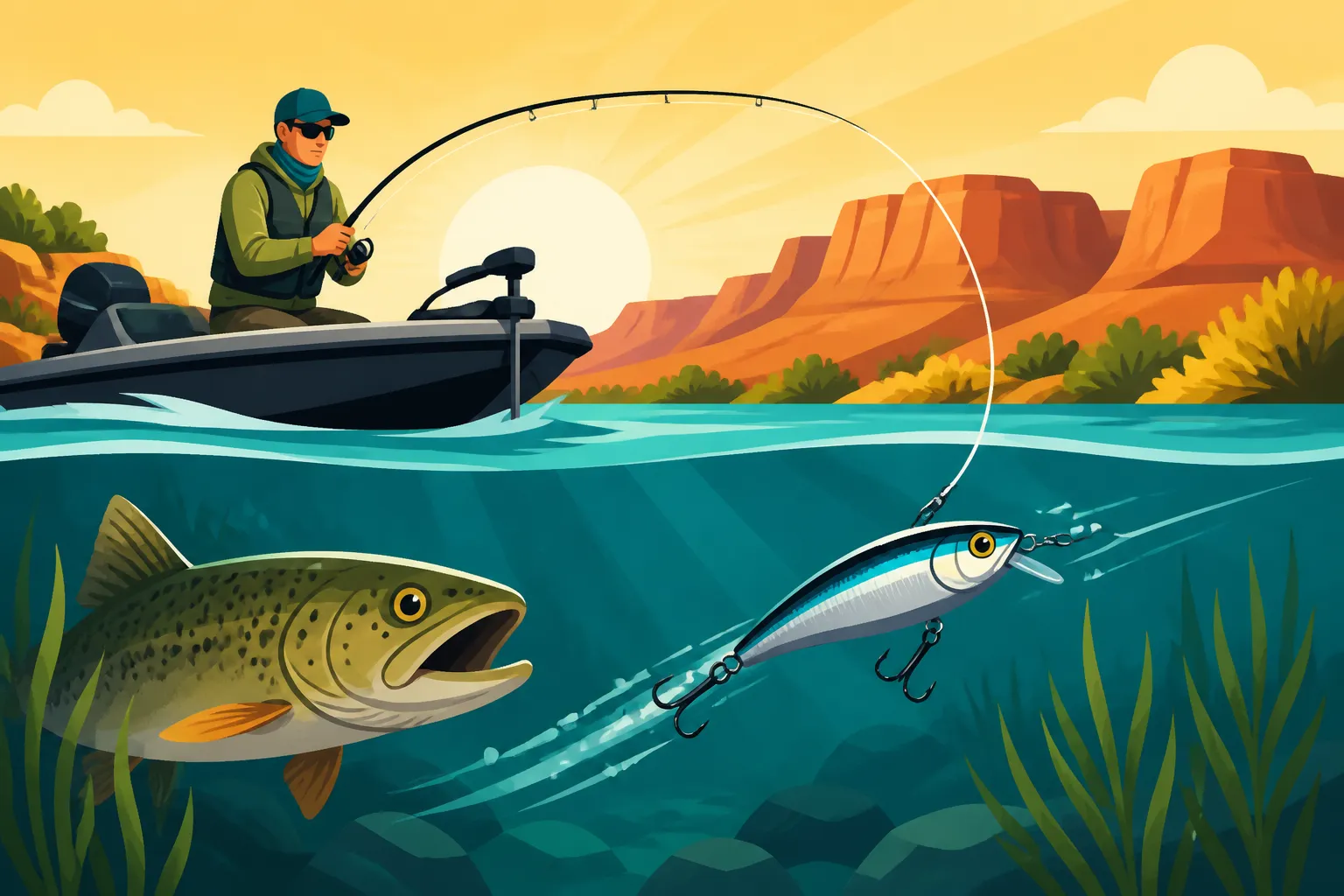
Trolling is a fishing method that involves drawing a fishing line with a lure or bait through the water behind a moving boat. It's an incredibly effective technique for covering large areas of water, mimicking the natural movement of baitfish, and presenting your offering to fish that might be scattered or holding in specific depth zones. For the expansive reservoirs and lakes we have here in New Mexico, like the mighty Elephant Butte or the deep waters of Navajo Lake, trolling isn't just a technique – it's often the most productive way to consistently catch fish. It allows you to systematically explore different depths and contours, increasing your odds exponentially compared to stationary fishing.
The "Why" of Trolling in Expansive Waters
Think about it: New Mexico's major lakes are massive. Trying to find a school of walleye or a lone cruising striped bass by casting from one spot is like trying to guess where a single raindrop will land in a thunderstorm. It's possible, sure, but the odds are stacked against you. This is where trolling shines. By moving your boat, you're constantly searching, bringing your lure through new territories, and intercepting fish that are actively feeding or moving.
It's particularly invaluable when fish are spread out or when they're following specific depth contours that are hard to pinpoint from a static position. For instance, if kokanee salmon at Heron Lake are holding at 30 feet over a 100-foot bottom, a trolled lure at that precise depth will be far more effective than casting a jig and hoping it sinks just right. Trolling also allows you to present your bait or lure in a more natural, sustained manner. A crankbait or spoon trolled at a consistent speed often perfectly imitates a fleeing baitfish, triggering predatory strikes from species like walleye or striped bass. It’s about bringing the fight to the fish, rather than waiting for them to come to you, which is a game-changer on our big desert impoundments.
Essential Trolling Gear for Beginners
Getting started with trolling doesn't require a commercial fishing vessel, but a few key pieces of equipment will make a world of difference. First and foremost, you’ll need a boat capable of maintaining a slow, consistent speed, ideally with a quiet electric trolling motor, especially for stealthier approaches to fish. A good fish finder is nearly indispensable; it helps you locate fish, identify bait schools, and most importantly, understand the depth and contours of the lake bottom. You can find excellent entry-level models on sites like Amazon that provide surprisingly detailed underwater views.
For rods and reels, you'll want something a bit heavier and sturdier than your typical casting setup. Medium-heavy to heavy action rods, around 7 to 9 feet long, are ideal, as they can handle the drag of lures and the fight of larger fish while providing enough backbone for downriggers if you decide to use them later. Reels should have good line capacity and a smooth drag system. Conventional reels are popular for trolling due to their durability and line counter capabilities, but baitcasters or larger spinning reels can work too. Spool up with a strong braided line for sensitivity and minimal stretch, often with a fluorocarbon leader for stealth. Don't forget a variety of lures, from crankbaits to spoons and even artificial worms, in different colors and sizes to match the local forage.
Key Factors for Successful Trolling
Success in trolling isn't just about dragging a lure behind a boat; it's a nuanced dance of depth, speed, and lure selection, all informed by what your electronics are telling you. Ignoring any of these factors can lead to a frustrating day on the water, but mastering them can unlock some incredible fishing experiences on New Mexico's lakes.
Dialing in Your Trolling Depth
This is arguably the most critical component of effective trolling. Fish, especially species like kokanee and walleye, are often very depth-specific. If your lure isn't in the strike zone, you're just exercising your motor. Understanding the thermocline is key during warmer months – this is a layer of water where the temperature changes rapidly, and it often holds concentrations of baitfish and predators. Your fish finder will help you identify this.
To achieve precise depths, you have several tools at your disposal:
- Line counters: These reels tell you exactly how much line you have out, which, combined with lure diving depths, helps you estimate your lure's position.
- Weighted lines: Lead core line or snap weights can drag your lures deeper without needing heavy sinkers directly on the leader, giving your lure more natural action.
- Downriggers: These are mechanical devices that use a heavy weight (cannonball) on a cable to carry your fishing line (which is clipped to the cable) down to a precise depth. When a fish strikes, the line pops free from the clip, allowing you to fight the fish directly. Downriggers are invaluable for targeting suspended fish, like kokanee salmon at Navajo Lake or Heron Lake.
- Diving devices: Planer boards, diving planes, or specialized crankbaits are also designed to reach specific depths. Many popular trolling crankbaits, often found in stores or online on platforms like Amazon, have published dive curves that indicate how deep they'll run at various speeds and line lengths.
Experimentation is crucial. Start at a depth where you're seeing bait or fish on your sonar, then adjust up or down until you start getting bites.
Mastering Trolling Speed and Lure Action
The speed at which you troll profoundly affects your lure's action and its appeal to different species. Too fast, and your lure might spin unnaturally or get blown out of the strike zone. Too slow, and it might lack the enticing wobble or flash that triggers a strike. Different lures are designed to perform best at specific speed ranges.
- Crankbaits: These typically have a "lip" that makes them dive and wobble. Most crankbaits have an optimal speed range, usually between 1.5 to 3.5 miles per hour (mph), where their action is most lifelike. Varying your speed, even slightly, can cause the lure to dart and pause, often provoking a following fish to strike.
- Spoons: Often used for trout and kokanee, spoons flutter and flash. They can be effective at a wider range of speeds, but a slower, erratic retrieve might be better for lethargic fish, while a faster troll could imitate a fleeing baitfish.
- Soft plastics/worms: When pulled behind a bottom bouncer for walleye, these require a slower speed, often around 0.8 to 1.5 mph, to allow the bait to subtly move near the bottom without getting buried.
It's a good practice to put your lure in the water next to the boat before deploying it fully to observe its action at your chosen speed. Adjust your speed until the lure looks its best. Current, wind, and even the direction you're trolling (with or against waves) can all impact your true lure speed and action, so pay attention to your GPS speed over ground, but also trust your eyes and fish activity. For detailed seasonal advice, check out our guide on the Best Time of Year to Fish in New Mexico.
Reading Your Electronics for Optimal Trolling
Your fish finder is your best friend when trolling. It's not just for seeing fish; it's a comprehensive underwater information system.
- Sonar: The primary display shows fish arches, bait balls, and bottom structure. When you see baitfish, chances are predators are nearby. Look for fish arches near structure, suspended in the water column, or hugging the bottom.
- Down and Side Imaging: More advanced units offer incredibly detailed views. Down imaging provides a photo-like view directly below the boat, excellent for identifying submerged timber or rock piles. Side imaging scans out to the sides, helping you spot schools of fish or structure off your trolling path that you might otherwise miss. This can be crucial on wide-open lakes, allowing you to cover even more ground visually without physically driving over every spot.
- GPS and Mapping: Modern fish finders integrate GPS with detailed lake maps. This allows you to mark waypoints where you catch fish, track your trolling passes, and follow depth contours precisely. If you find a productive depth, you can use your GPS to follow that contour line around a point or along a shoreline, keeping your lures in the strike zone. You can also monitor your trolling speed accurately, which is vital for consistent lure presentation. Without a good GPS, you're essentially trolling blind, so investing in a unit with robust mapping capabilities, like those offered by Lowrance or Humminbird (often available through retailers like Amazon), will significantly enhance your trolling game.
Species-Specific Trolling Strategies for New Mexico
While the basic principles of trolling remain consistent, tailoring your approach to specific fish species found in New Mexico's lakes will yield much better results. Each species has its preferred habitat, feeding behavior, and reaction to lures, demanding a nuanced strategy.
Trolling for Kokanee Salmon at Navajo and Heron Lakes
Kokanee salmon are a beloved target in New Mexico's northern lakes, particularly at Navajo Lake and Heron Lake. These landlocked sockeye salmon are plankton eaters but will readily strike small, flashy lures when feeding or aggressive.
- Depth is everything: Kokanee are typically found in the cooler, deeper parts of the water column. During summer, they'll often be suspended anywhere from 20 to 60 feet deep, often around the thermocline. In spring and fall, they might be shallower. A good fish finder is critical to locate schools and determine their depth. Downriggers are almost a necessity for consistent success, allowing you to present your lure precisely at the fish's level.
- Lure Selection: Small, brightly colored spoons and dodgers/flashers are the bread and butter for kokanee. Popular choices include Rocky Mountain Tackle dodgers, Sling Blade dodgers, and various small kokanee spoons. The dodger's job is to create an enticing flash and wobble that attracts kokanee, while the spoon trails behind, often tipped with a piece of corn for scent and extra appeal.
- Speed and Scent: A slower trolling speed, usually between 0.8 to 1.5 mph, is generally effective for kokanee. They are not typically fast-chasers. Scent is also highly important; many anglers tip their lures with a kernel or two of shoepeg corn, often soaked in an attractant like Pro-Cure or Garlic scent. This added smell can make all the difference, especially on tougher days. Check out our detailed guide on Kokanee Salmon Fishing in New Mexico for more in-depth tips.
Targeting Walleye with Trolling at Conchas and Ute Lakes
Walleye, with their delicate, flaky white meat and challenging reputation, are a highly sought-after species, particularly in eastern New Mexico's Conchas Lake and Ute Lake. Trolling is a prime method for covering water and finding these often bottom-hugging predators.
- Lure Choices: Crankbaits are king for walleye trolling. Choose models that dive to the depths where you're marking fish or structure. Jointed crankbaits often provide an irresistible wiggle. Colors should mimic local baitfish (shad, perch) or be bright and contrasting in murky water. Bottom bouncers paired with spinner rigs or nightcrawlers are also incredibly effective, especially when walleye are tight to the bottom structure.
- Depth and Structure: Walleye love structure. Troll along ledges, points, humps, and submerged creek channels. Use your fish finder to map the contours and target depths where you see transitions or irregularities. In summer, they might retreat to deeper, cooler water during the day, coming shallower to feed in low light. In spring, they'll be shallower, near spawning areas.
- Speed: A slower, methodical pace is often best for walleye, typically between 1.0 to 2.5 mph. This allows crankbaits to achieve their optimal dive and wobble, or for bottom bouncers to tick along the bottom without snagging excessively. Pay close attention to your speed; even a half-mile per hour difference can change the bite. Our Walleye Fishing in New Mexico article offers more insights into chasing these fish.
Chasing Striped Bass at Elephant Butte Lake
Elephant Butte Lake is famous for its powerful striped bass, and trolling is one of the most effective ways to hook into these hard-fighting giants. Stripers are nomadic and chase baitfish, making a searching technique like trolling ideal.
- Bigger Baits, Deeper Water: Stripers are aggressive predators. Don't be shy with larger crankbaits, swimbaits, or even umbrella rigs. In summer, they will often be found in the deeper, cooler water chasing shad schools, sometimes 30-50 feet down or more. In spring and fall, they might come shallower, but still often relate to main lake points and humps.
- Speed: Stripers are fast swimmers and often prefer a faster troll than walleye or kokanee. Speeds from 2.5 to 4.0 mph are common. Experiment with speed until you find what triggers bites, as they can sometimes be finicky. The faster speed helps cover more water quickly to find active schools.
- Electronics are paramount: Look for large schools of baitfish, often appearing as dense clouds on your sonar. Where there's bait, there are usually stripers below or around them. Trolling through these bait balls with big lures can result in explosive strikes. Keep an eye on your map and mark areas where you find bait or catch fish; stripers often follow similar patterns. A detailed guide on Striped Bass Fishing in New Mexico can help you prepare for these exciting battles. For specific boat setup recommendations, you might find our general guide on Best Boats for New Mexico Reservoir Fishing helpful.
Advanced Trolling Setups and Troubleshooting
Once you've got the basics down, you might feel the urge to expand your trolling arsenal and refine your techniques. Advanced setups can unlock new fishing opportunities and help you adapt to challenging conditions. Plus, knowing how to troubleshoot common issues can save a lot of frustration on the water.
Advanced Rigging: Downriggers, Planer Boards, and Lead Core
Taking your trolling game to the next level often means investing in specialized equipment that gives you greater control over lure depth and spread.
- Downriggers: We've touched on these, but they deserve more attention. For species like kokanee and deep-holding trout, downriggers are incredibly effective. A single boat can run multiple lines at precise, independent depths. Modern downriggers, some even electric, allow for very fine adjustments. They are perfect for targeting fish suspended over deep water, such as those elusive kokanee at Heron Lake or deep lake trout if you're ever lucky enough to encounter them. The key is to watch your fish finder, identify the depth of the fish, and then set your downrigger cannonball just above that depth, allowing your lure to run at eye level with the fish.
- Planer Boards: These devices are designed to carry your fishing lines out to the side of the boat, away from the prop wash and boat noise. This is especially useful in clear, shallow waters or when fish are skittish. By using multiple planer boards, you can effectively troll a wider spread of lures, increasing your coverage. They come in various sizes, from small inline boards for a single line to larger mast systems that can handle several lines. They're excellent for covering flats or breaking up the monotony of straight-behind trolling, allowing you to present lures to undisturbed fish.
- Lead Core Line: This specialized line has a lead core inside a braided sheath, designed to sink. Each "color" (section, usually 10 yards) of lead core sinks to a predictable depth at a given speed. For instance, at 2 mph, one color might sink 5 feet. By deploying multiple colors, you can reach deeper depths without heavy weights or downriggers. It's an excellent choice for a stealthier approach or when you want to subtly present lures at specific depths without the bulk of a downrigger setup. It's also more forgiving than downriggers if you frequently encounter snags. Combining lead core with a diving crankbait can achieve impressive depths, giving you options when fish are holding very deep, which can be the case for walleye during the summer in places like Conchas Lake.
Troubleshooting Common Trolling Problems
Even the most experienced anglers encounter issues. Knowing how to diagnose and fix them quickly can salvage a trip.
- No Bites: This is the most common and frustrating problem.
- Check your depth: Are you seeing fish on your sonar, and is your lure at their level? Adjust depth up or down by 5-10 feet.
- Vary your speed: Speed changes lure action. Speed up, slow down, or make S-turns to vary the speed of your outside lines.
- Change lures/colors: Fish can be finicky. Try a different size, shape, or color that might better match the forage or stand out. Sometimes a subtle, natural color works; other times, a bright, obnoxious color is the ticket.
- Check water temperature: Drastic changes in water temperature can move fish. Use your fish finder's temperature gauge to find optimal zones.
- Look for structure/bait: Are you trolling over barren bottom? Move to areas with humps, channels, or baitfish schools.
- Tangled Lines: This can be a nightmare, especially with multiple rods.
- Maintain adequate spacing: Ensure sufficient distance between lures, especially when deploying.
- Use different diving depths: Stagger your lures so some run deeper than others.
- Avoid sharp turns: Wide, gradual turns are best. The outside lines will speed up, and the inside lines will slow down, but quick turns are a recipe for tangles.
- Check line twist: Some lures can cause line twist over time. Use swivels, especially with spoons, and occasionally unspool and respool your line.
- Snags: Hitting the bottom is inevitable when targeting bottom-dwelling species like walleye.
- Adjust depth/speed: If you're constantly snagging, your lure might be running too deep for your current speed or the terrain.
- Use lighter weights: For bottom bouncers, use the lightest weight that still keeps contact with the bottom.
- Move to cleaner bottom: Sometimes, you just need to find a less snaggy area.
- "Pop" your rod: When you feel a snag, immediately point your rod directly at the lure and give a sharp, quick tug upwards. Often, this can free a lure before it's truly stuck.
Remember that troubleshooting is part of the game. Every lake and every day is different, so being adaptable is key.
Seasonal Considerations for Trolling in New Mexico
The dynamic climate of New Mexico means that fish behavior, and therefore your trolling strategy, will shift significantly throughout the year. Understanding these seasonal changes is vital for year-round success on the water.
Spring and Fall Transition Trolling
These are often prime times for trolling in New Mexico as fish become more active and are often found in shallower waters than during the heat of summer.
- Spring: As ice melts and water temperatures begin to rise, fish like walleye and trout move towards shallower areas for spawning or feeding on newly active baitfish.
- Walleye: In spring, especially pre-spawn and immediately post-spawn, walleye will often be found near rocky shorelines, points, and humps in 10-25 feet of water. Troll crankbaits or bottom bouncers slowly over these areas. The water can be murky from runoff, so brighter colors like chartreuse, orange, or firetiger can be effective.
- Trout/Kokanee: Trout will be more active throughout the water column in cooler, oxygenated water. Kokanee may be shallower too before the full heat of summer. Trolling small spoons or spinners in the top 20-30 feet can be very productive. Areas where rivers flow into lakes, such as at Navajo Lake, can be hotspots as they bring in nutrients and draw in baitfish. Consider reviewing the New Mexico Fishing Season Calendar for more precise dates and expectations.
- Fall: As water temperatures cool down again, fish often go on a feeding frenzy to bulk up for winter.
- Walleye: They'll move shallower again, similar to spring, often targeting concentrations of baitfish in bays and along prominent points. Troll crankbaits at medium depths, focusing on areas with good cover.
- Striped Bass: At Elephant Butte, fall can be incredible for stripers as they gorge on shad. They'll often school up and actively chase bait on the surface or in the upper water column during low light, but remain accessible via trolling at various depths during the day. Trolling larger swimbaits or spoons can be deadly.
Summer Deep Water Trolling
New Mexico summers are hot, and the scorching sun drives many fish to deeper, cooler, and more oxygenated waters, often concentrating them around the thermocline.
- Depth is Critical: This is when downriggers become your best friend. For species like kokanee at Navajo Lake and Heron Lake, they will be deep, often 30-60 feet down. Lake trout (where present, like in certain deep, cold lakes) will be even deeper. Striped bass at Elephant Butte will also retreat to cooler depths, chasing shad.
- Early Morning/Late Evening: While deep trolling can be effective all day, the periods around dawn and dusk often see fish move shallower to feed, or become more active at their preferred depths. This is true for walleye, who might move up ledges to feed in low light.
- Slower Speeds: Sometimes, especially in the heat, fish can become lethargic. Slowing down your troll speed and ensuring your lures have an enticing, subtle action can be more effective than a fast retrieve. Consider vertical jigging or drifting if trolling proves too challenging in the peak heat, especially for walleye. Our article on Summer Fishing in New Mexico provides a detailed overview of what to expect.
Winter Trolling (where applicable)
While ice fishing is popular in some northern New Mexico lakes, open-water trolling can still be an option in larger, unfrozen reservoirs like Elephant Butte or the lower reaches of Navajo Lake.
- Slower and Deeper: Fish metabolism slows down significantly in cold water. Your trolling speeds should be drastically reduced, often to 0.5 to 1.5 mph. Fish will conserve energy and won't chase fast-moving baits.
- Target Concentrated Fish: Fish will often school up in specific, deeper wintering holes, often near significant structure or channels. Your electronics become even more important for locating these concentrations.
- Subtle Lures: Small, subtle lures with minimal action, or even live bait (if regulations allow), can be more effective than aggressive, high-action baits. Think small spoons, slow-wobbling crankbaits, or even vertical jigging presentations while slowly moving.
- Safety First: Always prioritize safety in cold weather. Be prepared for rapidly changing conditions, and ensure your boat and gear are winter-ready. For those looking for colder water action, our guide to Ice Fishing in New Mexico offers alternative winter strategies.
Remember, regardless of the season, checking the latest New Mexico Fishing Regulations Overview and acquiring your New Mexico Fishing License Guide is crucial before heading out. Different lakes and specific "Quality Waters" like the San Juan River Special Trout Water may have unique rules, so always be informed.
Table of Trolling Techniques by Target Species
To help you quickly reference effective trolling strategies, here's a breakdown by some of New Mexico's most popular species for trolling:
| Fish Species | Primary Lure Types | Optimal Trolling Speed (mph) | Typical Depth Range (feet) | Key Considerations | Best Lakes to Target |
|---|---|---|---|---|---|
| Kokanee Salmon | Small Spoons, Dodgers, Flashers | 0.8 – 1.5 | 20 – 60 (seasonal) | Downriggers, corn scent, subtle action, bright colors. | Navajo Lake, Heron Lake, Eagle Nest Lake |
| Walleye | Crankbaits, Bottom Bouncers | 1.0 – 2.5 | 10 – 40 (seasonal) | Structure-oriented, slower speeds, natural/contrasting colors, follow contours. | Conchas Lake, Ute Lake, Clayton Lake |
| Striped Bass | Large Crankbaits, Swimbaits, Spoons | 2.5 – 4.0 | 15 – 50+ (seasonal) | Fast speeds, look for bait balls, open water, aggressive presentations. | Elephant Butte Lake, Ute Lake |
| Rainbow Trout | Small Spoons, Spinners, Wedding Rings | 1.0 – 2.5 | 10 – 30 (seasonal) | Often shallower, diverse colors, tip with corn/worm. | Storrie Lake, Fenton Lake, Bluewater Lake (stocked) |
This table provides a quick reference, but always remember that fish behavior can be unpredictable, and adapting to conditions is paramount.
Disclaimer
Fishing conditions and regulations in New Mexico can change frequently. Always consult the latest New Mexico Department of Game and Fish regulations handbook or website before your trip to ensure compliance with all current laws, limits, and special area rules. This guide is for informational purposes only and does not supersede official regulations.