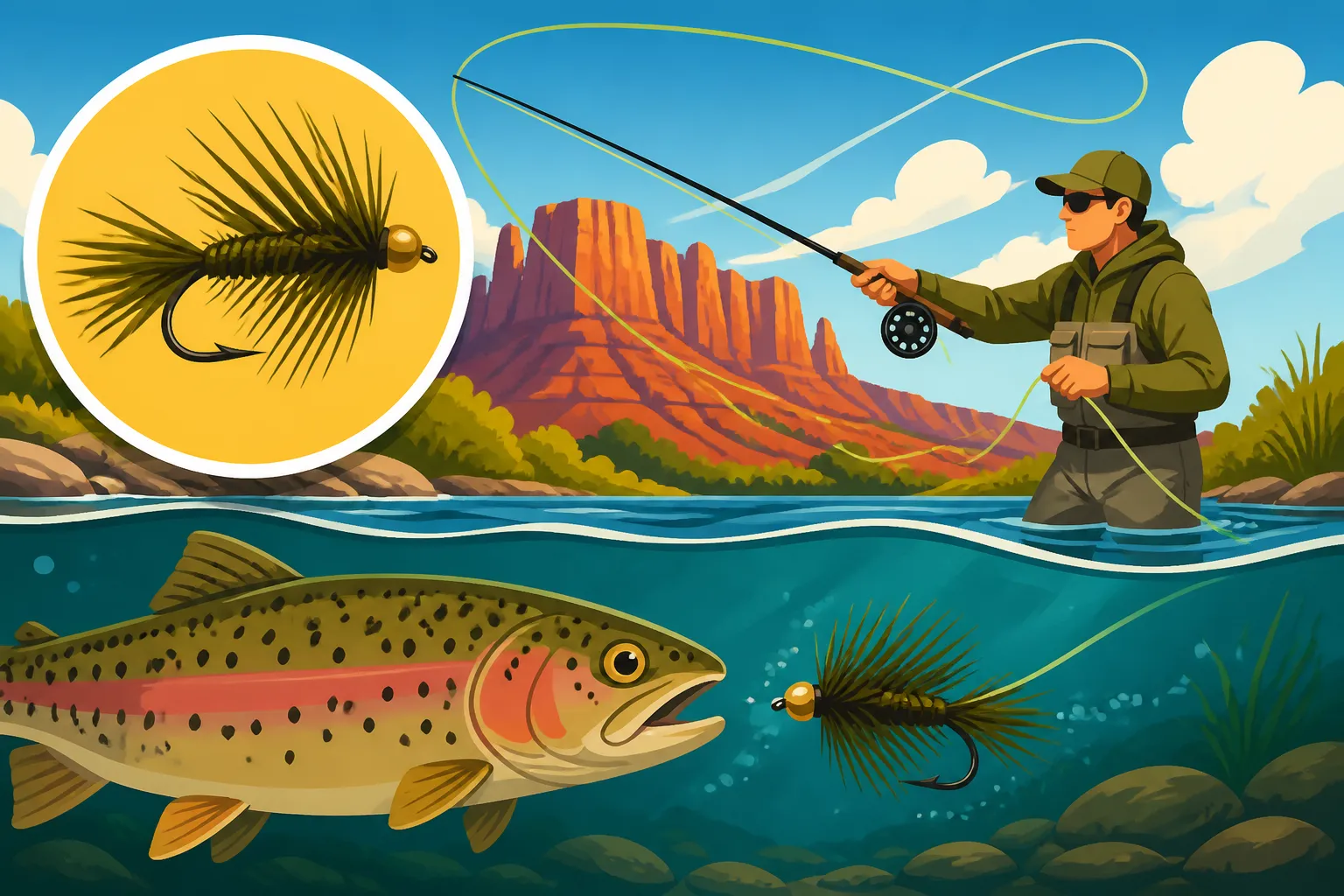
How to Fish a Woolly Bugger in New Mexico
When you're standing on the banks of a beautiful New Mexico river or lake, looking out at the water, it's easy to feel overwhelmed by the sheer number of fly patterns out there. What do you choose? What's going to work across different conditions, for different fish? It’s a common frustration, especially if you want a reliable workhorse fly. But don't worry, because there’s one pattern that has stood the test of time and proven itself relentlessly effective across our state’s diverse waters: the Woolly Bugger. This guide is all about mastering this incredible fly, from rigging it up to making it dance in the water, ensuring you’re ready for whatever New Mexico throws your way.
The Enduring Appeal of the Woolly Bugger in New Mexico
Let's be honest, few flies inspire the kind of confidence a Woolly Bugger does. It’s not just a fly; it’s a legend. Its effectiveness isn’t some grand mystery; it simply mimics so many different food sources that fish, especially our robust New Mexico trout and bass, just can’t resist it. From the cold, clear tailwaters of the San Juan River to the warmer depths of Elephant Butte Lake, the Woolly Bugger consistently produces strikes.
What Makes it So Effective
The magic of the Woolly Bugger lies in its simple, yet ingenious, construction. It typically features a marabou tail that breathes and pulses in the water with even the slightest movement, mimicking the undulating motion of a leech or a swimming minnow. This is perhaps its most defining characteristic – that lifelike, seductive wiggle. The chenille body provides bulk and a profile, while the palmered hackle (wound along the body) adds even more lifelike movement, creating a subtle vibration and profile that fish key into. It’s the perfect combination of texture, movement, and silhouette.
Consider a brown trout holding in a slow current pocket on the Rio Chama. It’s looking for an easy meal. A Woolly Bugger drifting or slowly stripped by can easily be mistaken for a succulent sculpin or a juicy aquatic invertebrate dislodged from the riverbed. Similarly, a smallmouth bass cruising the rocky shores of Abiquiu Lake might see that same Bugger and instinctively think "minnow" or "crawfish." Its versatility is truly unmatched, making it a must-have in any New Mexico angler’s fly box.
Matching the Hatch… or Not
One of the beautiful things about the Woolly Bugger is that it doesn't always need a specific "hatch" to be effective. While traditional dry fly fishing often depends on pinpointing what insects are emerging, the Bugger shines as an attractor and an imitator of general forage. Our New Mexico waters are home to diverse aquatic life. The Bugger can imitate:
- Leeches: Especially effective in lakes and slow-moving river sections. Black or olive Buggers are fantastic leech imitations.
- Minnows/Baitfish: The pulsing marabou tail and streamlined body are dead ringers for small baitfish. White, gray, or olive patterns work well here.
- Large Nymphs/Larvae: Many larger aquatic insects, like stoneflies or Dobsonfly larvae, are substantial meals. Brown or black Buggers in larger sizes can mimic these.
- Crawfish: Especially relevant in warmer waters where bass and larger trout feast on crawfish. Brown and olive patterns with a bit of orange or red can be excellent.
So, while your friends are meticulously trying to match a tiny Trico hatch on the San Juan, you can confidently tie on a size 10 olive Bugger and know that something, somewhere, is going to find it appealing. It's a fly that thrives on the opportunistic nature of hungry fish, which, let's face it, describes most fish most of the time.
Rigging Up for Success in New Mexico Waters
Knowing how versatile the Woolly Bugger is, the next step is understanding how to rig it correctly for different New Mexico fishing scenarios. A poorly rigged fly, no matter how good, won't entice a bite. It's all about presentation, depth, and matching your setup to the water conditions. For those getting started, a basic setup is fine, but as you grow, understanding these nuances will greatly improve your success.
Weighting and Leader Considerations
The key to fishing a Woolly Bugger effectively is often getting it down to where the fish are, or controlling its sink rate and drift.
- Bead Heads: Many Woolly Buggers come with a bead head (brass or tungsten) which provides weight and a "hot spot" attraction. These are excellent for getting the fly down quickly in rivers or deeper lake sections. For instance, if you're targeting rainbow trout on the Rio Grande, a bead-head Bugger can help it sink past the faster surface currents to the fish holding deeper.
- Lead Wraps: Some tiers will wrap lead wire under the body of the fly for added weight. This gives a more subtle sink rate than a bead head.
- Split Shot: If your Bugger isn't weighted, or you need it to sink faster, adding small split shot (removable weights) a foot or so above the fly on your leader is a common practice. This is particularly useful in strong currents or when trying to reach fish hugging the bottom of a deep pool. However, be mindful that too much weight can impede the fly's natural action.
- Sinking Leaders/Sink Tips: For lake fishing or very deep river sections, especially if you're using a floating fly line, you might consider a sinking leader or a sink tip. These are specialized sections of line that connect to your main fly line and are designed to sink, taking your fly down with them. This is often crucial when targeting kokanee salmon in places like Heron Lake, where they might be suspended in deeper water. You can find a good variety of these on Amazon.
When it comes to your leader, a general rule of thumb for trout is a 7.5 to 9-foot tapered leader. The tippet section (the thinnest part connected to your fly) will vary based on water clarity and target species. For average New Mexico trout fishing, a 3X to 5X fluorocarbon tippet is usually sufficient. Fluorocarbon is less visible underwater and more abrasion-resistant, which is a big plus when bouncing flies along rocky bottoms. If you're chasing larger fish or fishing in murky water, you might go heavier with 0X or 1X. Conversely, in crystal clear, low-pressure waters, you might need to drop down to 6X.
Choosing the Right Color and Size
This is where the artistry and local knowledge come in! While the Bugger is versatile, having a few key colors and sizes can make a significant difference.
- Black: An absolute staple. Black can imitate leeches, dark nymphs, or even small baitfish. It creates a strong silhouette against the sky, making it highly visible to fish. Excellent for murky water, low light conditions, or anytime you want a strong presence. Think about fishing a black Bugger on a cloudy day on Fenton Lake for those cruising rainbows.
- Olive: Another must-have. Olive is incredibly versatile, mimicking everything from sculpins to larger aquatic insects and even small frogs. It blends well with many natural environments. If you’re fishing the Pecos River, an olive Bugger is often a go-to.
- Brown: Great for imitating crawfish, mottled sculpins, and various nymphs. Effective in both clear and slightly stained waters. This is a solid choice when you know crawfish are present, especially for bass.
- White/Natural: Excellent for imitating shad or other light-colored baitfish. Particularly effective in lakes with good baitfish populations, like Elephant Butte, for striped bass or aggressive trout.
- Hot Colors (Chartreuse, Orange): While less "natural," these can be phenomenal attractor patterns, especially for recently stocked trout or in off-color water. They can trigger an aggressive strike out of curiosity or irritation. Think of using a chartreuse Bugger on a newly stocked pond near Albuquerque.
Size-wise, Buggers typically range from a small #12 up to a hefty #4 or even larger for bass or big predatory trout.
| Bugger Size | Typical Prey Imitation | Water Conditions / Target |
|---|---|---|
| #12 – #10 | Small nymphs, small leeches | Clear, low-flow rivers; finicky trout in lakes; general trout |
| #8 | Larger nymphs, small minnows | All-around versatile size; most trout waters, moderate current |
| #6 | Minnows, leeches, crawfish | Larger trout, bass, walleye; moderate to fast currents |
| #4 | Large baitfish, crawfish, big leeches | Trophy trout, predatory bass, tiger muskie; deeper lakes, strong currents |
When in doubt, start with a size #8 or #10 olive or black. If the fish aren't responding, don't be afraid to change size or color. Sometimes, just going up or down one size can make all the difference. Remember that even on the famous San Juan River Fishing Guide, while tiny midges get the spotlight, a well-presented Bugger in the right size and color can often tempt larger, less selective fish.
Fishing Techniques: Making Your Bugger Come Alive
A Woolly Bugger isn’t a passive fly; it’s meant to be actively fished. Its inherent movement needs to be amplified by your retrieve, making it appear like a living, breathing meal. This is where your rod, reel, and line become an extension of your creativity, bringing that marabou tail to life.
Stripping and Pausing
This is arguably the most common and effective way to fish a Woolly Bugger, especially in stillwaters or slower river sections. The technique mimics the erratic movements of a fleeing baitfish or a swimming leech.
- The Strip: Cast your Bugger out, let it sink to your desired depth (or until it hits the bottom), and then begin a series of short, sharp strips of your fly line. These strips can be anywhere from 6 inches to 2 feet long.
- The Pause: Crucially, after each strip, introduce a pause. This pause allows the marabou tail to collapse and then flare out as the fly settles, mimicking a natural pause in movement or a dying minnow. Many strikes occur during this pause, so be ready!
- Varying the Retrieve: Don't stick to a monotonous retrieve. Experiment with strip length, speed, and pause duration. Sometimes, a quick, jerky retrieve works. Other times, a slow, almost painfully slow, retrieve with long pauses is key. Picture yourself retrieving a Bugger across the flats of Cochiti Lake for bass – try a fast strip, strip, then a long pause. For the more lethargic winter trout in a New Mexico stream, a super slow crawl might be the ticket.
- Adding Twitches: You can also add subtle twitches with your rod tip during the retrieve to impart even more erratic movement.
This technique is fantastic for covering water and actively seeking out fish. It's particularly effective in lakes like Navajo Lake or Elephant Butte Lake when targeting a variety of species from bass to trout and even walleye. For more general advice on how to use your equipment effectively, check out our guide on Best Rods and Reels for New Mexico Trout Fishing.
Dead-Drifting and Swinging
While stripping is active, dead-drifting and swinging allow the current to do most of the work, mimicking a natural, unhurried food source. These techniques are often more applicable to rivers and streams.
- Dead-Drifting: This means casting your Bugger upstream or quartering upstream and allowing it to drift naturally downstream with the current, without any drag on your line. You want it to move at the exact speed of the current, just like a dislodged nymph or a stunned minnow. This requires good line management, constantly mending your line to keep it free of drag. It's incredibly effective in the riffles and runs of smaller streams, or even in the slower quality waters of the San Juan River when fish are less aggressive. This technique often pairs well with advice from our Fly Fishing Techniques for New Mexico Rivers article.
- Swinging: Cast your Bugger quartering downstream and let it swing across the current, tightening your line as it moves. The current will impart a seductive, arcing movement to the fly as it sweeps across potential holding lies. This is a classic method for brown trout and can be very effective in larger rivers like the Rio Chama or the Gila River. The Bugger's tail will undulate enticingly as it swings. Once the swing is complete and the fly is directly downstream, let it hang for a moment, then slowly strip it back in, as many strikes occur as the fly pauses at the end of its swing or as it begins its retrieve.
Jigging and Bottom Bouncing
For deeper water, suspended fish, or when targeting specific species like walleye or deep-holding lake trout, jigging and bottom bouncing with a Woolly Bugger can be incredibly effective.
- Jigging: This involves casting a weighted Bugger out (or dropping it straight down from a boat or pier) and then imparting short, sharp upward jerks with your rod tip, letting the fly fall back on a semi-slack line. This up-and-down motion can trigger reactive strikes, especially from fish that are less inclined to chase a stripped fly. This is a great technique for fishing off points or submerged structure in reservoirs like Conchas Lake.
- Bottom Bouncing: Here, the goal is to keep your Bugger in constant contact with the bottom, mimicking a crawfish scurrying along or a large nymph crawling. Use enough weight to periodically feel the bottom, then lift your rod tip slightly, allowing the fly to drift a short distance, and then let it settle again. This can be deadly for brown trout or smallmouth bass that are hugging the riverbed or lake bottom.
Where and When to Fish a Woolly Bugger in New Mexico
The true beauty of the Woolly Bugger is its adaptability. You can use it virtually anywhere fish swim in New Mexico, and often at any time of year. However, understanding specific locations and seasonal patterns will undoubtedly boost your catch rates. After all, the Land of Enchantment offers an incredible array of fisheries.
Top New Mexico Waters for Buggers
Let’s talk specifics. Where does the Woolly Bugger really shine in New Mexico? The answer is, almost everywhere, but some places offer prime opportunities:
- San Juan River (Below Navajo Dam): While famous for tiny midge and annelid patterns, larger brown and rainbow trout in the San Juan River's Quality Waters and even the bait-water sections will absolutely crush a black, olive, or brown Woolly Bugger, especially in sizes #8 to #12. Dead-drifting it in the runs or slowly stripping it in the eddies can be incredibly effective for larger fish. Remember to always check the New Mexico Special Trout Water Rules for specific regulations like fly-and-lure-only sections.
- Rio Chama: This iconic river, particularly the sections below El Vado and Abiquiu dams, is prime brown trout habitat. A brown or olive Bugger, stripped slowly through deep pools or swung through runs, is a top producer here.
- Pecos River: From its headwaters in the Pecos Wilderness down through the canyon sections, the Pecos offers fantastic opportunities for rainbows and browns. Olive and black Buggers in sizes #10 to #8 are excellent for prospecting pockets and runs.
- Fenton Lake: This beautiful lake in the Jemez Mountains is regularly stocked with trout. A black or olive bead-head Bugger, retrieved slowly or jigged from a float tube, is often irresistible to these fish.
- Eagle Nest Lake: While known for kokanee salmon, its rainbow trout population also readily takes Buggers. Try an olive or white Bugger, particularly near structure or drop-offs.
- Bluewater Lake: Home to the elusive tiger muskie and quality trout, a larger Woolly Bugger (size #6 or #4) in olive or black can tempt the bigger predators here.
- Elephant Butte Lake and Navajo Lake: For warm-water species like bass (largemouth and smallmouth) and striped bass, a white, olive, or brown Bugger in sizes #6 or #4 can be deadly. Strip it aggressively along rocky points, submerged timber, or near drop-offs. On Navajo, a black or olive Bugger can also tempt the larger brown trout found in the lake.
- Small Ponds and Lakes: Don't overlook the many smaller, stocked ponds around New Mexico. A simple black or olive Bugger, retrieved slowly, is often all you need to catch eager rainbow trout.
Seasonal Strategies
The Woolly Bugger is a year-round fly, but how you fish it changes with the seasons. Understanding the New Mexico Fishing Season Calendar can give you an edge.
- Spring: As waters begin to warm and runoff starts, fish become more active. Trout are looking for substantial meals after a lean winter. This is a prime time for Buggers. Use larger sizes (#6- #8) in olive or black, fishing them deep in swollen rivers or stripping them slowly in warming lakes.
- Summer: During the heat of summer, especially in warmer lakes, fish often move deeper to cooler water or become more active during low-light hours. Focus on early mornings and late evenings. Use dark Buggers (black, brown) in deeper sections, or lighter colors (white, olive) in rivers. In alpine lakes, a small olive Bugger can be incredibly effective. Consider using a weighted Bugger or adding split shot to get it down.
- Fall: This is arguably the best time for Buggers, especially for large brown trout. As trout prepare for spawning and winter, they become aggressive and opportunistic. Use brown, olive, and black Buggers, particularly in sizes #8 to #6. Fish them aggressively with strips and pauses in rivers, or deep in lakes. The changing leaves and cooler air often coincide with some of the best Bugger fishing.
- Winter: Even in the coldest months, the Bugger can produce. Fish are generally more lethargic, so slow your retrieve way down. Dead-drifting smaller (#10-#12) black or olive Buggers through deep, slow pools is a tactic for trout. For ice fishing, small Buggers can be jigged vertically for trout and even perch. Remember, just because it’s cold doesn’t mean they’re not eating; they just need an easy meal.
Remember, regardless of the season, water clarity is always a factor. In clear water, opt for natural colors and smaller sizes. In stained or murky water, a larger, darker, or "hot-colored" Bugger can create a better silhouette and get noticed. It pays to carry a variety, and you can conveniently stock up on different sizes and colors through retailers like Amazon.
| Season | Recommended Bugger Colors | Recommended Sizes | Technique Focus | Key Locations (Examples) |
|---|---|---|---|---|
| Spring | Olive, Black, Brown | #6 – #8 | Slow stripping, deep retrieves, swinging | Rio Chama, Pecos River, newly stocked ponds |
| Summer | Olive, White, Black (for low light/deep) | #8 – #10 | Early/late stripping, deep jigging, dead-drift | High mountain lakes, deep reservoir points, Rio Grande |
| Fall | Brown, Olive, Black, with some red/orange flash | #6 – #8 | Aggressive stripping, swinging, bottom bouncing | San Juan River, Gila River, Eagle Nest Lake |
| Winter | Black, Olive (smaller, subtle) | #10 – #12 | Slow dead-drift, very slow stripping, vertical jigging | San Juan tailwaters, Fenton Lake (ice fishing), deep pools |
Disclaimer
Fishing conditions and regulations in New Mexico can change. Always consult the latest New Mexico Department of Game and Fish regulations booklet or website before heading out. This guide is for informational purposes only and does not supersede official regulations. Stay safe and respect our waters!