Transferring a Boat Registration to a New Owner in New Mexico
Selling or buying a boat in New Mexico should be an exciting venture, but often the paperwork, especially transferring the registration to a new owner, can feel like navigating choppy waters without a map. It's a common frustration, leaving many wondering exactly what forms are needed, where to go, and what pitfalls to avoid to ensure a smooth, legal transfer. This comprehensive guide is here to untangle that process, walking you through every step to transfer a boat registration to a new owner in New Mexico, making sure your time is spent on the water, not wrestling with bureaucracy.
Understanding New Mexico's Boat Registration Basics for New Owners
When a boat changes hands in the Land of Enchantment, it's not just about shaking on a deal and handing over the keys. There’s a crucial legal process involved to ensure the new owner is properly recognized by the state. This isn't just a formality; it protects both the buyer and the seller from potential liabilities and legal headaches down the road.
Why Proper Transfer Matters
Imagine you've just sold your boat, you're thrilled, new adventures await! But if the registration isn't properly transferred, you could still be on the hook for tickets, accidents, or even property taxes associated with that vessel. For the buyer, failing to transfer registration means you're operating an unregistered vessel, which can lead to fines, impoundment, and an inability to legally launch your boat at many public access points. It's a situation nobody wants to be in. Properly transferring the registration ensures that the state's records accurately reflect ownership, which is paramount for safety, law enforcement, and for you to fully enjoy your new or newly sold boat with peace of mind.
Furthermore, without a proper transfer, obtaining things like insurance for your new boat can become a major hurdle. Insurance companies need proof of ownership and valid registration to issue a policy. Trying to navigate this process without the correct paperwork can lead to delays, higher premiums, or even denial of coverage, leaving you exposed if something goes wrong on the water. Taking the time to do it right from the beginning prevents these future complications and solidifies your legal ownership of the vessel.
Key Documents Needed for a Smooth Transfer
The New Mexico Motor Vehicle Division (MVD) oversees boat titling and registration. To transfer ownership, you'll generally need a few key documents. The most critical is the Certificate of Title, which acts much like a vehicle title for your car. This document proves who legally owns the boat and typically includes spaces on the back for the seller to sign over ownership to the buyer. If your boat is an older model or falls below a certain size threshold, it might not have a title, but you'll still need proof of ownership, usually a bill of sale. For a deeper dive into the overall requirements, check out our guide on New Mexico Boat Titling and Registration.
Beyond the title, a comprehensive Bill of Sale is absolutely essential. This document should detail the sale, including the boat's hull identification number (HIN), make, model, year, purchase price, date of sale, and the names, addresses, and signatures of both the buyer and seller. Even if you're just selling to a friend or family member, having a written bill of sale safeguards both parties. You can find generic bill of sale templates online through sites like Amazon or even at a local Bass Pro Shops, or you can draft your own, just ensure it includes all necessary information.
Finally, the existing registration certificate is also important. While the title is the ultimate proof of ownership, the registration certificate confirms the boat is currently registered with the state. The buyer will need to apply for a new registration in their name, even if the existing one is still current. Having the previous registration can help verify details and ensure a smooth transition of the vessel's history with the MVD.
Who Needs to Register a Boat in New Mexico
It's a common misconception that only large, powerful motorboats require registration. In New Mexico, any motorboat, regardless of size or horsepower, must be registered with the MVD. This includes everything from a small jon boat with a tiny trolling motor to a massive cabin cruiser. The rationale is simple: if it has a motor, it needs to be tracked for safety, environmental regulations, and revenue generation to support waterways. Our guide, Do Electric Trolling Motors Need Registration in New Mexico?, offers specific insights if you're dealing with a smaller, electrically powered craft.
However, certain vessels are exempt from registration, which often causes confusion. This typically includes non-motorized boats like canoes, kayaks, paddleboards, and rafts. While these vessels don't require state registration, they are still subject to certain safety regulations, like carrying proper personal flotation devices. Additionally, boats documented with the U.S. Coast Guard, lifeboats used on other registered vessels, and some boats solely used for racing might also be exempt. Always double-check the current regulations to be sure, especially if your vessel falls into a niche category.
| Document Type | Provided By | Required For | Purpose |
|---|---|---|---|
| Certificate of Title | Seller | All titled boats | Legal proof of ownership transfer |
| Bill of Sale | Both | All boat sales | Details transaction, protects buyer/seller |
| Existing Registration | Seller | All registered boats | Provides vessel details to MVD |
| New Registration Form | Buyer | All boats requiring new registration | Application for new owner's registration |
| Proof of Residency | Buyer | For resident rates | Verifies New Mexico residency for fee calculation |
| Photo ID | Buyer | All transactions | Confirms identity |
Step-by-Step Guide to Transferring Ownership and Registration
Navigating the MVD can feel like a maze, but with the right preparation, transferring boat ownership in New Mexico can be quite straightforward. Both the seller and the buyer have distinct responsibilities that, when met, ensure a seamless process.
The Seller's Responsibilities
As the seller, your primary responsibility is to legally transfer ownership. This begins with signing the existing Certificate of Title. On the back of the New Mexico boat title, there are designated fields for the seller to sign, print their name, and sometimes include the sale date and odometer reading (though less common for boats unless it's an hour meter). Ensure your signature matches the name on the title exactly. Any discrepancies can cause delays or rejection at the MVD.
Next, you absolutely must provide a comprehensive Bill of Sale to the buyer. Even if the MVD doesn't explicitly require it for the transfer, it's crucial for your own protection. This document serves as proof that you sold the vessel and are no longer responsible for it. Make multiple copies – one for you, one for the buyer, and one to potentially submit with the MVD paperwork. It’s also wise to remove any old registration decals from the boat once the sale is complete. This clearly signals that the registration is no longer valid under your name and that the new owner needs to complete their part of the process.
Finally, while not always mandatory, it's a good practice to notify the MVD that you've sold the boat. This can often be done through a simple form or by presenting your copy of the bill of sale. This helps ensure that any future issues with the boat don't inadvertently get traced back to you. This step can save you considerable hassle and potential legal entanglements later on.
The Buyer's Action Plan
For the buyer, the process begins immediately after the purchase. Your first step is to gather all the necessary documents provided by the seller: the properly signed Certificate of Title (if applicable), and the Bill of Sale. Without these, you won't be able to prove ownership and register the vessel in your name. If the boat does not have a title, such as certain small or homemade vessels, then a robust bill of sale becomes even more critical.
Once you have your documents in hand, you'll need to head to a New Mexico MVD office. It's often advisable to make an appointment if possible, to avoid long wait times. You'll need to fill out an application for boat registration and title (if applicable), which can often be found online on the New Mexico MVD website, or picked up at the office. This form will ask for details about the boat (HIN, make, model), your personal information, and how you acquired the vessel. For details on how much this might cost you, read New Mexico Boat Registration Fees by Length.
You will also be responsible for paying all applicable fees, including title fees, registration fees, and any excise tax on the purchase price. Remember, there's a deadline to complete this transfer, typically 15 days from the date of purchase, or you could face penalties. Our guide on the Deadline to Register a Boat After Buying It in New Mexico provides more clarity on these timeframes. Once all paperwork is processed and fees are paid, you'll receive your new registration certificate and decals, which must be prominently displayed on your boat.
What to Do if the Boat Doesn't Have a Title
Sometimes, you might find yourself purchasing an older boat, a smaller vessel, or a homemade one that simply doesn't have a formal Certificate of Title. This doesn't mean you can't register it, but the process requires a bit more legwork and different documentation to establish proof of ownership. This situation is particularly common for very small watercraft or vessels that predate titling requirements in New Mexico.
In these cases, the Bill of Sale becomes the paramount document. It needs to be incredibly detailed, ideally notarized, and include the hull identification number (HIN) if one exists. If there's no HIN, the MVD might require an inspection to assign one, which is an important safety and identification measure. You might also need to provide affidavits from previous owners, if available, or even publish a notice in a local newspaper to establish clear ownership and ensure there are no outstanding liens or claims on the vessel.
For homemade boats, you'll typically need to submit receipts for materials used in its construction, along with detailed photographs. The MVD will also likely require an inspection to verify the boat's construction and assign a Hull Identification Number (HIN). This process ensures that even unique or custom-built vessels can be legally registered and operated on New Mexico waters, but it certainly takes more preparatory steps than a simple title transfer.
Common Pitfalls and How to Avoid Them
Even with the best intentions, transferring boat registration can sometimes hit snags. Knowing the common issues ahead of time can help you steer clear of them and keep your transfer process smooth and efficient.
Missed Deadlines and Penalties
One of the most frequent stumbling blocks is simply missing the deadline to transfer the registration. New Mexico gives you a limited window, typically 15 days from the date of purchase, to complete the transfer of title and registration. This short timeframe can easily slip by, especially if you're excited about your new boat or if the MVD offices are busy. Failing to meet this deadline can result in late fees, which add unnecessary costs to your new acquisition.
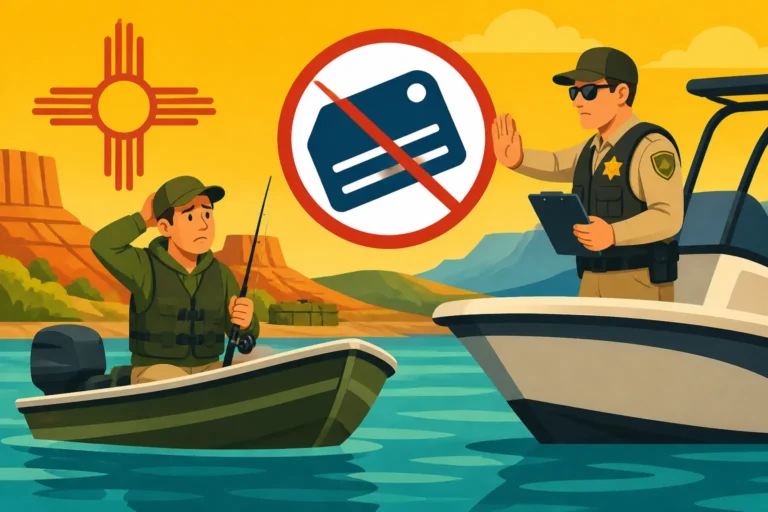
Beyond late fees, operating a boat that isn't properly registered in your name after the deadline can lead to more serious consequences. Law enforcement officers have the authority to issue tickets for unregistered vessels, and in some cases, the boat could even be impounded. This is not just an inconvenience; it can be an expensive and time-consuming ordeal to retrieve your vessel. To understand the full scope of potential issues, take a look at our article, Penalty for Boating Without Registration in New Mexico.
The best way to avoid these penalties is to act promptly. As soon as the sale is complete, gather your documents and plan your visit to the MVD. If you anticipate any delays, contact the MVD proactively to see if extensions are possible or if there are any specific steps you can take to mitigate potential issues. Being proactive is always better than being reactive when it comes to official paperwork.
Incomplete Paperwork Woes
Submitting incomplete or incorrect paperwork is another common reason for delays and frustration. The MVD deals with a high volume of transactions, and they have strict requirements for documentation. A missing signature, an incorrectly filled-out date, or an illegible HIN can send your application straight back to you, delaying your ability to get on the water. This can be especially annoying if you’ve waited in line for an hour only to be told you need to go back home and fix something.
To prevent this, double-check every form and document before you head to the MVD. Make sure all names, addresses, and boat details match across all documents. If you have questions about specific fields, call the MVD beforehand or look for sample forms online. It's also a good idea to bring extra copies of everything, just in case. Having a checklist of required documents from the MVD website can be incredibly helpful in ensuring nothing is overlooked.
Sometimes, the issue isn't missing information but conflicting information. For example, if the HIN on the bill of sale doesn't exactly match the HIN on the title, or if the seller's signature on the title looks different from their ID, it could raise red flags. Address any discrepancies with the seller before you go to the MVD. Resolving these issues upfront will save you a world of trouble and ensure your application is processed efficiently.
Special Situations: Gifts, Inherited Boats, and Out-of-State Purchases
Not all boat transfers involve a straightforward sale between two parties. Sometimes, a boat is gifted, inherited, or purchased from an out-of-state seller, each presenting its own unique set of documentation requirements. These special situations often catch new owners off guard, leading to confusion at the MVD office.
For a gifted boat, you'll still need a Bill of Sale, but it should clearly state that the transfer is a gift, often with a nominal value (like $1). This helps avoid sales tax, though other fees like title and registration will still apply. The donor (giver) will need to sign over the title just as a seller would. When inheriting a boat, you'll typically need a copy of the death certificate, proof of your relationship to the deceased, and potentially probate court documents (like letters of administration or last will and testament) to prove your legal right to ownership.
Purchasing a boat from out of state adds another layer of complexity. The boat might have a title from a different state, which the New Mexico MVD will need to verify. You'll likely need to bring the out-of-state title, a bill of sale, and potentially the boat itself for an inspection, especially if the HIN needs to be verified or if there's any concern about theft. The process will essentially be to title and register the boat in New Mexico as if it were a new registration for the state. Our article, New Mexico Out-of-State Angler Rules, covers some related aspects if you're bringing a boat in for fishing.
Maintaining Your New Mexico Boat Registration
Getting your boat registered in your name is a significant accomplishment, but it's not a one-and-done deal. Keeping your registration current and your information accurate is an ongoing responsibility that ensures you can continue to enjoy New Mexico's beautiful waterways legally and without interruption.
Understanding Your New Registration Certificate and Decals
Once your transfer is complete and the MVD processes everything, you'll receive your official New Mexico Boat Registration Certificate and new registration decals. The certificate is a paper document that should always be kept on board the vessel when it's in operation. This document contains vital information about your boat, including its registration number, HIN, make, model, and expiration date. Think of it as your boat's driver's license – it proves its legality on the water.
The registration decals are equally important. These are typically self-adhesive stickers that you must affix to the forward half of your boat, on both the port (left) and starboard (right) sides. They usually display the current year and the registration number. Correct placement and visibility are crucial, as law enforcement needs to be able to easily identify your vessel. Incorrectly displayed or expired decals are a common reason for stops and citations, so make sure they are applied according to MVD guidelines.
Take a moment to review your new registration certificate carefully. Ensure all the information is accurate, from your name and address to the boat's details. If you spot any errors, contact the MVD immediately to have them corrected. It's far easier to rectify a mistake right away than to deal with it later when you might be trying to launch your boat or renew its registration.
New Mexico Boat Registration Renewal Steps
Just like with your vehicle, boat registrations in New Mexico aren't permanent. They typically need to be renewed periodically, usually every one or two years. The MVD usually sends out renewal notices well in advance of your expiration date, but it's ultimately your responsibility to keep track of it. Missing a renewal can lead to an expired registration, which, as we've discussed, can result in fines and legal issues if you're caught operating the boat. For a complete walkthrough, refer to our guide, New Mexico Boat Registration Renewal Steps.
Renewal is usually a straightforward process. You can often renew online through the MVD website, by mail, or in person at an MVD office or authorized vendor. You'll need your current registration information and payment for the renewal fees. Once processed, new decals will be mailed to you, which you'll then need to replace the old, expired ones on your boat. Remember to keep the old ones on until the new ones arrive, but then promptly remove the expired decals and apply the fresh ones.
Setting a reminder on your calendar or phone for a month or two before your registration expires is an excellent habit to adopt. This gives you ample time to complete the renewal process without feeling rushed and helps ensure there’s no lapse in your boat's legal status. A proactive approach here prevents headaches and ensures uninterrupted enjoyment of New Mexico’s incredible fishing and boating opportunities.
The Importance of Keeping Your Information Current
Life happens, and sometimes your personal information changes. You might move to a new address, get a new phone number, or even change your name. It's critical to inform the New Mexico MVD of any changes to the information on your boat registration certificate. Failing to do so can lead to missed renewal notices, incorrect mailing of official documents, and difficulties in contacting you regarding your vessel.
Updating your address, for example, is usually as simple as filling out a change of address form with the MVD, which can often be done online or by mail. If your boat itself undergoes significant modifications, such as changing its primary propulsion system (e.g., adding a motor to a previously non-motorized vessel), you might also need to notify the MVD, as this could impact its registration category or requirements.
Keeping your records meticulously updated with the MVD ensures that you receive all important communications, maintains the accuracy of the state's boating database, and ultimately keeps you in good standing as a responsible boat owner. This attention to detail contributes to the overall safety and regulatory compliance of New Mexico's boating community.
Disclaimer
This article is for general informational purposes only and does not constitute professional advice. Laws, prices and regulations vary by location and change over time. Consult a qualified professional for guidance on your specific situation.