Best Sunglasses for Sight Fishing in New Mexico
There's nothing quite as vexing as standing on the banks of a beautiful New Mexico river or casting into a shimmering lake, knowing fish are there, but being utterly blinded by the sun's glare reflecting off the water. That frustrating shimmer can turn a promising fishing spot into a guessing game, making you miss subtle movements or hidden structure. This comprehensive guide is designed to help you navigate the world of fishing eyewear, ensuring you pick the best sunglasses to cut through that New Mexico glare and significantly improve your sight fishing success.
Why Polarized Sunglasses Are Non-Negotiable for New Mexico Anglers
Let's face it, New Mexico's sunny skies are one of its greatest assets, but for anglers, that intense sunlight bouncing off the water can be a real adversary. You're not just dealing with bright light; you're battling reflections that effectively create a mirror on the water's surface, obscuring everything beneath. This is where polarized sunglasses don't just become helpful; they become an absolute necessity.
Cutting Through the Glare: The Science of Polarization
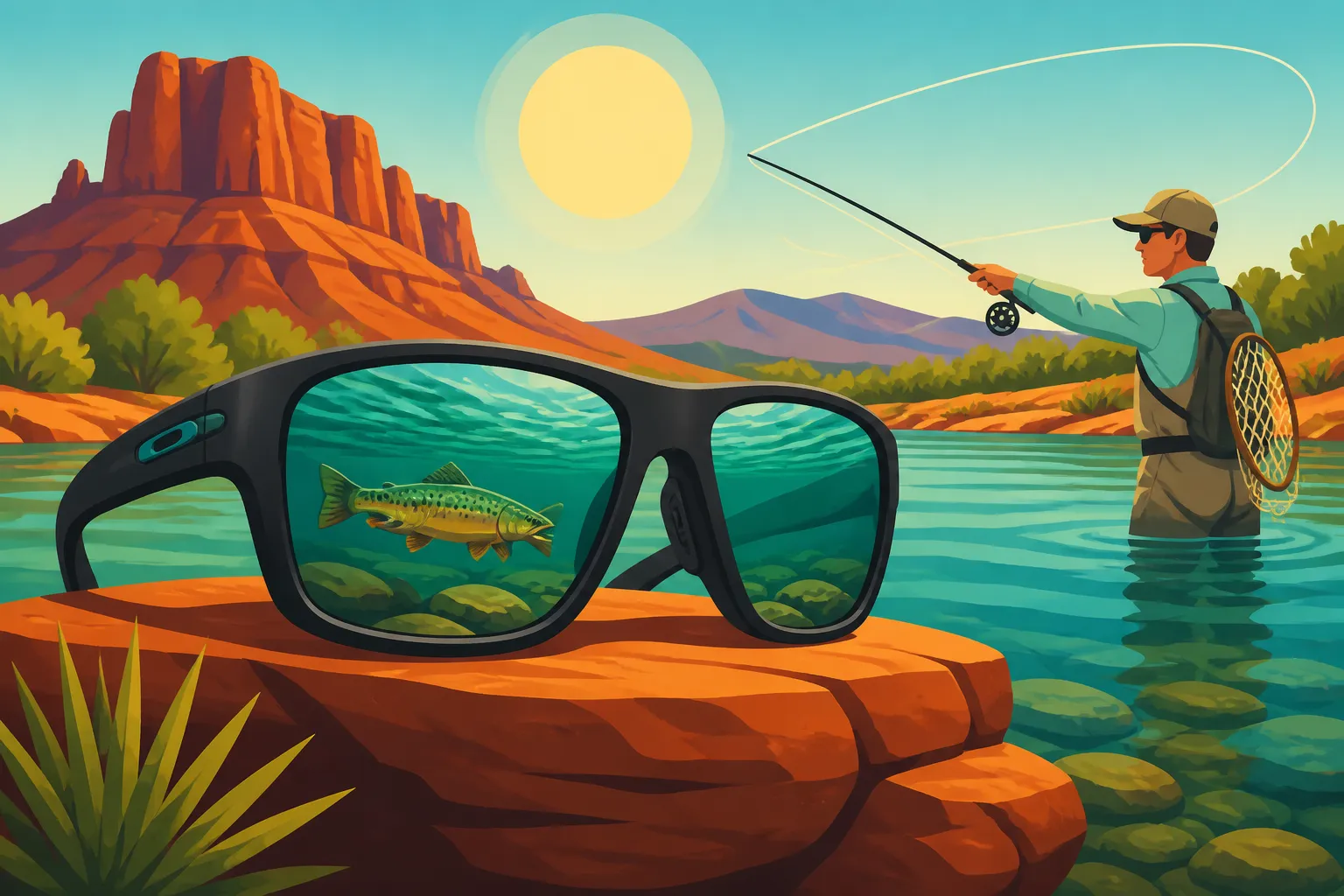
Think about how sunlight hits the water. It bounces off in all directions, but a significant portion of it becomes horizontally polarized light – that's your annoying glare. It's like a sheet of shimmering light that sits right on top of the water, making it impossible to see through. Standard sunglasses only dim all light uniformly, which reduces overall brightness but does little to eliminate this specific type of glare.
Polarized lenses are engineered with a special filter that absorbs these horizontal light waves while allowing vertical light waves to pass through. This isn't just dimming; it's actively canceling out the reflective glare. The result? That shimmering surface disappears, and suddenly, you can peer into the water, spotting submerged rocks, weed lines, drop-offs, and most importantly, the fish themselves. For anyone targeting wary trout in a clear mountain stream or trying to locate bass holding on structure in one of our reservoirs, this ability to literally "see through" the water is a game-changer. It's the difference between blindly casting and making precise, informed presentations. You'll instantly understand why this technology is so crucial, especially when trying to discern the subtle movements of fish against the riverbed. For more on specific rules, check out New Mexico Trout Fishing Rules.
Beyond Just Seeing Fish: Enhanced Safety and Comfort
While spotting fish is undoubtedly the primary benefit, polarized sunglasses offer so much more for the New Mexico angler. Our rivers, like the Rio Grande or the Pecos, often have uneven, rocky bottoms that can be treacherous to wade through, especially when the current is strong. Lakes and reservoirs can also hide submerged obstacles, logs, or sharp rocks near the shore.
By eliminating glare, polarized lenses allow you to clearly see these underwater hazards, making your wading safer and more confident. You can pick your footing, avoid potential falls, and move through the water with greater ease. Beyond safety, there's the significant comfort factor. Prolonged exposure to intense glare causes immense eye strain, leading to headaches and fatigue. By reducing this strain, polarized lenses allow you to spend more time on the water, focused and comfortable, making your long days of fishing far more enjoyable. This benefit is particularly noticeable during those long summer days on the open water, where the sun beats down relentlessly.
Key Features to Look for in New Mexico Fishing Sunglasses
Choosing the right pair of polarized sunglasses isn't just about grabbing the first pair you see. There's a science to it, especially when you consider the diverse and often challenging light conditions found across New Mexico's varied fishing landscapes. From bright, high-altitude lakes to shaded canyon rivers, different features will make a significant impact on your ability to see clearly and protect your eyes.
Lens Material Matters: Glass vs. Polycarbonate
When it comes to the core of your sunglasses – the lenses themselves – you generally have two primary material choices: glass or polycarbonate. Each has its distinct advantages and disadvantages, making one a better fit depending on your fishing style and priorities.
Glass lenses are often heralded for their superior optical clarity. They provide the crispest, distortion-free vision, which can be invaluable when you're trying to distinguish a camouflaged trout against a rocky bottom from a distance. They are also incredibly scratch-resistant, which means they'll hold up well against incidental contact with branches, sand, or the occasional dropped fly. However, glass lenses are heavier than polycarbonate, which can be a factor during long days on the water. More importantly, they are not as impact-resistant. While less likely to scratch, if they take a direct hit, they are more prone to cracking or shattering. For anglers who spend a lot of time on boats, where hooks and weights can fly, or those who are prone to dropping their gear on hard surfaces, the fragility of glass might be a concern.
Polycarbonate lenses, on the other hand, shine in their durability and lightness. They are incredibly impact-resistant, making them a safer choice for active anglers, especially those who might find themselves in situations where their glasses could take a hit. If you fish from a kayak or canoe, or if you're frequently bushwhacking through dense vegetation to reach your favorite fishing spot, polycarbonate offers peace of mind. They are also much lighter, contributing to a more comfortable fit over extended periods. The trade-off is that while modern polycarbonate lenses are exceptionally good, they typically don't offer the exact same level of optical clarity as high-end glass, and they are more susceptible to scratching. Many reputable brands offer excellent polycarbonate lenses that come very close in clarity to glass, and with proper care, their scratch resistance can be managed. Thinking about what type of fishing you'll primarily be doing in New Mexico is key here; do you prioritize absolute clarity on a pristine fly-fishing stream or rugged durability when hiking into a remote lake?
The Power of Color: Choosing the Right Lens Tint for New Mexico's Waters
The color of your polarized lenses isn't just a fashion statement; it's a critical factor in how effectively you'll see fish and structure under varying light conditions. Different tints are designed to enhance contrast, filter specific light spectrums, and perform optimally in different environments. New Mexico, with its diverse waters from clear mountain streams to sometimes murky, silty reservoirs, demands a thoughtful approach to lens color.
Amber/Copper Tints: These are fantastic all-around tints, particularly for lower light conditions, overcast days, or when fishing in shaded areas, like deep canyons along the Pecos River or early morning on the San Juan. They enhance contrast, making it easier to distinguish objects against a variable background. They’re excellent for spotting trout in rocky rivers or bass lurking in shadowed cover. If you often fish during dawn, dusk, or on cloudy days, an amber or copper lens will significantly improve your vision.
Gray Tints: Gray lenses offer true color perception, meaning they don't distort colors, and they reduce overall brightness very effectively. They are best suited for bright, sunny conditions and open water, such as the expansive surfaces of Elephant Butte or Navajo Lake. If you're out on the reservoir in the middle of a clear summer day, a gray lens will keep your eyes comfortable and provide good glare reduction without altering the natural colors of your surroundings. However, they don't enhance contrast as much as amber or copper, so they might not be the top choice for spotting fish in dappled light or murky water.
Green Mirror/Blue Mirror Coatings: These are typically applied over a base lens color (often gray, amber, or copper) and offer additional glare protection, especially in extremely bright conditions. Green mirror lenses are often paired with a copper or amber base and are fantastic for general fishing, offering excellent contrast and glare reduction across a wide range of light conditions, particularly nearshore or in mixed environments. Blue mirror lenses are typically built on a gray base and are specifically designed for offshore or extremely bright, open water situations, like wide-open reservoirs on a cloudless day. They offer maximum glare reduction by reflecting more light away from the eye. These are ideal if you find yourself squinting even with regular polarized lenses on those dazzling New Mexico summer afternoons.
Here’s a quick guide to help you choose:
| Lens Tint/Coating | Best Conditions | Primary Benefit | Ideal New Mexico Scenario |
|---|---|---|---|
| Amber/Copper | Low light, overcast, cloudy, dawn/dusk, shaded areas | High contrast, enhanced depth perception | Mountain streams, canyon rivers, early/late reservoir fishing |
| Gray | Bright, sunny, open water | True color perception, excellent glare reduction | Open lakes (Elephant Butte, Navajo), mid-day sun |
| Green Mirror | Bright to moderate light, variable conditions | Enhanced contrast, excellent all-around glare reduction | General river/lake fishing, mixed cover/open water |
| Blue Mirror | Extremely bright, open water, intense sun | Maximum glare reduction, superior eye comfort | Large reservoirs (Elephant Butte, Ute Lake) on clear summer days |
Many anglers find it beneficial to own multiple pairs with different tints, allowing them to adapt to the specific conditions of the day. You can find a wide selection of these options at retailers like Bass Pro Shops, or by browsing specialized fishing eyewear on Amazon. The right choice will make a profound difference, whether you're fly fishing the San Juan River or trolling for walleye on Conchas Lake. For general seasonal advice, take a look at New Mexico Fishing by Season.
Frame Fit and Coverage: Protecting Your Eyes from All Angles
The lenses are undoubtedly the star of the show, but the frame supporting them plays a crucial role in comfort, protection, and overall effectiveness. A poorly fitting frame can be a constant annoyance, allowing light to sneak in or even falling off during active fishing.
Coverage is Key: For maximum protection and performance, look for frames that offer ample coverage. Wrap-around styles are particularly effective as they minimize light leakage from the sides, top, and bottom. This prevents distracting glare from reflecting off the back of your lenses or sneaking around the edges, which can negate the benefits of polarization. Good coverage also protects your eyes from wind, dust, and stray fishing line, which is especially important during windy days on New Mexico's larger reservoirs or when casting vigorously.
Material and Comfort: Frame materials vary widely, but look for durable, lightweight options like nylon or proprietary blends that can withstand the rigors of outdoor use. Adjustable nose pads and rubberized temple grips are often overlooked but incredibly important features. They ensure the sunglasses stay securely on your face, even when you're sweating, bending over to net a fish, or navigating uneven terrain. A comfortable, secure fit means you won't be constantly pushing your glasses back up your nose or worrying about them falling off, allowing you to focus entirely on the fishing. If your frames are constantly slipping, it will detract from your focus, potentially costing you a fish or even leading to losing your expensive eyewear in the water.
Top Lens Technologies and Coatings for Superior Sight Fishing
Once you've nailed down your preferred lens material and tint, there are additional lens technologies and coatings that can elevate your fishing sunglasses from good to truly exceptional. These advancements are designed to further enhance clarity, durability, and adaptability, making your time on the water even more productive and comfortable.
Anti-Reflective and Hydrophobic Coatings
These specialized coatings might seem like minor details, but they make a substantial difference in real-world fishing scenarios.
Anti-Reflective (AR) Coatings: Think about those annoying reflections you sometimes see on the inside surface of your regular eyeglasses or sunglasses. That's light bouncing off the back of the lens and entering your eye, causing internal glare and distraction. An anti-reflective coating applied to the back surface of your polarized lenses virtually eliminates these reflections. This means less eye strain, improved clarity, and a clearer view of the water without any internal distractions. When you're trying to spot a subtle take from a trout in a clear stream, every bit of visual clarity counts. It's especially useful when the sun is behind you, preventing that distracting shimmer from your own face reflecting into your eyes.
Hydrophobic and Oleophobic Coatings: These coatings are designed to make your lenses more resistant to water, oil, and smudges. A hydrophobic (water-repelling) coating causes water droplets to bead up and roll right off the lens surface, rather than streaking and obstructing your view. This is incredibly valuable when fishing in the rain, on a splashy boat, or just when dealing with incidental water spray. An oleophobic (oil-repelling) coating repels skin oils and lotions, making it much easier to clean off fingerprints and smudges with a quick wipe. Combined, these coatings keep your lenses cleaner for longer and make them much quicker to clean when they do get dirty, which is an inevitable part of any fishing trip. Imagine trying to quickly wipe away a water spot to spot a rising fish – these coatings make that possible without leaving streaks behind. For more general advice on equipment, check out Best Fishing Gear for New Mexico Anglers.
Photochromic Lenses: Adapting to New Mexico's Variable Light
New Mexico's weather can be notoriously unpredictable, with bright sunshine quickly giving way to cloud cover or afternoon monsoons. Moving from wide-open lakes into shaded canyons or dense riparian zones can also cause dramatic shifts in light conditions. This variability often means that a fixed-tint lens, perfect for bright sun, might be too dark in the shade, or a lighter tint, great for clouds, might not offer enough protection in full sun. This is where photochromic lenses come into their own.
How They Work: Photochromic lenses contain molecules that react to UV light, causing the lens to darken when exposed to brighter sunlight and lighten when UV levels decrease (e.g., when it becomes cloudy or you step into the shade). This adaptive technology means you theoretically only need one pair of sunglasses for a wider range of conditions. For an angler targeting different environments, such as starting the day in a sunny open river section and then moving into a heavily wooded canyon, these lenses adjust automatically, optimizing your vision without requiring a lens change.
Considerations: While incredibly convenient, photochromic lenses do have some limitations. Their darkening and lightening speed isn't instantaneous; there's a slight delay. Also, their performance can be affected by temperature, often performing better (darkening more) in cooler temperatures than in very hot conditions. Lastly, they typically don't get as dark as the darkest fixed-tint lenses (like blue mirrors), nor as clear as a purely clear lens, so they represent a compromise. However, for many anglers who value versatility and don't want to carry multiple pairs, photochromic lenses are an excellent choice, providing a good balance for New Mexico's often dynamic light. If you find yourself fishing varied environments frequently, these could be a worthwhile investment to keep your eyes comfortable and vision optimized throughout the day.
Considerations for New Mexico's Unique Fishing Environments
New Mexico's diverse geography presents a fascinating array of fishing opportunities, but each environment comes with its own set of visual challenges. To truly optimize your sight fishing capabilities, it's essential to consider how different conditions—from high-altitude glare to murky reservoir water—impact your choice of sunglasses.
High-Altitude Lakes and Bright Sun Conditions
Fishing in New Mexico often means heading to higher elevations, whether it's Eagle Nest Lake, Heron Lake, or numerous smaller alpine lakes in the Pecos Wilderness. At these altitudes, the air is thinner, meaning there's less atmosphere to filter UV radiation. This results in significantly increased UV exposure and more intense sunlight and glare.
When you're out on a high-altitude lake, especially on a clear, sunny day, the combination of direct overhead sun and reflection off the water can be incredibly harsh on your eyes. For these conditions, you'll want sunglasses with the highest level of glare reduction and UV protection possible. Darker lens tints, like gray or a dark green mirror over a gray base, are often the best choice here. The darker tint helps reduce the sheer volume of light reaching your eyes, while the mirror coating provides an extra layer of reflection, bouncing away a significant portion of the intense light. These lenses will not only help you cut through the glare to spot those cruising trout or kokanee salmon but also offer superior protection for your long-term eye health. Always prioritize maximum UV protection (usually 100% UVA/UVB) when fishing these pristine but intense environments. For more on this, consult High Altitude Fishing Tips for New Mexico.
River and Stream Fishing: Reading the Water
New Mexico's rivers and streams, from the world-renowned San Juan River Quality Waters to smaller, intimate trout streams, demand a specific approach to sight fishing. Here, it's not just about cutting through glare; it's about discerning subtle details in moving water – the flash of a fish, the outline of a submerged rock, the seam of current where trout might be holding.
For river and stream fishing, especially for trout, contrast enhancement is paramount. This is where amber or copper-tinted lenses truly shine. They excel at separating shades of green and brown, allowing you to pick out the silhouette of a fish against the riverbed or differentiate between a shadow and actual structure. You want lenses that allow you to "read the water" – identifying changes in depth, current seams, and potential holding lies. Good peripheral vision is also crucial, particularly if you're wading and constantly scanning for both fish and safe footing. Frames with a moderate wrap-around design that don't obstruct your side vision are beneficial. While mirror coatings can be helpful, for many river anglers, the priority is often the base tint's ability to enhance contrast and depth perception, allowing for more precise casts and better understanding of the water. This is especially true for delicate presentations in Fly Fishing Techniques for New Mexico Rivers.
Reservoir Fishing: Open Water Glare and Deep Water Clarity
New Mexico's large reservoirs like Elephant Butte, Conchas Lake, and Ute Lake present their own unique challenges for sight fishing. These are vast bodies of water where the sun can create immense, sweeping glare across acres of surface. Furthermore, depending on the clarity of the reservoir, you might be trying to penetrate deeper into the water column to locate suspended fish or bottom structure.
For open-water reservoir fishing, excellent glare reduction is non-negotiable. Blue mirror lenses (often on a gray base) are typically the top performers in these conditions. They are specifically designed to reflect the most intense light, providing maximum comfort and glare elimination over large, bright water surfaces. When trying to spot striped bass chasing baitfish or walleye hugging the bottom, the ability to see deeper into the water with reduced surface reflection is invaluable. However, if the reservoir is murkier, no lens will magically make it crystal clear, but a good polarized lens will still reduce the surface glare, which is always present. For days with mixed sun and clouds on a reservoir, a green mirror lens (on an amber/copper base) offers a good compromise, providing strong glare reduction while maintaining decent contrast. The key is to overpower that vast expanse of reflective surface so you can gain insight into the underwater world.
Caring for Your Fishing Sunglasses: Longevity on the Water
Investing in a quality pair of polarized sunglasses is a game-changer for your New Mexico fishing adventures. But like any essential piece of gear, their performance and lifespan largely depend on how well you care for them. Neglecting your shades can quickly lead to scratched lenses, loose frames, and diminished clarity, negating all the benefits they offer.
Cleaning and Storage Best Practices
Proper cleaning and storage are the two most critical aspects of maintaining your fishing sunglasses. It's easy to get lazy after a long day on the water, but a few moments of care can save you from premature wear and tear.
Cleaning: Never, ever wipe your lenses with a dry shirt, a paper towel, or anything abrasive. Dirt and grit picked up on the water can act like sandpaper, scratching the delicate lens coatings. The best practice is to first rinse your lenses under clear, running water (freshwater is best, especially after saltwater exposure, although most New Mexico fishing is freshwater). This removes any loose dirt, sand, or salt crystals. After rinsing, use a high-quality microfiber cloth specifically designed for eyewear. Gently wipe the lenses clean. If you encounter stubborn smudges or water spots (which can be less frequent with hydrophobic coatings), a small drop of lens cleaning spray (also designed for eyewear) can be applied to the microfiber cloth. Always ensure the cloth itself is clean, as a dirty cloth can also cause scratches. Regular, gentle cleaning not only preserves your lenses but ensures you always have the clearest possible vision on the water.
Storage: When your sunglasses aren't on your face, they should be in their case. This might seem obvious, but how many times have we tossed them onto a dashboard, into a tackle box, or hung them from our shirt collar? A hard case provides the best protection against crushing, scratches, and accidental drops. It shields the lenses from dust and debris and prevents the frames from getting bent or twisted. If a hard case isn't practical for a quick moment, at least use a soft pouch, but always remember that a soft pouch primarily protects from scratches, not impact. Proper storage prevents pressure points on the frames and keeps them from being exposed to extreme temperatures that can warp frame materials or damage lens coatings. Getting into the habit of immediately placing them in their case when you're done for the day or moving locations will drastically extend their life.
When to Replace Your Lenses or Frames
Even with the best care, fishing sunglasses won't last forever. Knowing when it's time to replace them, either partially or entirely, is important for maintaining your sight fishing advantage and protecting your eyes.
Lenses: The most common reason for replacement is excessive lens scratches. Even minor scratches can create visual distortions, scatter light, and ultimately hinder your ability to see clearly through the water. While tiny imperfections might be tolerable, once scratches become distracting or noticeable in your field of vision, it's time for new lenses. Another, less obvious, sign of degradation is a loss of polarization effectiveness. Over time, or with prolonged exposure to heat and UV, the polarizing film in some lenses can delaminate or degrade. You might notice that glare reduction isn't as effective as it once was, or you might see hazing. To check, hold your sunglasses up to an LCD screen (like your phone or a gas pump) and rotate them 90 degrees; if the screen doesn't appear to darken or black out, the polarization might be compromised. Many premium brands offer replacement lens kits, which can be a cost-effective way to refresh your favorite frames.
Frames: Frames can also wear out. Common issues include loose hinges, warped temples that no longer fit securely, or cracks in the frame material. If your frames are constantly slipping, allowing light to leak in, or causing discomfort, it's impacting your ability to fish effectively. Sometimes, minor issues like loose screws can be fixed, but significant warping or breakage usually means a new frame is needed. Consider the overall investment in your eyewear. If the frames are still in excellent condition but the lenses are shot, replacing lenses is smart. However, if both are showing significant wear, it might be more economical and certainly more beneficial for your fishing to invest in a completely new pair. Remember, your eyes are one of your most valuable fishing tools, and clear, protected vision is paramount for success on any New Mexico water, from the San Juan River Quality Waters Section to the sprawling Best New Mexico Lakes for Bass.
Disclaimer
This article is for general informational purposes only and does not constitute professional advice. Laws, prices and regulations vary by location and change over time. Consult a qualified professional for guidance on your specific situation.