Best Kayaks for Elephant Butte Lake
Fishing Elephant Butte Lake from a kayak presents a unique blend of challenge and reward, but if you've ever tried to paddle a small, unsuitable craft on its expansive, often windy waters, you know the frustration. The wrong kayak can turn a peaceful fishing trip into a constant battle against the elements or a wobbly, gear-strewn mess. This guide will walk you through what truly makes a kayak suitable for New Mexico's largest reservoir, helping you pick a stable, efficient, and well-equipped vessel so you can focus on catching those trophy stripers and walleye.
Why Kayak Fishing is a Game Changer on Elephant Butte Lake
Elephant Butte Lake is a magnificent body of water, drawing anglers from all over for its diverse fishery, including robust populations of striped bass, walleye, crappie, and catfish. However, its sheer size and sometimes unpredictable nature can be intimidating for smaller craft. That's where kayak fishing truly shines, offering an intimate and highly effective way to navigate its waters, reaching spots that larger boats might miss or scare away fish from.
The Unique Challenges and Rewards of Elephant Butte
Anyone who's spent time on Elephant Butte knows it's not your average pond. The lake is enormous, stretching over 40 miles long when full, and can experience significant winds that whip up waves in a hurry. This means your kayak needs to handle chop and provide a stable platform, even when the weather turns. The reward, however, is immense. Imagine silently sneaking into coves where stripers are busting bait, or methodically working underwater structure for walleye without the noise and disturbance of a gas motor. Kayaks offer unparalleled access to shallow flats, rocky shorelines, and quiet backwaters that are inaccessible to larger powerboats, opening up entirely new fishing opportunities. The connection to nature is also a huge draw; it's just you, the water, and the fish, providing a more primal and satisfying experience.
Beyond the wind, the intense New Mexico sun demands a different approach to gear and personal comfort. Long days on the water mean you need reliable shade, hydration, and a kayak that offers comfort for hours of paddling or pedaling. The vastness also implies that you'll be covering distances, so efficiency in propulsion becomes key. For more on targeting specific species, check out our guides on Elephant Butte Lake Striped Bass Fishing and Elephant Butte Lake Walleye Fishing.
Advantages of Kayaks Over Traditional Boats Here
While larger bass boats or pontoons certainly have their place on Elephant Butte, kayaks offer distinct advantages, especially for the dedicated angler looking for a different experience. Firstly, the cost of entry and ongoing maintenance is significantly lower. You don't have to worry about expensive fuel, complex engine repairs, or hefty storage fees. This makes kayak fishing an incredibly accessible way for many to enjoy the lake.
Secondly, the stealth factor cannot be overstated. Fish, especially wary species like walleye or big bass, are highly sensitive to noise and vibrations. A kayak glides through the water with minimal disturbance, allowing you to approach fish without spooking them. This often translates to more bites and a higher success rate, particularly in calm conditions or when fishing in tight quarters. Thirdly, maneuverability is a huge plus. Kayaks can navigate tight spaces, weave through submerged timber, and turn on a dime, giving you precise control over your presentation. This can be crucial when trying to cast into a specific pocket or retrieve a lure around structure. Finally, transportation and launch are often simpler; you can often launch from more informal spots around the lake, avoiding crowded boat ramps, particularly if you're exploring lesser-known areas around the Elephant Butte Lake Boat Ramps and Marinas.
Key Features to Look for in an Elephant Butte Kayak
Choosing the right kayak for Elephant Butte is about balancing several critical factors. You're not just looking for a boat; you're looking for a stable fishing platform that can handle the specific conditions of this large, open water environment while accommodating all your fishing needs.
Stability and Tracking on Open Water
On Elephant Butte, stability is paramount. The lake can go from glassy calm to white-capping waves in a short amount of time, especially with afternoon winds. A kayak that feels tippy will quickly lead to discomfort, fatigue, and even a capsized boat, especially when you're trying to cast, fight a fish, or reach for gear. Look for kayaks that are wider, typically 30 inches or more, and have a flatter hull design. These characteristics increase initial stability, meaning they feel solid even when you shift your weight or stand up to cast.
Tracking, or the kayak's ability to hold a straight line, is equally important. A kayak that constantly wants to turn or weathercock in the wind will make long paddles across the lake exhausting and inefficient. Kayaks with a longer waterline and a defined keel or skeg tend to track much better. Some fishing kayaks even come with deployable skegs or rudders, which are incredibly helpful for maintaining your course in windy conditions, conserving your energy for fishing. Consider a kayak that is designed with an eye toward open water, not just placid ponds. For insights on choosing the right size, consider our piece on Best Kayak Length for Reservoir Fishing.
Storage Capacity for Gear and Catch
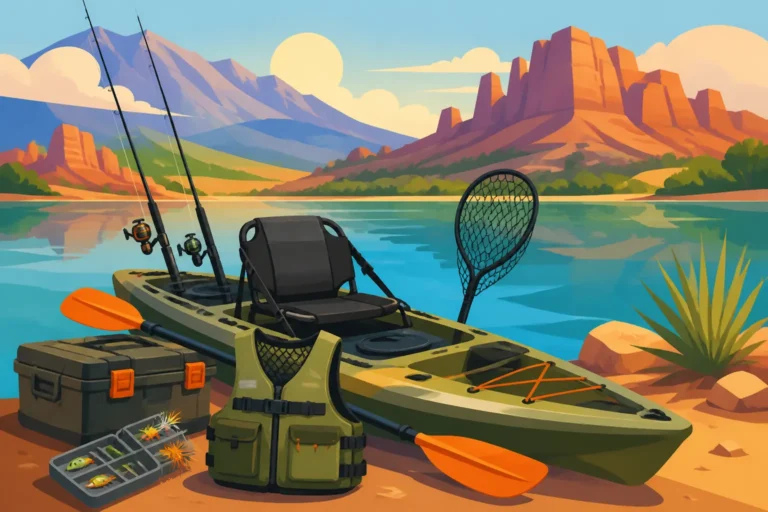
When you're out for a full day of fishing on Elephant Butte, you're going to accumulate a fair amount of gear. From multiple rods and tackle boxes to a cooler for your lunch and, hopefully, your catch, ample and accessible storage is a must. Look for kayaks with dedicated rod holders – flush-mount, adjustable, or both. Large bow and stern storage wells with bungee tie-downs are ideal for dry bags, tackle crates, or a small cooler. Many fishing kayaks also feature central hatches or consoles for smaller items, making quick access to pliers, a knife, or your phone much easier.
Consider how you'll secure your gear. Loose items can easily be lost overboard, especially if you encounter waves or happen to flip. Integrated gear tracks (like those from RAM Mounts or Scotty) are fantastic for mounting accessories like fish finders, GPS units, action cameras, or additional rod holders, allowing for customization without drilling into your kayak. For your catch, a small, insulated soft-sided cooler or a dedicated fish bag kept in a stern well is often sufficient. Remember that New Mexico's sun can be intense, so keeping your catch cool and out of direct sunlight is vital for preserving its quality.
Propulsion Options: Paddle, Pedal, or Motor
The way you move your kayak on Elephant Butte will significantly impact your experience. While traditional paddle kayaks are effective, the size of the lake often makes alternative propulsion systems highly desirable.
-
Paddle-drive kayaks: These are the most traditional and often the most affordable. They are great for exercise and offer a very direct connection to the water. However, covering long distances or holding your position against wind and current while fishing can be exhausting. If you opt for a paddle kayak, ensure it's efficient through the water and invest in a high-quality, lightweight paddle to reduce fatigue. These are excellent for those who enjoy the physical aspect of kayaking and aren't planning to cover vast expanses in a single outing.
-
Pedal-drive kayaks: These systems, like those offered by Hobie (with their MirageDrive) or Native Watercraft (Propel Drive), are game-changers for kayak fishing on large waters. They allow you to use your legs to propel the kayak, freeing up your hands for casting, reeling, and managing your gear. This is incredibly advantageous for trolling, jigging, or holding your position in breezy conditions. Pedal-drives often offer more power and speed than paddling, making it easier to cover ground on Elephant Butte. While they represent a higher initial investment, many anglers find the hands-free fishing experience invaluable. Check out our detailed article on Are Pedal Kayaks Good for New Mexico Lakes? for more information.
-
Motorized kayaks: A growing trend, many fishing kayaks are now designed to accept a small electric trolling motor. This can be a transom-mount motor, a bow-mount motor, or even an integrated motor system. Electric motors provide the ultimate hands-free propulsion, allowing for effortless movement, speed, and precise boat control, especially when combined with GPS spot-lock features. This option bridges the gap between traditional kayaks and small powerboats, offering the quiet stealth of a kayak with the extended range and power of a motor. Of course, adding a motor means you'll need to consider battery weight and charging, but for serious anglers on Elephant Butte, it can be a significant advantage. Remember, any motorized vessel will also fall under New Mexico Boat Registration and Titling Guide rules, so make sure you're compliant.
Top Kayak Types Suited for Elephant Butte's Conditions
When you're out on a big, open water body like Elephant Butte Lake, the type of kayak you choose isn't just a preference; it's a strategic decision. Each style offers unique benefits and drawbacks that will impact your fishing experience on these specific waters.
Sit-on-Top Fishing Kayaks for Versatility
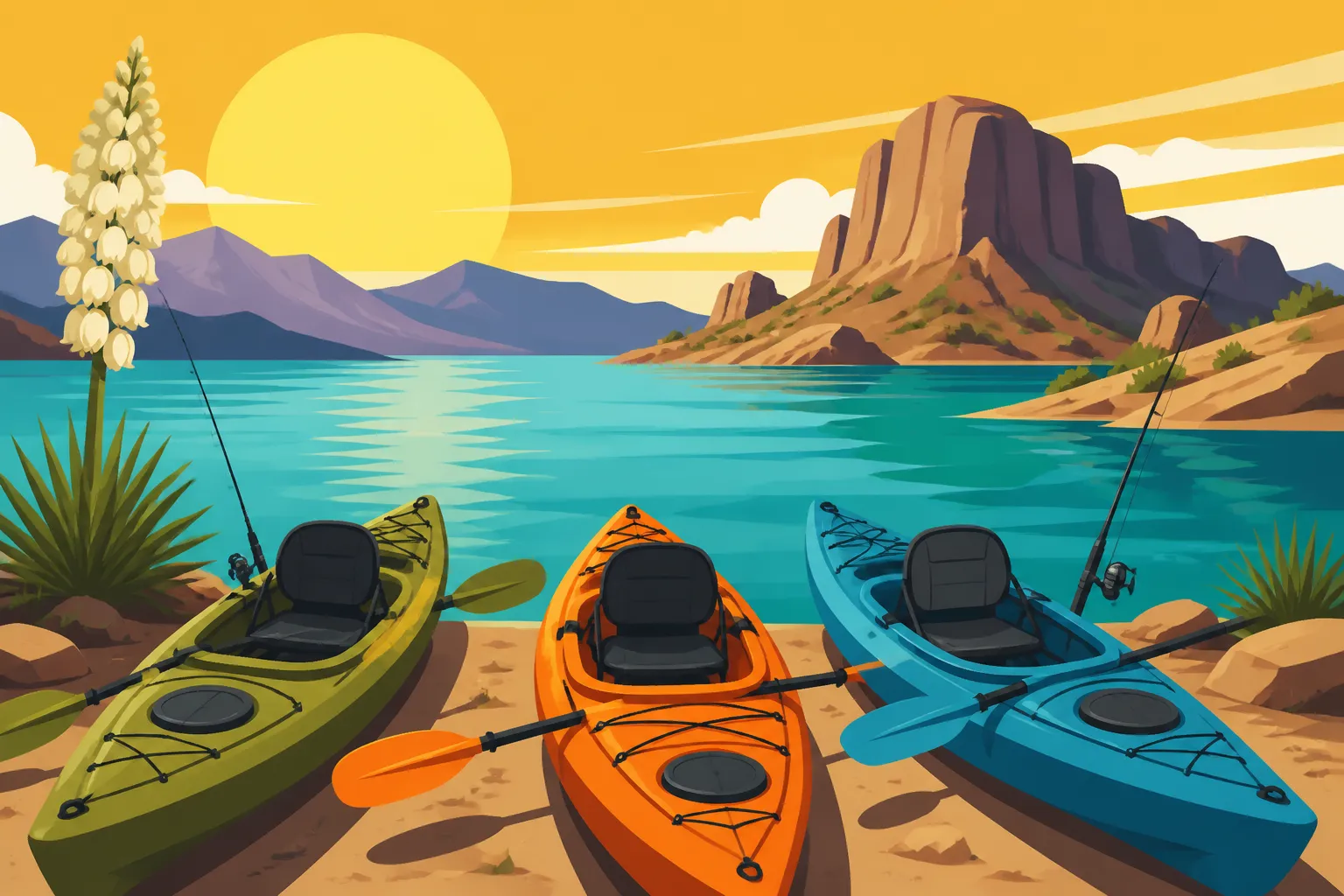
Hands down, the vast majority of kayaks suited for fishing on Elephant Butte are sit-on-top (SOT) models. These kayaks are incredibly popular for fishing due to their inherent stability, ease of entry and exit, and generous storage options. Unlike sit-in kayaks, if an SOT fills with water (say, from a rogue wave or a splashy landing), it will self-drain through scupper holes, making it unsinkable and safer on large, choppy lakes.
Their open deck design makes it easy to access gear, store tackle boxes, and rig up multiple rods without feeling confined. Many dedicated fishing SOTs also feature wide, flat platforms that allow experienced anglers to stand up and cast, providing a better vantage point for spotting fish or making precise presentations. This versatility in fishing positions is a massive advantage when targeting species like cruising stripers or submerged walleye structure. When looking at options from retailers like Bass Pro Shops or Amazon, you'll find a wide array of SOT fishing kayaks, many explicitly designed for reservoir and open water use.
Pedal-Drive Kayaks for Hands-Free Angling
For many serious anglers on Elephant Butte, a pedal-drive kayak is the holy grail. The ability to propel yourself across the water using your legs, leaving your hands entirely free for fishing, changes everything. Imagine trolling a crankbait for walleye while simultaneously holding your rod, adjusting your depth, and watching your fish finder – all without dropping your paddle. This hands-free operation is particularly valuable when you're trying to cover vast areas of Elephant Butte or maintain a precise speed for trolling.
Brands like Hobie with their MirageDrive system, Native Watercraft with their Propel Pedal Drive, and Old Town with their Sportsman line, have innovated these systems to be robust and efficient. While the initial investment is higher than a traditional paddle kayak, the increased efficiency, control, and overall fishing effectiveness often justify the cost for those who spend a lot of time on the water. These kayaks also tend to be very stable and often come pre-rigged with features like transducer mounts and power pole ready sterns, further enhancing their utility for a big lake like Elephant Butte.
Inflatable Kayaks: Portability vs. Performance
Inflatable kayaks have come a long way, and modern, high-pressure models can be surprisingly rigid and stable. For Elephant Butte, their main advantage is undeniable portability. If you have limited storage space, drive a smaller vehicle, or want to access very remote, hard-to-reach launch points around the lake, an inflatable kayak can be a fantastic option. They pack down small and are relatively lightweight, making transport and setup much easier than a rigid kayak.
However, when compared to their rigid counterparts on a large, open body of water like Elephant Butte, inflatable kayaks do have some performance trade-offs. They are generally slower and less efficient to paddle, making long crossings more arduous. While stable, they can be more susceptible to wind, catching more air due to their higher profile. Durability, while improved, is still a consideration against sharp rocks or abrasive shorelines. If you choose an inflatable, opt for a high-quality model specifically designed for fishing, with multiple air chambers and a durable PVC or Hypalon construction. Look for models with rigid drop-stitch floors, which significantly improve stability and performance. For the occasional angler or those prioritizing extreme portability, an inflatable can work, but for frequent use or serious angling, a rigid SOT or pedal-drive might be a better long-term investment for this specific lake.
Essential Kayak Accessories for Elephant Butte Anglers
Having the right kayak is only half the battle. Outfitting it with the necessary accessories for safety, comfort, and fishing efficiency will make all the difference on Elephant Butte Lake. Think of these as extensions of your kayak, designed to enhance your experience and keep you safe.
Safety Gear and Personal Flotation Devices
Safety should always be your number one priority, especially on a large, potentially unpredictable lake like Elephant Butte. The first and most critical piece of safety gear is a properly fitting Personal Flotation Device (PFD), or life jacket. New Mexico law, like most states, requires all vessels to carry at least one PFD for each person on board, and children typically have specific wear requirements. On open water, it's always recommended to wear your PFD, not just have it on board. A sudden capsize can happen quickly, and having your PFD securely fastened can save your life. Consult Life Jacket Requirements for New Mexico Boaters for specific regulations.
Beyond the PFD, a whistle or horn is crucial for signaling other boaters, especially in low light or fog. Carry a bright, easily accessible knife for cutting tangled lines or emergency situations. A small first-aid kit, fully stocked for cuts, scrapes, and sun exposure, is also a must. For longer trips or when venturing further from shore, consider a paddle leash to prevent losing your paddle in windy conditions, and a small anchor with sufficient rope (at least 50-75 feet for Elephant Butte's depths) to hold your position when fishing or in strong winds. Many anglers opt for a lightweight grappling or folding anchor, which can be easily stowed.
Fishing-Specific Enhancements and Rigging
Once safety is covered, you can focus on making your kayak a fishing machine. A quality fish finder/chartplotter is incredibly useful for locating fish, identifying structure, and understanding bottom contours on a large lake like Elephant Butte. Look for units with GPS capabilities for marking waypoints and navigating back to productive spots. Mount it securely on a gear track or a dedicated mount, ensuring the transducer is properly deployed.
Rod holders are another essential. Beyond the flush-mount holders that often come standard, adjustable rod holders can be invaluable for trolling, soaking bait, or simply having extra rods ready at hand. A sturdy tackle management system, like a milk crate conversion or a dedicated tackle bag, helps keep your lures, tools, and terminal tackle organized and easily accessible. Many kayak anglers use a specialized fishing crate that fits snugly in the stern well. Consider a robust landing net, preferably with a rubberized mesh, to safely land fish and protect their slime coat if you plan to practice catch and release. For detailed insights into setting up your kayak for fishing, our guide Kayak Fishing Gear for New Mexico Lakes has more tips.
Navigation and Communication Tools
Given the vastness of Elephant Butte, proper navigation and communication tools are not just convenient, they're vital. Even with a simple recreational kayak, a basic map of the lake and a compass are good backups. However, for serious kayak fishing, a dedicated GPS unit or a smartphone with a reliable mapping app (and a waterproof case!) can make a huge difference. These tools help you track your movement, mark productive fishing spots, and navigate back to your launch point safely, especially if conditions change rapidly.
For communication, a fully charged cell phone is a given, but understand that cell service can be spotty in some remote areas of the lake. For enhanced safety, especially if you're venturing far from shore or fishing solo, consider carrying a VHF marine radio. These radios offer reliable communication with other boats and emergency services, often with a much greater range than a cell phone in open water environments. Always tell someone your float plan – where you're going, when you expect to be back, and who you're with. This simple step can be life-saving if something unexpected happens.
Preparing for Your Kayak Fishing Trip to Elephant Butte
Elephant Butte is a fantastic fishery, but it demands respect and preparation, especially when you're heading out in a kayak. A little foresight can be the difference between a memorable day on the water and a challenging, or even dangerous, one.
Understanding the Lake's Mood and Weather
Elephant Butte Lake can be a tempestuous beast. What starts as a calm, glassy morning can quickly turn into a windy, choppy afternoon. Always, and I mean always, check the weather forecast before you head out. Pay close attention to wind speed and direction. A southerly wind can quickly build up significant waves on the long fetch of the lake. Understanding how weather affects the lake's conditions will help you choose appropriate launch points and plan your routes. If the forecast calls for sustained winds over 10-15 mph, especially out of the south or west, you might reconsider venturing too far out or postpone your trip entirely if you're in a smaller, less stable kayak.
Beyond wind, New Mexico's sun is relentless. High UV index days are common. Bring plenty of water – more than you think you'll need – to stay hydrated. Sunscreen, a wide-brimmed hat, and polarized sunglasses are not optional; they are essential for comfort and preventing sunburn. Layers of clothing, including lightweight, long-sleeved sun shirts, can protect you from the sun while also providing warmth if temperatures drop or if you get wet. Knowing how the lake fishes under different conditions is also key; calm mornings might be great for sight fishing, while windy afternoons might call for trolling or fishing protected coves.
Launching and Landing Strategies
Launching and landing a kayak, especially a larger fishing model, can be tricky. Elephant Butte has numerous Elephant Butte Lake Boat Ramps and Marinas, but not all are ideal for kayak launches. Look for areas with gentler slopes, sandy beaches, or designated kayak launch points. Avoid steep, rocky banks that can damage your hull or make it difficult to get in and out of your kayak safely. If using a heavy pedal-drive kayak, a kayak cart is an invaluable tool for transporting your boat from your vehicle to the water's edge.
When launching, take your time. Ensure all your gear is securely stowed before pushing off. For landing, especially in windy conditions, try to approach the shore head-on or at a slight angle into the waves to maintain control. If you're fishing with others, it's often helpful to assist each other with launches and recoveries, particularly if dealing with heavy kayaks fully loaded with gear and a potential catch. Practice makes perfect, and understanding the unique features of your chosen launch spot can save you a lot of hassle.
Maintenance and Storage for Longevity
Your fishing kayak is an investment, and proper maintenance and storage will ensure it lasts for many seasons of enjoyment on Elephant Butte. After each trip, especially in freshwater, it's a good idea to rinse your kayak thoroughly with fresh water to remove any dirt, sand, or algae. Pay attention to scupper holes, rudder cables, and pedal-drive units, flushing them out to prevent debris buildup. If you have a pedal-drive, follow the manufacturer's recommendations for cleaning and lubricating the drive unit itself.
When storing your kayak, keep it out of direct sunlight as much as possible. Prolonged UV exposure can degrade the plastic (polyethylene) over time, making it brittle and dull. If outdoor storage is your only option, use a breathable kayak cover. Store it on its side, on sawhorses, or on a dedicated kayak rack to prevent flat spots on the hull. For pedal drives, remove them from the kayak and store them separately in a clean, dry place. Regular checks for cracks, loose bolts, or worn rudder lines will help you address minor issues before they become major problems, keeping your kayak in top shape for your next adventure.
Comparative Analysis of Kayak Types for Elephant Butte
Choosing the ideal kayak for Elephant Butte is rarely a one-size-fits-all decision. Your budget, fishing style, and personal preferences will play a significant role. Let's break down some common considerations and compare kayak types to help you make an informed choice.
Cost vs. Benefit for Different Budgets
Kayak fishing offers a wide spectrum of entry points, and Elephant Butte can be enjoyed regardless of your budget, though certain features will undeniably enhance the experience on such a large lake.
-
Entry-Level Paddle Kayaks: These are typically the most affordable, often found for a few hundred dollars. They are usually basic sit-on-top models, stable enough for calmer days, and perfectly adequate for bank-side fishing or shorter excursions. The benefit here is low cost and simplicity. The drawback is often less tracking ability, minimal integrated features, and the physical effort required for long distances on Elephant Butte. If you're just starting out or only plan occasional trips, a simple SOT from Bass Pro Shops or Amazon can get you on the water.
-
Mid-Range Paddle Fishing Kayaks: Stepping up, you'll find more purpose-built fishing kayaks with better hull designs for tracking, more storage, integrated rod holders, and potentially gear tracks for accessories. These usually range from roughly $800 to $1,500. They offer a good balance of cost and functionality, providing a more comfortable and efficient experience for longer days on Elephant Butte than the entry-level options. Many popular brands offer excellent models in this category, suitable for anglers who are serious but not ready to commit to a pedal drive.
-
High-End Pedal-Drive and Motor-Ready Kayaks: This is where the price point jumps significantly, typically starting around $2,500 and going up to $5,000 or more, especially once you add a motor, battery, and fish finder. The benefits are hands-free fishing, superior speed and efficiency, advanced stability, and often extensive rigging capabilities. For an angler who plans to spend countless hours chasing stripers or walleye across Elephant Butte, the investment provides unparalleled comfort, range, and fishing effectiveness. The ability to troll hands-free or precisely hold position in wind is a game-changer on this large lake. While a larger initial outlay, the long-term enjoyment and success can easily justify the cost for dedicated anglers.
Here's a quick comparison table:
| Kayak Type | Pros for Elephant Butte | Cons for Elephant Butte | Typical Price Range | Ideal Angler For |
|---|---|---|---|---|
| Basic Paddle SOT | Low cost, easy entry/exit, good initial stability | Limited speed/range, tiring in wind, fewer features | $400 – $800 | Casual angler, short trips, protected coves |
| Dedicated Paddle SOT | Better tracking, more storage/features, good stability | Still requires constant paddling, can be slow over distance | $800 – $1,500 | Serious paddler, moderate trips, budget-conscious |
| Pedal-Drive SOT | Hands-free fishing, excellent speed/range, superior control | High cost, heavier, more maintenance, can be complex | $2,500 – $4,500 | Dedicated angler, long trips, trolling, all conditions |
| Motor-Ready SOT | Hands-free fishing, highest speed/range, precise control | Highest cost, battery/motor weight, more maintenance | $3,000 – $5,000+ | Max range/speed, serious multi-species, tournament anglers |
| Inflatable Fishing | Highly portable, easy storage, lightweight | Slower, wind-affected, less rigid, puncture risk | $500 – $1,200 | Space-limited, remote access, occasional use |
Best Kayak for Specific Fishing Styles (e.g., Striper vs. Walleye)
The best kayak for Elephant Butte also depends on how you like to fish and what species you're primarily targeting.
-
For Striped Bass: Stripers often cruise open water, school up in large groups, and can bust bait over wide areas. This means covering ground quickly and efficiently is often key. A pedal-drive or motor-ready SOT is ideal here. The ability to quickly move to a busting school, chase down a breaking striper, or cover miles of shoreline trolling a large swimbait will significantly increase your success. The hands-free operation is fantastic when you're battling a hard-fighting striper or needing to rapidly reel in a line. Elephant Butte Lake Striped Bass Fishing involves a lot of chasing, and these kayaks provide the necessary speed and range.
-
For Walleye: Walleye often relate to structure – humps, ledges, submerged timber – and prefer deeper, cooler water, especially in summer. Precise boat control and the ability to hold position are crucial for jigging or slow trolling. Again, a pedal-drive or motor-ready SOT excels here. The ability to maintain a specific speed while trolling with your legs, or to use a spot-lock feature on an electric motor to stay over a productive hump, is invaluable. A stable platform for jigging vertically and room for a good fish finder are also important. For more on this, consult Best Time of Year to Catch Walleye in New Mexico.
-
For Crappie and Catfish: These species often prefer shallower coves, brush piles, or slower-moving sections of the lake. While a pedal-drive is still excellent, a well-equipped dedicated paddle SOT can be very effective and more budget-friendly. Crappie fishing often involves sitting and soaking baits or small jigs in specific spots, where the added speed of a pedal drive might be less critical. Catfish anglers often fish from anchored positions or slowly drift baits. Good storage for bait buckets and a large cooler for your potential haul are key for both species.
Ultimately, regardless of your chosen style, aim for a kayak that offers comfort, stability, and enough open deck space to customize your rigging. The more time you spend comfortably on the water, the more fish you're likely to catch, and the more you'll enjoy New Mexico's magnificent Elephant Butte Lake.
Disclaimer
This article is for general informational purposes only and does not constitute professional advice. Laws, prices and regulations vary by location and change over time. Consult a qualified professional for guidance on your specific situation.