Best Sunscreen for High-Altitude Fishing Trips
One of the most common frustrations for anglers hitting the incredible waters of New Mexico is coming home with a nasty sunburn, even on what felt like a cloudy day. That intense, high-altitude sun, combined with reflection off the water, can turn a fantastic fishing trip into a painful ordeal if you're not properly protected. This guide is all about helping you understand why that happens here in the Land of Enchantment and, more importantly, how to choose the absolute best sunscreen to keep your skin safe and happy on your high-altitude fishing adventures.
Why New Mexico's High-Altitude Sun is a Game-Changer for Anglers
Let's be real, you might think you know sun protection, but fishing in New Mexico, especially in our stunning high country lakes and rivers, throws a few extra curveballs at your skin. It's not just about a sunny day; it's about a combination of factors that amplify UV exposure. Ignoring these can lead to a quick and painful burn, potentially even derailing your multi-day backcountry fishing trip.
First off, we're talking about altitude. Many of New Mexico's prime fishing spots – think places like Heron Lake, Eagle Nest Lake, or even parts of the San Juan River – are at significantly higher elevations than sea level. For every thousand feet you climb, UV radiation exposure increases by about 10-12%. So, when you're casting your line at 7,000, 8,000, or even 9,000 feet above sea level, you're getting a much stronger dose of harmful UV rays than you would at the beach. The air at these elevations is thinner, which means there's less atmosphere to filter out those burning UV-B and aging UV-A rays. This is a critical factor when considering High Altitude Fishing Tips for New Mexico.
Secondly, water is a highly reflective surface. When you're out on a lake or river, the sun's rays aren't just coming down from above; they're bouncing off the water and hitting you from below and the sides. This means areas like your chin, the underside of your nose, and even your ears get exposed to direct and reflected UV, which many people forget to adequately cover. It's like a double whammy for your skin, making broad-spectrum protection absolutely essential.
Finally, New Mexico often boasts clear, dry air and abundant sunshine. While this makes for incredible fishing weather, it also means fewer clouds to offer natural protection. Even on overcast days, a significant amount of UV radiation can penetrate cloud cover, lulling anglers into a false sense of security. It's a combination that demands a more serious approach to sunscreen than you might be used to, and it's why having the right product can make all the difference between an enjoyable day on the water and a miserable one recovering from a burn.
Key Features to Look for in Your High-Altitude Fishing Sunscreen
When you're picking out a sunscreen for a New Mexico fishing trip, you can't just grab the first bottle you see. You need a formula specifically designed to stand up to the unique challenges of our high-altitude, sun-drenched, and often watery environments. It's about more than just a high SPF number; it's about a comprehensive shield for your skin.
SPF Rating for Intense UV Protection
The Sun Protection Factor (SPF) is probably the most recognized number on any sunscreen bottle, and for good reason. It indicates how well the sunscreen protects against UV-B rays, which are the primary cause of sunburn. For high-altitude fishing, where UV intensity is significantly amplified, you absolutely want a high SPF. While SPF 30 is often cited as a minimum, for the intense New Mexico sun, especially when you're out on open water for hours, aiming for SPF 50 or even higher is a much smarter move. An SPF 50 blocks approximately 98% of UV-B rays, compared to about 93% for SPF 15. That extra few percentage points can make a world of difference over a long day. Don't cheap out here; your skin will thank you.
Broad-Spectrum Protection: Guarding Against All Rays
While SPF covers UV-B, you also need to worry about UV-A rays. These are the ones that penetrate deeper into the skin, causing premature aging, wrinkles, and contributing to skin cancer. That's where "broad-spectrum" protection comes in. A broad-spectrum sunscreen protects against both UV-A and UV-B rays. Always, always look for this designation on the label. Without it, you're only getting half the battle won, leaving your skin vulnerable to the longer-term damage from UV-A exposure, which is just as prevalent at high altitudes. Think of it as your full armor against the sun, not just a helmet.
Water Resistance for Wet Adventures
Let's face it, when you're fishing, you're going to get wet. Whether it's from splashing water while reeling in a big one, a sudden rain shower, or just plain sweat from the exertion of casting all day, your sunscreen needs to stay put. This is why water resistance is non-negotiable. Look for labels that clearly state "water resistant" for either 40 or 80 minutes. This rating indicates how long the sunscreen remains effective while swimming or sweating. Even if you don't plan on taking a dip, the New Mexico heat, especially during Summer Fishing in New Mexico, can lead to a lot of perspiration, and you don't want your protection washing off with it. Remember, "water resistant" doesn't mean "waterproof," so reapplication after a significant soak or sweat session is crucial. When putting together your Best Fishing Gear for New Mexico Anglers, sunscreen with good water resistance should be high on your list.
Beyond the Bottle: Choosing the Right Sunscreen Formulation
Once you understand the basic protective features, it's time to think about the practical application. Not all sunscreens are created equal in their feel, ingredients, and ease of use, and these factors can significantly impact how consistently you use them. For a long day on the water, convenience and comfort truly matter.
Mineral vs. Chemical Sunscreens
This is a big debate in the sunscreen world, and for good reason. Understanding the difference can help you choose what's best for your skin and the environment.
-
Mineral Sunscreens (Physical Blockers): These typically use zinc oxide and/or titanium dioxide as their active ingredients. They work by creating a physical barrier on top of your skin that reflects and scatters UV rays. Think of it like a tiny shield. The pros? They start working immediately upon application, are often less irritating for sensitive skin, and are generally considered "reef-safe" (though always check specific product labels). The cons? They can sometimes leave a whitish cast on the skin, especially older formulas, though newer micronized versions have largely overcome this. For fishing, where you might be handling fish or bait, a mineral sunscreen can feel a bit thicker, but many anglers swear by their gentle nature and immediate protection. Many outdoor enthusiasts browsing Bass Pro Shops or looking on Amazon for gear will specifically seek out mineral-based options.
-
Chemical Sunscreens: These sunscreens use organic compounds like oxybenzone, avobenzone, octinoxate, and homosalate. Instead of blocking rays, they absorb UV radiation, convert it into heat, and release it from the skin. The pros? They tend to be thinner, rub in completely clear, and can feel lighter on the skin. The cons? They need about 15-20 minutes to become effective after application, and some people with sensitive skin might find certain ingredients irritating. There's also ongoing debate about the environmental impact of some chemical filters on aquatic ecosystems, though regulations vary. For fly fishing on pristine waters like the San Juan River, some anglers opt for mineral sunscreens out of an abundance of caution for the delicate ecosystem.
Ultimately, the "best" type is the one you will consistently use. If a mineral sunscreen feels too heavy or leaves a tint you dislike, you might not reapply it as often, which defeats the purpose.
Lotions, Sprays, and Sticks: Application Preference
Beyond the ingredients, consider the format. Each has its pros and cons for a fishing trip:
-
Lotions: These are the most common and generally offer the most thorough coverage if applied correctly. You can really feel where it's going and ensure an even layer. The downside is that they can be messy, and if your hands are covered in fish slime or dirt, applying a lotion can be less than ideal. However, for initial application before heading out, a good lotion is often preferred for its comprehensive coverage.
-
Sprays: Super convenient for quick, broad coverage, especially on hard-to-reach areas like your back. They're great for a fast reapplication mid-day. The major drawback is that it's notoriously difficult to tell if you've applied enough, and a significant amount can be lost to the wind, especially on a breezy New Mexico lake. Always spray generously and rub it in to ensure full coverage, especially when fishing on large, open reservoirs like Elephant Butte Lake where wind is a constant factor.
-
Sticks: These are fantastic for targeted areas like your face, ears, nose, and lips. They're mess-free, won't run into your eyes, and are easy to throw in a pocket for quick touch-ups. They're especially great for covering the delicate skin around your eyes where lotion might sting. Many anglers find them indispensable for combining with other Best Sun Protection Gear for New Mexico Reservoir Fishing. They also won't count against your liquid allowance if you're flying for a fishing vacation.
When selecting, think about the entirety of your New Mexico Fishing Season Calendar and what each season might demand. A stick might be great for quick touch-ups in cooler weather, while a water-resistant lotion might be your go-to for intense summer heat.
Application Prowess: Maximizing Your Sunscreen's Effectiveness on the Water
Having the "best" sunscreen means nothing if you don't apply it correctly and consistently. This is where many anglers fall short, leading to those painful burns despite having a good product in their gear bag.
Don't Skimp on Quantity and Coverage
This is perhaps the biggest mistake people make. Sunscreen works by creating a barrier, and if that barrier is thin or patchy, UV rays will find a way through. A general rule of thumb is to use about a shot glass full (approximately one ounce) of lotion for your entire body. For your face alone, aim for at least a nickel-sized dollop. When you're out there, apply it generously to all exposed skin, including those often-forgotten areas: the back of your neck, your ears (front and back!), the tops of your hands, the part in your hair (if you're not wearing a hat, which you should be!), and even your lips (use a good SPF lip balm).
Remember what we discussed about water reflection? That means your chin and the underside of your nose are prime targets. Be diligent. It's often helpful to apply sunscreen before you even leave the house, giving it time to set and ensuring you don't miss spots when you're distracted by getting your gear ready. When considering your Beginner Fishing Gear Checklist for New Mexico, don't forget this crucial step.
Reapplication is Your Best Friend
Even the most water-resistant, high-SPF sunscreen eventually wears off. Sweat, water, rubbing against clothing, or simply the passage of time will diminish its effectiveness. Reapplication is absolutely critical, especially on a long fishing day.
- Every two hours: This is the standard recommendation for most sunscreens, regardless of water resistance. Set a reminder on your phone if you need to!
- After swimming or heavy sweating: If you take a dip to cool off, or if you've been working hard reeling in fish or hiking to a secluded spot, reapply immediately after drying off. Even "water resistant 80 minutes" means you need to reapply after that time or sooner if toweling off.
- After toweling dry: Toweling can rub off a significant amount of sunscreen, even if you were only gently patting yourself dry.
Keep a small, travel-sized bottle of your preferred sunscreen easily accessible in your fishing vest or Best Fishing Backpack for Hiking to High Lakes. This makes those frequent reapplications less of a hassle and more of a habit. Companies like Bass Pro Shops often stock smaller versions of popular sunscreens perfect for this.
Combine with Other Sun Protection Gear
Sunscreen is a vital tool, but it's part of a larger sun protection strategy. Don't rely on sunscreen alone, especially under the intense New Mexico sun. Combine it with other physical barriers:
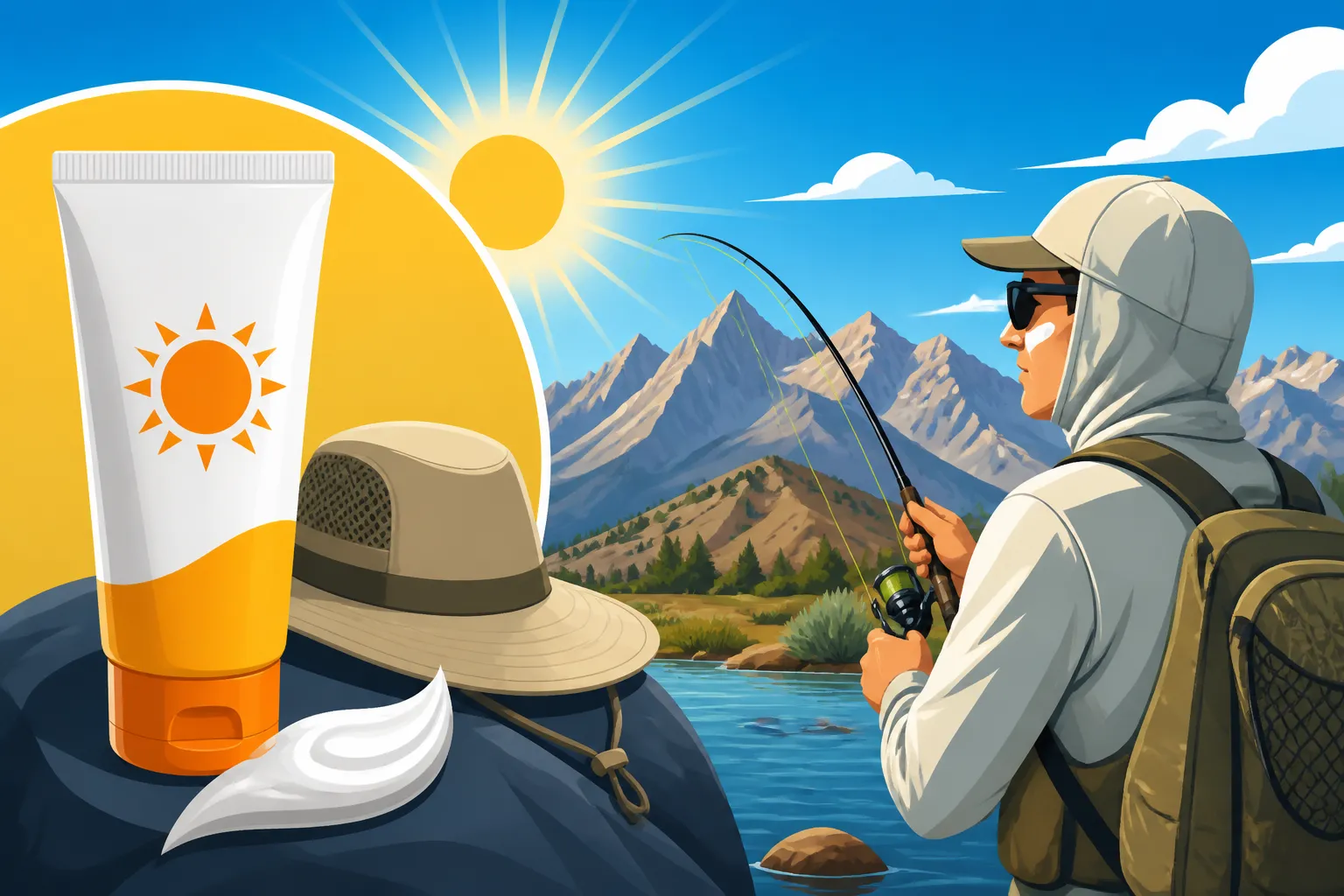
- Wide-brimmed hat: A good hat is indispensable. It protects your face, ears, and neck far better than sunscreen alone. A hat with a dark underbrim can also reduce glare. Learn more in Best Hat for Sun Protection on Open Reservoirs.
- UPF clothing: Shirts, pants, and buffs made with Ultraviolet Protection Factor (UPF) fabric offer a superior barrier to standard clothing. Many fishing-specific shirts are designed with high UPF ratings (e.g., UPF 30, 50+) and are lightweight and breathable, perfect for summer fishing in New Mexico.
- Polarized sunglasses: These not only help you spot fish by cutting glare but also protect your eyes from harmful UV rays. Don't forget this crucial piece of gear, as discussed in Best Sunglasses for Sight Fishing in New Mexico.
- Neck gaiters or buffs: These are fantastic for covering your neck and face, especially when combined with a hat.
By layering your protection, you create a robust defense against the sun's relentless rays, ensuring a comfortable and safe fishing experience in New Mexico's beautiful outdoors. Even for a short trip, having this combination of gear significantly reduces your risk of sunburn and long-term skin damage.
Here's a quick comparison of common sunscreen types to help you decide:
| Sunscreen Type | Active Ingredients | How It Works | Pros | Cons | Best For |
|---|---|---|---|---|---|
| Mineral Lotion | Zinc Oxide, Titanium Dioxide | Reflects UV rays | Gentle, immediate protection, less irritating | Can leave white cast (improving), may feel thicker | Sensitive skin, eco-conscious anglers |
| Chemical Lotion | Oxybenzone, Avobenzone, etc. | Absorbs & converts UV | Rubs in clear, lighter feel | Needs 15-20 min to activate, potential irritants | Everyday use, those who dislike white cast |
| Mineral Spray | Zinc Oxide, Titanium Dioxide | Reflects UV rays | Quick application, can be less messy | Hard to ensure even coverage, wind can carry away product | Quick touch-ups, active kids (with rubbing in) |
| Chemical Spray | Oxybenzone, Avobenzone, etc. | Absorbs & converts UV | Very quick, easy coverage, clear | Hard to ensure even coverage, wind loss, inhalation risk | Reapplication on the go (ensure adequate coverage) |
| Stick | Mineral or Chemical | Barrier | Mess-free, targeted application, won't run | Limited body coverage, higher cost per ounce | Face, ears, nose, lips, small areas, quick touch-ups |
Disclaimer
This article is for general informational purposes only and does not constitute professional advice. Laws, prices and regulations vary by location and change over time. Consult a qualified professional for guidance on your specific situation.