Best Landing Net Size for Catch and Release Trout
It's incredibly frustrating when you finally get a beautiful New Mexico trout on the line, only for the landing process to become a tangled mess or, worse, cause unnecessary harm. We all want to admire our catch before releasing it safely back into the water, but choosing the right net is often overlooked. This guide will walk you through everything you need to know about selecting the best landing net size and features to ensure a healthy catch and release experience for trout fishing across our diverse waters.
Why Net Size and Features Matter for Healthy Catch and Release
Catch and release fishing is a cornerstone of responsible angling, especially when targeting sensitive species like trout in New Mexico's precious fisheries. The goal is always to minimize stress and physical harm to the fish, giving it the best possible chance of survival after it swims away. The right landing net isn't just a convenience; it's a vital tool in achieving this.
Minimizing Stress and Injury to Trout
Imagine you've battled a feisty rainbow trout in the Rio Grande, and it's finally ready to be brought in. If your net is too small, you'll be struggling to fit the fish, potentially causing it to flop around more, dislodging hooks in sensitive areas, or even damaging its fins and scales by bumping against the net frame. A net that's too shallow can allow a spirited fish to jump right out, hitting the bank or rocks and sustaining injuries. Even more critical, the type of netting material itself plays a huge role. Traditional nylon nets with large, abrasive knots can strip away a fish's protective slime coat or cause fin damage, making them more susceptible to disease once released. A properly sized net allows for a quick, secure scoop, minimizing the fight at the critical moment of landing and reducing handling time, which is paramount for the trout's well-being. This is especially true when practicing Catch and Release Best Practices in New Mexico.
The Challenge of Landing a Lively New Mexico Trout
New Mexico trout, whether it's a wild brown in a high mountain stream or a stocked rainbow in a state park lake, are often incredibly strong and spirited. They fight hard until the very last second. Landing one gracefully, particularly if you're fishing solo, requires a net that's easy to maneuver and offers enough space to safely cradle the fish without fuss. Trying to pin a lively trout against a tiny net opening or a shallow bag can be a recipe for disaster, leading to lost fish, broken leaders, or worse, an exhausted fish that struggles to recover. A well-proportioned net provides that margin for error, letting you scoop and secure the fish with minimal struggle, giving you a chance to quickly assess, photograph (if you choose), and release.
Understanding Net Dimensions: What to Look For
When you're sifting through options online at retailers like Bass Pro Shops or browsing shelves at a local outfitter, the sheer variety of landing nets can be overwhelming. But for catch and release trout fishing, understanding the key dimensions will help you make an informed choice.
Hoop Size and Shape
The hoop is the frame that defines the opening of your net. For trout, you generally want a hoop that is wide enough to comfortably fit the fish without forcing it. A common size range for general trout fishing in New Mexico might be a hoop opening of 10 to 18 inches.
- Small Streams/Panfish: For smaller streams where trout rarely exceed 12-14 inches, a compact hoop of 10-12 inches wide and 14-16 inches long might be perfectly adequate. These are lighter and less cumbersome to carry, especially when navigating dense brush or wading.
- Medium Rivers/Lakes: For average trout fishing on rivers like the Pecos or smaller lakes where you might encounter trout up to 18-20 inches, a hoop size of around 12-14 inches wide by 18-20 inches long is a good all-around choice. This provides enough room for most common trout species without being overly bulky.
- Trophy Waters/Larger Fish: If you're specifically targeting larger trout, perhaps a hefty brown trout on the San Juan River or a big rainbow in Eagle Nest Lake, you'll want to size up. A hoop of 16-18 inches wide and 20-24 inches long will give you the confidence to land a true trophy fish, minimizing the chance of it flopping out.
The shape of the hoop is often either round or tear-drop. Tear-drop shapes are very popular for wading anglers as they can be a bit easier to sweep through the water to net a fish, especially in current.
Handle Length Considerations
The handle of your landing net is crucial for reach, balance, and portability. The ideal handle length depends heavily on your fishing style and where you fish.
- Short Handles (8-12 inches): These are common on "boat nets" or nets designed for float tubes and kayaks where the fish is already very close to you. They're also popular for small stream wading where you might be close to the water and want a compact setup. They clip easily to a vest or pack.
- Medium Handles (18-36 inches): This range is highly versatile for most bank fishing, wading in moderate-sized rivers like the Chama, or fishing from smaller boats. A handle of 24-30 inches gives you enough reach to comfortably net a fish without needing to lean precariously. Many of these handles are telescoping, allowing for adjustability, which is a fantastic feature when you transition between bank fishing and wading.
- Long Handles (3-6 feet or more): If you're primarily fishing from a high bank, a large boat, or off a pier where you need significant reach, a long-handled net is indispensable. These are less practical for wading or hiking long distances but excel in situations demanding extended reach. They ensure you don't have to strain or put yourself in an unsafe position to land a fish.
Consider how you'll be carrying your net too. A short-handled net with a magnetic release or clip can be easily attached to your wading belt or vest, keeping it out of the way until needed. Longer handles might require a shoulder strap or special boat mounting.
Net Bag Depth
The depth of the net bag is just as important as the hoop size, especially for keeping active trout safely contained during catch and release. A shallow bag risks the fish flopping right over the rim and back into the water (or worse, onto the bank).
For trout, a net bag depth of at least 10-15 inches is generally recommended. This allows the fish to be fully submerged and contained within the net without its tail or head sticking out, reducing stress and preventing injury. If you're targeting larger trout, or just prefer extra security, a bag depth of 18-24 inches can be even better. The deeper bag cradles the fish, providing a calm, contained space for you to quickly remove the hook. This depth, combined with a proper hoop size, creates a safe environment for the fish before you initiate How to Handle a Trout Before Releasing It.
Matching Net Size to New Mexico Trout Fishing Scenarios
New Mexico offers an incredibly diverse range of fishing environments, from the narrow, intimate mountain streams of the Carson National Forest to the vast, open waters of Elephant Butte Lake. Your ideal net will vary depending on where and how you plan to chase trout.
Stream and River Trout: San Juan, Pecos, Rio Grande
When you're wading the freestone rivers or famous tailwaters of New Mexico, portability and maneuverability are key. For places like the San Juan River Quality Waters, where anglers often walk miles and are focused on protecting trophy-sized fish, a net that's robust yet not cumbersome is essential.
- Smaller Rivers and Tributaries: Think about the Pecos River or smaller sections of the Rio Grande. Here, you're likely targeting trout in the 10-16 inch range. A net with a 12-14 inch hoop and a medium bag depth (10-12 inches) with a handle around 18-24 inches is ideal. It's compact enough to carry while wading through brush and provides ample space for these mid-sized fish. Look for models from brands available at Bass Pro Shops that emphasize lightweight design and a comfortable grip.
- Major Tailwaters (e.g., San Juan River): The San Juan is renowned for its large, powerful trout. Here, you might hook a rainbow or brown pushing 20+ inches. For these waters, a larger hoop (14-18 inches) and a deeper bag (15-20 inches) are highly recommended. A slightly longer handle (24-36 inches, or telescoping) can be beneficial for reaching fish in varied currents or from slightly elevated banks. Many fly anglers prefer a tear-drop shaped hoop here for easier netting in moving water. Ensuring you have the right net for these critical environments ties into understanding New Mexico Trout Fishing Rules.
Lake and Reservoir Trout: Eagle Nest, Heron, Fenton
Fishing New Mexico's lakes and reservoirs presents a different set of challenges. Whether you're casting from the bank at Fenton Lake or trolling for kokanee salmon at Heron Lake, your net needs to accommodate potentially larger fish and different landing angles.
- Bank Fishing Lakes: If you're fishing from shore, especially on a lake with fluctuating water levels or steeper banks, a net with a longer handle becomes crucial. A hoop size of 14-16 inches with a deep bag (15-18 inches) on a 3-foot or longer telescoping handle will give you the reach to safely land trout that might be just out of arm's reach. This prevents you from sliding down a muddy bank or stressing the fish by trying to beach it.
- Boat or Kayak Fishing: When you're in a boat or kayak on a larger body of water like Eagle Nest Lake or Navajo Lake, your proximity to the water changes. A shorter-handled net (10-18 inches) with a large, wide hoop (16-20 inches) and a deep bag (18-24 inches) is often preferred. This allows you to scoop the fish quickly from the side of the boat, minimizing the time it spends out of water. The wider hoop helps when a fish might make a last-second dart. Many reputable brands found on Amazon offer compact, boat-friendly nets designed for these situations. You can find more specific advice related to Best New Mexico Lakes for Trout in other guides.
Targeting Trophy Trout
New Mexico is home to some incredible trophy trout opportunities, from the massive lake trout in Heron Lake to the legendary browns of the San Juan. When a true lunker is on the line, you don't want your net to be the weak link.
For trophy trout, always err on the side of larger. A net with a hoop opening of 18-24 inches and a bag depth of 20-30 inches is not overkill. The extra space ensures that even a 25-inch-plus fish can be safely brought into the net and contained. A robust, sturdy handle, whether long for boat fishing or a heavy-duty wading style for rivers, is also important. The larger net minimizes the struggle and provides enough room for the fish to calm down, making unhooking and releasing much smoother. Remember, the goal is not just to land it, but to release it healthy. For such precious catches, also ensure your net features align with Why a Rubber Net Is Better for Catch and Release.
Beyond Size: Other Critical Net Features for Healthy Release
While size is paramount, a net's material and design can be just as crucial for ensuring a safe and successful catch and release. The best nets for trout are those designed with the fish's welfare at the forefront.
Rubberized or Knotless Mesh
This is arguably the most important feature for any catch and release net. Traditional knotted nylon mesh nets, while durable, are incredibly abrasive to a fish's delicate skin and slime coat. This protective slime is a fish's first line of defense against parasites and disease. When it's rubbed off, the fish becomes vulnerable. Knotless nylon or, even better, rubberized mesh nets are far superior.
- Rubberized Nets: These nets feature a soft, pliable rubber or rubber-coated mesh. The material is smooth, so it doesn't abrade the fish's slime coat. Critically, rubber is also less likely to tangle hooks, which is a huge advantage when you have trebles on a spinner or even a complex fly rig. This significantly reduces the time you spend handling the fish, which is vital for its recovery. They are heavier and can be a bit bulkier than traditional nets but the benefits for fish health are undeniable.
- Knotless Nylon Nets: These are a step up from knotted nets, offering a smoother surface that's less damaging than knotted versions. They are typically lighter and drain water faster than rubber nets. While better than knotted options, rubberized nets are still generally considered the gold standard for catch and release due to their superior hook-shedding properties and minimal impact on fish slime.
Many manufacturers, easily found through searches on Amazon or at Bass Pro Shops, now prioritize these fish-friendly materials.
The Importance of a Tangle-Free Net
Every angler knows the frustration of a hook hopelessly tangled in a net. Not only does it waste precious fishing time, but more importantly, it prolongs the handling time for the fish. A fish struggling in a net while you wrestle with a tangled hook is under immense stress.
Rubberized nets are inherently more tangle-resistant. Hooks tend to bounce off the smooth rubber rather than snagging deep into the mesh fibers. This means you can quickly unhook the fish, photograph it if desired, and get it back into the water without unnecessary delay. For anglers who use various lures and flies, a tangle-free net is a game-changer. This ease of use is especially helpful when dealing with a feisty trout that might still be making an effort to get away.
Measuring and Weighing While Protecting Fish
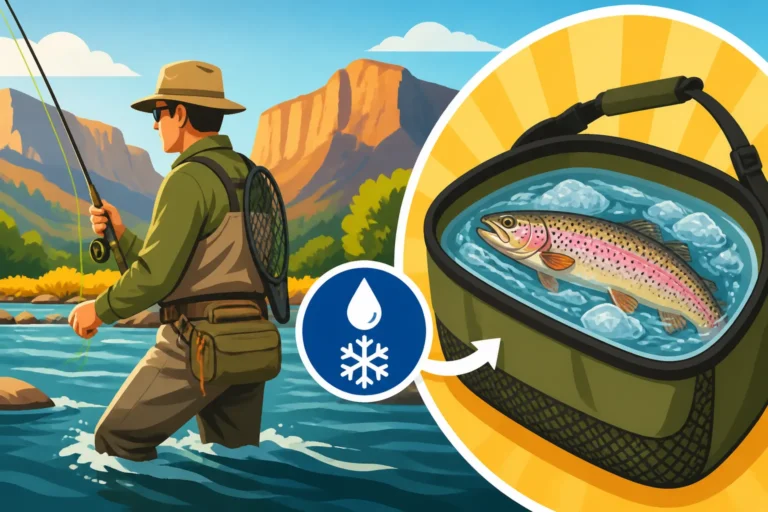
For those who like to document their catches, even when releasing, the right net can help facilitate safe measurements and estimations. A deep, rubberized net can serve as a temporary "livewell" for the fish while you prepare your camera or measuring tape.
Instead of removing the fish from the water entirely, you can often leave it in the net, partially submerged, to unhook, measure, or even get a quick photo. Many nets feature a measuring tape on the handle or frame, or you can use a separate flexible tape measure. For weighing, specialized "catch and release" scales that allow you to weigh the fish in the net or a soft cradle are available. The less direct contact you have with the fish's body, the better its chances of survival. Techniques covered in How to Keep Trout Cool and Alive for Catch and Release also emphasize minimal out-of-water time.
Here's a quick comparison of net types suitable for different New Mexico trout fishing scenarios:
| Scenario | Recommended Hoop Size (inches) | Recommended Handle Length (inches) | Recommended Bag Depth (inches) | Ideal Mesh Type | Key Considerations |
|---|---|---|---|---|---|
| Small Stream/Wading | 10-12 | 8-18 (fixed or short telescoping) | 10-12 | Rubber or Knotless Nylon | Lightweight, compact, easy to carry on vest/pack |
| Medium River/General Lake Bank | 12-16 | 24-36 (telescoping preferred) | 12-18 | Rubber or Knotless Nylon | Versatile, good reach, balances portability & function |
| Trophy River (e.g., San Juan) | 14-18 | 24-36 (sturdy fixed or telescoping) | 15-20 | Rubber | Large capacity for big fish, tangle-free is crucial |
| Large Lake/Boat/Kayak Fishing | 16-20 | 10-24 (short fixed or telescoping) | 18-24 | Rubber | Wide opening, deep bag for quick scoops from vessel |
Ultimately, the best landing net for you is one that you'll actually use consistently and confidently. Investing in a quality, fish-friendly net ensures that every release is as gentle as possible, helping to preserve New Mexico's incredible trout populations for future generations. Keep exploring our other resources like Best Rods and Reels for New Mexico Trout Fishing and New Mexico Trout Fishing Techniques to complete your gear setup for your next angling adventure!
Disclaimer
This article is for general informational purposes only and does not constitute professional advice. Laws, prices and regulations vary by location and change over time. Consult a qualified professional for guidance on your specific situation.