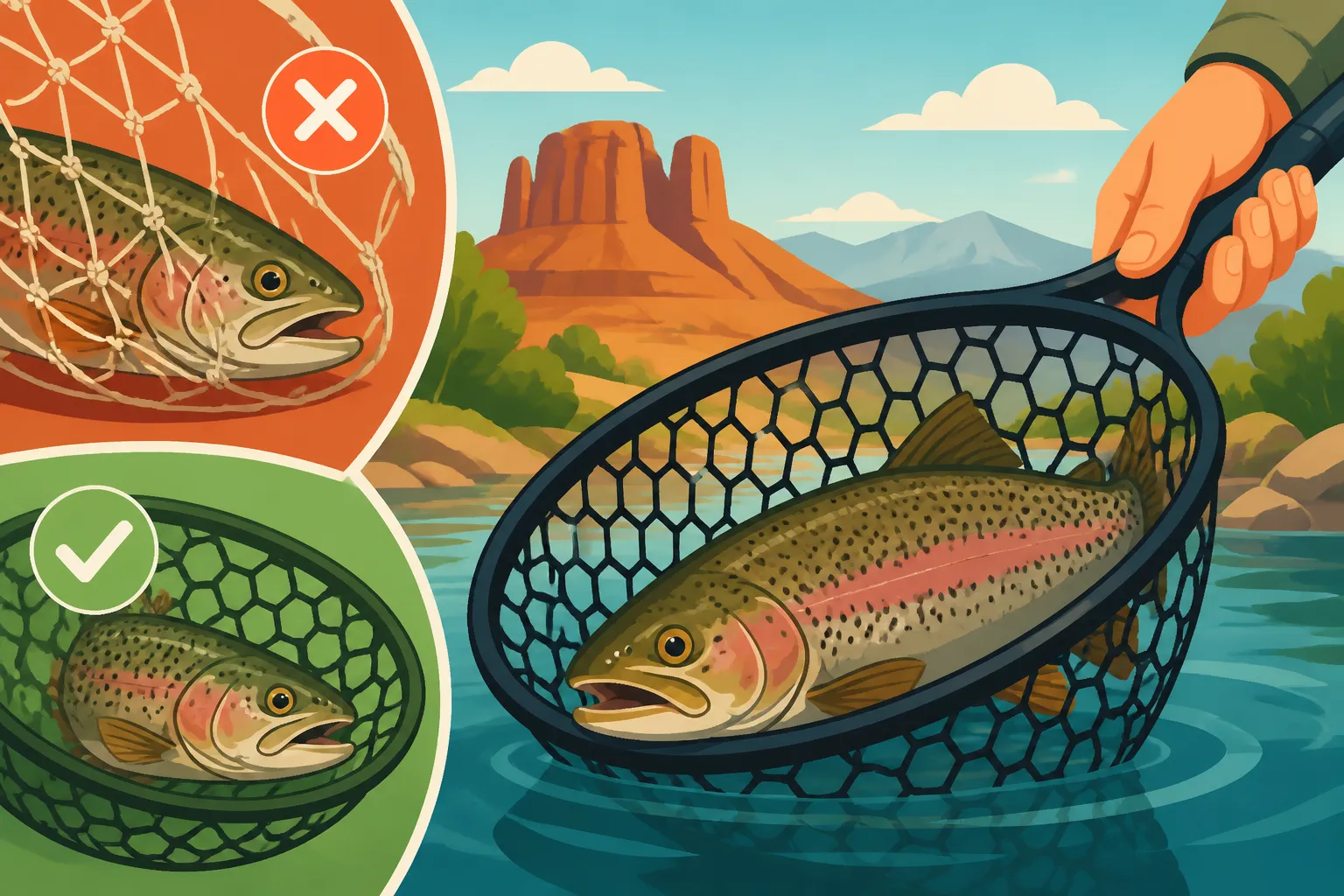
Why a Rubber Net Is Better for Catch and Release
We've all been there: you land a beautiful fish, perhaps a vibrant rainbow trout from a crystal-clear New Mexico stream, or a feisty smallmouth bass from one of our big lakes. You carefully unhook it, admire it for a moment, and send it back, hoping it swims off strong. But sometimes, you watch it float away, sluggish, a bit ragged, and you wonder if you did more harm than good. A major culprit in this heartbreaking scenario often isn't the angler's intent, but the very tool they use to land the fish: the net. This guide will walk you through why choosing a rubber net can make all the difference in ensuring your catch-and-release efforts truly give fish the best chance at survival in New Mexico's diverse waters.
Why Traditional Nets Are Problematic for Fish Welfare
For generations, anglers have used nets made with knotted nylon or string mesh. They're cheap, readily available, and they do the job of scooping up a fish. However, when it comes to the delicate biology of a fish, especially those you intend to release, these traditional nets can cause significant, often unseen, damage. It's not about being a bad angler; it's about understanding the science behind fish welfare.
The Damage to the Fish's Protective Slime Coat
Imagine your skin being rubbed raw by a coarse rope. That's a bit like what happens to a fish's protective slime coat when it comes into contact with traditional nylon or string mesh nets. Fish are covered in a crucial layer of mucus, often called a slime coat, that acts as their first line of defense against parasites, bacteria, and fungal infections. It’s their immune system on the outside, a natural barrier protecting them from the myriad of pathogens in the water.
When a fish thrashes in a knotted net, the rough, abrasive mesh strips away this vital slime coat. You might even see a cloudy residue on the net after a particularly lively fish. This removal leaves the fish vulnerable, much like a human having their skin scraped open. While the fish might swim away immediately, the underlying damage can lead to infections days or even weeks later, ultimately causing stress, illness, or even death. This is especially critical in colder New Mexico waters where trout species are highly susceptible to such post-release trauma.
Fin and Scale Damage from Knots and Snags
Beyond the slime coat, traditional nets are notorious for snagging fins and scales. The tight knots and coarse fibers can easily catch on delicate fin rays, tearing them or causing permanent deformities. Picture a trout with its dorsal fin ripped, or a bass with a tail fin frayed and bleeding. Not only does this hinder their ability to swim effectively and escape predators, but it also creates open wounds that are prime entry points for infections.
Scales, too, are often scraped off by the rough mesh. While a few lost scales might seem minor, each one represents a tiny injury, and larger patches of scale loss can significantly weaken the fish. This becomes a serious concern when you're fishing for species like our native cutthroat trout in high-elevation streams, where every fish counts and survival rates are paramount. A fish that’s lost scales and damaged fins is a fish that’s fighting an uphill battle to recover, even if it manages to swim out of your sight.
Gill and Eye Injuries from Entanglement
Perhaps the most immediately dangerous damage inflicted by traditional nets comes from entanglement, particularly around the gills and eyes. Fish gills are incredibly fragile and packed with blood vessels, essential for oxygen exchange. When a fish's head or gill plates get caught in a fine mesh net, the gills can be crushed, torn, or otherwise damaged, leading to severe internal bleeding and respiratory distress. This kind of injury is often fatal, even if the fish appears to swim away.
The eyes are another vulnerable area. A thrashing fish can easily get an eye caught in a knotted mesh, leading to corneal abrasions, vision impairment, or even complete loss of an eye. Imagine trying to hunt, forage, or escape a predator with compromised vision. These are not minor inconveniences for a fish; they are life-threatening injuries that severely reduce its chances of long-term survival in its natural habitat. Many experienced anglers fishing the San Juan River Quality Waters understand the critical importance of minimizing any gill or eye contact when releasing those magnificent trout.
The Benefits of Rubber Nets for Fish Welfare
Switching to a rubber net is one of the simplest, yet most impactful, changes an angler can make to improve catch-and-release success. These nets are specifically designed with fish health in mind, offering a gentler, safer way to handle your catch before sending it back. The differences are immediately apparent once you start using one.
Preserving the Essential Slime Coat
The primary advantage of rubber nets lies in their material: soft, flexible, and non-abrasive rubber or silicone. Unlike coarse nylon, this material slides smoothly over the fish's body, minimizing friction and significantly reducing the removal of the protective slime coat. When a fish is briefly held in a rubber net, its natural defenses remain largely intact.
Think of it like cradling a delicate object in a soft hammock rather than dropping it into a prickly bush. The smooth, supple texture of the rubber basket allows the fish to rest securely without having its vital slime layer rubbed off. This preservation is crucial for preventing infections and allowing the fish to quickly recover and reintegrate into its environment, ready to face the challenges of its wild home. This is especially true for delicate trout species found in New Mexico's diverse rivers and lakes.
Minimizing Tangles and Injury to Fins
Another huge benefit of rubber nets is their ability to prevent tangles. Traditional nets are notorious for hooks getting hopelessly snagged in the mesh, leading to frustrating delays and often requiring the angler to spend precious minutes wrestling with the fish and the net. During this struggle, the fish is often out of water longer, struggling more, and more susceptible to injury.
Rubber nets, with their wider, slicker openings, simply don't snag hooks. When your hook does get caught, it's usually just looped through a single strand of rubber, making removal incredibly quick and easy. This means less stress for both you and the fish. Reduced entanglement also translates directly to fewer torn fins and scraped scales. The soft rubber gently supports the fish's body, allowing its fins to fold naturally rather than being splayed and caught in tight knots. This means a fish released from a rubber net is far more likely to swim off with all its fins and scales intact, minimizing open wounds and secondary infections. You can find excellent options for rubber nets at retailers like Bass Pro Shops or browse a wide selection online via Amazon.
Easier Fish Handling and Quicker Release
The design of rubber nets doesn't just benefit the fish; it also streamlines the entire catch-and-release process for the angler. Because hooks don't tangle and fish are less prone to injury, the time spent handling the fish is dramatically reduced. Every second a fish spends out of water or being actively handled increases its stress and reduces its chances of survival. A quick, efficient release is a cornerstone of responsible catch and release.
With a rubber net, you can often quickly net the fish, unhook it while it's still in the water, take a quick photo if desired (keeping the fish submerged as much as possible), and send it on its way. This ease of handling not only minimizes physical trauma but also helps to reduce physiological stress on the fish. For anglers practicing catch and release in New Mexico, especially in sensitive fisheries like our trout streams, a rubber net is an indispensable tool. A faster release means the fish is back to breathing and recovering much sooner, increasing the likelihood of a successful and healthy swim-off. For more information on proper handling, see our guide on How to Handle a Trout Before Releasing It.
Here’s a quick comparison of net types:
| Feature | Traditional Knotted/Nylon Net | Rubber/Silicone Net |
|---|---|---|
| Slime Coat | High risk of stripping, leading to infection | Low risk, preserves natural protective layer |
| Fins/Scales | High risk of tearing, scraping, and entanglement | Low risk, gentle support, minimizes damage |
| Hook Tangles | Very common, difficult and time-consuming removal | Extremely rare, hooks easily slip out |
| Handling Time | Often extended due to tangles and fish struggle | Significantly reduced, quicker release |
| Fish Stress | High due to physical trauma and prolonged handling | Lower due to gentle contact and efficient release |
| Durability | Mesh can fray, knots can come undone | Very durable, resistant to rot and UV damage |
| Maintenance | Can hold odors, difficult to clean | Easy to rinse, dries quickly, resists odors |
Choosing the Right Rubber Net for New Mexico Fishing
Now that you're convinced a rubber net is the way to go, selecting the right one for your New Mexico adventures is the next step. Not all rubber nets are created equal, and considering the diverse fishing environments we have, from high mountain lakes to expansive desert reservoirs, a little thought goes a long way.
Types of Rubber Nets: Clear vs. Black Rubber
Rubber nets typically come in two main varieties: clear (or sometimes opaque white) rubber and black rubber. While both offer the core benefits of fish protection, there are subtle differences that might influence your choice. Clear rubber nets are often favored by fly anglers and those who prioritize stealth and photography. The clear material virtually disappears in the water, making it less likely to spook fish and allowing for cleaner, unobstructed photos of your catch. This can be particularly appealing when targeting wary trout in clear streams like the Pecos River or smaller waters in the Carson National Forest.
Black rubber nets, on the other hand, tend to be slightly more robust and sometimes have a bit more weight to them. They can be a good choice for larger, more powerful fish such as bass or walleye found in reservoirs like Elephant Butte Lake or Navajo Lake, where durability is a key factor. Some anglers also find that the black color provides better contrast, making it easier to see the fish once it's in the net. Ultimately, the choice between clear and black often comes down to personal preference and the specific conditions you're fishing in, but both offer superior fish protection compared to traditional mesh.
Net Size and Handle Length Considerations
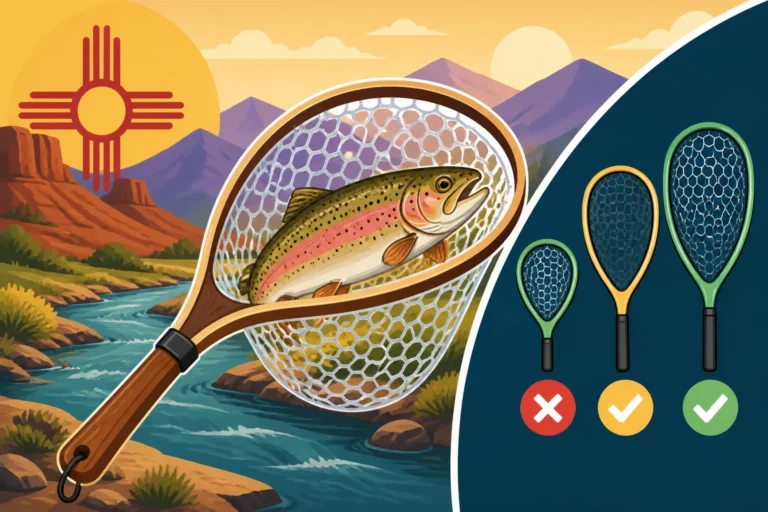
The size of your rubber net and the length of its handle are critical decisions based on the type of fishing you do in New Mexico. For wade fishing small streams and rivers for trout, a compact net with a short, fixed handle or even a magnetic release on a vest is ideal. This allows for easy portability and quick, one-handed netting in close quarters. Think about the ease of navigating brushy banks along the Rio Chama or stalking smaller tributaries.
However, if you're fishing from a boat on a large reservoir like Conchas Lake, or bank fishing for larger species such as striped bass, a net with a longer, often extendable, handle and a wider, deeper hoop is essential. A longer handle gives you the reach needed to land a fish that's still a few feet from the boat or bank, preventing lost fish and reducing the risk of a messy struggle. The hoop size should be appropriate for the size of fish you expect to catch. Trying to squeeze a trophy walleye into a small trout net is a recipe for disaster and potential harm to the fish. Consider what species you'll predominantly target; a "one-size-fits-all" approach often compromises optimal performance. Many retailers like Bass Pro Shops offer a range of sizes and designs to suit various fishing scenarios, and Amazon provides numerous brands and options to compare.
Portability and Durability for New Mexico Adventures
New Mexico's fishing opportunities often involve hiking into remote areas or dealing with rugged terrain. Therefore, the portability and durability of your rubber net are significant factors. For backcountry fly fishing or high-mountain lake excursions, a lightweight net that can be easily attached to a backpack or vest, perhaps with a retractable cord or magnetic release, is invaluable. You don't want to be fighting your gear as you navigate through challenging landscapes.
Durability is also key. Rubber nets are inherently more robust than traditional mesh against snags on branches or rocks. Look for models with sturdy frames, often made of aluminum or durable composites, and high-quality rubber baskets that resist tears and UV degradation from the intense New Mexico sun. A net is an investment in both your fishing enjoyment and the health of the fish you catch, so choosing one that can withstand the rigors of our diverse fishing environments will serve you well for years to come. For more on essential gear, check out our guide on Best Fishing Gear for New Mexico Anglers.
Beyond the Net: Best Practices for Catch and Release
While a rubber net is a game-changer for catch and release, it’s just one piece of the puzzle. Truly maximizing a fish's survival rate involves a holistic approach, encompassing proper handling, quick unhooking, and thoughtful release techniques. These practices, combined with your new rubber net, form the foundation of responsible angling in New Mexico.
Minimizing Air Exposure and Handling Time
The single most critical factor, arguably even more important than the net itself, is minimizing a fish's air exposure. Fish need water to breathe, just like we need air. Every second a fish is out of its aquatic environment, it's suffocating, and the damage starts to accumulate rapidly, especially in warmer conditions. This means no extended photo shoots with the fish dangling by the lip, and certainly no dropping it onto dry land or a boat deck.
With your rubber net, try to unhook the fish while it's still submerged in the water, or at the very least, keep it in the net just below the surface until you're ready to quickly remove the hook. If you must lift it for a quick photo, do so gently, supporting its entire body, and get it back into the water within seconds. Handling should be gentle and minimal, avoiding squeezing the fish or touching its eyes or gills. Wet your hands before touching the fish to further protect its slime coat. This rapid return to water is crucial for all fish, from the smallest bluegill to the largest lake trout. The longer a fish is out, the lower its chances, simple as that. For more on local rules, see New Mexico Catch and Release Regulations.
Using Barbless Hooks for Easier Extraction
Another simple yet highly effective practice that complements the use of a rubber net is fishing with barbless hooks. Barbs are designed to hold the hook firmly in place, which is great for keeping fish on the line but terrible for quick, clean hook removal. A barbed hook can cause significant tissue damage upon extraction, especially if it's deeply swallowed.
Barbless hooks, on the other hand, slide out effortlessly with minimal damage. Many special trout waters in New Mexico, like certain sections of the San Juan River, actually mandate the use of barbless hooks for this very reason. You can either buy hooks that are already barbless or simply pinch down the barb on your existing hooks with a pair of pliers. This tiny modification makes a monumental difference in the fish's welfare, allowing for lightning-fast unhooking, especially when combined with a net that doesn't snag the hook itself. Pair this with your rubber net, and you'll be releasing fish healthier and quicker than ever before. To learn more about this essential technique, consult Barbless Hook Fishing Technique for New Mexico Rivers.
Revival Techniques for Stressed Fish
Sometimes, despite your best efforts, a fish might be particularly stressed or tired after a long fight, especially in warmer water or if it's a large fish. When you release it, it might float on its side or struggle to swim away. This is where proper revival techniques come into play. Never simply toss a lethargic fish back into the current; take the time to help it recover.
Hold the fish gently by its tail, supporting its belly if possible, and face it into a gentle current. If there's no current, gently move the fish back and forth in the water to force water over its gills. This helps to oxygenate its blood and allows it to recover from the exhaustion of the fight. Watch for signs of recovery: strong fin movements, gill plates working vigorously, and the fish attempting to swim from your grasp. Only release it when it can swim away under its own power. This patience and care can be the difference between a successful release and a fish that perishes unseen. This practice is vital for the health of all species, including the various Trout Species Found in New Mexico.
Disclaimer
This article is for general informational purposes only and does not constitute professional advice. Laws, prices and regulations vary by location and change over time. Consult a qualified professional for guidance on your specific situation.