How to Handle a Trout Before Releasing It
It’s a moment every angler cherishes: feeling that tug on your line, fighting a beautiful trout, and finally bringing it in. But what happens after you admire its colors and before you send it back to its watery home? This is where many well-intentioned anglers inadvertently cause harm, leading to what's often called "delayed mortality." This guide is all about equipping you with the practical, compassionate steps you need to handle a trout before releasing it, ensuring it swims away strong and healthy, ready to fight another day in New Mexico's incredible waters.
The Core Principle: Minimize Stress and Time Out of Water
When you catch a trout, you're essentially putting it through a stressful event. Your goal, if you intend to release it, is to make that stress as brief and as minimal as possible. Every second out of water, every rough squeeze, every missed attempt at de-hooking, adds to the trauma. Think of it like a quick, careful medical procedure – precise, gentle, and efficient.
Understanding Why Trout Are So Delicate
Trout, especially species like the beautiful Rio Grande Cutthroat Trout in New Mexico or the vibrant rainbows stocked in our state, are incredibly sensitive creatures. They rely on dissolved oxygen in the water, which they take in through their gills. When they're pulled out, they're essentially holding their breath, and prolonged exposure to air can cause irreparable damage to those delicate gill filaments.
Beyond oxygen, a trout's body is covered in a protective layer of slime, or mucus. This slime coat is their first line of defense against bacteria, parasites, and fungi. Handling a trout with dry hands or letting it flop around on rocks or dry ground can rub off this vital slime layer, leaving the fish vulnerable to infection once it's back in the water. Furthermore, internal organs can be easily damaged by squeezing or mishandling, particularly around the belly. A fish that looks fine when it swims away might succumb hours or days later if its internal systems are compromised. That’s why a gentle touch and quick action are paramount.
Preparation Before the Catch
Being prepared is half the battle when it comes to successful catch and release. You don't want to be fumbling for tools or scrambling for a good spot to release your fish while it's gasping on the bank. Before you even cast your line, make sure you have the right mindset and the right gear.
First and foremost, consider using barbless hooks. They might seem like a small detail, but barbless hooks make a huge difference in how quickly and cleanly you can remove a hook, often without even touching the fish. If your hooks aren't barbless, you can easily crimp down the barb with a pair of pliers. This simple act drastically reduces tissue damage and stress during removal. Many of our pristine waters, like the Quality Waters of the San Juan River, actually require barbless hooks. If you're heading to such areas, understanding the Barbless Hook Fishing Technique for New Mexico Rivers is non-negotiable.
Secondly, invest in a good landing net. But not just any net – a rubberized, knotless net. Traditional nylon nets, especially those with knots, can strip away a trout's protective slime coat and damage fins. A rubber net, on the other hand, is much gentler on the fish, reduces tangles, and prevents hooks from getting hopelessly snagged. You can find excellent options on Amazon, designed specifically for catch-and-release. Have it ready, deployed, and easily accessible before you hook up.
Finally, have your de-hooking tools ready. A good pair of long-nosed pliers or forceps is essential. Again, these should be easily reachable, perhaps clipped to your vest or belt. The quicker you can access these tools, the less time the fish spends out of water. Before you cast, identify a calm, shallow spot near the water's edge where you can quickly land, handle, and release your fish without dragging it over rocks or dry ground. This foresight can make all the difference in a successful release.
The Catch: Gentle Handling from Hook-Up to Landing
The moment a trout takes your bait or lure, the clock starts ticking. How you play and land the fish directly impacts its chances of survival after release. It's not just about getting it to shore; it's about getting it there with minimal exhaustion and injury.
Playing the Fish Quickly and Efficiently
While the thrill of a long, drawn-out fight is undeniable, it's detrimental to a fish you plan to release. A prolonged fight exhausts the trout, building up lactic acid in its muscles, similar to how we feel after an intense workout. This exhaustion can leave the fish too weak to recover, making it susceptible to predators or simply unable to swim properly when released.
Your goal is to bring the fish to hand or net as quickly and efficiently as possible, without breaking your line or stressing your tackle. This often means using appropriate gear for the size of fish you expect to encounter. For example, when targeting larger trout, using a rod with enough backbone and a reel with a smooth, reliable drag can help you subdue the fish faster. If you're serious about your trout fishing, understanding the Best Rod Setup for New Mexico Trout Fishing can greatly improve your chances of both landing and successfully releasing fish. Don't "horse" the fish in, but keep consistent pressure on it to guide it towards you without letting it rest or dig in. When the fish gets close, it's natural for it to make a final run. Let your drag do its job, absorbing the shock, until you can gently guide it into your waiting net.
Wet Hands and Proper Grip
This is perhaps one of the most crucial, yet often overlooked, aspects of catch-and-release: always wet your hands thoroughly before touching a trout. Remember that protective slime coat we talked about? Dry hands will immediately strip it away, leaving the fish vulnerable. Simply dip your hands in the water or splash them generously before making any contact.
Once your hands are wet, how do you hold the fish?
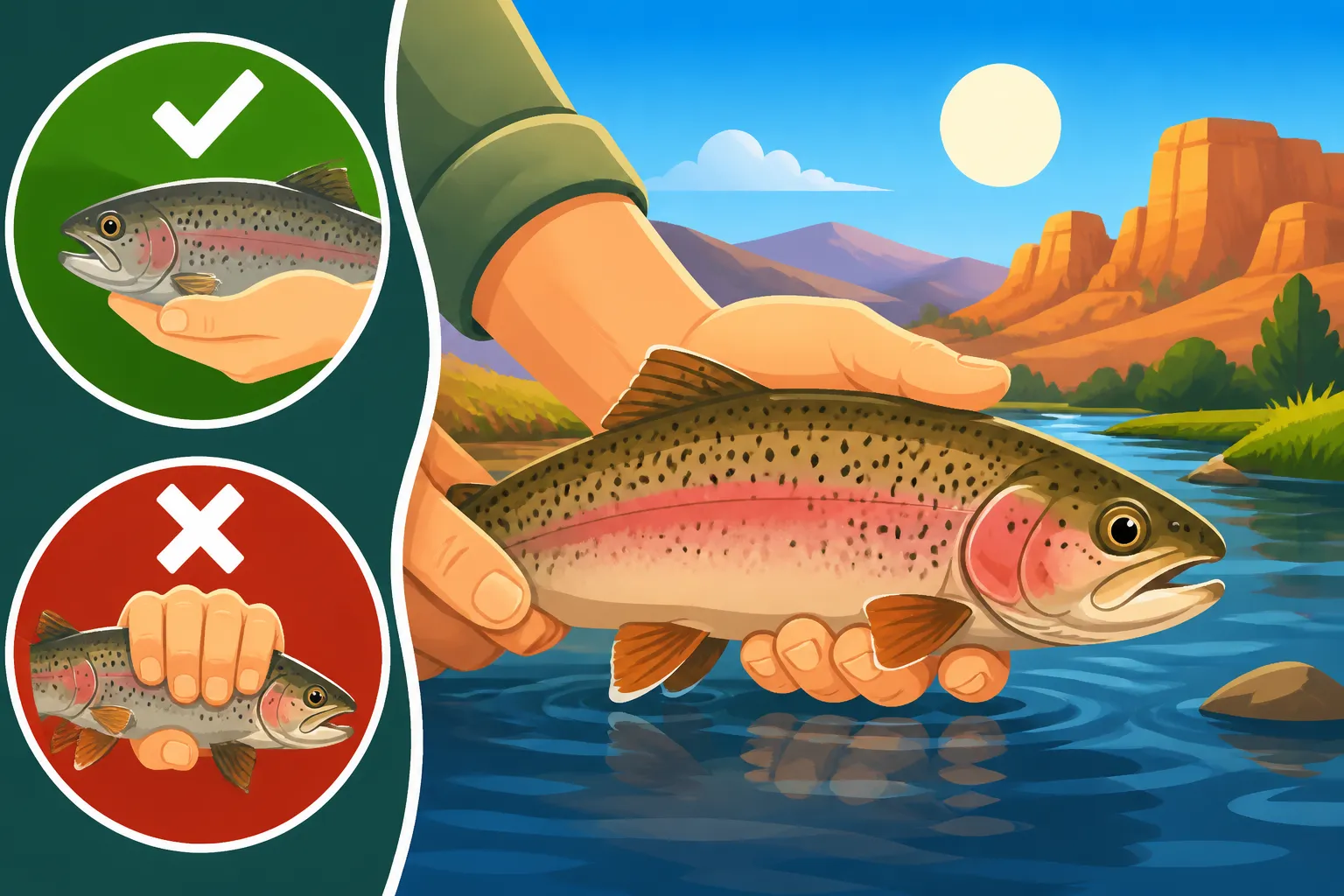
- Avoid the "death grip": Never squeeze a trout around its belly or gills. This can damage internal organs, including its liver, spleen, and reproductive organs, or even break its jaw. Their internal structure is much more fragile than you might think.
- The cradle method: The best way to support a trout is to cradle it gently under its belly with one wet hand, providing full support. If it's a larger fish, you can use your other wet hand to gently hold the tail. This allows you to admire the fish and work on de-hooking without causing undue stress or damage.
- Tail grab (for larger fish): For bigger trout, a firm but gentle grab of the caudal peduncle (the narrow part of the body just before the tail fin) can help control the fish. Support its body with your other hand. Ensure your grip isn't crushing its tailbone.
- Keep it horizontal: Whenever possible, keep the fish horizontal, supporting its full weight. Holding a fish vertically by its jaw or gills can dislocate its jaw or damage its spine and internal organs, especially with larger, heavier fish.
Remember, the goal is minimal contact and maximum water time. If you can, try to keep the fish submerged in the net while you work on de-hooking. This is where a rubber net really shines – it allows you to manipulate the fish while it's still breathing.
The Release: Ensuring a Strong Swim Away
The final act of catch and release is arguably the most important. A proper release gives the trout the best possible chance of survival and recovery. It’s not enough for the fish to just swim off; it needs to swim off with vigor.
De-hooking with Care
This step requires patience and precision. The less time the hook is in the fish, and the less damage it causes, the better.
- Keep the fish in the water: This is the golden rule. If you can manage it, try to remove the hook while the fish is still in your net, submerged in the water. This keeps the gills functioning and reduces air exposure.
- Use pliers or forceps: Your trusty long-nosed pliers or forceps are indispensable here. With a barbless hook, a quick twist or gentle push in the opposite direction of entry should release it easily. If the hook has a barb, once you get the barb past the skin, you should be able to back it out.
- Deeply swallowed hooks: This is where it gets tricky, and where a barbless hook truly shows its value. If a trout has swallowed the hook deeply into its gullet, do not try to rip it out. This will almost certainly cause fatal internal damage. Instead, simply cut the line as close to the hook as possible. Studies have shown that fish have a surprisingly good chance of surviving with a hook left in, especially if it's made of a biodegradable material, as it will often rust out or be expelled over time. Trying to extract a deeply swallowed hook, however, is almost always a death sentence.
- Different hook types: Single hooks are generally easier to remove than treble hooks. If you're using lures with treble hooks and practicing catch and release, consider replacing them with single, barbless hooks. This small modification can drastically improve a trout's chances.
Reviving the Trout
Once the hook is out, the fish might be disoriented or exhausted. It needs a moment to regain its strength and equilibrium before swimming away. This is the revival process.
- Hold it gently, facing the current: Cradle the fish in the water, supporting its belly and tail. Position it so its head is facing upstream into a gentle current (if in a river or stream). If you're in still water, slowly move the fish back and forth to push oxygenated water over its gills. This helps to flush water through its respiratory system, much like giving it CPR.
- Observe for signs of recovery: Watch the fish closely. You’ll see its gills begin to move more regularly, and it might start wiggling its tail. It may try to swim out of your hands a few times. Don't let it go until it actively tries to swim away with purpose.
- Don't throw it: Never toss or drop a fish into the water. This can cause further injury or disorient it, making it an easy meal for predators. Instead, gently release your grip and let it swim away under its own power.
- Water temperature considerations: Pay attention to water temperature. In New Mexico, especially during warmer months, some stocked trout waters can get quite warm. Warm water holds less dissolved oxygen, making trout recovery more difficult. If the water is particularly warm, consider shortening your fishing session, or avoiding fishing for trout altogether. When releasing fish in these conditions, extend the revival period. This is especially important if you're exploring Best Practices for Releasing Fish in Warm Water.
Essential Gear for Responsible Catch and Release
Having the right tools isn't about being fancy; it's about being effective and responsible. A few key items can dramatically improve your catch-and-release success rate.
Must-Have Tools
- Rubber Landing Nets: As discussed, these are absolutely critical. A quality, knotless rubber net minimizes damage to the fish's slime coat, fins, and scales. It also prevents hooks from snagging, making de-hooking faster and less stressful for both you and the fish. If you're wondering Why a Rubber Net Is Better for Catch and Release, it's all about reducing friction and protecting that delicate exterior. You can find a wide range of sizes and styles on Amazon, from compact models for wade fishing to larger hoops for boat angling.
- Forceps or Long-Nosed Pliers: These are your primary de-hooking tools. Long forceps are excellent for smaller hooks and precise work, while pliers are more robust for larger hooks or crimping barbs. They allow you to get leverage on the hook without having to put your fingers inside the fish's mouth, which can cause injury to both you and the trout. Make sure they are rust-resistant, as they’ll be exposed to water frequently.
- Line Clippers: Essential for those times when a hook is too deep to remove safely. Keep them sharp and easily accessible, ideally on a zinger attached to your vest or pack.
Optional but Recommended Gear
While not strictly necessary for every trip, these items can enhance your catch-and-release practice and overall fishing experience.
- Fish Handling Gloves: Some anglers prefer to use specialized fish handling gloves, which are designed to protect the fish's slime coat while providing you with a better grip. These can be particularly useful for larger, more energetic fish.
- Portable Measuring Device: If you enjoy documenting your catches (length, but not necessarily weight for released fish), a soft, flexible measuring tape or a specialized measuring board is perfect. This allows you to quickly get a measurement without unduly stressing the fish. Just lay the fish gently on the wet board or alongside the wet tape for a quick photo and measurement. This is a great way to respect the fish while still celebrating your catch, and knowing the Best Measuring Board for Recording Catch Length can make this process seamless.
- Digital Scale: While not recommended for weighing fish you intend to release, some anglers use them carefully. If you do, ensure it's a model designed to support the fish horizontally in a sling, rather than hanging it vertically, which can cause internal damage.
Special Considerations for New Mexico's Diverse Waters
New Mexico is a land of incredible contrasts, and our fishing waters are no exception. From high mountain streams to desert reservoirs, the conditions can vary wildly, and these differences impact how we should approach catch and release.
High-Altitude Lakes and Cold Streams
Our high-altitude lakes and cold, pristine streams, like those found in the Pecos Wilderness or near Taos, are often home to sensitive trout species, including native cutthroats and wild browns. These waters tend to be well-oxygenated and cool, which generally improves a trout's chances of survival after release. However, the fish in these environments can still be quite fragile.
The key here is speed and gentleness. The cold water might make the fish lively, but their energy reserves are still finite. In these delicate ecosystems, minimizing your impact is paramount. Keep the fish submerged as much as possible, use barbless hooks, and ensure a quick de-hooking process. Often, the banks of these streams can be rocky or overgrown, so having your net and tools ready before you bring the fish close is critical to avoid flopping it onto abrasive surfaces. For example, when you're fishing in places like Fenton Lake Winter Trout Fishing, the cold temperatures mean fish are often less active and more susceptible to shock, so speedy handling is even more vital.
Warm Water Stressors in Reservoirs
While many of New Mexico's primary trout fisheries are coldwater havens, there are situations, particularly in lower-elevation reservoirs or during warmer seasons, where trout (especially stocked rainbows) might be present in water that is warmer than ideal. Higher water temperatures mean less dissolved oxygen is available, and fish are already under physiological stress. When a trout in warm water is caught and fought, the added exertion and lactic acid buildup can be fatal.
During times of elevated water temperatures (generally above 68-70°F for trout), it's often best to reconsider fishing for trout entirely, especially if your intent is catch and release. Even with the best handling practices, the fish's chances of survival can be significantly reduced. If you do find yourself catching trout in surprisingly warm water, immediately assess the fish's condition. Shorten the fight as much as possible, ensure the absolute minimum time out of water, and spend extra time reviving the fish in the current or by gently moving it. Pay close attention to the New Mexico Fishing Season Dates and Limits to understand when certain species are more active and when water temperatures might become a concern. Some anglers even carry a small water thermometer to monitor conditions, especially if they are fishing transitional zones or during shoulder seasons. When in doubt, let the fish rest in the net, fully submerged, for a few extra moments before attempting to de-hook.
Catch and Release Best Practices
Here's a quick summary of the do's and don'ts when handling trout for release, which you can keep in mind for your next outing, whether you're exploring New Mexico Trout Fishing Rules or simply enjoying a local pond.
| Do's for Handling Trout Before Release | Don'ts for Handling Trout Before Release |
|---|---|
| Keep the fish wet, submerged as much as possible. | Handle with dry hands (strips slime coat, invites infection). |
| Wet your hands thoroughly before any contact. | Squeeze the fish's belly or gills (damages internal organs). |
| Use barbless hooks or crimp barbs down. | Over-fight the fish, causing exhaustion. |
| Employ a rubberized, knotless landing net. | Drag the fish over rocks, gravel, or dry ground. |
| Have pliers/forceps ready for quick de-hooking. | Rip out deeply swallowed hooks (cut the line instead). |
| Support the fish horizontally under its belly. | Hold the fish vertically by its jaw or gills (dislocates jaw, damages spine). |
| Revive the fish gently in the water, facing the current. | Throw or drop the fish back into the water. |
| Cut the line if a hook is deeply swallowed. | Keep the fish out of water for photos for more than a few seconds. |
| Consider avoiding trout fishing in excessively warm water. | Prolong the handling process unnecessarily. |
| Be aware of special regulations like those for New Mexico Special Trout Water Rules. |
Disclaimer
This article is for general informational purposes only and does not constitute professional advice. Laws, prices and regulations vary by location and change over time. Consult a qualified professional for guidance on your specific situation.