How to Locate Walleye at Conchas Lake
It's no secret that Conchas Lake holds some fantastic walleye, but actually finding them can feel like searching for a needle in a haystack, especially if you're not familiar with the lake's ever-changing moods. Many anglers get frustrated because walleye seem to disappear, but with the right knowledge and a bit of patience, you can absolutely pinpoint their favorite hangouts. This guide is all about helping you unlock the secrets to locating those elusive walleye at Conchas Lake, giving you the confidence to turn a slow day into a successful one.
Unraveling Conchas Lake's Walleye Puzzle: Behavior and Habitat
Walleye, bless their finicky hearts, aren't like some other species that just hang out anywhere. They have preferences, strong ones, and understanding these preferences at a specific body of water like Conchas Lake is your first step to success. It's not enough to know that walleye live there; you need to understand how they live there.
The Walleye Mindset: What Drives Them at Conchas?
First off, walleye are notoriously light-sensitive. This is a huge factor in their behavior and why you often find them in deeper water, murky conditions, or actively feeding during low light periods like dawn, dusk, and even after dark. At Conchas Lake, with its often clear skies, this means they'll frequently seek out shade, deep water, or stained areas to escape the bright New Mexico sun. They're ambush predators, too, which means they love to set up shop near structure where they can hide and dart out to snatch a passing baitfish. Think rocky drop-offs, submerged timber, humps, and ledges – anything that provides a strategic advantage. The walleye here are always on the hunt, constantly looking for a good meal, whether it's shad, sunfish, or even smaller crappie. Their movements are largely dictated by forage availability and comfortable light levels.
This light sensitivity also explains why you might have better luck on cloudy days or when there's a good chop on the water, which breaks up the sunlight penetration. Many experienced anglers understand that a little wind is often a walleye angler's best friend. Without that chop, the walleye might retreat to deeper, darker recesses of the lake, making them harder to find without the right electronics. Keeping an eye on the weather forecast and planning your trips around these conditions can give you a significant edge.
Conchas Lake's Unique Layout: Why It Matters for Walleye
Conchas Lake is a sprawling, interesting body of water, and its geography plays a massive role in where walleye choose to live. You've got two main river arms, the Canadian River arm and the Conchas River arm, both feeding into the main lake basin. Each arm has its own characteristics, from differing water clarity to unique bottom compositions. The lake is known for its extensive rocky points, submerged humps, ledges, and distinct old river channels that wind their way through the depths. These features are walleye magnets.
The Canadian arm tends to be a bit shallower and can sometimes have more stained water, especially after a rain event, which can be great for daytime walleye fishing due to the reduced light penetration. On the other hand, the Conchas arm and the main lake basin often feature more pronounced rock structures, deeper ledges, and larger humps that appeal to walleye during brighter periods or as they seek stable, cooler temperatures. Understanding these distinctions will help you decide which part of the lake to focus your efforts on, depending on the season and prevailing conditions. Don't just cast anywhere; consider the contours, the depth changes, and what kind of cover is available. For deeper insights into navigating the lake, check out our Conchas Lake State Park Fishing Access guide.
Seasonal Strategies for Pinpointing Walleye Locations at Conchas
Walleye are creatures of habit, but their habits change dramatically with the seasons. What works in spring won't necessarily work in summer, and a fall pattern is a whole different ballgame. Being able to adapt your approach to the time of year is crucial for consistently locating these prized fish at Conchas Lake. Our general New Mexico Fishing Season Dates and Limits article provides a good overview, but let's dive into Conchas specifics.
Spring Awakening: Post-Spawn and Hungry Walleye
As the ice thaws and water temperatures begin to climb in early spring, walleye in Conchas Lake complete their spawning ritual, typically on rocky points, shoals, and gravel bottoms in shallower areas. After the spawn, they're often exhausted but incredibly hungry. This is a fantastic time to target them as they move from their spawning grounds to areas where they can recover and feed aggressively. You'll want to focus your efforts on those shallower, rocky points and coves, especially those with access to deeper water nearby. The males will often stick around the spawning areas for a bit longer, while the females might move to slightly deeper, but still accessible, flats or points to recuperate.
During this period, look for areas where the sun can warm the water just a few degrees more than the surrounding lake. These warmer pockets attract baitfish, and where the baitfish are, the walleye won't be far behind. Depths can vary, but generally, 10-25 feet can be very productive. Trolling crankbaits or casting jigs tipped with live bait (like shiners or worms) along these transitions can be deadly. The key is to cover water and pay close attention to any changes in bottom structure or depth that might hold fish.
Summer Deep Dive: Finding Walleye in the Heat
When the scorching New Mexico summer sun really kicks in, walleye at Conchas Lake tend to go deep. The surface water warms significantly, and the walleye seek refuge in the cooler, more stable temperatures found lower in the water column. This is when your electronics truly become your best friend. You'll be looking for main lake points that drop off quickly into deep water, submerged humps, and the edges of the old river channels. Walleye will often suspend over these deep structures, especially if there's a thermocline (a layer where water temperature changes rapidly) that provides an ideal comfort zone.
During the summer, depths of 25-50 feet are not uncommon for finding active walleye. Night fishing also becomes incredibly effective, as the walleye move shallower under the cover of darkness to feed. For day fishing, slow trolling with deep-diving crankbaits or bottom-bouncing rigs with live bait can be very productive. Pay attention to how your boat traffic might affect the fish; sometimes, a slower, more subtle approach is best. If you're wondering about general fishing throughout the state, our Best Time of Year to Fish in New Mexico guide offers broader seasonal advice.
Fall Feeding Frenzy: Walleye Gearing Up for Winter
As the summer heat gives way to cooler autumn temperatures, Conchas Lake's walleye enter a pre-winter feeding frenzy. This is a prime time to catch large, aggressive fish. The water starts to cool, and the walleye begin to move shallower again, similar to spring, but often with even more urgency as they try to pack on weight for the lean winter months. They'll follow schools of baitfish, which are also very active during this period, moving between shallow flats and deeper channels.
Focus on main lake points, channel bends, and larger flats where baitfish are congregating. Depths can range from 15-40 feet, but don't be afraid to check shallower if you see signs of bait. Trolling crankbaits that mimic shad or casting jigs and spoons can work wonders. The fall bite can be incredibly strong, with walleye willing to chase down lures more aggressively than at other times of the year. This is a great time to experiment with different presentations and cover a lot of water to find those active schools. For specific techniques, our Jigging for Walleye in New Mexico article could be very helpful.
Tools and Tactics for Conchas Lake Walleye Detection
Finding walleye isn't just about knowing where they should be; it's about actively searching for them and interpreting the clues the lake provides. Modern technology combined with good old-fashioned angling instincts will significantly increase your success rate.
Harnessing Your Electronics: Sonar and GPS
In a vast lake like Conchas, quality marine electronics are indispensable for locating walleye. Your depth finder (sonar) allows you to "see" the underwater world. Look for defined bottom structures like humps, ledges, and old river channels. Walleye often appear as distinct arches or lines near the bottom, or sometimes suspended in open water if they're chasing baitfish. Don't just look for fish; look for the features that hold fish. A good fish finder can also help you identify baitfish schools, which are prime indicators of where predator fish like walleye will be lurking. Many excellent models can be found on Amazon, offering different price points and features.
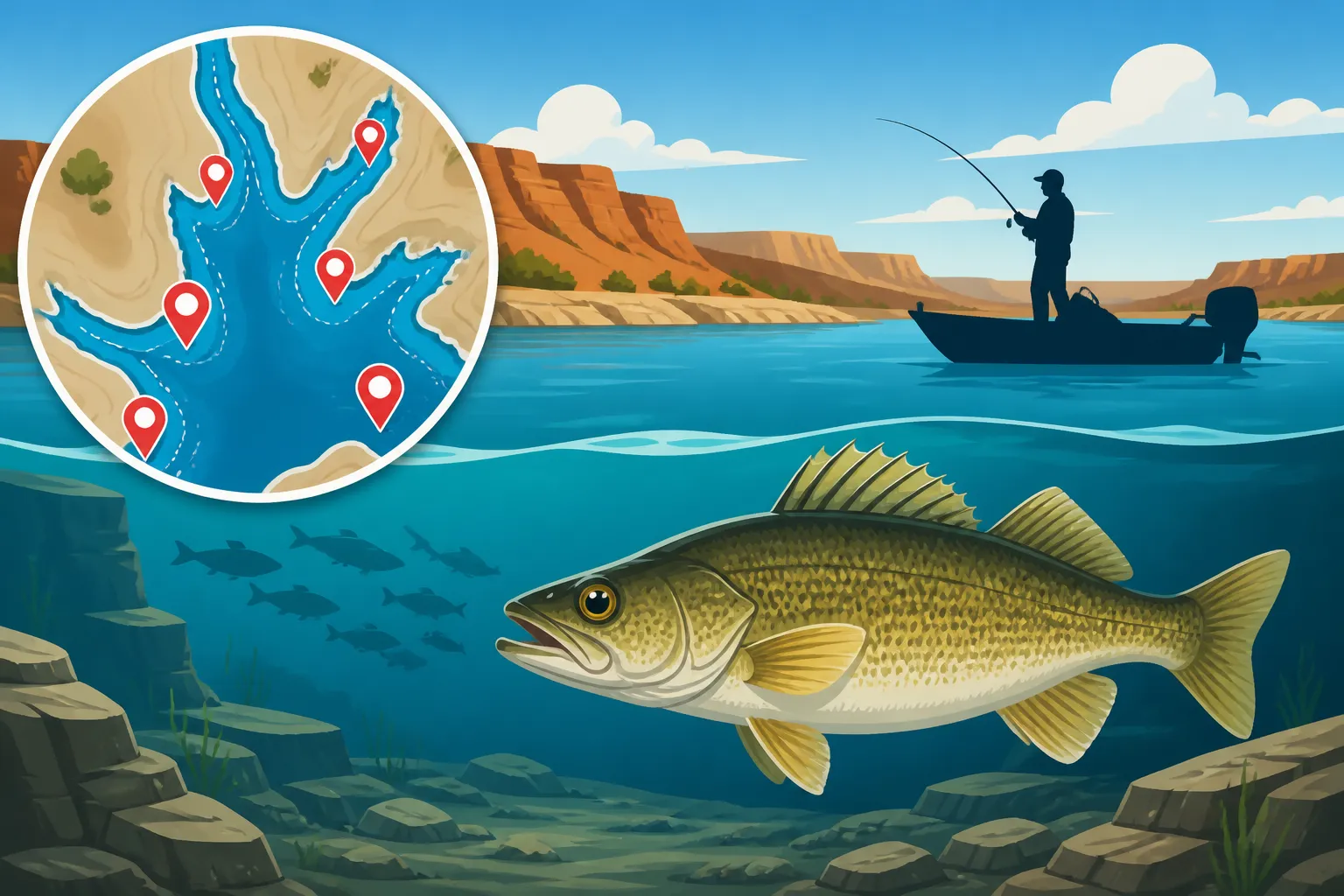
Once you find a productive spot, use your GPS to mark a waypoint. This allows you to return to that exact location later in the day or on future trips. Walleye often school, so if you catch one, there are likely more nearby. Drifting over a marked waypoint or making precise trolling passes becomes much easier with accurate GPS. Remember, the deeper you go, the more crucial your electronics become in identifying those subtle changes in depth and structure that walleye favor. For more on this, check out our guide to Best Fish Finders for New Mexico Reservoirs.
Interpreting Environmental Cues: Wind, Current, and Forage
Beyond electronics, learning to "read the water" is a skill that comes with experience but can be accelerated by understanding key environmental factors.
- Wind: As mentioned earlier, a moderate wind creating a chop on the water's surface can be incredibly beneficial. It breaks up light penetration, making walleye more comfortable moving shallower, and it also concentrates baitfish against wind-blown points and shorelines. These wind-swept areas are often excellent places to start your search.
- Current: While Conchas is a reservoir, there can still be subtle currents, especially in the river arms or near the dam. Walleye will often position themselves facing into the current, waiting for food to be swept to them. Understanding the flow, even if minimal, can help you predict their ambush points.
- Forage: The presence of baitfish is perhaps the most critical environmental cue. If you see schools of shad flickering on your sonar, or even visual signs of baitfish jumping at the surface, you can bet that larger predators like walleye are nearby. Walleye are highly dependent on these baitfish for survival, so finding their food source is tantamount to finding them. This is especially true during the fall when they are actively bulking up.
Specific Conchas Lake Hotspots and Structural Targets
While walleye move, certain types of locations consistently hold them across seasons, though the specific depth might change. When you're out on Conchas, keep these in mind:
- Main Lake Points: These are classic walleye spots. Look for points that extend far out into the main lake basin and have a sharp drop-off into deeper water. Walleye will use these as highways and ambush points.
- Submerged Humps and Islands: Any underwater structure that rises from the lake bed can hold walleye. These act as gathering points for baitfish and provide excellent cover. Finding these usually requires good sonar mapping or careful searching with your depth finder.
- River Channel Edges: The old Canadian and Conchas River channels that run through the lake are prime travel corridors and holding areas for walleye, especially where they make sharp bends or intersect with other structures.
- Rocky Ledges and Bluffs: Vertical rock faces or ledges that plunge into the water provide shade and excellent ambush points. These are often productive during bright, sunny days when walleye are seeking refuge.
Remember that while specific spots can be good, the most important thing is to understand why walleye are there. Is it current? Cover? Baitfish? Temperature? Once you figure out the "why," you can replicate that success in other similar areas of the lake. Learning general Walleye Fishing in New Mexico techniques can help you translate your findings at Conchas to other bodies of water, too.
| Season | Typical Depths (Feet) | Key Structures to Target | Recommended Tactics | Primary Forage Indicators |
|---|---|---|---|---|
| Spring | 10-25 | Rocky points, shallow flats near spawning areas, coves | Trolling crankbaits, casting jigs with live bait | Schools of shad moving into shallower, warmer waters |
| Summer | 25-50+ (day) 5-20 (night) | Main lake points, submerged humps, channel edges | Deep trolling, bottom bouncing, night fishing with jigs | Thermocline layers, deep schools of shad |
| Fall | 15-40 | Main lake points, channel bends, large flats | Aggressive trolling, casting jigs, spoons | Concentrated baitfish schools moving shallower |
| Winter | 30-60+ | Deep channel breaks, main lake humps, steep drops | Vertical jigging, slow trolling with blade baits | Deeply suspended baitfish, isolated schools |
No matter the season, patience and persistence are your greatest assets. Sometimes the walleye bite will be hot, and other times you'll have to work for every single fish. But by understanding their behavior, adapting to the seasonal changes, and effectively using your tools, you'll be well on your way to consistently locating and catching walleye at Conchas Lake. For general gear needs, you can find a wide variety of equipment on Amazon, from rods and reels to a good Best Fishing Gear for New Mexico Anglers.
Disclaimer
This article is for general informational purposes only and does not constitute professional advice. Laws, prices and regulations vary by location and change over time. Consult a qualified professional for guidance on your specific situation.