How to Fish Deep Structure at Conchas Lake
Oh, the deep structure at Conchas Lake! It's a fantastic place to fish, but let's be honest, trying to find those fish holding tight to submerged contours can feel like looking for a needle in a haystack, especially when the sun is blazing down or the fish are just plain finicky. It's a common frustration for even seasoned anglers to spend hours casting over seemingly barren water. But don't you worry, this guide is here to unravel the mysteries of Conchas's depths, offering you the strategies, gear insights, and techniques you need to confidently target and catch those elusive fish tucked away in the lake's hidden underwater world.
Understanding Conchas Lake's Deep Structure
Before we even talk about casting a line, we need to understand what "deep structure" truly means in a place like Conchas Lake. It's not just "deep water." It's specific features on the bottom that provide cover, ambush points, or temperature breaks that fish are naturally drawn to. Think of it as their underwater real estate, and the best spots are prime properties.
At Conchas, deep structure can manifest in several ways:
- Submerged Humps and Ridges: These are elevated areas that don't quite break the surface. Fish will often hold on the sides, the top, or the points of these humps, especially when current or wind is pushing baitfish around them. Imagine a small hill completely underwater – fish love to school up here.
- Old Creek Channels and Riverbeds: Before Conchas was a lake, the Canadian River and various creeks snaked through the landscape. These old channels, now submerged, create distinct drops, bends, and deeper troughs that act as fish highways and holding areas. They provide quick access to different depths and current flows.
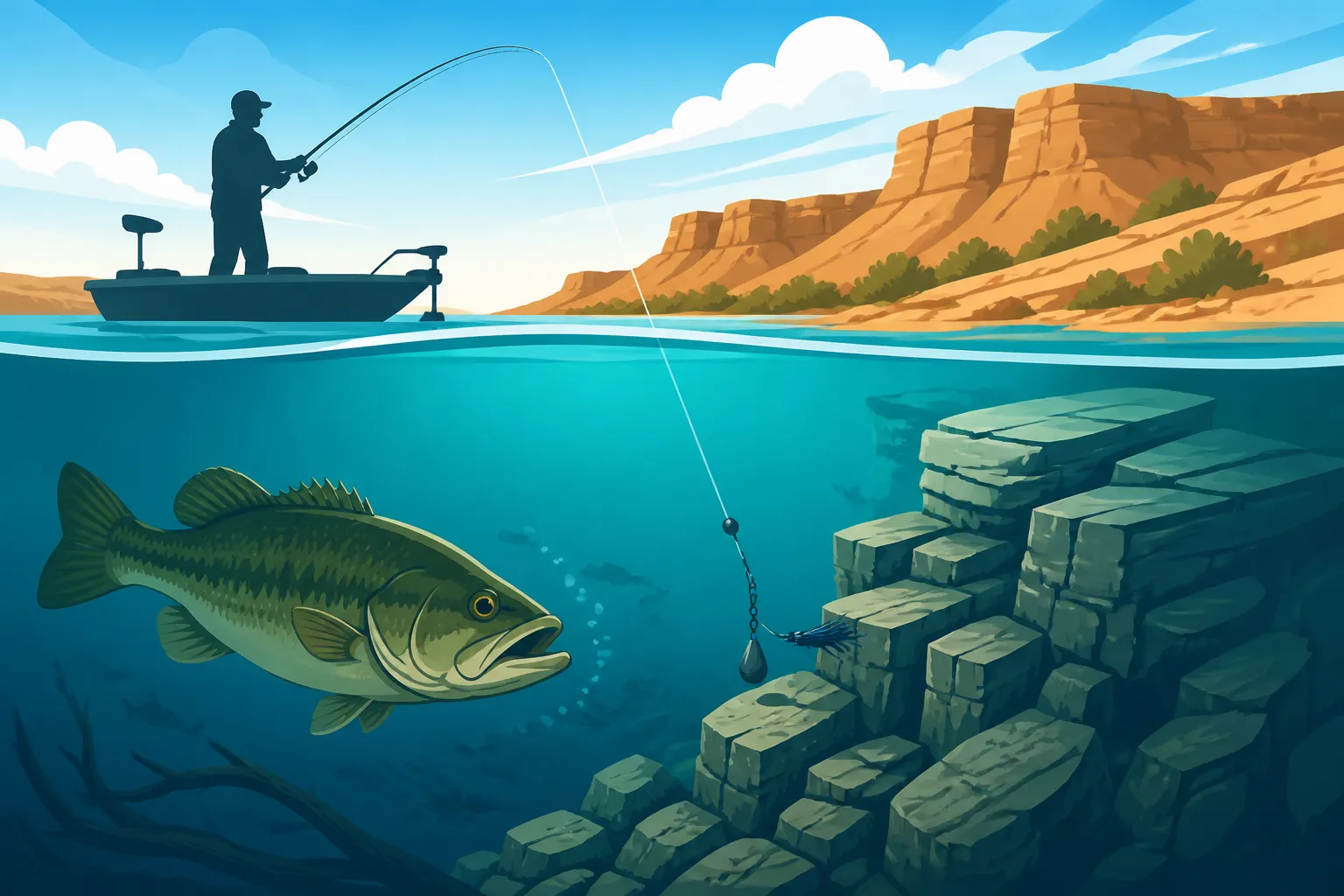
- Ledges and Drop-offs: These are abrupt changes in depth, often forming a "wall" or a sharp incline underwater. The fish will sit right along these ledges, waiting to ambush prey moving up or down the contour. A classic example would be a flat area suddenly plunging into deeper water.
- Submerged Timber and Rock Piles: These are the ultimate fish magnets. Old trees, brush piles, or scattered rock fields offer incredible cover from predators, strong currents, and harsh sunlight. Bass, crappie, and even walleye will orient themselves tightly to these features. Finding a good brush pile in 20 feet of water can be like hitting the jackpot.
Why do fish gravitate to these spots? Simple: survival and sustenance. Deep water generally means cooler, more stable temperatures, which is a big deal during the scorching New Mexico summers. Structure provides cover from predators and strong sunlight, making them feel secure. And often, baitfish will congregate around these features, making them ideal ambush points for larger game fish. Knowing this helps you understand why you're targeting certain areas and not just casting blindly. To get a broader sense of the lake's offerings, check out our Conchas Lake Fishing Guide.
Essential Gear for Deep Structure Fishing
Successfully tackling deep structure at Conchas requires more than just a rod and reel; it's about having the right tools to see the structure, present your bait effectively, and feel those subtle bites. Without the right gear, you're essentially fishing blindfolded.
High-Quality Electronics: Your Underwater Eyes
This is where the game truly changes. A good fish finder is your absolute best friend when fishing deep structure. You need more than just basic sonar; look for units that offer:
- 2D Sonar: This gives you a traditional view of what's directly beneath your boat, showing fish arches and the bottom contour. Look for clarity and target separation to distinguish fish from structure.
- Down Imaging/DownScan: This provides a photographic-like view directly below your boat, rendering structure, timber, and fish with incredible detail. You can literally see tree branches, rock piles, and fish suspended within them.
- Side Imaging/SideScan: This is revolutionary for covering water. It allows you to scan wide swaths of the lake bottom to either side of your boat, revealing humps, channels, brush piles, and even individual fish that you might have otherwise driven right over. Imagine motoring along and seeing a submerged creek bed or a hidden rock pile 50 feet to your left – it cuts down search time dramatically.
Learning to interpret what you see on your screen is crucial. A blob might just be a rock, or it could be a school of crappie packed tight. Understanding the differences between baitfish and larger game fish marks is a skill developed over time, but good electronics make the learning curve much shorter. If you're looking to upgrade, our guide on Choosing a Fish Finder for Deep Reservoirs offers some great advice. Many anglers find great deals and a wide selection of these sophisticated units on platforms like Amazon.
Rods, Reels, and Lines: Feeling the Unseen
When fish are holding deep, their bites can be incredibly subtle – sometimes just a slight "tick" or a feeling of added weight. Your rod, reel, and line setup need to be optimized for sensitivity and power.
- Rods: For deep structure, you'll generally want a medium-heavy to heavy action rod, typically 6'6" to 7'6" in length. The longer length helps with casting distance and managing line when setting the hook in deep water. A fast or extra-fast tip is paramount for detecting those light bites. The backbone of the rod needs to be strong enough to drive a hook home and fight a strong fish from the depths. For specific applications like jigging, a sensitive graphite rod that allows you to feel the bottom is indispensable. Our article on Best Rod Action for Walleye Jigging can provide more targeted recommendations.
- Reels: A high-quality baitcasting reel is often preferred for deep-water techniques due to its power, line capacity, and ability to handle heavier lures. Look for a smooth drag system and a good retrieve ratio to bring in line quickly when a fish charges you or to efficiently work deep-diving crankbaits. Spinning reels can work for lighter applications like drop-shotting, but ensure it's a robust model with excellent line management.
- Lines: This is where many anglers make mistakes. Monofilament stretches too much for deep-water fishing, making bite detection difficult.
- Braided Line: This is your best primary line for deep structure. It has virtually no stretch, transmitting even the lightest tap directly to your rod tip. It's also incredibly strong for its diameter and highly abrasion-resistant, a huge advantage around rocks and timber.
- Fluorocarbon Leader: While braid is great for sensitivity, it's highly visible underwater. Tying on a 6-10 foot fluorocarbon leader (slightly lighter in test than your main braid) is crucial for stealth. Fluorocarbon is nearly invisible in water and offers excellent abrasion resistance.
This combination of braid to fluorocarbon leader gives you the best of both worlds: extreme sensitivity and strength from the braid, and stealth with good abrasion resistance from the fluorocarbon.
Lures and Baits: Matching the Hatch and the Depth
The lures you choose will depend on the species you're targeting and the specific type of deep structure. Variety is key.
- Deep-Diving Crankbaits: These are perfect for covering large areas of submerged points, humps, and ledges. Look for models designed to dive 15-25+ feet. The idea is to make them "crash" into the structure, deflecting and triggering reaction strikes. You'll find a massive selection of colors and diving depths on Amazon.
- Jigging Spoons: Heavy metal spoons are deadly for fish suspended over structure or holding tight to the bottom. They mimic dying baitfish and can be worked vertically right over fish marks on your sonar. Check out our advice on Best Jig Head Weight for Walleye at Conchas Lake.
- Heavy Jigs and Soft Plastics: Think football jigs, swim jigs, and Texas-rigged worms or creature baits. These are excellent for getting down into thick cover, probing rock piles, or slowly working ledges. Pair them with soft plastics that mimic crawfish or baitfish.
- Drop Shot Rigs: When fish are super finicky or grouped tightly on a specific piece of structure, a drop shot is hard to beat. It keeps your bait suspended just above the bottom, right in the fish's strike zone, with minimal movement.
- Carolina Rigs: Similar to a Texas rig, but with a sliding weight above a swivel and a longer leader to the hook. This rig is fantastic for dragging over rocky bottoms and covering ground while presenting your bait naturally.
Having a selection of these deep-water specialists on hand will ensure you're ready for whatever Conchas throws at you.
Techniques for Targeting Deep Structure
Now that you've got the gear, let's talk about how to use it to coax fish out of their deep hideouts. Each technique has its nuances, and mastering a few will significantly increase your success.
Vertical Jigging: Precision Strikes
Vertical jigging is all about presenting a lure directly to fish you've identified on your fish finder. It’s a very precise technique, often used when fish are suspended in the water column or hugging tight to specific structure.
- Lure Choice: Jigging spoons, blade baits, or heavy soft plastics on a jig head are ideal.
- How to Do It: Position your boat directly over the fish or structure using your trolling motor. Drop your lure straight down, keeping a close eye on your sonar. You want to see your lure on the screen, descending towards the fish. Once it reaches the desired depth, engage your reel and use a sharp, upward sweep of your rod tip (about 1-3 feet), then let the lure fall back on a semi-slack line. Most bites occur on the fall, so watch your line intently for any unnatural movement or pauses. Repeat this process, varying the intensity and length of your sweeps. This technique is particularly effective for walleye and crappie holding in deeper humps or channels. If you're targeting walleye, our guide on Jigging for Walleye in New Mexico has more detailed tips.
Deep Cranking: Covering Water and Triggering Reaction Bites
Deep-diving crankbaits are excellent for covering larger areas of deep structure and triggering aggressive reaction strikes. The key is to make them interact with the bottom.
- Lure Choice: Select crankbaits with a large, extended lip designed to reach depths of 15 to 25+ feet. Color choice can depend on water clarity, but natural baitfish patterns or crawfish colors are generally effective.
- How to Do It: Cast your crankbait out and reel it down quickly until it starts "bouncing" or "grinding" off the bottom or the top of the submerged structure. The erratic action created by the lure hitting obstacles often triggers a strike. Vary your retrieve speed – sometimes a steady retrieve works, other times a stop-and-go or a "rip and pause" can be more effective. Pay attention to the feel of the lure. When it hits something, don't just pull it away; let it deflect off the obstacle. Many strikes happen right after that deflection. This technique is fantastic for bass and aggressive walleye. For more insight into this, read our article on How to Fish a Crankbait for New Mexico Bass.
Drop Shotting: Finesse for Finicky Eaters
When fish are deep, but not actively chasing, or if they are tightly schooled in a specific spot, the drop shot rig shines. It’s a subtle presentation that keeps your bait right in their face.
- Lure Choice: Small worms, minnow imitations, or creature baits are typically used on a light wire hook.
- How to Do It: The drop shot rig consists of a weight tied to the very end of your line, with your hook tied directly to the main line a foot or two above the weight. This allows your bait to suspend naturally. Cast the rig out or drop it vertically to the desired depth. Let the weight settle on the bottom, then use minimal rod tip movements to impart action to your bait. The beauty of the drop shot is that you can shake your rod tip, moving the bait, while the weight stays put, keeping your offering in the strike zone longer. This is a deadly technique for smallmouth and largemouth bass, especially in clear water.
Carolina Rigging: Dragging for Bass and Walleye
The Carolina rig is a bottom-fishing presentation that's excellent for covering deeper, rocky areas or vast flats with scattered structure. It separates your weight from your bait, allowing the bait to float or drift more naturally behind the weight.
- Rigging: Thread an egg sinker or cylindrical weight onto your main line, followed by a bead (to protect the knot and add some clicking attraction). Tie on a swivel, then attach a 2-4 foot fluorocarbon leader to the other end of the swivel, and finally, your hook and soft plastic bait (worms, lizards, craws).
- How to Do It: Cast the rig out and slowly drag it along the bottom with your rod tip. The weight will bounce and tick along the structure, while your bait follows behind with a very natural, almost weightless action. Bites often feel like the weight simply stopped or became heavier. Pause frequently during your retrieve, as fish often pick up the bait when it's stationary. This rig is particularly effective for probing humps, points, and channel edges for both bass and walleye.
Slow Trolling or Drifting: Covering Contours
For covering broader areas of deep contours, especially when you suspect fish are scattered, slow trolling or drifting can be incredibly effective. This is a popular tactic for walleye.
- Lure/Bait Choice: Bottom bouncers with spinner rigs or nightcrawlers, crankbaits, or even heavy jigs can be trolled.
- How to Do It: Use your trolling motor (or let the wind/current do the work) to move slowly along a contour line or over a series of humps. Present your bait at or very near the bottom. Keep a close eye on your fish finder to stay on structure and mark fish. Adjust your speed and lure depth until you start getting bites. Many anglers will set out multiple rods with different presentations to see what the fish prefer on a given day. Our Trolling Techniques for New Mexico Lakes guide offers more general advice that applies well to Conchas.
Reading the Water and Adapting to Conditions
Fishing deep structure isn't just about the right gear and techniques; it's also about understanding the environment and how fish react to changing conditions. Conchas Lake is a dynamic system, and fish behavior will vary significantly.
Seasonal Movements and Deep Structure
Fish don't stay in the same deep spots all year round. Their relationship to deep structure changes with the seasons:
- Spring: After the spawn, some fish, particularly bass, will move to deeper ledges and points adjacent to their spawning flats to recover and feed. Walleye will also be transitioning from their spawning areas.
- Summer: This is prime time for deep structure. As surface temperatures rise, many game fish retreat to cooler, deeper water, congregating on humps, in old creek channels, and around deep timber. This is when deep cranking and vertical jigging really shine.
- Fall: As water temperatures begin to cool, fish might become more active across a wider range of depths, but deep structure still holds plenty of fish as they feed heavily in preparation for winter. Baitfish schools will often consolidate, and predatory fish will follow.
- Winter: During the coldest months, fish often become less active and will hold tightly in the deepest, most stable parts of the lake – often the very bottom of creek channels or large, deep humps. Finesse techniques like slow jigging or drop-shotting are usually most effective. To get a better grasp of these patterns, take a look at our Best Time of Year to Fish in New Mexico article.
Water Clarity and Temperature's Influence
These two factors profoundly affect how fish relate to deep structure:
- Water Clarity: In clear water, fish tend to be more sensitive to light and may hold deeper or tighter to cover, even on shallower structures. They'll also be more wary of your line and boat. In stained or turbid water, fish might move shallower, even in summer, as the reduced light penetration allows them to feel more secure. In very clear conditions, a longer fluorocarbon leader is a must.
- Water Temperature: As mentioned, temperature is a primary driver for deep-water fish. During summer, the thermocline (a layer where water temperature changes rapidly) is crucial. Fish will often suspend right above, below, or within this layer, seeking optimal temperatures and oxygen levels. Your fish finder can help you identify this layer. Understanding the preferred temperature range for species like walleye or bass will help you dial in the depth.
Harnessing Wind and Current
While Conchas isn't known for strong riverine currents, wind can create its own "currents" or water movement, especially on large open expanses of the lake.
- Wind: Wind-blown points and banks can push baitfish into deeper pockets or against ledges, concentrating game fish. Understanding How Wind Affects Fishing at Elephant Butte Lake can give you similar insights for Conchas. Use the wind to your advantage for controlled drifts over deep structure, allowing you to cover water efficiently with jigs or bottom bouncers. Just be careful not to get blown off your desired line too quickly.
- Current (Subtle): Even subtle water movement, like that found in an old submerged creek channel or near the dam, can position fish. Fish will often face into even the slightest current, waiting for food to be delivered. Casting upstream or upcurrent and letting your lure drift naturally can be very effective.
The Importance of Mapping and Preparation
Before you even launch your boat, spend time studying detailed contour maps of Conchas Lake. Digital mapping on your fish finder is invaluable, but even paper maps can help you identify potential deep structure like old creek bends, submerged roadbeds, or sharp drop-offs.
- Pre-fishing Planning: Mark promising humps, channels, and ledges on your map. Plan your boat approach and drift lines. This greatly reduces unproductive searching time on the water.
- GPS Waypoints: Once you find a productive deep structure spot on your sonar, mark it immediately with a GPS waypoint. This allows you to return to it precisely, cast from the right angle, or set up a perfect drift.
Being prepared with the right information, understanding the conditions, and having the appropriate gear will turn those frustrating deep-water puzzles into rewarding fishing adventures at Conchas Lake. Access points like those at Conchas Lake State Park Fishing Access are great starting points for your deep-water explorations.
Here's a handy table summarizing some key aspects of deep structure fishing at Conchas:
| Technique | Primary Target Species | Ideal Structure Type | Key Lure/Bait | Best Conditions | Pros | Cons |
|---|---|---|---|---|---|---|
| Vertical Jigging | Walleye, Crappie, Bass | Humps, Rock Piles, Channel Bends, Suspended Fish | Jigging Spoons, Blade Baits, Heavy Jig/Plastic | Clear water, calm winds | Precise targeting, excellent for schooled fish | Can be slow, requires good boat control |
| Deep Cranking | Bass, Walleye | Submerged Points, Ledges, Contours, Humps | Deep-diving Crankbaits | Moderate wind, active fish | Covers water quickly, triggers reaction strikes | Can be tiring, lures can get snagged |
| Drop Shotting | Bass, Walleye | Specific Rocks, Timber, Small Ledges | Small Soft Plastics (worms, minnows) | Clear water, finicky fish | Finesse presentation, keeps bait in strike zone | Slower presentation, can be challenging in heavy current |
| Carolina Rigging | Bass, Walleye | Rocky Flats, Scattered Timber, Channel Edges | Soft Plastics (lizards, craws, worms) | Moderate wind, searching for fish | Excellent for probing bottom, natural bait presentation | Can be bulky, line twist if not set up correctly |
| Slow Trolling/Drifting | Walleye, Crappie | Long Contours, Channel Edges, Large Flats | Bottom Bouncers, Spinner Rigs, Deep Crankbaits | All conditions, especially windy days | Covers large areas, good for scattered fish | Can be less precise, requires patience and boat control |
Disclaimer
This article is for general informational purposes only and does not constitute professional advice. Laws, prices and regulations vary by location and change over time. Consult a qualified professional for guidance on your specific situation.