Best Practices for Releasing Fish in Warm Water
There’s nothing quite like a warm summer day out on the water, rod in hand, waiting for that tell-tale tug. But as temperatures climb, especially in places like New Mexico where the sun can be relentless, we anglers face a serious responsibility: ensuring the well-being of the fish we catch and release. This isn't just about following rules; it's about being a good steward of our precious aquatic ecosystems. This guide will walk you through the essential best practices for releasing fish safely when the water is warm, helping them swim away strong to fight another day.
Understanding the Dangers of Warm Water for Fish
When the water heats up, it's not just uncomfortable for us; it can be life-threatening for fish. Understanding why is the first step in becoming a more responsible angler. It’s not just about the temperature; it’s a whole cascade of biological effects that can quickly turn a fun catch into a fatal encounter for the fish.
The Physiology of Fish in Heat
Think of fish like tiny cold-blooded athletes. Their body temperature is directly tied to the water around them. As water temperatures rise, fish metabolism speeds up dramatically. This might sound good, but it's a huge problem. Faster metabolism means they need more oxygen, but here's the kicker: warm water holds less dissolved oxygen than cold water. It's a cruel paradox. Imagine trying to run a marathon in thin air on a scorching day – that's what a fish is up against when water temperatures soar. Their gills struggle to extract enough oxygen from the depleted water, leading to a state of hypoxia, or oxygen deprivation. This is further exacerbated by the physical exertion of being caught.
Beyond oxygen, warm water also stresses a fish's immune system. Just like us, when fish are stressed, their ability to fight off diseases and parasites diminishes significantly. This makes them more susceptible to illness even after they swim away, especially if they've already been weakened by the fight. The delicate balance of their internal systems gets thrown off, and recovery takes much longer, if it happens at all.
Signs of Stress in Warm Water Fish
Learning to recognize a stressed fish is incredibly important. You’ll often notice them gasping at the surface, which is a clear sign they’re struggling to get oxygen. Their gill plates might be flaring more rapidly than usual, another indicator of labored breathing. Sometimes, their color might appear duller or washed out, a sign of shock. You might also see erratic swimming patterns or even a complete lack of energy, where the fish just floats listlessly after being unhooked.
A fish that goes belly-up immediately after release, even if it rights itself for a moment, is in grave danger. These signs tell you that the fish is severely compromised and needs immediate, gentle care to even stand a chance. Ignoring these cues means you're likely sending a fish to its doom, even if it manages to swim out of sight. Pay close attention the moment you bring a fish to hand, and throughout the release process.
Impact on Different Species
Not all fish handle warm water equally well. Coldwater species, like trout and salmon, are particularly vulnerable. Their physiological makeup is geared towards cooler temperatures, and they simply cannot cope with elevated heat for long. A few degrees above their optimal range can be lethal, leading to what's often called "thermal shock." This is why you'll often see special regulations for New Mexico Trout Fishing Rules or even closures on specific trout waters during the hottest months.
Warmwater species, like bass, catfish, and carp, are naturally more tolerant of heat. However, even these resilient fish have their limits. While they won't typically succumb as quickly as a trout, prolonged exposure to high temperatures combined with the stress of a fight can still be incredibly taxing. They might survive the initial release but be too weakened to evade predators or find food, ultimately leading to a delayed mortality. Understanding the specific species you're targeting and their heat tolerance is a critical part of being a responsible angler. For example, if you're fishing for Trout Species in New Mexico in a stream that's running unusually warm, it might be best to switch to a different location or postpone your trip.
Pre-Fishing Preparations for Warm Water Conditions
Before you even cast your line, there are several proactive steps you can take to minimize stress on fish when you know you'll be fishing in warm water. These preparations are your first line of defense in ensuring a successful catch-and-release.
Timing Your Fishing Trips
One of the easiest and most effective ways to reduce warm water stress on fish is to simply choose your fishing times wisely. The coolest parts of the day are typically early morning and late evening, often referred to as the "crepuscular hours." During these times, the sun is less intense, and water temperatures, especially in shallower areas, will be at their lowest. Fishing during the scorching midday sun in July or August is often a recipe for stressed fish and poor catch rates anyway, as many species will be hunkered down in deeper, cooler water.
Consider the Best Time of Day to Catch Trout in Summer Heat, for example. Even trout that survive a midday fight are less likely to recover fully. If you're planning a trip to one of New Mexico’s many beautiful lakes or rivers during the summer, checking local forecasts for air and water temperatures is a smart move. If the water temperature approaches or exceeds the upper tolerance limit for your target species, it might be best to reschedule for a cooler day or focus on species known to handle warmer conditions better. Sometimes, the most responsible choice is to simply not fish at all when conditions are too extreme, especially during a hot spell. You can find general guidance in the New Mexico Fishing Season Calendar.
Essential Gear for Warm Water Releases
Having the right gear makes a huge difference in how quickly and safely you can release a fish. First and foremost, a good quality landing net is indispensable. But not just any net! Avoid knotty, abrasive nylon nets, which can strip away a fish’s protective slime coat, leaving it vulnerable to infection. Instead, invest in a rubberized or knotless mesh net. These nets are much gentler on scales and fins, and the hooks are less likely to get tangled, speeding up the entire process. You can find excellent options for Best Landing Nets for New Mexico Catch and Release Fishing, often available through retailers like Amazon.
Beyond the net, a pair of long-nose pliers or a specialized hook remover is critical. These tools allow you to quickly and efficiently remove hooks without having to manhandle the fish extensively. Keeping a small measuring board handy, especially for species where length limits apply, also helps reduce handling time. Consider a release tool, like a de-hooker, which allows you to remove the hook while the fish is still in the water, minimizing air exposure. Having a small, designated wet towel or rag can also be useful for briefly handling the fish if absolutely necessary, but ideally, you'll keep direct hand contact to a minimum.
Choosing Your Fishing Spot Wisely
When facing warm water conditions, strategic location choice can dramatically improve a fish's chances of survival. Cooler water often congregates in specific areas, even within a generally warm body of water. Look for deeper pockets, shaded areas under overhanging trees or cliffs, or around the mouths of cooler feeder streams. These areas act as thermal refuges where fish can escape the heat.
Another excellent strategy is to target tailwaters – the sections of rivers immediately below dams. The water released from the bottom of large reservoirs is often significantly colder than the surface water, creating prime conditions for coldwater species, even in the hottest months. For example, the San Juan River Fishing Guide, especially the Quality Waters section, is renowned for its cold, consistent flows year-round, making it a fantastic destination even when other rivers are too warm. Avoid shallow, stagnant coves or areas with dark, heat-absorbing bottoms, as these will be the warmest and most oxygen-depleted zones. Making informed choices about where you cast your line is a subtle yet powerful act of conservation.
During the Catch: Minimizing Stress and Damage
The moment a fish takes your bait, the clock starts ticking. How you handle the fight and the initial moments of landing can make or break a successful release, especially in warm water. Every second counts, and minimizing physical exertion and air exposure is paramount.
Fighting Fish Efficiently
When a fish is hooked, it immediately begins a fight-or-flight response, generating lactic acid in its muscles, much like a human sprinter. In warm, low-oxygen water, fish struggle to flush this lactic acid, leading to severe fatigue. Therefore, the goal is to land the fish as quickly as possible without "horsing" it in. Use appropriately sized tackle that allows you to apply steady pressure without over-stressing your line or the fish. A medium-light rod and reel combo with a smooth drag system is often ideal for many freshwater species, allowing the fish to make runs but tiring it efficiently.
Avoid prolonged fights, especially with larger fish. If the fish is putting up an epic battle, consider loosening your drag slightly to prevent breaking your line, but keep enough pressure to guide it towards you. If you feel the fish is tiring rapidly or showing signs of extreme stress, try to bring it in even more quickly. Think of it as a sprint, not a marathon. The less time a fish spends fighting on the end of your line, the better its chances of recovery.
Handling Fish in the Net
Once you've brought the fish close, the net becomes your best friend. As mentioned earlier, a rubberized or knotless net is vital. Submerge the net and gently guide the fish into it, keeping as much of its body in the water as possible. This minimizes air exposure, which can cause significant stress and damage to delicate gill tissues. The less time a fish spends out of water, the better.
If you absolutely need to lift the fish for a quick photo or hook removal, do it swiftly and support its entire body weight horizontally. Never hold a fish vertically by the jaw or gills, especially larger ones, as this can dislocate jaws and damage internal organs. For bigger fish, cradle them with two hands, one supporting the belly and the other gently gripping the tail. If you're fishing from a boat, consider a "net release" – keeping the fish in the net, submerged in the water, while you remove the hook. This is often the gentlest approach, letting the fish recover slightly before it even leaves the net.
Removing the Hook Safely
This is perhaps the most critical moment for a successful release. The goal is speed and precision. With the fish still in the net and ideally in the water, use your long-nose pliers or hook remover to quickly grasp the hook shank or bend. Twist and push the hook out the way it went in. If the hook is deeply swallowed or in a precarious spot, do not rip it out. Cutting the line as close to the hook as possible is often the best option. Modern hooks, especially those made from stainless steel, will eventually rust out, and the fish has a much better chance of survival than if you inflict severe internal damage trying to retrieve a deeply embedded hook.
Barbless hooks are a game-changer for catch and release, particularly in warm water. They slide out effortlessly, minimizing tissue damage and dramatically reducing handling time. Many anglers even pinch down the barbs on their existing hooks. If you're fishing in a "Quality Waters" section like those found in the San Juan River Quality Waters Section, barbless hooks might even be a requirement, so always check the New Mexico Fishing Regulations Overview. Keep your fingers away from gills, as they are extremely delicate and easily damaged.
The Release: Gentle Handling and Revival
You've landed the fish, quickly removed the hook, and now it's time for the moment of truth: the release. This final step is where many anglers unknowingly seal a fish's fate. Proper technique and patience are essential for ensuring the fish swims away strong and healthy.
Proper Release Technique
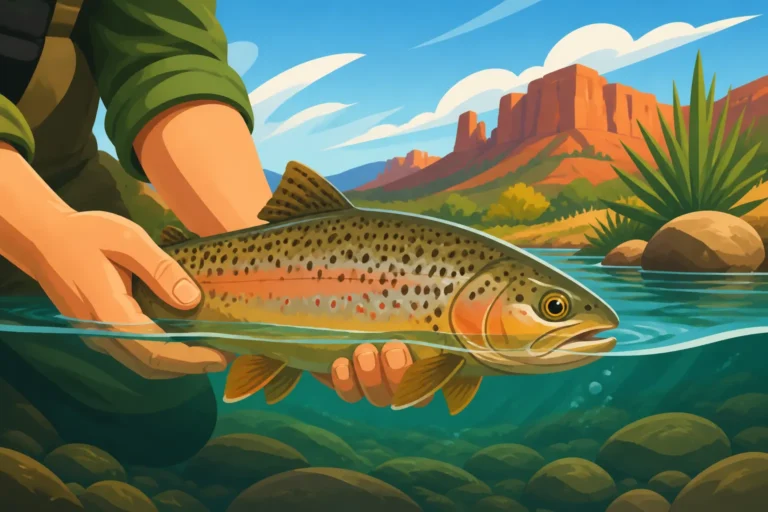
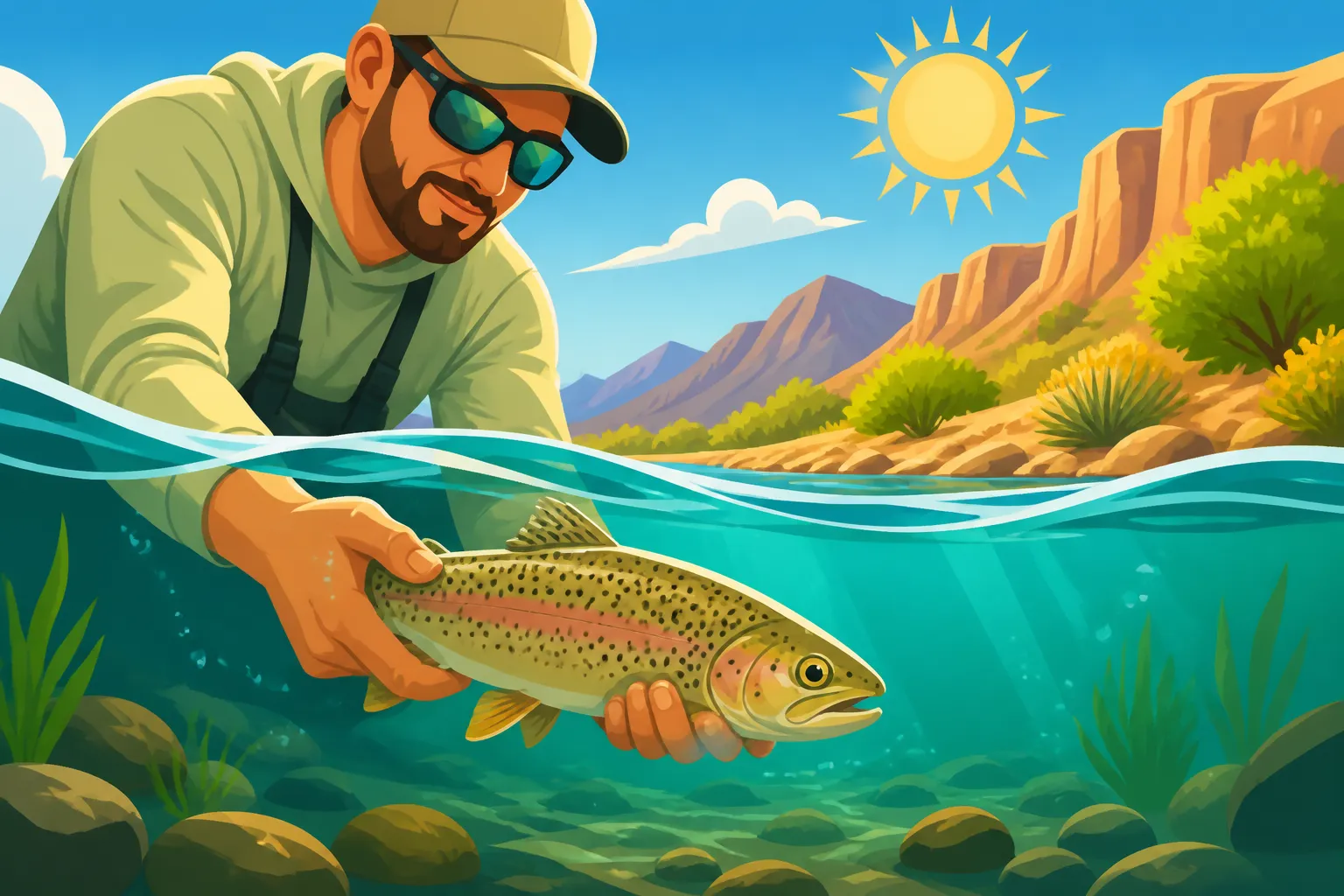
Once the hook is out, resist the urge to simply toss the fish back into the water. This can stun or disorient it, making it an easy target for predators or causing it to sink to the bottom without recovering. Instead, hold the fish gently in the water, supporting its belly and tail. Position it so water can flow over its gills, preferably facing into a gentle current if you're in a river. Avoid squeezing the fish, especially around the belly, as this can damage internal organs.
Allow the fish to orient itself. It might take a moment, especially if it's been through a tough fight. Let it kick its tail and regain its balance. When it feels ready, it will often give a strong tail flick and swim away under its own power. Your job is to facilitate this natural recovery, not force it. If it seems sluggish, proceed to the next step: revival. Remember, the core principle of Catch and Release Best Practices in New Mexico, especially in warm water, is minimal contact and maximum care.
Reviving Stressed Fish
Sometimes, a fish will be too exhausted to swim off immediately. This is where active revival comes in. While still holding the fish gently in the water, begin moving it slowly back and forth (if in still water) or simply holding it into the current (if in moving water). This gentle motion helps force oxygenated water over its gills, essentially giving it artificial respiration. Keep its head facing into the current. You'll often feel the fish's tail begin to flutter, and its fins will start to move more purposefully.
Continue this revival process until the fish actively tries to pull away from your hands. It might take a minute or two, or even longer for larger, more stressed fish. Be patient. If you release a fish that isn't fully recovered, it might just drift downstream or sink, becoming easy prey. Once it gives a strong kick and swims off with vigor, you've done your job. If you’re fishing a Warm Water Fishing Techniques for New Mexico-type scenario and the fish is showing extreme distress, you might have to extend this period significantly.
Monitoring After Release
Even after a seemingly successful release, it’s a good practice to take a moment and observe the fish. Watch to see if it swims purposefully away, or if it struggles to stay upright, swims erratically, or returns to the surface gasping. If you see signs of continued distress, and it's safe and practical to do so, try to gently re-net the fish and attempt the revival process again. Sometimes, a second, longer revival is all it takes to make the difference.
Monitoring not only helps that specific fish but also gives you valuable feedback on your techniques. If many of your released fish are showing signs of delayed mortality, it might be a signal to adjust your tactics – perhaps fish earlier in the day, use lighter tackle, or switch to a different location altogether. Being observant after the release is a commitment to responsible angling, ensuring your efforts truly contribute to the health of New Mexico's fisheries. This dedication is especially crucial when considering that every fish released in warm conditions faces an uphill battle to survival.
| Practice Category | Best Practices for Warm Water Release | Avoid These Practices |
|---|---|---|
| Timing & Location | Fish early morning/late evening; target deeper, shaded areas or tailwaters. Check water temperatures. | Fishing midday in direct sun; targeting shallow, stagnant coves; ignoring water temperature advisories. |
| Gear Selection | Use rubberized/knotless nets, long-nose pliers, hook removers, and barbless hooks. | Using abrasive, knotted nets; using fingers to remove hooks; fishing with barbed hooks on catch-and-release waters. |
| Fighting Fish | Use appropriately sized tackle; land fish quickly and efficiently (sprint, not a marathon). | Using ultralight gear for large fish resulting in prolonged fights; "horsing" fish in; prolonged exposure to air. |
| Handling Fish | Keep fish in the net and water as much as possible; support horizontally with two hands if lifting; minimize direct contact. | Lifting fish vertically by jaw/gills; dragging fish on hot surfaces (boat deck, rocks); excessive squeezing or rough handling. |
| Hook Removal | Remove hook quickly and gently with pliers/remover while fish is in water; cut line if hook is deeply swallowed. | Tearing deeply embedded hooks out; taking excessive time for hook removal; unnecessary air exposure during removal. |
| Release & Revival | Gently hold fish in water, facing current, until it actively swims away; revive stressed fish by moving slowly to oxygenate gills. | Tossing fish back; releasing a fish that is still disoriented or floating listlessly; abandoning a stressed fish without attempting revival. |
| Post-Release | Observe fish after release for signs of recovery; be prepared to re-net and revive if needed. | Assuming all released fish survive without observation; ignoring signs of delayed mortality. |
Disclaimer
This article is for general informational purposes only and does not constitute professional advice. Laws, prices and regulations vary by location and change over time. Consult a qualified professional for guidance on your specific situation.