How to Fish From a Kayak Safely on Big Reservoirs
Ever feel a little intimidated by the sheer size of New Mexico's big reservoirs like Elephant Butte Lake or Navajo Lake when you're thinking about kayak fishing? It's a completely valid concern! While kayak fishing offers an incredible connection to the water, tackling those vast, often windy, and sometimes busy lakes requires a different mindset and a solid safety plan. This guide is all about equipping you with the knowledge to safely and confidently navigate the beautiful but challenging waters of New Mexico's larger impoundments.
Understanding the Unique Challenges of Big Reservoirs for Kayak Anglers
Kayak fishing on smaller ponds or slow-moving rivers is one thing, but venturing onto a sprawling reservoir like Elephant Butte or Conchas Lake introduces a whole new set of variables that demand respect and careful preparation. These aren't just bigger versions of your local fishing hole; they have their own personalities and potential hazards that can quickly turn a peaceful day into a harrowing experience if you're not ready. The wide-open spaces, the rapid weather changes, and the presence of larger watercraft all contribute to a dynamic environment that requires heightened awareness and specific safety protocols. It's not about fear, but about being smart and proactive so you can truly enjoy your time on the water.
Dealing with Wind and Waves
Wind is perhaps the biggest adversary for kayak anglers on large reservoirs. What might feel like a gentle breeze on shore can quickly whip up into significant chop and whitecaps in the middle of a mile-wide lake. Imagine paddling against a strong headwind for an hour just to get back to the launch ramp, or worse, having your kayak swamped by unexpected swells. These conditions aren't just uncomfortable; they can be genuinely dangerous, especially if you're far from shore or feeling fatigued. The open expanses of lakes like Navajo Lake or Ute Lake offer little in the way of natural windbreaks, meaning conditions can change dramatically and without much warning.
This constant battle with the elements can quickly drain your energy, making you more susceptible to mistakes or accidents. Furthermore, larger waves can swamp smaller kayaks, compromise your balance, and make it incredibly difficult to paddle effectively or even cast a line. It’s crucial to understand how wind direction and speed forecasts translate to actual water conditions and to never underestimate their potential impact on your day.
Navigating Large Expanses and Open Water
The sheer scale of New Mexico's major reservoirs can be disorienting. What looks like a short paddle to a distant cove can turn into a multi-mile journey across open water, especially if you're fighting current or wind. Losing sight of familiar landmarks or misjudging distances is surprisingly easy when everything around you looks similar. This can lead to exhaustion, dehydration, or even getting truly lost if you don't have a plan. The vastness also means that help might be a long way off if you run into trouble.
When you're out on the main body of a lake, there's often no shallow water to retreat to, no immediate bank to pull over to, and nowhere to hide from a sudden thunderstorm. This necessitates a more strategic approach to navigation, including reliable mapping, understanding your capabilities, and knowing when to call it a day. The beauty of these expansive waters is undeniable, but it comes with the responsibility of being self-sufficient and prepared for long stretches of open-water travel.
Sharing Water with Larger Boats
Another significant challenge is sharing the water with motorboats, wakeboarders, jet skis, and even large houseboats. These vessels operate at much higher speeds and create significant wakes that can easily capsize a kayak. It's not uncommon to be peacefully casting only to have a large cruiser zoom by, leaving a wall of water in its wake. Their operators might not even see a low-profile kayak, especially in bright sunlight or choppy conditions. This requires constant vigilance and defensive paddling.
You need to assume that you are largely invisible to larger craft and proactively move out of their way, or at least brace for their wakes. During peak seasons, popular fishing spots on lakes like Heron Lake or Cochiti Lake can become quite busy with all sorts of recreational users, adding another layer of complexity to kayak safety. Understanding basic boating etiquette and common traffic patterns can help, but ultimately, your safety often rests on your ability to react to situations created by others.
Essential Safety Gear and Preparation for Kayak Fishing
Going out on big water in a kayak is not something to be taken lightly. It requires diligent preparation and a non-negotiable checklist of safety gear. Thinking ahead and packing smart means the difference between a minor inconvenience and a serious emergency. It's not about being paranoid; it's about being prepared for the unexpected, which is especially important when you're far from shore on one of New Mexico's beautiful, but sometimes unpredictable, reservoirs.
Personal Flotation Devices and Visibility
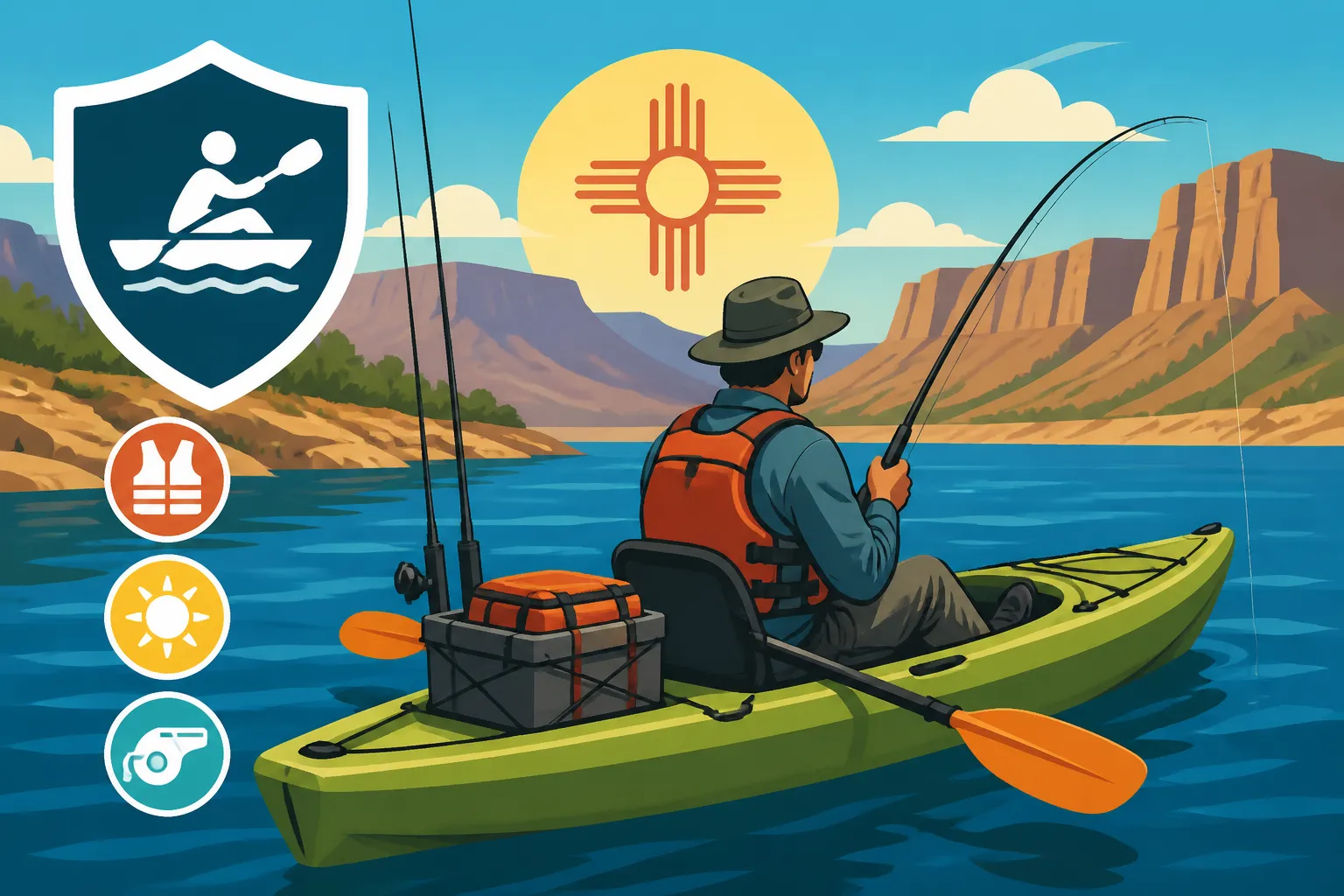
The most crucial piece of safety gear is a properly fitting Personal Flotation Device (PFD), often called a life jacket. It's not enough to just have it in your kayak; you must wear it. Even strong swimmers can be quickly overcome by cold water shock, injury, or fatigue, making a PFD your lifeline. Look for a PFD designed for paddling, which typically has high-back flotation to avoid interfering with your kayak seat and ample arm mobility. There are numerous comfortable options available, and a quick search on Amazon will show you a variety of choices designed specifically for anglers, often with pockets for small tackle or tools. Remember, the Life Jacket Requirements for New Mexico Boaters are there for a reason – your safety.
Beyond the PFD, enhancing your visibility is paramount. Kayaks sit low in the water, making them hard to spot by larger boats. Consider adding a bright safety flag on a tall pole, especially if you plan to fish in popular areas or cross open water. Brightly colored clothing, particularly fluorescent greens or oranges, can also make a significant difference. Some anglers even attach small, battery-operated strobe lights to their kayaks or PFDs, which are especially useful if you find yourself out on the water longer than planned or if a fog rolls in.
Communication and Emergency Tools
Having a reliable way to communicate is critical. While a cell phone is a good start, remember that service can be spotty on some parts of New Mexico's vast lakes, particularly in canyons or remote areas. A waterproof VHF marine radio is a far more reliable option for communicating with other boaters and emergency services. Even a small, handheld model can provide peace of mind. For truly remote excursions, a satellite messenger or personal locator beacon (PLB) offers the ability to send distress signals regardless of cell service. You can find a wide range of marine radios or satellite communicators on Amazon, ensuring you have the right tool for your specific adventures.
Beyond communication, a few other emergency tools are non-negotiable. A whistle is essential for attracting attention, especially if your voice is hoarse or wind-blown. Carry a good quality, waterproof flashlight or a Best Headlamp for Night Fishing in New Mexico, even if you don't plan to be out after dark. A small first-aid kit, securely stored in a dry bag, is also vital for addressing minor injuries before they become major problems. Always have a sharp knife or multi-tool for cutting lines, untangling snags, or other unexpected needs.
Weather Monitoring and Trip Planning
Never head out onto a big reservoir without checking the forecast thoroughly, and then continue to monitor it throughout the day. Conditions can change rapidly in New Mexico, with afternoon thunderstorms, sudden wind shifts, and temperature drops being common. Use multiple reliable weather sources, looking specifically at wind speed, wind direction, and chances of precipitation or storms. Apps and marine weather forecasts are your friends here.
Your trip planning should extend beyond just the weather. Tell someone on shore exactly where you are going, your expected return time, and what your backup plan is if conditions change. This "float plan" is incredibly important so that if you don't return, someone knows where to start looking. Familiarize yourself with the area you plan to fish, including potential bail-out points, boat ramps, and areas offering shelter from the wind. Knowing the Best Time of Year to Fish in New Mexico for specific species can also help you anticipate general weather patterns, but always check the daily forecast.
On-Water Tactics for Safe Kayak Fishing
Once you're on the water, having the right mindset and knowing how to handle your kayak in challenging conditions becomes paramount. It's not just about paddling; it's about making smart decisions that keep you safe and allow you to focus on the fishing. From how you paddle to how you anchor, every action has safety implications on a large reservoir.
Paddling and Anchoring Strategies
When paddling on large reservoirs, conserve your energy. Instead of constantly fighting the wind, learn to "ferry" across currents or paddle into the wind on your way out, so you have the wind at your back for the return journey. Shorter, more frequent strokes are more efficient than long, powerful ones, especially when battling conditions. If you're traveling long distances, hug the shorelines where possible for some wind protection and easier access to land if needed. Remember that a long paddle can quickly lead to fatigue, and fatigue is a primary factor in many boating accidents.
Anchoring safely is another key skill. Avoid anchoring directly in strong currents or heavy boat traffic, as a sudden surge could pull you sideways or capsize you. Use an anchor trolley system, which allows you to deploy and retrieve your anchor from either the bow or stern of your kayak without having to reach awkwardly or change your boat's orientation. This lets you "weather vane" into the current or wind, presenting a smaller profile and making your kayak more stable. Always use a proper anchor for the bottom type and size of your kayak, and ensure your anchor line is long enough – typically a 7:1 scope (7 feet of line for every 1 foot of water depth) is recommended for good holding power.
Situational Awareness and Avoiding Hazards
Constant situational awareness is your best defense on big water. Keep your head on a swivel, scanning for other boats, approaching weather changes, and potential hazards like submerged rocks, shallow areas, or floating debris. Sound signals are often more effective than shouting to get attention, so be ready with your whistle. If a large motorboat is approaching, make eye contact if possible, and be prepared to paddle out of their path or brace for their wake. Never assume they see you.
Pay close attention to changes in wind direction, cloud formations, and water color, which can all indicate shifting weather patterns. If you see dark clouds building or feel a sudden drop in temperature, it's often a sign to head back to shore. It's always better to cut a trip short than to get caught in dangerous conditions. Additionally, know the New Mexico Fishing Season Calendar and the busiest times for specific lakes to better anticipate traffic and plan your outings during quieter periods if possible.
Managing Your Catch and Gear Safely
Even landing a fish needs a safety consideration on a kayak. A thrashing fish, especially a larger one like a striped bass from Elephant Butte Lake, can easily knock gear overboard or even cause you to lose balance. Keep your landing net easily accessible and close by. When handling fish, practice good Catch and Release Best Practices in New Mexico if you're not keeping them, or have a stringer or a cooler like the Best Coolers for Keeping Fish Fresh in New Mexico ready if you intend to harvest.
Ensure all your gear is tethered or securely stowed. One lost rod or tackle box can be a major inconvenience, but a lost paddle or crucial safety equipment could be disastrous. Dry bags are invaluable for protecting electronics, extra clothes, and food. You'll find that many anglers use robust dry bags, often sourced from Amazon, to keep their essentials safe and dry. Keep your kayak uncluttered, providing clear space for paddling and moving around without tripping. Having a dedicated spot for everything makes it easier to find what you need quickly, especially in an emergency.
Choosing the Right Kayak and Accessories for Big Waters
Your choice of kayak and its outfitting plays a huge role in your safety and comfort on New Mexico's larger reservoirs. Not all kayaks are created equal, and what works well on a small pond might be a poor—or even dangerous—choice for open water. Investing in the right vessel and accessories is an investment in your safety.
Kayak Stability and Design
For big reservoirs, stability is king. Look for fishing kayaks that are wider and often longer than recreational models. Sit-on-top kayaks are generally preferred for fishing on open water because they are inherently more stable, easier to re-enter if you do capsize, and shed water more effectively. Many modern fishing kayaks are designed to be extremely stable, allowing anglers to even stand up to cast, which is a huge advantage for spotting fish and reducing fatigue. When researching the Best Kayaks for Elephant Butte Lake, you'll often see reviews for models available through retailers like Amazon, focusing on their stability and features for serious anglers.
Hull design also matters. A kayak with a flatter, wider hull will offer initial stability, while one with a more pronounced keel or pontoon-style hull will offer better secondary stability (how stable it feels once it starts to tip). Self-bailing scupper holes are a must for draining water that comes over the bow or sides. Propulsion systems beyond traditional paddles, such as pedal drives or even electric trolling motors, can also add a layer of safety by providing hands-free operation and faster means of escape if conditions turn sour or you're fighting a strong headwind.
Essential Accessories for Enhanced Safety
Beyond the kayak itself, several accessories can significantly boost your safety on big water. As mentioned, a visibility flag is non-negotiable. A reliable bilge pump (manual or battery-operated) is critical for removing water from your kayak if you take on waves or get swamped, even if your kayak has scupper holes, which can struggle with larger volumes of water.
A robust anchor system, often incorporating an anchor trolley, is vital for holding your position in wind or current, allowing you to fish effectively and safely. A paddle leash can prevent your paddle from floating away if you accidentally drop it or capsize. A small, high-quality air horn can also be an effective way to signal other boaters or alert someone to your presence if a whistle isn't cutting it. Even small items like specialized anchor systems or safety whistles are readily available on Amazon, making it easy to outfit your kayak with crucial safety gear. Finally, always have a spare paddle securely stowed. Breaking or losing your main paddle far from shore is a situation no angler wants to face.
| Item | Purpose | Notes |
|---|---|---|
| PFD (Life Jacket) | Essential flotation in case of capsize or emergency | Must be worn at all times; choose paddling-specific design. |
| Visibility Flag & Lights | Makes you visible to larger boats, day and night | Tall pole mount for flag; strobe lights for low light conditions. |
| VHF Marine Radio | Reliable communication with other boats/emergency services | Waterproof, handheld model recommended. Cell service unreliable. |
| Whistle/Air Horn | Auditory signal for attention | Attach to PFD or kayak; louder than voice. |
| Bilge Pump | Removes water from inside the kayak | Manual hand pump or small battery-operated pump. |
| Anchor System | Holds position in wind/current; includes anchor trolley | Proper anchor size for kayak, sufficient line length. |
| Paddle Leash | Prevents paddle loss if dropped or capsized | Securely tether your primary paddle. |
| Spare Paddle | Backup propulsion if primary paddle is lost or broken | Crucial for self-rescue or getting back to shore. |
| First-Aid Kit | Addresses minor injuries | Waterproof container, basic supplies. |
| Dry Bag | Protects electronics, clothes, and supplies | Keep essential items safe from water. |
| Knife/Multi-tool | Cutting lines, general utility | Sharp, accessible, preferably corrosion-resistant. |
| Weather App/Monitor | Real-time weather updates | Crucial for tracking changing conditions. |
Ultimately, kayak fishing on New Mexico's grand reservoirs offers unparalleled fishing opportunities and breathtaking scenery. By understanding the inherent challenges, meticulously preparing with essential safety gear, practicing smart on-water tactics, and choosing the right equipment, you can ensure your adventures are both rewarding and safe. Always prioritize your safety and never hesitate to turn back if conditions become too much to handle.
Disclaimer
This article is for general informational purposes only and does not constitute professional advice. Laws, prices and regulations vary by location and change over time. Consult a qualified professional for guidance on your specific situation.