How to Keep Trout Cool and Alive for Catch and Release
There's nothing quite like the thrill of feeling a strong trout on the end of your line, especially here in New Mexico's stunning waters. But for many of us who cherish these beautiful fish, the satisfaction comes not just from the catch, but from ensuring they swim away strong and healthy. It's incredibly frustrating when you've done everything right, only to worry if your released trout will survive. This guide is all about giving you the best, most practical tips and techniques to keep your trout cool and alive when practicing catch and release, making sure our New Mexico fisheries thrive for years to come.
Understanding Why Trout Need Special Care for Catch and Release
Trout, unlike some of their warm-water cousins, are incredibly sensitive creatures, particularly when it comes to stress and environmental factors. What might be a minor inconvenience for a bass can be life-threatening for a trout. Understanding their physiology is the first step in becoming a truly responsible catch-and-release angler.
The Delicate Nature of Trout
These cold-water warriors thrive in oxygen-rich, cool water. Their gills are highly efficient at extracting oxygen, but they are also very delicate, easily damaged by air exposure or rough handling. Think of their slime coat, that slick, protective layer on their skin, as their first line of defense against bacteria and parasites. When we handle them with dry hands or allow them to flop on abrasive surfaces, we strip away this vital protection, leaving them vulnerable to infection and disease. It's a bit like taking off a person's coat in winter – suddenly, they're exposed and susceptible. This is why minimizing physical contact and keeping them wet is paramount.
Moreover, trout have a surprisingly low tolerance for lactic acid buildup. A prolonged fight, especially in warmer water, causes their muscles to accumulate lactic acid, leading to what's often called "exhaustion." This isn't just a temporary tiredness; it can be fatal. The fish may swim away seemingly fine, only to perish hours later due to organ failure caused by metabolic stress. This hidden mortality is a silent killer, and it's why every moment of the catch-and-release process counts. Our goal is to make the entire experience as quick and stress-free as possible for the fish.
Stressors in Catch and Release
The journey from hook-set to release is fraught with potential stressors for a trout. One of the biggest culprits is air exposure. Imagine trying to run a marathon while holding your breath for extended periods – that's what it's like for a trout out of water. Even a few seconds of gasping for air can cause significant gill damage and oxygen deprivation, reducing their chances of survival. This is especially true on sunny, windy days where their delicate gills dry out even faster.
Another major stressor is water temperature. New Mexico can get incredibly hot, and while our high mountain lakes and tailwaters often stay cool, other waters can warm up quickly in summer. Trout struggle immensely in water above their preferred temperature range (typically 50-65°F for most species). When you combine warm water with the physical exertion of a fight, their chances of survival plummet. Their metabolism is already stressed by the heat, and the added lactic acid buildup from a fight can be overwhelming. This is why many anglers advocate for not fishing for trout at all when water temperatures climb too high.
Finally, rough handling is a huge issue. Squeezing a fish, dropping it, or allowing it to thrash around on rocks or dry ground inflicts immediate physical trauma and strips away that crucial slime coat. Even handling with dry hands can feel like sandpaper to their delicate skin. The goal is always a gentle, minimal, and wet touch, ensuring we leave them with the best possible odds of recovery.
Essential Gear for Responsible Catch and Release
Being prepared with the right tools makes all the difference in a successful, low-stress catch and release. You don't need a tackle shop full of gadgets, but a few key items are non-negotiable for the ethical angler. Having the right gear not only helps the fish, but it also makes the release process smoother and more enjoyable for you.
Landing Nets and Tools
The right landing net is probably your single most important piece of catch-and-release gear. Forget those old string nets that strip fish of their protective slime and tangle hooks. You need a rubberized or knotless nylon net. These nets cradle the fish gently, protect its slime coat, and prevent hooks from getting hopelessly snagged, which often leads to prolonged handling. Brands like Fishpond or Orvis offer excellent rubber nets, many of which you can find on Amazon. Always make sure your net is large enough to comfortably hold the trout you expect to catch. A good rule of thumb is to get a net that looks almost too big for the fish you're targeting; it makes landing and handling much easier.
Beyond the net, a pair of long-nosed pliers or hemostats (forceps) is crucial for quick hook removal. Even with barbless hooks, sometimes a hook can be deeply embedded or difficult to grasp with fingers alone. Having a dedicated tool allows you to remove the hook efficiently, minimizing the time the fish is out of water or being handled. Always carry a pair with you, readily accessible, so you're not fumbling for them when a fish is on the hook. For those tiny flies, a pair of small, curved forceps can be a lifesaver. You can also find specialized hook removers that make the process even easier, especially for gut-hooked fish.
Thermometers and Hydration
Carrying a water thermometer might seem excessive, but it's an incredibly powerful tool for responsible trout fishing, especially in warmer months. A simple, inexpensive thermometer allows you to gauge the water temperature before you even start fishing. If the water is approaching or exceeding 68°F (around 20°C), it's generally best to reconsider targeting trout. As we discussed, warm water already stresses trout, and fighting them in these conditions drastically reduces their survival rate. Knowing when to simply not fish is perhaps the most ethical choice you can make.
Another simple but often overlooked hydration tip is to always wet your hands before touching a trout. Dry hands will strip off that vital slime coat, leaving the fish exposed to pathogens. It takes just a second to dip your hands in the water before you handle the fish, but it makes a world of difference to their health. This also applies to any surfaces the fish might touch, like boat decks or rocks – always wet them down first if a fish accidentally comes into contact with them. Some anglers even keep a small spray bottle handy for this purpose, especially when fishing from a boat.
Proper Rod and Line Selection
Choosing the right rod and line might not seem directly related to keeping a fish alive, but it plays a critical role in minimizing the fight time. The longer a trout fights, the more lactic acid builds up in its muscles, leading to exhaustion and a reduced chance of survival. A rod that is too light for the fish you're targeting will result in extended battles, particularly with larger trout found in waters like the San Juan River Quality Waters Section.
For most trout fishing, a medium-light to medium action rod with a line strong enough to subdue the fish quickly is ideal. If you're using too light a line, you'll be forced to "play" the fish for much longer, which is exciting for you but potentially fatal for the trout. Aim for a balance: gear that provides a good fight without prolonging it unnecessarily. For fly anglers, matching your rod and line weight to the size of trout and the water conditions is standard practice for a reason. Using appropriate leader and tippet strength, as discussed in Best Leader Length for San Juan River Nymphing, is also essential to land fish efficiently without breaking off too frequently.
Spin fishermen might opt for a 6-7 foot rod with 4-6 pound test line, depending on the average size of fish and density of cover. The goal is to gain control of the fish quickly, guide it into your net, and release it with minimal stress. This doesn't mean "horsing" the fish in, but rather applying steady, firm pressure to bring it to hand (or net) as efficiently as possible.
Mastering Handling Techniques for Trout Survival
Once you've hooked a trout, the next few moments are critical. How you handle the fish directly impacts its chances of survival. The key is to be quick, gentle, and keep the fish in its element as much as possible. It's about respecting the creature you've just engaged with and giving it the best shot at thriving after release.
Minimizing Air Exposure
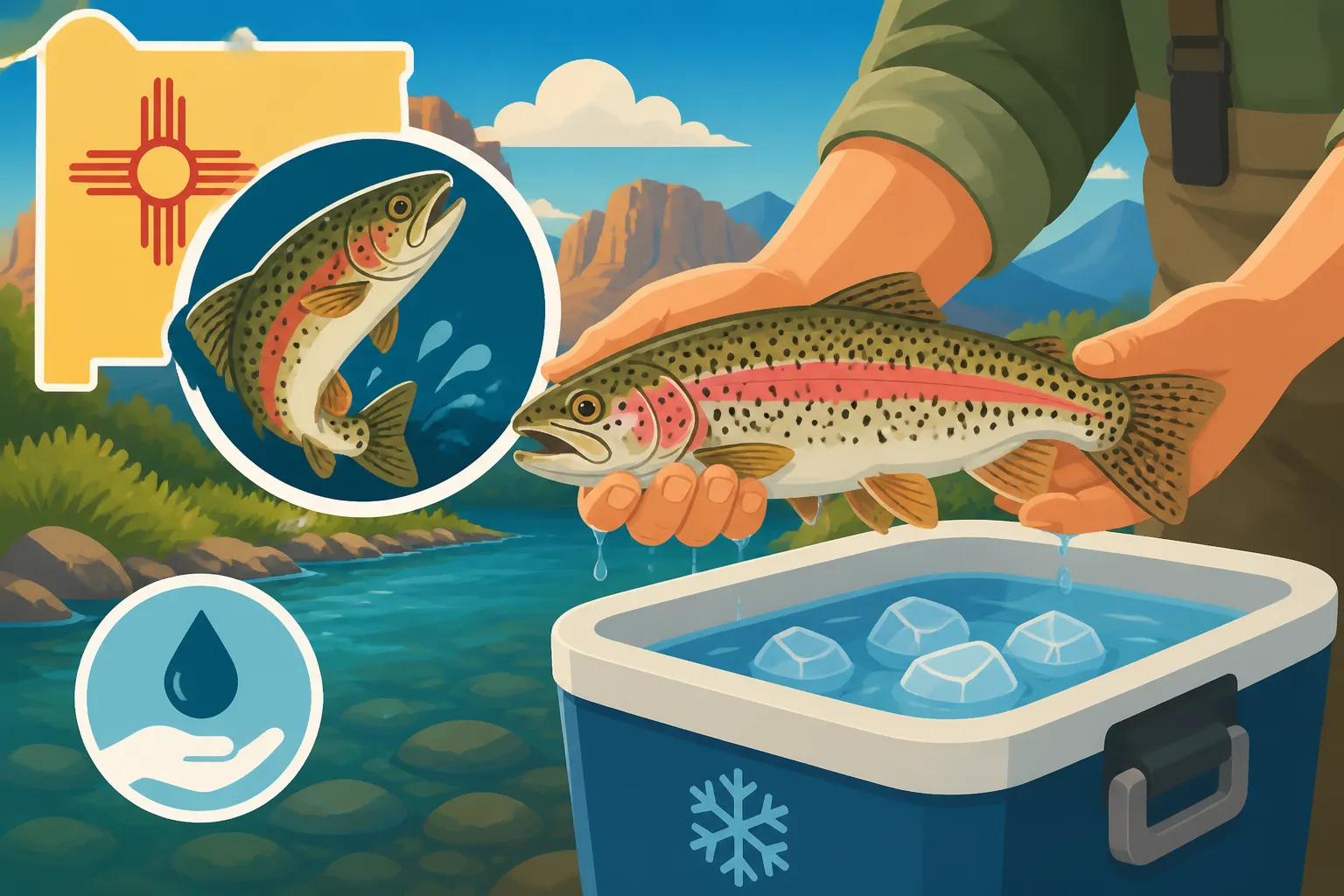
This is probably the single most important rule for catch-and-release trout fishing: keep the fish in the water. Trout need water to breathe, just like we need air. Every second they spend out of water causes them distress and gill damage. When you land a fish, guide it into your net while it's still submerged. Perform all hook removal, admiration, and any photos with the fish still in the water. If you must lift it for a quick picture, do so for only a few seconds, holding it horizontally and supporting its full weight, then immediately return it to the water.
Avoid letting the fish flop around on the bank, in your boat, or anywhere dry. This not only rubs off their protective slime coat but can also cause serious internal injuries or eye damage. Many experienced anglers in places like the San Juan River Special Trout Water Section will even unhook fish entirely while they are still in the net, submerged in the current. This takes practice but is the gold standard for minimal air exposure.
Remember, the moment you lift a trout from the water, you are putting it at risk. Be prepared to handle it quickly, gently, and with purpose. Having your pliers or hemostats ready, along with a plan for a quick photo (if desired), will greatly reduce the time the fish is gasping for air. The quicker it's back in the oxygenated water, the better its chances.
The Gentle Touch: Wet Hands and Proper Grip
As mentioned earlier, wet hands are essential. Before you even think about touching the fish, dunk your hands in the water. This prevents you from stripping away the trout's protective slime coat, which is vital for disease prevention. Once your hands are wet, you'll want to use a gentle, supportive grip.
The best way to hold a trout is horizontally, supporting its belly and tail. Avoid squeezing its midsection or gills. Never lift a trout vertically by its jaw or by its tail alone, as this can cause severe damage to its spine and internal organs. The "tail grab" is often effective for control, but always make sure the other hand supports the fish's weight near its belly, particularly for larger trout. If you're trying to get a quick photo, keep the fish low over the water, so if it slips, it falls back into its element rather than onto a hard surface.
If you're fishing for species like New Mexico's State Fish, the Rio Grande Cutthroat, these native fish are particularly sensitive, and extra care should be taken. Gentle handling extends beyond just your hands; it also means not letting the fish bounce or thrash excessively in the net. Keep the net submerged and calm the fish down before attempting hook removal.
Quick Hook Removal
Speed and efficiency are key when it comes to hook removal. Using barbless hooks is a game-changer here. Many of New Mexico's most sensitive fisheries, including specific sections of the San Juan River, actually require barbless hook fishing technique for New Mexico rivers for this very reason. A barbless hook slides out with minimal effort, reducing stress and injury to the fish. If you're using barbed hooks, consider pinching the barb down with your pliers before you even start fishing. It makes a huge difference.
Once the fish is in your net (and still in the water!), use your long-nosed pliers or hemostats to grasp the shank of the hook. Twist or back the hook out carefully. Avoid tearing at the fish's mouth. If the hook is deeply embedded or the fish is very feisty, prioritize getting the hook out quickly. Sometimes, it's better to cut the line as close to the hook as possible rather than prolonging the struggle. A hook left in a fish will often rust out, or the fish's immune system will encapsulate it, especially if it's a small, barbless hook made of non-corrosive material.
If you find yourself with a deeply gut-hooked fish, particularly if it's bleeding from the gills, the kindest thing to do is often to cut the line and release the fish. Trying to extract a deeply swallowed hook can cause more harm than good, leading to internal damage that is almost certainly fatal. This is a tough decision to make, but it prioritizes the fish's welfare over potentially recovering a piece of tackle.
Strategies for Catch and Release in Challenging Conditions
Not all fishing days are ideal, and sometimes, environmental factors make catch and release even more critical. Understanding how to adapt your approach to conditions like warm water or deeply hooked fish can significantly impact trout survival rates. Being proactive and making informed decisions is part of being a responsible angler.
Warm Water Considerations
Warm water is arguably the biggest enemy of catch-and-release trout survival. As ambient temperatures rise, so do the temperatures of our rivers and lakes. Trout are cold-water species, meaning their bodies are not equipped to handle prolonged exposure to warm water, especially when stressed from a fight. Their oxygen demands increase, while the oxygen content of the water decreases, creating a deadly double whammy. It's why anglers often see reduced trout activity and higher mortality rates when temperatures spike.
If you're fishing in New Mexico and the water temperature begins to climb above 65°F (around 18°C), it's a strong signal to consider switching to a different species or, better yet, finding cooler water. Above 68°F (20°C), it's generally best to cease trout fishing altogether. Even if a trout swims away, it might succumb to delayed mortality due to the immense physiological stress. This is often called "hugging the bank" or "running the heat" – essentially, not fishing for trout during the hottest parts of the day or year. Knowing the Best Time of Day to Catch Trout in Summer Heat can help you target cooler periods.
In some cases, local fishing regulations might even institute voluntary or mandatory hoot owl closures during extreme heat, where fishing for trout is prohibited during the hottest hours of the day. Always check local regulations and conditions before you head out, especially if you're exploring Best Places to Fish in New Mexico during the summer. Your thermometer is your best friend in these situations, helping you make an ethical choice for the trout.
Deep Hooking and When to Cut the Line
Despite our best efforts, sometimes a trout will swallow a hook deeply. This is a common and frustrating situation, especially if you're using bait, as fish are more likely to ingest it completely. When a hook is lodged in the gills or throat, attempting to extract it can cause severe internal damage, often resulting in fatal bleeding. This is where the difficult decision comes in.
If a trout is deeply hooked and you see blood, particularly from the gills, the most humane action is usually to cut your line as close to the hook as possible and release the fish immediately. Do not try to yank the hook out or dig around with pliers. While it might feel counterintuitive to leave a hook in a fish, research suggests that a hook left in place will often dissolve, or the fish's immune system will encapsulate it, allowing the fish a higher chance of survival than if you attempt a traumatic extraction. This is especially true with non-stainless steel hooks.
To minimize the chances of deep hooking, consider using artificial lures or flies that are less likely to be swallowed. If using bait, use circle hooks, which are designed to hook fish in the corner of the mouth, or strike quickly at the first sign of a bite. Being vigilant and responsive can help prevent this unfortunate scenario from happening in the first place, ensuring that your New Mexico Trout Fishing Rules are followed with care.
Reviving a Tired Trout
After a particularly long fight or in challenging conditions, a trout might appear lethargic or unresponsive upon release. It might be floating on its side or struggling to swim away. This is your cue to intervene and help it revive. The process is simple but requires patience.
Hold the trout gently, facing it upstream into a moderate current. Water flowing over its gills will help oxygenate them. Do not push the fish back and forth, as this can force water in the wrong direction and further injure its gills. Instead, hold it still, supporting its belly, and let the natural current do the work. You'll feel the fish start to "kick" or stiffen as it regains strength. Watch for its gills to begin a steady, rhythmic movement.
Continue holding the fish until it can maintain its equilibrium and actively tries to swim away from your hands. This might take a few minutes, especially for larger fish or those caught in warmer water. When it shows signs of wanting to go, gently release your grip and allow it to swim off under its own power. Sometimes a quick, strong tail flick is all it takes to signal readiness. A healthy release means the fish swims away strongly, not merely drifts away. This revival technique is vital, particularly when fishing for species like Rainbow Trout Fishing in New Mexico which are regularly stocked and often subject to more angling pressure.
Beyond the Release: Ethical Angling Practices
Catch and release isn't just a set of techniques; it's a mindset that prioritizes the health of the fishery above all else. It's about being a steward of our natural resources and ensuring that future generations can enjoy the same incredible fishing experiences we do today in New Mexico.
Understanding Trout Behavior and Habitat
Knowing where trout live and how they behave can greatly aid in minimizing stress during catch and release. Trout are often found in specific types of water – cold, clean, and oxygenated, with plenty of cover. Understanding their preferred lies means you can often target them more effectively, leading to quicker hook-sets and shorter fights. For example, knowing that trout might hide in deeper pools during sunny days or behind structure in current can inform your approach. This knowledge can also help you avoid areas where fish might be overly stressed, such as shallow, warm stretches of a river. Learning about the different Trout Species in New Mexico can further refine your understanding of their specific needs.
Furthermore, being aware of spawning seasons is crucial. While not always regulated, disturbing trout on their redds (spawning beds) can severely impact future populations. During these times, trout are already under immense physiological stress, and being caught only exacerbates it. Many ethical anglers choose to avoid fishing for spawning trout altogether, giving them the peace they need to reproduce successfully. This commitment to understanding and respecting the fish's natural life cycle is a hallmark of truly responsible angling.
Knowing When Not to Fish
Perhaps the most important, yet often overlooked, aspect of ethical catch and release is the decision of when not to fish. There are times when environmental conditions make successful catch and release highly unlikely, and continuing to fish becomes detrimental to the trout population. As we touched on, high water temperatures are a prime example. If your thermometer reads too high, hanging up your rod for the day is the most responsible choice you can make. This is especially true for delicate species like Gila Trout in New Mexico, which are native and often found in sensitive ecosystems.
Other factors, like extreme low water conditions or significant environmental disturbances (such as a recent wildfire runoff), can also stress fish populations. If the fish aren't actively biting, it might be a sign that conditions are already unfavorable for them. Instead of pressuring them, take the opportunity to scout new areas, practice casting, or simply enjoy the natural beauty of New Mexico. The fish will still be there when conditions improve. This mindful approach ensures that our passion for fishing doesn't inadvertently harm the very resources we cherish.
Becoming a truly responsible angler means integrating these practices into every fishing trip. It's a continuous learning process, but one that significantly contributes to the sustainability and health of New Mexico's incredible fisheries.
Catch and Release: Do's and Don'ts
| Do's for Trout Survival | Don'ts for Trout Survival |
|---|---|
| Do use a rubberized or knotless net. | Don't use string nets (damages slime coat). |
| Do wet your hands before touching fish. | Don't handle fish with dry hands. |
| Do keep fish in the water as much as possible. | Don't allow fish to gasp for air or flop on dry surfaces. |
| Do use long-nosed pliers or hemostats. | Don't use fingers to dig out hooks. |
| Do use barbless hooks or crimp barbs. | Don't use barbed hooks without crimping. |
| Do support fish horizontally, cradling belly. | Don't lift fish vertically by jaw or tail only. |
| Do revive a tired fish by facing it upstream. | Don't push fish back and forth to revive. |
| Do carry a water thermometer. | Don't fish for trout in warm water (above 68°F/20°C). |
| Do cut the line on deeply gut-hooked fish. | Don't attempt to extract deeply swallowed hooks. |
| Do choose appropriate rod/line to minimize fight time. | Don't use ultralight gear that prolongs the fight. |
Disclaimer
This article is for general informational purposes only and does not constitute professional advice. Laws, prices and regulations vary by location and change over time. Consult a qualified professional for guidance on your specific situation.