Why Are Barbless Hooks Required on the San Juan River?
It can be incredibly frustrating to arrive at a world-renowned fishing spot like New Mexico's San Juan River, only to find out there's a specific rule about your hooks – barbless only! You might wonder, "Why are they making things harder?" This guide will clear up that common confusion, diving deep into the reasons behind the barbless hook requirement on the San Juan River and how it helps protect this incredible fishery for everyone.
Understanding the San Juan River Quality Waters
The San Juan River, particularly the stretch below Navajo Dam, is nothing short of legendary among anglers. It's not just a good fishing spot; it's often hailed as one of the best trout fisheries in North America. But with such a reputation comes a responsibility to protect it, which is where many of the unique regulations come into play.
A World-Class Fishery with Unique Rules
Imagine a river teeming with robust, healthy trout, many of them pushing impressive sizes, finning in crystal-clear, cold water. That's the San Juan River Quality Waters. This section of the river, roughly from the dam downstream for about three and a half miles, is meticulously managed by the New Mexico Department of Game and Fish. Its fame isn't accidental; it's the result of stable water temperatures from the deep release of Navajo Dam, an incredibly rich aquatic insect population, and management practices designed to foster a truly exceptional wild trout fishery. Anglers travel from all over the globe, eager to test their skills against these magnificent fish. This intense angling pressure, while a testament to the river's quality, also means that every decision about regulations needs to be carefully considered to prevent over-stressing the fish population. For those looking to understand the broader framework, our guide on New Mexico Fishing Regulations Overview offers a great starting point for statewide rules, but the San Juan is indeed special.
The Philosophy Behind Special Regulations
The philosophy behind the strict rules on the San Juan River Quality Waters boils down to one core principle: sustainability. When you have a limited resource that is highly prized and heavily utilized, you have to implement measures to ensure it remains healthy and productive for generations to come. The trout here are predominantly wild, meaning they reproduce naturally in the river rather than relying solely on stocking programs. This makes their well-being even more critical. Every regulation, including the requirement for barbless hooks, is designed to minimize the impact of human activity on the fish and their habitat. It's about conservation, yes, but also about maintaining the quality of the angling experience – ensuring there are always plenty of big, feisty trout for everyone to enjoy. These special rules are a key part of what makes the San Juan River Special Trout Water Section such a renowned destination.
The Critical Role of Barbless Hooks
Now, let's get to the heart of the matter: why barbless hooks? It's not about making fishing harder; it's fundamentally about protecting the fish once they've been caught, especially in a fishery where catch-and-release is so prevalent and vital.
Minimizing Harm to Trout
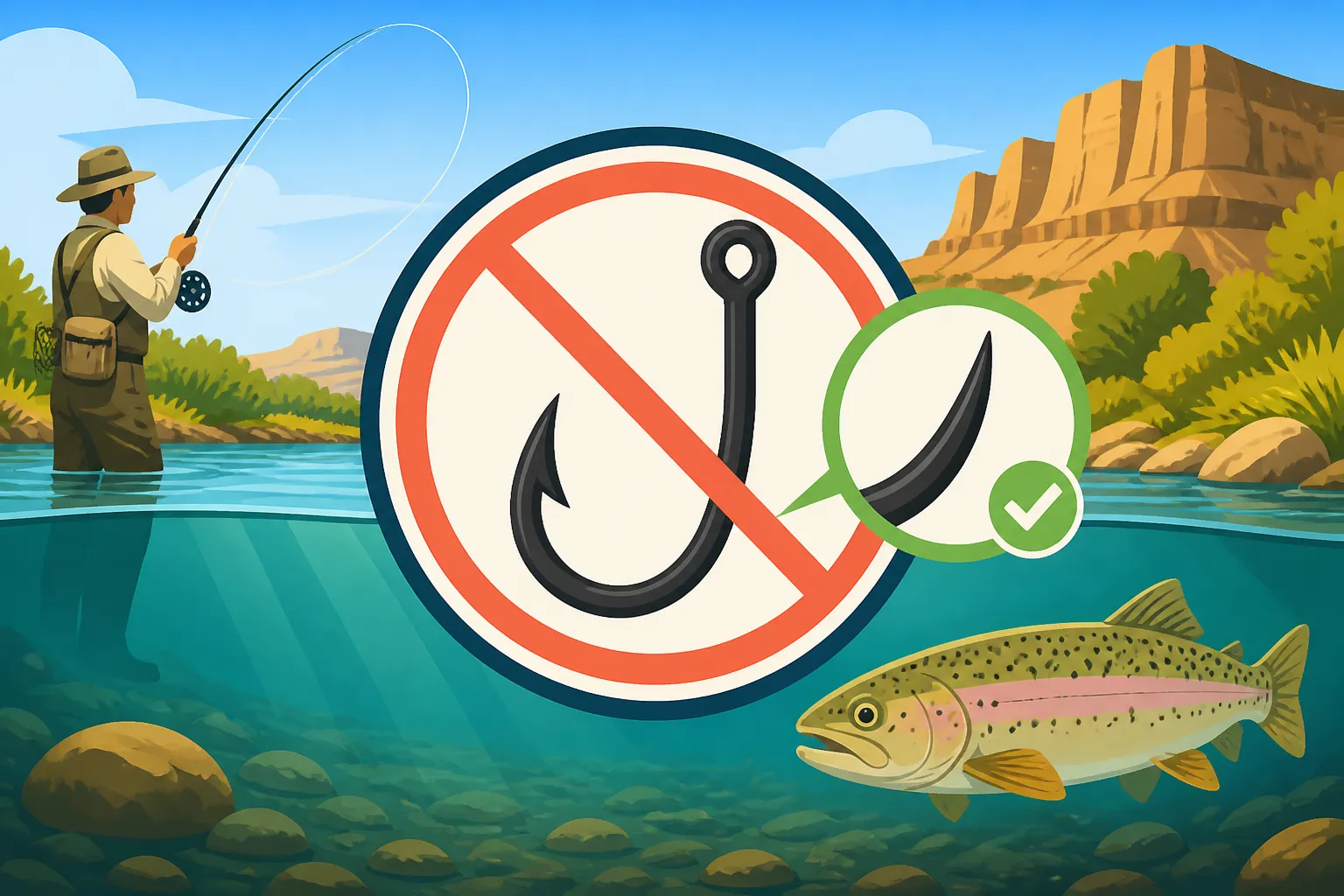
When a barbed hook pierces a fish's mouth, the barb acts like a tiny anchor, designed to prevent the hook from slipping out. While this is great for landing fish, it becomes a problem when you intend to release that fish. The barb often causes a larger, more ragged wound as it's pulled free, tearing delicate tissues in the fish's mouth, gills, or even eyes if the hook is swallowed deep. These injuries can lead to infection, difficulty feeding, or even direct mortality after release.
Think about it this way: imagine pulling a splinter from your finger. If it's a smooth piece of wood, it slides right out. If it has a tiny barb, it snags and tears. It's the same principle for a trout. A barbless hook, on the other hand, can usually be removed with minimal effort and without causing additional tissue damage. It slides out cleanly, leaving a smaller, less traumatic puncture wound that heals much faster. This significantly reduces the stress on the fish and its chances of post-release mortality. This focus on fish welfare is a cornerstone of Catch and Release Best Practices in New Mexico.
Enhancing Catch and Release Success Rates
The San Juan River is largely a catch-and-release fishery for many anglers, given the size and quantity of trout. For catch-and-release to be effective, the released fish must survive and thrive. Barbless hooks are a game-changer for enhancing these success rates. When you can remove a hook quickly and easily, you drastically reduce the time the fish is out of the water or being handled. Every second a trout is exposed to air, or struggling against a hook, increases its stress levels and depletes its energy reserves.
With a barbless hook, an experienced angler can often remove the hook while the fish is still in the water, sometimes without even touching the fish, using a simple pair of forceps or pliers. This quick, gentle release means the fish expends less energy, suffers less physical trauma, and is back in its oxygen-rich environment almost immediately. This allows it to recover faster and significantly improves its chances of surviving to be caught another day. Studies have consistently shown that fisheries implementing barbless hook rules see a noticeable increase in the survival rates of released fish, making it a key component in maintaining the health and vitality of a prized wild trout population like the San Juan's. Learning the Barbless Hook Fishing Technique for New Mexico Rivers is a skill every angler should master here.
Practical Implications for Anglers on the San Juan
So, you understand why barbless hooks are essential. Now, let's talk about the how and what it means for your actual fishing trip. It's easier than you might think!
How to "Barbless" Your Hooks
The good news is that you don't necessarily need to go out and buy a whole new set of hooks. While many fly shops and online retailers like Amazon sell pre-barbless hooks, it's incredibly simple to convert your existing barbed hooks. All you need is a good pair of needle-nose pliers or hemostats.
Here’s a quick rundown:
- Identify the Barb: Look closely at your hook point. You'll see a small, sharp protrusion just behind the point. That's the barb.
- Grip Firmly: Use your pliers to grip the barb firmly against the shank of the hook. Don't grip the point; you want to press the barb down.
- Squeeze: Apply steady pressure, squeezing the barb until it flattens completely against the hook shank. You want it to be as smooth as possible.
- Inspect: Run your finger gently along the hook point. It should feel smooth, with no noticeable bump or snag where the barb used to be. If you feel any resistance, squeeze again.
It's a quick process, and you can "barbless" a whole box of hooks in just a few minutes before you even head out to the river. It's a small investment of time that makes a huge difference for the fish. This simple adjustment ensures you're ready for the Hook Requirement in San Juan River Special Trout Water.
The Experience of Fishing with Barbless Hooks
Many anglers initially worry that fishing with barbless hooks will lead to losing a lot more fish. It's a valid concern, but the reality for most seasoned anglers is that the difference is often negligible, especially once you adjust your technique slightly.
Here's what you'll find:
- Initial Learning Curve: You might lose a fish or two initially as you get used to it. The key is to keep tension on the line and apply steady pressure. Don't "horse" the fish in; let your rod and reel do the work.
- Enhanced Feel: Some anglers even find that barbless hooks provide a more direct "feel" for the fish, leading to a more engaging fight.
- Easier Release: The biggest benefit you'll immediately appreciate is the ease of releasing fish. No more struggling to dig a barb out of a fish's mouth, risking harm to both the fish and yourself. It's quicker, cleaner, and less stressful for everyone involved.
- Ethical Satisfaction: There's a deep satisfaction that comes with knowing you're doing your part to protect a precious resource. Fishing the San Juan with barbless hooks isn't just a rule; it's a commitment to responsible angling.
Once you get the hang of it, fishing with barbless hooks becomes second nature, and the peace of mind knowing you're minimizing harm to those beautiful San Juan River trout is truly rewarding.
Beyond Barbless Hooks: Other San Juan River Rules to Know
The barbless hook rule is just one piece of the puzzle on the San Juan Quality Waters. To truly understand and respect this unique fishery, it's important to be aware of the other specific regulations that work in conjunction with it.
Artificial Lure and Fly Only
This is another significant regulation on the San Juan River Quality Waters, and it goes hand-in-hand with the barbless hook requirement. The rule means you can only use artificial flies or lures made of metal, plastic, or wood. Live bait, like worms, minnows, or even dough baits, is strictly prohibited.
Why this rule?
- Prevents Deep Hooking: Fish are much more likely to swallow natural bait deeply, leading to internal injuries that are often fatal, even with a barbless hook. Artificial lures and flies are typically mouth-hooked.
- Maintains Natural Environment: It reduces the introduction of non-native species or diseases that could be present in live bait.
- Reduces "High-Grading": When using bait, anglers might catch and release many small fish while waiting for a larger one, increasing stress on the smaller fish. Artificials generally lead to a more targeted approach.
- Supports the Ecosystem: It promotes a fishing style that respects the natural food sources and behaviors of the wild trout, rather than relying on readily available, unnatural sustenance.
This regulation, along with the barbless hook rule, reinforces the catch-and-release ethic and helps preserve the integrity of the San Juan's aquatic ecosystem. If you're planning a trip, consider our deep dive into Fly Selection for New Mexico's San Juan River to get a head start.
Bag and Possession Limits
On the San Juan River Quality Waters, the bag and possession limits are incredibly stringent, primarily aiming for catch-and-release to ensure the population's health. Specifically, for trout, anglers are typically restricted to keeping very few, if any, fish, and often only those within a very narrow size slot, if allowed at all. Many sections are pure catch-and-release for trout.
This stringent approach serves several critical purposes:
- Protects Spawning Stock: By limiting the harvest of mature, breeding-size fish, the regulations ensure a robust population can continue to reproduce naturally.
- Maintains Trophy Potential: With high survival rates and minimal harvest, the fish have the opportunity to grow to impressive sizes, which is a major draw for anglers.
- Distributes the Resource: It ensures that the incredible fishing experience is shared among a greater number of anglers over time, rather than being depleted by excessive harvest.
It’s crucial to always consult the current New Mexico Fishing Regulations guide before you go, as specific limits can vary slightly or be updated. However, the general principle on the San Juan River Quality Waters remains: it's a place to enjoy the thrill of the catch, appreciate the beauty of the fish, and then release them to fight another day. Beyond the Quality Waters section, rules might differ, so check out the full New Mexico Fishing Regulations Overview for comprehensive details.
Summary of Barbless Hook Benefits on the San Juan River
To quickly recap why barbless hooks are so important on the San Juan River, take a look at this table outlining the key benefits for both fish and the fishery:
| Aspect | With Barbed Hooks | With Barbless Hooks | Benefit for Fish/Fishery |
|---|---|---|---|
| Fish Injury | Larger, more ragged wounds; tissue tearing | Minimal, clean puncture wounds | Less trauma, faster healing, reduced infection risk |
| Stress on Fish | Prolonged handling/struggle during hook removal | Quick, easy hook removal; less handling | Lower stress, more energy for recovery |
| Survival Rate | Decreased chance of post-release survival | Significantly increased chance of survival | Healthy, thriving trout population for future angling |
| Release Time | More time spent removing hook | Faster release, often in-water | Fish back in oxygenated water sooner |
| Angler Experience | Can be difficult/frustrating to remove hooks | Smoother, quicker release; ethical satisfaction | Easier for angler, promotes conservation ethic |
| Fishery Management | Higher mortality impacts wild populations | Supports sustainable, wild trout fishery | Sustains San Juan River's world-class reputation |
This isn't just about following rules; it's about being a responsible steward of one of New Mexico's most precious natural treasures.
Final Thoughts on Ethical Angling
Fishing the San Juan River Quality Waters with barbless hooks and artificial lures might feel a little different at first, but it quickly becomes second nature. The peace of mind that comes from knowing you're doing your part to protect these magnificent trout and ensure the health of this world-class fishery is truly rewarding. It's a small adjustment that has a monumental impact on the future of angling in New Mexico. So, embrace the barbless movement, enjoy the incredible fishing, and help keep the San Juan River truly special for generations of anglers to come.
Before you head out, make sure you're up to date on all the rules. A great resource is the comprehensive guide on New Mexico Fishing License Guide which covers everything from licensing to specific regulations. Also, understanding New Mexico Trout Fishing Rules will serve you well on the San Juan and other premier trout waters across the state. Remember, whether you're fly fishing with tiny nymphs – perhaps trying some Nymph Fishing on the San Juan River – or throwing small spinners, the barbless rule applies.
Disclaimer
This article is for general informational purposes only and does not constitute professional advice. Laws, prices and regulations vary by location and change over time. Consult a qualified professional for guidance on your specific situation.