Fishing New Mexico’s Tailwaters
New Mexico's tailwaters offer some of the most consistent and productive fishing opportunities in the state, yet understanding their unique characteristics and the specific tactics required can be incredibly challenging. The consistent flows and stable temperatures below dams create a distinct ecosystem that demands a specialized approach, often leaving anglers frustrated if they apply general river fishing techniques. This comprehensive guide is designed to demystify fishing New Mexico's tailwaters, providing you with the knowledge and strategies to confidently tackle these unique and rewarding fisheries.
Understanding New Mexico's Tailwaters
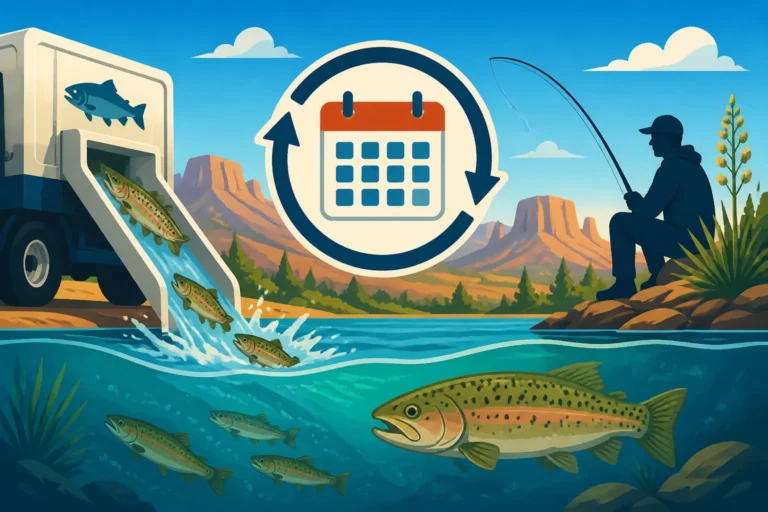
Tailwaters are essentially sections of rivers located immediately downstream from dams or large reservoirs. While many rivers in New Mexico can be highly seasonal, fluctuating wildly with spring runoff or drying up during drought, tailwaters offer a much more stable environment. This stability is precisely what makes them so attractive to both fish and anglers, providing reliable conditions even when other waters are unfishable.
What Makes a Tailwater Unique for Fishing?
The magic of a tailwater lies in its consistent water flow and temperature. Water released from the bottom of large reservoirs, like those found at Navajo Dam or Cochiti Dam, is typically cold and nutrient-rich, regardless of the surface temperature of the lake or the air temperature above. This consistent cold water is ideal for trout, allowing them to thrive year-round, even in warmer climates where other trout streams might struggle. The steady flow also means a more predictable environment for aquatic insects, leading to prolific hatches that provide a constant food source. Unlike freestone rivers that can become muddy torrents after heavy rains, tailwaters often remain clear, offering excellent visibility for both fish and sight-fishing anglers. This predictability and abundance of food create an environment where trout can grow large and healthy, but also where they become incredibly wary due to consistent angling pressure.
Key Tailwater Fisheries in New Mexico
New Mexico is blessed with a few truly exceptional tailwater fisheries, each with its own character and challenges. The most famous, by far, is the San Juan River below Navajo Dam, particularly its "Quality Waters" section. This stretch is world-renowned for its incredible density of large, wild trout, primarily rainbow trout and brown trout, thriving in its nutrient-rich, stable environment. The regulations here are strict – often requiring special techniques such as Barbless Hook Fishing Technique for New Mexico Rivers and artificial lures only – but the rewards are unparalleled. You'll find a similar, though less famous, tailwater experience on the Rio Grande below Cochiti Lake, which offers diverse fishing for trout and warm-water species depending on the section and water releases. Further north, the Chama River below Abiquiu Dam also provides tailwater characteristics, albeit with more seasonal fluctuations in flow, making it a dynamic fishery for those willing to adapt. Understanding the specific characteristics of these New Mexico Special Trout Water Rules is key to a successful trip.
Essential Gear for Tailwater Success
Tailwater fishing, especially for trout, demands a specific gear setup to maximize your chances of success. The clear, often heavily fished waters mean that your presentation needs to be refined, and your equipment matched to the task. Rushing out with your general-purpose lake fishing gear will likely lead to frustration.
Rods, Reels, and Line for Tailwater Trout
For fly anglers, a 9-foot, 5-weight fly rod is often considered the workhorse for most New Mexico tailwaters, offering a great balance for casting nymphs, streamers, and dry flies. If you're primarily nymphing on the San Juan, a slightly longer rod, like a 10-foot 3 or 4-weight, can offer better line control and easier mending. Your reel should be reliable with a smooth drag, capable of handling larger trout, and spooled with a good quality weight-forward fly line. When it comes to leaders and tippets, you'll want to go lighter and longer than you might on a freestone stream. Fluorocarbon tippet in 5x to 7x is standard on clear tailwaters, as it's less visible to wary fish.
Spin fishermen also have excellent opportunities on tailwaters. A light to ultra-light spinning rod, around 6 to 7 feet in length, paired with a small spinning reel spooled with 4-6 lb test fluorocarbon or monofilament line, is ideal. This setup allows for precise casts with small lures and baits, which are often necessary to entice the selective trout found in these waters. Ultralight presentations with small spoons, spinners, or soft plastics can be incredibly effective. Consider checking out brands like Daiwa or Shimano for reliable spinning reels that offer the smooth drag needed for tailwater fish. You can find a wide range of options on sites like Amazon that cater to every budget.
Wading Gear and Safety Considerations
Wading is an integral part of tailwater fishing, allowing you to access prime holding water and position yourself for the best drifts. Breathable chest waders are essential, providing insulation in the often cold tailwater flows and allowing for comfortable movement. Pair these with sturdy wading boots that offer excellent grip on slippery rocks. Felt soles are traditional, but rubber soles with studs are gaining popularity for their versatility and durability. A good wading belt is not just for keeping water out of your waders; it's a critical safety item that helps prevent water from filling your waders rapidly if you take an unexpected plunge.
Safety on tailwaters cannot be overstated. The water releases from dams can change rapidly and dramatically. Always check the planned release schedules for the specific tailwater you intend to fish. For instance, the Bureau of Reclamation and New Mexico Interstate Stream Commission often publish San Juan River flow data, which is vital before heading out. Strong currents can be deceptive, so always use a wading staff for stability, especially when moving in unfamiliar water. Be mindful of deep drop-offs and uneven riverbeds. Even on days with stable flows, the cold water can quickly lead to hypothermia if you're not adequately dressed, even in summer. Layering your clothing, with moisture-wicking base layers and insulating mid-layers, is always a smart strategy for staying comfortable and safe.
Mastering Tailwater Techniques
Fishing New Mexico’s tailwaters effectively requires specialized techniques, often differing significantly from those used on freestone rivers. The consistent flows and abundant food sources lead to fish that can be incredibly selective, often keying in on specific insect stages or sizes.
Nymphing and Dry Fly Strategies
Nymphing is arguably the most productive method for catching trout on New Mexico's tailwaters, especially on the legendary San Juan River. Fish in these nutrient-rich waters spend a vast majority of their time feeding on subsurface insects. A common setup involves a "strike indicator" (a fancy term for a bobber) to detect subtle bites, with a weighted nymph rig below. The key is to match the hatch, not necessarily by seeing adult insects, but by understanding what nymphs are prevalent. Popular choices include tiny midge larva and pupa patterns (often in sizes 20-24), San Juan Worms, and various annelid imitations. A common strategy involves a two-fly rig, presenting two different nymph patterns at varying depths to determine what the fish are keying in on. Getting a good, drag-free drift is paramount; any unnatural drag on your line will send these intelligent trout scurrying. The article, Fly Fishing Techniques for New Mexico Rivers, delves deeper into these specific methods.
While less frequent than nymphing, dry fly fishing can be spectacular on tailwaters when a strong hatch occurs. Midges are the most common dry fly opportunity, especially during colder months. Look for trout gently sipping adults off the surface during calmer periods. Mayfly and caddisfly hatches also occur, particularly in spring and fall, offering chances to throw larger patterns. Presentation is critical here – a perfect, drag-free float of a tiny fly is often what it takes. Focus on casting upstream and allowing your fly to drift naturally over suspected holding lies. Having a good selection of small dry flies in a quality fly box, perhaps one you picked up from Amazon, is always a good idea.
Streamer and Spinner Fishing Approaches
Streamer fishing can be a high-reward, high-effort technique on tailwaters, often targeting the larger, more aggressive trout. This involves casting imitations of baitfish, leeches, or larger nymphs that provoke a predatory strike rather than a feeding response. Stripping the streamer through deeper runs, along current seams, or near undercut banks can be incredibly effective, especially for brown trout, which are known for their territorial nature. Articulated streamers or those with heavy jig heads can help get the fly down quickly in faster currents. While not as consistently productive as nymphing, the strikes on a streamer are often violent and exhilarating.
For spin fishermen, small spinners and spoons are perennial favorites on tailwaters. Lures like Panther Martins, Mepps Aglias, or even tiny Kastmasters, in sizes from 1/16 to 1/8 ounce, can effectively imitate baitfish or flashing insects. The key is to retrieve them at a speed that allows the lure to maintain its action without blowing out in the current. Vary your retrieve speed and depth until you find what the fish prefer on a given day. Soft plastic grubs on small jig heads, fished with a slow retrieve or bounced along the bottom, can also be deadly, mimicking various aquatic insects and small prey. Remember that many special trout waters have specific rules, so always check the New Mexico Trout Fishing Rules before using bait or treble hooks.
Seasonal Dynamics of Tailwater Fishing
While tailwaters offer more stability than freestone rivers, they are not entirely immune to seasonal changes. Understanding these patterns can give you a significant advantage, allowing you to anticipate fish behavior and adjust your strategies accordingly.
Spring and Summer Tailwater Fishing
Spring on New Mexico's tailwaters often brings increasing water releases as reservoirs fill from snowmelt and anticipation builds for the irrigation season. While freestone rivers might be unfishable due to heavy runoff, tailwaters usually remain clear, though flows can be significantly higher. These higher flows can spread fish out, making them harder to locate, but also offer fresh food sources. Spring sees a surge in aquatic insect activity, with early hatches of midges and caddis, and often blue-winged olives. As spring transitions to summer, water releases generally stabilize, and the consistent cold water keeps trout happy even as air temperatures soar. This is often an excellent time for nymphing, as fish gorge on the abundant insect life. Early mornings and late evenings can also provide opportunities for dry fly fishing during brief hatches, particularly on the San Juan River Fishing Guide. Be mindful of crowded conditions during peak summer months, especially on popular sections like the San Juan Quality Waters.
Fall and Winter Tailwater Fishing
Fall is a favorite time for many tailwater anglers. Water flows often become incredibly stable after the irrigation season winds down, leading to predictable fishing conditions. Brown trout become more aggressive and vibrant in color as they prepare to spawn, offering excellent streamer fishing opportunities. Midges remain a staple food source, and late-season blue-winged olive hatches can provide some superb dry fly action. The crisp air and changing foliage also make for a beautiful angling experience. This is truly one of the Best Time of Year to Fish in New Mexico for tailwater trout.
Winter on New Mexico's tailwaters might seem daunting, but it can offer some of the most consistent and rewarding fishing, albeit for dedicated anglers. Water temperatures are at their coldest, but the stability means fish are still actively feeding. Midges dominate the insect life, and "midge fishing" becomes the primary tactic. This means using extremely small nymph patterns (size 22-28) and delicate presentations under a strike indicator, or even with a European nymphing setup. While the fishing can be slower, the fish caught are often strong and healthy, and the solitude on the river can be a welcome change from busier seasons. Dressing in warm layers is non-negotiable for comfort and safety in the cold, often icy, conditions.
Reading the Water and Approaching Tailwaters
Successfully fishing tailwaters isn't just about the right gear and techniques; it's also about keen observation and a thoughtful approach to the river itself. Wary trout in clear, pressured waters demand stealth and precision.
Identifying Holding Water and Feeding Lanes
On any river, but especially on tailwaters, the ability to "read the water" is a fundamental skill. This means understanding where fish are likely to hold and feed based on current, depth, and structure. Look for changes in current speed: seams where fast water meets slow water, eddies behind rocks or submerged logs, and foam lines that collect drifting insects. Trout will often position themselves in slower water, just out of the main current, where they can expend less energy but still have easy access to food washing by. Deeper runs and pools also hold fish, offering them safety and cooler temperatures. Undercut banks, submerged vegetation, and large boulders provide cover and ambush points. On the San Juan River, for example, the famous "flats" are often deceptive; while shallow, they hold vast numbers of fish feeding subtly on tiny insects. Observing other anglers' success (or lack thereof) can also provide clues about where fish are concentrated.
Stealth and Presentation for Wary Fish
New Mexico's tailwaters, particularly the popular ones, see a lot of fishing pressure. This means the fish can be incredibly wary and easily spooked. Stealth is paramount. Approach the river slowly and deliberately, keeping a low profile. Avoid heavy footfalls on the bank or splashing loudly in the water. Wear subdued clothing colors that blend in with the environment, not bright, contrasting colors. Casting a long shadow over the water or directly over where you suspect fish are holding can send them scattering.
When presenting your fly or lure, accuracy and a drag-free drift are critical. Any unnatural movement in your line, caused by the current pulling on it (known as "drag"), will immediately alert the fish to your deception. For nymphing, use mends in your line to keep your indicator and flies drifting at the same speed as the current. For dry flies, aim for a soft landing that doesn't spook the fish. Light tippets, often 6x or 7x fluorocarbon, are essential for invisibility in the clear water. The goal is to make your offering look as natural as possible, mimicking the abundant, real food sources these trout are accustomed to seeing every day. This attention to detail is what separates a truly successful tailwater angler from someone just flailing casts.
Conservation and Etiquette on New Mexico Tailwaters
As anglers, we have a responsibility to protect and preserve the incredible tailwater resources that New Mexico offers. These unique environments are fragile, and our actions on the water have a direct impact on the health of the fishery and the experience of others.
Catch and Release Best Practices
Many of New Mexico's premier tailwaters, like the Quality Waters of the San Juan, operate under strict catch and release regulations or highly restricted harvest limits to sustain their exceptional trout populations. Even in areas where keeping fish is permitted, practicing responsible catch and release significantly contributes to the long-term health and vitality of the fishery. Always use barbless hooks, or crimp down the barbs on your hooks with a pair of pliers. This makes hook removal quick and minimizes damage to the fish's mouth. The article, Catch and Release Best Practices in New Mexico, offers further valuable insights.
When you land a fish, handle it gently and keep it in the water as much as possible. Wet your hands before touching the fish to protect its delicate slime coat, which is its primary defense against disease. If you must take a photo, do so quickly, holding the fish horizontally with both hands, and return it to the water promptly. Avoid squeezing the fish or dragging it onto rocks or dry ground. If a fish seems sluggish after release, gently hold it upright in the current, facing upstream, until it regains its strength and swims away on its own. Responsible handling ensures these magnificent fish survive to be caught another day.
Respecting Fellow Anglers and the Environment
Tailwaters, especially the popular ones, can draw a crowd. Practicing good river etiquette is crucial for everyone's enjoyment. Give other anglers ample space. A general rule of thumb is to allow at least 50-100 feet between yourself and other groups, more if you're actively moving downstream or upstream. If you encounter someone fishing a run, ask if you can pass behind them, or find another access point. Don't crowd someone's space or wade directly in front of them, effectively "fishing over" their spot.
Leave no trace behind. Pack out everything you pack in, including all trash, broken leader, and used tippet. This micro-trash can be hazardous to wildlife and detracts from the natural beauty of the river. Avoid disturbing wildlife or damaging riparian vegetation. Stay on established trails and be mindful of private property boundaries. By respecting both the environment and your fellow anglers, you help ensure that New Mexico's tailwaters remain exceptional fishing destinations for generations to come.
Remember that regulations, like those for New Mexico Trout Bag and Possession Limits, can vary significantly even on different sections of the same river, so always consult the latest New Mexico Department of Game and Fish proclamation before you head out.
Here's a quick comparison of New Mexico's prominent tailwater fisheries:
| Feature | San Juan River (Quality Waters) | Rio Grande Below Cochiti Dam | Chama River Below Abiquiu Dam |
|---|---|---|---|
| Primary Fish Species | Rainbow Trout, Brown Trout | Rainbow Trout, Brown Trout, Catfish, Bass | Rainbow Trout, Brown Trout |
| Typical Size of Trout | Large (16-20+ inches) | Medium (10-16 inches) | Medium (10-15 inches) |
| Flow Stability | Very High (consistent year-round releases) | Moderate to High (seasonal fluctuations) | Moderate (more responsive to runoff) |
| Regulations | Special Trout Water: Barbless, artificial only | General NM regulations, some special rules | General NM regulations |
| Primary Techniques | Nymphing (micro-flies), Streamers | Nymphing, Spin fishing (lures/bait) | Nymphing, Dry Flies, Spin fishing |
| Crowd Level | High, especially weekends & holidays | Moderate | Low to Moderate |
| Access | Well-developed, multiple access points | Varied, some wilderness sections | Varied, some public lands, private sections |
Disclaimer
The information provided in this guide is for general informational purposes only and is subject to change. Always consult the most current New Mexico Department of Game and Fish regulations and advisories before planning any fishing trip. Fishing conditions, water levels, and species availability can vary significantly.