Personal Flotation Device Rules for Paddle Boards
Heading out on your paddle board for a serene glide across the glassy waters of a New Mexico lake or river sounds like absolute bliss, doesn't it? But before you push off from the shore, there's one crucial piece of gear that often causes confusion and, frankly, a bit of frustration for paddleboarders: the personal flotation device, or PFD. Many of us just want to enjoy the peace of being on the water, and wading through dense regulations can feel like a chore. This guide is here to untangle the specific rules surrounding PFDs for paddle boards in New Mexico, ensuring you stay safe and compliant without a headache.
Understanding New Mexico's Stance on Paddleboard PFDs
It's easy to think of a paddle board as just a glorified surfboard, or perhaps even less regulated than a canoe or kayak. But when it comes to New Mexico's boating laws, paddle boards, just like their paddle-powered cousins, are classified as vessels. This distinction is critical because it immediately brings them under the umbrella of federal and state regulations regarding safety equipment, particularly personal flotation devices.
Why the Rules Exist: More Than Just a Fine
Let's be honest, nobody likes being told what to do, especially when you're out trying to relax. The idea of wearing a bulky life vest on a warm New Mexico day can feel restrictive, even unnecessary, especially if you consider yourself a strong swimmer. However, these rules aren't just about collecting fines. They are fundamentally about safety. Even the most experienced swimmer can find themselves in serious trouble if they hit their head, become disoriented in cold water, or get caught in an unexpected current. A PFD is your ultimate safety net in these scenarios. It's designed to keep you afloat, conserve your energy, and dramatically increase your chances of being rescued. Think of it as insurance for your life on the water. The New Mexico Department of Game and Fish, along with federal agencies like the U.S. Coast Guard, are focused on preventing tragedies, and PFDs are a cornerstone of that effort. You can find a broader overview of these safety measures in our New Mexico Fishing Regulations Overview.
The Core Requirement: What New Mexico Law Says
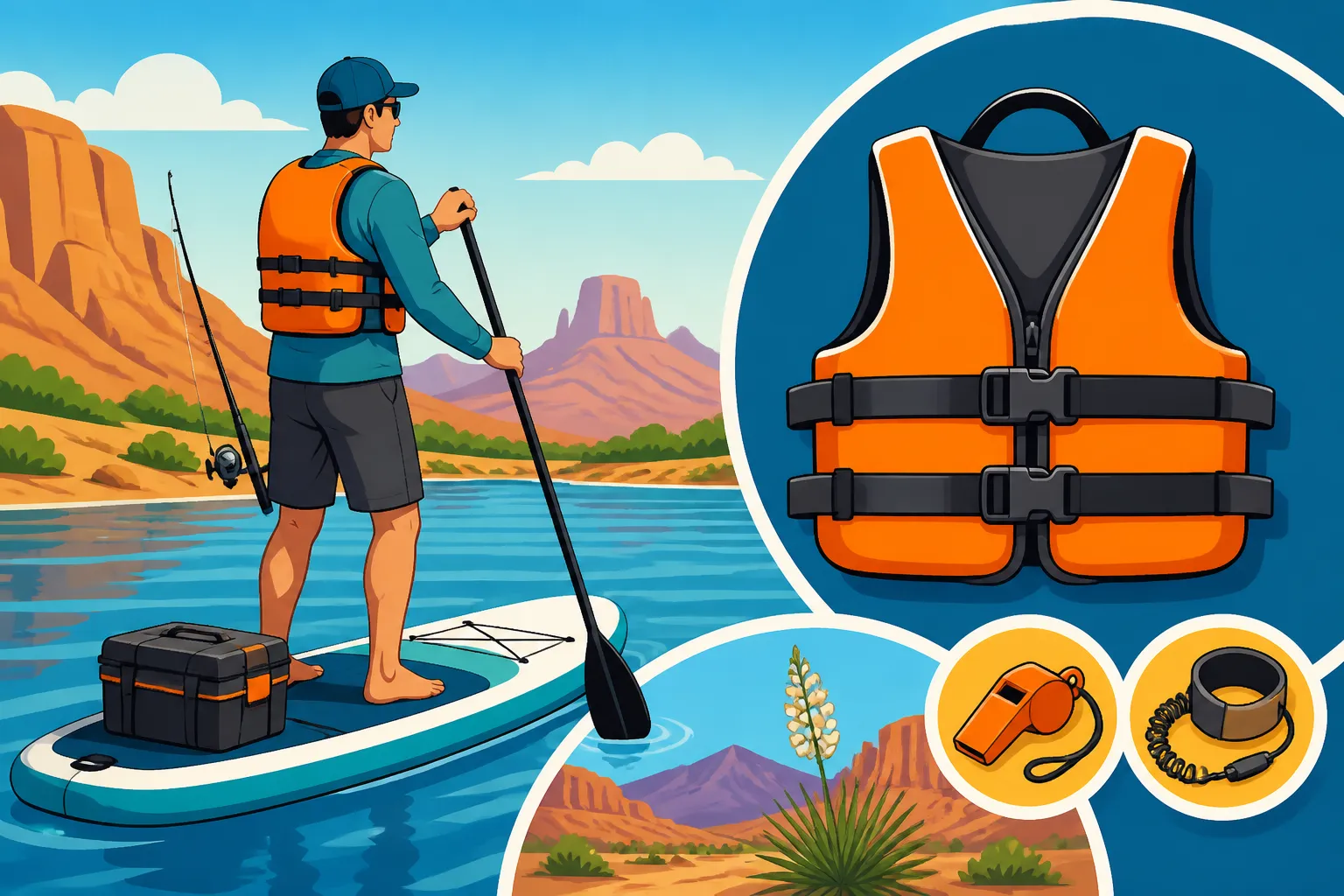
Here's the deal: if you're on a paddle board in New Mexico, you are legally required to have a U.S. Coast Guard-approved PFD on board for each person. This is non-negotiable. Now, for vessels 16 feet or longer (which most paddle boards are not, thankfully!), children 12 years old and younger must wear their PFD while the vessel is underway. For adult paddleboarders, the "on board" requirement means the PFD must be readily accessible. This usually means it's either in reach on the board itself, strapped to a bungee, or in a dry bag attached to your board. It doesn't necessarily mean you have to be wearing it at all times unless you're in a specific area with stricter rules or if you are under 13 years of age.
However, and this is a big however, while simply having it on board might satisfy the letter of the law for adults, it doesn't always satisfy the spirit of safety. Many experienced paddleboarders and safety advocates will tell you that the safest PFD is the one you are actually wearing. Imagine falling off your board in windy conditions, and your PFD floats away faster than you can swim to it. It happens more often than you'd think. This is why when we discuss Life Jacket Requirements for New Mexico Boaters, we always emphasize that "on board" is a minimum, and wearing it is always best practice.
Here’s a quick summary of the requirements:
| Age Group | PFD Requirement | When Wearing Is Mandated | Accessibility |
|---|---|---|---|
| Under 13 years old | USCG-approved PFD must be on board | Must be worn when vessel is underway (applies to paddle boards as "vessels") | Fully donned and fastened |
| 13 years and older | USCG-approved PFD must be on board | Not mandated to be worn unless specific local rules apply | Readily accessible (on board, easy to reach) |
| All Ages (Kayaks/Canoes) | USCG-approved PFD must be on board for each person | Same as above | Readily accessible (on board, easy to reach) |
This table applies to all "vessels" including paddleboards, kayaks, and canoes. It's crucial to understand that even if you're not legally required to wear it, having it within arm's reach means absolutely nothing if you're knocked unconscious or separated from your board quickly.
Navigating the Different Types of PFDs for Paddleboarding
When you walk into a store like Bass Pro Shops or browse online on Amazon, you'll see a dizzying array of PFDs. They aren't all created equal, especially for paddleboarding. Understanding the different types can help you make an informed decision that balances safety, comfort, and compliance.
Type I, II, III, IV, and V: Decoding the Options
The U.S. Coast Guard classifies PFDs into five main types, each designed for different situations and offering varying levels of flotation.
- Type I (Off-Shore Life Jackets): These are the big, bulky orange vests you often see on commercial vessels. They provide the most buoyancy and are designed to turn an unconscious person face-up in rough water. While incredibly safe, they are impractical and uncomfortable for paddleboarding.
- Type II (Near-Shore Vests): Less bulky than Type I, these are still designed to turn an unconscious person face-up, though not as reliably in rough water. Think of the bright orange vests found under seats on passenger ferries. Also generally too bulky for comfortable paddleboarding.
- Type III (Flotation Aids): This is where most recreational PFDs, including those ideal for paddleboarding, fall. They are designed for comfort and mobility, allowing for freedom of movement. They will not reliably turn an unconscious person face-up, so they require the wearer to be conscious and able to assist themselves. This is the most common type for watersports like kayaking, canoeing, and paddleboarding because they allow you to paddle freely.
- Type IV (Throwable Devices): Think of a life ring or a buoyant cushion. These are meant to be thrown to someone in distress, not worn. While some small boats are required to have one, a paddle board typically isn't considered large enough to substitute a wearable PFD with a Type IV device. You still need a wearable PFD (or one readily accessible) on your paddleboard.
- Type V (Special Use Devices): These are PFDs designed for specific activities, like whitewater rafting vests, sailing harnesses, or even inflatable belts. They often offer specialized features but must be worn to be considered compliant with the PFD requirement. Some inflatable PFDs fall into this category.
For most New Mexico paddleboarders, a Type III PFD offers the best combination of safety and practicality. It's designed to be worn comfortably for extended periods, making it more likely you'll actually keep it on.
Inflatable PFDs: A Popular Choice for Paddleboarders
Inflatable PFDs, often Type V (when worn), have become incredibly popular among paddleboarders, and it's easy to see why. They are much less bulky than traditional foam vests, often resembling a small fanny pack or a slim vest that inflates when activated. This minimal design allows for maximum freedom of movement, which is a huge plus when you're actively paddling or trying yoga poses on your board.
However, there are a few important caveats with inflatable PFDs:
- Must be Worn: To be considered a legal PFD on board, an inflatable PFD must be worn. Having it stashed in your dry bag doesn't count. This is a common point of confusion.
- Requires Activation: Most inflatable PFDs are manual activation, meaning you have to pull a cord to deploy the CO2 cartridge that inflates the bladder. If you're unconscious or disoriented, you won't be able to activate it. Some models offer automatic inflation upon immersion, but these are often more expensive.
- Maintenance: They require regular inspection to ensure the CO2 cartridge isn't expired or punctured and that the inflation mechanism is working correctly. You'll also need to replace the cartridge after each deployment.
- Age Restrictions: Typically, inflatable PFDs are only approved for individuals 16 years of age and older.
Despite these points, for adult paddleboarders who commit to wearing them, an inflatable PFD can be a fantastic option for comfort and safety on many New Mexico lakes like Elephant Butte or Navajo Lake. Just remember the "must be worn" rule to stay compliant and safe!
Choosing the Right PFD for Your New Mexico Paddleboarding Adventures
Selecting the right PFD isn't just about meeting the legal requirements; it's about choosing a piece of safety equipment that you'll actually use and that will perform when you need it most. Considering the diverse waterways of New Mexico, from placid urban ponds to vast reservoirs, your choice matters.
Comfort and Fit: Your Best Bet for Consistent Wear
This is perhaps the most critical factor. The best PFD in the world won't save you if it's uncomfortable and you leave it on the shore or strapped to your board without wearing it.
- Try Before You Buy: If possible, try on different PFDs before purchasing. Stores like Bass Pro Shops often have a good selection. Paddle in them, sit in them, even mimic paddling motions if you can. A good PFD should fit snugly but not restrict your movement. It shouldn't ride up around your ears when you're in the water or digging into your armpits when you're paddling.
- Material and Design: Look for breathable materials, especially if you plan to paddle during New Mexico's warm summers. Mesh panels can make a huge difference in comfort. Specific designs tailored for paddle sports often have larger armholes and shorter torsos to prevent chafing and allow for a full range of motion. Some even feature pockets for snacks, sunscreen, or a small whistle (another great safety item!).
- Adjustability: Ensure there are enough adjustable straps (shoulders, sides, waist) to customize the fit to your body. Women often find PFDs with specific designs for female anatomy to be much more comfortable.
- Color: While not directly related to comfort, a bright, highly visible color (like neon green, orange, or yellow) can make you much easier to spot in the water, especially if you're out on larger bodies of water. This is an important consideration for your general Required Safety Gear on a New Mexico Boat.
Many brands now offer PFDs specifically designed with paddleboarders in mind, focusing on low profile designs that integrate well with the activity. Check out options from reputable brands on platforms like Amazon for a wide range of choices, but always prioritize fit and comfort.
Maintenance and Inspection: Keeping Your PFD Ready
A PFD isn't a "set it and forget it" item. Like any critical piece of safety gear, it needs a little love and attention to ensure it's always ready to perform.
- Regular Checks: Before each outing, quickly inspect your PFD. Look for tears, punctures, mildew, or signs of sun damage (fading, brittleness). Check all zippers, buckles, and straps to ensure they are in good working order. For inflatable PFDs, verify the CO2 cartridge is still intact and not expired, and that the inflation pull-tab is clearly visible and easily accessible.
- Cleaning: Rinse your PFD with fresh water after use, especially if you've been in saltwater or chlorinated water. Hang it to dry completely in a shaded, well-ventilated area before storing it. Never store a wet PFD, as this can lead to mildew and damage the materials.
- Storage: Store your PFD in a cool, dry place, away from direct sunlight and extreme temperatures. Avoid leaving it crumpled or under heavy items, which can compress the foam and reduce its buoyancy over time.
- Replacement: PFDs don't last forever. Over time, UV exposure, wear and tear, and general aging can degrade the materials and reduce buoyancy. While there's no hard-and-fast expiration date, if your PFD shows significant signs of wear, damage, or no longer fits properly, it's time to replace it. A good rule of thumb is to consider replacing PFDs every 5-10 years, depending on usage and condition.
Remember, your PFD is your most important safety device on the water. Taking a few minutes for proper care and inspection can make all the difference in an emergency.
Beyond the Basics: Practical Safety Tips for New Mexico Paddleboarders
While meeting the PFD requirements is fundamental, real-world paddleboarding safety in New Mexico extends beyond just having a life vest. It's about a holistic approach to being on the water, embracing both the regulations and smart practices.
Always Wear It: The "On-Board" vs. "On-Your-Body" Debate
We touched on this earlier, but it bears repeating: for adults, while New Mexico law typically allows you to have a PFD "readily accessible" on your paddle board, wearing it is unequivocally safer. Consider the following scenarios:
- Sudden Falls: A rogue boat wake, an unexpected gust of wind, or simply losing your balance can send you into the water in an instant. If your PFD is strapped to your board, you might be disoriented or unable to reach it quickly.
- Cold Water Immersion: Even on a hot New Mexico day, deep lake waters can be surprisingly cold. Cold shock can cause involuntary gasping and disorientation, making it incredibly difficult to don a PFD while in the water.
- Wind and Current: If you fall off your board in windy conditions or a river with a current, your board (and your PFD strapped to it) can drift away much faster than you can swim. A leash helps keep your board, but your PFD might still be out of reach.
Wearing your PFD ensures that you are immediately buoyant if you go into the water, giving you precious time and conserving energy. This is especially important if you're exploring areas like the Rio Grande where currents can be unpredictable. Think of it like a seatbelt in a car – you don't wear it just for the police, you wear it for your safety.
Essential Gear to Complement Your PFD
While your PFD is the star, a few other pieces of gear can significantly enhance your safety and enjoyment while paddleboarding in New Mexico.
- Leash: A paddleboard leash connects you to your board, preventing it from floating away if you fall. This is non-negotiable, especially on larger lakes or rivers where your board can become a life raft.
- Whistle: A small, pealess whistle attached to your PFD is an inexpensive but incredibly effective way to signal for help. Federal law requires a sound-producing device on all vessels, and a whistle satisfies this for a paddle board.
- Dry Bag: A small dry bag can hold essentials like your phone (in a waterproof case), keys, snacks, and extra layers. Attach it securely to your board.
- Sun Protection: New Mexico's sun is no joke. A wide-brimmed hat, polarized sunglasses (check out options on Amazon or at your local Bass Pro Shops), and high-SPF sunscreen are vital. Our guide on Best Sun Protection Gear for New Mexico Reservoir Fishing offers more insights here.
- Water Bottle: Staying hydrated is crucial, especially during prolonged activity in the sun.
- Appropriate Clothing: Dress for the water temperature, not just the air temperature. Layers are always a good idea, and quick-drying fabrics are best.
By equipping yourself properly and making the conscious decision to wear your PFD, you're not just following the rules – you're embracing a safer, more enjoyable paddleboarding experience across New Mexico's beautiful waters. Enjoy the serenity, and paddle safe out there!
Disclaimer
This article is for general informational purposes only and does not constitute professional advice. Laws, prices and regulations vary by location and change over time. Consult a qualified professional for guidance on your specific situation.