Boat Safety Equipment Required in New Mexico
There's nothing quite like the feeling of launching your boat onto one of New Mexico's beautiful lakes or rivers, whether you're heading out to chase walleye at Conchas Lake, reel in stripers at Elephant Butte, or simply enjoy a peaceful afternoon paddle. But before you even think about putting your vessel in the water, you've got to ensure you're squared away on all the essential safety equipment. It's not just about avoiding a ticket; it's about protecting yourself, your passengers, and everyone else on the water. This comprehensive guide will walk you through exactly what boat safety equipment is required in New Mexico, covering everything from life jackets to fire extinguishers, so you can boat with confidence and compliance.
The Absolute Must-Haves: Essential Safety Gear for Every Vessel
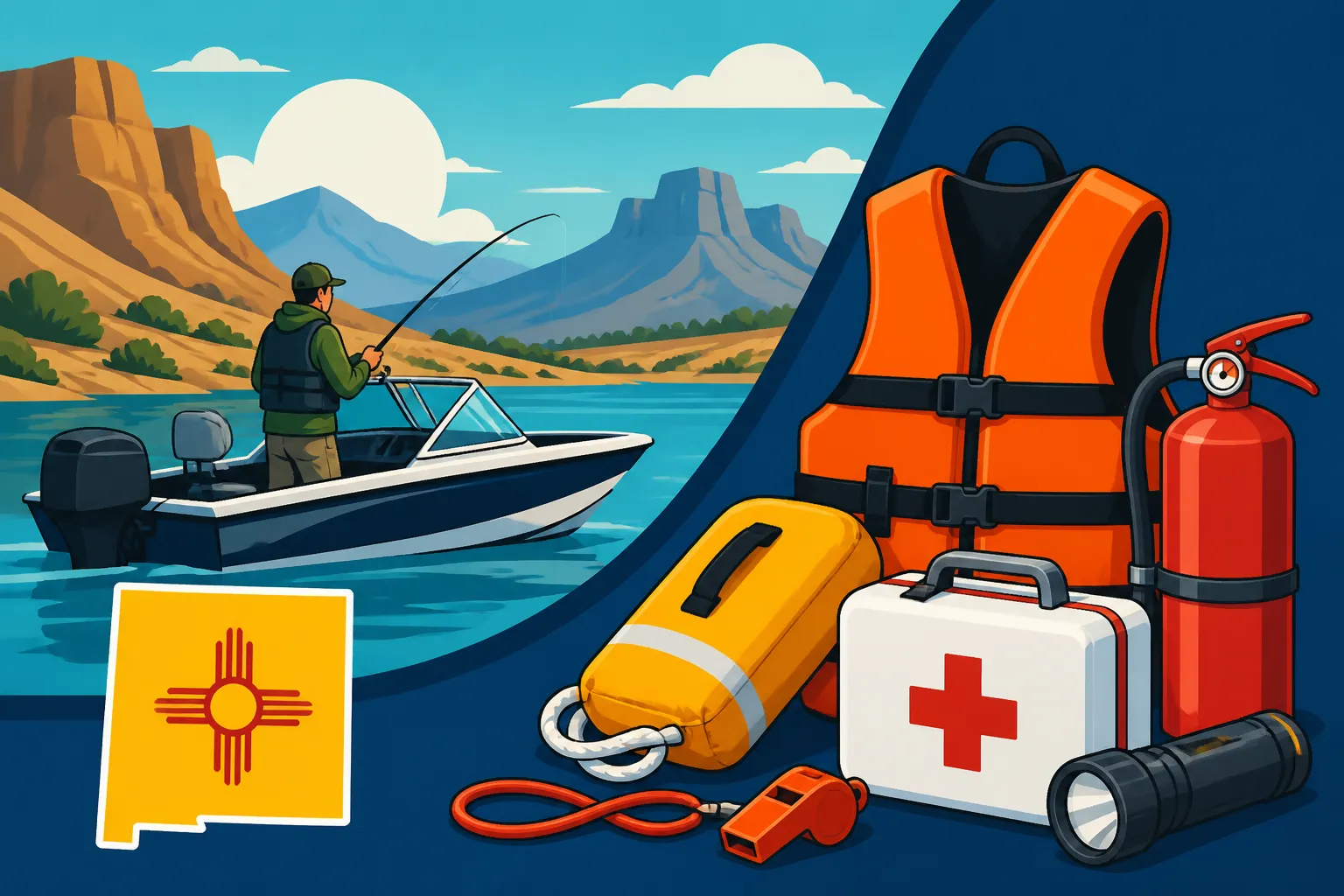
No matter if you're paddling a canoe, motoring a small jon boat, or cruising in a larger runabout, there are fundamental pieces of safety equipment that New Mexico law, following U.S. Coast Guard standards, mandates you have on board. These aren't suggestions; they are non-negotiable items designed to keep you safe in an emergency.
Personal Flotation Devices (PFDs)
Ah, the trusty life jacket. This is probably the most critical piece of safety gear you'll ever carry, and the requirements are pretty clear. Every single person on your boat, regardless of age or the size of your vessel, must have a readily accessible, Coast Guard-approved Personal Flotation Device (PFD).
It's not enough to simply have them stowed away in a locker. They need to be in good, serviceable condition, meaning no rips, tears, or broken straps that would compromise their effectiveness. They also need to be the right size for the intended wearer. A PFD designed for an adult won't do much good for a child if they fall overboard, and vice versa. It’s imperative that PFDs fit snugly but comfortably, without riding up around the ears when lifted by the shoulders. Always test the fit before heading out. Moreover, children 12 years of age and younger are required to wear a Coast Guard-approved PFD at all times while underway on any vessel, unless they are within an enclosed cabin. This isn't just a rule; it's a lifesaver, especially when you consider how quickly an unexpected capsize or sudden movement can happen, even on calm waters. If you're looking for more details on age-specific rules, check out Life Jacket Requirements for New Mexico Boaters.
Sound-Producing Devices
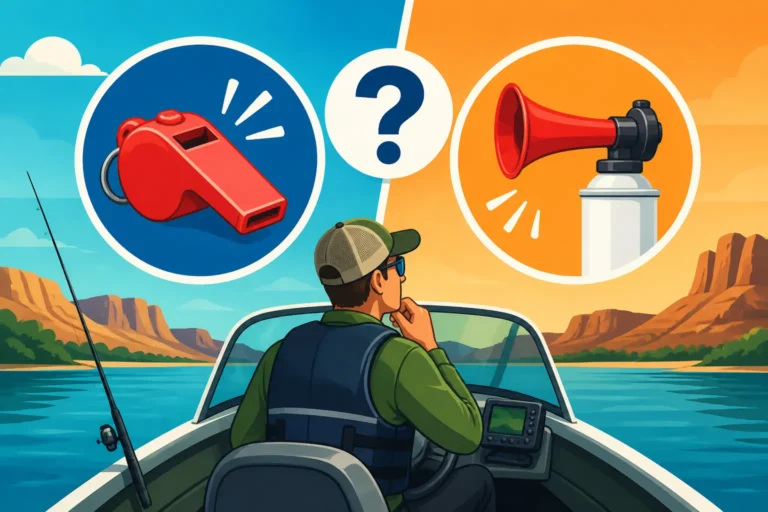
Imagine being caught in a dense fog or needing to signal another boat about a potential collision, especially on a busy weekend at a place like Elephant Butte Lake. That's where a sound-producing device becomes your best friend. All vessels in New Mexico are required to carry some form of sound-producing device capable of producing an efficient sound signal audible for at least one-half nautical mile.
For smaller boats, this can be as simple as a durable, marine-grade whistle. Just make sure it's attached to your PFD or a lanyard so it doesn't get lost overboard easily. For larger vessels, especially those over 39.4 feet (12 meters) in length, the requirements escalate to a bell and a whistle or horn capable of signaling for a longer distance. These devices aren't just for distress; they are crucial communication tools, used for signaling intentions to other boaters in various situations, like passing, meeting, or crossing paths. Understanding the proper whistle signals is part of being a responsible boater, helping to prevent accidents before they even become a threat.
Visual Distress Signals (VDS)
While New Mexico is primarily an inland boating state, the U.S. Coast Guard still requires visual distress signals (VDS) for certain types of vessels operating on U.S. coastal waters, and navigable waters that connect to the sea. For most inland lakes and reservoirs in New Mexico, VDS are not explicitly required by state law unless your vessel is over 16 feet in length and operating between sunset and sunrise, or in conditions of reduced visibility. However, for sheer peace of mind and preparedness, having some form of visual distress signal is always a good idea, regardless of what the law strictly mandates for your specific body of water.
These signals can range from bright orange distress flags, which are effective during daylight hours, to flares (pyrotechnic signals) that can be seen day or night. If you opt for pyrotechnic flares, remember they have expiration dates and must be stored properly to remain effective. Non-pyrotechnic VDS, such as an electronic distress light, are also available and offer a longer-lasting, reusable option. The ability to signal for help can be the difference between a minor inconvenience and a serious emergency, particularly if you find yourself stranded after dark or facing a sudden breakdown far from shore.
| Item | Requirement for All Vessels (General) | Additional Notes / Specifics |
|---|---|---|
| Personal Flotation Devices (PFDs) | One USCG-approved PFD for each person on board | Must be serviceable, readily accessible, and correctly sized. Children 12 and under must wear PFDs while underway. |
| Sound-Producing Device | Whistle or horn capable of producing an efficient sound signal | Audible for at least 0.5 nautical mile. Larger vessels (over 39.4 ft) require a bell and whistle/horn. |
| Visual Distress Signals (VDS) | Not strictly required for all inland vessels (see notes) | Required for vessels >16 ft operating between sunset/sunrise or in reduced visibility (inland). Pyrotechnic VDS have expiration dates. |
| Fire Extinguisher | Required for certain motorized vessels (see below) | Required if enclosed engine, fuel tanks, or passenger areas. Must be USCG-approved, mounted, and easily accessible. |
| Navigation Lights | Required for operation between sunset and sunrise | Specific configurations based on vessel type and length. Must be visible from prescribed distances. |
| Ventilation System | Required for enclosed engine or fuel tank compartments | For gasoline engines, to prevent accumulation of explosive fumes. |
Navigating the Waters: Additional Gear Based on Boat Size and Type
While the basics are universal, as your boat gets larger or includes specific features like engines or enclosed spaces, the list of required safety equipment grows. These regulations are designed to address the increased risks associated with more complex vessels and longer excursions.
Fire Extinguishers
When you're dealing with gasoline engines, fuel tanks, or enclosed compartments, the risk of fire becomes a very real concern. That's why Coast Guard-approved fire extinguishers are mandatory for most motorized vessels in New Mexico. If your boat has an inboard engine, permanently installed fuel tanks, enclosed living spaces, or double bottoms, you're going to need at least one, and potentially more, depending on your boat's length and configuration.
These extinguishers must be readily accessible, in good working order, and specifically rated for marine use (Type B, often labeled B-I or B-II). Check the pressure gauge periodically to ensure it’s charged, and make sure the tamper seal is intact. A common mistake is to bury the extinguisher under a pile of gear. In a fire, seconds count, and fumbling around for your extinguisher could have dire consequences. Knowing where it is, how to use it, and ensuring it's always ready is paramount.
Ventilation Systems
Boats with enclosed engine compartments or fuel tanks, particularly those running on gasoline, pose a unique hazard: the accumulation of explosive fumes. To combat this, adequate ventilation is required. This typically means having both an efficient natural ventilation system, which allows air to circulate freely through vents, and a power ventilation system (blower) for engine compartments.
The power ventilation system must be operated for at least four minutes prior to starting the engine, and any time the boat is docked or at anchor and fumes could be accumulating. This ensures that any dangerous vapors are purged from the compartment before ignition sources, like engine starting, occur. It's a critical step that many boaters, especially those new to larger vessels, might overlook, but it's designed to prevent catastrophic explosions. Always make sure your vents are clear of obstructions and your blower is functioning properly.
Navigation Lights
If you plan on being on the water between sunset and sunrise, or during periods of reduced visibility like fog or heavy rain, your boat must be equipped with proper navigation lights. These lights are essential for other vessels to see you and understand your direction of travel, preventing collisions in low-light conditions.
The specific arrangement and color of these lights depend on the size and type of your vessel. Generally, most powerboats will require a masthead light (white, shining 225 degrees forward), sidelights (red for port/left, green for starboard/right, shining 112.5 degrees each), and an all-around white light. Sailboats have different requirements, and smaller vessels like canoes or kayaks operating at night should at minimum carry a flashlight or lantern that can be shown in time to prevent a collision. Always ensure your navigation lights are clean, operational, and properly positioned before you head out after dark. This is a common point of inspection during safety checks, and for good reason—visibility is key to night safety. For more on what your specific boat needs, refer to the New Mexico Boat Registration and Titling Guide.
Anchoring Systems
While an anchoring system isn't always strictly mandated for every single tiny vessel, it becomes a legal requirement for larger boats and is always a wise piece of equipment to have on board, regardless of your boat's size. For vessels over 16 feet, a functional anchoring system with sufficient line is typically expected.
An anchor isn't just for stopping to fish or swim in a scenic cove. It's a critical safety device. Imagine your engine dies in a strong wind, or you need to hold position to make repairs in a busy channel. A reliable anchor can prevent you from drifting into hazardous areas, rocks, or other vessels. Your anchoring system should include an anchor of appropriate size and weight for your boat and the typical bottom conditions you'll encounter, along with enough rode (chain and line) to hold your vessel securely, usually 5-7 times the maximum depth of the water you'll be anchoring in. Make sure your anchor line is securely fastened to the boat, and not just coiled loosely!
Beyond the Basics: Recommended Gear for a Safer Day on the Water
While staying compliant with the law is crucial, a truly prepared boater goes beyond the bare minimum. Think of these items as your "just in case" kit—the gear that can turn a miserable or dangerous situation into a manageable inconvenience.
First-Aid Kits and Emergency Supplies
Even on a calm lake, unexpected things happen. A fish hook can find its way into a finger, a passenger might get a nasty scrape from slipping, or a sudden headache could strike. That's where a well-stocked first-aid kit comes into play. It should contain at least basic supplies like bandages, antiseptic wipes, pain relievers, gauze, and any personal medications regularly needed by those on board.
Beyond a basic first-aid kit, consider a small bag of emergency supplies. This could include things like extra water, non-perishable snacks, sunscreen, insect repellent, a spare set of dry clothes, and an emergency blanket. If you're planning a longer trip or venturing into more remote areas like those found along the Gila River, consider adding things like a multi-tool, duct tape, zip ties, and a small amount of cash. These items can be invaluable for addressing minor issues or making you more comfortable if you end up stranded longer than anticipated. Many experienced anglers keep a dedicated dry bag for these items, ensuring they're always ready.
Communication Devices
In today's connected world, reliable communication is more important than ever. While a cell phone is a good starting point, remember that cellular service can be spotty or non-existent in many of New Mexico's more remote fishing spots or expansive reservoirs. Don't rely solely on your phone.
Consider investing in a marine VHF radio, especially if you're on larger bodies of water like Navajo Lake or Elephant Butte. These radios provide direct communication with other boats and rescue services, often covering areas where cell signals fail. For truly remote adventures, or if you regularly fish areas with no signal, a satellite messenger device can be a literal lifesaver, allowing you to send distress calls and messages even far off the grid. Make sure whoever is operating the boat knows how to use these devices. Being able to call for help quickly can dramatically improve the outcome of an emergency situation.
Tool Kits and Spare Parts
A sudden engine hiccup or a minor mechanical issue can quickly turn a fun day on the water into a frustrating ordeal. Having a basic tool kit on board can empower you to fix simple problems yourself, potentially saving you a tow back to shore or cutting your fishing trip short.
Your tool kit doesn't need to be extensive, but should include essentials like a set of pliers, screwdrivers (flathead and Phillips), an adjustable wrench, electrical tape, spare fuses for your boat's electrical system, and perhaps some zip ties or hose clamps. If your boat has an outboard motor, carrying a spare shear pin and the tools to replace it can be a real game-changer if you hit something unexpected. Taking the time to learn some basic troubleshooting for your specific vessel's engine and systems can pay dividends when you're miles from the dock.
Staying Compliant: Registration, Titling, and Operator Requirements
Beyond the physical gear, there are also administrative requirements to ensure your boat is legally on the water and that you're qualified to operate it. These steps are just as critical as having the right life jackets.
New Mexico Boat Registration and Titling
Nearly all motorized vessels, and sailboats 16 feet or longer, operated on public waters in New Mexico must be registered and titled with the New Mexico Motor Vehicle Division (MVD). This process ensures your boat is officially recognized and helps in recovery if it's stolen.
When you purchase a new or used boat, there's typically a timeframe within which you need to complete the titling and registration. The process involves submitting an application, proof of ownership, and paying the applicable fees. You'll then receive a registration card and decals that must be displayed on your boat. Always keep your registration card on board when operating your vessel. For a deep dive into this, you'll want to read up on the New Mexico Boat Registration and Titling Guide and understand the New Mexico Boat Registration Cost by Length Class. Don't forget, if you have an electric trolling motor on a small craft, there might be specific rules to consider; check out Do You Need to Register a Kayak With a Trolling Motor in New Mexico? for more insights.
Boating Education and Operator Requirements
New Mexico is committed to boating safety, and that includes ensuring operators have the knowledge to navigate safely. While there isn't a blanket requirement for all boat operators to complete a boating safety course, certain individuals might need to. For instance, operators under a specific age (check current regulations for exact age requirements) might need to complete a New Mexico-approved boating safety course to operate a vessel above a certain horsepower.
Even if you're not legally mandated to take a course, completing one is highly recommended for all boaters. These courses cover essential topics like navigation rules, emergency procedures, environmental responsibilities, and the proper use of safety equipment. They provide invaluable knowledge that goes far beyond what you might pick up casually, making you a more confident and safer operator. Many online and in-person options are available, and the knowledge gained is well worth the time investment.
Equipping Your Boat: Where to Find Reliable Safety Gear
Once you know what you need, the next step is actually acquiring it. It's important to buy reliable, approved equipment from reputable sources. Don't cut corners when it comes to safety!
Reputable Marine Stores and Online Retailers
For all your boating safety needs, your best bet is to shop at stores that specialize in marine equipment or well-known outdoor retailers. Local marine dealerships or large sporting goods stores often have dedicated boating sections with a wide array of Coast Guard-approved equipment. These places often have knowledgeable staff who can help you ensure you're getting the right size and type of PFDs, fire extinguishers, and other gear for your specific vessel and planned activities.
Of course, the convenience of online shopping is also a huge advantage. Retailers like Bass Pro Shops and Amazon offer extensive selections of marine safety gear, often with detailed product descriptions and customer reviews that can help you make informed choices. When buying online, just be diligent about checking that products are indeed U.S. Coast Guard-approved where applicable and match the specifications required by New Mexico law. Make sure to read reviews about fit and quality, especially for things like life jackets. Getting your gear through these channels means you're more likely to receive legitimate, high-quality products built to meet safety standards.
Checking for US Coast Guard Approval
This cannot be stressed enough: for any item where U.S. Coast Guard (USCG) approval is mentioned (like PFDs, fire extinguishers, and certain visual distress signals), always double-check for the actual approval stamp or label. This is your guarantee that the equipment meets rigorous safety standards and is legally compliant.
A PFD, for example, will have a clear label indicating it is USCG approved, along with its type (e.g., Type I, II, III, V) and the weight range it's designed for. Fire extinguishers will also have a marine rating and approval information. Without this stamp, even if an item looks similar, it might not offer the same level of protection or satisfy legal requirements. Buying from reputable sources makes this easier, as they typically only stock approved products. If you're ever unsure, don't hesitate to ask a store employee or consult the official Coast Guard or New Mexico State Parks boating safety resources. Your life, and the lives of your passengers, depend on genuinely approved equipment.
The Consequences: Penalties for Non-Compliance
Ignoring boating safety regulations isn't just irresponsible; it carries real legal and personal consequences. New Mexico law enforcement, including New Mexico State Parks rangers and local sheriff's deputies, regularly patrol waterways to ensure compliance.
Fines and Citations
The most immediate consequence of failing to carry required safety equipment is a citation and a fine. These penalties can vary depending on the specific violation and the discretion of the enforcing officer. For instance, not having enough PFDs or having expired visual distress signals can lead to a monetary fine. These fines can quickly add up, especially if you have multiple deficiencies.
Beyond the immediate financial hit, repeated violations could lead to more serious repercussions, including potentially having your boating privileges suspended or needing to attend a mandatory boating safety course. The goal of these penalties isn't just to punish, but to encourage safer boating practices and ensure everyone on the water is protected. It's a lot easier, and certainly cheaper in the long run, to simply ensure your boat is properly equipped before you even leave the dock. You might also want to understand New Mexico Fishing Violations and Penalties in a broader context.
Risk to Life and Property
While fines are certainly unpleasant, the most severe consequence of neglecting boat safety equipment isn't legal, but personal. Operating a boat without the necessary gear significantly increases the risk of injury or death in an emergency. Imagine being caught in a sudden storm on Elephant Butte Lake without functional navigation lights, or having a passenger fall overboard without a readily available, properly fitted PFD.
The absence of a fire extinguisher could mean a small electrical fire escalates rapidly into a catastrophic blaze, destroying your vessel and endangering lives. These scenarios are not just hypothetical; they happen. Investing in and maintaining your safety equipment is an investment in your own life, the lives of your loved ones, and the security of your property. It's about being prepared for the unexpected and ensuring that a fun day on the water doesn't turn into a tragedy. Always err on the side of caution; a little extra preparation goes a long way towards a safe and enjoyable fishing trip.
Disclaimer
This article is for general informational purposes only and does not constitute professional advice. Laws, prices and regulations vary by location and change over time. Consult a qualified professional for guidance on your specific situation.