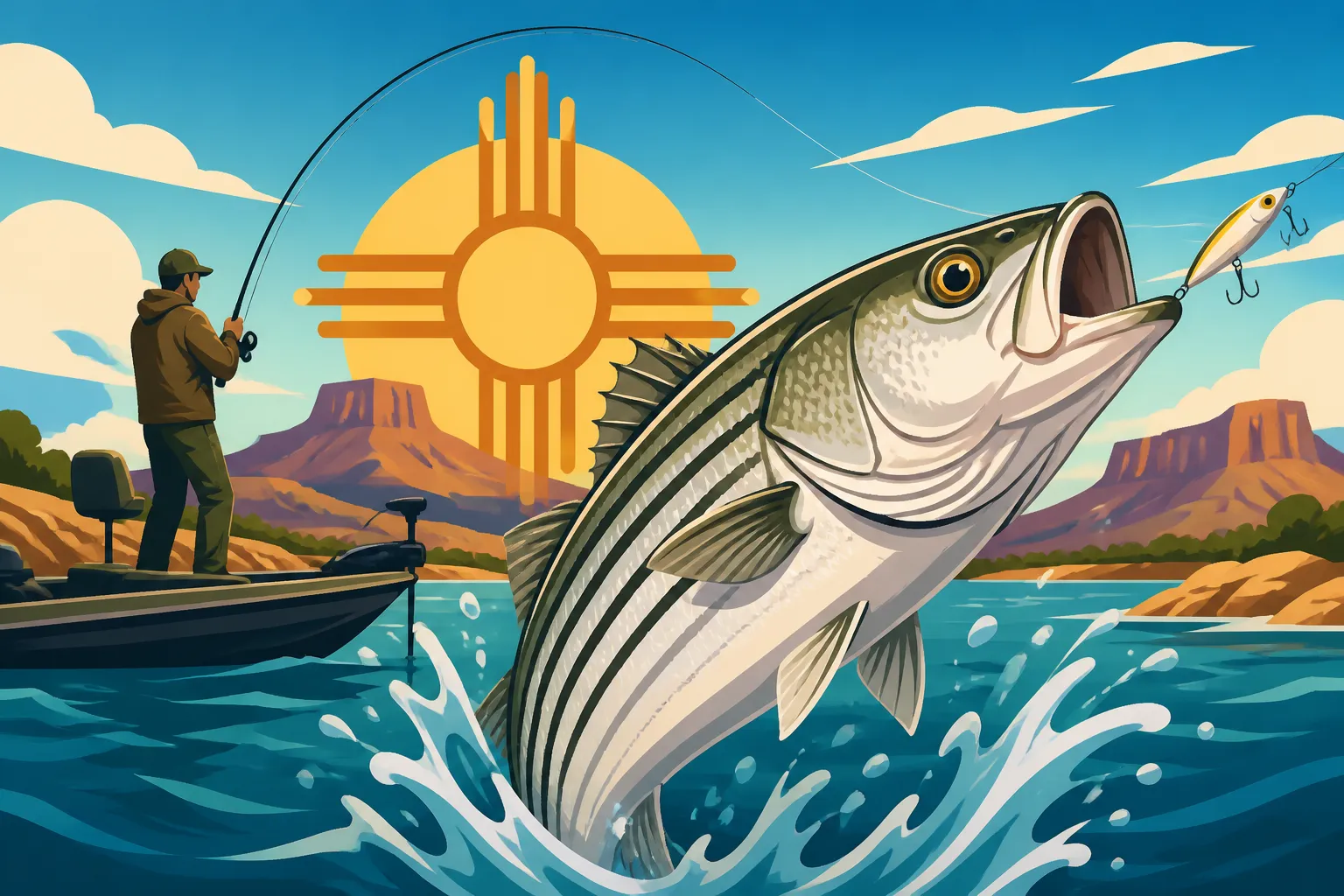
Ute Lake Striped Bass Fishing
Finding success fishing for striped bass at Ute Lake can feel like chasing a ghost if you don't know the ins and outs of this unique New Mexico reservoir. Many anglers get frustrated trying techniques that work elsewhere, only to come up empty-handed. This guide will cut through the guesswork, offering practical, in-depth advice on how to effectively target and catch striped bass in Ute Lake, ensuring your next trip is productive and enjoyable.
Understanding Ute Lake's Striped Bass Fishery
Ute Lake, nestled in the scenic high plains of eastern New Mexico near Logan, is a gem for warm-water species, and its striped bass population holds a special allure for many anglers. Unlike Elephant Butte Lake, which often gets all the striper glory, Ute Lake offers a different kind of challenge and reward. The stripers here, while perhaps not as numerous as in Elephant Butte, can grow to impressive sizes, making every catch a memorable battle. It’s crucial to understand the characteristics of Ute Lake itself to really dial into where these powerful fish are holding and what makes them bite.
The Dynamics of Ute Lake for Stripers
Ute Lake is a relatively deep, clear reservoir formed by the damming of the Canadian River. Its structure is key to understanding striper behavior. You’ll find a mix of rocky points, submerged timber, gradual sloping banks, and deeper channels. Striped bass are pelagic, meaning they often suspend in open water, but they’re also highly migratory and will follow baitfish. The clarity of Ute Lake's water often means stripers can be a bit more wary than in murkier waters, requiring a stealthier approach or specific presentations.
One of the biggest factors influencing striper behavior in Ute Lake is the presence of baitfish, primarily gizzard shad and sometimes even smaller panfish. Where the bait goes, the stripers follow. This means paying close attention to your fish finder to locate schools of bait is paramount. If you see clouds of baitfish, chances are good that hungry stripers aren't far behind, lurking below or circling the edges, waiting for the perfect opportunity to ambush. The lake's varying depths also play a role, with stripers moving deeper in summer to find cooler, more oxygenated water, and shallower during cooler seasons or low light conditions. You'll often find them congregating near underwater humps or ledges that provide quick access to both deep water safety and shallower feeding grounds.
Habitat Preferences and Behavior
Striped bass in Ute Lake are opportunistic predators. They love to ambush prey from cover or herd baitfish into tight balls. You'll often find them patrolling creek channels, river bends, and points that extend into deeper water. During early morning or late evening, they might push bait into coves or along shorelines, creating exciting topwater action. As the sun rises, they tend to retreat to deeper, cooler water, often suspending over structure or in the thermocline if one forms.
Understanding their seasonal patterns is also vital. In spring, as water temperatures rise, stripers become more active and will move into shallower areas to feed more aggressively. During the heat of summer, they go deep, making vertical jigging or trolling more effective. Fall sees them schooling up and feeding heavily in preparation for winter, often making them easier to locate and catch. In winter, they become more lethargic, often holding tight to deep structure or suspending near warm pockets of water if present. Their aggressive nature means they hit hard, making for an exhilarating fight, especially when hooked on lighter tackle. You’ll often hear stories of Ute Lake stripers breaking lines and testing the limits of even experienced anglers.
When to Target Ute Lake Striped Bass
Timing is everything when it comes to successful striped bass fishing, and Ute Lake is no exception. While you can catch stripers year-round, certain seasons and times of day offer significantly better odds, making your trip much more rewarding.
Best Seasons for Stripers
While opinions might vary slightly among local experts, most agree that the transition seasons—spring and fall—are generally the most productive for striped bass at Ute Lake.
- Spring (March-May): As the water begins to warm after the long winter chill, stripers become incredibly active. They move into shallower waters, particularly around rocky points, coves, and submerged humps, chasing shad that are also becoming more active. This is often an excellent time for casting lipless crankbaits, swimbaits, or even topwater lures during low-light conditions. The fish are hungry and less hesitant to strike. Keep an eye on the water temperature; once it consistently hits the 50s and low 60s Fahrenheit, the action usually picks up dramatically. You might find great success by checking the New Mexico Fishing Season Calendar for general guidance, but local knowledge for Ute Lake is key.
- Summer (June-August): Summer at Ute Lake means heat, and like most warm-water species, striped bass will seek refuge in deeper, cooler water. This doesn't mean they're impossible to catch, but your tactics will need to shift. Trolling deep-diving crankbaits or vertically jigging spoons or heavy swimbaits in the main lake channels or over deep structure becomes the name of the game. Look for them suspending in the thermocline (if present) or relating to deep underwater points and humps. Early mornings and late evenings can still provide brief windows of shallower feeding activity, especially around submerged brush or rocky ledges. If you're looking for information on optimal times, a guide on the Best Time of Year to Fish in New Mexico can provide broader context.
- Fall (September-November): Many consider fall the absolute prime time for Ute Lake striped bass. As water temperatures cool, the stripers become incredibly active, schooling up and feeding aggressively to put on weight for the colder months. This is when you can experience explosive topwater action, especially on cloudy days or during dawn and dusk. They'll chase shad into coves and along main lake points, creating "boils" on the surface as they bust through schools of bait. Jigging spoons, Kastmasters, and large swimbaits are also highly effective during this feeding frenzy.
- Winter (December-February): Winter fishing for stripers at Ute Lake can be tough, but not impossible. The fish become much less active, concentrating in deep channels and holding tight to structure. They'll often respond to slow-moving baits, like vertical jigging spoons or soft plastics fished patiently. It requires more effort and patience, but the reward can be a truly massive fish that might not be as active during other seasons. The low boat traffic can also make for a peaceful fishing experience.
Daily Timing and Weather Conditions
Beyond the seasons, the time of day and prevailing weather conditions play a significant role in striper success.
- Low Light Conditions: Without a doubt, the best times to target Ute Lake stripers are typically at dawn and dusk. During these periods, the fish are most active, often pushing bait to the surface and creating visible feeding frenzies. Overcast days can extend this activity throughout the day, as the reduced light penetration makes stripers more comfortable in shallower waters.
- Sunny Days: On bright, sunny days, especially during summer, stripers will usually retreat to deeper water. You'll need to adapt your techniques to target them vertically or by trolling. A good fish finder is indispensable for locating these deeper schools.
- Wind: Don't be afraid of a little wind! Choppy water can actually be your friend when fishing for stripers. The wave action breaks up the light, provides cover for the fish, and often concentrates baitfish, leading to more aggressive feeding. Just be mindful of safety, especially on a large lake like Ute, and ensure your boat is properly equipped with all required safety gear if you're out in the chop. For boaters, ensure you're familiar with New Mexico Boat Registration and Titling Guide to be safe and legal on the water.
Effective Techniques and Baits for Ute Lake Stripers
Catching Ute Lake striped bass requires a blend of traditional methods and an understanding of how to adapt to the specific conditions of this reservoir. From casting to trolling, having a diverse toolkit of techniques and baits will greatly increase your chances of success.
Casting and Jigging
Casting and jigging are highly effective methods, especially during the spring and fall when stripers are more active and shallower.
- Surface Action: When stripers are chasing shad on the surface, casting topwater lures like Zara Spooks, Chug Bugs, or large poppers can be absolutely exhilarating. The key is to cast into the boils or just beyond them and retrieve with a walk-the-dog action or aggressive popping. This triggers an immediate, often violent, strike.
- Subsurface Lures: For subsurface action, lipless crankbaits (like a Rat-L-Trap) or swimbaits (such as the SPRO Aruku Shad or a Keitech Swing Impact FAT) are deadly. Vary your retrieve speed and depth until you find what the fish are reacting to. Jerkbaits are also excellent, especially in clearer water, mimicking wounded baitfish. For deeper presentations, flutter spoons or heavy jigging spoons (like a Kastmaster) can be dropped directly onto fish located on your fish finder and then worked with a sharp lift-and-drop motion.
- Soft Plastics: Large soft plastic flukes, swimbaits, or grub tails rigged on a heavy jig head are versatile. They can be cast and retrieved, bounced along the bottom, or vertically jigged. Experiment with colors, but natural baitfish patterns like pearl, shad, or chartreuse are often reliable.
Trolling for Deeper Stripers
When stripers move deep, particularly in summer, trolling becomes the most efficient way to cover water and present baits at the right depth.
- Deep-Diving Crankbaits: Large, deep-diving crankbaits that can reach depths of 15-30 feet or more are excellent choices. Brands like Bomber, Rapala, and Strike King offer models specifically designed for trolling. Match the crankbait's color and profile to the local baitfish, focusing on shad patterns, chrome, or even bright colors like firetiger.
- Umbrella Rigs: An umbrella rig, which mimics a school of baitfish, can be incredibly effective for trolling. These rigs often feature multiple swimbaits or grub tails, and stripers will aggressively strike the "school." Ensure your rod and reel setup can handle the drag of an umbrella rig.
- Downriggers and Planer Boards: For precise depth control, especially when fish are suspending at specific depths, downriggers are invaluable. Planer boards can help you spread out your lines, covering a wider swath of water and preventing tangles, which is particularly useful if you're trolling multiple rods. If you're looking into new electronics, understanding the Best Fish Finders for New Mexico Reservoirs can help you locate these deeper schools more efficiently.
Live Bait Options
While artificial lures are highly effective, sometimes nothing beats live bait, especially for finicky stripers.
- Gizzard Shad: Live gizzard shad are the king of live baits for Ute Lake stripers, as they are a primary food source for these fish. Catching them with a cast net can be challenging but rewarding. Present them on a Carolina rig near suspected striper holding areas or suspend them under a balloon or bobber.
- Threadfin Shad: If gizzard shad are hard to come by, threadfin shad can also work. These are typically smaller but still appealing to stripers.
- Water Dog/Salamander: Believe it or not, water dogs (larval salamanders) are also excellent striper bait, particularly in colder water. They are hardy and can entice strikes when other baits fail.
- Bottom Fishing: For targeting stripers near the bottom, especially in deep water, a simple Carolina rig with a heavy sinker and a fluorocarbon leader can be very effective with live bait. Ensure your bait is active and presented naturally.
| Season | Primary Location | Preferred Techniques | Recommended Baits/Lures | Notes |
|---|---|---|---|---|
| Spring | Rocky points, coves, submerged humps, shallower areas | Casting, slow retrieve, jigging | Lipless crankbaits, swimbaits, jerkbaits, live shad | Fish are active and moving shallower. |
| Summer | Deeper channels, thermocline, deep structure | Trolling, vertical jigging | Deep-diving crankbaits, umbrella rigs, heavy spoons, live shad | Stripers are deep due to heat. Early/late for surface. |
| Fall | Main lake points, coves, open water (following bait) | Topwater, casting, jigging, trolling | Poppers, Zara Spooks, lipless cranks, swimbaits, spoons, live shad | Aggressive feeding frenzies, excellent topwater. |
| Winter | Deep channels, tight to bottom structure | Slow jigging, vertical presentation | Heavy spoons, soft plastics (slow), live water dogs | Fish are lethargic, requires patience and precise presentation. |
Essential Gear and Practical Tips for Ute Lake Striped Bass
Having the right gear and knowing a few insider tips can make a huge difference in your Ute Lake striper fishing success. From rod and reel setups to safety on the water, preparation is key.
Rods, Reels, and Line
Striped bass are powerful fighters, so your gear needs to be up to the task.
- Rods: For casting lures, a medium-heavy to heavy action spinning or baitcasting rod, typically 7 to 8 feet long, is ideal. This length provides good casting distance and enough backbone to handle a powerful striper. For trolling, dedicated trolling rods or stout baitcasting rods with a softer tip can work well, absorbing the shock of strikes and helping to keep hooks set.
- Reels: A good quality baitcasting reel with a smooth drag system and a high line capacity (e.g., a 300-400 series) is excellent for trolling and casting heavier lures. For spinning setups, a 4000-6000 series reel with a strong drag is suitable. Make sure your reel can handle the stress of multiple hard-fighting fish.
- Line: Braided line is often preferred for its strength, sensitivity, and lack of stretch. A 30-50 lb test braided line is a good all-around choice. Always use a fluorocarbon leader (20-40 lb test) tied to your braid with a strong knot (like an Albright or FG knot) to provide invisibility and abrasion resistance, especially in Ute Lake's often clear waters.
Navigation and Electronics
Ute Lake is a substantial body of water, and electronics will be your best friend.
- Fish Finder/Sonar: A high-quality fish finder with down imaging and side imaging capabilities is almost mandatory. This will allow you to locate schools of baitfish, identify deep structure where stripers might be holding, and even spot individual fish. Learning to interpret your sonar screen is a skill that pays off immensely.
- GPS/Chartplotter: Knowing where you are on the lake, marking productive spots, and navigating safely, especially in low light or unfamiliar areas, makes a GPS unit invaluable. You can mark schools of fish, specific ledges, or successful trolling paths for future reference.
- Boat Safety: Beyond fishing gear, ensure your boat is equipped with all required safety gear, including life jackets, a fire extinguisher, signaling devices, and a first-aid kit. The New Mexico Boat Registration and Titling Guide also outlines specific requirements you must meet to operate legally. Always inform someone of your float plan, especially if you're fishing alone.
Accessing Ute Lake
Getting your boat in the water at Ute Lake is generally straightforward, but it's good to be aware of the access points.
- Boat Ramps: Ute Lake State Park offers several well-maintained boat ramps. These include North and South Ramps, as well as the Logan Ramp, providing good access to different parts of the lake. Check the Ute Lake State Park Boat Ramp information for current conditions and any possible closures, especially during periods of fluctuating water levels. If you're considering chartering a trip or need local expertise, platforms like FishingBooker can help you find experienced guides who know Ute Lake intimately and often provide all the necessary gear.
- Bank Access: While many prefer to boat for stripers, there are some opportunities for bank fishing, particularly around the state park areas. Casting long distances with heavy spoons or fishing with live bait can yield results from shore, especially in spring and fall.
Pro Tips for Success
- Follow the Birds: If you see flocks of gulls or other waterfowl diving into the water, it's a strong indicator of a baitfish school being pushed to the surface by feeding stripers. Head straight there, but approach quietly.
- Observe Other Anglers: While it’s courteous to give other anglers space, observing their successful techniques or where they are catching fish can offer valuable clues.
- Water Levels: Ute Lake's water levels can fluctuate. Lower water levels can concentrate fish in certain areas and expose new structure, while higher levels might spread them out. Stay informed about current conditions.
- Match the Hatch: Always try to match the size and color of your lures or bait to the primary forage in Ute Lake, which is typically gizzard shad.
- Stay Hydrated and Protected: New Mexico sun can be intense. Always bring plenty of water, wear protective clothing, a wide-brimmed hat, and polarized sunglasses to spot fish and protect your eyes.
- Consider a Guide: Especially if it's your first time or you want to maximize your chances, consider hiring a local Ute Lake fishing guide. They have up-to-the-minute knowledge of where the fish are and what they're biting on. Websites like FishingBooker are a great resource for connecting with local guides who specialize in Ute Lake striped bass. They can provide not only expertise but also top-of-the-line gear specifically suited for the lake.
Striped bass fishing at Ute Lake can be a truly rewarding experience, offering the chance to hook into some incredibly strong and exciting fish. By understanding the lake, timing your visits right, and employing the correct techniques and gear, you'll significantly increase your odds of success. Whether you're casting topwater lures at dawn or trolling deep-diving crankbaits in the summer heat, Ute Lake's stripers offer a challenge that keeps anglers coming back for more.
Disclaimer
Fishing regulations and conditions can change. Always consult the official New Mexico Department of Game and Fish regulations handbook before heading out on your fishing trip to ensure you are compliant with all current rules, limits, and licensing requirements. This guide is for informational purposes only and should not replace official sources.