Sunfish Species in New Mexico
If you've spent any time fishing in New Mexico, chances are you've encountered a sunfish, even if you didn't know its exact species. These feisty, often colorful fish are a staple of ponds, lakes, and slower-moving rivers across the state, providing endless fun for anglers of all ages and skill levels. However, it's easy to lump them all into one "panfish" category. This guide is here to unravel the delightful diversity of sunfish species found in New Mexico, helping you identify your catch, understand their habitats, and become a more knowledgeable and successful angler.
Understanding the Sunfish Family in New Mexico
When we talk about "sunfish," it can sometimes feel a bit like a blanket term for any small, disc-shaped fish you might catch. But in New Mexico, and across North America, the sunfish family (Centrarchidae) is a fascinating group with distinct members. Knowing the difference isn't just for bragging rights; it helps you understand their behavior, preferred habitats, and even local regulations, as some species might have specific rules. It’s a common frustration to catch a fish and think, "What was that?" This section will clear up some of that confusion.
The Broader Panfish Family
First, let's talk about "panfish." This term is a general descriptor for any freshwater fish that is typically small enough to fit whole in a frying pan – hence, "pan" fish. It's more of a culinary or angler's term than a scientific classification. In New Mexico, popular panfish often include crappie, yellow perch, and, of course, many members of the sunfish family. These fish are beloved because they're generally abundant, relatively easy to catch, and provide excellent table fare.
The appeal of panfish, including sunfish, is undeniable. They are often the first fish a child ever catches, sparking a lifelong love for angling. They thrive in a variety of environments, from the small urban ponds Fishing Ponds Near Albuquerque for Kids to the vast stretches of Elephant Butte Lake. For many, a day chasing panfish is less about landing a trophy and more about enjoying the simple pleasure of a tug on the line and a fresh meal.
Distinguishing True Sunfish from Other Panfish
While all sunfish are panfish, not all panfish are sunfish. The true sunfish, or Lepomis genus within the Centrarchidae family, have some distinguishing characteristics. Generally, they have a deep, compressed body shape, a single dorsal fin with both spiny and soft rays, and a relatively small mouth. They often display vibrant colors, especially during spawning season, which can make them quite beautiful to behold.
Other popular panfish, like crappie, belong to a different genus (Pomoxis) within the same family. Crappie tend to have a more elongated body, a larger mouth, and distinct differences in their dorsal fin count. Yellow perch (Perca flavescens), while also a panfish, belong to an entirely different family (Percidae) and are more cylindrical with two distinct dorsal fins. Understanding these subtle differences helps in identification and learning more about the specific species you're targeting.
Common Sunfish Species You'll Find in New Mexico
New Mexico's diverse aquatic environments, from warm lowland reservoirs to cooler mountain streams, provide homes for several popular sunfish species. While some are widespread and abundant, others might be more localized. Getting to know these individual species will dramatically improve your fishing experience, allowing you to anticipate their behaviors and know where to cast your line.
The Ubiquitous Bluegill
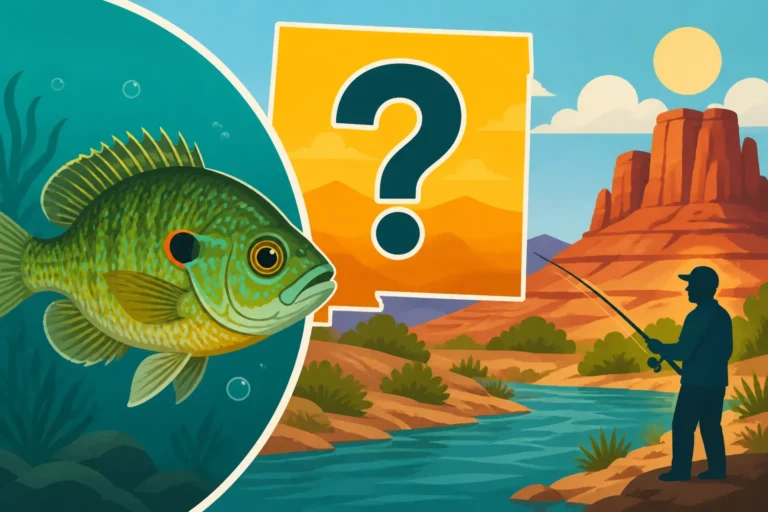
Ah, the bluegill! If you've fished for sunfish in New Mexico, you've almost certainly encountered this classic. Bluegill (Lepomis macrochirus) are arguably the most recognizable and widespread sunfish species in the state, inhabiting nearly every warm water body from small farm ponds to large impoundments like Ute Lake. They are often the target species for introducing newcomers to fishing due to their aggressive biting nature and willingness to take a variety of baits.
Bluegill are true survivors and thrive in many conditions. They prefer clear, warm water with plenty of submerged vegetation or structure where they can hide from predators and ambush insects, small crustaceans, and even tiny fish. You'll often find them schooled up, making it possible to catch several in one spot once you locate them. They are a cornerstone of the aquatic food chain, providing forage for larger game fish while also being a popular catch for anglers seeking a delicious meal.
Hardy Green Sunfish
Another common and robust sunfish in New Mexico is the green sunfish (Lepomis cyanellus). These guys are incredibly adaptable and can tolerate poorer water quality and higher turbidity than bluegill. This makes them a frequent resident of smaller creeks, ditches, and ponds that might not support other sunfish species. While they don't usually grow as large as bluegill, their aggressive attitude makes them a fun catch, often surprising anglers with how hard they fight for their size.
Green sunfish are characterized by their slightly more elongated body compared to a bluegill, a larger mouth, and often a mottled, iridescent green coloration. They're often found hiding around submerged logs, rocks, and undercut banks. Because of their hardiness, they can sometimes outcompete other sunfish species in less-than-ideal environments, becoming the dominant panfish in certain areas.
The Mollusk-Eating Redear Sunfish
The redear sunfish (Lepomis microlophus), often affectionately called "shellcrackers" or "stumpknockers," are another excellent species to target in New Mexico. Unlike bluegill and green sunfish, redear have a special diet: they love snails and other small mollusks. They have specialized pharyngeal teeth that allow them to crush shells, making them a natural biological control for snails in certain aquatic environments. This unique diet also influences where you might find them and what baits they prefer.
Redear sunfish are prized for their larger size compared to bluegill and green sunfish, often growing to impressive panfish dimensions. They are typically found in larger, clearer lakes and reservoirs with abundant snail populations and hard bottom structures like gravel beds or submerged timber. Targeting redear can be a bit more challenging than bluegill, but the reward of a bigger, harder-fighting fish is well worth the effort.
Occasional Pumpkinseed Sightings
While not as common or widespread as bluegill, green sunfish, or redear, the pumpkinseed sunfish (Lepomis gibbosus) can occasionally be found in some New Mexico waters. These beautiful fish are often lauded for their vibrant, intricate patterns and distinct markings. They prefer clear, shallow, weedy areas in lakes and ponds. Their presence in New Mexico is less dominant, often found in isolated populations or where they have been introduced.
If you're lucky enough to catch a pumpkinseed, take a moment to admire its striking beauty. They typically don't grow as large as redear but offer a spirited fight on light tackle. Their dietary preferences are similar to bluegill, focusing on insects, small crustaceans, and invertebrates. Catching one is often a delightful surprise for anglers accustomed to the more common bluegill or green sunfish.
Identifying Your Catch: Key Characteristics
Knowing the different sunfish species is one thing, but actually telling them apart when you've got one flopping in your hand can be another challenge entirely. Sometimes they all look similar, especially when young, or in different lighting conditions. Let's break down the distinct features that will help you confidently identify the various sunfish species swimming in New Mexico's waters. This will help you know if you're holding a common bluegill or a special redear.
Spotting a Bluegill
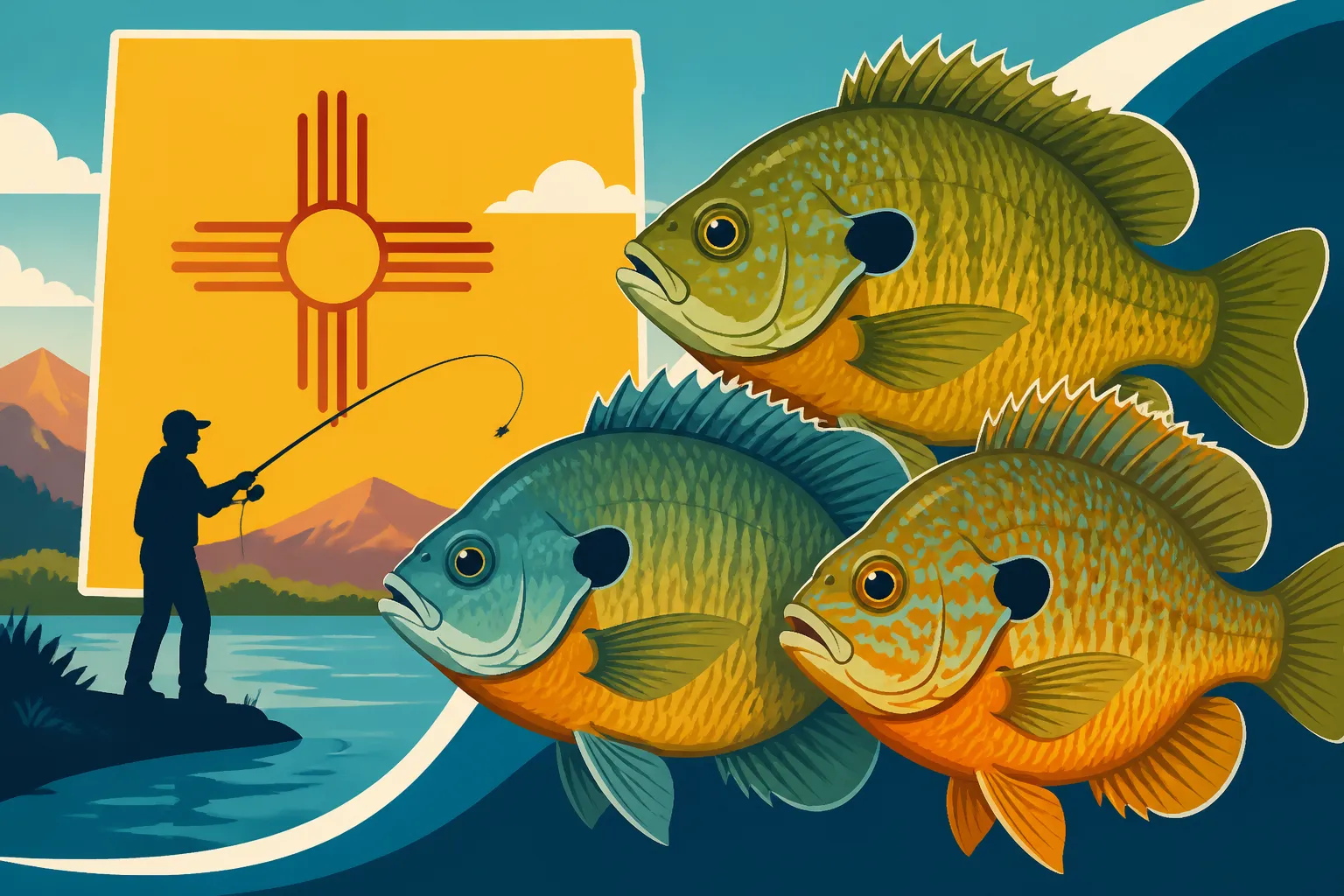
Bluegill are quite distinctive once you know what to look for. Their most prominent feature is the small, dark blue or black "ear flap" (operculum) that is entirely black, without any colored trim. Their bodies are typically deep and compressed, giving them a roundish profile. Coloration can vary, but generally, they have a dark olive-green back, fading to lighter flanks with vertical bars (more prominent in younger fish) and a yellowish-orange belly, especially in males during spawning season.
Another key identifier is their small mouth, which usually doesn't extend past the front of the eye. You'll also notice a dark spot on the soft-rayed part of their dorsal fin. When you catch a bluegill, notice these features. It's a true classic of the panfish world and one you'll encounter frequently in many New Mexico fishing spots.
Recognizing a Green Sunfish
Green sunfish are a bit more elongated than bluegill and have a noticeably larger mouth that extends back to at least the middle of the eye, sometimes even beyond it. This larger mouth is a significant giveaway. Their bodies are typically a mottled olive-green, often with iridescent blue or green flecks on their cheeks and gill covers. The "ear flap" is also dark, but it often has a distinct light-colored (often orange or yellow) margin.
You might also observe irregular dark spots or bars along their sides, but these are generally less defined than the vertical bars on a bluegill. The green sunfish's fins, particularly the anal and caudal fins, sometimes have a yellowish or orange tint, especially at the edges. They tend to be chunkier and more robust than bluegill, reflecting their hardy nature and opportunistic feeding habits.
Pinpointing a Redear Sunfish
Redear sunfish get their name from their most obvious distinguishing feature: a prominent red or orange spot on the margin of their dark "ear flap." This red margin is usually quite vivid, especially in mature males. Their bodies are deep and compressed, similar to a bluegill, but often have a more metallic, silvery-olive coloration, sometimes with faint dark spots or rows of spots along their sides rather than distinct bars.
Their mouth is relatively small, similar to a bluegill, and they lack the dark spot on the dorsal fin that bluegill possess. Redear also tend to have a slightly more pointed snout. If you catch a good-sized panfish with that unmistakable red flash on its gill cover, you've likely landed a redear, a true prize for any panfish enthusiast.
Distinguishing a Pumpkinseed
Pumpkinseed sunfish are arguably the most visually striking of the New Mexico sunfish species, though they are less common. Their "ear flap" is dark with a very distinctive, often bright orange or red spot, sometimes rimmed with white or blue. Their bodies are adorned with beautiful, iridescent patterns of blue, green, and orange spots and wavy lines, especially on their cheeks and gill covers, making them look almost painted.
They have a small mouth, similar to a bluegill and redear, and a relatively deep, compressed body. Their overall coloration tends to be olive-green to brownish on the back, transitioning to lighter, often yellowish sides with numerous small red or orange spots. If you see a sunfish that looks like it belongs in an aquarium, chances are it's a pumpkinseed. It's a fish that truly lives up to its vibrant name.
Here's a quick comparison of the common sunfish species you might encounter in New Mexico:
| Feature | Bluegill | Green Sunfish | Redear Sunfish | Pumpkinseed Sunfish |
|---|---|---|---|---|
| Ear Flap | Solid black, no colored rim | Black with a light (yellow/orange) rim | Black with a distinct red/orange spot | Black with a vivid red/orange spot, often with blue/white trim |
| Mouth Size | Small, not past front of eye | Large, extends to middle or past eye | Small, not past front of eye | Small, not past front of eye |
| Body Shape | Deep, round, compressed | More elongated, less compressed | Deep, round, compressed | Deep, round, compressed |
| Coloration | Olive green to yellow/orange, vertical bars often present | Mottled olive-green, blue flecks on cheeks | Silvery-olive, faint spots, no bars | Olive/brown, iridescent blue/green/orange spots & lines |
| Dorsal Fin Spot | Dark spot often present | Generally absent | Generally absent | Generally absent |
| Primary Diet | Insects, small crustaceans, larvae | Insects, small fish, anything opportunistic | Snails, mollusks, insects | Insects, small crustaceans |
Where to Find New Mexico's Sunfish
Knowing your sunfish species is half the battle; the other half is knowing where to find them! New Mexico offers a fantastic variety of fishing environments, and while sunfish are generally widespread, certain species thrive in particular types of water. Understanding their preferred habitats will significantly increase your chances of a successful and enjoyable fishing trip.
Preferred Habitats Across the State
Sunfish, as a family, tend to prefer warmer, slower-moving, or still waters. This means lakes, ponds, and the backwaters of rivers are prime locations. They are often found in areas with ample submerged vegetation (weeds, lily pads), sunken timber, brush piles, or rocky structures. These features provide cover from predators, ambush points for prey, and protection from strong currents.
Bluegill, for instance, are classic "weed-line" fish, often congregating around the edges of aquatic plants. Green sunfish, being more tolerant of varying conditions, might be found in shallower, murkier water, often tucked under an overhanging bank or near a fallen tree. Redear sunfish, with their love for mollusks, will often be found near hard, gravelly bottoms or submerged stumps where snails are plentiful. Fish Species Found in New Mexico highlights the diversity, but specific habitat details help zero in on your target.
Popular Lakes and Ponds for Sunfish
New Mexico boasts numerous lakes and ponds that are absolutely teeming with sunfish. For families or beginners, targeting these easily accessible spots is a fantastic way to introduce kids to fishing. Smaller community ponds, often managed and stocked by the New Mexico Department of Game and Fish, are usually excellent for bluegill and sometimes green sunfish. These urban fisheries are designed for easy access and consistent action.
Larger reservoirs like Elephant Butte Lake, Navajo Lake, and Ute Lake also hold robust populations of various sunfish. At these big waters, you'll need to focus on coves, bays, and areas with submerged structure. For redear sunfish, explore the clearer, harder-bottomed sections of these larger impoundments. Consider looking up Best Lakes for Family Fishing Trips in New Mexico for some great starting points where sunfish are almost guaranteed to provide action.
River and Stream Opportunities
While lakes and ponds are sunfish strongholds, don't overlook New Mexico's rivers and larger streams, especially their quieter sections. The slower moving backwaters, oxbows, and eddies of the Rio Grande, Pecos River, and other larger systems can hold good numbers of green sunfish and bluegill. These areas often have calmer currents, more vegetation, and plenty of cover.
When fishing rivers for sunfish, focus on areas where the current breaks or slows down. Look for fallen trees, brush piles, or even areas of heavy bank vegetation. During flood stages or after heavy rains, sunfish might move into flooded side channels or calmer pockets of water to escape strong currents and find food. A patient approach in these areas can yield a surprisingly good catch.
Fishing for Sunfish: Techniques and Gear
One of the best things about sunfish fishing is how accessible it is. You don't need fancy, expensive gear or highly specialized techniques to have a blast. In fact, simple methods are often the most effective, making it a perfect activity for anglers of all ages, especially those just starting out. Let's talk about getting you set up for success without breaking the bank.
Simple Tackle for Maximum Fun
When it comes to sunfish, think light. A lightweight spinning rod and reel combo, often called an ultralight or light action setup, is absolutely perfect. A 5 to 6-foot rod with a fast or moderate action will give you plenty of sensitivity to feel those light bites and enough backbone to handle a feisty fish. Pair that with a small spinning reel spooled with 4 to 6-pound test monofilament or fluorocarbon line. This kind of setup allows for accurate casting of small baits and lures and makes even a modest sunfish feel like a giant.
You can often find perfectly adequate combos on sites like Amazon for a very reasonable price, meaning you don't have to invest a fortune. A Beginner Fishing Gear Checklist for New Mexico would definitely highlight similar gear. Beyond the rod and reel, you'll want a small assortment of hooks (sizes #8 to #12 work well), some small split-shot weights, and a few small bobbers. That's really all you need to get started!
Effective Baits and Lures
Sunfish aren't particularly picky eaters, which is another reason they're so much fun to catch. Live bait is often the most effective and universally loved by sunfish. Worms (red wigglers or nightcrawlers cut into smaller pieces) are a classic choice. Crickets, grasshoppers, and small grubs are also fantastic, especially if you can collect them near your fishing spot.
For artificial lures, think small! Tiny jigs (1/32 to 1/16 ounce) tipped with a small piece of worm, a Berkley Gulp! Alive! micro bait, or even a piece of corn can be incredibly effective. Small spinners, like Mepps or Panther Martin brands, in sizes #0 or #1, can also entice aggressive sunfish, especially bluegill and green sunfish. The key is to present a small, enticing meal that matches what they naturally forage for. Best Bait for New Mexico Trout might give you some crossover ideas, but worms and crickets are sunfish kings.
Top Fishing Techniques
The beauty of sunfish fishing lies in its simplicity. The most common and often most effective technique is fishing with a bobber. Rig your line with a small hook, a piece of bait, and a split-shot weight a few inches above the hook, then attach a small bobber to your line. Cast it out near cover, watch the bobber, and wait for it to disappear or start dancing! This is particularly great for kids, as it gives a clear visual indication of a bite. You can also buy small bobber kits on Amazon to get started.
Another effective method is tight-lining or bottom fishing, especially for redear sunfish that feed closer to the bottom. Just use a small weight and a hook with bait, casting it to the desired spot and letting it sink. Pay close attention to your line for subtle tugs or movement. For more active fishing, especially with artificial lures, simply cast out a small jig or spinner near structure and retrieve it slowly and steadily. Vary your retrieve speed until you find what the fish are responding to. Remember to check How to Fish a Bobber and Worm Setup for Beginners for a detailed walkthrough.
Conservation and Management of Sunfish
While sunfish are generally abundant and not typically considered at-risk species, responsible angling practices and a basic understanding of their role in New Mexico's ecosystems are still incredibly important. We all want to ensure that future generations can enjoy the same fantastic fishing opportunities we have today.
Importance in the Ecosystem
Sunfish play a vital role in New Mexico's aquatic ecosystems. As omnivorous feeders, they help control insect populations and consume algae, contributing to the overall health of their environment. Perhaps more importantly, they serve as a crucial forage base for larger predatory fish. Largemouth bass, walleye, and even larger trout in some mixed fisheries rely heavily on young sunfish as a food source. Without healthy sunfish populations, these larger game fish would struggle to thrive.
Furthermore, sunfish are excellent indicators of water quality. Their presence and abundance can often tell scientists and anglers a lot about the health of a particular body of water. A thriving sunfish population often signals a balanced ecosystem, while a sudden decline might point to environmental issues.
Practicing Responsible Angling
Responsible angling for sunfish means a few things. First, always respect the resource. If you're planning to keep fish for a meal, only keep what you'll reasonably eat, and be mindful of any size or bag limits that might be in place for panfish. For catch-and-release, handle fish gently with wet hands, minimize their time out of the water, and ensure they swim away strongly. Using barbless hooks, or crushing the barb on your hooks with pliers, can also significantly reduce harm to fish if you're primarily practicing catch-and-release.
It's also essential to avoid introducing non-native species. Never transfer live fish from one water body to another, as this can have devastating impacts on existing ecosystems. Always properly dispose of trash and old fishing line. A clean environment ensures a healthy fishery for all.
Size and Bag Limits
While sunfish are often abundant, New Mexico does have regulations in place to ensure their populations remain healthy. It's absolutely crucial to consult the current New Mexico Fishing Regulations Overview or the New Mexico Department of Game and Fish website before you head out. Regulations can vary by water body and sometimes even by species, though sunfish are often grouped under a general "panfish" category.
For many sunfish species, there isn't a specific size limit, but there will almost certainly be a daily bag and possession limit. For example, there's a New Mexico Statewide Bag Limit for Crappie and Sunfish that typically allows for a generous number, recognizing their prolific nature. However, these numbers are subject to change, so always double-check. Ignoring these rules isn't just irresponsible; it can lead to fines and penalties. Knowledge is power, and in fishing, it means respecting the rules that keep our waters healthy and full of fish.
Disclaimer
This article is for general informational purposes only and does not constitute professional advice. Laws, prices and regulations vary by location and change over time. Consult a qualified professional for guidance on your specific situation.