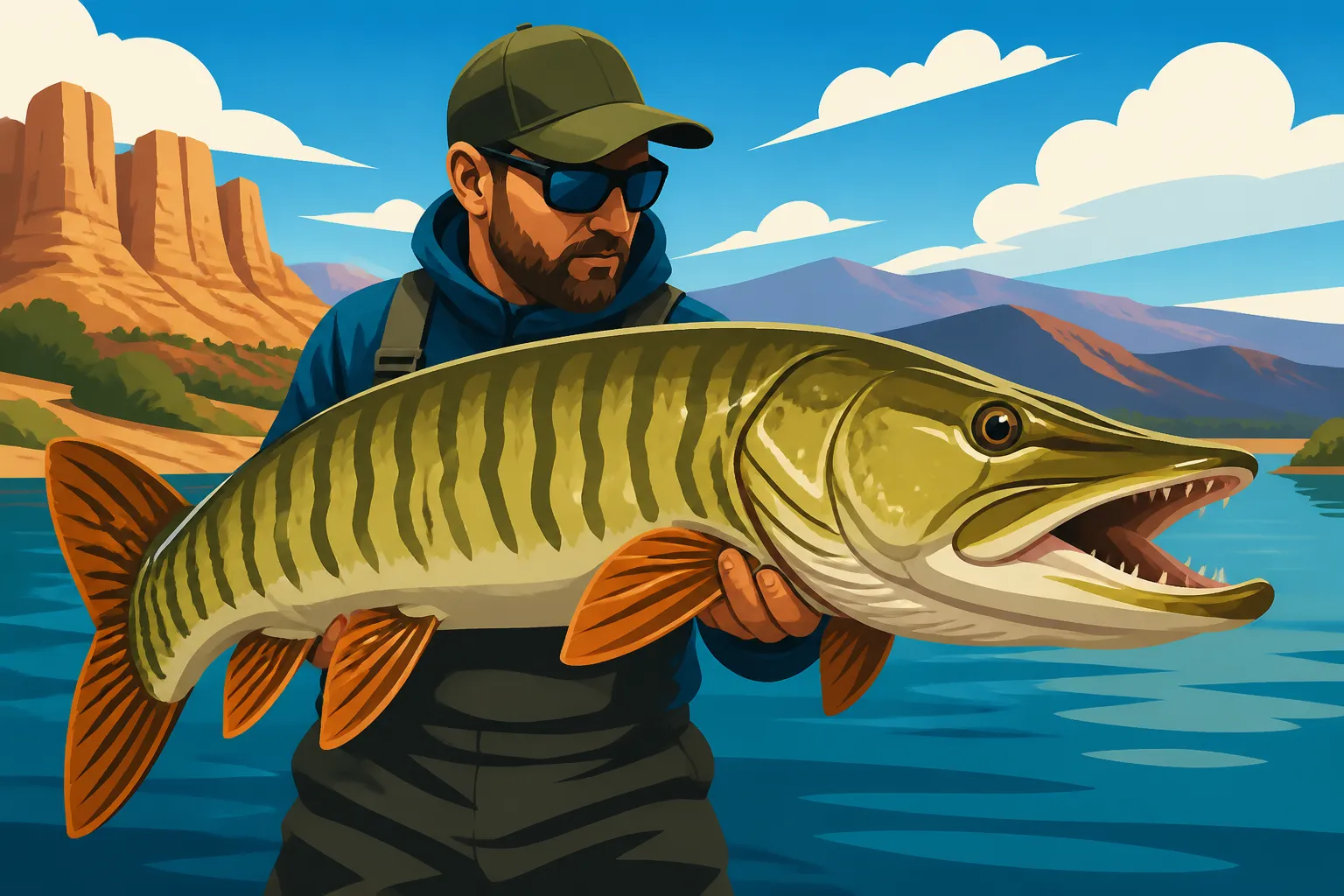
Tiger Muskie Size at Bluewater Lake
There’s nothing quite like the thrill of chasing a true apex predator in the water, and when you’re talking about New Mexico, that often means setting your sights on the elusive tiger muskie at Bluewater Lake. For many anglers, the size and power of these fish are legendary, and rightly so. If you've ever found yourself wondering just how big these toothy hybrids get and what it takes to tangle with one, you're in the right place. This guide is all about giving you the inside scoop on the impressive dimensions of Bluewater Lake's tiger muskie and preparing you for that unforgettable catch.
What Makes Tiger Muskie So Special at Bluewater Lake?
Chasing tiger muskie isn't just about catching a fish; it's an adventure. These magnificent creatures are a unique challenge, and Bluewater Lake in New Mexico has become one of the premier spots to find them. Their sheer size, aggressive nature, and relative rarity make every encounter an adrenaline-fueled story waiting to happen. Understanding why they thrive here helps explain their impressive dimensions.
The Hybrid Hunter's Unique Biology
Tiger muskie aren't a naturally occurring species in the wild. They're a sterile hybrid, a cross between a true muskellunge and a northern pike. This genetic combination results in a fish that often grows faster and bigger than either of its parent species in certain environments, inheriting the best (or most formidable!) traits from both. They possess the elongated, torpedo-like body of a pike but with the distinct tiger-striped markings that give them their name. New Mexico's wildlife management chose to stock these hybrids in specific waters like Bluewater Lake for a few key reasons, which you can learn more about in Why New Mexico Stocked Tiger Muskies in Its Lakes. Primarily, their predatory nature helps control populations of smaller, prolific species, acting as a biological control while also providing an exciting trophy fishery for anglers. Because they are sterile, they don't reproduce, allowing wildlife managers to precisely control their numbers and impact on the ecosystem. This careful management directly contributes to the robust, healthy fish we see growing to impressive sizes in the lake.
Bluewater Lake's Ideal Habitat for Growth
Bluewater Lake, situated amidst the scenic beauty of the Zuni Mountains, offers a fantastic environment that truly supports the growth of large tiger muskie. This isn't just any lake; its particular characteristics create a veritable muskie paradise. The lake is generally clear, allowing these visual predators to spot their prey, and it boasts a healthy population of forage fish, primarily trout and suckers, which are the main diet for growing muskie. A consistent food supply is absolutely crucial for any fish to reach substantial sizes, and Bluewater delivers. The lake also has plenty of submerged structure, such as old timber, rock piles, and varying depths, providing excellent ambush points and cover for these solitary hunters. They can lurk in the shadows, waiting for an unsuspecting meal to swim by. The cool, clean water, combined with these abundant resources, means that when a tiger muskie is stocked into Bluewater Lake, it has every opportunity to pack on pounds and length, transforming into the truly magnificent fish that anglers dream of catching.
Typical Size Ranges and What to Expect
When you hear "tiger muskie," you're likely thinking "big fish," and at Bluewater Lake, you wouldn't be wrong. While there's always the hope of landing a true behemoth, it's helpful to know what the average angler might encounter and what qualifies as a legitimate trophy.
Average Length and Weight for Bluewater Lake Tiger Muskies
For most anglers heading to Bluewater Lake with tiger muskie on their mind, you can realistically expect to encounter fish in the 30 to 40-inch range. These are robust, powerful fish that will put a serious bend in your rod and test your resolve. A muskie in this size class typically weighs anywhere from 8 to 15 pounds, depending on its condition and girth. While these might not be the giants you see gracing magazine covers, they are still incredibly exciting catches and represent a significant accomplishment for any angler. Landing one of these "average" fish is far from a small feat and often requires hours of casting and unwavering persistence. They fight hard, they're smart, and they demand respect. Many anglers consider a fish in this range to be a fantastic day on the water, providing ample challenge and a thrilling experience.
The Thrill of a Trophy Tiger Muskie
Now, if you're truly dreaming big, Bluewater Lake has the potential to deliver. Trophy tiger muskie here are generally considered to be those exceeding 40 inches in length, and fish pushing, or even surpassing, the 50-inch mark are caught every season. A muskie of 45 inches can easily weigh over 20 pounds, and a 50-inch fish could tip the scales at 30 pounds or more. These are true monsters of the deep, often having spent many years in the lake, growing fat on its abundant forage. The New Mexico state record for tiger muskie has consistently come from Bluewater Lake, highlighting its reputation for producing exceptionally large fish. While catching one of these giants is certainly not an everyday occurrence, it's the possibility that keeps dedicated anglers coming back, casting tirelessly. The satisfaction of battling and, hopefully, successfully releasing a truly colossal tiger muskie is a fishing memory that lasts a lifetime. You can always check the New Mexico State Record Fish to see the current benchmarks these impressive fish have set.
| Size Category | Typical Length (inches) | Estimated Weight (pounds) | Challenge Level |
|---|---|---|---|
| "Average" | 30-40 | 8-15 | High |
| "Big" | 40-45 | 15-25 | Very High |
| "Trophy" | 45+ | 25+ | Extreme |
Factors Influencing Tiger Muskie Size
It’s easy to look at a photo of a massive tiger muskie and just assume they all grow that big overnight. But like any wild creature, their size is a culmination of many variables. Understanding these factors can give you a deeper appreciation for these fish and even help you anticipate what size class you might encounter.
Age, Diet, and Growth Rate
A tiger muskie's growth rate is heavily dependent on two primary factors: age and diet. In their first year, with an abundant food source, they can grow quite rapidly, sometimes reaching 10-15 inches. However, their growth slows as they get older, with much of their later years focused on gaining girth and packing on muscle. A 30-inch muskie might be 3-5 years old, while a true 50-inch trophy could be 8-12 years or even older. The efficiency of their diet is paramount. Bluewater Lake's robust populations of rainbow trout, suckers, and even smaller bass provide a protein-rich menu that allows these muskie to thrive. When the forage base is strong, muskie have more to eat, translating directly into faster growth and larger ultimate sizes. Conversely, if forage becomes scarce, growth rates can slow dramatically. It's a delicate balance that fishery managers constantly monitor to ensure the lake can support these large predators.
Environmental Conditions and Management
Beyond age and diet, the overall health of the lake's ecosystem and how it's managed play a colossal role in the size of its tiger muskie. Consistent water levels, good water quality, and appropriate water temperatures all contribute to a stress-free environment where fish can grow efficiently. Extreme droughts or prolonged periods of unusually high water temperatures can stress fish, reduce forage, and slow growth. The stocking program itself is also critical; New Mexico Game and Fish carefully determines the number and size of tiger muskie fingerlings released into Bluewater Lake to ensure there's enough food and space for them to grow without over-competing. Furthermore, the strong emphasis on Catch and Release Best Practices in New Mexico for tiger muskie is a huge factor. Since these fish are sterile and cannot reproduce, every large fish caught and released has the opportunity to continue growing, reaching even more impressive sizes for future anglers. This conservation ethic is vital to maintaining Bluewater Lake's reputation as a trophy muskie fishery.
Gear Up for a Big One: Targeting Trophy Tiger Muskie
If you're serious about hooking into one of Bluewater Lake's giant tiger muskie, you can't show up with just any old fishing rod. These fish are powerful, aggressive, and demand specialized gear designed to handle their brute strength and sharp teeth. Don't learn this lesson the hard way!
Rods, Reels, and Line for Serious Muskie Anglers
When targeting tiger muskie, think heavy-duty. Your typical bass or trout setup simply won't cut it. You'll want a heavy power casting rod, ideally 7'6" to 9' in length, with a fast or extra-fast action. This kind of rod gives you the leverage needed to cast large lures and, more importantly, to control a powerful fish once it's hooked. Pair this with a robust baitcasting reel designed for muskie or saltwater use, featuring a strong drag system and a high line capacity. The gear ratio is also important, as you'll often be reeling in large, heavy lures. For line, braided line is the overwhelming choice due to its strength, sensitivity, and minimal stretch. You'll want at least 80-100 pound test braid to handle the shock of a strike and the relentless fight of a muskie. Remember, this isn't just about landing the fish; it's about casting those big baits hour after hour. You can find excellent selections of muskie-specific rods, reels, and braided lines on platforms like Amazon, often at competitive prices. For comparison, a Best Rods and Reels for New Mexico Trout Fishing setup would be dramatically different.
Lures and Techniques for Enticing Large Tiger Muskie
Tiger muskie are often called "the fish of 10,000 casts" for a reason – they can be incredibly challenging to entice. However, their aggressive nature means they respond to large, flashy, and noisy lures that mimic the trout and suckers they feed on in Bluewater Lake. Think big bucktail spinners, oversized crankbaits (diving plugs), jerkbaits, and glide baits. Lures often range from 6 to 12 inches, sometimes even larger. Colors that mimic natural forage, like silver, white, and perch patterns, are often effective, but don't be afraid to experiment with brighter, more aggressive colors like chartreuse or firetiger, especially on overcast days.
Technique is paramount. Muskie fishing is an active pursuit, involving a lot of casting, retrieving, and pausing to trigger strikes. The "figure-eight" at the boat is a legendary muskie technique: as your lure approaches the boat, sweep it into a wide figure-eight pattern just below the surface before lifting it out of the water. Many muskie will follow a lure all the way to the boat before striking, and this maneuver can often provoke a bite. Patience, persistence, and a willingness to try different presentations are your best allies. You can purchase a variety of these specialized lures from trusted retailers, with options available on Amazon to get you started. Make sure your tackle box is ready for the task; it's quite a different setup than what you'd use for Best Lures for New Mexico Trout.
Essential Safety and Handling Practices
Successfully landing a large tiger muskie is only half the battle; knowing how to safely handle and release it is equally, if not more, important. These fish have mouths full of razor-sharp teeth, and a powerful tail. For your safety and the fish's well-being, always carry a few key items:
- Long-nosed pliers or jaw spreaders: Essential for safely removing hooks from a toothy mouth without putting your fingers at risk.
- Large, rubberized landing net: A net with a wide hoop and rubber (not nylon) mesh will protect the fish's slime coat and fins, minimizing stress.
- Heavy-duty cut-resistant gloves: These are a wise precaution when handling a muskie, especially if you need to grasp its gill plate for control.
When you land a muskie, keep it in the water as much as possible, especially if you plan to release it. Minimize its time out of the water to snap a quick photo. Support its body horizontally, never vertically by the gill plate or tail alone, as this can damage its internal organs. Quickly remove the hooks, take your photo, and then gently release the fish, holding it upright in the water until it swims away under its own power. Following these practices ensures that New Mexico's magnificent tiger muskie population, particularly at Bluewater Lake, continues to thrive for generations of anglers to enjoy. Always be mindful of New Mexico Fishing Regulations Overview for specific rules on handling.
Disclaimer
This article is for general informational purposes only and does not constitute professional advice. Laws, prices and regulations vary by location and change over time. Consult a qualified professional for guidance on your specific situation.