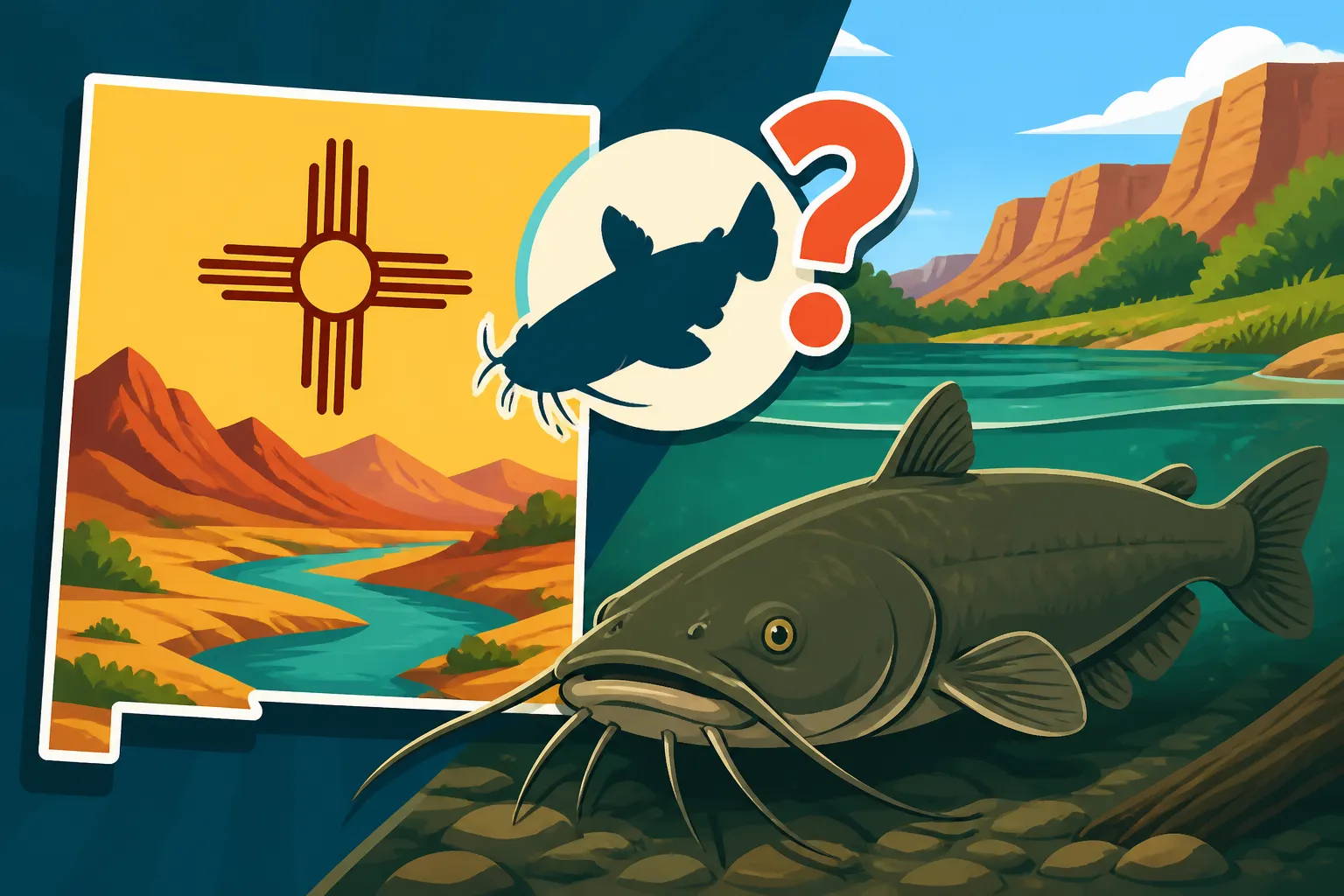
Are Flathead Catfish in New Mexico Rivers?
It's a common question for anglers new to the state, or even seasoned veterans who primarily chase trout in our high mountain streams: are those elusive, monster Flathead Catfish actually swimming in New Mexico's rivers? You see pictures and hear tales from other states, of these massive, prehistoric-looking fish that provide a fight like no other. But trying to figure out if they call the Land of Enchantment home, and more importantly, where to find them, can be a real head-scratcher. This guide is here to untangle that mystery, offering a clear picture of Flathead Catfish presence in New Mexico and how you might just land one yourself.
Understanding New Mexico's Catfish Landscape
New Mexico's waters might be known for their stunning trout fisheries, but don't let that fool you – we have a vibrant and exciting catfish population too! For many of us, especially those who grew up fishing the warmer, slower stretches of our rivers and lakes, catfish were some of the first big, powerful fish we ever hooked.
The Catfish Family in the Land of Enchantment
When most folks talk about catfish in New Mexico, they're usually referring to the ubiquitous and wildly popular Channel Catfish. These whiskered warriors are found in nearly every major river system and reservoir across the state, from the Rio Grande to the Pecos, and in lakes like Elephant Butte, Navajo Lake, and Conchas Lake. They're what many of us cut our teeth on, whether it was with a simple worm and bobber as a kid or a more advanced cut bait setup targeting bigger ones. Their aggressive bite and delicious fillets make them a perennial favorite. We also have various species of Bullhead Catfish, smaller but equally feisty, often found in ponds and smaller impoundments, providing great action, especially for younger anglers. The excitement of fishing for catfish often lies in their unpredictability and the sheer power they bring to a fight, often dwarfing other species in terms of raw pulling strength. You can learn more about the broader Catfish Fishing in New Mexico scene.
Where Do Flathead Catfish Typically Thrive?
Flathead Catfish, on the other hand, are a different beast altogether, and their habitat preferences are quite specific. Unlike Channel Cats, which are fairly adaptable, Flatheads are true river dwellers at heart. They prefer slow-moving, often murky, deeper sections of large rivers with plenty of cover. Think submerged timber, massive log jams, deep scour holes, and undercut banks – places where they can ambush their prey from the shadows. They're particularly fond of warmer water, which means they're often found in the lower, less mountainous stretches of river systems.
Their entire predatory nature is built around this environment. Flatheads are not scavengers in the way many imagine other catfish to be. They are ambush predators, and they prefer live food. This dictates their hunting grounds: they need structure to hide in, current breaks to conserve energy, and an abundance of baitfish or other living creatures to snatch up. This distinct preference for specific types of river habitat is a major factor in why their distribution in New Mexico isn't as widespread as that of their Channel Cat cousins.
The Truth About Flathead Catfish in New Mexico Waters
So, let's get right to the heart of it: are these formidable fish part of New Mexico's angling opportunities? The answer, thankfully, is yes, but with some very important caveats regarding where you'll find them.
Are Flathead Catfish Present in New Mexico?
Indeed, Flathead Catfish are present in New Mexico. However, their distribution is relatively limited compared to other states with vast river systems that better suit their specific habitat needs. You won't find them in every stream or lake. Instead, their primary strongholds in the Land of Enchantment are concentrated in the lower sections of the Pecos River and the lower Rio Grande.
Why these specific areas? It boils down to habitat and water temperature. The lower Pecos River, particularly below larger reservoirs like Brantley Lake and Lake Avalon, and the lower Rio Grande, generally south of Elephant Butte Lake, offer the warmer water temperatures and suitable riverine characteristics that Flatheads crave. These sections tend to be slower, wider, and have the kind of deep scour holes and woody debris that provide perfect ambush points for these powerful predators. The higher elevation, faster-flowing, or colder northern rivers and reservoirs simply don't offer the ideal environment for Flatheads to establish thriving populations. While they might occasionally be found elsewhere due to stocking or accidental introduction, these two major river systems are where you'll have the best chance of encountering them.
Distinguishing Flatheads from Other Catfish Species
If you're out fishing and happen to hook into a big catfish, how can you be sure it's a Flathead and not just a hefty Channel Cat? Knowing the difference is crucial, not just for bragging rights, but also because regulations or fishing strategies might vary.
Here are the key identification features for a Flathead Catfish:
- Head Shape: As their name suggests, their head is noticeably flattened and broad, giving them a distinct "bulldog" appearance.
- Lower Jaw: The lower jaw protrudes beyond the upper jaw, giving them an underbite. This is a very reliable distinguishing feature.
- Coloration: Flatheads typically have a mottled brown, olive, or yellowish-brown body, often with darker spots and patches that provide excellent camouflage in murky water. This is in contrast to the more uniform gray or olive-green of a Channel Catfish.
- Eyes: Their eyes are relatively small, set somewhat high on their flattened head.
- Tail Fin: This is another big one. Flathead Catfish have a square or only very slightly notched tail fin. A Channel Catfish, by contrast, has a deeply forked tail fin.
- Whiskers (Barbels): While all catfish have barbels, a Flathead's are typically shorter and thicker than those of a Channel Cat.
| Feature | Flathead Catfish | Channel Catfish |
|---|---|---|
| Head Shape | Broad and distinctly flattened | More rounded and conical |
| Lower Jaw | Protrudes beyond upper jaw (underbite) | Upper jaw typically slightly longer |
| Body Color | Mottled brown, olive, yellowish-brown | Gray to olive-green, often with spots |
| Tail Fin | Square or very slightly notched | Deeply forked |
| Body Shape | Robust, often stocky | More slender, streamlined |
| Diet Preference | Primarily live fish | Omnivorous (cut bait, worms, etc.) |
Knowing these differences is important because Flatheads are tenacious fighters, and targeting them often requires different tackle and, most importantly, different bait. While a Channel Cat will readily hit stink bait, chicken livers, or cut bait, a Flathead is almost exclusively interested in live prey.
Targeting Flathead Catfish in New Mexico
If you're eager to pit your skills against one of New Mexico's big Flatheads, you'll need a specific strategy and the right gear. These aren't your grandpa's easy-to-catch panfish, but the reward is truly something to experience.
Preferred Habitats and Hotspots in New Mexico
As we've touched on, your best bet for Flathead Catfish in New Mexico is in the lower Pecos River and the lower Rio Grande. Let's break that down a bit more.
On the Pecos River, focus your efforts downstream from major impoundments. Below Brantley Lake, for example, the river flows through a more arid landscape, and while it might not always seem like prime fishing country, those deeper bends, submerged logs, and rock piles can hold some monsters. The water here is generally warmer, and the river broadens in places, providing the kind of slow, deep currents Flatheads love.
For the Rio Grande, look south of Elephant Butte Lake. The tailwaters immediately below the dam might offer some opportunities, but as the river continues its journey south towards Las Cruces and beyond, it takes on the characteristics favored by Flatheads. Seek out the deepest holes you can find, especially those associated with significant structure. This could be natural log jams, fallen trees that have created deep scour pockets, or even man-made structures like bridge pilings or rip-rap. These fish are masters of camouflage and patience, often lying in wait for an unsuspecting meal to drift by. They are predominantly nocturnal feeders, so your best chances often come after sunset, continuing through the darkest hours of the night. This is where a good headlamp becomes your best friend. For more on this, check out our New Mexico Night Fishing Guide.
Essential Gear and Techniques for Flatheads
Catching a Flathead requires gear that can stand up to a serious fight. These fish are not only heavy but incredibly strong, often described as pulling like a "wet sack of bricks" or a "freight train."
- Rods & Reels: You'll need heavy-duty equipment. Think sturdy baitcasting rods, at least 7 to 8 feet long, with a heavy power rating and a fast action tip. Pair this with a robust baitcasting reel capable of holding a significant amount of heavy line and offering a strong, smooth drag. Many anglers opt for conventional reels designed for saltwater use due to their brute strength.
- Line: Don't skimp on your line. Most Flathead anglers use 50-80 pound test monofilament or braided line. Braided line offers superior sensitivity and strength for its diameter, which can be an advantage when feeling subtle bites in current or pulling fish out of heavy cover.
- Hooks: Large, strong circle hooks are paramount. Sizes ranging from 5/0 to 10/0 are common, depending on your bait size. Circle hooks are excellent for catfish as they typically hook the fish in the corner of the mouth, reducing gut-hooking and making for easier release if you're not planning to keep the fish.
- Sinkers & Swivels: Heavy slip sinkers (often 2-8 ounces, depending on current) are necessary to keep your bait on the bottom in strong currents. Pair these with strong barrel swivels (rated for 100+ pounds) to prevent line twist.
- Bait: This is perhaps the most critical difference for Flatheads compared to other catfish. Flatheads are primarily piscivorous, meaning they prefer live bait. Forget the stink baits and chicken livers often used for Channel Cats. Your best bet is live sunfish, bluegill, shad, perch, or small carp, typically 4-8 inches long. Presenting a lively baitfish near structure is the most effective method. You can often catch your own baitfish using small hooks, worms, or even cast nets in shallower areas. While Amazon might not sell live bait, they're a great place to find robust rods, reels, heavy lines, and sturdy tackle boxes from brands like KastKing or Penn that can handle these powerful fish.
- Rigs: The most common rig is a simple slip-sinker rig (also known as a Carolina rig for bass anglers, but on a much heavier scale). This consists of a heavy slip sinker on the main line, followed by a bead (to protect the knot), tied to a heavy barrel swivel. A 12-24 inch leader of heavy monofilament or fluorocarbon (40-80 lb test) is then tied from the swivel to your large circle hook. This allows the fish to pick up the bait without immediately feeling the weight of the sinker.
- Techniques: Patience is a virtue when Flathead fishing. Anchor your boat (or find a secure bank spot) near likely structure. Cast your live bait to the edges of log jams, deep holes, or undercut banks. Let the rig settle to the bottom. Keep your drag set appropriately – not too tight, but enough to prevent the fish from spooling you immediately. When a Flathead hits, they often don't "tap" like other fish; it can be a slow, heavy pull, or a sudden, aggressive thump. With circle hooks, resist the urge to set the hook hard. Instead, just slowly apply pressure and reel in as the fish turns and the hook sets itself in the corner of the mouth. You'll also want a sturdy net or a heavy set of fish grippers when you bring a Flathead boatside or to shore. Consider investing in a good Best Landing Nets for New Mexico Catch and Release Fishing for these giants.
Regulations and Conservation for Flathead Catfish
Before heading out, always double-check the latest fishing regulations for New Mexico. While the statewide bag and possession limits for many catfish species are fairly generous, specific regulations can sometimes apply to certain waters or species, particularly if they are less common or are part of a conservation effort. Understanding these rules is critical for responsible angling and ensuring the health of our fisheries. You can find comprehensive details in the New Mexico Fishing Regulations Overview. Given the limited distribution of Flatheads in New Mexico, practicing catch and release for larger breeding fish, or only keeping a smaller fish for the table, can help sustain their populations for future generations of anglers.
Why Flathead Catfish are a Unique Challenge
There's a reason why so many anglers dedicate themselves to chasing Flathead Catfish, even when they're challenging to find and hook. They offer an experience unlike almost any other freshwater fish.
The Thrill of the Fight
Once you've hooked a Flathead, prepare for a battle. These fish are pure muscle, and they use their broad, powerful bodies and the current to their advantage. It's not uncommon for a large Flathead to simply "sit" in the current, refusing to budge, forcing you to put maximum pressure on your gear. Then, just when you think you're gaining line, they'll make a powerful, deep run, testing your drag and your resolve. For trophy anglers, landing a Flathead of 20, 30, or even 40+ pounds is a true testament to their skill and patience. Many describe the fight as relentless and unforgiving, often lasting for many minutes, especially in heavy current. They truly earn their reputation as freshwater heavyweights.
Culinary Considerations
Beyond the thrilling fight, Flathead Catfish also have a fantastic reputation on the dinner table. Their meat is firm, white, and flaky, with a mild, sweet flavor that is often preferred over the meat of other catfish species. This is largely attributed to their diet of live fish, which gives their flesh a cleaner taste. Smaller to medium-sized Flatheads (say, under 15-20 pounds) are generally considered the best for eating, as larger, older fish can sometimes develop a stronger flavor or tougher texture. Preparing them is similar to other catfish – filleting and then frying, baking, or grilling yields delicious results. Just be sure to bleed them quickly after catching for the best quality meat, and keep them on ice or in a cooler with ice (easily found on Amazon if you don't already have one) to maintain freshness until you can clean them.
In conclusion, while not as widespread as their Channel Cat cousins, Flathead Catfish absolutely exist in New Mexico's rivers, particularly in the lower Pecos and Rio Grande. They represent a unique challenge and a rewarding experience for any angler willing to put in the effort and rig up appropriately.
Disclaimer
This article is for general informational purposes only and does not constitute professional advice. Laws, prices and regulations vary by location and change over time. Consult a qualified professional for guidance on your specific situation.