Catfish Fishing in New Mexico
Many anglers new to the Land of Enchantment might initially think New Mexico is all about high mountain trout streams and pristine alpine lakes. And while that's certainly a huge part of our fishing heritage, it's a real shame to overlook the incredible, hard-fighting, and delicious world of catfish that thrives in our warmer waters. If you've been struggling to figure out where the best whiskered fighters are hiding, or what bait they can't resist, you've come to the right place. This guide is your ultimate deep dive into everything you need to know to become a successful catfish angler in New Mexico, taking you from identifying species to landing that trophy blue.
Understanding Catfish Species in New Mexico
When you cast a line for catfish in New Mexico, you're primarily targeting two fantastic species, though there can sometimes be confusion with others. Knowing which fish you're after can drastically change your approach, from the bait you use to the type of water you target.
Channel Catfish – The New Mexico Staple
Ah, the Channel Catfish! This is arguably the most widespread and popular catfish species across New Mexico, and for good reason. They are plentiful, found in a vast array of waters, fight hard, and are absolutely delicious on the dinner table. If you've ever caught a catfish in New Mexico, chances are it was a Channel Cat.
These fish are easily identifiable by their slender bodies, deeply forked tails, and distinct barbels (whiskers) around their mouths. Juveniles often have small black spots, giving them a speckled appearance, which tends to fade as they grow larger. Their coloration can vary quite a bit depending on the water they inhabit, ranging from a dark, olive-brown to a lighter, silvery-grey. They generally prefer warm, sluggish waters with soft bottoms, but they are incredibly adaptable and can be found in a wide range of environments, from the shallow, muddy banks of a river to the deeper, more open water of a reservoir.
Channel cats are opportunistic feeders, meaning they'll eat just about anything they can get their mouths on. This makes them a fantastic target for anglers using a variety of baits, from traditional worms and cut bait to more unusual concoctions like hot dogs or cheese. They're particularly active during dawn, dusk, and throughout the night, making them a prime target for those who enjoy the peace and quiet of New Mexico Night Fishing Guide. You'll find them holding near submerged structures like fallen trees, brush piles, or rock formations, as well as in deeper channels and holes where they can ambush prey. Catching a good-sized channel cat in New Mexico is a truly satisfying experience, and a testament to the diverse fishing opportunities our state offers beyond just trout.
Flathead Catfish – The Apex Predator
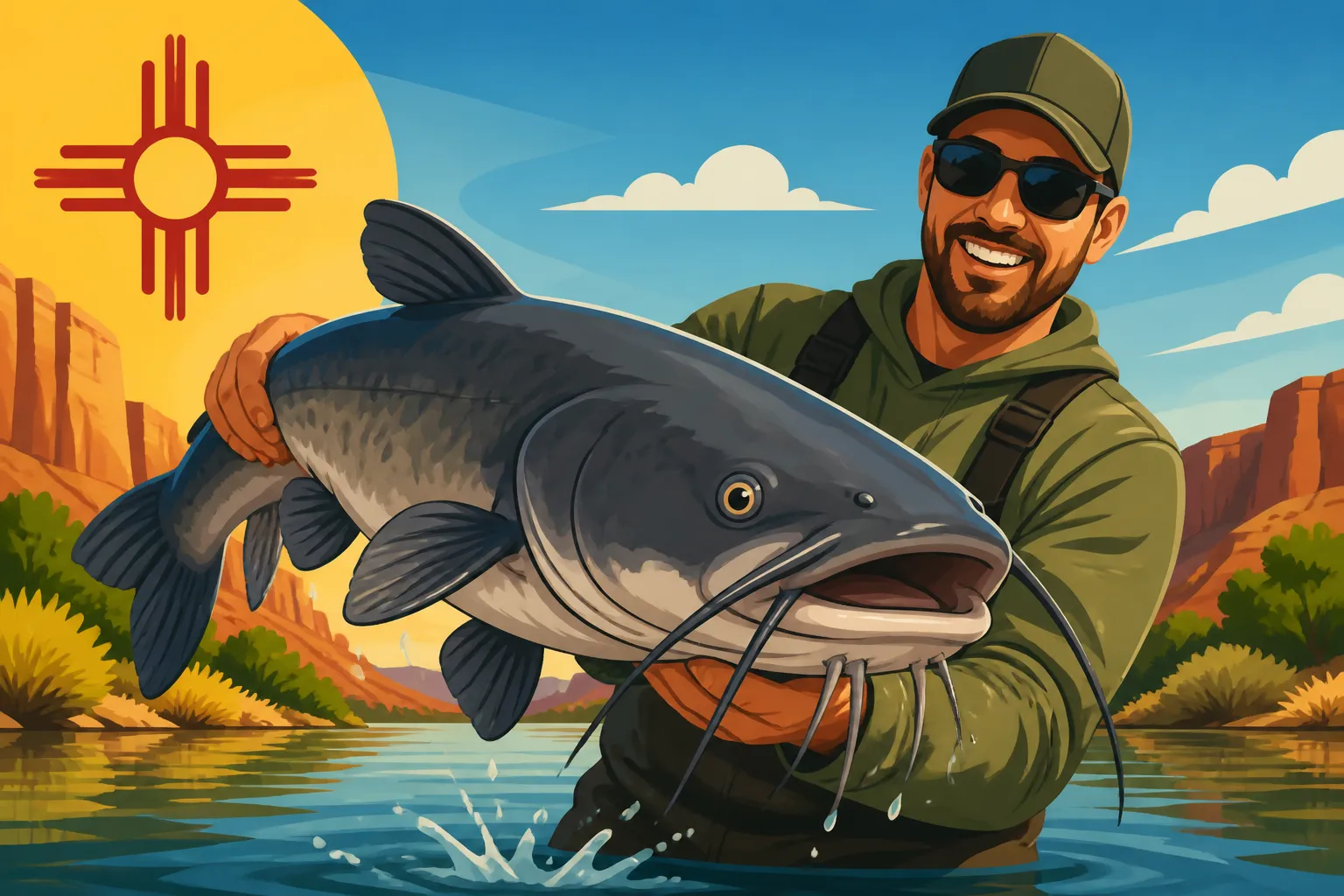
If the Channel Catfish is the everyman's fish, the Flathead Catfish is the elusive brawler. These are the true heavyweights of New Mexico's catfish world, known for their immense size, powerful fights, and a more predatory nature than their Channel Cat cousins. Catching a trophy Flathead is a badge of honor for many serious catfish anglers.
As their name suggests, Flathead Catfish have a distinctly flat, broad head. Their lower jaw protrudes beyond the upper, giving them a somewhat grumpy, determined look. Unlike the Channel Cat's deeply forked tail, the Flathead's tail is more rounded, almost square. Their bodies are typically mottled brown and yellow, offering excellent camouflage against the muddy and rocky bottoms they prefer. These aren't the fish you'll find schooling up; Flatheads are solitary ambush predators, preferring to hide in heavy cover and wait for prey to swim by. They're often found in large, slow-moving rivers and deep sections of reservoirs, especially around dense timber, rock piles, or undercut banks.
What truly sets Flatheads apart is their diet and behavior. Unlike Channel Cats, which are scavengers, Flatheads are voracious predators that almost exclusively prefer live bait. This means ditching the stink baits and focusing on live sunfish, bluegill, or even small carp. They can be incredibly wary, and hooking into a big one requires patience, heavy-duty gear, and often, an all-night vigil. Their powerful runs and stubborn resistance make them an exhilarating catch. While not as widespread as Channel Cats, where Flatheads exist, they can grow to truly enormous sizes, representing a genuine challenge for any angler looking to land a monster fish in New Mexico.
Blue Catfish and Other Potential Species
While Channel and Flathead Catfish dominate the New Mexico scene, anglers sometimes wonder about other species, particularly the large Blue Catfish. It's important to clarify that Blue Catfish are not typically found in New Mexico waters. If you catch a very large, silvery catfish with a forked tail, it's almost certainly a large Channel Catfish, which can sometimes grow to impressive sizes and lose their spots, taking on a bluish-grey hue that can lead to misidentification.
Beyond the main game species, you might occasionally encounter other smaller, non-game fish that resemble catfish or are part of the broader sunfish family but aren't typically targeted by catfish anglers. For example, some smaller bullhead species (like Black Bullheads or Yellow Bullheads) can sometimes be found in shallower, murkier waters, particularly in ponds and smaller rivers. These are generally much smaller than Channel Cats, have square or slightly notched tails, and don't typically grow beyond a pound or two. While they'll readily take similar baits, they are not usually what anglers are looking for when they go "catfishing."
Focusing on the Channel and Flathead catfish will give you the most rewarding and productive experiences in New Mexico. Understanding their distinct characteristics, dietary preferences, and preferred habitats is the first step in successful catfishing. Always refer to the latest New Mexico Fishing Regulations Overview to ensure you're correctly identifying your catch and adhering to any specific limits or rules that might apply to particular species or waters.
Where to Find Catfish in New Mexico
New Mexico's diverse landscapes offer a surprising array of waters where catfish thrive. From vast reservoirs to winding rivers and even accessible urban ponds, there's a catfish hotspot for every type of angler. Knowing the prime locations can save you a lot of guesswork and dramatically increase your chances of success.
Major Lakes and Reservoirs
When it comes to big water and big catfish, New Mexico's major reservoirs are absolute powerhouses. These sprawling impoundments offer the deep channels, abundant forage, and extensive structure that catfish adore, especially Channel and Flathead varieties.
Elephant Butte Lake, located in southern New Mexico, is hands down one of the premier catfish destinations in the state. This massive reservoir is famous for its abundant Channel Catfish population, with anglers frequently pulling out fish in the 5-15 pound range, and occasionally much larger. The lake's vast network of submerged channels, old riverbeds, and flooded timber provides endless hiding spots for catfish. Popular areas include the deeper sections of the main lake, particularly around points and humps that drop into old creek channels. The mouths of coves where baitfish congregate are also excellent spots. Night fishing here, especially during the warmer months, can be incredibly productive, with catfish moving into shallower waters to feed. You can explore a lot more about fishing this giant lake in our Elephant Butte Lake Fishing Guide.
Further east, Conchas Lake is another fantastic reservoir for catfish. While perhaps better known for its walleye and crappie, Conchas holds a thriving population of Channel Catfish, and some respectable Flatheads too. The lake's many coves, submerged rocky points, and timber-strewn areas are ideal catfish habitat. Fishing near the dam area or along the main river channel can often yield good results. Conchas Lake is generally less crowded than Elephant Butte, offering a more peaceful experience while still providing excellent angling opportunities. For a detailed look at this fishery, check out our Conchas Lake Fishing Guide.
Other notable reservoirs include Ute Lake, also in eastern New Mexico, which boasts a very healthy Channel Catfish population, and Caballo Lake, just south of Elephant Butte, which often offers consistent catfish action, especially in its shallower, warmer sections. Don't forget Navajo Lake in the north, while primarily a trout and salmon fishery, it also holds good numbers of Channel Catfish, particularly in its warmer, shallower arms and coves. The key to success in these reservoirs is often finding those submerged structures or old creek channels where catfish like to congregate and ambush prey.
Rivers and Smaller Waterways
While reservoirs get a lot of attention, New Mexico's rivers and smaller waterways are truly fantastic for catfish, offering a more intimate and often less crowded fishing experience. These flowing waters provide unique challenges and rewards, especially for anglers targeting Flatheads.
The Rio Grande is New Mexico's most iconic river, and it's absolutely teeming with Channel Catfish, particularly in its middle and southern stretches. The river's constantly changing currents, deep holes, sandbars, and snags create perfect catfish habitat. Look for deeper pools downstream from rapids, behind log jams, or in areas where the current slows down, creating eddies. These spots provide catfish with shelter from the current and prime ambush points. Using sturdy gear and being prepared for snags is essential when fishing the Rio Grande. The lower sections, particularly below major dams or diversion structures, can be especially productive as fish congregate and bait washes through.
The Pecos River in eastern New Mexico is another excellent choice for river catfishing. Much like the Rio Grande, it offers a mix of deep pools, undercut banks, and brushy snags that are ideal for both Channel and Flathead Catfish. Access points can be more spread out here, so a little exploration might be required, but the rewards are often worth the effort. The Gila River, in the southwestern part of the state, also holds catfish, though it's often better known for its native trout species. Still, the slower, warmer sections of the Gila can offer good catfishing, especially for those looking for a more remote experience.
When fishing rivers, pay close attention to current seams, structure, and depth changes. Catfish will often sit on the edge of faster currents, waiting for food to be swept by, or hide deep in holes during the day, moving shallower to feed at night. Remember that river conditions, especially water levels and turbidity, can change rapidly due to rainfall or upstream dam releases, so it's always wise to check current conditions before heading out.
Urban Ponds and Community Fisheries
Don't have a boat? Don't want to drive hours to a major reservoir? No problem! New Mexico also offers a fantastic network of urban ponds and community fisheries that are often regularly stocked with Channel Catfish, making them incredibly accessible and perfect for a quick trip or for introducing kids to fishing.
Cities like Albuquerque, Santa Fe, and Las Cruces often have several community ponds that are part of the New Mexico Department of Game and Fish's (NMDGF) stocking program. These ponds are specifically managed to provide easy access fishing opportunities for families and casual anglers. While you might not pull out a state-record Flathead from these waters, they provide consistent action for pan-sized Channel Catfish, which are perfect for a family fish fry. They are typically well-maintained, have good bank access, and sometimes even feature fishing piers or ADA-accessible facilities.
The beauty of these urban ponds is their convenience. They require minimal gear – often just a basic spinning rod, some hooks, weights, and a tub of worms or prepared bait is all you need. They're excellent places to hone your skills, experiment with different baits, or simply enjoy a relaxing afternoon outdoors. Check the NMDGF website for stocking schedules and specific regulations for these community fisheries, as some might have different rules than larger waters. These ponds are a wonderful resource for fostering a love of fishing, especially for the next generation of anglers, and often provide consistent action when other waters might be tougher.
Essential Gear for New Mexico Catfish Anglers
Getting the right gear for catfish in New Mexico is crucial. These are strong fish, and whether you're battling a feisty Channel Cat or an absolute monster Flathead, you need tackle that can stand up to the fight. Investing in the right equipment will not only increase your success but also ensure a more enjoyable and less frustrating experience on the water.
Rods, Reels, and Line – Building a Reliable Setup
Your rod, reel, and line are the backbone of your catfishing setup. Skimping here can lead to lost fish, broken lines, and a lot of disappointment. When targeting catfish in New Mexico, you generally want something with a bit more backbone than your typical trout or bass setup.
For Channel Catfish, a medium-heavy to heavy action spinning or baitcasting rod, typically 7 to 9 feet long, is an excellent choice. This length provides good casting distance for bank anglers and enough leverage to handle strong fish. The medium-heavy action offers a good balance of sensitivity for detecting bites and power for setting the hook and fighting the fish. Pair this with a durable reel (size 4000-6000 for spinning reels or a comparable baitcaster) that has a smooth drag system. A reliable drag is paramount when a powerful cat decides to make a run. For line, 15-30 pound test monofilament or braided line is generally appropriate. Monofilament offers good stretch and abrasion resistance, which can be useful around rocky bottoms. Braided line, with its superior strength-to-diameter ratio and no-stretch properties, gives excellent sensitivity and hook-setting power, but can be more prone to getting snagged and harder to cut if needed. Many anglers use a braided main line with a monofilament or fluorocarbon leader for a combination of strength and abrasion resistance.
If you're specifically targeting Flathead Catfish, you'll want to beef up your gear considerably. These fish are notorious for their brute strength and their tendency to head straight for heavy cover when hooked. A heavy to extra-heavy action baitcasting rod, 7 to 10 feet long, is highly recommended. The longer rod provides more leverage, which you'll definitely need. Pair this with a large, robust baitcasting reel capable of holding a substantial amount of heavy line. Line choices will typically range from 40 to 80 pound test braided line, again, often with a heavy mono or fluorocarbon leader. The no-stretch nature of braid is critical for driving large hooks into a Flathead's tough mouth and pulling them away from snags. While some anglers prefer conventional reels for heavy catfishing, a high-quality baitcaster with a strong drag is perfectly capable. Think of it this way: when a 40-pound Flathead decides to bury itself in a log jam, you'll be glad you opted for the heavier tackle.
Hooks, Sinkers, and Terminal Tackle
Once you've got your rod, reel, and line sorted, the smaller but equally important components of your terminal tackle come into play. These are the bits and pieces that connect your line to your bait and ultimately, to the fish.
Hooks are incredibly important for catfishing. For Channel Catfish, a wide variety of hooks can work, but popular choices include circle hooks (sizes 2/0 to 8/0) and octopus hooks (sizes 3/0 to 6/0). Circle hooks are a fantastic choice for catch and release, as they typically hook the fish in the corner of the mouth, minimizing gut hooks. They also require less of a forceful hookset; just let the fish take the bait and reel in, and the hook often sets itself. For prepared or stink baits, some anglers might use treble hooks, but these are generally discouraged due to increased harm to the fish. For Flathead Catfish, you'll want to go even larger, often using 7/0 to 10/0 circle hooks or J-hooks, especially when using big live baits. The key is to match the hook size to your bait size – you want the hook point exposed enough to get a solid set.
Sinkers are essential for getting your bait down to where the catfish are, especially in rivers with current or deep reservoirs. The type and weight of your sinker will depend on the conditions. Egg sinkers and flat-sided pyramid sinkers are popular choices. Egg sinkers, often used with a slip-sinker rig, allow the line to pass through freely, so the fish can take the bait without feeling immediate resistance. Pyramid sinkers are great for holding bottom in strong currents. You'll want to carry a range of weights, from 1/2 ounce up to several ounces, especially if fishing the Rio Grande Fishing Guide. The goal is to use the lightest weight possible that will still hold your bait in place.
Other terminal tackle includes heavy-duty swivels (to prevent line twist, especially with spinning baits or in current), sturdy snaps (for quickly changing rigs if desired), and abrasion-resistant leaders. Some anglers prefer a fluorocarbon leader for its invisibility in clear water, while others stick to stout monofilament for its knot strength and abrasion resistance. Keep a pair of heavy-duty pliers or cutters handy for cutting heavy line and safely removing hooks. An essential piece of gear for any angler is a well-stocked tackle box. You can find a huge variety of options on Amazon, ranging from compact utility boxes to large, multi-tray systems to keep your hooks, weights, and swivels organized and easily accessible.
Bait – The Key to Success
No matter how good your rod and reel are, without the right bait, you're just casting for exercise. Catfish are notoriously picky on some days and ravenous on others, but having a diverse bait selection is key to unlocking their bite.
For Channel Catfish, the menu is incredibly broad. These opportunistic feeders will strike a wide array of natural and prepared baits.
- Natural Cut Bait: Freshly cut pieces of oily fish like shad, bluegill, or carp are absolute dynamite. The smell disperses well in the water, attracting catfish from a distance.
- Worms: Good old nightcrawlers and earthworms are always a reliable choice, especially for smaller to medium-sized channel cats.
- Prepared Baits (Stink Baits/Punch Baits): These are commercially available or homemade concoctions designed to have a strong, often pungent odor that catfish can't resist. Brands like Sonny's Super Sticky Baits or other similar options are popular, often used with a specialized worm or sponge hook. You can even find bait casting tools for these on Amazon.
- Other Food Items: Believe it or not, hot dogs, chicken livers (a classic!), shrimp, and even pieces of cheese can be incredibly effective on channel cats, especially in ponds and slower-moving waters.
For Flathead Catfish, the bait game changes significantly. These are pure predators, and they prefer their meals alive and kicking.
- Live Baitfish: This is the absolute undisputed champion for Flatheads. Small sunfish (bluegill, green sunfish), bullheads, or carp, caught from the same waters you're fishing, are typically the most effective. Presenting them alive and active is key. Make sure to check New Mexico Fishing Regulations Overview for rules on using live bait, especially if transporting baitfish between waters.
- Size Matters: Flatheads are not afraid of a big meal. Don't be shy about using a 6-8 inch live baitfish if you're targeting true monsters.
Regardless of the species, always remember that fresh bait is usually best. Keep your live bait lively in a bait bucket with an aerator, and your cut bait fresh and chilled until it's ready to go on the hook. Experimentation is often key, especially on a new body of water or during different seasons. What worked yesterday might not work today, so having options can make all the difference. For more specific advice on what to put on your hook, dive into our guide on Best Bait for New Mexico Trout, though keep in mind catfish often prefer very different offerings!
Tried-and-True Catfish Fishing Techniques
Catfishing isn't just about throwing a line in the water and hoping for the best. While catfish are certainly willing biters, employing specific techniques tailored to their habits and habitat can drastically improve your catch rates. From patient bank fishing to active boat strategies, mastering these methods will make you a more versatile and successful New Mexico catfisherman.
Bottom Fishing and Stationary Setups
The most common and often most effective method for catching catfish in New Mexico, particularly Channel Catfish, is bottom fishing with a stationary setup. This technique relies on getting your bait down to the catfish, who are often lurking near the bottom, and letting its scent and presence do the work.
The Carolina Rig (also known as a slip-sinker rig) is a perennial favorite and an absolute workhorse for catfishing. It consists of threading an egg sinker onto your main line, followed by a bead (to protect your knot), and then tying on a swivel. To the other end of the swivel, you attach a leader (typically 12-24 inches) and then your hook. The beauty of this rig is that the sinker slides freely on the main line. When a catfish picks up your bait, it can swim off without feeling the weight of the sinker, allowing it to mouth the bait more confidently before you set the hook. This rig is incredibly versatile and works well in both still waters and moderate currents.
For bank anglers, fishing multiple rods with stationary setups is a popular and effective strategy, especially for Channel Catfish. You can cast out several lines with different baits or at varying distances and depths to cover more water and see what the fish are preferring. Sturdy rod holders are essential to keep your rods secure and upright, preventing them from being pulled into the water by a strong strike. These can range from simple bank sticks to more elaborate tripod setups. When fishing from the bank, look for areas with current breaks, drop-offs, or submerged cover. Casting near the edges of weed beds or into deeper holes can be very productive. Remember to keep your drag set appropriately – loose enough for the fish to pull line without breaking it, but tight enough to set the hook. Many anglers even employ bite alarms (available on Amazon) that clip to the rod and emit an audible signal when a fish strikes, allowing you to relax and socialize while still being alerted to action.
Drifting and Trolling for Catfish
While stationary bottom fishing is a go-to, sometimes a more active approach is needed, especially for covering larger areas or targeting specific species like Flatheads that might be spread out. Drifting and slow trolling are excellent techniques for presenting bait to mobile catfish.
Drifting involves letting your boat move naturally with the current or wind, dragging your bait along the bottom or just above it. This is particularly effective in larger rivers like the Rio Grande or big reservoirs like Elephant Butte, where catfish might be scattered or actively searching for food. You'll typically use a heavy sinker to maintain bottom contact, often employing a three-way swivel rig (tying the main line to one eye, a leader to the hook on a second, and a shorter leader to a heavy sinker on the third) or a simple Carolina rig with a heavier weight. The key is to control your drift speed, often using a drift sock or a trolling motor on a very low setting to slow the boat down. This allows your bait to cover a lot of ground, mimicking natural prey being swept along by the current. As you drift, pay attention to your fish finder for any changes in bottom contour, submerged structure, or baitfish schools, as these are prime areas to find actively feeding catfish.
Trolling for catfish, while less common than drifting, can also be productive, especially in large reservoirs when catfish are suspended or cruising open water. This involves slowly motoring the boat, typically at speeds just above a slow drift, while dragging baits behind. Deep-diving crankbaits can sometimes entice strikes from aggressive Flatheads or larger Channel Cats, though live bait or cut bait presented on a three-way rig with heavy weights is usually more effective. Trolling allows for precise control over depth and speed, which can be crucial when trying to pinpoint where fish are holding. This technique requires good boat control and often the use of a fish finder to locate schools of baitfish or catfish. While perhaps not the first technique that comes to mind for catfishing, it can be a valuable tool in your arsenal, particularly when exploring new water or when fish aren't concentrated in one area.
Night Fishing for Catfish
If there's one thing almost universally true about catfishing, it's that some of the best action happens after the sun goes down. New Mexico is no exception, and embracing the darkness can lead to some truly memorable catches. New Mexico Night Fishing Guide is practically a rite of passage for serious catfish anglers.
Why is night fishing so effective? Catfish, particularly Channel Cats, are largely nocturnal feeders. As the sun sets and water temperatures cool, they become more active, moving out of deeper, cooler water into shallower areas to forage. The cover of darkness also makes them bolder, less wary, and more willing to hit baits. For Flatheads, while they are active predators during the day, their movements often increase under the cloak of night, especially when hunting larger prey.
To successfully fish at night, you need to be prepared.
- Safety First: Always fish with a buddy, inform someone of your plans, and be aware of your surroundings. Bring a powerful headlamp (and spare batteries!) for tying knots, baiting hooks, and navigating.
- Lighting: In addition to a headlamp, consider ambient lighting for your camp or boat, such as a battery-powered lantern. Glow sticks attached to your rod tips can also be incredibly useful for detecting subtle bites in the dark.
- Insect Repellent: Mosquitoes and other biting insects can be relentless after dark, especially near water. Don't forget your bug spray!
- Comfort: Night fishing often means longer sessions, so bring comfortable chairs, plenty of water, and snacks. Temperatures can drop significantly, even in summer, so layers of clothing are a good idea.
- Familiarity: It's often best to fish a spot you've scouted during the day, so you know the terrain, potential hazards, and where you want to cast.
When setting up for night fishing, use the same stationary bottom rigs you would during the day. Catfish often move closer to shore at night, so you don't always need to cast as far. Focus on natural current breaks, submerged structure, or points that extend into deeper water. The peace and quiet of night fishing, combined with the anticipation of a hard strike from a nocturnal giant, make it an incredibly rewarding experience that every New Mexico catfish angler should try.
Best Times to Go Catfish Fishing in New Mexico
Timing is everything in fishing, and catfishing in New Mexico is no exception. Understanding the seasonal movements, daily patterns, and environmental influences on catfish behavior can significantly boost your success. It's not just about what bait you use, but when you use it.
Seasonal Hotspots and Strategies
New Mexico's distinct seasons bring about predictable changes in catfish behavior, offering unique opportunities throughout the year.
Spring (March-May): As water temperatures begin to rise in early spring, catfish become increasingly active. This is often an excellent time to target them, especially Channel Catfish, as they start to feed heavily in preparation for the spawn. Look for them moving into shallower, warmer coves and flats, particularly those with muddy or sandy bottoms that warm up quickly. They'll be on the hunt for easy meals. The pre-spawn period can be one of the most productive times for catching numbers of fish. Later in spring, as water temperatures approach the 70s, the spawn begins. During this time, catfish become very focused on reproduction and can be a bit harder to entice. They'll often seek out secluded, protected areas like undercut banks, hollow logs, or rock crevices to lay their eggs. Fishing just outside these areas, or targeting fish before they move into these spawning grounds, is often your best bet.
Summer (June-August): Summer is prime time for catfishing in New Mexico! The warm water temperatures keep catfish metabolism high, meaning they need to feed regularly. While they might retreat to deeper, cooler waters during the hottest parts of the day, they become incredibly active during dawn, dusk, and especially throughout the night. This is when New Mexico Night Fishing Guide truly shines. Target deeper main lake points, river channels, and submerged structure during daylight hours. As evening approaches, move into shallower flats, coves, and creek mouths where they come to feed. The abundance of baitfish during summer also means catfish are actively hunting. This is also a fantastic time for Flathead Catfish, as their preferred live baits are plentiful. Be prepared for intense heat during the day, but embrace those cooler nighttime hours for incredible action.
Fall (September-November): As water temperatures start to drop in the fall, catfish enter a "fattening up" phase before winter. This can be another fantastic time to fish. They'll often school up and feed aggressively, trying to pack on calories. Look for them in transitional areas, moving between shallow feeding grounds and deeper wintering holes. They might be found shallower in the mornings and evenings, retreating to slightly deeper water during midday. As fall progresses into late fall, their activity will slow, and they'll move towards their deep wintering grounds. This can be a great time for targeting bigger fish that are still actively feeding.
Winter (December-February): Winter catfishing in New Mexico is certainly possible, but it often requires a more refined approach. Catfish metabolism slows significantly in cold water, and they become less active. They typically congregate in deep, stable water, such as main river channels, deep holes in reservoirs, or near dam structures. Your bites will be much more subtle, and the action slower, but persistence can pay off with some surprisingly large fish that are less wary due to their reduced activity. Downsizing your bait and fishing very slowly can sometimes trigger a bite. While not the most popular season for catfishing, a mild winter day can still offer opportunities for dedicated anglers.
Daily Patterns and Weather Impacts
Beyond the seasons, daily rhythms and sudden weather changes also play a significant role in catfish behavior.
Time of Day: As mentioned, catfish are predominantly nocturnal or crepuscular (active during dawn and dusk). The hours around sunrise and sunset are almost always excellent for catfishing, as fish move into feeding mode. Throughout the night, their activity typically remains high, making overnight trips incredibly productive. During the middle of the day, especially in summer, catfish often retreat to deeper, cooler water or seek refuge in heavy cover, becoming less active. However, don't write off midday altogether; sometimes a sudden storm front or heavy cloud cover can spur a bite.
Weather:
- Warm, Stable Weather: Generally good for catfishing, especially in summer. Fish are active and feeding.
- Fronts: A rapidly approaching cold front can sometimes trigger a feeding frenzy right before it hits, as fish sense the change and try to feed ahead of it. After a strong cold front passes, however, fishing can become tough as fish become lethargic and less willing to bite.
- Rainfall and Turbidity: Moderate rainfall can actually be beneficial, washing food into the water and increasing current, which can activate catfish. However, very heavy rains leading to extreme turbidity and rapidly rising water levels can temporarily shut down the bite as fish get disoriented. Catfish use their incredible sense of smell more than sight, so slightly muddy water doesn't deter them as much as it might for trout.
- Barometric Pressure: A falling barometer (indicating an approaching storm) often correlates with increased feeding activity, while a high, stable barometer can sometimes mean slower fishing.
Understanding these daily and weather patterns, combined with seasonal knowledge, will help you decide not only when to go, but also where to focus your efforts and what techniques to employ.
Water Levels and Their Influence
New Mexico is no stranger to fluctuating water levels, especially in its rivers and reservoirs. These changes can dramatically impact where catfish are holding and how they feed.
Rising Water Levels: When water levels rise, especially after heavy rains or snowmelt, new areas of shoreline or flooded vegetation become inundated. This often creates new feeding opportunities for catfish. They will move into these newly flooded areas to forage for worms, insects, and other small creatures washed into the water. In rivers, rising water often means increased current, which can sometimes push catfish into quieter eddies and slack water areas. However, as the water clears after the initial surge, these newly accessible areas can become very productive.
Falling Water Levels: Falling water levels, common during prolonged dry spells or heavy irrigation withdrawals, can concentrate catfish. As shallower areas recede, fish are forced into deeper channels, holes, and closer to existing structure. This can make them easier to locate, but it can also put them under stress, making them less willing to bite. In reservoirs like Elephant Butte, dramatically falling water can expose vast tracts of land, changing the landscape of fishing spots. Anglers often need to adjust their boat ramps or find new access points. During these times, focus on the remaining deep water access points and channels.
Current: In rivers, current is a major factor. Catfish will use current to their advantage, positioning themselves in eddies, behind log jams, or on the edges of faster flows to ambush prey being swept downstream. Too much current can make fishing difficult, as it's hard to hold bottom, but a moderate current is often ideal. In reservoirs, strong winds can create currents and waves, which can sometimes stir up bait and activate catfish, though it can also make boat control challenging.
Always try to check the latest water level reports for your chosen fishing destination, especially for major reservoirs and rivers. Resources from the U.S. Bureau of Reclamation or local park services can provide valuable insights into current conditions. Adapting your strategy to these ever-changing water levels is a crucial skill for any successful New Mexico catfish angler.
Regulations and Conservation for Catfish
As responsible anglers, understanding and adhering to New Mexico's fishing regulations is not just a legal requirement but a vital part of conserving our precious fisheries for future generations. Catfish are a robust species, but proper management and ethical practices ensure their continued abundance.
New Mexico Catfish Limits and Rules
The New Mexico Department of Game and Fish (NMDGF) establishes specific rules for all fish species, and catfish are no exception. These regulations are in place to manage fish populations sustainably, ensuring that anglers can continue to enjoy productive catfishing for years to come.
For Channel Catfish, New Mexico typically has generous bag and possession limits, reflecting their widespread abundance and strong reproductive rates. Generally, the statewide daily bag limit allows for a significant number of Channel Catfish per angler, with a similar possession limit. These limits are designed to allow anglers to keep a good meal while preventing overfishing. It's rare to find specific size restrictions for Channel Catfish in most waters, meaning you can keep any legal-sized fish you catch, up to your daily limit. However, certain "Special Waters" or community ponds might have specific, localized rules that differ from the statewide regulations, so always double-check the current NMDGF fishing proclamation for the specific body of water you intend to fish.
Flathead Catfish often have slightly more restrictive regulations due to their slower growth rates and more predatory nature. The daily bag and possession limits for Flatheads are usually much lower than for Channel Cats, sometimes limited to just one or two fish per day. This is to protect the larger, older breeding stock and to ensure these magnificent fish continue to thrive. In some instances, there might also be a minimum or maximum size limit for Flatheads, or even a slot limit (where fish within a certain size range must be released). These measures are crucial for managing trophy fisheries and protecting vulnerable age classes. Given their size and fighting prowess, many anglers choose to release large Flatheads to allow them to continue to grow and reproduce, even if they are legally allowed to keep them.
It's paramount to consult the latest official NMDGF fishing proclamation each year, as regulations can change. You can usually find these booklets at license vendors, NMDGF offices, or download them directly from the NMDGF website. Ignorance of the law is not an excuse, and violations can result in significant fines and penalties.
Licensing Requirements for Catfish Anglers
Before you even think about casting a line for catfish in New Mexico, you need to make sure you have the proper licenses and validations. This is a non-negotiable step for all anglers.
Every angler aged 12 and older is required to possess a valid New Mexico fishing license. Whether you're a resident or a non-resident, an annual license is the most common choice, allowing you to fish year-round. However, if you're just visiting for a short trip, there are also options for New Mexico One-Day and Five-Day Fishing Licenses that might suit your needs. Remember, purchasing your license directly supports wildlife and fisheries management efforts across the state. You can find detailed information on costs and how to purchase in our New Mexico Fishing License Guide and New Mexico Fishing License Costs Explained articles.
In addition to your general fishing license, many anglers will also need a Habitat Management & Access Validation (HMAV) or Habitat Stamp. The HMAV is often required for fishing on federal lands (like National Forests or BLM lands) and some state lands, which covers a vast amount of prime catfishing territory, especially on major rivers and reservoirs. There are some exemptions, but generally, if you're an adult angler, it's a safe bet to acquire this validation. It's a small additional fee, but it provides crucial funding for improving access to public lands and managing wildlife habitat. Our New Mexico Habitat Stamp and Validation Requirements article provides a deep dive into who needs it and where your money goes.
It's your responsibility to ensure you have all required licenses and validations before you start fishing. Enforcement officers routinely check anglers, and getting caught without the proper documentation can lead to a citation and potentially heavier penalties. Always carry your license with you when fishing, whether it's a physical copy or stored digitally on your phone through an authorized app.
Responsible Angling and Conservation
Beyond simply following the rules, responsible angling involves adopting practices that promote the health of the fishery and ensure ethical treatment of the fish. Catfish are tough, but they still deserve our respect.
Catch and Release Best Practices: While many anglers keep catfish for the table, releasing some or all of your catch, especially larger breeding-size fish, contributes significantly to the population's health. If you plan to release a fish:
- Minimize Handling: Touch the fish as little as possible. If you must handle it, do so with wet hands to protect its slime coat.
- Use Proper Tools: Have a good pair of long-nose pliers or a hook remover handy for quickly and safely removing hooks. Using a rubberized landing net is also much gentler on fish than knotted nylon nets.
- Revive the Fish: If a fish seems sluggish, hold it gently in the water, facing into the current (if any), until it regains strength and can swim away on its own. Don't just toss it back; ensure it's vigorous enough to survive. Our Catch and Release Best Practices in New Mexico article has more detailed tips.
- Barbless Hooks: Consider using barbless hooks or crimping down the barbs on your hooks. This makes hook removal much easier and less damaging to the fish, particularly if you're using circle hooks.
Avoiding Illegal Methods: Never engage in illegal fishing practices such as snagging (unless explicitly permitted for certain species like Kokanee salmon during specific seasons), shocking, or using poisons. These methods are detrimental to fish populations and can lead to severe legal consequences.
Waste Not, Want Not: If you plan to keep catfish for consumption, only keep what you will realistically eat and adhere strictly to bag limits. Practice ethical harvesting, and don't let your catch go to waste. Properly clean and store your fish to maintain its quality.
Respect the Environment: Always pack out everything you pack in, including discarded fishing line, bait containers, and any other trash. Leave your fishing spots cleaner than you found them. Avoid disturbing wildlife or damaging sensitive habitats.
By being informed about regulations and practicing responsible angling, you play a crucial role in safeguarding New Mexico's catfish populations and ensuring that the tradition of catfishing can be enjoyed for generations to come. It’s about more than just catching fish; it’s about appreciating and protecting the wild places and creatures we cherish.
Advanced Tips and Local Insights for Catfish Anglers
So, you've got the basics down, you know your species, your spots, and your gear. Now, how do you take your New Mexico catfishing game to the next level? It's often in the subtle details, the local knowledge, and the willingness to experiment that separates a good angler from a great one.
Reading the Water and Finding Structure
Catfish are creatures of habit, and their habits are often tied directly to the underwater landscape. Learning to "read the water" – identifying potential catfish holding areas even when they're hidden from view – is a skill that will dramatically increase your success.
In reservoirs like Elephant Butte or Conchas, catfishing isn't just about casting into open water. You need to think about what's under the surface.
- Submerged Channels: These are old creek or river beds that were flooded when the reservoir was created. Catfish, especially Flatheads, love to cruise these channels and hold in the deeper pockets. Look for subtle depressions on the surface or use your fish finder to locate these underwater highways.
- Humps and Points: Underwater humps or points that extend into deeper water are magnets for baitfish, and where baitfish gather, predators like catfish will follow. Fish the transition zones where the shallow water drops off into the deeper channel.
- Flooded Timber and Brush Piles: These provide excellent cover and ambush points. Catfish will often lay right in the middle of a submerged tree, waiting for prey. Fishing these areas can be tricky due to snags, but the rewards are often worth the risk.
- Rock Piles and Boulders: Rocky bottom structures create hiding spots and attract crayfish and other forage. Flatheads, in particular, will often associate with large rock formations.
In rivers like the Rio Grande or Pecos, reading the current is paramount.
- Current Seams and Eddies: These are areas where fast-moving water meets slower water. Catfish will often sit in the slack water of an eddy, or on the slower side of a current seam, waiting for food to be swept past from the faster current.
- Undercut Banks: These are prime hiding spots for both Channel and Flathead Catfish, offering shade and protection from strong currents. Casting your bait right up against or under an undercut bank can be incredibly productive.
- Deep Holes and Pools: After rapids or bends in the river, deep holes often form. These provide sanctuary for catfish, especially during the day or in colder water.
Using a good quality fish finder on your boat is like having X-ray vision for the underwater world. It can show you depth changes, submerged timber, schools of baitfish, and sometimes even individual catfish. Learning to interpret these readings is an invaluable skill for serious catfishing.
Specialized Gear and Electronics
While basic gear will get you by, a few specialized items and electronics can give you a distinct advantage, especially when targeting larger catfish or fishing vast waters.
- Fish Finders: As mentioned, a reliable fish finder is almost essential for boat anglers. Modern units not only show depth and structure but can also differentiate between types of fish. Side imaging and down imaging technologies can give you a remarkably clear picture of what's beneath and to the sides of your boat, helping you pinpoint those elusive Flathead hiding spots.
- GPS and Chartplotters: Integrated into most modern fish finders, GPS allows you to mark productive spots, navigate safely, and return to those honey holes again and again. For big reservoirs, having a detailed lake map on your chartplotter can reveal hidden channels and humps you might otherwise miss.
- Heavy-Duty Rod Holders: For bank or boat fishing with multiple rods, sturdy, metal rod holders are a must. They prevent your expensive rod and reel from being pulled into the water by a powerful strike.
- Bait Tanks/Livewells: If you're using live bait for Flatheads, a good bait tank with aeration is crucial for keeping your baitfish lively. A robust bait net for handling your live bait is also helpful.
- Pneumatic or Electric Fillet Knives: For processing a large haul of Channel Catfish, an electric fillet knife can save your hands a lot of work and make the cleaning process much faster and more efficient.
Investing in these tools, where appropriate, can significantly streamline your catfishing efforts and increase your enjoyment, especially during those long night fishing sessions.
Preparing Your Catch – From Water to Table
One of the greatest joys of catfishing in New Mexico is the delicious reward at the end of the day. Catfish, especially Channel Catfish from clean waters, are incredibly tasty. Properly handling and preparing your catch ensures the best flavor and experience.
Cleaning and Filleting:
- Keep them Cool: If you're keeping fish, immediately put them on ice or in a cooler with an ice-water slurry. This dramatically improves flesh quality.
- Cleaning: Catfish have a tough, scaleless skin that is best removed rather than scaled. You can do this with a sharp fillet knife and a pair of pliers. Many anglers prefer to "skin" catfish. Make a cut behind the head down to the spine, and another cut along the backbone to the tail. Then, using pliers to grip the skin, pull it off the fish like peeling a glove. This takes a little practice but becomes very efficient.
- Filleting: Once skinned, you can fillet the fish, removing the meat from the bones. Catfish have a central bone structure, making filleting relatively straightforward. You'll often end up with two boneless fillets, or if you prefer, you can leave the bone in for cooking a larger fish whole. Be sure to remove any dark red meat along the lateral line, as this can sometimes impart a stronger, "fishier" taste.
Cooking Methods: Catfish are incredibly versatile in the kitchen.
- Fried Catfish: This is a classic for a reason! Dredge fillets in seasoned cornmeal or a flour mixture and deep fry until golden brown and flaky. Perfect with hushpuppies and coleslaw.
- Grilled or Baked: For a lighter option, catfish fillets can be marinated and then grilled or baked. A little lemon, garlic, and your favorite herbs complement the mild, flaky white meat beautifully.
- Catfish Stew or Tacos: Don't limit yourself to just frying! Catfish can be used in hearty stews or flaked for delicious fish tacos.
Always check the New Mexico Warm Water Fish Bag Limits to ensure you're harvesting within legal limits. There's nothing quite like enjoying a meal of fresh-caught New Mexico catfish, knowing you put in the effort to find, catch, and prepare it yourself. It's the perfect culmination of a successful day (or night!) on the water.
Disclaimer
This article is for general informational purposes only and does not constitute professional advice. Laws, prices and regulations vary by location and change over time. Consult a qualified professional for guidance on your specific situation.