Difference Between Kokanee and Regular Salmon
You're out on a beautiful New Mexico reservoir, the sun is shining, and someone mentions "Kokanee salmon." If your first thought is, "Salmon? In New Mexico? Don't those live in the ocean?" you're definitely not alone. It's a perfectly natural question that can trip up even experienced anglers. This comprehensive guide is here to unravel the mystery, diving deep into what makes Kokanee salmon unique, how they differ from their ocean-dwelling relatives, and why understanding these distinctions is absolutely vital for successful fishing in the Land of Enchantment.
Understanding the Salmon Family Tree: What's a "Regular" Salmon Anyway?
When most people think of "salmon," their minds often conjure images of powerful, silver-sided fish leaping up waterfalls in Alaska or the Pacific Northwest. These iconic fish are truly magnificent, undertaking epic journeys that define a significant portion of their lives. But the world of salmon is more diverse than just those incredible ocean travelers.
The Anadromous Lifestyle: Ocean-Going Salmon
The "regular" salmon many of us envision are typically Pacific salmon species like Chinook (King), Sockeye (Red), Coho (Silver), Pink (Humpy), and Chum (Dog) salmon. These fish are famous for their anadromous lifecycle. Born in cold, clear freshwater streams, they spend their early lives in these natal waters before embarking on a monumental migration downstream to the ocean.
Once in the vast, nutrient-rich saltwater, these salmon grow rapidly, feeding on a diverse diet that allows them to reach impressive sizes. They spend several years in the ocean, maturing and building up their strength. Then, driven by an instinctual call, they begin their arduous journey back to the very freshwater streams where they were born. This upstream migration, often against strong currents and over formidable obstacles, culminates in spawning. After laying and fertilizing their eggs, these ocean-going salmon complete their life cycle and die, their bodies returning nutrients to the ecosystem that sustained them. Their spawning colors can be incredibly vibrant, transforming them from sleek silver to deep reds, greens, and coppers, often accompanied by dramatic physical changes like hooked jaws in males.
The Landlocked Life: How Salmon Adapt
Nature, and sometimes human intervention, has a funny way of creating unique adaptations. There are instances where populations of these ocean-going salmon or their close relatives become geographically cut off from the sea. This can happen naturally due to geological events, or, more commonly, through human-made barriers like dams or intentional stocking programs in landlocked lakes and reservoirs. When these fish can no longer access saltwater, they adapt to live their entire lives in freshwater environments.
This adaptation to a purely freshwater existence often leads to some noticeable changes. These landlocked populations generally grow to a smaller size compared to their ocean-migrating counterparts, simply because freshwater environments typically don't offer the same abundance and variety of food as the open ocean. Their diets shift, and so do some of their behaviors. While they retain many of the salmonid characteristics – the general body shape, the adipose fin – their life cycle is completed entirely within lakes and their tributary streams. This is where our New Mexico Kokanee salmon come into the picture; they are a prime example of this fascinating landlocked adaptation, specifically being a landlocked form of the Sockeye salmon. It’s a testament to the resilience and adaptability of nature that these fish can thrive so far from the ocean.
Unpacking the Kokanee Salmon: New Mexico's Silver Bullet
Now that we understand the concept of landlocked salmon, let's zoom in on the star of the show for New Mexico anglers: the Kokanee salmon. These fish are a truly special and highly sought-after species in our state, offering a unique fishing experience that stands apart from targeting trout or bass.
Physical Distinctions: What to Look For
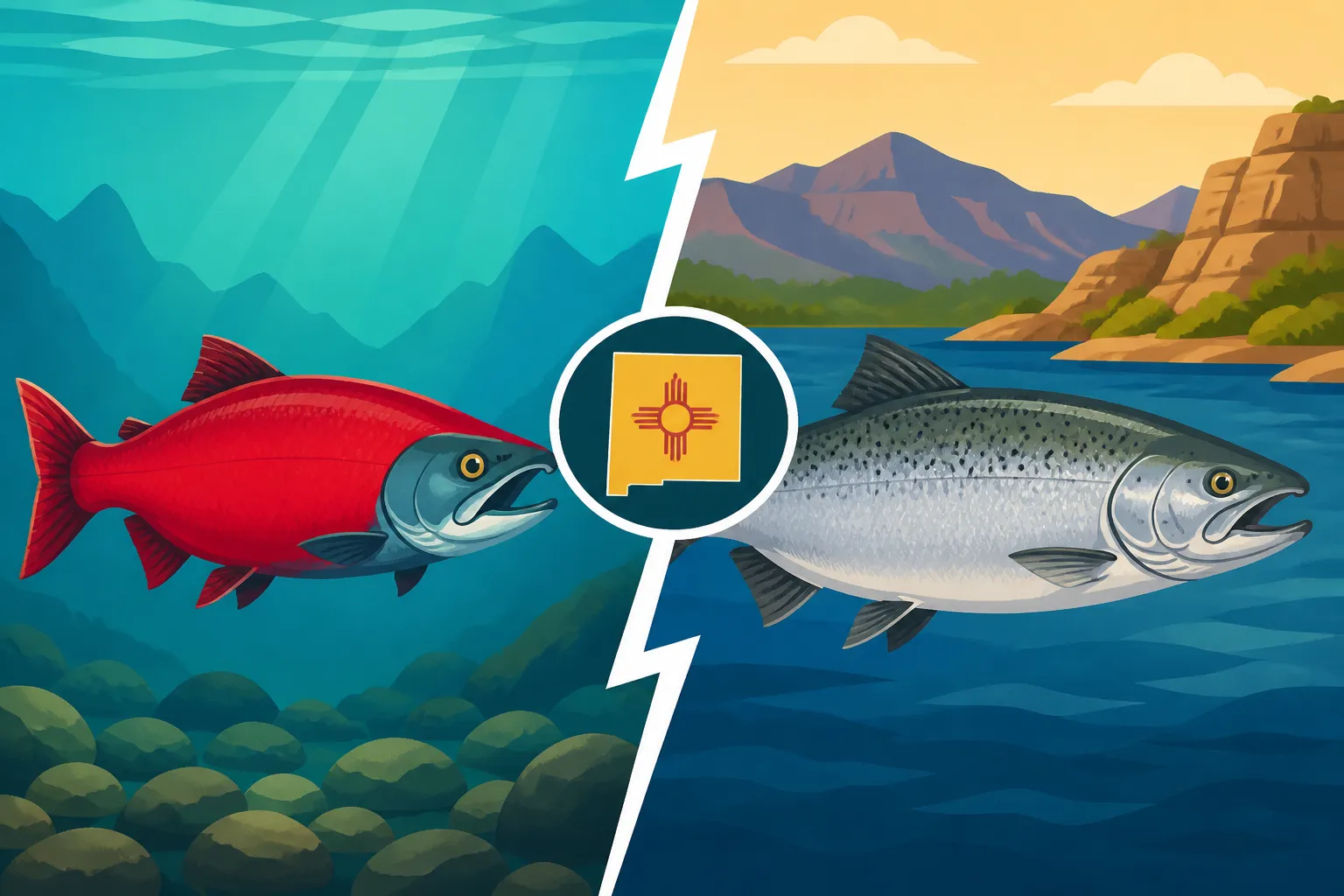
If you're out on a lake and wondering if you've hooked a Kokanee or perhaps a rainbow trout, there are some key physical clues to look for. For most of their lives, Kokanee are often described as "silver bullets." They typically display a sleek, silvery body with a darker, bluish-green back, transitioning to a lighter belly. Unlike many trout species, they tend to have very few, if any, spots on their bodies or fins. If they do have spots, they are usually very faint and small, often only on the upper back. Their mouths are also generally smaller and more delicate than the robust, toothy jaws you'd find on a predatory brown trout or a large lake trout.
However, their appearance undergoes a truly dramatic transformation when they enter their spawning phase. As autumn approaches and their reproductive cycle begins, Kokanee salmon turn a brilliant, fiery red. Their heads become green, and the males often develop a pronounced humped back (kype) and a more elongated, hooked jaw. This striking coloration is one of the most identifiable characteristics of a mature, spawning Kokanee, making them instantly recognizable. This vibrant display signals the end of their lifecycle, as they will spawn and then perish shortly after.
Lifecycle and Spawning Habits
The lifecycle of a Kokanee salmon is entirely contained within freshwater. Unlike their anadromous Sockeye cousins, Kokanee never make the journey to the ocean. They are born in tributary streams that feed into large, cold, deep lakes, or sometimes in the lake shoals themselves. For the majority of their lives—typically three to four years—they inhabit the open waters of these lakes.
Kokanee are primarily planktivores, meaning their diet consists almost exclusively of zooplankton, tiny aquatic organisms suspended in the water column. This specialized diet is why they prefer deep, clear, and cold lakes; these environments typically have abundant plankton populations. As they mature, usually in their third or fourth year, an irresistible urge takes hold. In the fall, typically from late September through November, they embark on their final journey. They migrate en masse, often moving into the tributary rivers or streams they were born in, or to specific shallow areas along the lake shore. Here, the females build nests called "redds" in the gravel, deposit their eggs, and the males fertilize them. After this intense spawning ritual, both the male and female Kokanee die, completing their life cycle and contributing valuable nutrients back to the lake system, enriching it for the next generation. This phenomenon is a highlight for many anglers, leading to unique opportunities like New Mexico Salmon Snagging Season at specific locations. In New Mexico, excellent examples of Kokanee fisheries can be found at Navajo Lake Kokanee Salmon Fishing and Heron Lake Kokanee Salmon Fishing, where you can witness these incredible cycles firsthand. Kokanee Salmon Spawning Time at Navajo Lake and the Kokanee Color Change During Spawning Season are eagerly anticipated by those who pursue these fish.
Why These Differences Matter to the New Mexico Angler
Understanding the fundamental distinctions between Kokanee and their "regular" salmon cousins isn't just an academic exercise; it has very real, practical implications for anyone looking to successfully fish for them in New Mexico. From the tackle you choose to the regulations you follow, these differences guide every aspect of your angling adventure.
Fishing Techniques and Gear Adaptations
Imagine trying to catch an ocean-run Chinook salmon with the same gear you'd use for a New Mexico bluegill. It just wouldn't work, right? The same principle applies when comparing Kokanee to larger, more aggressive salmon species. Ocean salmon often require heavy-duty rods, large reels spooled with strong line, and substantial lures or baits capable of withstanding fierce currents and powerful strikes. Trolling expansive ocean waters with heavy gear is a common strategy.
Kokanee fishing, however, is a much more specialized game. Because Kokanee are smaller, have delicate mouths, and feed on microscopic plankton, successful anglers often employ very light tackle. Think ultra-light spinning rods or specialized kokanee trolling rods, paired with small reels and lighter line (often 6-8 pound test). The lures are typically small and flashy, designed to imitate zooplankton or simply attract attention. Popular choices include wedding rings, small hoochies or squids, and tiny spoons, often tipped with corn or some other scent attractant. These lures are usually trolled slowly behind downriggers to get them down to the specific depths where Kokanee are feeding, which can be considerable in deep lakes like Navajo or Heron. Jigging with small spoons or specialized jigs is another effective technique, especially when fish are schooled up. When putting together your tackle box, think finesse and subtle attraction. You can find a fantastic selection of these specialized Kokanee lures and downrigger accessories on retail sites like Amazon, which makes gearing up convenient. Trolling Techniques for New Mexico Lakes are absolutely essential to master for these fish.
Conservation and Regulation Considerations
The distinct biology and lifecycle of Kokanee salmon also mean that they are managed with very specific conservation efforts and regulations. While other states might have regulations for anadromous salmon focused on ocean harvest, river migrations, or hatchery returns, New Mexico's rules for Kokanee are tailored to a completely landlocked population in specific reservoirs.
It's absolutely crucial to check the current New Mexico Fishing Regulations Overview before you head out, as rules can vary by water body and season. For example, Kokanee may have specific bag and possession limits that differ from trout, and there might be designated "snagging" seasons in certain lakes, like at Navajo Lake, where anglers can legally snag the fish during their spawning run. This is a very different method than traditional hook-and-line fishing and is only allowed for Kokanee during specific times and in specific areas. Understanding these nuances, including any gear restrictions like the use of barbless hooks in certain areas or limits on the number of rods, is key to being a responsible and legal angler. The fact that Kokanee are entirely freshwater residents means their populations are more susceptible to localized environmental changes, like water levels or temperature fluctuations, making thoughtful regulation even more important to ensure healthy fisheries for years to come.
A Quick Comparison: Kokanee vs. Typical Pacific Salmon
To help solidify the differences, here's a quick comparison table outlining the key distinctions between New Mexico's beloved Kokanee salmon and the "typical" anadromous Pacific salmon.
| Feature | Kokanee Salmon (New Mexico) | Typical Pacific Salmon (e.g., Chinook, Sockeye) |
|---|---|---|
| Typical Habitat | Landlocked freshwater lakes and their tributary streams | Born in freshwater, migrate to saltwater (ocean) to mature, return to freshwater to spawn |
| Average Size | Smaller (often 10-18 inches, 1-3 pounds) | Much larger (can range from 5 to over 50 pounds, depending on species) |
| Diet | Primarily zooplankton (microscopic aquatic organisms) | Broad diet in ocean: smaller fish, squid, crustaceans, plankton |
| Spawning Migration | Up tributary streams or along lake shores | Epic migrations from ocean back to natal freshwater rivers/streams |
| Spawning Coloration | Brilliant red body, green head, dark fins (males develop kype) | Varies greatly by species, often vibrant reds, greens, coppers; males develop kype |
| Lifespan | Typically 3-4 years | Varies by species, often 3-7 years |
| Fishing Technique | Light tackle, small lures/flies, downriggers, trolling, jigging | Heavy tackle, large lures/baits, trolling, casting, fly fishing, jigging |
| Ocean Migration? | No, always freshwater | Yes, anadromous |
This table highlights just how distinct these two categories of salmon truly are, even though they share a common lineage. Next time you're on a New Mexico lake, you'll know exactly what makes that shimmering Kokanee a unique and exciting catch! For more details on the fish species found in New Mexico, be sure to check out our Fish Species Found in New Mexico guide. You might also want to consult the New Mexico Fishing Season Calendar to plan your trips around the best times to target these fascinating fish. New Mexico really does offer some incredible opportunities for anglers looking for a unique fishing experience, and the Kokanee is certainly a big part of that allure.
Disclaimer
This article is for general informational purposes only and does not constitute professional advice. Laws, prices and regulations vary by location and change over time. Consult a qualified professional for guidance on your specific situation.