Is There a Size Limit on Catfish in New Mexico?
It's a common concern when you're headed out to fish: what are the rules for what I can actually keep? You've got your bait, your favorite spot in mind, but the last thing you want is to run afoul of regulations regarding size limits. This guide aims to clear up any confusion about whether there's a size limit on catfish in New Mexico, ensuring your next fishing trip is both enjoyable and compliant.
Understanding New Mexico's Catfish Regulations
Fishing regulations can sometimes feel like a labyrinth, especially when different species or even different bodies of water have their own specific rules. When it comes to catfish in New Mexico, you might be pleasantly surprised, or perhaps a little confused, by the approach the state takes. Unlike some other popular game fish, catfish often fall under a simpler regulatory umbrella.
The Statewide General Rules for Catfish
Let's cut to the chase: for most of New Mexico's waters, there is generally no statewide minimum or maximum size limit on catfish. This means if you catch a catfish, whether it's a feisty channel cat or a chunky flathead, you usually don't have to worry about measuring it to see if it's legal to keep. This can be a huge relief for anglers who just want to enjoy their time on the water without constantly fumbling for a measuring tape. It simplifies things considerably, allowing you to focus on the thrill of the catch rather than the strict numbers. However, while size might not be a concern, you still need to be mindful of daily bag and possession limits, which we'll dive into shortly. Remember, these regulations are designed to help sustain fish populations, so understanding them is key to responsible angling.
Special Waters and Their Unique Catfish Rules
Now, before you throw caution to the wind, it's crucial to understand that "generally no statewide size limit" doesn't mean never a size limit. New Mexico, like many states, has special waters or specific programs that might impose unique regulations. While these are far more common for trout or bass (think "Quality Waters" for trout), it's always a good practice to check the current regulations for the specific lake or river you plan to fish. Sometimes, a certain pond or a section of a river managed for a specific purpose might have different rules for all species, including catfish. For instance, a small, heavily stocked community pond might have different limits to encourage harvest or manage population density. Always grab the latest New Mexico Fishing Regulations Overview before heading out.
One hypothetical scenario might involve a private pond that has been opened to public fishing under a special permit, where the owner or managing agency has set their own limits, or perhaps a specific urban pond where the goal is to provide maximum opportunity, leading to different rules. It's rare for catfish, but not impossible, and checking the official guide is your best defense against inadvertently breaking a rule.
Why Size Limits Matter (or Don't) for Catfish
So, why do other fish species have strict size limits, but catfish often don't? The answer lies in their biology and population dynamics. For species like trout or bass, minimum size limits are often implemented to allow fish to reach reproductive maturity at least once, ensuring they have a chance to spawn and contribute to the next generation before being harvested. This helps maintain a healthy population structure. Maximum size limits, on the other hand, might protect large, trophy-sized fish that are crucial breeders or to ensure a good genetic pool.
Catfish, particularly channel catfish, are incredibly prolific breeders. They tend to reproduce readily and grow quickly in many New Mexico waters, and their populations are generally robust. Often, the goal for catfish management is to encourage harvest, especially of smaller to medium-sized fish, to prevent overpopulation and ensure sufficient food resources for the remaining fish. This can lead to faster growth rates for the fish that are left, creating a healthier fishery overall. Therefore, the lack of a size limit isn't an oversight; it's a deliberate management strategy based on the species' ecological characteristics.
Navigating Bag Limits and Possession Limits for Catfish
While size limits might be a non-issue for most catfish fishing in New Mexico, bag limits and possession limits are definitely something you need to pay close attention to. These limits are designed to prevent overharvest and ensure sustainable fishing opportunities for everyone. Failing to adhere to these rules can lead to significant penalties, so it's vital to understand the difference and what they mean for your cooler.
Daily Bag Limits for Catfish Species
The daily bag limit refers to the maximum number of fish of a specific species that an angler can legally catch and keep in a single day. For catfish in New Mexico, this limit applies across most public waters. It’s generally quite generous, reflecting the abundant nature of these fish. However, "generous" doesn't mean "unlimited." You'll find specific numbers in the annual regulations guide. This means that once you've reached that number, any additional catfish you catch must be immediately released unharmed.
For example, if the daily bag limit for catfish is ten fish, and you've already kept ten beautiful channel catfish, then that eleventh one that bites must go back into the water, regardless of how big it is. This is where Catch and Release Best Practices in New Mexico become really important, even for species you're allowed to keep. It's about being a responsible angler and knowing when to stop keeping fish for the day. These limits help distribute the harvest among more anglers and prevent individual efforts from significantly impacting the overall population.
Possession Limits: What You Can Have at Home
Separate from the daily bag limit is the possession limit. This rule dictates the maximum number of fish you can have in your possession at any given time, whether they're in your cooler, at your campsite, or stored in your freezer at home. The possession limit is often two times the daily bag limit, but again, this can vary, so always consult the current regulations. The idea here is to prevent anglers from taking multiple daily limits over several days and hoarding fish.
Let's say the daily bag limit for catfish is ten, and the possession limit is twenty. You could catch and keep ten catfish on Monday. If you go fishing again on Tuesday, you can catch and keep another ten, bringing your total possessed fish to twenty. But if you already have twenty catfish in your freezer from previous trips, you couldn't keep any more on your current outing until some of that existing stash is consumed or given away. This rule is particularly relevant for those planning multi-day fishing trips or who like to stock up their freezers. You need to be aware of your total take, not just what you caught today. For a broader perspective on how limits work, you might find information on New Mexico Statewide Bag Limit for Bass useful for comparison.
Combining Catfish with Other Species in Your Cooler
When you're out fishing in New Mexico, especially in larger reservoirs like Elephant Butte or Navajo Lake, you're often targeting more than just catfish. You might be after bass, walleye, or crappie too. It's important to remember that bag and possession limits are almost always species-specific. Your catfish limit is distinct from your bass limit, which is distinct from your walleye limit, and so on.
This means that having your limit of catfish doesn't affect your ability to also keep your limit of walleye or bass, assuming you're fishing in waters where those species are prevalent and legal to harvest. However, you're not allowed to exceed the individual species limits. Always keep your catches separated by species if possible, especially if you're keeping a variety of fish. It makes it easier for game wardens to verify your compliance if they happen to check your cooler. Furthermore, it's a good practice to handle each species according to its specific needs for freshness. A well-organized cooler is a sign of a prepared and responsible angler. You'll definitely want to check out the New Mexico Fishing Regulations Overview for all the specific numbers before your trip.
Identifying New Mexico's Catfish Species and Their Impact
New Mexico is home to several species of catfish, each with its own characteristics and preferred habitats. Knowing what kind of catfish you've hooked can not only be interesting but can also sometimes play a role in understanding specific local regulations, although less so for size limits with catfish. The most commonly targeted and abundant species are the Channel Catfish and the Flathead Catfish.
Channel Catfish: The Most Common Target
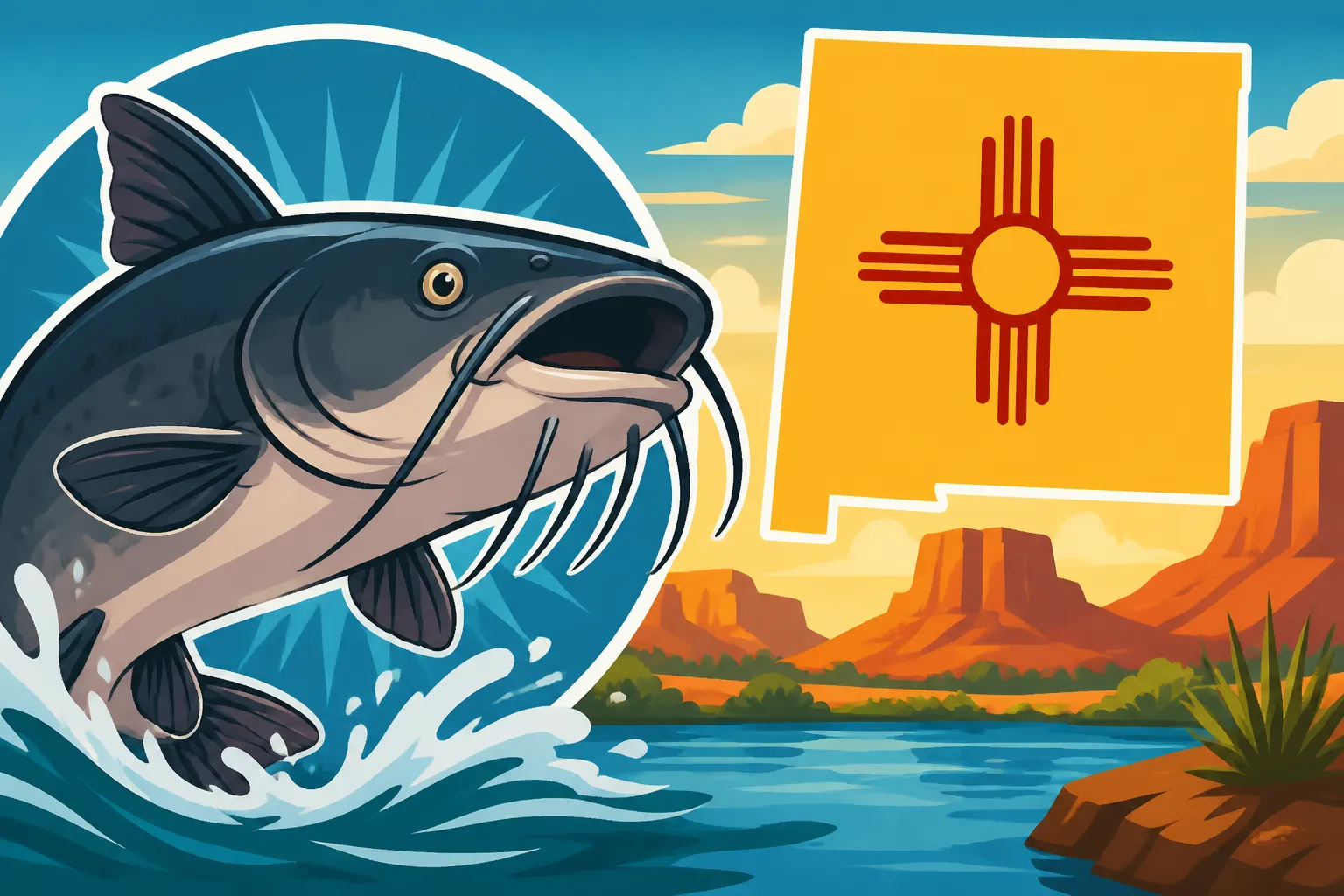
When most people in New Mexico talk about catfish, they're usually referring to the Channel Catfish. These are the workhorses of the New Mexico catfish world, found in virtually every major river, reservoir, and many smaller ponds across the state. They're easily identifiable by their smooth, scaleless skin, deeply forked tail, and barbels ("whiskers") around their mouths. Channel cats are known for their voracious appetites and willingness to bite a wide variety of baits, making them a fantastic target for anglers of all skill levels, from kids with worms and bobbers to seasoned pros using stink baits.
Channel catfish are also highly regarded for their firm, white, flaky meat, making them excellent table fare. They tend to thrive in warmer, slower-moving waters, often congregating in deeper holes, around submerged structures, or along river bends. You can find them in abundance in places like Elephant Butte Lake, Caballo Lake, and throughout the Rio Grande system. They are the primary reason why New Mexico can maintain a relatively open policy regarding catfish size limits – their populations bounce back quickly. If you're looking for Where to Catch Channel Catfish in the Rio Grande, you'll find plenty of opportunities throughout the state.
Flathead Catfish: The Trophy Hunters' Dream
For those looking for a true monster, the Flathead Catfish is the ultimate prize in New Mexico. These formidable predators are quite different from their channel cat cousins. They have a distinctively flattened head (hence the name), a less-forked, more rounded tail, and a mottled, olive-brown coloration. Unlike channel cats, Flatheads are almost exclusively piscivorous, meaning they prefer to eat live fish rather than stink baits or cut bait. This makes them a more challenging target, often sought by anglers using large live bluegill, sunfish, or carp as bait.
Flathead catfish are renowned for their incredible fighting power and their potential to reach truly massive sizes, often exceeding 50 pounds in prime New Mexico waters like Elephant Butte Lake. They prefer large, deep rivers and reservoirs with plenty of submerged timber and structure, where they can ambush their prey. While also delicious, their pursuit is more about the sport and the trophy potential. Because they are apex predators and grow slowly, their populations are typically less dense than channel catfish. For more information on these impressive fish, check out Flathead Catfish in New Mexico. The challenge of landing a trophy flathead is a unique experience.
Other Catfish Species You Might Encounter
While Channel and Flathead Catfish dominate the scene, New Mexico also has other, less common catfish species. Bullhead catfish, including black, brown, and yellow bullheads, are smaller, stouter catfish with square or slightly rounded tails. They are often found in ponds, slow-moving creeks, and muddy backwaters, and while they don't grow to the impressive sizes of channel or flathead catfish, they can provide plenty of action, especially for younger anglers. They are also edible, though cleaning them can be a bit more tedious due to their smaller size.
Occasionally, anglers might encounter other species, but these are generally the result of localized introductions or are less widespread. The important takeaway is that for all these species, the general absence of a size limit typically holds true across New Mexico's public waters. Focus instead on understanding the daily and possession limits for the specific body of water you're fishing.
Best Practices for Ethical Catfish Angling in New Mexico
Just because there aren't specific size limits for catfish doesn't mean we, as anglers, should disregard ethical fishing practices. Being a responsible angler involves more than just following the letter of the law; it's about respecting the fish, the environment, and fellow anglers. These practices ensure healthy fish populations for years to come and a positive experience for everyone.
Catch and Release Considerations for Catfish
Even without a minimum size limit, catch and release is an important consideration, especially if you're not planning on keeping every fish you catch. Catfish are generally hardy fish, but proper handling is still crucial for their survival post-release. If you intend to release a fish, try to minimize the time it spends out of water. Handle it gently with wet hands to protect its slime coat, which acts as a protective barrier against disease. Avoid dragging it on rough surfaces or inserting fingers into its gills.
When unhooking, consider using a dehooker tool, especially if the fish has swallowed the hook deeply. If the hook is too deep to remove easily without causing significant damage, it's often better to cut the line as close to the hook as possible. Hooks made of plain steel will eventually rust out, giving the fish a chance to recover. This approach is particularly important if you're practicing catch and release for larger, older catfish that might be important breeders. Even a small act of care goes a long way.
Gear for Responsible Catfish Handling
Having the right gear isn't just about catching fish; it's also about handling them responsibly. For catfish, especially the larger ones, a good pair of fishing pliers or a dehooker is invaluable for quickly and safely removing hooks. These tools can be found readily on platforms like Amazon and are essential for protecting both the fish and your hands from sharp hooks and fin spines. For trophy-sized flatheads, a large, knotless rubber landing net is highly recommended. The rubber mesh is much gentler on the fish's fins and slime coat compared to traditional nylon nets, reducing injury.
For those targeting smaller catfish, a simple stringer might suffice if you're keeping them, but even then, consider placing them directly into a cooler with ice immediately after catching. This not only keeps the fish fresh but also ensures a humane end if you plan to eat them. A cooler filled with ice, also easily found on Amazon, is a critical piece of gear for any angler planning to harvest fish, keeping your catch in prime condition. Using proper gear minimizes stress on the fish, increasing their chances of survival if released or ensuring quality if kept.
Staying Informed: Always Check the Latest Regulations
The single most important practice for any angler is to always check the latest New Mexico Department of Game and Fish (NMDGF) regulations before you head out. While this guide provides a general overview, regulations can and do change. They are typically updated annually, usually around April 1st, and sometimes mid-season if emergency closures or changes are needed. You can usually find the most current regulations booklet online on the NMDGF website, or pick up a physical copy wherever fishing licenses are sold.
This goes for all regulations, not just catfish. Checking the guide ensures you're up-to-date on bag limits, possession limits, specific rules for certain waters (like New Mexico Quality Waters Program or New Mexico Special Trout Water Rules), and any other permits you might need, such as a New Mexico Habitat Stamp and Validation Requirements. It's your responsibility as an angler to know and follow the rules. Being informed not only protects you from potential New Mexico Fishing Violations and Penalties but also contributes to the conservation efforts that keep New Mexico's waters thriving with fish.
Catfish Regulations at a Glance
To make things a bit easier, here's a quick summary of general catfish regulations in New Mexico. Remember, this is a general overview, and specific waters may have unique rules. Always consult the current NMDGF regulations booklet for the most accurate and up-to-date information.
| Regulation Type | Channel Catfish | Flathead Catfish | Bullhead Catfish | General Rule Notes |
|---|---|---|---|---|
| Size Limit | None (Statewide) | None (Statewide) | None (Statewide) | Most waters have no minimum or maximum size limit. |
| Daily Bag Limit | Varies (e.g., 15) | Varies (e.g., 10) | Varies (e.g., 15) | Check current NMDGF regulations for exact numbers by species. |
| Possession Limit | Varies (e.g., 30) | Varies (e.g., 20) | Varies (e.g., 30) | Often twice the daily bag limit. Check current regulations. |
| Gear Restriction | None (General) | None (General) | None (General) | Typically no specific gear restrictions for catfish, but general fishing rules apply (e.g., number of rods). |
Please note that the specific numbers for Daily Bag Limit and Possession Limit are illustrative examples. You absolutely must refer to the most recent New Mexico Department of Game and Fish regulations for the current, accurate figures for the specific species and body of water you plan to fish. You can also find out more about your New Mexico Fishing License Guide requirements.
Disclaimer
This article is for general informational purposes only and does not constitute professional advice. Laws, prices and regulations vary by location and change over time. Consult a qualified professional for guidance on your specific situation.