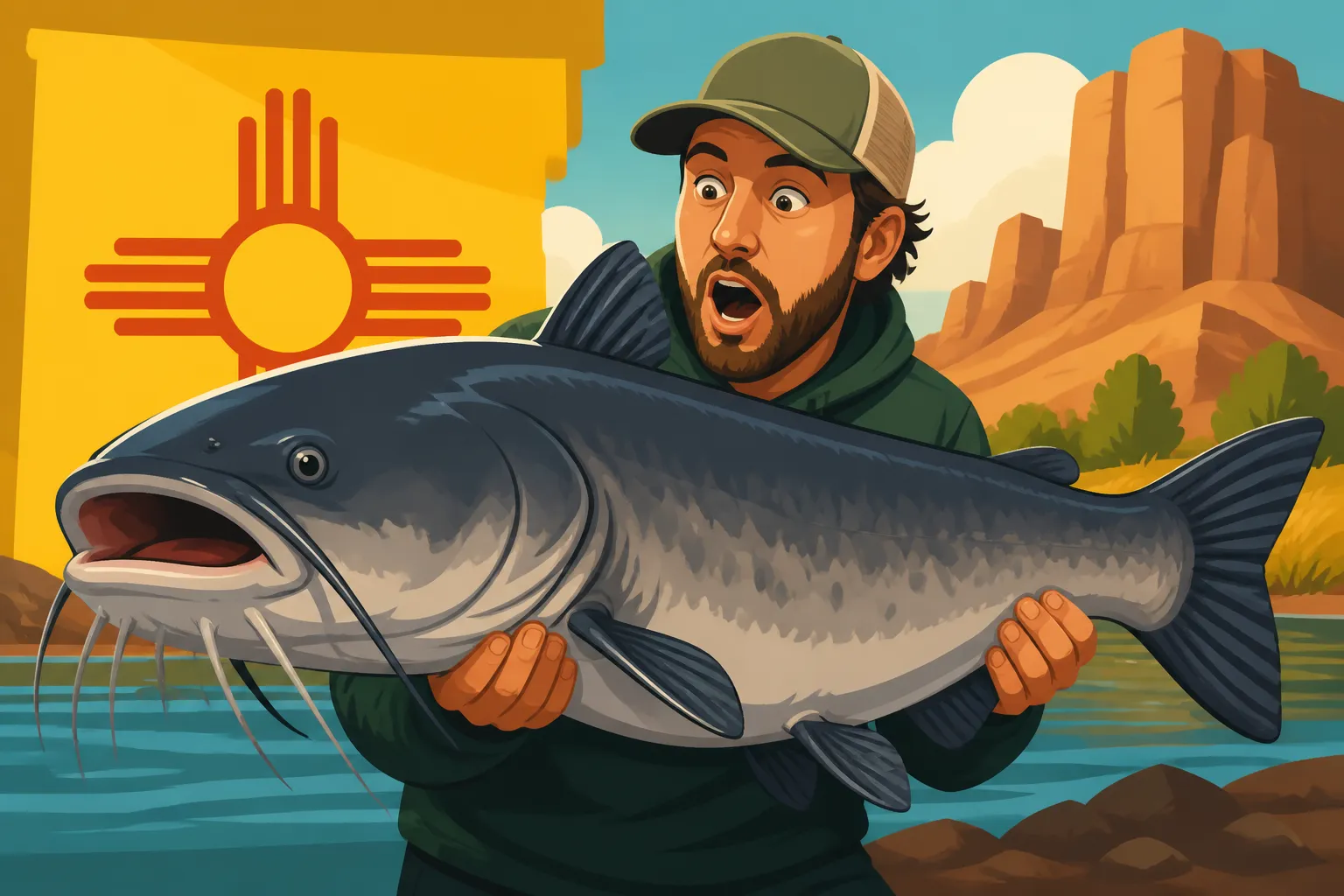
Biggest Catfish Ever Caught in New Mexico
There's nothing quite like the anticipation of a rod bending violently, the reel screaming, and the sheer power on the other end of your line. For many anglers in New Mexico, that dream is all about connecting with a colossal catfish, a true denizen of the deep. This guide is here to unravel the mystery of the biggest catfish ever landed in our state and arm you with the knowledge to chase your own personal best.
The Quest for New Mexico's Monster Catfish
New Mexico's waters, from its vast reservoirs to its winding rivers, hold some truly impressive fish. But when it comes to sheer size and raw fighting power, catfish often steal the show. There's a primal satisfaction in battling a fish that can easily outweigh a small child, and the stories of these giants become legendary among fishing circles.
The Thrill of the Fight: Why Catfish are Prized
Catfish aren't known for their dazzling leaps or acrobatics, but what they lack in aerial displays, they more than make up for in brute strength and tenacious fighting. When you hook into a really big channel cat or, even more so, a flathead, be prepared for a dogged, deep-diving fight that tests your tackle and your resolve. They pull hard, they hold to the bottom, and they can make even seasoned anglers break a sweat. It's not just about the size; it's about the challenge of bringing such a powerful creature to the bank or boat. This is why so many anglers specifically target them, often dedicating entire trips to the pursuit of these heavyweight fighters.
The reward isn't just the photo op; it's the delicious fillets that some of these fish provide, particularly the channel catfish, which are renowned for their firm, white meat. Catching a lunker means not only a great story but also a fantastic meal for the family. Knowing that a state record exists just adds to the mystique and motivation for countless fishing enthusiasts.
Understanding New Mexico's Catfish Species
Before we dive into the records, it's essential to understand which catfish species call New Mexico home. While many might just think "catfish," there are distinct types, each with its own habits, preferred habitats, and potential for reaching massive sizes. The most common and widely distributed are the Channel Catfish and the Flathead Catfish, but there are others too, though they rarely reach the same impressive dimensions.
- Channel Catfish: These are arguably the most popular game fish in New Mexico, readily identifiable by their fork-shaped tail and often spotted bodies when younger. They thrive in a variety of waters, from large lakes and reservoirs to rivers and even smaller ponds. They're opportunistic feeders and are what most people picture when they think of catfish. They grow fast and fight hard, making them a favorite for many. If you're wondering about Catfish Fishing in New Mexico, chances are you'll be targeting these guys.
- Flathead Catfish: The true monsters of the New Mexico catfish world, flatheads are distinct from channels. They have a flatter, broader head (hence the name), a more rounded tail, and a mottled brown-and-yellow coloration that helps them camouflage in murky, snag-filled environments. Unlike the omnivorous channel cats, flatheads are predatory, preferring live bait and often lurking in heavy cover. They are less common but grow to much larger sizes, making them the primary target for record seekers. You can learn more about Flathead Catfish in New Mexico to understand their unique characteristics.
Here's a quick overview of our primary catfish species:
| Species | Tail Shape | Primary Diet | Typical Habitat | Record Potential |
|---|---|---|---|---|
| Channel Catfish | Forked | Omnivorous | Lakes, rivers, ponds | Large, but rarely record-breaking |
| Flathead Catfish | Rounded | Predatory (live bait) | Deep holes, woody cover, rivers | True monster potential |
Unveiling the Official New Mexico State Record Catfish
The question that burns in the minds of many anglers is: just how big do they get? New Mexico has a proud history of incredible fishing, and its catfish records stand as a testament to the healthy, productive waters we're fortunate to have. Every angler dreams of catching the fish of a lifetime, and for catfish enthusiasts, that often means breaking into the state record books.
Which Species Holds the Crown?
When discussing the "biggest catfish ever caught in New Mexico," it's crucial to specify the species. The state keeps separate records for different types of fish, recognizing the distinct characteristics and growth patterns of each. And when it comes to pure weight, the flathead catfish is typically the one that tips the scales at truly astounding numbers. While channel catfish can grow to very respectable sizes, it's the flathead that consistently produces the jaw-dropping, tackle-testing behemoths that capture anglers' imaginations.
The existing state record for the largest catfish, in terms of weight, belongs to a massive flathead. These fish are incredible creatures, often found in the deep, slow-moving sections of our larger rivers and reservoirs, tucked away in submerged timber or rock piles. They are powerful predators, and catching one this large is no accident; it usually involves immense patience, specialized gear, and a deep understanding of their behavior.
The Story Behind the Catch
While the specific details of every record-breaking catch are unique to the angler and the moment, a common thread runs through these tales: perseverance. Imagine spending countless hours on the water, meticulously preparing your bait, and positioning your boat or setting up your bank rods, all for that one, fleeting chance at a true leviathan. The angler who set the current New Mexico record for flathead catfish undoubtedly put in their time.
Often, these record fish are caught using robust, heavy-duty tackle, designed to withstand the immense power of these bottom-dwelling giants. They typically aren't caught on a whim with light spinning gear. Rather, it's a deliberate pursuit, targeting specific areas known to hold large fish. The exact location is often a closely guarded secret, but generally, these fish come from our largest impoundments or major river systems like the Rio Grande, where they have ample food and space to grow to enormous proportions. The fight itself is often described as an epic tug-of-war, with the fish making powerful runs and trying to bury itself in structure. Landing such a fish is a monumental task, often requiring the help of a net, a gaff, or careful hand-landing by an experienced partner. It's a memory that lasts a lifetime, etching its place in New Mexico's angling history. It certainly puts the "biggest catfish ever caught in New Mexico" at the top of many bucket lists.
Strategies for Hooking Your Own Giant Catfish
If the idea of tangling with a monster catfish has your heart racing, you're not alone. While breaking a state record is a rare feat, landing a personal best — or simply a truly massive catfish — is absolutely within reach for dedicated anglers in New Mexico. It requires the right approach, the right gear, and understanding where these giants lurk.
Gear Up for Battle: Rods, Reels, and Line
Forget your ultralight spinning combo; big catfish demand serious tackle. When you're talking about fish that can easily weigh 30, 40, or even 50+ pounds, you need gear that can handle the strain.
- Rods: Look for heavy to medium-heavy action rods, typically 7 to 9 feet in length. These rods have the backbone to turn a big fish's head and the leverage to pull it out of heavy cover. Brands like Ugly Stik or Penn offer excellent, durable catfish rods that you can often find readily on Amazon.
- Reels: A stout baitcasting reel or a large, robust spinning reel with a strong drag system is essential. Your reel needs to hold a good amount of heavy line and have smooth, powerful gears. The drag must be set correctly to allow the fish to take line when necessary without breaking off, but also to apply enough pressure to tire it out.
- Line: This is not the place to skimp. Monofilament line in the 20-40 pound test range is a good starting point for general big cat fishing, but for truly trophy-sized flatheads, many anglers opt for braided line of 50-80 pound test or even heavier. Braid offers superior strength for its diameter and excellent sensitivity, which can be crucial when feeling subtle bites in deep water or current. You might find a good selection of Best Line Test for Catfish Fishing in New Mexico that will give you the confidence to tackle these heavyweights.
- Hooks and Sinkers: Large, strong hooks are a must. Circle hooks, in sizes 6/0 to 10/0, are popular for their ability to hook fish in the corner of the mouth, reducing gut hooks and making release easier if you choose to. Heavy lead sinkers (often 2-8 ounces or more, depending on current) are needed to hold your bait on the bottom in rivers or deep lake sections.
Baiting Your Beast: Tried and True Methods
Catfish are primarily scent-oriented feeders, but flatheads also rely heavily on sight. Your bait choice is paramount.
- For Channel Catfish: These fish are opportunistic omnivores, making them susceptible to a wide array of baits. Stink baits, cut bait (like shad, carp, or sunfish), chicken livers, and even hot dogs can be incredibly effective. Prepared baits, often sold in tubs, emit strong odors that attract channel cats from a distance. If you're looking for Best Bait for Catfish in New Mexico Rivers, cut bait and chicken livers are almost always a winning combination.
- For Flathead Catfish: This is where things get specific. Flatheads are predators, and they overwhelmingly prefer live bait. Small to medium-sized sunfish, bluegill, carp, or even small stocked trout (where legal) are excellent choices. Hook your live bait through the back or lips to keep it lively on the hook. Presenting this bait near submerged timber, rock piles, or deep holes where flatheads ambush prey is key. The fresher and livelier your bait, the better your chances.
Prime Locations and Timing for Big Catfish
New Mexico offers several fantastic locations for targeting big catfish. Understanding their habits is just as important as having the right gear.
- Rivers: The Rio Grande, especially the deeper, slower sections, is a legendary spot for both channel and flathead catfish. Look for deep holes, undercut banks, and areas with submerged logs or brush, which provide perfect ambush points and cover for flatheads. The Pecos River can also produce impressive channel cats. If you want to know Where to Catch Channel Catfish in the Rio Grande, targeting sections below dams or in areas with current breaks can be highly productive.
- Lakes and Reservoirs: Elephant Butte Lake is perhaps the premier big catfish destination in New Mexico. Its vast waters, abundant forage, and extensive structure allow both channel and flathead catfish to grow to enormous sizes. Navajo Lake, Conchas Lake, and Ute Lake also hold significant populations of large catfish. Look for them in deeper channels, near old riverbeds, and around submerged structures like old roads, trees, or rock piles.
- Timing: Catfish, especially big ones, are often most active during low light conditions. Dawn, dusk, and nighttime fishing are prime times. Many anglers specifically target big flatheads after dark. How to Catch Channel Catfish at Night involves using glow sticks on your rod tips, checking baits frequently, and being prepared for powerful bites. During the day, they tend to move to deeper, cooler water. The warmer months, particularly late spring through early fall, are generally the most productive for catfish.
Beyond the Records: Other Notable Catfish and Hotspots
While state records are exciting, the joy of fishing often comes from the consistent catches and the quality of the experience. New Mexico has numerous spots where you can reliably catch large, healthy catfish, even if they aren't quite record-breakers.
Lakes and Rivers Known for Large Catfish
Beyond the well-known giants, many other waters in New Mexico consistently produce excellent catfish fishing. These spots might not be where the absolute state record was caught, but they offer fantastic opportunities for catching impressive fish.
- Caballo Lake: Just downstream from Elephant Butte, Caballo Lake also offers excellent channel catfish opportunities. Its rocky shores and varying depths provide good habitat, and it's a popular spot for bank fishing, especially in the evenings.
- Sumner Lake: Located on the Pecos River, Sumner Lake is known for its channel catfish population. Anglers often find success fishing the numerous coves and points, particularly after a good rain when the water brings in new food sources.
- Clayton Lake: While perhaps better known for its walleye, Clayton Lake in northeastern New Mexico also holds a solid population of channel catfish. Its smaller size can make finding fish a bit easier, and it’s a great spot for family outings where kids can have success.
- Urban Ponds: Don't overlook some of the urban and community fishing ponds managed by the New Mexico Department of Game and Fish. While they might not yield state record flatheads, many are stocked with channel catfish and can produce surprisingly large fish, especially for bank anglers or those looking for a quick and convenient fishing trip. They are perfect for introducing kids to the sport.
Remember to always consult the current New Mexico Fishing Regulations Overview before heading out, as rules and limits can change for different waters. This will also clarify details like Is There a Size Limit on Catfish in New Mexico? in specific locations.
Responsible Angling for Sustainable Giants
Catching a truly massive catfish is a thrilling experience, but it also comes with a responsibility to the resource. If you're targeting trophy fish, consider practicing catch and release, especially for the largest flatheads, which are often the prime breeders. These older, larger fish contribute significantly to the health of the population.
- Handling Large Fish: When handling a big catfish, support its weight properly, especially if you plan to release it. Avoid dragging it on rough surfaces. Use a large net or cradle to bring it in, and get your photos quickly before returning it to the water. Wet your hands before touching the fish to protect its slime coat.
- Respecting Regulations: Always adhere to bag and possession limits. These regulations are in place to ensure healthy fish populations for future generations of anglers. If you're on tribal lands, remember that separate permits may be required in addition to your state license.
- Conservation Mindset: Beyond regulations, embrace a conservation mindset. Pack out what you pack in, avoid leaving fishing line or tackle in the water, and be mindful of other anglers and wildlife. Our incredible fishing resources are something to be cherished and protected.
By understanding the species, equipping yourself with appropriate gear, and approaching the quest for New Mexico's biggest catfish with knowledge and respect, you significantly increase your chances of connecting with a true monster and creating an unforgettable fishing memory.
Disclaimer
This article is for general informational purposes only and does not constitute professional advice. Laws, prices and regulations vary by location and change over time. Consult a qualified professional for guidance on your specific situation.