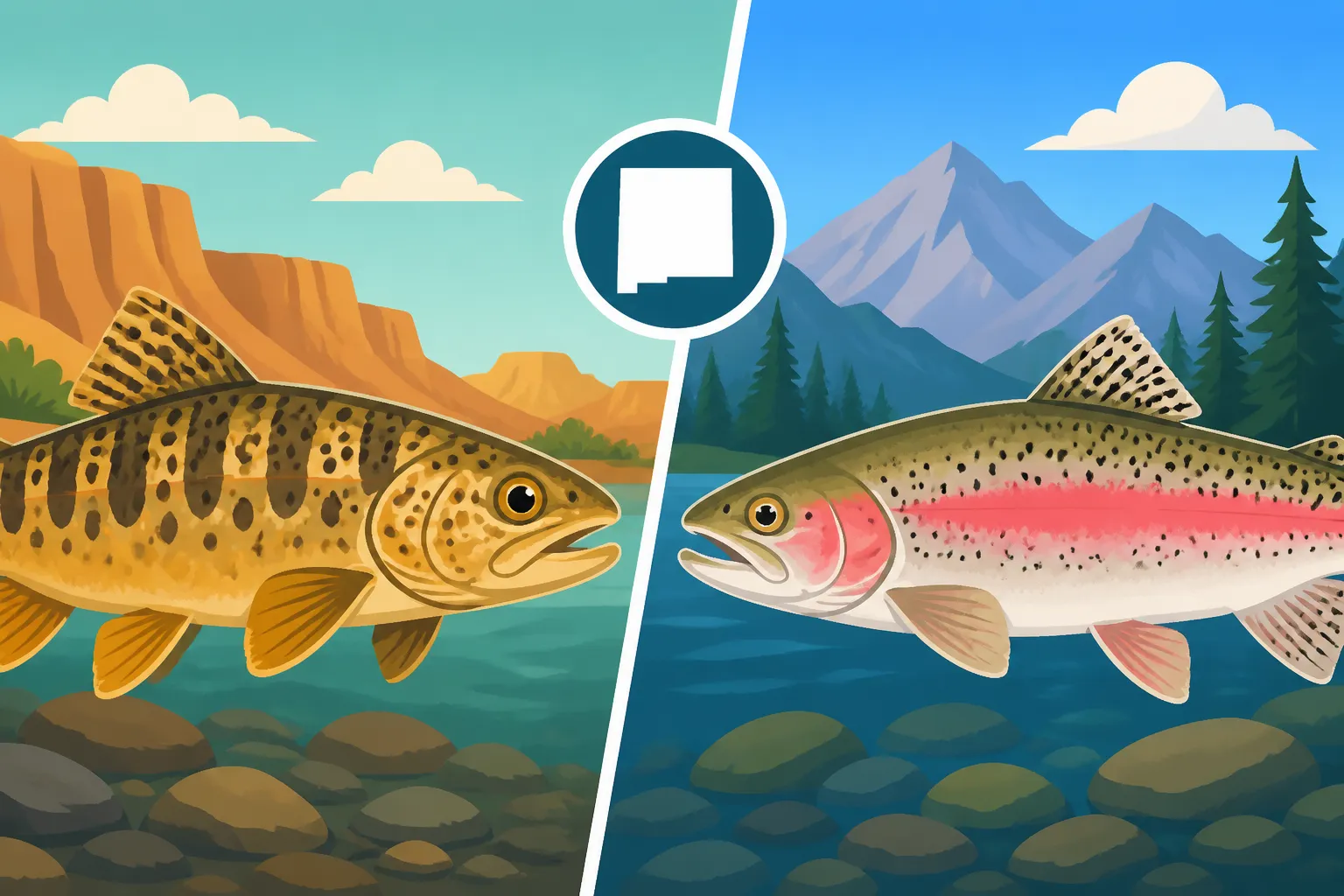
How to Tell a Gila Trout From a Rainbow Trout
It's incredibly frustrating when you're out on a beautiful New Mexico river or stream, you hook into a gorgeous trout, and then you stand there wondering, "Is this a Gila Trout, or is it a Rainbow?" The distinction isn't just academic; it can carry significant weight when it comes to conservation and regulations. This guide is designed to help you confidently tell the difference between these two stunning but often confused species, ensuring you can enjoy your fishing responsibly and appreciate the unique beauty of each.
The Challenge of Identification in New Mexico Waters
New Mexico is blessed with incredible aquatic diversity, but that also means anglers sometimes face a delightful, albeit challenging, puzzle when identifying fish. Gila Trout and Rainbow Trout are two species that frequently cause confusion, even for seasoned anglers. They share some superficial similarities, especially when encountered quickly in their natural environment, making a positive ID tricky.
Why Anglers Confuse These Two Species
One of the biggest reasons for confusion is that both Gila Trout and Rainbow Trout are, well, trout! They have similar body shapes, fin placements, and generally inhabit similar cold-water environments. Young rainbow trout, especially those found in wilder, less stocked settings, can sometimes lack the prominent red lateral stripe that older, hatchery-raised rainbows often display. This can make them look remarkably similar to Gila Trout, which are naturally more subtle in their coloring. Furthermore, the conditions of the water itself – its clarity, the light filtering through the canopy, or even reflections – can play tricks on your eyes, making distinct markings hard to discern in the moment. You're trying to carefully release a fish, and in that fleeting moment, details can blur.
The Importance of Correct Identification
Beyond the simple satisfaction of knowing what you've caught, correctly identifying a Gila Trout from a Rainbow Trout is crucially important for several reasons. First and foremost is conservation. Gila Trout are a federally listed threatened species, meaning they are incredibly rare and protected. While their populations are making a slow but steady comeback thanks to dedicated efforts, they are still vulnerable. Mistaking a Gila for a Rainbow could lead to unintended violations of strict catch-and-release rules or specific gear restrictions in certain waters. For instance, Do You Need a Permit to Fish for Gila Trout? explains some of the specific requirements around these special fish. Secondly, understanding which fish you've encountered contributes to valuable data for wildlife agencies, helping them monitor populations and manage fisheries effectively. And finally, for the ethical angler, it's about respecting the fish and the regulations in place to protect New Mexico's precious natural resources.
Key Visual Differences Between Gila Trout and Rainbow Trout
While they might seem similar at first glance, a closer look reveals several key visual distinctions that can help you differentiate a Gila Trout from a Rainbow Trout. Pay attention to a combination of these features, rather than relying on just one, for the most accurate identification.
Coloration and Body Markings
The overall color palette is often the first giveaway. Gila Trout typically have a stunning, almost jewel-like appearance, sporting an olive-yellow to golden-bronze body color. Their backs are usually darker, fading into these beautiful golden sides, often with a silvery belly. The spots on a Gila Trout are generally small, dark, and irregularly shaped, often concentrated on the upper half of the body and dorsal fin, rarely extending below the lateral line in a dense pattern. Critically, Gila Trout lack the distinct, often vibrant, reddish-pink lateral stripe that is characteristic of most Rainbow Trout.
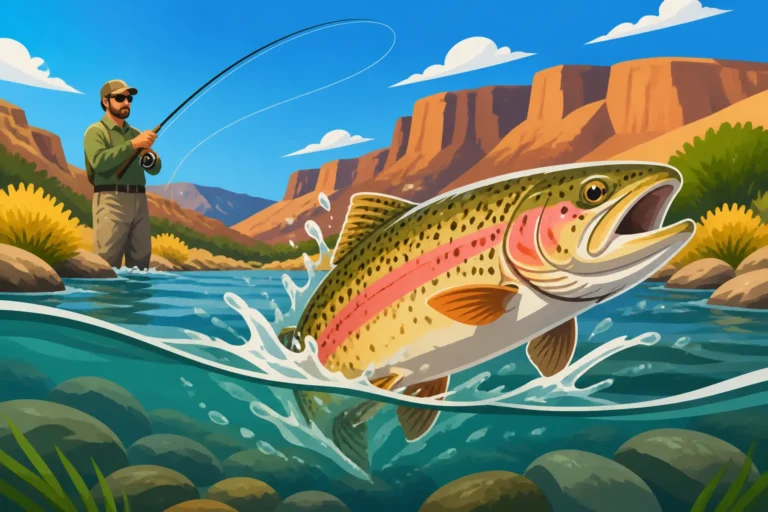
Rainbow Trout, on the other hand, live up to their name with a much more varied and often more striking coloration. They tend to have a lighter, more silvery-white belly, a greenish or bluish-green back, and sides that transition from silver to a grayish-green. The defining feature is that prominent, often iridescent, reddish-pink band running along their lateral line, from gill plate to tail. Their spots are typically larger, more numerous, and more uniformly distributed across their entire body, including below the lateral line and often on the tail fin. While some wild rainbow trout in pristine streams might have fainter stripes or fewer spots, the overall pattern usually leans towards the "rainbow" look.
Fin Characteristics and Body Shape
Take a moment to observe the fins and general body structure. Gila Trout tend to be more slender, almost "torpedo-shaped," reflecting their evolution in fast-moving, high-gradient streams. Their fins are generally smaller and more rounded at the edges, and they often have a more delicate appearance overall.
Rainbow Trout, especially those found in larger rivers or lakes, often exhibit a deeper, more robust body shape. Their fins are typically larger and more pointed, particularly the dorsal and caudal (tail) fins. The adipose fin (the small, fleshy fin between the dorsal and tail fin) on both species is present, but again, the overall size and shape of the other fins can be a good indicator.
Mouth and Jaw Structure
Examining the mouth can also offer clues, though this requires a very careful and brief examination if you're practicing catch-and-release. Gila Trout generally have a smaller mouth that is more "terminal," meaning it's located at the very end of the snout. Their jaw typically doesn't extend much beyond the back of the eye.
Rainbow Trout usually have a proportionally larger mouth. The jaw of a Rainbow Trout often extends to or slightly beyond the back of the eye, giving them a more predatory appearance. This difference can be subtle, but combined with other features, it helps build a clearer picture.
Here's a quick comparison table to help you keep these visual cues straight:
| Feature | Gila Trout | Rainbow Trout |
|---|---|---|
| Body Color | Olive-yellow to golden-bronze; darker back | Silvery-white belly, greenish/bluish-green back |
| Lateral Stripe | Absent or very faint if present | Prominent reddish-pink lateral band |
| Spots | Small, irregularly shaped, often above lateral line | Larger, more numerous, generally spread across body |
| Fin Shape | Smaller, more rounded | Larger, often more pointed |
| Body Shape | More slender, torpedo-like | Deeper-bodied, more robust |
| Mouth Size | Smaller, more terminal, jaw typically not past eye | Larger, jaw often to or slightly past back of eye |
Habitat and Geographic Distribution Clues
Where you catch a trout in New Mexico can be a huge clue to its identity. Gila Trout are confined to specific, limited habitats, while Rainbow Trout are found almost everywhere. Understanding their preferred environments is as important as recognizing their physical traits.
Where Gila Trout Are Found in New Mexico
If you're fishing in New Mexico and suspect you've caught a Gila Trout, the first question to ask yourself is: "Am I even in Gila Trout country?" These rare beauties are incredibly specific about their homes. They are primarily found in small, high-elevation mountain streams within the Gila Wilderness and surrounding national forests in southwestern New Mexico. Think of pristine, cold, clear waters, often with dense riparian vegetation, and typically at elevations above 6,000 feet. The Gila National Forest and its tributaries, particularly those within the Gila and Aldo Leopold Wilderness Areas, are their strongholds. These are often remote, challenging-to-access streams that require a hike to reach. You won't find Gila Trout in major reservoirs or widely stocked rivers. For more detailed information on their specific locations, you might want to check out Where You Can Legally Fish for Gila Trout. Always remember that fishing for Gila Trout often requires special attention to regulations designed to protect their fragile populations.
Where Rainbow Trout Thrive in New Mexico
Rainbow Trout, by contrast, are ubiquitous across New Mexico's waters. They are the workhorse of the state's stocking program and can be found in nearly every fishable body of cold water. This includes many of our beloved large reservoirs like Navajo Lake, Heron Lake, and Eagle Nest Lake, as well as countless smaller lakes, urban ponds, and accessible rivers. Major river systems like the Rio Grande and the Pecos River, especially in their cooler sections, are prime rainbow habitat. You'll find them thriving in everything from the highly managed San Juan River Quality Waters to smaller, easily accessible community fishing ponds. Both wild, naturally reproducing populations and heavily stocked hatchery-raised fish contribute to the widespread distribution of Rainbow Trout. If you're fishing in a well-known, easily accessible fishing spot that receives regular stockings, the odds are overwhelmingly in favor of your catch being a Rainbow Trout.
Behavioral and Ecological Distinctions
Beyond their looks and locations, Gila Trout and Rainbow Trout also exhibit subtle differences in how they live and interact with their environment. These ecological distinctions, while harder to observe directly on the stream, further illustrate their unique adaptations.
Feeding Habits and Diet
Gila Trout, living in their pristine, often isolated high-country streams, tend to have a diet composed predominantly of aquatic and terrestrial insects. They are opportunistic feeders, taking advantage of whatever bugs fall into the water or hatch in their immediate vicinity. Because their habitats are generally untouched by human development, their food sources are usually natural and varied. They are often less aggressive feeders than their rainbow cousins, perhaps a reflection of their survival in resource-limited, fragile ecosystems. Their smaller mouths are well-suited for picking off individual insects.
Rainbow Trout, particularly the abundant stocked populations, have a much broader and more adaptable diet. While wild rainbows will also consume a variety of insects, hatchery-raised fish are accustomed to pellets and will eagerly strike at a wide range of artificial baits, worms, corn, and other offerings. In larger lakes and rivers, their diet can include small baitfish, crayfish, and even smaller trout. This adaptability in diet is one reason why rainbows are so successful in diverse environments and why they are such a popular sport fish.
Spawning Patterns and Life Cycles
Both Gila Trout and Rainbow Trout are spring spawners, typically laying their eggs in gravel redds in stream bottoms when water temperatures are favorable. However, there are nuances. Gila Trout are highly sensitive to environmental conditions during spawning. Their success depends heavily on stable flows, clean gravel, and ideal water temperatures, making them vulnerable to habitat degradation. Their life cycles are intimately tied to the specific, undisturbed conditions of their native drainages.
Rainbow Trout, while also requiring good conditions for natural reproduction, are generally more resilient and adaptable. Hatchery programs have also influenced their life cycles significantly. Many stocked rainbows are sterile or have altered spawning instincts, meaning they are primarily raised for sport rather than reproduction. Wild rainbow populations, however, will follow natural spawning cycles, often selecting similar gravel beds as Gila Trout, which underscores the importance of proper identification during spawning seasons, when fish might be more vulnerable.
Conservation Status and Regulations
The most critical reason to learn how to distinguish between these two species lies in their vastly different conservation statuses and the regulations designed to protect them. Understanding this isn't just about avoiding a fine; it's about being a responsible steward of New Mexico's unique natural heritage.
Gila Trout: A Protected Treasure
The Gila Trout holds a special place in New Mexico's conservation efforts. Once pushed to the brink of extinction due to habitat loss, hybridization with rainbow trout, and past overfishing, it is now a federally listed threatened species. This status means strict protections are in place to ensure its survival and recovery. Angling for Gila Trout is often restricted to specific recovery waters, sometimes requiring special permits, and almost universally demands catch-and-release only with barbless hooks. The goal is to allow these fish to grow, reproduce, and expand their populations without added pressure from anglers. The Gila Trout Bag Limit in New Mexico is often zero, emphasizing the need for extreme care. If you accidentally catch a Gila Trout in a designated recovery water, the protocol is simple: unhook it gently while it's still in the water, avoid handling it, and release it as quickly as possible. Reporting your catch to New Mexico Game and Fish can also be helpful for their monitoring efforts.
Rainbow Trout: A Widespread Game Fish
Rainbow Trout, in stark contrast, are the backbone of recreational trout fishing in New Mexico. Thanks to extensive stocking programs by the New Mexico Department of Game and Fish, they are abundant and widely available for anglers across the state. Regulations for Rainbow Trout are generally much more liberal than for Gila Trout, allowing for retention within specified bag and possession limits. These limits vary by water body, so always consult the latest New Mexico Fishing Regulations Overview or New Mexico Trout Fishing Rules before you head out. While some "Quality Waters" or "Special Trout Waters" might impose catch-and-release rules or gear restrictions even for rainbows (like the lower San Juan River), the general statewide rules are designed to promote harvest and enjoyment of this popular species. The goal with Rainbow Trout management is to provide ample fishing opportunities for the public, while still maintaining healthy populations.
Practical Tips for Anglers in the Field
Even with all this knowledge, identifying a fish in the heat of the moment can be challenging. Here are some practical tips to help you make the right call when you're out on the water.
Research Before You Go
The best defense against misidentification is preparation. Before you even tie on a fly or lure, do your homework. Consult the official New Mexico Department of Game and Fish website or pick up the latest fishing regulations booklet. These resources will clearly delineate which waters are designated Gila Trout recovery areas, which are exclusively Rainbow Trout fisheries, and any special regulations that apply to specific sections of rivers or particular lakes. If you're planning a trip to the Gila Wilderness, specifically research the small, high-elevation streams. Knowing the potential species you might encounter in a given watershed significantly narrows down the possibilities. Don't be afraid to ask for local knowledge at tackle shops or from experienced anglers who frequent the area.
Observe and Document Carefully
When you do hook into a fish, take a moment to observe it carefully before making a quick decision. If you're able to handle the fish briefly and safely (while still prioritizing its health), look for those key visual cues: the presence or absence of a red lateral stripe, the size and distribution of spots, and the overall body shape and coloration.
A great practice is to carry a small, waterproof camera or use your phone (securely!) to snap a quick, clear photo of the fish while it's still in or near the water. This allows you to examine it more closely later, perhaps even consulting an identification guide or a local expert if you're still unsure. Remember, good catch-and-release practices mean minimizing handling time, keeping the fish wet, and using a knotless net. A good resource for understanding these practices is Catch and Release Best Practices in New Mexico. You can easily find a suitable waterproof phone pouch or a small, durable camera on Amazon to help you document your catches responsibly.
When in Doubt, Assume It's a Gila
This is perhaps the most important rule of thumb. If you're fishing in Gila Trout habitat, or even if you're simply unsure whether your catch is a Gila or a Rainbow, err on the side of caution. Treat the fish as if it were a Gila Trout. This means practicing immediate, careful catch-and-release, using barbless hooks, and minimizing any stress to the fish. It's far better to accidentally release a Rainbow Trout than to inadvertently harm or illegally keep a protected Gila Trout. This approach demonstrates respect for the fish and contributes to the ongoing recovery efforts for this truly special native New Mexico species.
Understanding the difference between a Gila Trout and a Rainbow Trout enriches your fishing experience and reinforces your role as a responsible angler. It's a testament to the diverse and beautiful fisheries New Mexico has to offer, and by taking the time to learn these distinctions, you're helping to protect them for future generations.
Disclaimer
This article is for general informational purposes only and does not constitute professional advice. Laws, prices and regulations vary by location and change over time. Consult a qualified professional for guidance on your specific situation.