New Mexico Boat Registration and Titling Guide
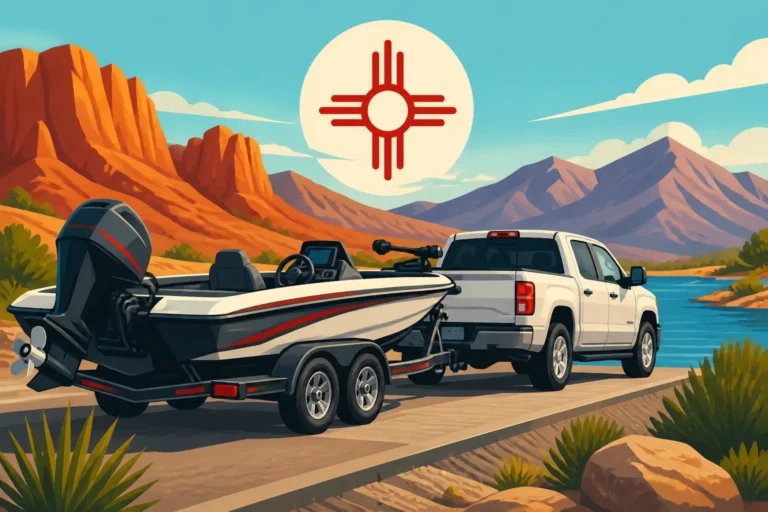
Getting out on the water in New Mexico is an incredible experience, whether you're chasing trophy bass on Elephant Butte or enjoying a peaceful fly-fishing trip on the San Juan River. But before you launch your vessel, there's a crucial step many folks find daunting: understanding the ins and outs of boat registration and titling in the Land of Enchantment. It can feel like navigating a maze of paperwork and rules, leaving you wondering if you've got everything just right. This comprehensive guide is here to untangle that complexity, walking you through every detail you need to know to legally and confidently enjoy New Mexico's beautiful waterways.
Understanding New Mexico Boat Ownership Regulations
The rules around boat ownership aren't just bureaucratic red tape; they're in place for safety, to help with law enforcement on the water, and to track ownership, much like with cars. Ignoring these regulations can lead to fines, hassles, and even prevent you from getting out on that serene lake or river you've been dreaming about. It's truly a foundational aspect of responsible boating in New Mexico.
Why Boat Registration Matters in New Mexico
Think of boat registration as your vessel's identification card. It’s how the state knows your boat belongs to you, and it’s critical for several practical reasons. For one, it helps first responders identify vessels in emergencies, which can be life-saving on a vast lake like Navajo. When you're out there enjoying the solitude, it's easy to forget that safety nets are in place, and registration is a big part of that.
Furthermore, registration helps the New Mexico Department of Game and Fish (NMDGF) manage and fund important conservation efforts. A portion of the fees collected directly supports stocking programs, habitat restoration, and the maintenance of public access points, all of which benefit anglers and boaters alike. Without these funds, the quality of our state's fishing and boating experiences would surely decline. It’s an investment in the very recreational opportunities we cherish.
Finally, proper registration ensures compliance with state and federal laws. Without it, you could face penalties, have your boating privileges suspended, or even have your boat impounded. No one wants their relaxing day on the water to end with a stern conversation with a game warden, so understanding this fundamental requirement is the first step to hassle-free enjoyment.
Who Needs to Register and Title Their Boat?
This is where some confusion often creeps in, because not every single watercraft needs to be registered or titled. Generally, any motor-driven boat, regardless of its size, needs to be registered in New Mexico. This includes everything from a small jon boat with a tiny electric trolling motor to a massive cabin cruiser. Even if your boat is primarily wind-powered, like a sailboat, but has an auxiliary engine, it typically falls under the registration requirement.
However, certain non-motorized vessels often have exemptions. Canoes, kayaks, paddleboards, and similar unpowered craft generally do not require state registration or titling. This is fantastic news for those who prefer human-powered exploration of New Mexico’s waters, as it simplifies getting on the water considerably. Always double-check, though, especially if you're thinking about adding an electric motor later on, as that addition would change its status. For example, Do Electric Trolling Motors Need Registration in New Mexico? is a very common question.
It’s crucial to understand that residency matters. If you're a New Mexico resident and you own a boat that meets the criteria, you must register it here. Non-residents who plan to operate their boat in New Mexico for an extended period beyond a certain grace period may also be required to register their vessel in the state, even if it's registered elsewhere. This prevents folks from skirting local laws by maintaining an out-of-state registration indefinitely while primarily using New Mexico's waters.
Key Terms: Registration vs. Titling Explained
It's easy to use "registration" and "titling" interchangeably, but they actually refer to two distinct processes, each with its own purpose. Understanding the difference is vital for proper boat ownership. Think of it like a car: you register it to legally drive it on the road, and you title it to prove you own it.
Registration in New Mexico is about getting a permit to operate your boat on public waters. When you register your boat, you receive a registration certificate and decals that must be displayed on your boat. This certificate needs to be on board whenever the boat is in use, serving as proof that you're authorized to operate it. It's typically renewed annually or every few years, ensuring that the state's records are current and that you continue to contribute to the NMDGF's efforts. The registration process is primarily handled by the New Mexico Department of Game and Fish.
Titling, on the other hand, establishes legal ownership of the vessel. A boat title is a legal document, much like a car title, that proves you are the owner of record. This is especially important when buying or selling a boat, as it legally transfers ownership from one party to another. New Mexico generally requires titling for all motorboats and sailboats over a certain length (often 10 feet), but there can be exceptions. This process is usually handled through the Motor Vehicle Division (MVD) of the New Mexico Department of Transportation. Getting a clear understanding of New Mexico Boat Titling and Registration will save you headaches down the line.
The table below provides a quick overview of the key differences:
| Feature | Boat Registration (NMDGF) | Boat Titling (MVD) |
|---|---|---|
| Purpose | Permit to operate on public waters; ID | Proof of legal ownership |
| Issued By | New Mexico Department of Game and Fish (NMDGF) | New Mexico Motor Vehicle Division (MVD) |
| Documents | Registration certificate, decals | Certificate of Title |
| Requirement | Generally for all motor-driven vessels | Generally for motorboats and sailboats > 10ft |
| Duration | Renewable annually or periodically | Permanent, until ownership transfer |
| Key Action | Allows legal use of the boat | Proves who legally owns the boat |
| Display | Decals on hull, certificate on board | Keep with important documents, not on display |
Understanding these distinct roles is paramount, as you might interact with two different state agencies for your boat's registration and titling needs. It helps to keep these processes separate in your mind as you gather your paperwork and prepare for your trips to the appropriate offices.
Step-by-Step Guide to New Mexico Boat Registration
Navigating the actual process of registering your boat can feel like a scavenger hunt for forms and information. But it doesn't have to be overwhelming! Breaking it down into manageable steps makes it much clearer. It's about being prepared, gathering the right paperwork, and knowing where to go.
Gathering Your Essential Documents
Before you even think about heading to the NMDGF office or going online, you need to compile a specific set of documents. This preparation phase is critical because missing just one item can mean wasted time and a frustrating trip. Think of it as assembling your fishing tackle before you head to the lake – you wouldn't forget your lures, would you?
First and foremost, you'll need a completed New Mexico Boat Registration Application. This form asks for all the vital information about you and your vessel, from its make and model to its hull identification number (HIN). If you bought a brand new boat, you’ll need the Manufacturer's Statement of Origin (MSO) or Manufacturer's Certificate of Origin (MCO). This document acts as the birth certificate for your boat, proving it’s never been registered before. For a used boat, you’ll need the properly executed title from the previous owner (if titled) and a bill of sale that clearly shows the purchase price, date, and signatures of both buyer and seller. This proves the change of ownership and forms the basis for any sales tax calculations.
You'll also need proof of New Mexico residency if you're applying for resident rates, such as a valid New Mexico driver's license or state ID. For any required fees, be prepared to pay with a check, money order, or credit card, depending on the venue. And if you're transferring a registration, make sure you have the previous owner's registration card as well. Having all these items organized in a folder before you leave the house will make the process much smoother.
The Application Process: Where and How to Apply
Once your documents are in order, you have a couple of options for submitting your application, catering to different preferences and schedules. The NMDGF strives to make it as convenient as possible, understanding that boat owners are busy people eager to hit the water.
Many people find the online system to be the most convenient route. The NMDGF website has a dedicated portal for boat registration services. You can often fill out the application electronically, upload scanned copies of your supporting documents, and pay the fees securely. This method is fantastic because you can do it from the comfort of your home, anytime, without having to take time out of your busy day. Just make sure your scans are clear and readable to avoid any delays in processing. This is also how many people handle their New Mexico Boat Registration Renewal Steps.
If you prefer a more personal touch or need assistance with your application, you can visit a NMDGF office in person. They have offices scattered throughout the state, often in larger cities like Albuquerque, Santa Fe, or Las Cruces. Going in person allows you to ask questions directly and get immediate feedback on your paperwork. It's also often the preferred method for complex situations, such as first-time titling or unusual ownership transfers. Additionally, some authorized vendors, like certain sporting goods stores or even large retailers like Bass Pro Shops, might have specific kiosks or departments that can assist with registration, though it's always best to call ahead to confirm their services. Where to Register a Boat in New Mexico is easily found on the NMDGF website.
Understanding Registration Fees and Renewals
Like most state services, boat registration in New Mexico comes with associated fees. These fees are vital for supporting the state's efforts in managing waterways, enforcing regulations, and enhancing recreational opportunities for everyone. It's not just a charge; it's a contribution to the health of our aquatic ecosystems.
The cost of registration typically varies based on the length of your vessel. Larger boats generally incur higher fees, reflecting their potentially greater impact on public waters and the resources needed to manage them. There might also be additional fees for things like processing, late renewals, or if you opt for specific validations. It's always a good idea to check the current fee schedule on the NMDGF website before you apply, as these figures can change over time. For a detailed breakdown, you can often find information like New Mexico Boat Registration Fees by Length.
Boat registrations are not a one-and-done deal; they need to be renewed periodically. New Mexico typically requires renewal every three years. You'll usually receive a renewal notice in the mail or via email as your expiration date approaches. It's your responsibility to keep your contact information updated with the NMDGF to ensure you receive these crucial reminders. Renewing on time avoids late fees and ensures uninterrupted legal operation of your boat. Forgetting to renew can put a damper on spontaneous fishing trips!
Navigating New Mexico Boat Titling Requirements
While registration gets you on the water, titling solidifies your ownership. It's the legal backbone of boat possession, and understanding when and how to get or transfer a title is crucial for protecting your investment and preventing future disputes. This part of the process often involves the Motor Vehicle Division (MVD), making it a slightly different administrative journey than registration.
When is a Boat Title Necessary?
Determining if your boat needs a title can sometimes be a point of confusion for new owners. In New Mexico, a boat title is generally required for any motorboat or sailboat that is 10 feet in length or longer. This covers a vast majority of powered vessels and larger sailboats that are commonly used on our lakes and rivers. The title serves as a permanent record of ownership, much like the title for your car.
If you purchase a new boat from a dealership, they will typically handle the initial titling application on your behalf, submitting the Manufacturer's Statement of Origin (MSO) to the MVD. When buying a used boat, it's absolutely critical to ensure the seller provides you with a properly endorsed title, signed over to you. Without a valid title, you won't be able to legally register the boat in your name, which can turn a great deal into a huge headache. A good rule of thumb is, if it has a motor and is over ten feet, assume it needs a title.
There are, of course, a few exceptions to the titling rule. As mentioned before, most purely human-powered vessels like canoes, kayaks, and paddleboards typically do not require a title, regardless of their length. Also, if a boat was manufactured before a certain year (e.g., typically pre-1988 or 1989 in many states, though you'd need to verify New Mexico's specific cutoff), it might be exempt from titling, even if it has a motor. However, if you're unsure, it's always best to contact the New Mexico MVD directly to clarify your specific situation. Don't risk a costly mistake by making assumptions.
Applying for an Original New Mexico Boat Title
The process of obtaining an original boat title in New Mexico, particularly for a brand-new vessel or one that's never been titled before in the state, is a methodical process. It primarily falls under the purview of the New Mexico Motor Vehicle Division (MVD), meaning you'll be dealing with the same agency that handles vehicle registrations and driver's licenses.
To start, you’ll need to complete the appropriate MVD application form for a certificate of title. Along with this, you'll need the Manufacturer's Statement of Origin (MSO) or Manufacturer's Certificate of Origin (MCO). This document is provided by the boat manufacturer and is the cornerstone of proving your boat's origin and initial sale. For out-of-state titled vessels, you'll surrender the out-of-state title. You'll also need proof of ownership, which could be a bill of sale, and proof of your identity and residency. Don't forget that sales tax will likely be due at this time, calculated based on the purchase price of the boat.
Once you have all your documents in order, you will submit them to your local MVD office. It's often advisable to make an appointment or go during off-peak hours to avoid long waits. The MVD agent will review your paperwork, calculate any applicable taxes and fees (including the New Mexico Boat Title Fee Explained), and process your application. After successful submission, you won't walk out with a physical title that day; rather, the MVD will typically mail the official Certificate of Title to you within a few weeks. It's a waiting game, but one that results in the crucial document proving your legal ownership.
Transferring a Boat Title in New Mexico
Buying or selling a used boat is where title transfers become incredibly important. A proper title transfer protects both the buyer and the seller, establishing a clear chain of ownership and preventing future legal entanglements. It’s not something to be taken lightly, as an improperly executed transfer can cause significant headaches down the road.
As a seller, your responsibility is to ensure the existing New Mexico boat title is properly completed and signed over to the buyer. This typically involves endorsing the title in the designated area, providing the sale date, purchase price, and your signature. It's also wise to provide a bill of sale, even if the title itself has a section for this information. Make sure you keep a copy of the signed title and bill of sale for your records, as this proves you've relinquished ownership. This protects you from any liability for the boat after the sale.
As a buyer, your primary responsibility is to ensure you receive a properly endorsed title from the seller. You should also get a detailed bill of sale. With these documents in hand, you’ll need to visit a New Mexico MVD office to transfer the title into your name. You’ll complete a new MVD application for title, present the properly signed-over title and bill of sale, and pay any applicable sales tax and transfer fees. The Deadline to Register a Boat After Buying It in New Mexico also applies to titling, so don't delay. Remember, a title that's not in your name doesn't legally make the boat yours, even if you've paid for it. This crucial step solidifies your legal claim to the vessel.
Exemptions and Special Cases for Boats in New Mexico
Not every watercraft on New Mexico's lakes and rivers is treated the same way under the law. There are specific exemptions and special circumstances that can alter registration and titling requirements. Knowing these can save you time, money, and unnecessary frustration, especially if your vessel falls outside the typical motorboat category.
Boats That Don't Need Registration or Titling
For those who enjoy a simpler, human-powered approach to the water, New Mexico offers some relief from the complexities of registration and titling. Generally, non-motorized vessels are exempt. This includes:
- Canoes: Classic and beloved, these quiet boats typically don't require registration.
- Kayaks: Whether you're a seasoned whitewater paddler or a calm lake explorer, your kayak generally gets a pass on registration. This is a common point of relief for many, and Do You Need to Title a Kayak in New Mexico? is a question often asked by new paddlers.
- Paddleboards (SUPs): These increasingly popular boards also fall under the non-motorized exemption.
- Rowboats and Dinghies: If they're solely propelled by oars or paddles, they usually don't need to be registered.
- Inflatable Rafts: For recreational floating, most inflatables are exempt unless they have a motor.
It's important to stress the "non-motorized" aspect. The moment you attach an electric trolling motor to your kayak, for instance, you've likely crossed the line into needing registration. The key is how the vessel is propelled. If it relies exclusively on human power or wind (without an auxiliary motor), you're typically in the clear. However, even if exempt from state registration, always remember that you'll still need to carry required safety equipment like life jackets.
Out-of-State Boats and Visiting Anglers
New Mexico welcomes visitors to its beautiful waters, and the state has provisions for those bringing their boats from elsewhere. If you're an out-of-state resident with a boat validly registered in another state, you can generally operate your vessel in New Mexico for a limited period without having to obtain New Mexico registration. This grace period is typically 90 consecutive days. This means if you're coming for a week-long fishing vacation to Elephant Butte, your home state registration should be perfectly fine.
However, if you plan on staying longer than 90 days, or if you become a New Mexico resident, you will then be required to register your boat in New Mexico. This prevents individuals from maintaining out-of-state registrations indefinitely to avoid New Mexico fees or regulations. It’s all about establishing bona fide residency and recognizing when your primary boating activity shifts to New Mexico. Always ensure your out-of-state registration and decals are current and properly displayed to avoid any misunderstandings with local authorities. This applies to both private citizens and commercial operators who might be working in the state for an extended period.
For those simply passing through or on short trips, always keep your current registration certificate onboard. While you might not need New Mexico-specific paperwork, being able to prove your vessel is legally registered elsewhere is crucial.
Unique Situations: Homemade Boats and Salvage Titles
Not every boat comes from a factory with a shiny Manufacturer's Statement of Origin. Sometimes, an adventurous soul builds their own vessel, or perhaps a boat has a history that includes significant damage. These unique situations have specific requirements for registration and titling.
For homemade boats, the process is understandably a bit different. Since there's no MSO, you'll need to provide evidence of construction, receipts for materials, and potentially undergo an inspection by the NMDGF or MVD to verify the hull identification number (HIN) and safety standards. The NMDGF will usually assign a HIN if one isn't already present. This ensures that even custom-built vessels can be properly identified and tracked, just like commercially manufactured ones. It’s a way to integrate unique projects into the official system.
Salvage titles are another special case. If a boat has been declared a "total loss" by an insurance company due to damage (fire, flood, collision, etc.), it may be issued a salvage title. This title indicates that the boat has sustained significant damage and its value may be compromised. If you purchase a boat with a salvage title and rebuild it, you will likely need to go through a rigorous inspection process with the MVD to ensure it is structurally sound and safe for operation before it can be issued a "reconstructed" or "prior salvage" title and subsequently registered. This process is designed to protect public safety and prevent unsafe vessels from being put back on the water without proper vetting. Understanding these unique circumstances is important for anyone dealing with non-standard boat ownership scenarios.
Essential Safety Equipment and Compliance
Getting your boat registered and titled is only half the battle. To truly enjoy New Mexico's waters responsibly and legally, you must also ensure your vessel is equipped with the proper safety gear and that you understand the rules of the road (or, in this case, the water). Game wardens aren't just checking for registration; they're ensuring everyone's safety.
Required Safety Gear for All New Mexico Boats
Safety on the water is paramount, and New Mexico boating laws mandate specific equipment to protect you and your passengers. Ignoring these requirements isn't just risky; it can lead to fines and spoil your day out. Think of it as your essential "pre-flight" checklist before you cast off.
Every vessel must carry a sufficient number of U.S. Coast Guard-approved Personal Flotation Devices (PFDs), commonly known as life jackets. The rule is simple: there must be at least one wearable PFD for every person on board. Additionally, if your boat is 16 feet or longer, you must also have one throwable PFD (like a ring buoy or a cushion) in an easily accessible location. Remember, children 12 years of age and younger are required to wear a PFD at all times when a boat is underway. This is a non-negotiable safety measure, and it's something game wardens check frequently. For comprehensive details, see Life Jacket Requirements for New Mexico Boaters.
Beyond PFDs, other crucial items include a sound-producing device (such as a whistle, horn, or bell) to signal intentions or alert others, and proper navigation lights if you operate between sunset and sunrise or during periods of restricted visibility. Boats with enclosed fuel compartments or permanently installed fuel tanks often require a fire extinguisher. And, of course, a kill switch lanyard must be attached to the operator on certain boats with open construction and engines exceeding a certain horsepower. A full list of Required Safety Gear on a New Mexico Boat can be found in the NMDGF regulations. It’s not just about avoiding a ticket; it’s about being prepared for the unexpected.
Displaying Registration Numbers and Decals
Once your boat is officially registered with the NMDGF, you'll receive your unique registration numbers and decals. Correctly displaying these on your hull is not just a formality; it's a legal requirement that allows law enforcement to quickly identify your vessel. Incorrect display can result in a citation, so pay close attention to the guidelines.
Your registration numbers (the "NM" followed by a series of numbers and letters) must be prominently displayed on both sides of the forward half of the boat. They need to be in block letters, at least three inches high, and in a color that sharply contrasts with the hull color. There must be a space or hyphen between the "NM" and the numbers, and between the numbers and the letters. For example, "NM 1234 AB" or "NM-1234-AB". This ensures readability, even at a distance or while moving.
The validation decals provided with your registration must be affixed on each side of the boat, generally placed within six inches of and directly behind the registration numbers. These decals indicate the current validity period of your registration. When you renew your registration, you'll receive new decals that supersede the old ones. Always remove expired decals before applying new ones to keep your boat's identification clean and current. These visual cues are how game wardens quickly ascertain if your boat is legally on the water without having to pull you over.
Consequences of Non-Compliance
Operating a boat in New Mexico without proper registration, titling, or the required safety equipment isn't just a minor oversight; it carries real legal and financial consequences. The NMDGF takes compliance seriously, not just to enforce the law, but to ensure the safety and fair use of public waterways for everyone.
The most immediate consequence of non-compliance is typically a citation or fine. The amount of the fine can vary depending on the specific violation, but it's always an unwelcome expense that can quickly overshadow the cost of proper registration. For instance, being caught without a valid registration certificate or proper life jackets will certainly lighten your wallet and dampen your spirits. Repeated offenses or serious safety violations can lead to more severe penalties.
Beyond fines, game wardens have the authority to terminate your voyage. This means they can order you to return to shore immediately, effectively ending your boating or fishing trip right then and there. In some cases, particularly for egregious violations or if the boat poses a significant safety hazard, the vessel could even be impounded. Imagine the hassle and expense of having to retrieve your boat from an impound lot, on top of any fines. A thorough understanding of New Mexico Fishing Violations and Penalties can help you avoid these scenarios. It's always better to take the time to ensure full compliance before you even think about launching your boat.
Where to Get Help and Additional Resources
Even with a comprehensive guide, questions can and will arise. The good news is that New Mexico offers several avenues for boaters to get answers, find additional resources, and stay informed. Don't hesitate to reach out to these official sources to ensure you're always operating within the regulations.
New Mexico Department of Game and Fish Resources
The New Mexico Department of Game and Fish (NMDGF) is your primary resource for all things related to boat registration and general boating regulations. Their website is typically the most up-to-date source of information. You can often find downloadable forms, fee schedules, links to online registration portals, and detailed summaries of boating laws. They also publish an annual "Fishing Rules and Information" booklet that often includes a section on boating regulations. While this focuses primarily on fishing, the boating regulations are a critical component for anglers.
Beyond the website, the NMDGF maintains several district offices throughout the state. Visiting one of these offices in person allows you to speak directly with knowledgeable staff who can answer specific questions, help you fill out forms, or even assist with more complex registration issues. Their customer service lines are also available for phone inquiries. Don't be shy about calling them if you're unsure about a particular rule or need clarification on a document. They are there to help ensure safe and legal boating for everyone.
It's also worth noting that the NMDGF often conducts boating safety courses. While not always mandatory for adult operators, completing such a course can be highly beneficial, enhancing your knowledge of navigation, safety protocols, and emergency procedures. Plus, some insurance companies offer discounts for boaters who have completed an approved safety course.
Connecting with Other New Mexico Boaters
Sometimes, the best advice comes from those who are already out there doing it! Connecting with other New Mexico boaters can be an invaluable resource, offering practical tips, local insights, and firsthand experiences that official documents might not cover.
Online forums and social media groups dedicated to New Mexico boating and fishing are excellent places to start. You'll find communities of experienced boaters who are often eager to share their knowledge on everything from the best fishing spots to local peculiarities in regulations. Just remember to always cross-reference any advice with official NMDGF or MVD information, as rules can change, and anecdotal advice might not always be perfectly accurate.
Additionally, local marinas, bait and tackle shops (like your local Bass Pro Shops or small independent stores), and fishing clubs are hubs of information. The folks who work at these establishments, and the members of these clubs, are often lifelong boaters who can offer practical guidance. They can provide insights into specific lake conditions, current enforcement trends, and even recommendations for gear that holds up well in New Mexico's unique climate. Don't underestimate the power of local knowledge when it comes to navigating the practicalities of boating. For instance, if you're looking for Where to Find Boat Rentals on New Mexico Lakes, these local sources are often the best bet.
Preparing for a Successful Boating Season
With your boat legally registered and titled, and all your safety gear in check, the final step is to ensure you're truly prepared for a fantastic boating season. This involves a bit of ongoing maintenance and staying informed.
Regularly check the condition of your boat and all its equipment. This includes your engine, lights, steering, and especially your safety gear. Life jackets can degrade over time, and fire extinguishers expire. A pre-season check-up can prevent a small issue from becoming a major problem when you're miles from shore. You can find many marine parts and accessories on sites like Amazon or at local marine supply stores to keep your boat in top shape.
Always stay updated on current regulations and environmental conditions. Water levels at New Mexico's reservoirs can fluctuate dramatically, affecting launch ramp access and even navigation hazards. The NMDGF website provides alerts and updates on these conditions. Similarly, fishing regulations can be updated annually, so consult the latest New Mexico Fishing Regulations Overview before each season. Being a responsible boater means being aware of both your vessel's readiness and the environment you're operating in. Happy boating, and tight lines!
Disclaimer
This article is for general informational purposes only and does not constitute professional advice. Laws, prices and regulations vary by location and change over time. Consult a qualified professional for guidance on your specific situation.