Best Boat Length for Elephant Butte Lake Waves
Few things can ruin a planned day out on the water faster than unexpectedly rough conditions, and nowhere is this more true than on New Mexico's vast Elephant Butte Lake. One moment it's glassy, the next you're bouncing around like a cork in a washing machine. The truth is, choosing the right boat length is absolutely crucial not just for your comfort, but for your safety and overall enjoyment when facing those notorious Elephant Butte waves. This guide will help you understand what boat length provides the best balance for tackling the lake's often unpredictable waters.
Understanding Elephant Butte's Unique Wave Characteristics
Elephant Butte Lake is a magnificent body of water, but it's not always a gentle giant. Many anglers, myself included, have learned the hard way that its vast open expanses, coupled with New Mexico's often relentless winds, can whip up significant chop in a hurry. Understanding these unique characteristics is the first step in deciding what kind of vessel is truly going to serve you well.
Wind and Open Water Dynamics
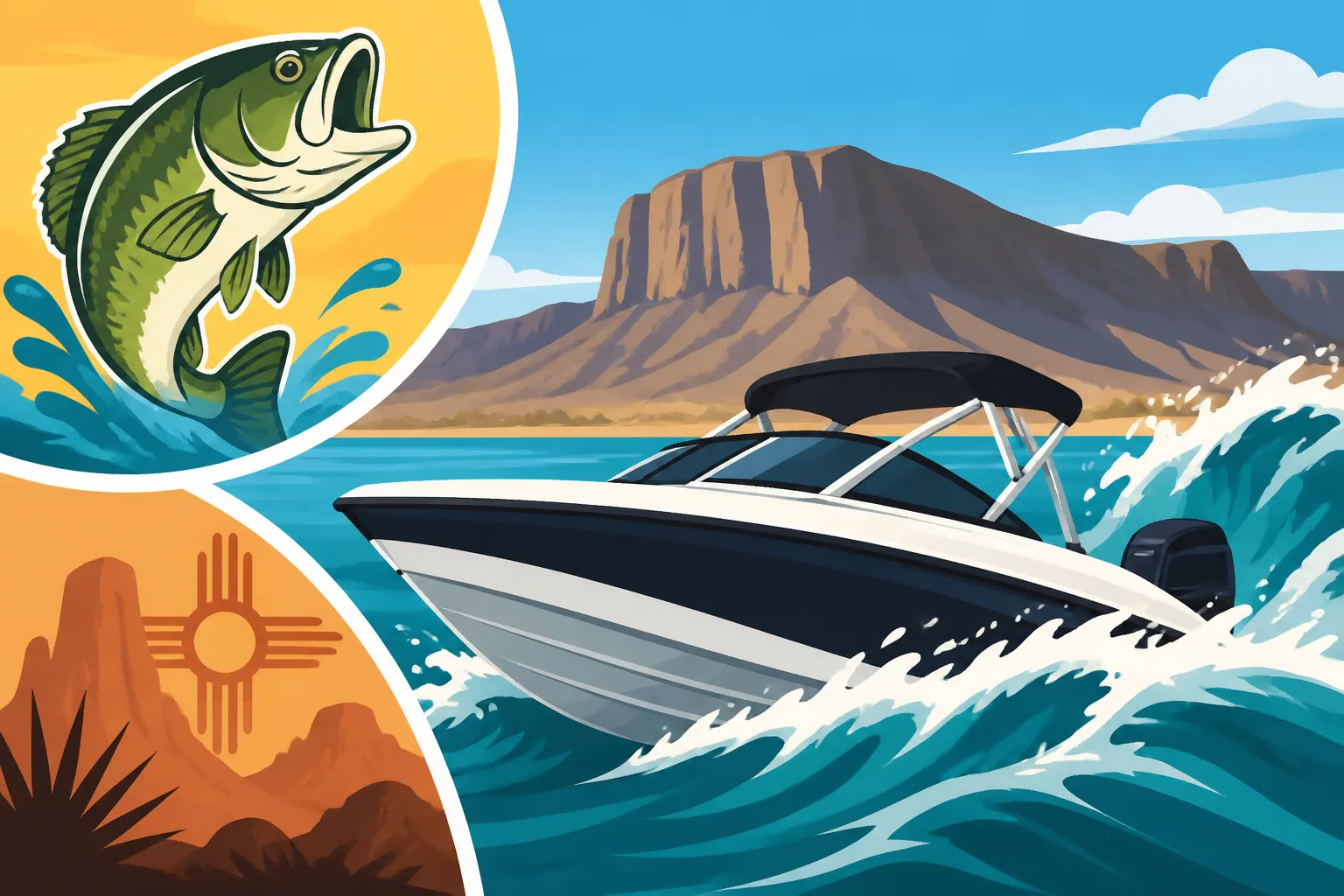
Imagine a sheet stretched taut over a massive, flat surface – that's Elephant Butte on a calm morning. Now, imagine a persistent breeze starting to ripple that sheet, growing stronger and stronger. That's essentially what happens with the wind on this lake. Because Elephant Butte is so large and has very few natural windbreaks, even a moderate breeze can travel across miles of open water, building substantial waves. These aren't just gentle rollers; they can be steep, closely spaced, and come from multiple directions as the wind shifts or bounces off shorelines. A boat that handles well on a smaller, more sheltered lake might feel totally overwhelmed here, making for a truly exhausting and potentially unsafe day. It’s a common frustration to arrive at the lake with high hopes, only to see whitecaps forming the moment you launch.
Boating Traffic and Wake Concerns
Beyond the natural wind chop, Elephant Butte is a popular recreation destination, especially during peak seasons and holidays. This means you're not just contending with Mother Nature; you're also dealing with the wakes generated by other boats. Everything from giant houseboats to powerful ski boats and fast personal watercraft contributes to the overall wave chaos. These wakes can be significant, sometimes reaching three to four feet, and they can hit your boat from unexpected angles, often compounding the natural wind-driven waves. This creates a very confused and unpredictable water surface, which demands a boat with enough mass and length to cut through or ride over these combined forces without jarring everyone aboard or taking on too much water. Trying to navigate this kind of multi-directional chop in a small, flat-bottomed boat can feel like being in a boxing match you didn't sign up for.
Ideal Boat Length Ranges for Safety and Performance
When we talk about the "best" boat length for Elephant Butte Lake, it's not a one-size-fits-all answer. It's about finding the sweet spot that balances safety, comfort, and your specific fishing or recreational needs against the lake's challenging conditions. Generally speaking, longer boats tend to handle waves better due to their ability to bridge more than one wave crest at a time, providing a smoother ride.
Shorter Boats Under 18 Feet
For many, a boat under 18 feet is a tempting choice. They're often more affordable, easier to store in a garage, simpler to launch and retrieve, and more fuel-efficient. Think smaller aluminum fishing boats, bass trackers, or even some compact fiberglass runabouts.
| Category | Pros | Cons |
|---|---|---|
| Maneuverability | Very nimble, easy to navigate tight spots. | Can be easily tossed around by larger waves. |
| Cost & Ownership | Lower purchase price, less fuel, easier to tow and store. | Frequent, jarring impacts in chop, potential for very wet rides. |
| Wave Handling | Fine for calm days or sheltered coves. | Struggles significantly in moderate to heavy chop. |
| Capacity | Limited space for passengers and gear. | Passengers will be uncomfortable and could get soaked. |
While these boats are fantastic for a quick trip on a perfectly calm morning or poking around in protected c coves, they quickly become uncomfortable and potentially unsafe when Elephant Butte kicks up. A 2-foot chop might feel like 4 feet in a 16-footer, causing continuous pounding that's hard on both the boat and its occupants. You'll likely be forced to slow down significantly, extending your travel time and making it a less enjoyable experience. Many anglers fishing in these smaller craft tend to stick close to the ramps or only go out on days with minimal wind forecasts.
Medium-Sized Boats: The 18-22 Foot Sweet Spot
This length range is often considered the optimal balance for fishing and recreational boating on large, open bodies of water like Elephant Butte. Here, you start to gain the significant advantages of a longer waterline, without necessarily crossing into the realm of truly massive, difficult-to-manage vessels. Many popular fiberglass bass boats, bay boats, and multi-species boats fall into this category.
A boat in the 18 to 22-foot range offers a much more comfortable ride in typical Elephant Butte chop. The added length allows the hull to span waves more effectively, reducing the "pounding" sensation and allowing for a smoother, drier experience. You'll find you can maintain a more reasonable cruising speed in rougher conditions compared to shorter boats, meaning less time spent white-knuckling it and more time enjoying the fishing. These boats also generally offer more deck space for gear, multiple anglers, and better stability when standing to cast. The fuel consumption is still manageable, and while they require a larger tow vehicle and more storage space than smaller boats, they are far from the logistical challenges of truly large cruisers. This is often where anglers feel they get the most "bang for their buck" in terms of capability for varied conditions.
Larger Boats Over 22 Feet
For those who prioritize ultimate comfort, stability, and the ability to confidently tackle almost any conditions Elephant Butte throws at them, boats over 22 feet, and often stretching into the 24-28 foot range, are the way to go. These typically include larger offshore-style center consoles, substantial walk-arounds, or even smaller cabin cruisers.
| Characteristic | Advantage in Larger Boats (22+ feet) | Disadvantage in Larger Boats (22+ feet) |
|---|---|---|
| Ride Comfort | Unparalleled smoothness in rough water. | Requires a significant initial investment. |
| Stability | Very stable platform for fishing or family. | Higher fuel consumption, more expensive to operate. |
| Range/Capability | Can handle long runs across the lake in comfort. | Difficult to trailer, launch, and retrieve alone. |
| Capacity | Ample space for large groups and extensive gear. | Requires larger tow vehicle and significant storage space. |
| Safety | Enhanced safety margin in severe weather. | Can be overkill for casual, short trips. |
These boats truly excel at cutting through heavy chop, offering a dry ride and confidence-inspiring stability. If you plan on making long runs across the lake, frequently fish in less-than-ideal conditions, or bring a large group of friends or family, a boat in this class will provide the best experience. The trade-offs, however, are substantial. They come with a significantly higher price tag, require larger, more powerful tow vehicles, and demand more expensive storage options. Launching and retrieving can also be a two-person job, and maneuvering in tight marinas can be a challenge. While these boats offer superior performance, the practicalities of ownership mean they aren't for everyone. When looking at these larger vessels, you'll definitely want to check out the offerings at places like Bass Pro Shops, or even browse used options on sites like Amazon for boat accessories. For serious anglers looking to truly master Elephant Butte Lake Fishing Guide, this size range offers the ultimate platform.
Factors Beyond Length: Hull Design, Weight, and Experience
While boat length is a critical factor, it's certainly not the only thing that dictates how a boat will handle the waves on Elephant Butte. Several other design elements and even your personal skill level play a huge role in determining comfort and safety.
Hull Design Matters Immensely
The shape of a boat's hull below the waterline is paramount to its ride quality. Different hull designs are optimized for different conditions:
- Deep-V Hulls: These hulls have a pronounced V-shape that extends far back towards the transom. They are designed to slice through waves rather than pound over them, offering the smoothest ride in rough water. Many offshore fishing boats and larger center consoles employ this design. For Elephant Butte, a deep-V hull is often the preferred choice, particularly in the 18-22+ foot range, as it provides the most comfortable journey when the lake gets nasty.
- Modified-V Hulls: These hulls have a V-shape forward that flattens out towards the stern. They offer a good compromise between a smooth ride in chop and better stability at rest or slower speeds, making them popular for multi-species fishing boats. They perform better than flat bottoms in chop but won't be as smooth as a true deep-V.
- Flat-Bottom Hulls (or very shallow V): While incredibly stable at rest and excellent for shallow water access, these hulls will pound mercilessly in even moderate chop. They tend to ride on top of the waves rather than through them. While you might find some smaller utility boats with these designs, they are generally not recommended for tackling the main body of Elephant Butte Lake when the wind is blowing.
Understanding the difference in hull design is key. A longer boat with a shallow-V hull might actually ride worse in chop than a slightly shorter boat with a deep-V design. Always look at the deadrise angle at the transom – a higher degree (18 degrees or more) generally indicates a better ride in rough water.
Boat Weight and Beam
It's simple physics: a heavier object tends to be less affected by external forces. A heavier boat, assuming it has a good hull design, will generally cut through waves more effectively and provide a more stable, less bouncy ride than a lighter boat of the same length. The added mass helps the boat maintain its momentum and course through choppy water, rather than being thrown around.
Similarly, the beam (width) of the boat plays a role. A wider boat can offer more initial stability at rest, which is great for standing and fishing. However, a very wide, flat-bottomed boat can sometimes feel like it's slamming down on the waves more harshly than a narrower, deep-V boat that slices through them. It's a balance. A wider boat paired with a deep-V hull, particularly in the longer size ranges, offers both excellent stability and good wave performance. When you're considering Best Boats for New Mexico Reservoir Fishing, remember that weight and beam are just as important as length.
Your Boating Experience and Crew
Finally, let's talk about the human element. An experienced boat operator with a good understanding of wave dynamics and boat handling can navigate rough water more safely and comfortably in a given boat than a novice. Knowing how to trim your engine, adjust your speed, and approach waves at the correct angle can make a huge difference in ride quality.
Consider who you'll be bringing along. Are you usually a solo angler, or do you frequently have family, including young children or elderly passengers, aboard? A bumpy, wet ride might be an exciting adventure for some, but it can quickly become miserable, or even dangerous, for others. If you're consistently taking out a full crew, especially those who aren't accustomed to rough water, investing in a boat that offers maximum comfort and safety in choppy conditions – often meaning a longer, heavier boat with a good deep-V hull – is a wise decision. You want everyone to have a good time, not just tolerate the ride!
Practical Considerations and Recommendations for Elephant Butte
Choosing the right boat for Elephant Butte involves more than just ideal specifications; it's about blending those with practical realities like budget, storage, and how you actually plan to use the boat.
Prioritizing Safety and Comfort
Above all else, your decision should hinge on safety and comfort. Elephant Butte is a large, sometimes unforgiving lake. It's far better to be slightly over-boated for calm days than dangerously under-boated when conditions turn. A boat that feels safe and comfortable in varied conditions will encourage you to get out more often and enjoy your time on the water. If you're constantly worried about swamping, getting tossed around, or breaking gear, the joy of fishing quickly evaporates. Always ensure you have all the Required Safety Gear on a New Mexico Boat and that everyone on board is wearing appropriate Life Jacket Requirements for New Mexico Boaters.
When reviewing specifications, don't just look at the overall length, but also search for the boat's "dead rise" angle at the transom. A higher dead rise (e.g., 20-24 degrees) indicates a hull designed to cut through waves more smoothly. You can often find these specs on manufacturer websites or even through detailed reviews on retail sites like Amazon or Bass Pro Shops.
Budget and Storage Realities
Let's be real: bigger boats come with bigger price tags, both upfront and long-term.
- Purchase Cost: Longer, heavier boats with robust hull designs are more expensive to buy.
- Fuel Consumption: A larger boat with a bigger engine will burn significantly more fuel, especially when running across the lake.
- Trailering: You'll need a larger, more capable tow vehicle. A 22-foot fiberglass boat, especially loaded with gear, is heavy and requires a truck or large SUV capable of safely pulling thousands of pounds.
- Storage: Can you store a 20+ foot boat in your driveway or garage? Many anglers underestimate the space needed. Indoor storage can be expensive, and even outdoor storage requires more space. Consider where you'll keep your boat when it's not in the water.
- Maintenance: Larger engines and more complex systems often mean higher maintenance costs.
Think about your honest budget. It's often better to buy a slightly shorter, well-maintained boat with a solid hull design that you can comfortably afford and operate, rather than stretching for a larger boat that becomes a financial burden. For many, a boat in the 18 to 22-foot range strikes a good balance between capability and affordability, especially when factoring in the New Mexico Boat Registration and Titling Guide and ongoing operational costs.
Boat Type and Fishing Style
Your primary use for the boat also helps dictate the ideal length and type.
- Bass Boats: While incredibly fast and designed for fishing, many traditional bass boats have shallower V-hulls, which can be rough in Elephant Butte's chop. Newer, longer bass boats (20-22+ feet) often feature deeper V-hulls specifically designed to handle rougher tournament waters, making them a much better choice for Elephant Butte.
- Multi-Species Boats (Walleye Boats): These are often a fantastic choice for Elephant Butte. They typically fall in the 18-22 foot range, have deeper V-hulls than traditional bass boats, and offer more freeboard (height from the waterline to the top of the boat) for a drier ride. They are designed to fish in varied conditions and handle rougher lakes.
- Center Consoles: While often associated with saltwater, center consoles (especially 20+ feet) are becoming increasingly popular on large freshwater lakes for their open deck space, high freeboard, and excellent rough-water capability. They are incredibly versatile for various fishing techniques, including Trolling Techniques for New Mexico Lakes.
- Pontoons: Pontoons are great for leisurely cruising and calm-water fishing with a crowd, but their flat deck and relatively shallow draft make them particularly vulnerable to wave action. They can be very uncomfortable and even unsafe in anything more than light chop. If a pontoon is your dream, consider a longer model (24+ feet) with larger pontoons (tubes) for slightly better performance, but know their limitations on a truly windy day at Elephant Butte. If you're wondering Do You Need a Boat to Fish Elephant Butte Effectively?, the answer is often yes, and the right type of boat makes all the difference. Even if you're exploring smaller options like Best Kayaks for Elephant Butte Lake, understanding wave dynamics is crucial.
Ultimately, for comfortable and safe navigation of Elephant Butte Lake's often challenging waves, a boat in the 18 to 22-foot range with a moderate to deep-V hull offers the best all-around performance for most anglers and recreational boaters. If your budget and storage allow, stepping up to a 22-24+ foot boat with a deep-V hull will provide an even smoother, more confidence-inspiring ride when the lake truly shows its teeth.
Disclaimer
This article is for general informational purposes only and does not constitute professional advice. Laws, prices and regulations vary by location and change over time. Consult a qualified professional for guidance on your specific situation.