Chest Waders vs Hip Waders for New Mexico Rivers
One of the most common dilemmas I hear from fellow anglers, especially those new to exploring the incredible diversity of New Mexico's waters, is figuring out what kind of waders they actually need. It's frustrating to buy a piece of gear only to find it's either overkill for your usual spots or, worse, leaves you soaking wet when you push its limits. This guide will walk you through the real-world differences between chest waders and hip waders, helping you make an informed choice that suits your New Mexico fishing adventures.
Understanding New Mexico's Diverse River Environments
New Mexico is a land of extremes, and its fishing environments are no exception. We have everything from tiny, spring-fed trickles in the high country to the wide, meandering flows of the Rio Grande, and the legendary, deep currents of the San Juan River. Each of these unique landscapes presents its own set of challenges and opportunities for the wading angler, and what works perfectly in one spot might be totally inadequate in another.
The Variability of New Mexico's Rivers
Imagine yourself planning a trip to a high-mountain stream in the Pecos Wilderness. You might envision a small, easily wadeable creek where hip waders seem like the perfect choice. And often, they are! However, even these seemingly docile waters can hold surprisingly deep pockets, especially after a recent rain or during spring runoff. A spot that was ankle-deep yesterday could be knee-deep today, and suddenly, those hip waders are making for a very uncomfortable — and potentially dangerous — situation. Then you have rivers like the San Juan River Quality Waters Section, known for its consistent flows but also its considerable depth in many areas, where wading beyond your knees is a regular occurrence to access prime fishing lanes.
Seasonal changes play a massive role too. What's a gentle, low-flow river in late summer might transform into a raging torrent during spring runoff, making even a walk along the bank challenging, let alone wading in. Knowing the typical conditions for your target area and time of year is crucial. Even within a single river, the depth and current can vary wildly from one bend to the next, or even one side of the river to the other. It's this unpredictability that often leaves anglers second-guessing their gear choices.
Beyond the Wading Line: Bank Fishing Considerations
It's easy to focus solely on how deep you'll be standing in the water when thinking about waders, but let's not forget about the banks themselves! Many New Mexico rivers, especially in the warmer months, have muddy, overgrown, or thorny banks that can be just as much a deterrent as deep water. Picture trying to navigate a thicket of tamarisk along the middle Rio Grande or pushing through tall, dew-covered grasses on an early morning trout stream.
In these scenarios, even if you don't plan to wade past your shins, hip waders might not offer enough protection. Your legs could still get scraped, muddy, or even worse, exposed to thorns, biting insects, or even rattlesnakes that love to bask in the sun on riverbanks. Chest waders, in this context, provide a much greater shield, protecting your clothing and skin not just from water but also from the often-rugged and prickly terrestrial environment that defines many of our fishing spots. So, while you might not be submerging yourself, the higher coverage can still be a huge benefit for overall comfort and safety.
The Case for Hip Waders in New Mexico
Hip waders often get a bad rap for being less versatile than their chest-high counterparts, but for many New Mexico fishing scenarios, they are absolutely the perfect tool for the job. They offer a unique blend of comfort and practicality that can make a day on the water much more enjoyable, provided you're fishing the right kind of water.
When Hip Waders Shine Brightest
Imagine a perfect spring morning, targeting panfish in one of New Mexico's urban ponds or a smaller, easily accessible section of a river like parts of the Gila River. The water is relatively shallow, the sun is beginning to warm the air, and you're mostly moving along the bank or making short forays into the water to reach a productive seam or avoid bankside vegetation. This is where hip waders truly excel. They're lightweight, making them much less cumbersome than chest waders, especially when hiking to those more secluded spots. Putting them on and taking them off is a breeze, which is a huge plus if you're frequently getting in and out of the water or moving between different fishing locations.
Their breathability is often superior to chest waders, especially in warmer weather, because less material means less heat retention. If you're fishing a small, clear stream where you rarely venture past mid-thigh, or even targeting bass in the shallower coves of a lake, hip waders keep you dry without making you feel like you're wrapped in a sauna suit. They're also an excellent choice for anglers who prefer to mostly bank fish but occasionally need to step into the water to net a fish, cross a shallow riffle, or cast to a distant bank. They provide just enough protection without adding unnecessary bulk.
Limitations and Unexpected Wetness
However, the biggest advantage of hip waders is also their most glaring limitation: their height. It's a tale as old as time: an angler confidently stepping into what they thought was a shallow stretch, only to find a sudden drop-off, a hidden hole, or a powerful current that forces water right over the top. The feeling of ice-cold river water rushing into your waders is, to put it mildly, an instant mood killer and a significant frustration for any angler. It's a common mistake, even for seasoned folks, when exploring new stretches of water or when water levels fluctuate unexpectedly.
This limitation means hip waders are inherently less versatile. If you're planning a trip to a river with variable depths, strong currents, or where you anticipate needing to wade deep to reach fish, hip waders simply won't cut it. For instance, attempting to use hip waders on many parts of the Rio Grande Fishing Guide could quickly lead to an unpleasant soaking, as its depths can be quite unpredictable. Furthermore, they offer no protection for your upper body, leaving you vulnerable to splashing from waves, rain, or even just setting your rod down carelessly. So, while they offer fantastic freedom and comfort in the right conditions, they demand a keen awareness of your surroundings and the water's depth.
The Advantages of Chest Waders in New Mexico
When it comes to serious wading in New Mexico's more challenging waters, chest waders are often the undisputed champion. They offer a level of protection and versatility that hip waders simply cannot match, making them an essential piece of gear for many dedicated anglers.
Navigating Deeper Currents and Colder Waters
The primary and most obvious advantage of chest waders is their superior coverage. When you're standing in the middle of a swift current on a river like the Rio Chama, trying to reach that perfect trout hideout, you need to know you'll stay dry. Chest waders allow you to comfortably wade up to your chest, providing ample margin for error against unexpected deep spots or strong currents that might push water higher than anticipated. This confidence in staying dry means you can focus more on your fishing and less on every step you take.
Furthermore, New Mexico's rivers, especially those fed by mountain snowmelt or dam releases, can be incredibly cold, even in summer. Rivers such as the San Juan River Quality Waters are renowned for their consistent, frigid temperatures. Chest waders offer significantly more insulation than hip waders, keeping your core body temperature stable and extending your comfortable fishing time. This is especially true for neoprene chest waders, though modern breathable waders with good layering underneath also do an excellent job. They are indispensable when fishing during colder months, early mornings, or in those high-elevation lakes where the water rarely gets above chilly.
All-Season, All-Terrain Versatility
Another significant benefit of chest waders is their all-season, all-terrain versatility. Unlike hip waders, which are often relegated to specific shallow-water conditions, chest waders can handle almost anything you throw at them. Whether it's a hot summer day on a deep lake, a snowy winter morning ice fishing (though insulated bibs might be better for pure ice fishing, chest waders can suffice for shore-based ice angling), or a rainy monsoon afternoon on a mountain stream, chest waders keep you dry and comfortable.
Beyond water protection, they offer a shield against the elements and terrain. Hiking through brush, tall weeds, or thorny plants is much more comfortable when your legs and lower torso are protected. They prevent bug bites, scrapes, and provide an extra layer of defense against ticks, which are a real concern in many riparian zones. If you're bushwhacking to a secluded fishing hole or crossing varied terrain to get to your preferred spot, the full coverage is invaluable. They truly are the workhorses of an angler's wardrobe, adapting to changing conditions and providing peace of mind no matter where your New Mexico fishing adventures take you. For a comprehensive look at what else you might need, check out Best Fishing Gear for New Mexico Anglers.
Choosing the Right Waders for Your New Mexico Fishing Style
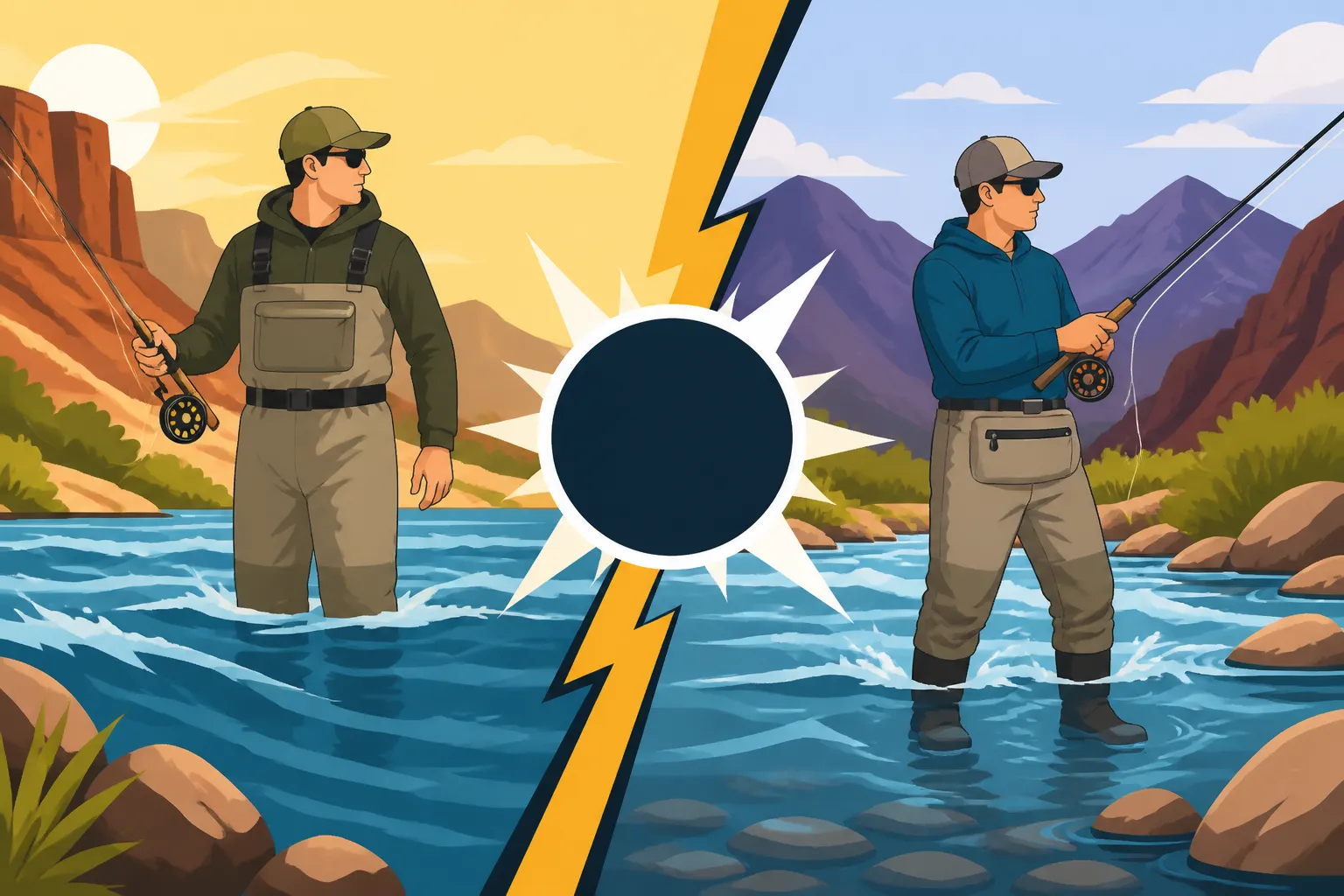
Deciding between hip waders and chest waders isn't about one being inherently "better" than the other; it's about matching the gear to your specific needs, fishing style, and the waters you frequent most often here in New Mexico. It's an investment, so you want to get it right the first time.
Assessing Your Primary Fishing Grounds
The first question to ask yourself is: where do you typically fish in New Mexico? Are you primarily targeting small trout streams in the mountains, like those found in the Carson National Forest, where the water is usually ankle to knee-deep? If so, hip waders might be perfectly adequate and offer greater freedom of movement and comfort in warmer conditions. They're also excellent for urban ponds or shallower sections of bigger rivers where you mostly cast from the bank.
However, if your passion lies in fly fishing the deeper, colder sections of the San Juan River, exploring larger reservoirs like Navajo Lake from shore, or tackling swift rivers with unpredictable depths, then chest waders are almost certainly the way to go. They'll give you the confidence to navigate diverse depths and currents without the constant worry of getting soaked. Think about the average depth of the water you'll be standing in, and then add a healthy margin for error – because unexpected drops will happen. If you plan to wade into anything above your mid-thigh regularly, chest waders are the safer, drier bet. For more insights on where to fish, consider reading Best Rivers for Fly Fishing in New Mexico.
Material Matters: Breathability vs. Durability
Once you've decided on hip or chest waders, the material is the next big consideration.
-
Neoprene Waders: These are fantastic for cold water and cold weather. They offer excellent insulation, keeping you warm even when standing in frigid water for extended periods. The downside is that they can be incredibly hot in warmer weather, and they're generally less breathable, leading to sweat buildup inside. They also tend to be bulkier and heavier. If you mostly fish during winter or in high-mountain lakes and tailwaters, neoprene might be a solid choice.
-
Breathable Waders (Gore-Tex or similar fabrics): These are the preferred choice for many anglers, especially in New Mexico's variable climate. They are made from multi-layered fabrics that allow perspiration to escape while preventing water from entering. This makes them much more comfortable in warmer temperatures and during strenuous activity, like hiking to a remote stream. While they don't offer the same inherent warmth as neoprene, you can easily layer clothing underneath to adjust for cold conditions. Breathable waders are generally more expensive but offer superior comfort and versatility across seasons. When you're looking for breathable waders, you might find a good selection and user reviews on Amazon or get hands-on advice and sizing at a dedicated outdoor retailer like Bass Pro Shops.
The "Just in Case" Mentality and Cost
It's natural to consider the cost. Hip waders are generally less expensive than chest waders, which can be tempting. However, thinking with a "just in case" mentality often pays off in the long run. If there's even a slight chance you'll encounter deeper water or colder conditions, investing in chest waders might save you from buying two pairs of waders later or, worse, from a miserable, wet fishing trip.
Consider your budget, but also consider the potential for discomfort or missed opportunities. If you're a casual angler sticking to very predictable, shallow spots, hip waders are a great, cost-effective option. But if you're serious about exploring New Mexico's diverse fisheries, tackling different seasons and water types, chest waders offer peace of mind and expand your fishing horizons. For a deeper dive into wader options, take a look at Best Waders for New Mexico Rivers. Always remember to check the latest New Mexico Fishing Regulations Overview before you head out!
Here's a quick comparison to help solidify your decision:
| Feature | Hip Waders | Chest Waders |
|---|---|---|
| Coverage | Up to the hip/thigh | Up to the chest/armpits |
| Wading Depth | Best for shallow water (ankle to mid-thigh) | Best for deep water (mid-thigh to chest) |
| Comfort (Warm) | More breathable, less restrictive in warm weather | Can be hot due to more material, less airflow |
| Comfort (Cold) | Limited warmth, only lower body protected | Superior warmth, protects core body from cold water |
| Mobility | Excellent, lightweight, less bulk | Good, but more restrictive due to greater coverage |
| Protection | Water (lower body), some bankside scrapes | Water (full lower body), bankside scrapes, brush, bugs |
| Versatility | Limited to shallower, predictable waters | Highly versatile for varied depths and conditions |
| Ease of Use | Quick to put on/take off | Takes a bit longer to don/doff |
| Cost | Generally less expensive | Generally more expensive |
| Ideal for | Small streams, urban ponds, bank fishing | Rivers with varied depths, cold tailwaters, all-season |
Ultimately, the best wader choice for you depends on your personal angling habits in the Land of Enchantment. If you can only afford one pair, and you have aspirations of exploring more challenging and diverse waters, chest waders offer the most flexibility. But don't underestimate the joy and utility of a good pair of hip waders for those specific, shallower adventures!
Disclaimer
This article is for general informational purposes only and does not constitute professional advice. Laws, prices and regulations vary by location and change over time. Consult a qualified professional for guidance on your specific situation.