Best All-Around Combo for a First New Mexico Fishing Trip
Embarking on your very first New Mexico fishing trip can feel like staring at a massive, winding river with a tiny map – exciting, but also a little overwhelming when it comes to figuring out what gear to even start with. You dream of casting lines into clear trout streams or battling bass on a sprawling reservoir, but the sheer volume of rod-and-reel combos out there can make your head spin. This guide is all about cutting through that noise, helping you pinpoint the best all-around rod, reel, and line combination that will set you up for success across many of New Mexico’s fantastic fisheries without needing a truckload of specialized equipment.
Understanding New Mexico's Diverse Waters
New Mexico is a land of incredible contrasts, and its fishing opportunities are no exception. You can find yourself chasing trout in a cool, high-mountain stream one weekend and then be casting for warm water species in a vast, sun-drenched reservoir the next. This diversity is what makes the fishing here so exciting, but it's also why picking an "all-around" setup is so important for a beginner. You don't want a heavy ocean rod for delicate trout, nor a tiny ultralight combo when you might hook into something bigger.
From High Mountain Lakes to Desert Reservoirs
Picture this: you're planning a trip to a pristine alpine lake tucked away in the Sangre de Cristos, hoping to entice a wily brook trout or a native cutthroat. The next month, your sights are set on the expansive waters of Elephant Butte Lake, home to formidable striped bass and chunky largemouth. These two scenarios demand vastly different approaches if you're going for highly specialized gear. However, for someone just starting out, investing in a flexible setup that can handle both the finesse needed for smaller mountain stream fish and the backbone required for larger lake dwellers is key. It's about finding that sweet spot of capability.
The challenge isn't just the species, but the environment itself. High mountain lakes often mean lighter lines and more precise casts from shore or a small float tube. Desert reservoirs, on the other hand, might involve longer casts, heavier lures, and dealing with wind, open water, and sometimes more aggressive fish. A truly "all-around" combo needs to navigate these different demands reasonably well, allowing you to focus on the experience rather than constantly fretting about having the wrong tool for the job.
What "All-Around" Really Means Here
When we talk about an "all-around" fishing combo for a first New Mexico fishing trip, we're really focusing on versatility and ease of use. It's not about being the absolute best for any single situation, but being good enough for most common situations you'll encounter as a new angler. This means a setup that can comfortably cast small trout lures and bait, handle panfish, and still have enough power to fight a decent-sized bass or even a smaller walleye without feeling totally outgunned.
Think of it as the Swiss Army knife of fishing setups. You want something forgiving for casting, sensitive enough to feel those subtle bites, yet strong enough to land your catch. This approach saves you money in the long run by not needing to buy multiple specialized setups right away, and it simplifies your decision-making so you can spend more time actually fishing. It allows you to explore different waters like the Gila River for trout or Cochiti Lake for bass with confidence, knowing your gear won't immediately hold you back. Best Places to Fish in New Mexico is a great resource to explore once you have your combo sorted.
The Core Components: Rod, Reel, and Line
Getting the right rod, reel, and line is like putting together the engine of your fishing adventure. Each piece plays a crucial role in how the entire system performs, affecting your casting, sensitivity, and fighting power. For a beginner looking for an all-around setup, striking a balance between these components is paramount.
Choosing Your Rod: Length and Action for Versatility
For an "all-around" New Mexico setup, a spinning rod is usually the way to go for beginners because it's the most forgiving to learn casting with. When it comes to length and action, you're looking for a sweet spot. A rod between 6'6" and 7'0" is incredibly versatile. This length provides good casting distance for lakes and reservoirs, but it's not so long that it becomes cumbersome to navigate brushy riverbanks or smaller streams. A shorter rod might be great for tight streams, but it struggles with casting distance on open water, and a much longer rod can be a handful for a new angler.
The "action" of the rod refers to where it bends when pressure is applied. For an all-around setup, a medium-light (ML) or medium (M) power with a fast action is often ideal.
- Medium-light power means the rod has enough flexibility to make accurate casts with lighter lures and baits (perfect for trout and panfish) while still offering surprising backbone for a larger fish.
- Fast action means the rod bends mostly in the tip section. This provides excellent sensitivity for detecting subtle bites and quick hook sets, which is incredibly helpful when you're just learning to differentiate between a bite and snag. It also offers good control when fighting fish.
This combination of length, power, and action creates a rod that can handle a wide range of situations – from tossing a small spinner for trout in the Pecos River to throwing a medium-sized crankbait for bass in a larger impoundment. For more specific trout needs, you can always check out Best Rods and Reels for New Mexico Trout Fishing later, but this is a solid start.
The Reel Deal: Spinning vs. Baitcasting for Beginners
Hands down, for a beginner seeking an all-around combo, a spinning reel is your best friend. Baitcasting reels, while offering greater accuracy and power for experienced anglers, come with a steeper learning curve, often leading to frustrating "bird's nests" or backlashes that can quickly sour a first fishing trip. Spinning reels, on the other hand, are incredibly easy to use and forgiving.
Look for a spinning reel in the 2000 to 3000 size range (often labeled 20, 25, 200, 250, 2000, 2500, or 3000, depending on the manufacturer). This size balances line capacity with overall weight, making it comfortable to cast all day without fatigue. A good quality spinning reel will have:
- Smooth drag system: This is crucial for fighting fish. A smooth drag allows line to be pulled off the spool consistently, preventing your line from breaking when a fish makes a strong run.
- Smooth retrieve: This makes reeling in lures and fish much more pleasant.
- Decent gear ratio: Something in the 5.1:1 to 6.2:1 range is versatile, allowing for both slower retrieves for bottom bouncing and faster retrieves for covering water.
You don't need to spend a fortune, but avoid the absolute cheapest reels. Many reliable brands offer excellent entry-level spinning reels that will last for years. Places like Bass Pro Shops or even Amazon offer a huge selection, and their customer reviews can be really helpful in finding a good balance of quality and price for your first setup.
The Right Line for New Mexico Adventures
Choosing the right fishing line might seem like a small detail, but it's incredibly important for an all-around setup. For versatility in New Mexico, a good choice is a high-quality monofilament line or a thinner braided line with a fluorocarbon leader.
Let's break it down:
- Monofilament (mono): This is a classic for a reason. It's affordable, easy to tie knots with, and has a good amount of stretch, which acts as a shock absorber when a fish strikes or makes a sudden run. For an all-around combo, 6-8 pound test monofilament is a great starting point. It's strong enough for most freshwater fish you'll encounter, but light enough to cast smaller lures and baits effectively. Its slight stretch can also be more forgiving for beginners with less-refined drag settings or hook sets.
- Braided Line with Fluorocarbon Leader: If you're willing to learn a few more knots, a 10-15 pound test braided line with a 4-8 pound test fluorocarbon leader is an excellent upgrade for versatility. Braided line has virtually no stretch, offering incredible sensitivity to feel even the lightest bites. It's also much stronger for its diameter, meaning you can use a thinner line while maintaining good breaking strength. The fluorocarbon leader (attached to the braid with a knot like an Alberto or FG knot) is nearly invisible underwater, making it less detectable to wary fish, especially in clear New Mexico waters. It also offers abrasion resistance, which is handy around rocks or submerged timber.
For a first trip, starting with monofilament is often the easiest. As you gain confidence, experimenting with braided line and a fluorocarbon leader can open up new possibilities and increase your sensitivity on the water. Just remember to use an appropriate knot that handles the different line types, as braid can be slippery!
Essential Terminal Tackle and Baits
Having the right rod, reel, and line is a fantastic start, but they're only as good as the terminal tackle and bait you tie to the end. For an all-around approach in New Mexico, you'll want a small, versatile selection that can tempt a variety of fish species. Don't worry about buying every single lure under the sun; focus on the tried-and-true basics.
Building a Basic Tackle Kit
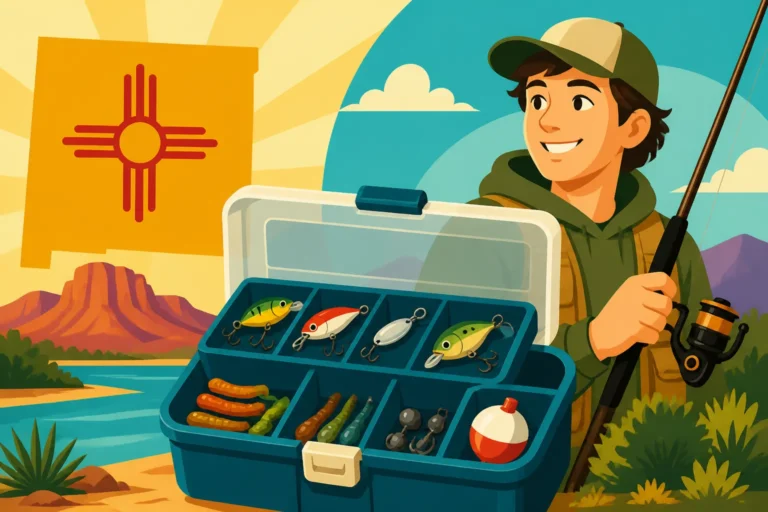
Your basic tackle kit should be small, portable, and contain items that work across different fishing scenarios. Think of it as your essential "grab and go" fishing pouch or a small tackle box like those you can find readily at a Bass Pro Shops.
Here’s what you’ll definitely want to include:
- Hooks: A selection of sizes is key. Start with an assortment of small to medium-sized worm hooks (e.g., sizes 6, 4, 2) for live bait like worms or corn, and a few slightly larger offset worm hooks (e.g., sizes 1/0, 2/0) for plastic worms if you plan to target bass. Treble hooks are often found on lures, so you may not need many loose ones.
- Weights/Sinkers: A variety of small split shot weights (various sizes from BB to 7) are indispensable for adding just enough weight to get your bait down or to hold it in a current. A few egg sinkers (1/4 oz to 1/2 oz) or bullet weights are also useful for different rigging styles, especially for bottom fishing in lakes.
- Swivels: Small barrel swivels or snap swivels (sizes 10, 8, 6) are great for preventing line twist, especially when using spinners or fishing in current. Snap swivels also make changing lures much quicker and easier.
- Bobbers/Floats: A couple of small clip-on bobbers are perfect for suspending your bait at a specific depth, especially when fishing for panfish or stocked trout. They're also fantastic for visually detecting bites, which is super encouraging for new anglers.
This humble collection will allow you to rig up for almost any basic fishing situation, from still water to slow-moving streams. Remember, simplicity is your friend when you're just starting out and learning the ropes.
Versatile Baits and Lures to Start With
Now for the fun part – what to put on your hook! For an all-around New Mexico fishing trip, you want baits and lures that are widely appealing to common species like trout, panfish, and bass.
-
Live Bait (or prepared bait):
- Worms (Nightcrawlers): The king of all-around baits. Trout, bass, catfish, sunfish – almost everything eats a worm. They are readily available and easy to rig.
- PowerBait (or similar dough bait): If you're targeting stocked trout (which are very common in New Mexico), PowerBait is often incredibly effective. It comes in various colors and scents. Check out PowerBait Fishing Tips for New Mexico for more details.
- Corn: Believe it or not, corn works wonders for trout and panfish, especially in heavily fished areas where fish are used to seeing it. A few kernels on a small hook can be deadly.
-
Artificial Lures:
- Small Spinners: Lures like Panther Martins, Mepps, or Rooster Tails in sizes #0 to #2 are absolute trout magnets, but they'll also attract aggressive bass and panfish. Gold, silver, and black are excellent starting colors. These are a must-have, and easily found online or at local sporting goods stores. Best Lures for New Mexico Trout offers more specific recommendations.
- Small Jigs: Tiny jigs (1/32 oz to 1/8 oz) with grub tails or marabou feathers in white, black, or olive can catch almost anything. They can be fished under a bobber or slowly retrieved.
- Small Crankbaits/Minnow Imitations: A small, shallow-diving crankbait or a suspending minnow imitation (2-3 inches long) can be very effective for bass, larger trout, and walleye. Choose natural colors or something with a bit of flash.
When you're packing, prioritize these versatile options. As you fish more, you'll start to notice what works best in specific locations and for particular species, allowing you to expand your tackle collection strategically. For example, if you focus heavily on trout, you might then delve into New Mexico Trout Fishing Rules and specialized trout lures.
Beyond the Combo: Must-Have Accessories
While the rod, reel, line, and tackle are the stars of the show, a few crucial accessories can significantly enhance your comfort, safety, and success on your first New Mexico fishing trip. These are the unsung heroes that make the difference between a good day and a great one, especially when you're navigating new waters and learning the ropes.
Comfort and Safety Essentials
Fishing should be enjoyable, and being prepared for New Mexico's often intense sun and variable weather is key. Don't let discomfort cut your trip short!
- Sun Protection: New Mexico's elevation means the sun can be surprisingly strong, even on cooler days. A wide-brimmed hat, polarized sunglasses, and sunscreen are non-negotiable. Polarized sunglasses don't just protect your eyes; they cut glare off the water, helping you see fish and underwater structure. This can be a game-changer for spotting fish, especially in clear streams.
- Water: Stay hydrated! Always carry more water than you think you'll need, especially when fishing in arid regions or during warmer months. Dehydration can sneak up on you quickly.
- Appropriate Clothing: Dress in layers. Mornings can be chilly, even in summer, but temperatures can rise dramatically by midday. Moisture-wicking fabrics are great, and a light rain jacket is a smart addition, especially during monsoon season when afternoon showers are common.
- First-Aid Kit: A small, basic kit for minor cuts, scrapes, or blisters is always a good idea. Hooks can be sharp, and sometimes unexpected falls happen on slippery banks.
These items contribute directly to your well-being, allowing you to focus on the fishing itself rather than battling the elements or nursing a preventable injury. Being comfortable means you'll spend more time on the water, which ultimately leads to more catches and more fun.
The Importance of a Good Landing Net and Pliers
These two items are often overlooked by beginners, but they are absolutely essential for a successful and ethical fishing experience. They protect both you and the fish.
- Landing Net: A good quality, rubberized landing net is invaluable. For an all-around setup, a medium-sized net with a rubber (or rubber-coated) mesh is ideal.
- Why rubber? Traditional nylon nets can strip off a fish's protective slime layer, which makes them more susceptible to disease if you plan on releasing them. Rubber nets are gentler on fish and also prevent hooks from tangling, saving you a lot of frustration.
- Why a net? It makes landing fish much safer and easier, especially if you're alone or dealing with a feisty fish. Instead of awkwardly trying to grab a fish by hand, which can injure both you and the fish, you can gently scoop it up. This is particularly important for species like trout, where proper handling is key for Catch and Release Best Practices in New Mexico.
- Pliers/Forceps: You'll want a sturdy pair of fishing pliers or forceps.
- Hook Removal: These are crucial for safely and efficiently removing hooks from a fish's mouth, especially if the fish has swallowed the hook or if it's deeply embedded. Trying to do this by hand can be dangerous for you and traumatic for the fish.
- Cutting Line: Many fishing pliers come with a built-in line cutter, which is handy for tying knots or cutting snags.
- Crimping Weights: They can also be used to crimp split shot weights onto your line.
Having these tools readily available means you can quickly and gently handle your catch, whether you're keeping it or releasing it, minimizing stress on the fish and keeping your hands safe. You can easily find affordable and durable options at most outdoor stores or through online retailers like Amazon.
Comparison of Common Rod Actions for New Mexico Fisheries
| Rod Action | Bends Mostly In… | Sensitivity | Casting Lighter Lures | Fighting Larger Fish | Best For (NM Examples) |
|---|---|---|---|---|---|
| Extra Fast | Very Tip | Highest | Good (precise casts) | Excellent | San Juan River nymphing, finesse bass fishing, feeling subtle bites |
| Fast | Top Third | High | Very Good | Very Good | All-around versatile, trout streams, small/medium lures, jigging |
| Moderate Fast | Middle Section | Medium-High | Good | Good | Crankbaits, topwater lures, general purpose, slightly more forgiving |
| Moderate | Bottom Half | Medium | Fair | Good (good backbone) | Trolling, live bait fishing, absorbing shock of powerful fish |
| Slow | Entire Rod | Low | Poor (difficult for light lures) | Limited (more of a buggy whip) | Panfish, ultralight fishing with very light lines, specific fly rods |
Choosing a fast action rod, especially in a medium-light power, offers the best blend of sensitivity and backbone for a beginner exploring the diverse waters of New Mexico. This is why it's recommended as the core of your "all-around" setup.
So, there you have it! Don't let the vast world of fishing gear intimidate you. Starting with a versatile spinning combo – a 6'6" to 7' fast-action, medium-light rod, a 2500-3000 size spinning reel, and 6-8 pound monofilament or braided line with a fluorocarbon leader – will empower you to tackle a huge variety of New Mexico's incredible fishing spots. Pair that with a basic tackle kit, some worms, a few spinners, and your essential comfort and safety gear, and you're ready to make those first unforgettable casts. Get your New Mexico Fishing License Guide sorted, consult the New Mexico Fishing Season Calendar, and go make some memories!
Disclaimer
This article is for general informational purposes only and does not constitute professional advice. Laws, prices and regulations vary by location and change over time. Consult a qualified professional for guidance on your specific situation.