How to Find Crappie in New Mexico Reservoirs
Oh, the elusive crappie! You're out there on a vast New Mexico reservoir, the sun is shining, and you know those tasty papermouths are lurking, but finding them can feel like searching for a needle in a haystack. It’s a common frustration, especially when these lakes are so huge. This guide is all about helping you decode crappie behavior and pinpoint their favorite hiding spots, so you can spend less time guessing and more time reeling in those slabs.
Understanding Crappie Behavior: The Keys to Unlocking Reservoir Secrets
Crappie in New Mexico's reservoirs, whether you're talking about Elephant Butte, Conchas, or Ute Lake, aren't just swimming around aimlessly. They're creatures of habit, driven by water temperature, food sources, and protection from predators. If you can understand why they move and where they prefer to hang out, you're already halfway to a successful day on the water.
Seasonal Movements and Temperature Sensitivity
Crappie are highly sensitive to water temperature. This isn't just a minor preference; it dictates their entire annual migration pattern within a reservoir. As the seasons change, so do the most productive depths and locations.
Think of it like this: in the dead of winter, when the water is frigid, crappie are trying to conserve energy. They'll typically move to deeper, more stable water, often suspending in open water or hugging deep structure. They might not be incredibly active, but they're there. Then, as spring approaches and the water warms, their metabolism kicks into gear, and they start thinking about spawning. This is when they make their move shallower, seeking out protected coves and flats. Come summer, with scorching New Mexico heat, they'll retreat to cooler, deeper water again, often seeking out the thermocline if one forms, or finding shade under structure. And in the fall, as temperatures begin to drop but the water is still comfortable, they might spread out a bit more, feeding aggressively to build up fat reserves for the winter ahead. Understanding these broad movements is your first step in learning Best Time to Catch Crappie in New Mexico.
Structure and Cover Affinity
Crappie are masters of ambush and concealment. They absolutely love structure and cover. This isn't just about hiding from predators; it's also where their food source—small baitfish and insects—often congregates. If you're not looking for structure, you're likely overlooking crappie.
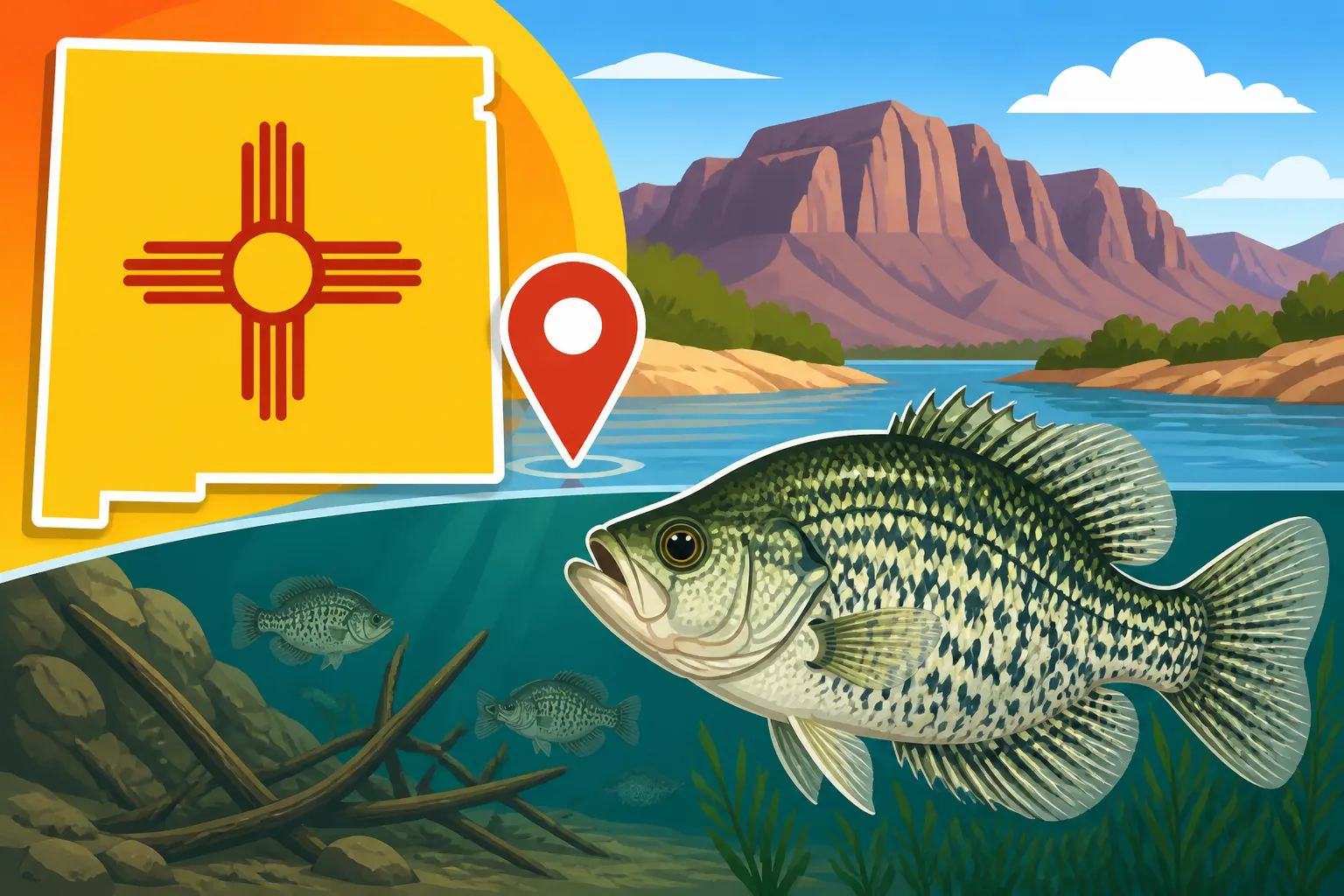
Imagine a submerged brush pile. To a crappie, that's a five-star hotel with an all-you-can-eat buffet. The branches provide shade, a maze of escape routes, and a perfect spot to dart out and grab a passing minnow or insect. Similarly, submerged timber, rock piles, old roadbeds, bridge pilings, and even sudden changes in bottom contour like ledges and drop-offs, all serve as prime crappie real estate. These fish will hug these features, often positioning themselves on the sunnier or shadier side depending on the time of day and water temperature. It's not enough to just find a brush pile; you need to understand how crappie will orient themselves around it. Are they inside the thickest part? Are they on the edge, waiting for prey? Are they suspending slightly above it? These nuances can make all the difference in whether you get a bite or just snag your jig.
Key Locations and Structures to Target in New Mexico Reservoirs
New Mexico's reservoirs offer a diverse range of habitats, and crappie adapt to them all. Knowing what to look for and where to focus your efforts can drastically improve your catch rate.
Submerged Timber and Brush Piles
These are classic crappie magnets, and for good reason. Reservoirs, especially older ones, often have entire forests submerged beneath their surface. Over time, these trees break down into snags, stumps, and brush piles that become vital ecosystems for crappie.
When targeting submerged timber, think about the depth. In spring, crappie might be in shallower timber near spawning flats. In summer and winter, they'll likely be in deeper timber on creek channels or old riverbeds. Brush piles, whether natural or man-made, are always worth checking. Many dedicated crappie anglers will even create their own brush piles and sink them in strategic locations, marking them with GPS. When approaching these spots, use your electronics to identify the structure, then slowly present your bait or jig into the cover. It’s a delicate dance between getting close enough to entice a bite without getting hopelessly snagged. You might find a whole school holed up in one small cluster of branches. Many anglers swear by vertical jigging directly over these structures once they locate them on their fish finder. You can often find a good selection of durable jigs suitable for fishing heavy cover on Amazon.
Creek Channels and Old Riverbeds
Before many of New Mexico's larger reservoirs were filled, there were creeks and rivers winding through the landscape. These old channels, now submerged, create natural highways and holding areas for crappie. They represent distinct depth changes and often accumulate structure like rocks and timber.
Crappie use these channels for travel, especially during seasonal migrations. In deeper reservoirs, these channels act like deep-water sanctuaries in hot summers and cold winters. Look for where these channels make sharp bends, where they intersect with submerged humps, or where they narrow down. These features create natural ambush points and current breaks. Your boat's sonar is your best friend here, as you can trace these channels and look for schools of crappie suspended within them or clinging to any structure along their banks. Often, crappie will suspend right over the channel, sometimes at specific depths that relate to the presence of baitfish or comfortable water temperatures. Finding the intersection of a creek channel and a brush pile is like hitting the crappie jackpot.
Points, Humps, and Drop-Offs
Any feature that creates a significant change in depth or bottom contour is a potential crappie haven. These transition zones offer crappie quick access to both deep water for safety and shallow water for feeding.
- Points: Submerged points extending out into the main lake can act as highways for crappie moving between coves and open water. Crappie will often position themselves on the sides of the point, particularly on the deeper, shadier side, or along the subtle ledges that drop off.
- Humps: Submerged humps, especially those with some cover like rocks or brush, are excellent crappie hideouts. Crappie will hold around the top or sides of these humps, particularly if baitfish are schooling nearby.
- Drop-Offs: A sharp drop-off from a shallow flat into deeper water is a classic crappie spot. These fish will stage along the edge of the drop-off, moving up to feed on the flat during low light conditions or when baitfish are present, and retreating to the safety of deeper water when conditions change. Fishing along these contour lines, especially when you mark fish on your sonar, can be incredibly productive. Focus on the depth where the most baitfish are showing up, as crappie won't be far behind. You can learn more about How to Find Crappie in New Mexico Reservoirs by paying attention to these types of underwater topography.
Protected Coves and Spawning Flats
During the spring spawning season, crappie make a beeline for warmer, shallower water. This is when protected coves and large, shallow flats become absolute hotspots.
In the spring, usually when water temperatures get into the high 50s to low 60s Fahrenheit, crappie move into coves, especially those with some kind of cover. Think about areas with reeds, lily pads, submerged grass, or even rip-rap along shorelines. They prefer these areas because the water warms faster, and the cover provides protection for their eggs. Look for darker bottom areas, as these absorb more sunlight and warm up quicker. Spawning crappie can be found in water as shallow as a foot or two, sometimes even less. As the post-spawn period begins, some fish will linger in these coves, while others will begin their transition back to deeper water. During this time, a gentle approach in a kayak or small boat can be very effective, allowing you to quietly target these fish. To protect the future of the fishery, practicing Catch and Release Best Practices in New Mexico is always a good idea, especially during the spawn.
Effective Techniques and Baits for Crappie
Once you've found a promising location, the next step is to present your bait in a way that crappie can't resist. There are several tried-and-true methods that New Mexico anglers use to fill their coolers.
Jigging and Minnows: The Dynamic Duo
When it comes to crappie fishing, a jig paired with a live minnow or a soft plastic imitation is often the most effective combination.
- Jigging: This technique involves using a small jig head (typically 1/32 to 1/8 ounce) dressed with a soft plastic grub, tube, or a small hair jig. The idea is to present the jig vertically or with a slow, erratic retrieve, mimicking a dying baitfish or insect. When you locate crappie on your fish finder, drop your jig directly to their depth and use subtle lifts and drops of your rod tip. Sometimes a very slow, almost imperceptible wiggle is all it takes. Other times, a more aggressive snap can trigger a strike. Experiment with colors and sizes, but don't overthink it; natural colors like white, chartreuse, or black/chartreuse are often solid producers. If you're looking for a variety of options, many anglers start their search for crappie jigs on Amazon.
- Live Minnows: There's simply no denying the effectiveness of live minnows for crappie. You can fish them under a bobber in shallow water, or on a tight-line rig in deeper water. Hook the minnow lightly through the lips or just behind the dorsal fin, allowing it to swim naturally. The key is to present the minnow right at the depth where the crappie are holding. The natural action and scent of a live minnow can often entice bites even when crappie are finicky. A small split shot a foot or so above the hook can help get your minnow down to the strike zone. You might even use a double minnow rig, especially if you're trying to locate the depth the fish are holding at.
Trolling and Spider Rigging
For covering more water and enticing schools of crappie that might be scattered, trolling or spider rigging can be incredibly effective, especially in larger reservoirs.
- Trolling: This involves pulling jigs or small crankbaits behind your boat at a very slow speed (often less than 1 mph). The advantage of trolling is that you can cover a lot of ground, especially along creek channels, points, or long ledges. Experiment with different depths by adjusting your line length, adding small weights, or using trolling sinkers. Often, crappie will suspend at a particular depth over open water or deeper structure, and trolling allows you to systematically present baits to those fish. Many anglers will run multiple rods out of the back of the boat, each at a different depth, until they find the magic number.
- Spider Rigging: This technique is a sight to behold, with multiple long rods (often 8 to 16 feet) fanned out around the front or sides of the boat, resembling a spider's legs. Each rod presents a jig or a minnow at a slightly different depth and distance from the boat. This allows you to present a wide "net" of baits as you slowly drift or use a trolling motor to creep along. It's particularly effective for targeting widespread schools of crappie along contours or over large flats. The key is to maintain a very slow speed and watch your rod tips for the slightest tap, as crappie bites can be incredibly subtle. Some anglers even use specialized rod holders available on Amazon to set up their spider rigs perfectly.
Lure Selection and Presentation
While minnows and jigs are paramount, having a variety of lures and understanding how to present them can be a game-changer.
- Soft Plastics: These are incredibly versatile. Tiny tube jigs, grubs, and shad-imitating plastics (often 1 to 2 inches long) are fantastic. They come in an endless array of colors, and the subtle action of the plastic tail can be irresistible. Pair them with a lightweight jig head.
- Small Crankbaits: While less common for crappie, very small, shallow-diving crankbaits can be deadly when crappie are actively feeding on baitfish, especially in shallower water or during periods of aggressive feeding.
- Spinnerbaits (Mini-Spinners): Small inline spinners or tiny spinnerbaits designed for panfish can also work, especially in stained water where the flash and vibration help attract attention.
- Colors and Size: Always start with natural colors in clear water and brighter, more contrasting colors in stained or muddy water. Chartreuse, white, black, and pink are perennial favorites. Match the size of your lure to the prevalent baitfish in the reservoir. A good selection of lures is an important part of your tackle box for New Mexico Crappie Fishing.
Seasonal Considerations for Crappie Fishing in New Mexico
The best way to find crappie will shift dramatically throughout the year. Adapting your strategy to the season is crucial for consistent success.
Spring: The Spawning Frenzy
Spring is arguably the most popular time to target crappie in New Mexico, as the fish move shallow and become more concentrated.
As ice melts and water temperatures climb, crappie move from their deep winter haunts into shallower staging areas, typically along the main lake points leading into coves. They'll hold here for a while, feeding aggressively before moving onto the actual spawning beds. Look for protected coves, shallow flats, and areas with submerged brush, reeds, or old dock pilings. The water will be warmest in these areas. You'll often find both black and white crappie in these spots, though white crappie tend to spawn a little deeper than black crappie. The optimal spawning temperature is usually between 60-68 degrees Fahrenheit. Jigging small tube jigs or minnows under a bobber in depths from 2 to 10 feet is extremely effective. As the spawn progresses and then finishes, some fish will remain shallow, especially the males guarding nests, while the females will gradually retreat to slightly deeper water near the coves, recovering from the spawn.
Summer: Deeper and Shadier
When the scorching New Mexico summer heat arrives, crappie change their tactics and head for cooler, deeper water.
During summer, particularly in the dog days of July and August, crappie will move to deeper parts of the reservoir to escape the heat and find more stable temperatures. Look for them suspending over deep creek channels, along sharp drop-offs, or around deep submerged timber and brush piles. The thermocline, if present, is a crucial zone to find, as crappie will often suspend just above, within, or just below it, where oxygen levels are stable and temperatures are comfortable. Your fish finder becomes absolutely invaluable here to locate schools of crappie suspended anywhere from 15 to 30 feet deep, or even deeper in very large reservoirs. Trolling deep-diving jigs or tight-lining minnows at specific depths are excellent strategies. Fishing during low-light conditions, like early morning or late evening, can also be productive as crappie might move slightly shallower to feed. Night fishing can also be a phenomenal option, drawing crappie to lights placed over the water. For more on night fishing, check out our New Mexico Night Fishing Guide.
Fall: The Feeding Frenzy Returns
As the temperatures cool in the fall, crappie sense winter approaching and embark on another period of aggressive feeding.
Fall crappie fishing can be fantastic, often rivaling spring in terms of action. As water temperatures drop, crappie start to spread out and feed heavily, building up fat reserves. They'll often move back towards creek channels and the edges of flats, particularly those with good cover. Look for schools of crappie chasing baitfish. They can be found at varying depths, depending on the day and the weather, but often in the 8 to 20-foot range. Trolling, casting jigs, or using a spider rig can all be effective. Pay attention to main lake points and channel swings where baitfish are abundant. The fish will be actively chasing food, so a moving bait can be very effective. This is often when you'll find some of the largest crappie of the year.
Winter: Slow and Deep
Winter fishing for crappie in New Mexico's reservoirs requires patience and a precise presentation, but it can yield some hefty fish.
When water temperatures hit their lowest, crappie activity slows down significantly. They move to their deepest winter haunts, often suspending in deep pockets of the reservoir or hugging tight to deep, dense structure like timber or rock piles along creek channels. They might congregate in large schools, but their metabolism is slow, and they won't chase baits very far. The key is to present your jig or minnow right in front of their faces. Vertical jigging with very subtle movements is usually the most effective method. Your fish finder is essential for locating these deep schools. Think about using light line and small jigs to get a more natural presentation. Ice fishing, where applicable and safe, can also be extremely productive, allowing you to directly drop baits onto schools of crappie located with a flasher. Even in winter, a good understanding of New Mexico Fishing Season Dates and Limits can ensure you're compliant with regulations.
Remember, crappie fishing is a blend of science and art. Use your electronics, understand the seasonal patterns, and don't be afraid to experiment with different depths, baits, and techniques. The reward is a cooler full of delicious crappie!
| Season | Typical Location & Depth | Preferred Techniques | Key Considerations |
|---|---|---|---|
| Spring | Shallow coves, spawning flats, 2-10 ft | Jigging, minnows under bobber | Water temp 60-68°F, target visible cover, spawning |
| Summer | Deep channels, drop-offs, thermocline, 15-30+ ft | Trolling, deep jigging, tight-lining | Hot weather, low light hours, check fish finder for depth |
| Fall | Main lake points, channel edges, 8-20 ft | Trolling, casting jigs, spider rigging | Aggressive feeding, chasing baitfish, wider spread |
| Winter | Deepest holes, submerged timber, 20-40+ ft | Vertical jigging, slow minnows | Slow metabolism, precise presentation, electronics critical |
Disclaimer
This article is for general informational purposes only and does not constitute professional advice. Laws, prices and regulations vary by location and change over time. Consult a qualified professional for guidance on your specific situation.