Conchas Lake Walleye Fishing
It's no secret that Conchas Lake holds some truly impressive walleye, but for many anglers, these toothy critters can feel like ghosts. You hear the stories, you see the pictures, but actually putting a few in the cooler consistently feels like a mystery. This guide is here to unravel that mystery, diving deep into the nuances of Conchas Lake walleye fishing so you can confidently hit the water with a plan, understand where these fish hide, and master the techniques to bring them to your net.
Understanding Conchas Lake and its Walleye Population
Conchas Lake, nestled in northeastern New Mexico, is a remarkable fishery. It’s a vast reservoir formed by the confluence of the Conchas River and the Canadian River, offering a diverse landscape that walleye absolutely thrive in. But understanding this sprawling body of water is the first step to unlocking its walleye potential.
The Unique Environment of Conchas Lake for Walleye
Conchas Lake is characterized by its expansive main body, numerous coves, and significant river arms. What truly sets it apart for walleye, however, is its rocky, sandy, and sometimes muddy bottom composition, combined with a wealth of submerged timber and ledges, especially in its deeper sections. Walleye are ambush predators that love to relate to structure, and Conchas provides this in spades. The lake's depth can vary dramatically, with main channels dropping down to 100 feet in some areas, offering plenty of cooler, oxygenated water for walleye during the scorching New Mexico summers.
The water clarity at Conchas can also fluctuate, often having a slight stain, particularly after rain events. This is actually a boon for walleye, which prefer lower light conditions compared to many other game fish. They use this reduced visibility to their advantage, ambushing prey that might not see them coming. The combination of varied structure, ample depth, and fluctuating water clarity creates a dynamic environment where walleye can find everything they need to flourish, from spawning grounds to feeding territories and comfortable holding areas. Anglers who take the time to study the lake's contours and conditions with their electronics often find their efforts richly rewarded.
The Walleye in Conchas Lake: What to Expect
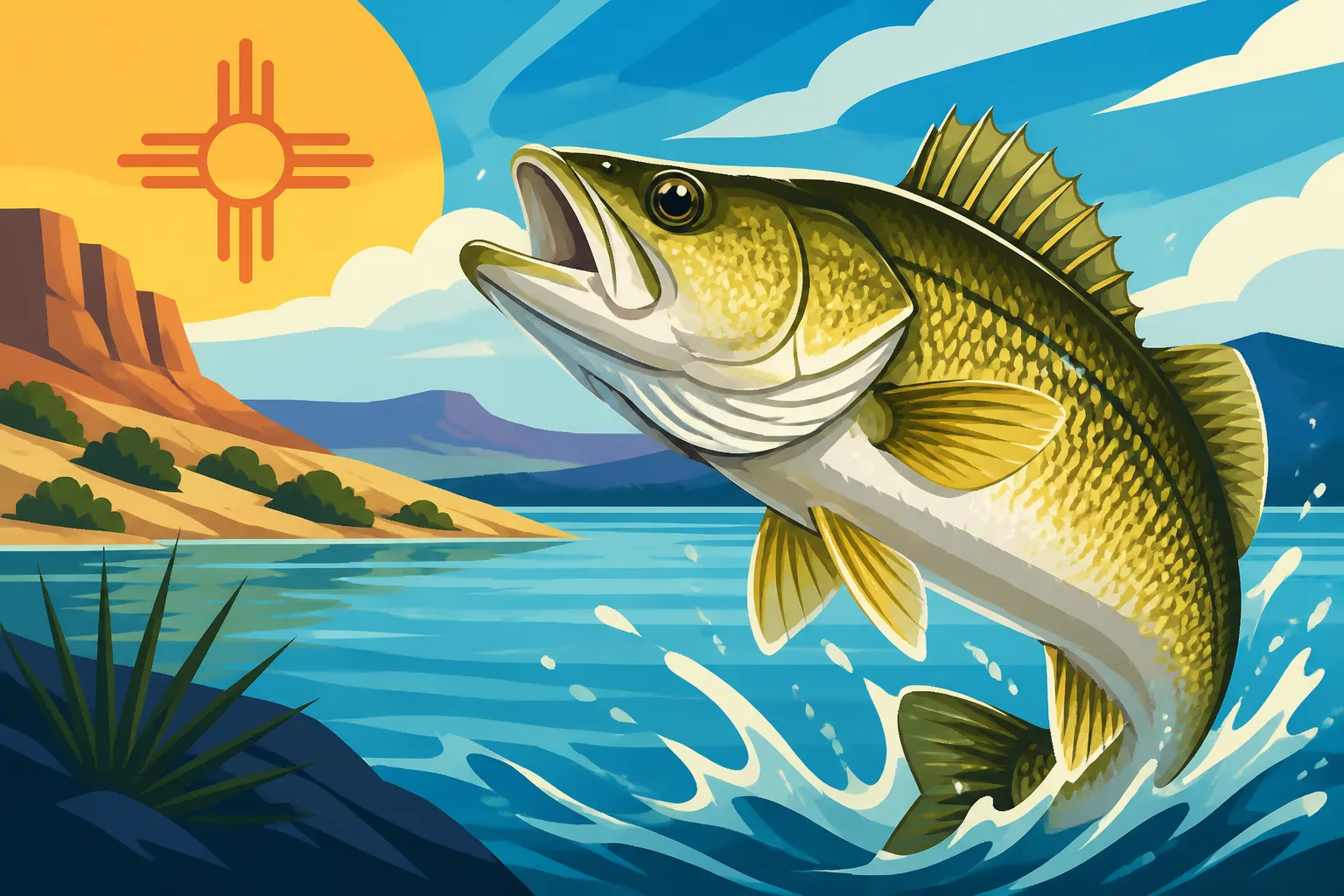
The walleye population at Conchas Lake is robust and healthy, thanks to ongoing stocking efforts by the New Mexico Department of Game and Fish, supplementing a naturally reproducing population. Anglers consistently report catching fish in the 16 to 22-inch range, which are perfect table fare. However, Conchas is also known for kicking out some true trophy walleye, often exceeding 25 inches and even pushing past the 30-inch mark. Many seasoned walleye anglers consider Conchas one of the premier walleye destinations in the Southwest.
These Conchas Lake walleye exhibit classic walleye behavior. They are highly attuned to light levels, often becoming most active during low light periods such as dawn, dusk, or on overcast days. They'll also feed actively at night, moving shallower to hunt. During bright daylight hours, they typically retreat to deeper, darker water, relating tightly to structure like submerged humps, channel edges, and drop-offs. Their diet primarily consists of baitfish such as shad, sunfish, and small crappie, so understanding the movements and locations of these forage species is key to finding the walleye. If you're hoping to learn about the potential for catching a giant, you might be interested in researching the New Mexico State Record Walleye, which demonstrates the trophy potential of the state's waters, including Conchas.
Seasonal Strategies for Conchas Lake Walleye
Walleye fishing at Conchas Lake is a year-round pursuit, but your approach needs to change dramatically with the seasons. What works in April will likely fall flat in July, and vice versa. Adapting your tactics to the water temperature, light conditions, and the walleye's metabolic rate is crucial for consistent success.
Spring Tactics: Post-Spawn and Early Season Feasting
Spring is a fantastic time for walleye at Conchas Lake as fish move into shallower water to spawn, typically from March through May, depending on water temperatures. Once the spawn is over, usually by late April into May, the walleye become incredibly hungry, seeking to replenish their energy reserves. They’ll often be found in areas adjacent to their spawning grounds, such as rocky points, shallow humps, and the backs of coves where baitfish are abundant.
During this post-spawn period, targeting depths from 5 to 15 feet can be highly effective. Techniques like jigging with soft plastics (curly tail grubs or paddle tails) or throwing shallow-diving crankbaits can entice aggressive strikes. Slow trolling spinner rigs tipped with a nightcrawler or a minnow is also a proven method, allowing you to cover water and present a tempting, natural offering. Look for areas with a mix of rock and sand, especially where there's a slight drop-off into deeper water. This transition zone provides both feeding opportunities and a quick escape to safety. For more general spring fishing insights that can be adapted to various species, checking out resources on Spring Trout Fishing in New Mexico might offer some transferable knowledge about seasonal shifts in fish behavior.
Summer Challenges and Deep Water Success
As the New Mexico summer heats up, Conchas Lake water temperatures rise, and the walleye strategy shifts dramatically. The fish move deeper to find cooler, more oxygenated water, often congregating around main lake humps, deep points, channel edges, and submerged structure. Depths of 20 to 40 feet, and sometimes even deeper, become the sweet spot.
During the daytime, trolling deep-diving crankbaits, spoons, or worm harnesses on bottom bouncers are excellent ways to cover these deeper areas. Vary your trolling speed and direction to trigger bites. Pay close attention to your fish finder to identify schools of baitfish and the structure that walleye are relating to. At night, walleye will often push shallower, sometimes coming up to 10-20 feet to feed under the cover of darkness. This can be a prime time for casting crankbaits or vertical jigging with glow-in-the-dark jigs. Remember that walleye often suspend during the summer, so don't always assume they're glued to the bottom. For a more detailed look into this technique, exploring dedicated guides on Jigging for Walleye in New Mexico can provide valuable tips on bait presentations and depths.
Fall Walleye: Aggressive Feeding and Transition Zones
Fall at Conchas Lake sees the walleye enter an aggressive feeding mode as they fatten up for winter. Water temperatures begin to cool, and fish often become more widespread throughout the lake. You’ll find them shallower than in summer, but not quite as shallow as during the spring spawn. Depths from 10 to 30 feet are generally productive, but it’s always wise to explore.
This season offers a fantastic mix of opportunities. Trolling crankbaits, both shallow and deep divers, can be highly effective as walleye actively chase baitfish. Jigging spoons or blade baits in deeper pockets and along channel edges can also produce limits. As the water cools further into late fall, the walleye tend to congregate even more, making it possible to find large schools once you locate them. Look for areas where baitfish are abundant, often indicated by bird activity or marks on your fish finder. The transition zones between shallow flats and deeper channels are particularly productive. Much like other species, walleye in fall are driven by instinct to feed heavily, a pattern often seen across various New Mexico fisheries during this period, as discussed in articles about Fall Fishing in New Mexico.
Prime Locations and Structure for Walleye at Conchas Lake
Knowing where to fish is often half the battle, especially on a lake as big and diverse as Conchas. Walleye are creatures of habit, and they relate heavily to specific types of structure and depth contours. Understanding these key areas is paramount to consistently finding fish.
Key Areas and Underwater Topography
Conchas Lake offers a plethora of walleye habitat across its vast expanse. One of the most productive areas often mentioned by local anglers is around the main Conchas Dam itself and the immediate main lake points extending from it. The deeper water here, combined with significant rock structure and subtle current breaks, creates ideal holding areas for walleye year-round. Don't overlook the many submerged humps and ledges that dot the main lake basin; these are prime ambush points.
The two main river arms – the Conchas River arm and the Canadian River arm – are also critical. In spring, the shallower, incoming waters of these arms are important spawning areas, and walleye will linger there post-spawn. As summer progresses, walleye move out of the very backs of these arms into the deeper channels and associated structure like submerged brush and rock piles along the old riverbeds. Utilizing high-definition mapping on your fish finder can reveal these hidden gems. Areas around Conchas Lake State Park also offer excellent access and can be a good starting point, as detailed in resources like Conchas Lake State Park Fishing Access, which often highlights specific public fishing points that can lead to deeper walleye haunts.
Reading the Water: Interpreting Walleye Holding Patterns
Beyond just knowing where the "spots" are, truly successful walleye anglers learn to "read the water" and interpret what the fish are doing. This means paying attention to several factors. First, your electronics are your best friend. A good fish finder with side imaging and down imaging capabilities will help you identify submerged humps, rock piles, old creek channels, and even individual fish relating to that structure. Look for baitfish schools – walleye are rarely far from their food source.
Second, observe surface activity. While walleye don't often "boil" on the surface, schooling baitfish or diving birds can indicate concentrations of forage, which in turn attract predators like walleye. Pay attention to wind direction and strength; a steady breeze pushing baitfish against a bank or point can create a feeding frenzy. Understanding current, even subtle currents created by dam releases or river inflows, can also position walleye in predictable ambush points. Remember, walleye are light-sensitive, so on bright days, they'll be deeper or in shaded areas. On overcast days or low light, they might move much shallower. Mastering these observations will greatly enhance your ability to continually find active fish and improve your overall success, providing invaluable insight into How to Locate Walleye at Conchas Lake.
Essential Gear and Bait for Conchas Lake Walleye
Having the right tools for the job makes all the difference when targeting Conchas Lake walleye. From your rod and reel setup to the lures you tie on and the electronics you rely on, each piece plays a vital role in maximizing your chances of success.
Rods, Reels, and Line Choices
For Conchas Lake walleye, versatility in your rod and reel setup is key, as you'll be employing various techniques throughout the year. For jigging and casting crankbaits, a medium-light to medium power spinning rod, typically 6'6" to 7' in length, with a fast action tip is ideal. This setup provides the sensitivity to detect subtle bites and enough backbone to set the hook firmly. Pair it with a 2500 or 3000 size spinning reel spooled with 8-10 lb braided line, which offers superior sensitivity and casting distance. Add an 8-12 lb fluorocarbon leader for abrasion resistance and stealth.
For trolling, a medium power baitcasting or spinning rod (7' to 8'6") with a moderate-fast action is preferred. The longer rod helps spread out lines and absorb the shock of a striking walleye. Spool these reels with 10-15 lb monofilament or braid, depending on your preference for stretch or sensitivity. Monofilament offers a bit of forgiveness with its stretch, which can be useful when trolling, while braid provides direct contact. Understanding the nuances of rod action, as detailed in guides like Best Rod Action for Walleye Jigging, will significantly enhance your ability to detect strikes and effectively work your lures.
Top Lures and Live Bait Strategies
When it comes to lures for Conchas Lake walleye, a diverse tackle box is your friend. Jigs are paramount, especially those weighing 1/8 to 1/2 ounce, tipped with soft plastics like curly tail grubs, paddle tails, or minnow imitators. Colors often vary, but chartreuse, white, purple, and green pumpkin are consistent producers. Crankbaits, both shallow and deep-diving models, are essential for covering water and targeting different depths. Shad-imitating colors, firetiger, and perch patterns are always good starting points. Don't forget spinner rigs or "worm harnesses" for slow trolling, especially when tipped with live nightcrawlers, which are often irresistible to walleye. Blade baits and jigging spoons can also be incredibly effective, particularly when vertical jigging over schools of fish in deeper water.
Live bait, particularly nightcrawlers, minnows, and leeches, can be incredibly potent. Present nightcrawlers on a worm harness behind a bottom bouncer or simply drifted under a bobber in shallower water. Minnows can be jigged, trolled, or fished under a slip bobber. Leeches, though sometimes harder to find, are also fantastic, especially on warmer days. To get the best insights on local preferences and what's currently working, considering booking a local guide through platforms like FishingBooker can provide immediate, hyper-local recommendations. They often have the latest scoop on specific jig colors or live bait presentations that are hot. For more on how color influences success, check out Best Jig Color for New Mexico Walleye.
Electronics and Accessories for Walleye Success
In today's walleye fishing world, advanced electronics are less of a luxury and more of a necessity, especially on a lake the size of Conchas. A high-quality fish finder with GPS capabilities is paramount. Look for units that offer CHIRP sonar, Down Imaging, and especially Side Imaging (or similar technologies like Mega Imaging from Humminbird or LiveScope from Garmin). Side imaging allows you to scan wide swaths of water to locate submerged structure, baitfish, and even walleye holding off to the sides of your boat, dramatically increasing your efficiency. GPS helps you mark productive spots, navigate safely, and return precisely to those fish-holding areas.
Beyond your primary fish finder, other accessories can significantly improve your walleye game. A good electric trolling motor with spot-lock functionality (like those from Minn Kota or Lowrance) is invaluable for holding your boat precisely over a deep-water hump or along a productive contour line. An effective anchor system is also crucial if you prefer to hold steady. Consider investing in a high-quality cooler to keep your catch fresh, and always have a sturdy landing net with a rubberized mesh (better for the fish if you're practicing catch and release, and less prone to snagging hooks). Finally, polarized sunglasses are a game-changer for spotting subtle changes in water color, identifying shallow structure, and even seeing cruising fish in clearer conditions.
Navigating Conchas Lake: Boating and Safety Tips
Conchas Lake is a large and beautiful body of water, offering fantastic boating opportunities alongside its excellent fishing. However, its size and sometimes unpredictable weather mean that careful navigation and adherence to safety protocols are not just recommendations, but absolute necessities.
Boat Ramps and Lake Access
Conchas Lake is well-equipped with several public boat ramps, ensuring good access for anglers. The primary boat ramps are located at Conchas Lake State Park, offering multiple lanes and amenities. The North Recreation Area and South Recreation Area both provide excellent launching facilities. These ramps are generally well-maintained, but it's always a good idea to check current water levels before heading out, especially during periods of drought, as lower water levels can affect the usability of some ramps.
Beyond the main state park ramps, there may be other, more primitive access points depending on the lake's water level and current conditions. Always exercise caution when using unfamiliar ramps or those that appear to be in disrepair. Pay attention to signage and any posted warnings. Knowing Where to Launch a Boat at Conchas Lake can save you valuable fishing time and ensure a smooth start to your day on the water. Before you go, a quick check of the New Mexico State Parks website or local bait shops can provide the most up-to-date information on ramp conditions and lake levels.
Important Safety Considerations and Regulations
Boating on Conchas Lake requires diligence regarding safety. The lake can get windy, and choppy conditions can develop quickly, particularly on the main lake body. Always check the weather forecast before you launch and be prepared for sudden changes. Carrying enough fuel for your trip, plus a reserve, is critical given the lake's size.
New Mexico has specific boating regulations that all operators must adhere to. This includes having enough U.S. Coast Guard-approved life jackets for every person on board, including children who have specific wear requirements. Other mandatory safety equipment typically includes a throwable flotation device, a sound-producing device (like a horn or whistle), navigation lights if operating between sunset and sunrise, and a fire extinguisher if your vessel has an enclosed engine compartment. It's also vital to practice safe boating habits: operate at safe speeds, maintain a proper lookout, and avoid alcohol while operating your vessel. For a full breakdown of requirements, consulting the official New Mexico boating regulations or resources such as the New Mexico Boat Titling and Registration guide can offer comprehensive information on what is legally required to ensure a safe and enjoyable experience on the water.
Seasonal Walleye Tactics at Conchas Lake
Here’s a quick overview of how walleye behavior and effective fishing tactics shift throughout the year at Conchas Lake:
| Season | Typical Depths | Preferred Structure | Recommended Techniques | Best Lures/Bait | Notes |
|---|---|---|---|---|---|
| Spring (Mar-May) | 5-15 ft | Rocky points, shallow humps, coves, river arms | Jigging, casting shallow crankbaits, slow trolling spinner rigs | Soft plastics, shallow crankbaits, nightcrawlers (live) | Post-spawn feeding frenzy; fish are active and hungry. |
| Summer (Jun-Aug) | 20-40+ ft | Deep humps, channel edges, submerged timber, main lake points | Deep trolling crankbaits, bottom bouncing, night jigging (shallower) | Deep crankbaits, spoons, worm harnesses, minnows (live) | Walleye go deep for cooler water; night fishing can be excellent. |
| Fall (Sep-Nov) | 10-30 ft | Transition zones, main lake basin, creek channels | Trolling various crankbaits, jigging spoons/blade baits, casting | Crankbaits, blade baits, jigging spoons, minnows | Aggressive feeding before winter; fish often school up. |
| Winter (Dec-Feb) | 25-50+ ft | Deep main lake channels, significant vertical structure, humps | Vertical jigging, slow trolling spoons, deadsticking live bait | Heavy jigs, jigging spoons, minnows (live), shiners | Slower bite, but can produce large fish; very precise presentations needed. |
Disclaimer
Please be aware that fishing regulations, conditions, and fish populations can change. Always consult the latest New Mexico Department of Game and Fish regulations handbook before heading out on your fishing trip. Stay safe on the water, be mindful of weather conditions, and practice ethical angling. The information provided here is for general guidance and educational purposes.