Fishing During Monsoon Season in New Mexico
The summer and early fall in New Mexico often bring with them a dramatic change in weather patterns: the monsoon season. For many anglers, the thought of fishing during this period conjures images of sudden downpours, muddy rivers, and perhaps even the unsettling rumble of thunder. It's easy to feel frustrated and simply put the rods away until things "settle down," fearing that the unpredictable conditions will ruin any chance of a good day on the water. But what if those very changes actually created unique opportunities? This guide is designed to transform your approach to fishing during the New Mexico monsoon, helping you understand the conditions, stay safe, and adapt your techniques to find success when others are packing up.
Understanding New Mexico's Monsoon Season
Before we dive into tactics, let's really get a handle on what the monsoon means for the Land of Enchantment. It's not just a passing summer shower; it's a significant weather phenomenon that brings dramatic shifts to our landscapes and waterways.
What Exactly Is the Monsoon?
When we talk about the monsoon in New Mexico, we're referring to the North American Monsoon (NAM) system. This isn't just a daily forecast; it's a seasonal atmospheric circulation pattern that typically kicks in around early July and can last through September. Picture this: a massive shift where high pressure builds over the Four Corners region, pulling moisture from the Pacific Ocean and the Gulf of Mexico northeastward into our desert and mountain states.
What does that look like on the ground? It's often characterized by sudden, intense thunderstorms, localized downpours that can feel like the sky is just emptying out, and a noticeable increase in humidity. Unlike widespread, frontal rain, monsoon storms are usually convective, meaning they build quickly, unleash a torrent of water, and then can move on, sometimes clearing the air for stunning sunsets. This rapid onset and localized nature can be incredibly frustrating for anglers, as conditions can literally change from sunny and calm to a raging deluge in a matter of minutes, completely altering your fishing prospects.
How Monsoon Weather Impacts Waterways
The dramatic weather of the monsoon season has profound and immediate impacts on New Mexico's diverse waterways, from our high-mountain streams to our vast reservoirs. Understanding these changes is key to successful and safe fishing.
For our rivers and smaller streams, the most noticeable effect is often a significant increase in flows. Those intense downpours rapidly swell creek beds and rivers, turning previously clear water into a muddy, roiling mess. This turbidity, or murkiness, isn't just visual; it's packed with sediment, leaves, and other debris washed in from the surrounding landscape. On top of that, the sudden influx of rain can cause water temperatures to drop, especially in smaller, shallower waterways. This can be a shock to cold-blooded fish and disrupt their feeding patterns, at least temporarily.
Lakes and reservoirs experience a different, but equally impactful, set of changes. As arroyos and feeder creeks suddenly surge with runoff, they dump a huge volume of cooler, turbid water into the main body of the lake. This creates distinct "inflow" zones and often visible "turbidity lines" where the muddy water meets the clearer lake water. These inflows also carry a flush of nutrients and detritus, which can stir up the food chain. Internally, the rapid influx can also affect oxygen stratification within the lake, potentially concentrating fish in areas with more stable oxygen levels. Crucially, anglers must remember that with these dramatic shifts comes a heightened need for caution; lightning strikes are a very real danger on open water, and flash floods can turn a calm stream bank into a deathtrap in moments.
Safety First: Essential Monsoon Fishing Preparations
The thrill of a monsoon storm brewing can be exhilarating, but safety should always be your absolute top priority when fishing in New Mexico during this season. These storms are beautiful, powerful, and utterly unforgiving if you're caught unprepared.
Monitoring Weather and Water Conditions
Fishing during the monsoon season means becoming a diligent weather watcher. Gone are the days of just glancing at the forecast the night before; real-time monitoring is crucial. Before you even head out, make it a habit to check multiple weather sources. NOAA (National Oceanic and Atmospheric Administration) weather radio or their website offers excellent localized forecasts and real-time radar, which can show you exactly where those intense cells are developing and moving. Local news channels often provide detailed hourly breakdowns that can clue you into the likelihood of afternoon pop-up storms. Don't just look at the chance of rain; pay attention to flash flood watches and warnings, and especially severe thunderstorm advisories that indicate potential for dangerous lightning.
Beyond the sky, you need to keep a close eye on the water itself. For river anglers, real-time river flow gauges, often managed by the USGS (U.S. Geological Survey) or the AWIS (Agricultural Weather Information System), are invaluable tools. These gauges show you not just current water levels, but also trends – rapidly rising water is your clear signal to exit the river and seek higher ground. When it comes to lightning, if you hear thunder, it's time to get off the water immediately and seek substantial shelter, like a hard-topped vehicle or a sturdy building. Avoid isolated trees or open areas, as they offer no protection. Similarly, be acutely aware of flash flood risks; never camp or fish in dry streambeds or arroyos, as they can become raging torrents in seconds, even if the rain is falling miles away. It's truly a matter of life or death, so prioritizing safety always comes first.
Gear and Clothing for Monsoon Conditions
Preparing for the monsoon isn't just about checking the forecast; it's about equipping yourself properly. The right gear won't just keep you comfortable, it could genuinely keep you safe. Imagine being miles from your vehicle when a sudden downpour hits, and your "waterproof" jacket turns out to be anything but.
First and foremost, invest in genuinely waterproof rain gear. This isn't just a light rain jacket; you need a full set, including waterproof pants. Look for materials like Gore-Tex or similar highly breathable, yet fully waterproof, fabrics. Brands like Patagonia, Columbia, and Frogg Toggs offer excellent options, and you can often find great deals on robust rain gear on Amazon. Pair this with appropriate footwear: sturdy wading boots with excellent grip are essential for river wading, especially when currents pick up. For bank fishing or hiking to spots, waterproof hiking boots will keep your feet dry and secure. Don't forget a wide-brimmed hat to keep rain out of your eyes and a quality headlamp, because even during the day, a heavy storm can make it feel like dusk, obscuring your footing.
Crucially, protect your valuables. A reliable dry bag or two is indispensable for your phone, keys, wallet, and any electronics. Nothing ruins a fishing trip faster than a drowned phone. Even on cloudy days, New Mexico's high-altitude sun means UV radiation is intense, so don't skip the sunscreen, polarized sunglasses, and a good sun-protective shirt. While the rain might seem like the main concern, a clear, post-storm afternoon can quickly lead to sunburn if you're not careful. Packing layers is also a smart move, as temperatures can drop significantly during and after a storm, even in the middle of summer. A warm fleece or synthetic mid-layer can make all the difference when the rain cools the air.
Strategies for River Fishing During the Monsoon
River fishing during New Mexico's monsoon season can be one of the most challenging, yet rewarding, experiences. The dynamics change rapidly, but fish are still in there, and they're often hungry if you know how to find them.
Adapting to Muddy, Swollen Rivers
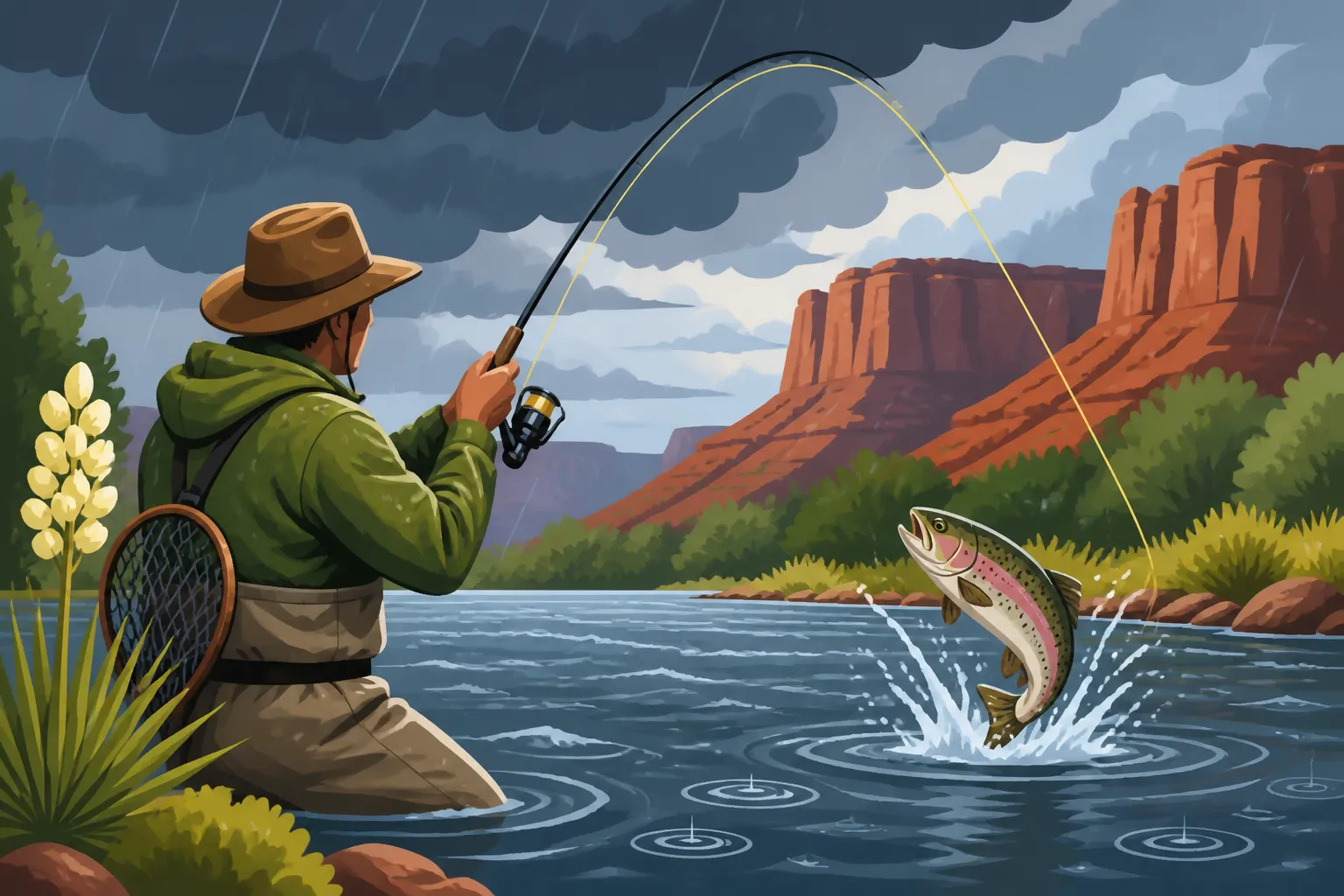
When the monsoon storms unleash their fury, many of New Mexico's rivers quickly transform into muddy, swollen torrents. This is the point where many anglers simply pack up and go home, but with a few strategic adjustments, you can still find success. The key is understanding how fish react to these conditions and adapting your approach. Fish will often seek refuge from the main current, moving into slower eddies, behind large rocks, or into the softer seams along the banks. These are your primary targets. Don't cast blindly into the main, raging flow; focus on these calmer pockets where fish can hold without expending too much energy.
Turbid water significantly reduces visibility, making sight-fishing impossible. This means you need to rely on other senses, both your own and the fish's. For spin fishermen, bright, noisy, and vibrating lures become incredibly effective. Think about using chartreuse, orange, or firetiger colored spinners, crankbaits, or even chatterbaits. The flash and vibration help fish locate your offering even when they can't see it clearly. When it comes to bait, scent is king. Natural baits like earthworms, PowerBait, corn, or even dough baits infused with strong attractants will draw fish in. For fly anglers, forget the delicate dry flies for a while. It's time for heavier nymph rigs, large streamers that imitate baitfish, and especially "junk flies" like the infamous San Juan Worm, which perfectly mimics the drowned worms that get washed into the river. Remember that the article, "How to Fish Muddy Water in New Mexico," offers a deeper dive into these techniques, and they become absolutely critical during these conditions.
Capitalizing on Post-Rain Opportunities
While fishing during a heavy downpour can be tricky and sometimes unsafe, the period immediately following a monsoon rain, or as the river begins to clear, often presents phenomenal fishing opportunities. This is what we call the "washing out" effect, and it's a huge trigger for fish.
The sudden rush of water into a river system dislodges an incredible amount of food. Worms, grubs, terrestrial insects like ants and beetles, and even small baitfish get swept into the current, creating a buffet for hungry game fish. Trout, bass, and catfish suddenly have an abundance of easy meals flowing right to them, and they often go into a feeding frenzy. This is when you can experience some of the most aggressive bites of the season. Focus your efforts on the seams between fast and slow water, where fish can sit comfortably out of the main current but dart out to snatch passing food. Also, look for eddies and backwaters where debris and food accumulate.
This post-rain period is precisely when many of the principles discussed in "Fishing After Runoff in New Mexico" come into play. Trout, which might have been hunkered down during the storm, will often become incredibly active. Catfish, with their superior sense of smell, absolutely thrive in these turbid, nutrient-rich waters and can be caught in large numbers using stink baits or cut bait. For bass, the added cover and food sources in stained water can make them more aggressive and less wary, especially around submerged structure and cover along the banks. The key is to be ready to hit the water as soon as conditions are safe and the water starts to drop and clear slightly. Don't wait too long, as the feeding frenzy can be short-lived once the initial flush of food passes.
Lake and Reservoir Fishing During Monsoon
Fishing New Mexico's larger lakes and reservoirs during the monsoon season offers a different set of challenges and opportunities compared to rivers. While rivers often get muddy, lakes experience more localized changes, creating distinct hot spots.
Understanding Inflow Areas and Turbidity Lines
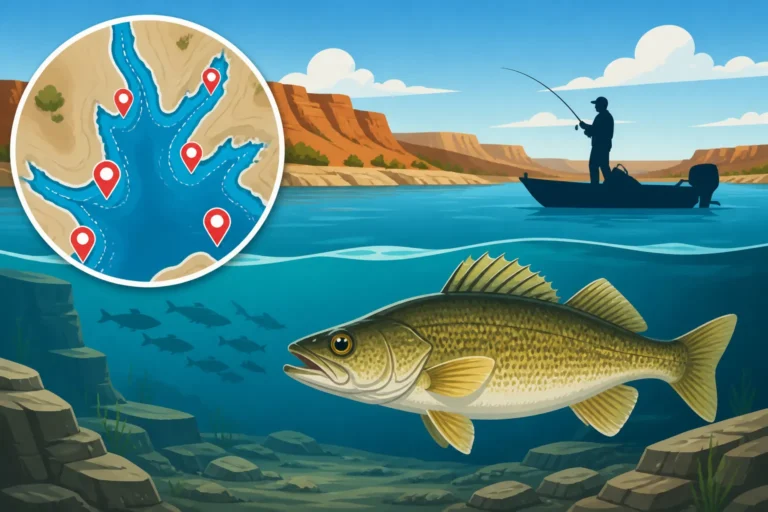
One of the most exciting aspects of monsoon fishing on New Mexico's lakes and reservoirs is the creation of "inflow areas" and "turbidity lines." These are dynamic zones where feeder creeks, arroyos, and even sheet flow from the surrounding land dump fresh, often cooler and muddier, water into the main body of the lake. These areas are magnets for fish for several compelling reasons.
First, these inflows carry a bounty of new food – everything from worms and insects washed in from the shore to disoriented baitfish pushed by the current. Second, the cooler incoming water can create temperature breaks that attract fish, especially during the sweltering heat of July and August. Third, the turbidity lines, where the clear lake water meets the stained inflow, create perfect ambush points for predatory fish. Bass, walleye, and even crappie will often position themselves on the clearer side of these lines, using the muddy water as cover to dart out and ambush prey that washes out of the inflow or simply swims by unaware. Targeting these specific zones is crucial. For bass, try pitching jigs, crankbaits, or plastic worms into the stained water near structure. Walleye often respond well to jigs or slow-trolled spinner rigs in these areas. Don't be afraid to experiment with different depths until you find where the fish are holding.
Deep Water vs. Shallow Water Strategies
The monsoon's impact on a lake's water temperature and clarity can lead to fish holding at different depths, requiring anglers to adjust their presentations accordingly. It’s not always a straightforward choice; sometimes both strategies can be productive in different parts of the same lake.
During an intense monsoon storm, the sudden influx of cooler rainwater can actually cause surface water temperatures to drop. While this might seem counterintuitive in summer, it can be enough to push some temperature-sensitive fish, particularly certain trout species or walleye, into deeper, more stable thermal zones. In these scenarios, vertical presentations like jigging with spoons or blade baits, or slow trolling with downriggers for species like Kokanee salmon in lakes like Navajo or Heron, can be effective. Conversely, the runoff from surrounding land often carries a wealth of food, attracting a variety of species into shallower, stained water. Bass, catfish, and even some panfish will move into these newly enriched shallow zones, especially around flooded vegetation or submerged structures, to capitalize on the easy meals. For these shallower fish, you'll want to use lures that create a strong presence and can be worked through cover, such as spinnerbaits, chatterbaits, or Texas-rigged plastic worms. The key is to pay attention to where the water is clearest versus muddier, and how that influences fish behavior. Understanding how fish react to "Fishing New Mexico Reservoirs in Summer Heat" can provide valuable context here, as monsoon conditions often present a temporary reprieve or alteration to those typical summer patterns, leading to different depth preferences.
Species-Specific Monsoon Tactics
Different fish species react to the monsoon season in New Mexico in unique ways. What works for a trout in a mountain stream might be completely ineffective for a catfish in a large reservoir. Tailoring your approach to your target species is paramount.
Trout Tactics in Monsoon Season
Trout fishing during the New Mexico monsoon can be incredibly feast or famine, but with the right tactics, it's often more feast. Many high-country streams and smaller rivers will become blown out and unfishable during and immediately after heavy rains. The sheer volume and velocity of the water, coupled with extreme turbidity, makes it difficult for trout to feed or even hold comfortably. In these situations, your best bet is to target tailwater fisheries, like the legendary San Juan River. These rivers, fed by large dams, often maintain more consistent flows and clearer water, even when upstream areas are getting pounded. The stable environment of a tailwater makes it an excellent choice for consistent trout fishing during the monsoon, as outlined in "Trout Fishing Techniques for New Mexico."
For those determined to fish smaller streams, timing is everything. Try to fish before a storm rolls in when the fish sense the approaching low pressure and often feed aggressively. Alternatively, once the water begins to drop and clear slightly after a storm, and the initial flush of debris has passed, trout will often move back into feeding lanes. In these conditions, don't be afraid to use larger, heavier nymph patterns or attractor flies that stand out in stained water. Worm imitations, such as the San Juan Worm, are also incredibly effective. Live worms, if permitted, can also be a killer bait. Remember that "Best Lures for New Mexico Trout" will still apply, but you'll often need to size up your offerings and opt for more vibrant colors to catch a trout's attention in the reduced visibility.
Bass and Catfish Opportunities
While trout fishing can be challenging during the peak of monsoon storms, these conditions often create prime opportunities for warm-water species like bass and catfish. These fish, in many ways, thrive in the turbulent, nutrient-rich waters that monsoon rains bring.
Bass, both largemouth and smallmouth, are ambush predators that love stained water. The reduced visibility provides them with excellent cover, making them less wary and more aggressive. When runoff enters a lake, it carries terrestrial insects and other food, drawing bass into the shallow, newly flooded areas. Focus on fishing structure near these inflow points: submerged brush, rocks, timber, and even flooded grass. Spinnerbaits, chatterbaits, and dark-colored plastic worms or creature baits worked slowly and deliberately can be incredibly effective. The vibration and profile of these lures allow bass to find them in the murky water, and their aggressive nature during these feeding windows means they're often not particular.
Catfish, with their incredible sense of smell and preference for warmer, often turbid water, are perhaps the biggest winners during the monsoon season. The influx of new water and stirred-up sediment puts them into a feeding frenzy. Areas where muddy water enters a lake or river are prime locations to target them. Use strong-smelling baits like chicken livers, prepared stink baits, cut bait, or good old nightcrawlers. Fish them on the bottom, either with a Carolina rig or a slip sinker rig, allowing the scent to disperse with the current. This is a fantastic time to go after channel cats, and the larger flathead catfish can also become more active. Many of the strategies discussed in "Catfish Fishing in New Mexico" become even more potent during the monsoon, making it an ideal time to target these hard-fighting fish.
Post-Monsoon Fishing: Capitalizing on Stable Conditions
The monsoon season isn't just about fishing during the storms; it also ushers in a period of fantastic fishing as conditions stabilize. The lasting impacts of the rains can create a renewed ecosystem, leading to thriving fish populations.
When Rivers and Lakes Settle
Once the monsoon storms begin to taper off and the weather patterns return to a more stable state, often in late September and October, the fishing in New Mexico can be truly exceptional. This is the period when rivers and lakes have had a chance to absorb the moisture, flows recede to more manageable levels, and water clarity improves significantly. Fish, having experienced the turbulent conditions, often settle into more consistent feeding patterns, but with a renewed vigor thanks to the influx of nutrients and replenished water levels.
During this post-monsoon phase, fish are often less pressured than during the height of summer. They've had a chance to feed on the bounty brought by the rains and are now looking for more consistent food sources. This is when you can often return to more "normal" presentations that might have been ineffective during the storms. For trout, clearer water means you can often revert to smaller nymphs, dry flies if hatches are present, or more subtle spinners. Bass might be found patrolling the edges or hunkering down near structure, but they'll be more willing to chase a variety of lures. This period provides an excellent opportunity to explore different areas of the lake or river that might have been inaccessible or unfishable during the higher flows. It's a fantastic time to consult the "New Mexico Fishing Season Calendar" to see what other species might be becoming more active as fall approaches.
Long-Term Impacts and Ecological Benefits
Beyond the immediate fishing opportunities, the New Mexico monsoon season plays a profoundly vital role in the long-term health and sustainability of our aquatic ecosystems. These rains are far more than just a temporary inconvenience; they are a lifeblood for the arid landscape.
Crucially, monsoon rains are essential for recharging groundwater aquifers and replenishing our reservoirs, many of which can experience significant drawdowns during the hot, dry spring and early summer months. This increased water volume supports fish habitat, ensuring there's enough room and oxygen for fish to thrive. The storms also help to flush out stagnant areas in rivers and lakes, improving overall water quality by circulating water and oxygenating deeper sections. This can reduce the risk of harmful algal blooms and improve the overall living conditions for fish. Furthermore, the runoff carries a fresh supply of nutrients from the surrounding land into the waterways. This nutrient boost kickstarts the aquatic food chain, leading to increased plankton, insect larvae, and forage fish, which in turn supports larger game fish populations. In essence, the monsoon provides a critical seasonal reset, enhancing the overall productivity and resilience of New Mexico's fisheries, ensuring future generations of anglers have healthy waters to enjoy.
| Monsoon Condition | Typical Fish Behavior | Recommended Tackle/Bait | Notes |
|---|---|---|---|
| Heavy Rain / Muddy Water | Seek cover, reduce visibility, rely on lateral line/smell. | Bright, noisy lures (chartreuse, orange); scented natural baits. | Focus on eddies, structure, slower seams. Safety first: avoid lightning. |
| Post-Rain (Clearing) | Highly active, feeding on flushed-in food. | Worms (San Juan Worm), streamers, crankbaits, jigs, natural baits. | Prime time for aggressive bites. Look for turbidity lines, inflow areas. |
| Swollen Rivers | Hunker down in slower current, edges, eddies. | Heavy nymphs, large streamers, PowerBait, worms. | Fish tight to banks, behind large obstacles. Check river flows. |
| Lake Inflows (Muddy) | Concentrate near inflows, ambiguity lines; ambush prey. | Darker or contrasting colored lures (black, purple, red); cut bait. | Target bass and catfish. Fish the transition zones where clear meets muddy. |
| Cooling Surface Temps (Lakes) | Can push some fish deeper, or activate others in shallows. | Jigging spoons, deep crankbaits, vertical presentations (deeper). | Bass often move shallow for food, trout/walleye may go deeper for stable temps. |
Disclaimer
Fishing regulations and conditions in New Mexico can change rapidly. Always consult the most current New Mexico Department of Game and Fish regulations handbook before heading out. Be aware of local conditions, especially during monsoon season, and prioritize safety above all else. This guide is for informational purposes only and does not supersede official regulations or local advisories.