Two-Fly Rig Setup for the San Juan River
Ever stood on the banks of New Mexico's legendary San Juan River, watching trout sip bugs all around you, but they just won't touch your single fly? It's a classic struggle, and frustratingly common in technical fisheries like the San Juan. Those highly educated trout can be incredibly picky, often inspecting every drift with microscopic scrutiny. This guide is all about overcoming that challenge by mastering the two-fly rig setup, a game-changing approach for enticing even the most finicky trout in these celebrated waters.
Why a Two-Fly Rig for the San Juan River?
The San Juan River, especially its Quality Waters section below Navajo Dam, is a unique and often challenging fishery. It's renowned for its abundance of large, healthy trout, but these fish are also incredibly discerning. Simply throwing a single fly out there often isn't enough to fool them. This is where the two-fly rig truly shines, offering multiple advantages that significantly increase your chances of success.
Matching Diverse Hatches
One of the primary reasons to employ a two-fly rig on the San Juan is the incredible diversity of aquatic insects present throughout the year. Trout aren't just looking for one type of bug at a time; often, they're keying into multiple life stages or different species simultaneously. By presenting two distinct fly patterns, you essentially double your chances of "matching the hatch," or at least presenting something the fish are interested in. You might have a larger nymph imitating a baetis larva, while your trailing fly mimics a tiny midge pupa, covering a broader spectrum of the trout's potential diet. This adaptability is crucial in a river known for its prolific and varied insect life.
This strategy becomes even more critical when you consider the varying depths and current seams. A single fly might drift through one feeding lane, but two flies give you a better chance to cover slightly different depths or present different profiles. The San Juan's rich ecosystem means trout have a smorgasbord of food choices, and a two-fly rig allows you to offer more options, mimicking both emerging and drowned insects. It's like offering a buffet to a gourmet diner – more choices usually lead to a more satisfied customer, or in this case, a hooked fish.
Increased Chances of a Hook-Up
It's simple math, really: two flies in the water mean twice the opportunity for a fish to take your offering. But it's more than just a numbers game. Sometimes, one fly acts as an attractor, drawing a trout's attention, while the second fly, perhaps a smaller, more subtle imitation, is what the fish actually decides to eat. This phenomenon, often called the "tag-team effect," is a common occurrence on the San Juan River. A flashier or larger lead fly can pique curiosity, leading the trout to follow, only to commit to the more realistic trailing pattern.
Beyond attraction, the two-fly setup allows you to explore different zones of the water column more effectively. If your lead fly is a weighted nymph, it might plumb the deeper sections where larger trout often hold. Your second fly, tied off a dropper, could then drift slightly higher, imitating an emerger just beneath the surface or a lighter nymph in shallower water. This tiered presentation is a powerful tool for systematically probing the river and increasing the likelihood of encountering a fish, especially when you're unsure of their precise feeding depth.
Adapting to San Juan's Unique Conditions
The San Juan River's tailwater nature means consistent water temperatures and flows, creating a year-round fishery. However, even with stable conditions, the trout here are notoriously well-fed and often require very precise presentations. A two-fly rig allows for immediate adjustments to depth, fly size, and even color without having to re-rig your entire setup. For instance, if you're getting short strikes on your lead fly, you can easily change the trailing fly to a smaller, more delicate pattern, or vice versa, to better match what the fish are actually targeting.
Furthermore, the San Juan's clear waters and abundant insect life can make fish incredibly wary. Presenting two flies, especially with a subtle drift, can sometimes appear more natural than a single, isolated offering. It mimics the natural drift of multiple insects. This adaptability is key for success when fishing the San Juan River Quality Waters Section, where the fish have seen it all. Learning the best approaches for Nymph Fishing on the San Juan River often involves mastering these multi-fly techniques to effectively present your offerings in a way that minimizes suspicion and maximizes bites.
Understanding the Components of a Two-Fly Rig
Before you start tying knots, it’s essential to understand the individual elements that make up a robust and effective two-fly rig. Each component plays a crucial role in presentation, sensitivity, and ultimately, your success on the water. Skimping on quality or understanding the function of each part can lead to frustration and missed opportunities.
The Leader System: Tapered vs. Hand-Tied
Your leader is the bridge between your fly line and your flies, and its design is paramount for proper presentation. For two-fly nymphing, a strong, long leader is often preferred. A tapered leader typically starts thick at the butt section, designed to turn over your flies smoothly, and gradually thins out towards the tippet. These are convenient and readily available. Many anglers prefer a 9-foot or even 12-foot tapered leader for nymphing on the San Juan, allowing for longer, more natural drifts without spooking fish with the fly line.
However, many seasoned San Juan anglers opt for a hand-tied leader. This allows for complete customization of length, taper, and strength, which is invaluable in a technical fishery. A common hand-tied setup might involve a butt section of 20-30 lb monofilament, gradually tapering down through 15 lb, 10 lb, 8 lb test, and finally attaching a length of tippet. This allows for stronger connections, easier replacement of worn sections, and the ability to build in specific tapers that suit your casting style and the river conditions. For a detailed discussion on optimal length, you might check out guides on Best Leader Length for San Juan River Nymphing.
Tippet Material and Strengths
Tippet is the final, thinnest section of your leader where you attach your flies. On the San Juan, using high-quality tippet is non-negotiable. Fluorocarbon tippet is overwhelmingly favored due to its low visibility underwater, abrasion resistance, and fast-sinking properties, which help get your flies down quickly. Unlike monofilament, fluorocarbon has a refractive index very close to that of water, making it virtually invisible to wary trout. It's also much more durable, standing up better to rocks and the occasional toothy encounter.
The strength or "X" rating of your tippet is critical. For the San Juan's Quality Waters, anglers typically use 5X, 6X, or even 7X tippet. 5X offers a good balance of strength and stealth, while 6X and 7X are often necessary for smaller flies and extremely finicky fish. While you can find a wide variety of tippet sizes and brands, like the popular Rio or Seaguar options, readily available on Amazon, always ensure you're using fresh material, as old tippet can weaken over time. Matching your tippet strength to the size of your flies and the potential size of the fish is crucial to avoid break-offs while still achieving a natural drift. For clearer water conditions and smaller flies, consider guides on Best Tippet Size for Clear Water Trout.
Weighting Your Rig Effectively
Proper weighting is arguably the most important aspect of a successful nymphing rig, especially on a technical river like the San Juan. Your flies need to get down to where the fish are feeding, but they also need to drift naturally without snagging the bottom constantly. There are a few key ways to add weight to your two-fly rig:
- Weighted Flies: Many nymphs come pre-weighted with tungsten beads or lead wraps. Using a heavier fly as your lead (or "point") fly can help sink your entire rig efficiently. This is often the cleanest way to add weight, as it keeps the weight directly on your fly.
- Split Shot: Small, removable lead or non-toxic tin split shot can be crimped onto your leader a few inches above your lead fly or between your two flies. This allows for quick adjustments to depth. Always use the minimum amount of weight necessary to get your flies into the feeding zone. Too much weight will cause your flies to drag unnaturally or constantly snag. Many anglers keep a small assortment of various split shot sizes handy.
- Tungsten Putty: A moldable tungsten putty can be wrapped around your leader. This is a very sensitive way to add weight, as it can be easily adjusted and removed, and its smooth profile minimizes snags. Brands like Loon Outdoors offer excellent tungsten putty that can be reused multiple times. Regardless of the method, the goal is to achieve a dead drift where your flies tumble along the bottom as naturally as possible. This often requires experimentation with weight and careful observation of your drift.
Step-by-Step Guide to Tying Your Two-Fly Rig
Tying a two-fly rig isn't overly complicated once you understand the basic principles. It becomes second nature with a little practice. The key is to create strong, clean knots that don't impede the natural movement of your flies and to ensure proper spacing between your lead and trailing fly.
Attaching the First Fly and Dropper Tag
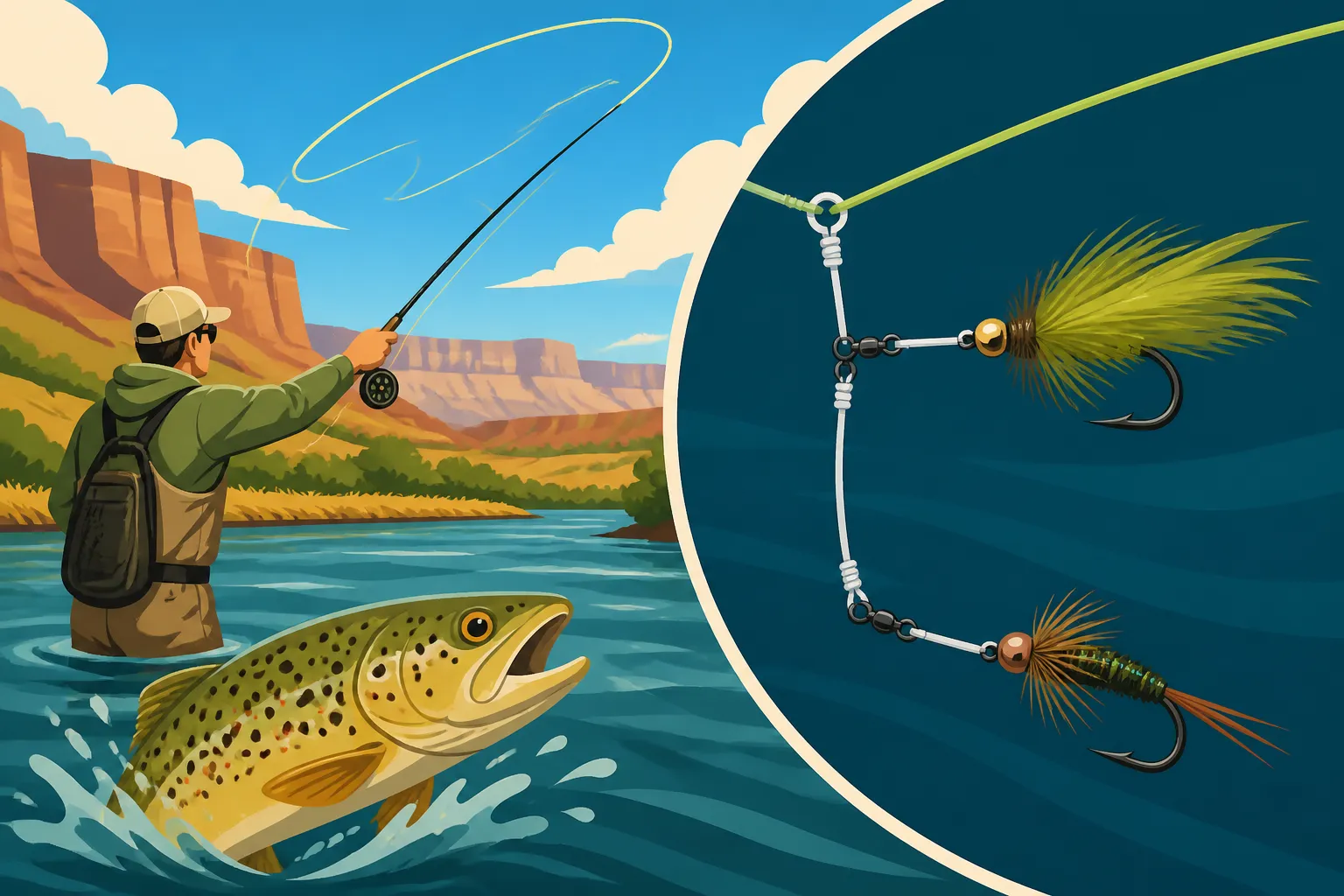
Start with your tapered leader, or the thinnest section of your hand-tied leader, usually around 5X. You'll want to add a piece of tippet material to this section, typically 18-24 inches long. A simple blood knot or surgeon's knot works well for connecting leader to tippet. Now, choose your lead fly – often a heavier, larger pattern that will get your rig down. Tie this fly onto the end of your tippet using a strong, reliable knot like an Improved Clinch knot or a Non-Slip Mono Loop for flies that need more movement.
Once your lead fly is secure, you'll create the "dropper" for your second fly. Instead of tying a second piece of tippet directly to the bend of the first fly's hook (which can sometimes foul the hook-up of the lead fly), it's often better to create a small tag. To do this, measure about 12-18 inches up from your lead fly on the tippet. At this point, tie a triple surgeon's knot, but instead of trimming both tag ends, leave one tag end long – about 8-12 inches. This long tag end will become your dropper. This method ensures your first fly can move freely and reduces tangles. Remember, barbless hooks are usually required on specific sections like the Quality Waters, so ensure your flies meet these New Mexico Special Trout Water Rules.
Securing the Second Fly (Point Fly)
Now that you have your dropper tag extending from your leader, it's time to attach your second fly, often referred to as the "point fly" or "trailer." Select a smaller, often more delicate pattern for this position. Tie this second fly to the end of the dropper tag using an Improved Clinch knot. The length of this dropper tag is important; typically, 8-12 inches is a good starting point. If the dropper is too short, the flies might interfere with each other; too long, and it can become prone to tangles, especially in faster currents or during casting.
The choice of knot here is crucial. Ensure it's cinched down tightly and trim the tag end very close to the knot to prevent any stray material from catching weeds or distracting fish. It's a good practice to test the strength of both knots by pulling firmly before you cast. This two-fly system allows you to cover different feeding strategies. For instance, your lead fly might be a heavy San Juan Worm, while your point fly is a tiny Pheasant Tail Nymph. This combination can be incredibly effective, especially when you are doing Fly Fishing Techniques for New Mexico Rivers.
Adding Indicators and Weight
With your flies tied, the next step is to add a strike indicator and any necessary weight. The strike indicator is your "bobber," signaling when a fish has taken your fly. For nymphing, these are typically buoyant pieces of foam or yarn that attach to your leader above your flies. Place your indicator anywhere from 3 to 6 feet above your top fly, depending on the depth of the water you're fishing. A general rule of thumb is to set your indicator at 1.5 to 2 times the depth of the water you expect to be fishing, giving your flies enough time to sink to the bottom.
Finally, consider adding weight if your flies aren't getting down quickly enough or if the current is strong. Small split shot can be carefully crimped onto your leader about 6-12 inches above your lead fly. Use the least amount of weight necessary. You want your flies to tick the bottom occasionally, but not constantly snag. Alternatively, as mentioned, you can use tungsten putty. Continuously adjust the placement and amount of weight until your rig is drifting naturally in the feeding zone. It's a delicate balance, but mastering it is fundamental to successful two-fly nymphing on the San Juan.
Strategic Fly Selection for the San Juan River's Quality Waters
Fly selection is often the most discussed (and sometimes overthought) aspect of fly fishing. On the San Juan, it's less about having hundreds of patterns and more about understanding a few key insect types and their life stages. A two-fly rig gives you the flexibility to experiment and present options.
Choosing Your Lead Fly
Your lead fly, often the heavier or larger of the two, serves several purposes. Firstly, it often acts as the primary weight to get your entire rig down to the fish. Secondly, it can be a larger, more visible pattern designed to get a trout's attention. Think about the common "meat and potatoes" of the San Juan: small aquatic worms, larger midge larva, or scuds. Patterns like the San Juan Worm, a dark red or brown Annelid, is almost legendary here. A UV Scud or a Mercury Baetis can also make excellent lead flies.
The lead fly should typically be tied on a stronger tippet (e.g., 5X or 6X). It should be a fly that confidently gets into the feeding lane, whether that's near the bottom or in the mid-column. For example, a size 18-20 Tungsten Zebra Midge in black or olive, or a size 16-18 Blood Worm, often performs admirably as the initial offering. The aim is to choose something substantial enough to command attention and sink effectively, setting the stage for the trailing fly.
Selecting Your Trailing Fly
The trailing fly, or point fly, is usually a smaller, more imitative pattern designed to seal the deal with picky trout. It often mimics a smaller insect, an emerger, or a different life stage than your lead fly. Popular choices for the San Juan include tiny midge pupa (like a Black Beauty, Disco Midge, or Top Secret Midge in sizes 20-24), small baetis nymphs (like a Juju Baetis or Barr's Emerger in sizes 20-24), or even small eggs patterns. This fly is often tied on a lighter tippet (e.g., 6X or 7X) for maximum stealth and natural movement.
The contrast between your lead and trailing fly can be significant. Perhaps a heavy, dark lead fly is followed by a tiny, light-colored emerger. This setup effectively covers multiple bases, appealing to trout that might be looking for a larger meal or those focused on the delicate emergence of smaller insects. The trailing fly is your finesse option, often the one that gets eaten when the fish are being incredibly selective. Many anglers find the Best Lures for New Mexico Trout often includes small, highly realistic patterns for this position.
Seasonal Fly Combinations
The San Juan River, while stable, does have seasonal variations in insect activity that influence fly choice.
- Winter/Early Spring: Midges are dominant. Pairing a larger midge larva (e.g., Jujubee Midge #20) as the lead with a tiny midge pupa (e.g., Black Beauty #22-24) or a Blood Worm is highly effective. San Juan Worms are also perennial producers.
- Late Spring/Summer: Baetis (Blue-Winged Olives) hatches become more prevalent, alongside midges. A Mercury Baetis (#20-22) or a larger pheasant tail variation as the lead, trailed by a smaller Baetis emerger or a Top Secret Midge, can be deadly. You might want to refer to What Flies Work Best on the San Juan River in Summer? for specific advice.
- Fall: Baetis continue to be important, and larger terrestrials might be around, though less critical for deep nymphing. Focus remains on midges and baetis nymphs. Similar patterns to late spring and summer will work well. Guides on What Flies Work Best on the San Juan River in Winter? will help you adapt as temperatures drop.
Ultimately, successful fly selection involves observing the river, noting what trout are feeding on, and experimenting with different combinations. Don't be afraid to change out one or both flies if you're not getting bites. Having a well-stocked fly box with various sizes and colors of midges, baetis, and annelids, perhaps organized in a quality fly box you picked up on Amazon, will prepare you for any situation.
Fishing Techniques and Presentation with a Two-Fly Rig
Once your two-fly rig is perfectly tied, the next step is to present it to the fish in a way that looks as natural as possible. This requires careful casting, mend-ing, and a keen eye for subtle takes.
Reading the Water with a Multi-Fly Setup
Effective nymphing with a two-fly rig begins with understanding where the fish are holding and how the current interacts with the riverbed. Trout, especially large ones, typically hold in seams, eddies, and deeper pockets where food is abundant but the current is softer, allowing them to conserve energy. Look for changes in current speed, areas behind large rocks, or drop-offs. The San Juan River has a fairly consistent flow, but subtle variations can create prime feeding lies. Understanding How to Read Water on the San Juan River is critical for this.
When fishing a two-fly rig, you're essentially trying to "read" the water to determine the optimal depth and drift path for both flies. If your indicator is racing ahead of your flies, you might not have enough weight or your flies are not deep enough. If your indicator is constantly stopping, you're likely dragging bottom too much. The ideal drift has your indicator moving at the same speed as the surrounding current, with your flies tumbling along the bottom. This requires constant observation and adjustment. Don't just cast blindly; envision where those trout are hiding and aim for a drift that brings your flies directly into their strike zone.
Casting and Drifting for Optimal Presentation
Casting a two-fly rig can be a bit more challenging than a single dry fly due to the added weight and potential for tangles. The key is to use open-loop casts, avoiding tight loops that can cause your flies and leader to tangle. A good roll cast or a Belgian cast (sometimes called a "perry poke") can effectively deliver your rig without too much aerial acrobatics. Aim for a smooth, controlled presentation that lands your flies gently upstream of your target zone.
Once your flies hit the water, the work truly begins. The goal is a "dead drift," where your flies move at the exact speed of the current, free of any drag from your fly line or leader. This means constantly "mending" your line – lifting and repositioning your fly line upstream to counteract the faster surface currents pulling on your indicator. Your indicator should float freely, with just a slight curve in your leader to allow for a natural drift. Long, drag-free drifts are paramount on the San Juan, allowing those discerning trout ample time to inspect and commit to your offerings.
Setting the Hook and Fighting Fish
Detecting a strike with a two-fly nymphing rig on the San Juan often requires keen observation and quick reflexes. Trout takes can be incredibly subtle – a slight hesitation, a quick dip, or even just a sideways movement of your indicator is often all you get. Many anglers miss fish by waiting for a dramatic pull. The moment your indicator does anything out of the ordinary, set the hook immediately with a sharp, upward sweep of your rod. Don't delay!
Once hooked, fighting San Juan trout requires a delicate touch but firm control. These fish are strong, and you're often using light tippet. Keep your rod tip high to maintain pressure and absorb shocks. Let the rod do the work, and use your reel's drag system effectively. Avoid "horsing" the fish, as this will likely result in a broken tippet. Bring the fish to hand quickly but gently, especially if you're planning on New Mexico Catch and Release Regulations. Use a net with a rubber mesh to minimize harm to the fish's protective slime coat, and wet your hands before handling.
Common Mistakes and Troubleshooting Your Two-Fly Setup
Even experienced anglers encounter challenges with two-fly rigs. From frustrating tangles to perplexing lack of bites, understanding common pitfalls and how to troubleshoot them can save your day on the water.
Tangles and How to Prevent Them
Tangles, or "bird's nests," are perhaps the most common frustration with multi-fly rigs. They typically occur during casting, especially if you're using too much power or a tight loop. To minimize tangles:
- Open Loop Casts: As mentioned, emphasize open, wide casting loops. This allows your flies to travel without colliding.
- Less Power: You don't need a lot of power to cast nymphs. A smooth, controlled cast is far more effective than trying to "bomb" your flies across the river.
- Leader Length: Ensure your leader isn't excessively long for your rod or casting style. A leader that's too long can be difficult to manage.
- Dropper Length: Keep your dropper tag for the second fly to a manageable length (8-12 inches). Too long, and it's a tangle waiting to happen.
- Wind: In windy conditions, reduce your casting distance and focus on roll casts or shorter, more compact overhead casts.
If a tangle does occur, try to untangle it immediately while the line is still wet. Dry tangles are much harder to resolve. Sometimes, a tangle is so severe that it's faster and less frustrating to simply cut and re-tie, especially if you're using fresh tippet you bought on Amazon.
Adjusting Depth and Weight
If you're not getting bites, or if you're constantly snagging, your depth and weight are likely off. This is a perpetual puzzle on the San Juan.
- Not Enough Bites: If you're drifting through prime water without any action, your flies might not be getting deep enough. Add more weight (split shot or tungsten putty) or move your existing weight closer to your lead fly. You can also lengthen the tippet section to allow flies to sink further, or try a heavier lead fly. Sometimes, simply adjusting the placement of your strike indicator further up your leader can give your flies more time to sink.
- Constant Snags: If you're snagging the bottom frequently, your flies are too deep or you have too much weight. Reduce the amount of weight, move it further away from your lead fly, or shorten the tippet section. You can also adjust your indicator to be closer to your flies, which will keep them riding higher in the water column. Observing how your indicator behaves – is it pausing unnaturally? Is it drifting too slowly? – provides crucial clues for these adjustments.
Remember, the San Juan has varying depths and currents, even within a short stretch. Be prepared to make frequent, small adjustments to your weight and indicator placement throughout the day. It’s an ongoing process of trial and error.
Leader Management and Maintenance
Proper leader management extends beyond just tying good knots. It's about ensuring your leader performs optimally throughout your fishing day.
- Check for Abrasion: Frequently inspect your tippet and leader for nicks, frays, or abrasions, especially after snagging or catching a fish. Rocks and fish teeth can quickly weaken your line. If you find any damage, cut out the compromised section and re-tie. It's better to lose a few inches of tippet than to lose a trophy fish.
- Knot Freshness: Over time, knots can loosen or weaken, especially if exposed to sunlight and repeated stress. If you've been fishing a lot, or if a knot seems suspect, it's wise to re-tie it.
- Storage: When you're done fishing, gently coil your leader and flies and store them in a way that prevents tangles. Many anglers use leader wallets or small foam spools. Keeping your leader organized not only saves time but also prolongs its life. Investing in quality leader and tippet, like those from reputable brands often sold on Amazon, will contribute significantly to your overall success and reduce frustrations on the water. Proper care ensures your New Mexico Fishing Regulations Overview compliant gear is always ready for action.
| Lead Fly (Larger/Heavier) | Trailing Fly (Smaller/Emerger) | Typical San Juan River Conditions |
|---|---|---|
| San Juan Worm (Red/Brown #16-18) | Black Beauty (#20-24) | Year-round, especially after rain or higher flows |
| Tungsten Zebra Midge (Black #18-20) | Top Secret Midge (#22-24) | Consistent midge hatches, clear water |
| Mercury Baetis (Olive #18-20) | Barr's Emerger (Baetis #20-22) | Baetis hatches (spring/fall), cloudy days |
| UV Scud (Tan/Olive #16-18) | Juju Baetis (Olive #20-22) | General searching pattern, varied insect activity |
| Blood Worm (Red #16-18) | Disco Midge (Pearl/Black #20-22) | Midge-heavy days, slower currents |
Disclaimer
The information provided in this guide is for general informational purposes only and is not intended as legal advice. Fishing regulations in New Mexico can change, and it is the angler's responsibility to consult the latest official New Mexico Department of Game and Fish regulations before fishing. Always prioritize safety and ethical angling practices.